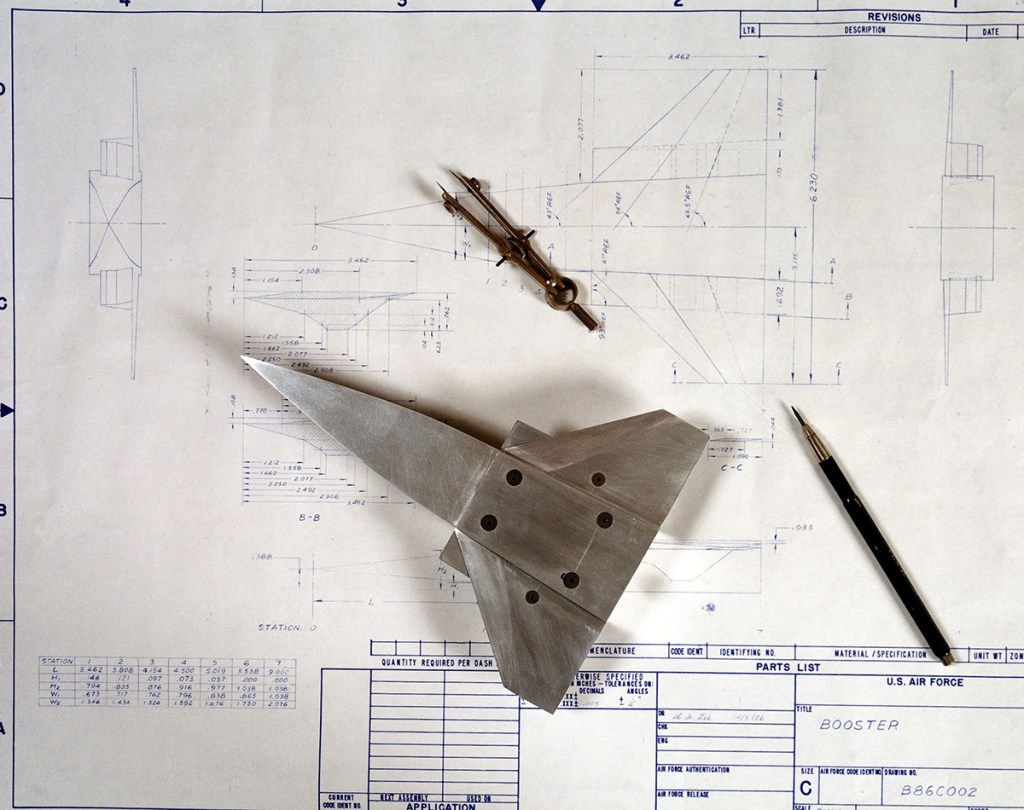
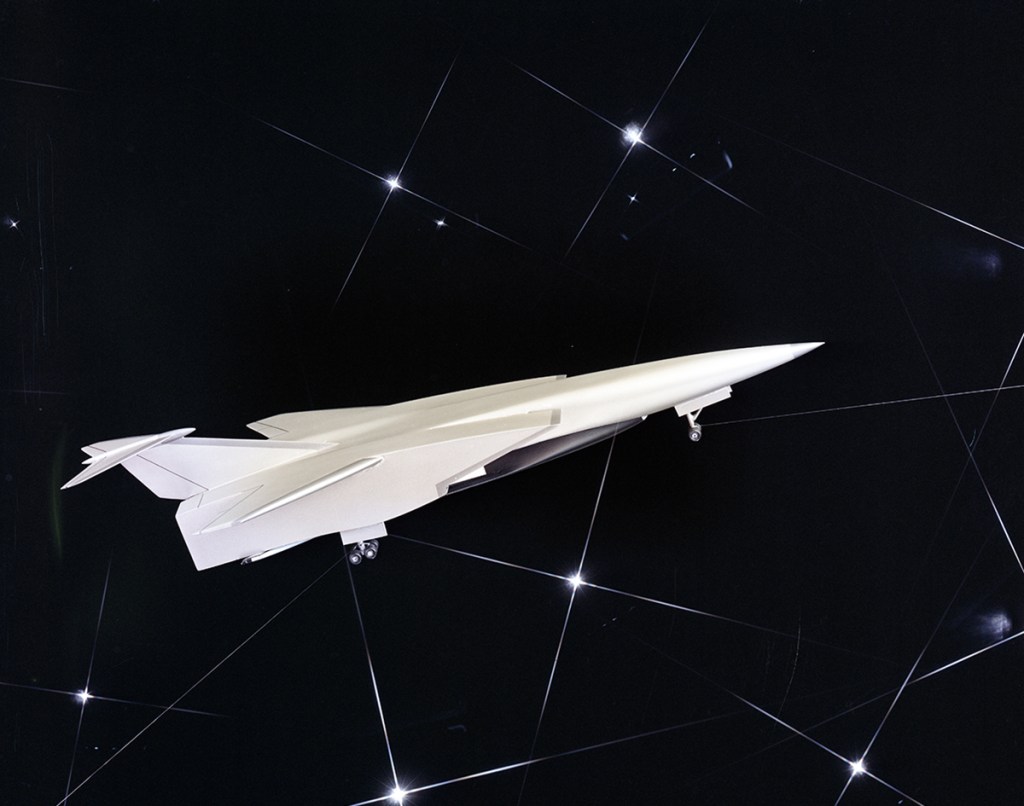
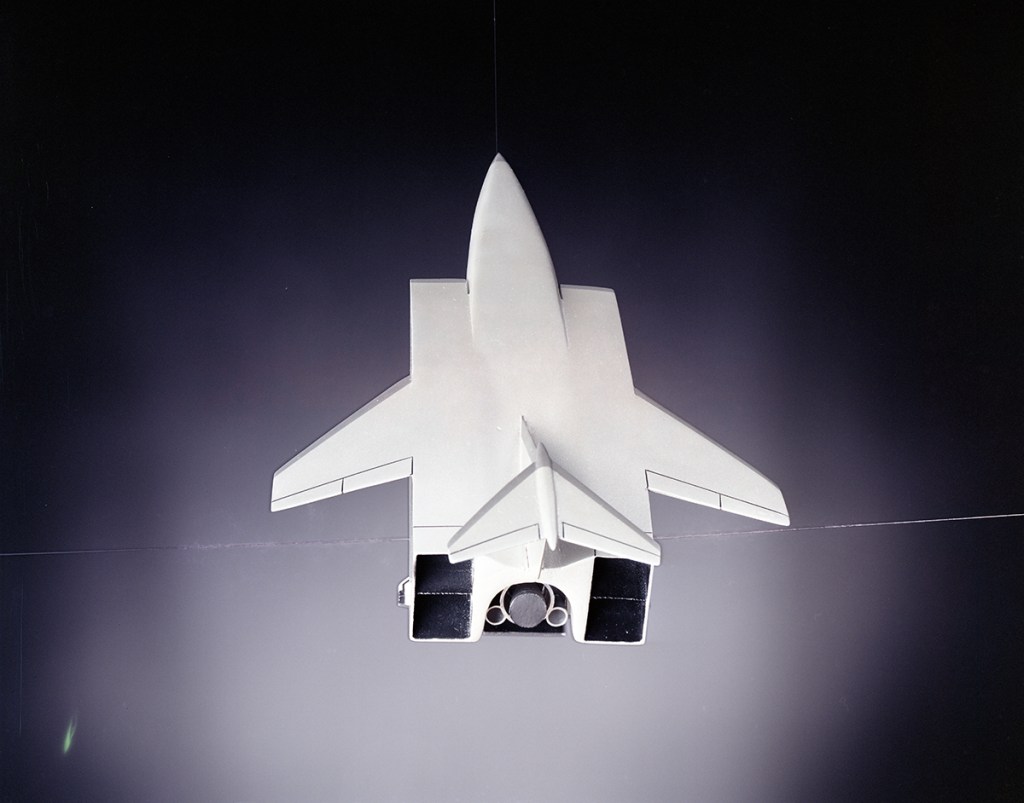
A view of a model of the first stage of a two-stage horizontal takeoff and landing vehicle designed to place shuttle class payloads in low earth orbit. The model will be used in launcher studies by the Aeromechanics Division of the Flight Dynamics Laboratory.
Image credit: NASA Image source: National Archives
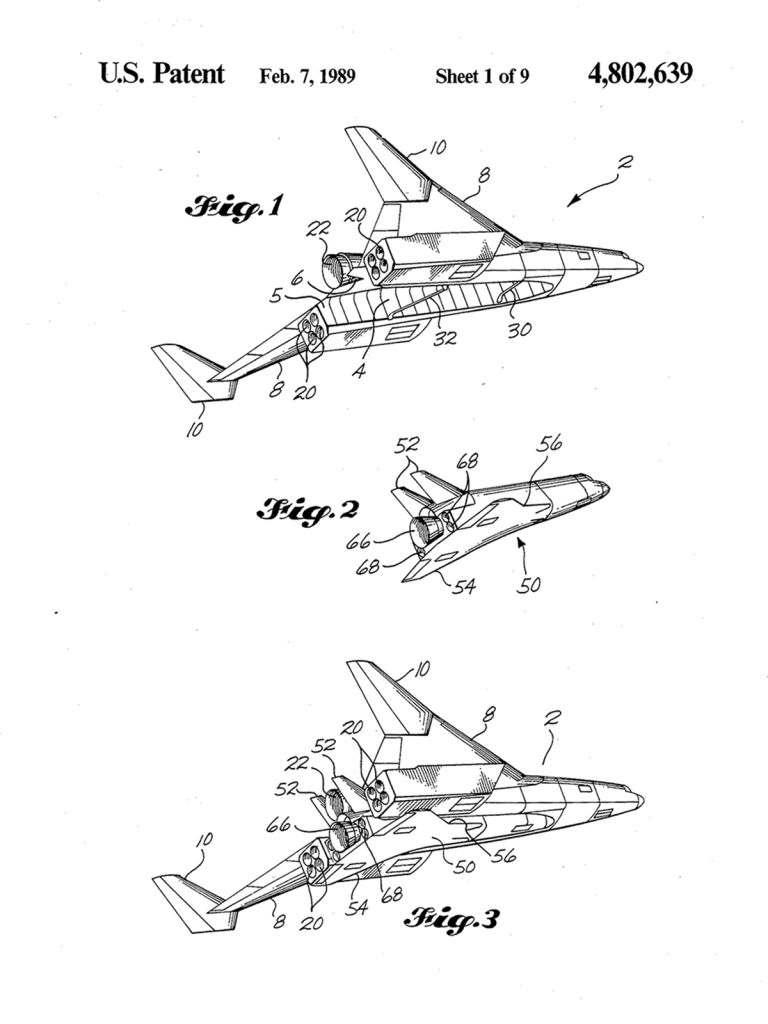
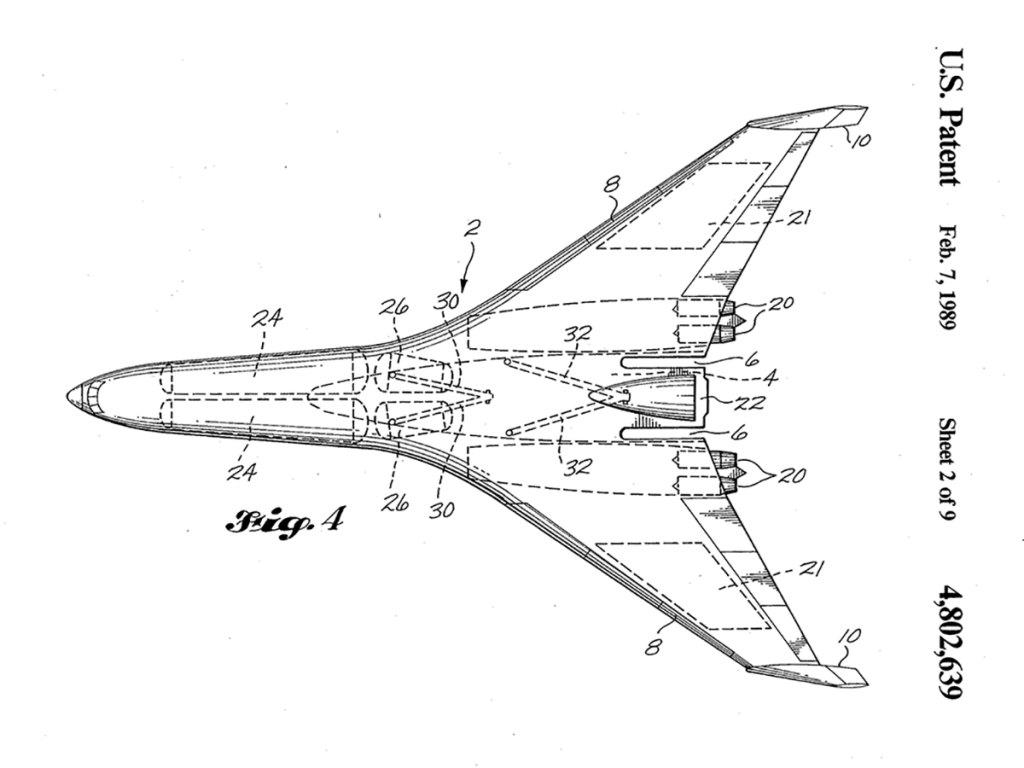
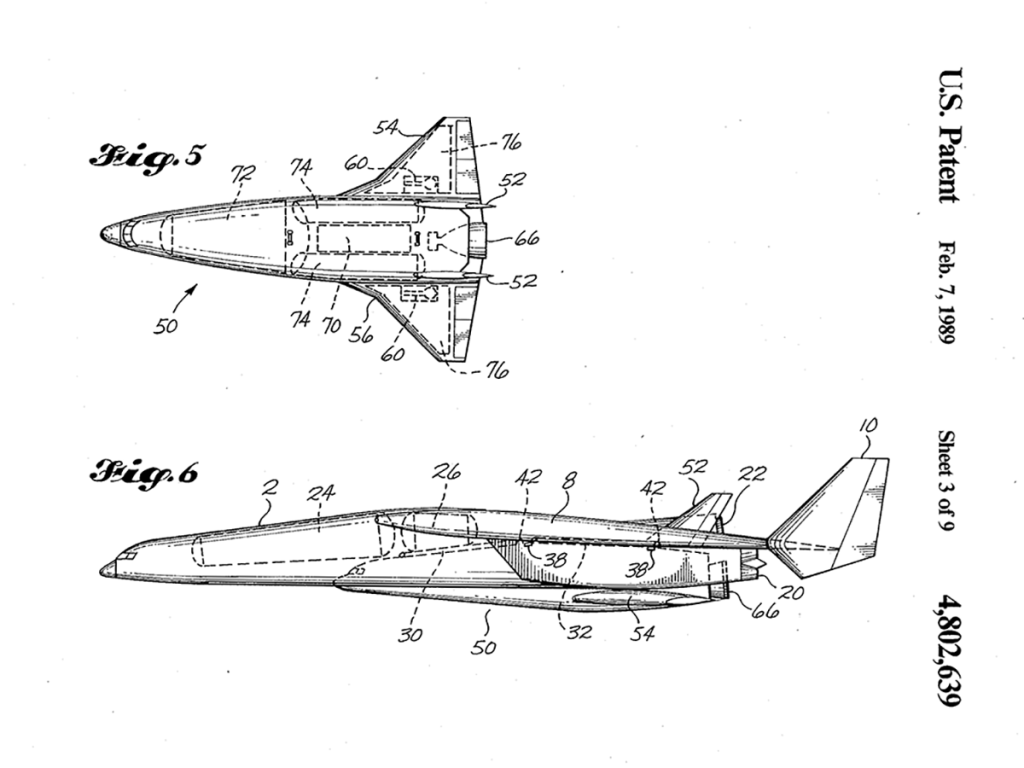
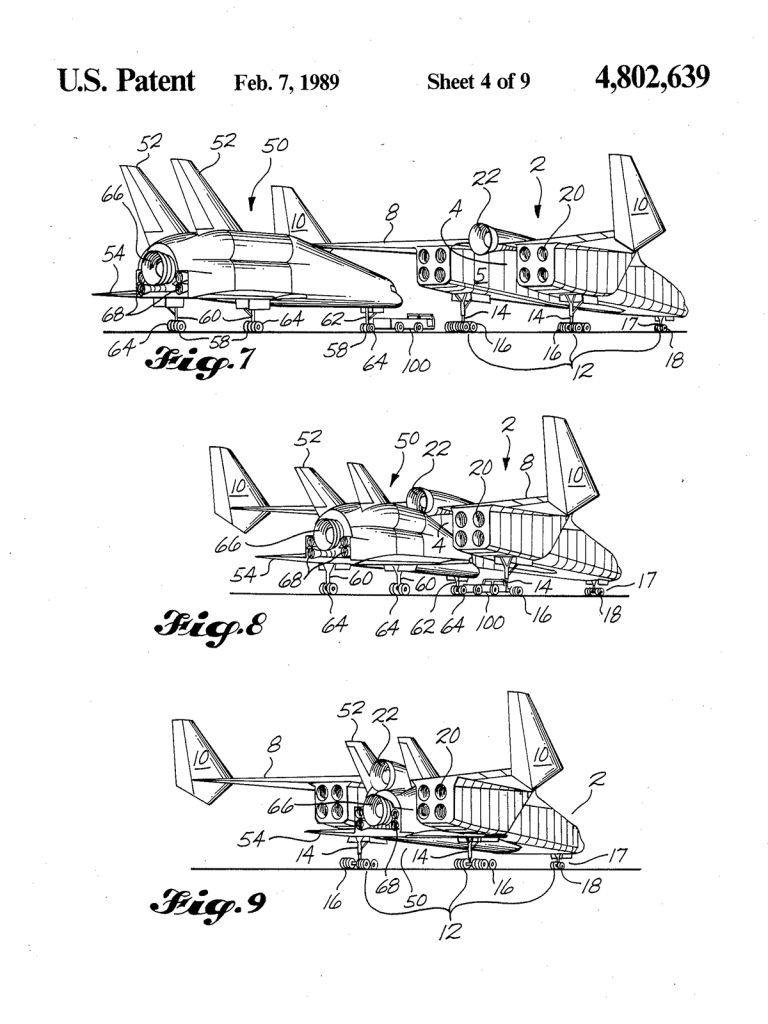
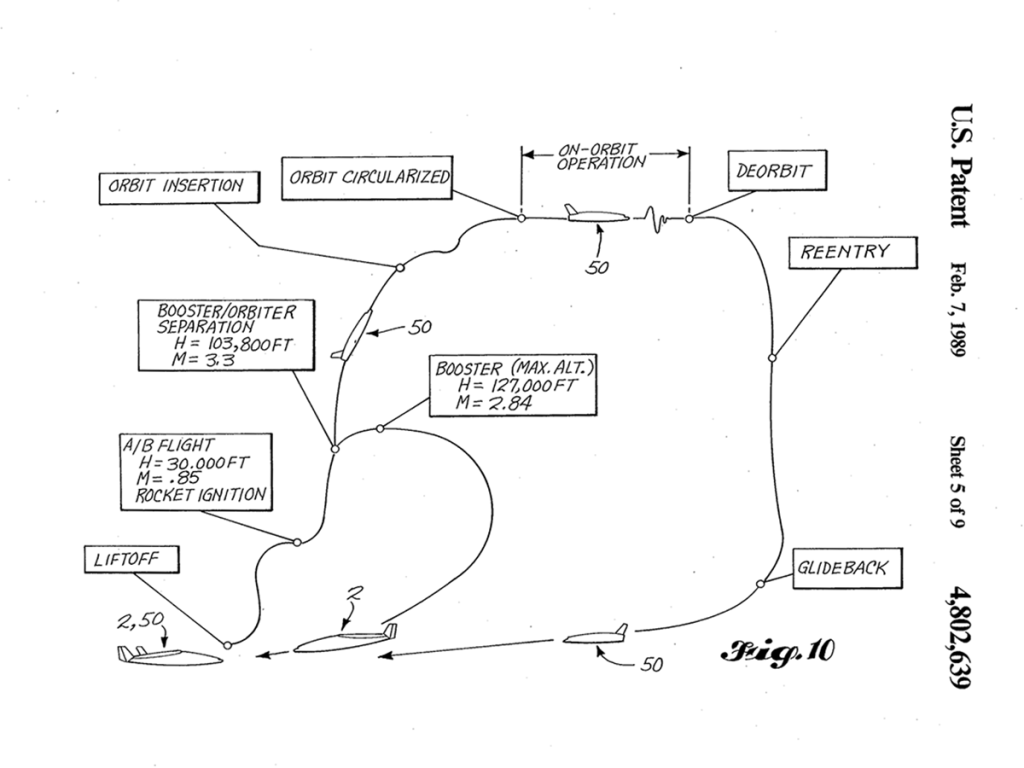
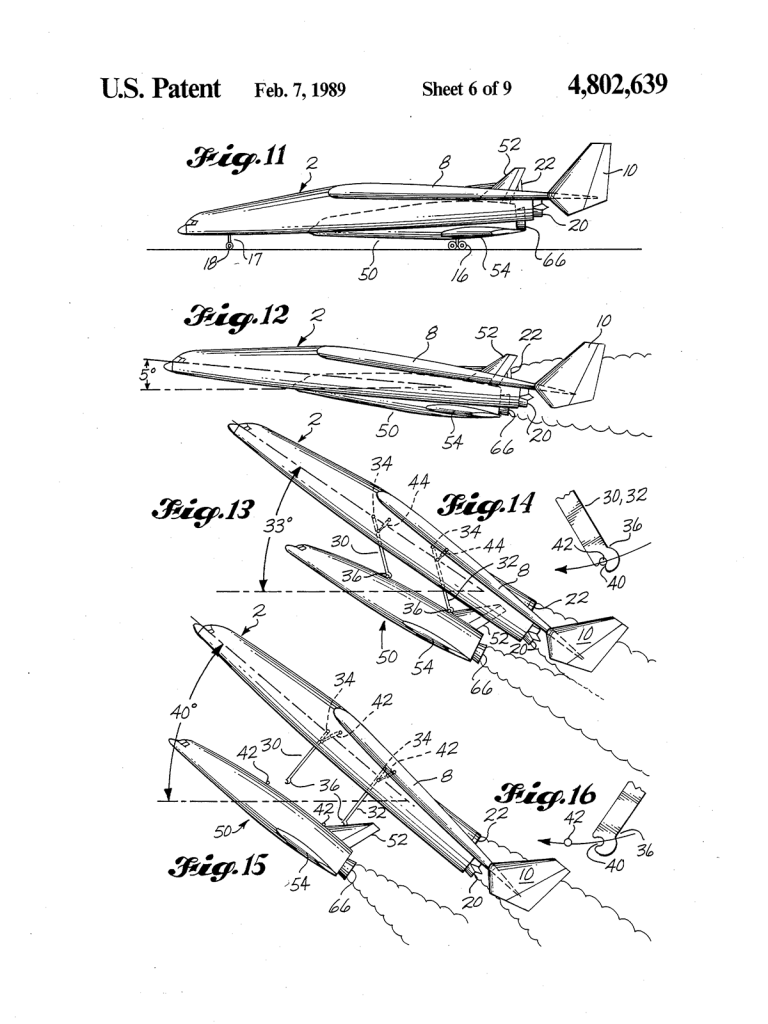
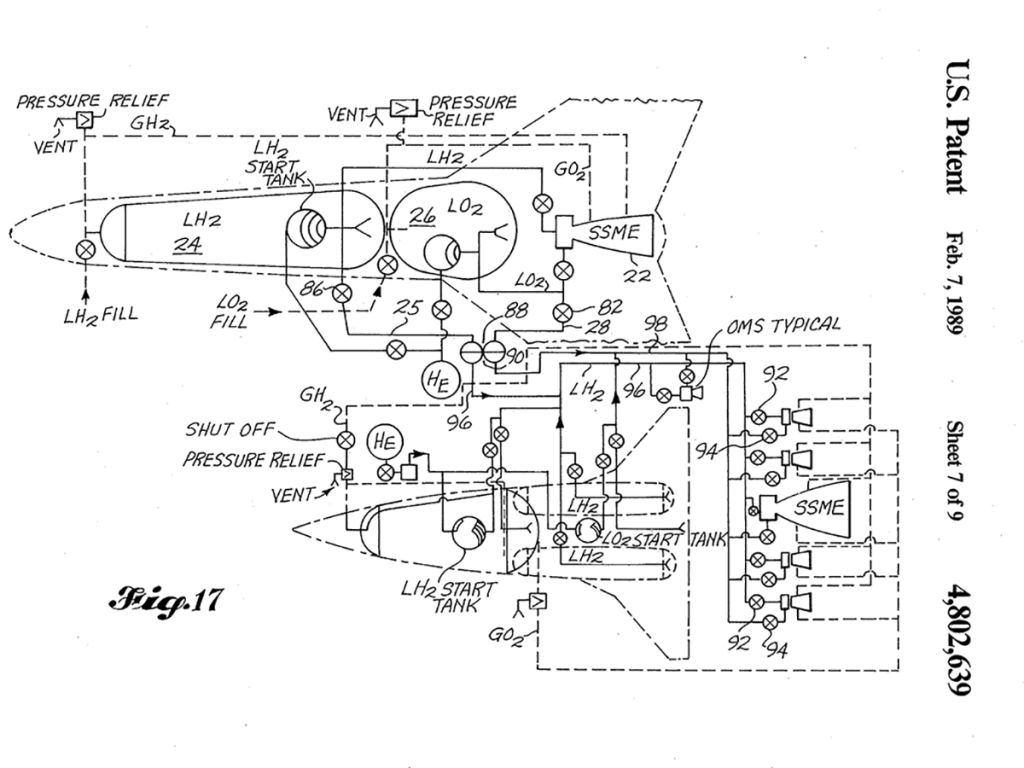
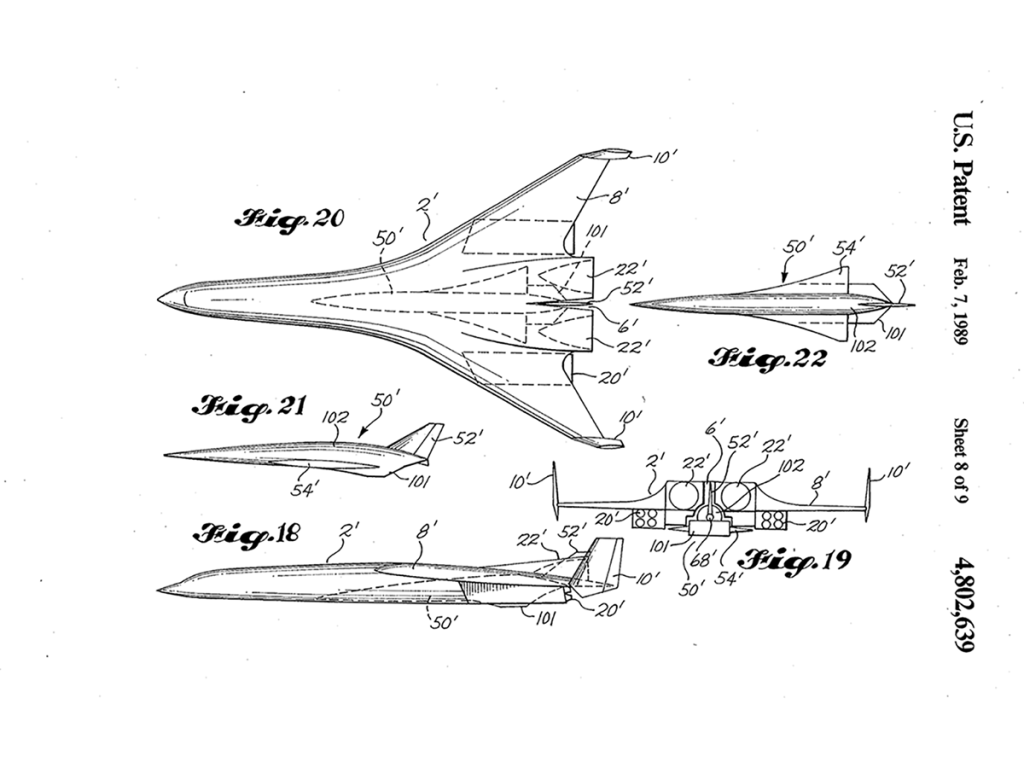
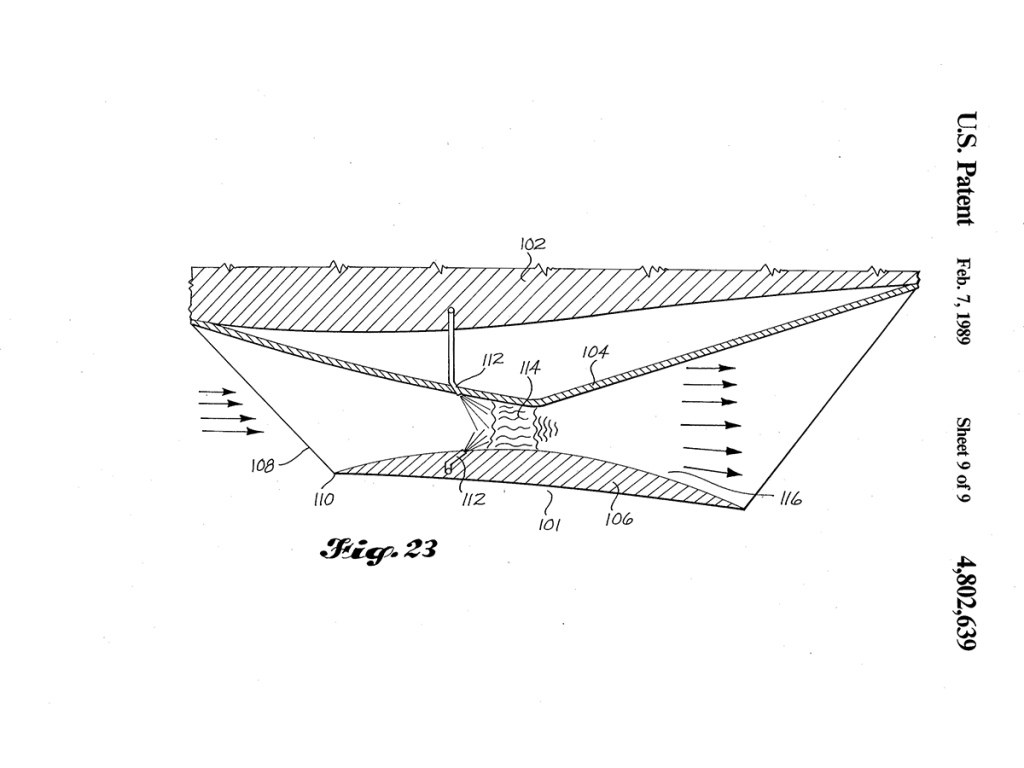
This invention is directed toward providing a transatmospheric launch system that is essentially totally reusable, provides wide flexibility in choice of orbit, and may be launched quickly on short notice. The system of the invention is a two-stage horizontal takeoff and landing system. An orbiter vehicle (50) is integrated into the underside of an aircraft (2). Aircraft (2) has a cavity (4) opening aftwardly and downwardly to receive vehicle (50). Vehicle (50) and aircraft (2) are releasably connected by struts (30, 32). Aircraft (2) and vehicle (50) proceed to staging conditions under air breathing and then rocket power. Rocket engine (22) of aircraft (2) is throttled to produce a thrust differential with rocket engine (66) of vehicle (50). This differential causes vehicle (50) to automatically pivot away from aircraft (2) on struts (30, 32). After pivoting out of cavity (4), vehicle (50) is disengaged from struts (30, 32) and proceeds on its own to orbit. Aircraft (2) makes a conventional landing. Following reentry, vehicle (50) makes an unpowered horizontal landing. Separation is accomplished at a Mach number of about 3.3. In a second embodiment, the main engine of the orbiter (50′) is a scramjet (101) instead of a rocket.
FOR RELEASE: FIle: April 29, 1976 PHOTO NO. 76-11-373, 76-11C-569
This photograph is a government publication – not subject to copyright.
It may not be used to state or imply the endorsement by NASA or by any NASA employee of a commercial product, process or service, or used in any other manner that might mislead. Accordingly, it is requested that if this photograph is used in advertising, and other commercial promotion, layout and copy be submitted to NASA prior to release.
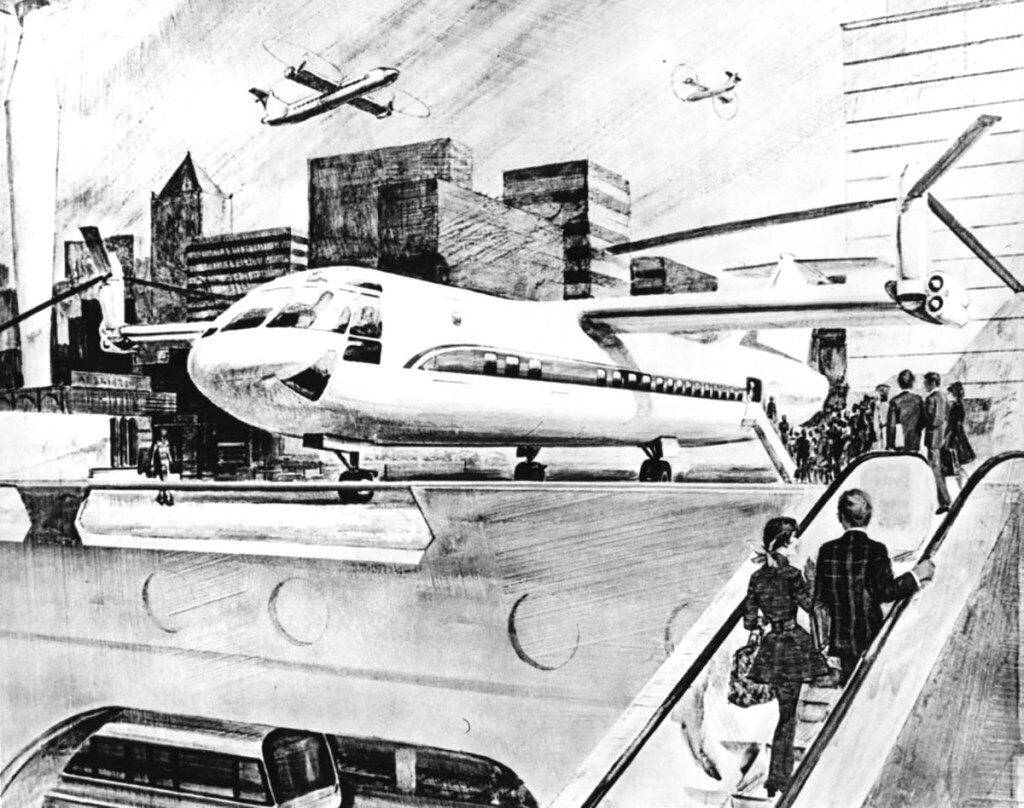
INTERCITY AIR TRANSPORTATION: The aircraft depicted in this picture is an advanced rotorcraft which is capable of quiet vertical take-off and landing from cities close to or within urban centers. Its large rotors would provide efficient lift in vertical flight and when re-oriented would act as large propellers in horizontal flight. Other VTOL concepts, which utilize large fans in place of rotors are equally promising and may prove more efficient over longer routes. These VTOL aircraft could provide both intraurban and interurban passenger service and serve as versatile high speed links to major hub airports. The development of such VTOL aircraft will require improvements in fuel efficiency, operating cost, noise levels and ride quality over present vehicles. This will require advances in all the basic aeronautical disciplines including, for example aerodynamics, control systems, propulsion, structural design and the use of advanced materials.
PHOTO CREDIT-NASA or National Aeronautics and Space Administration