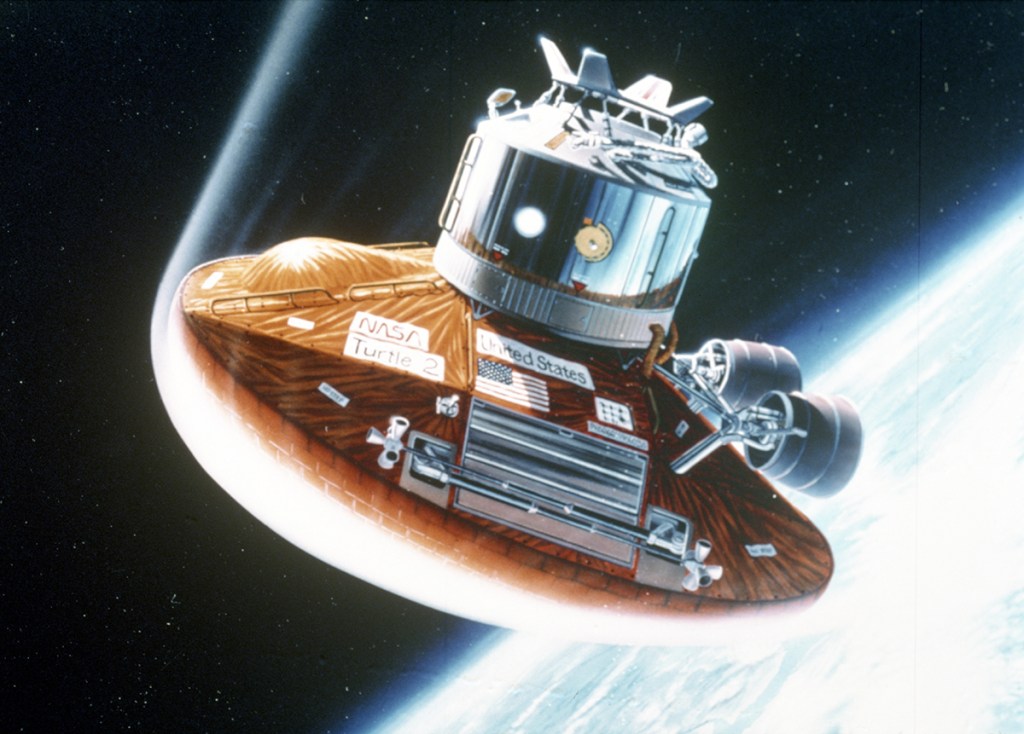
Image credit: Boeing
Image source: National Archives
Image credit: Boeing
Image source: National Archives
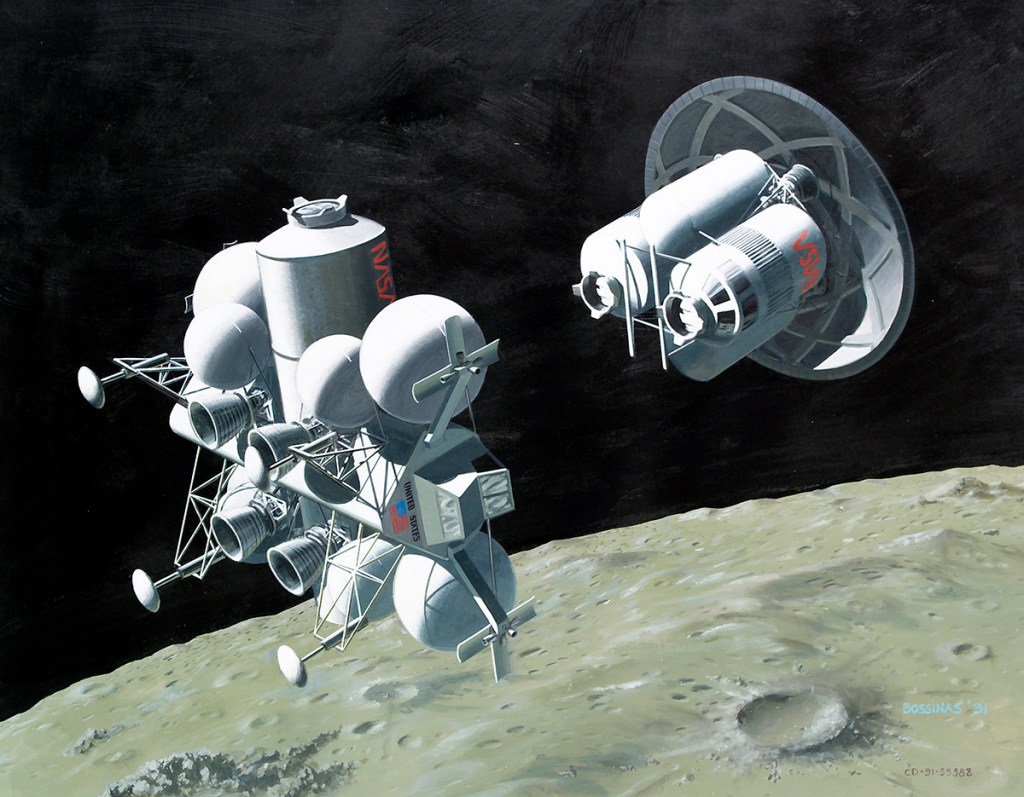
Image credit: NASA
Image source: DVIDS
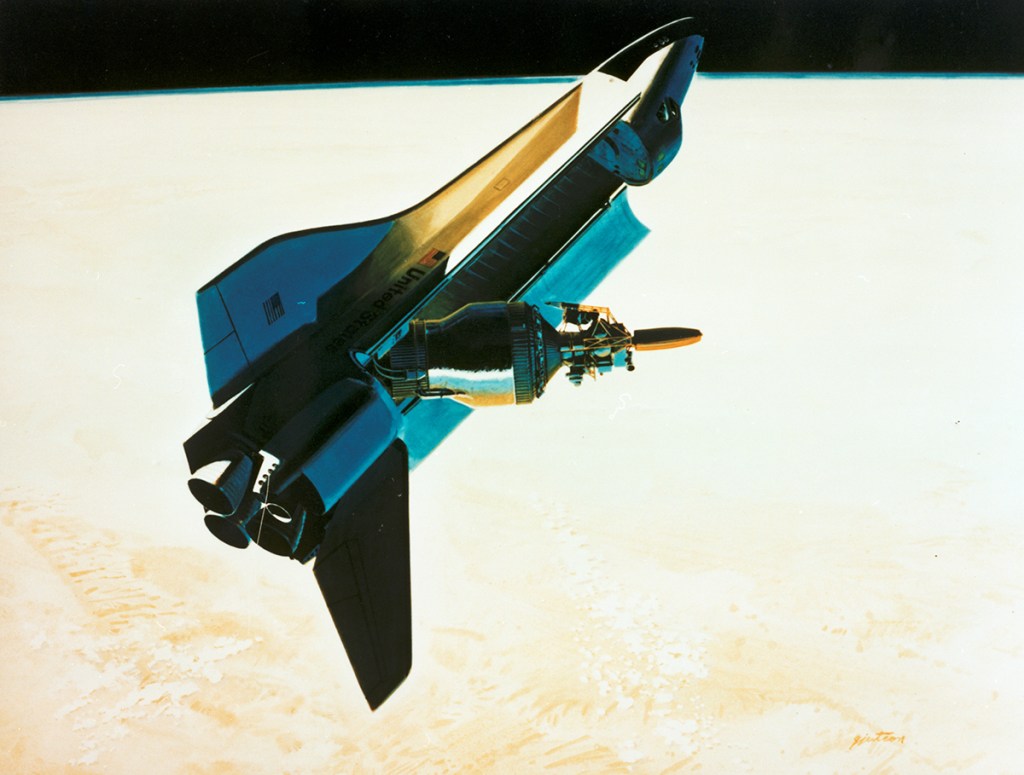
Image credit: Convair
Image source: National Archives
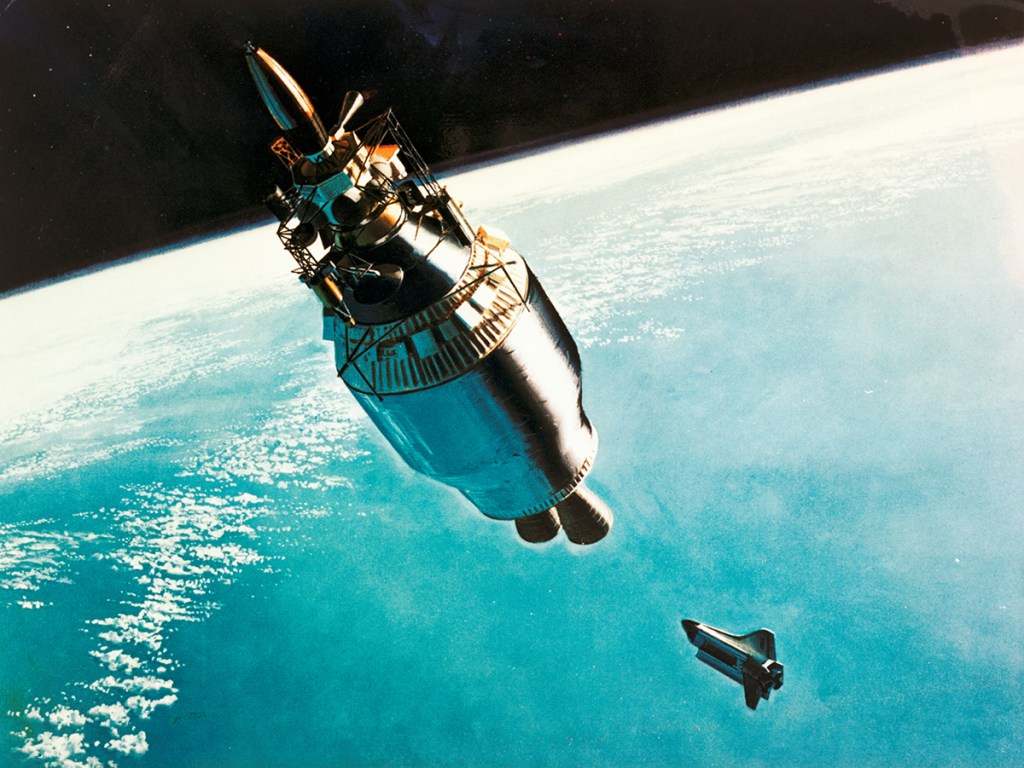
Image credit: Convair
Image source: National Archives
Image credit: Douglas
Image source: Mike Acs

Image credit: McDonnell Douglas
Image source: Drew Granston
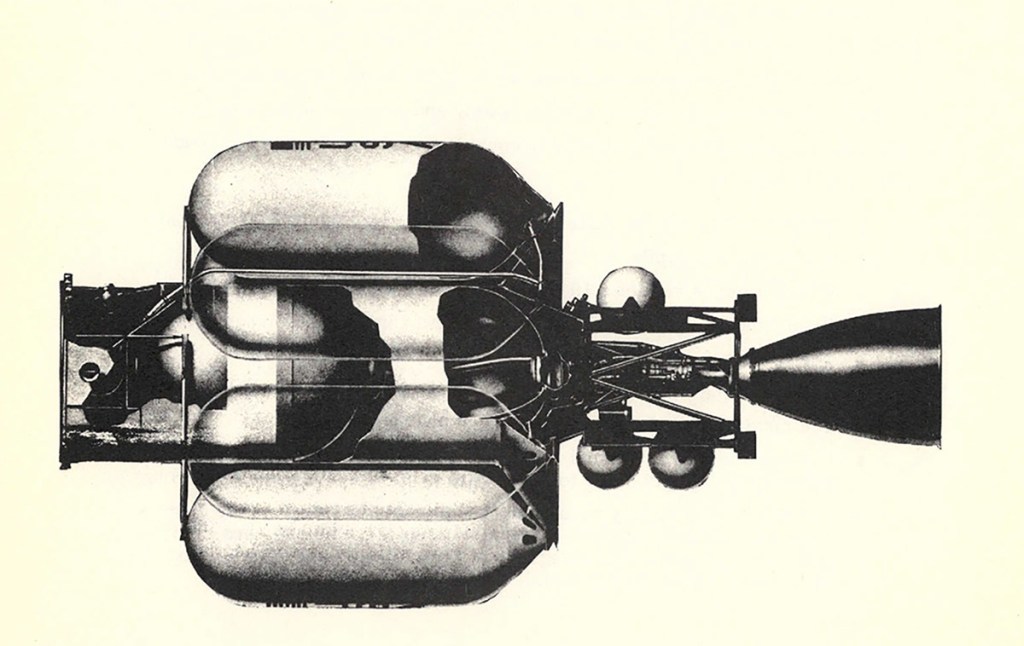
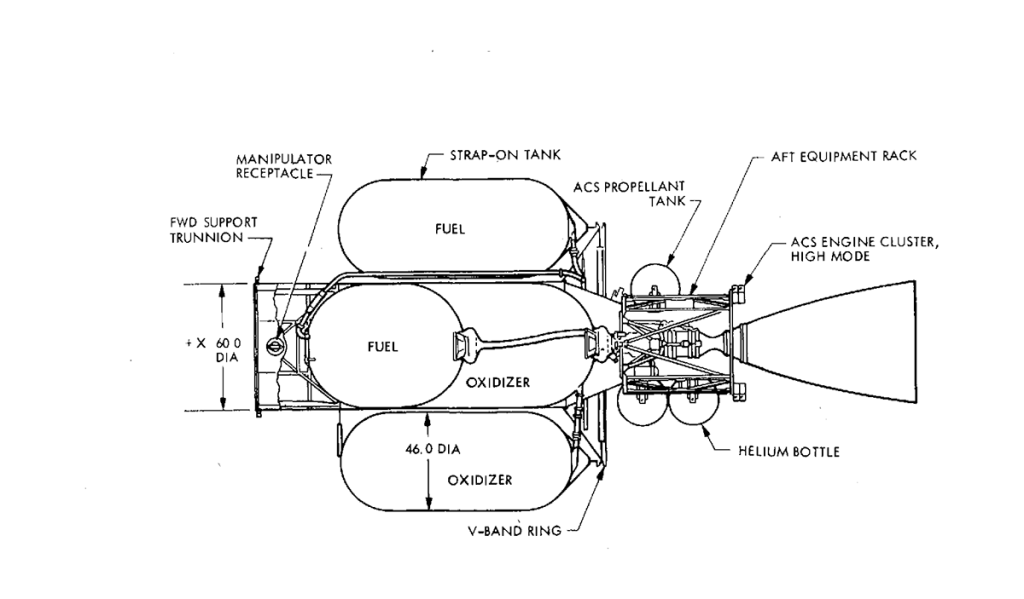
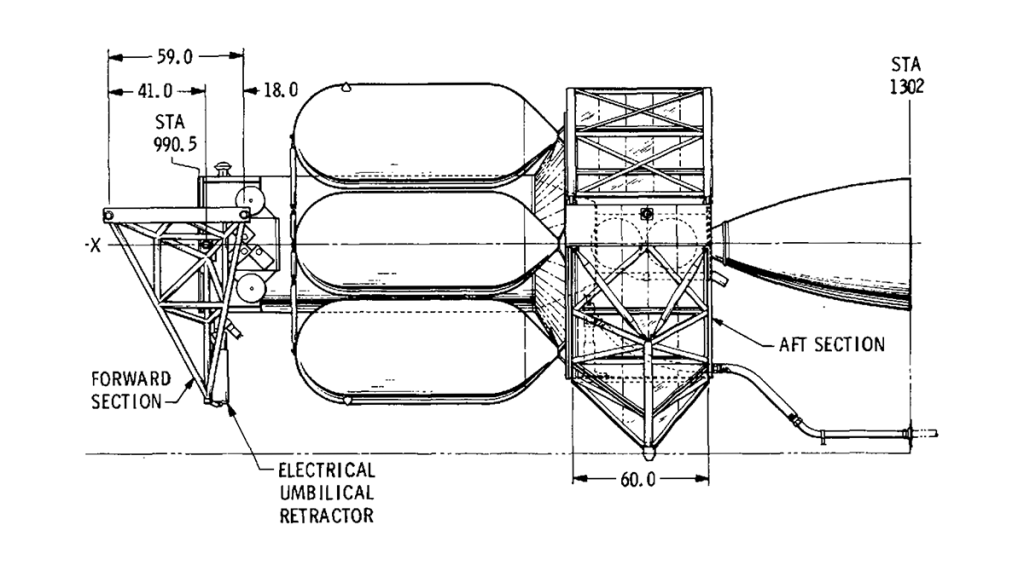
Image credit: Lockheed
File source: NASA NTRS
Image credit: Grumman
Image source: Cradle of Aviation Museum
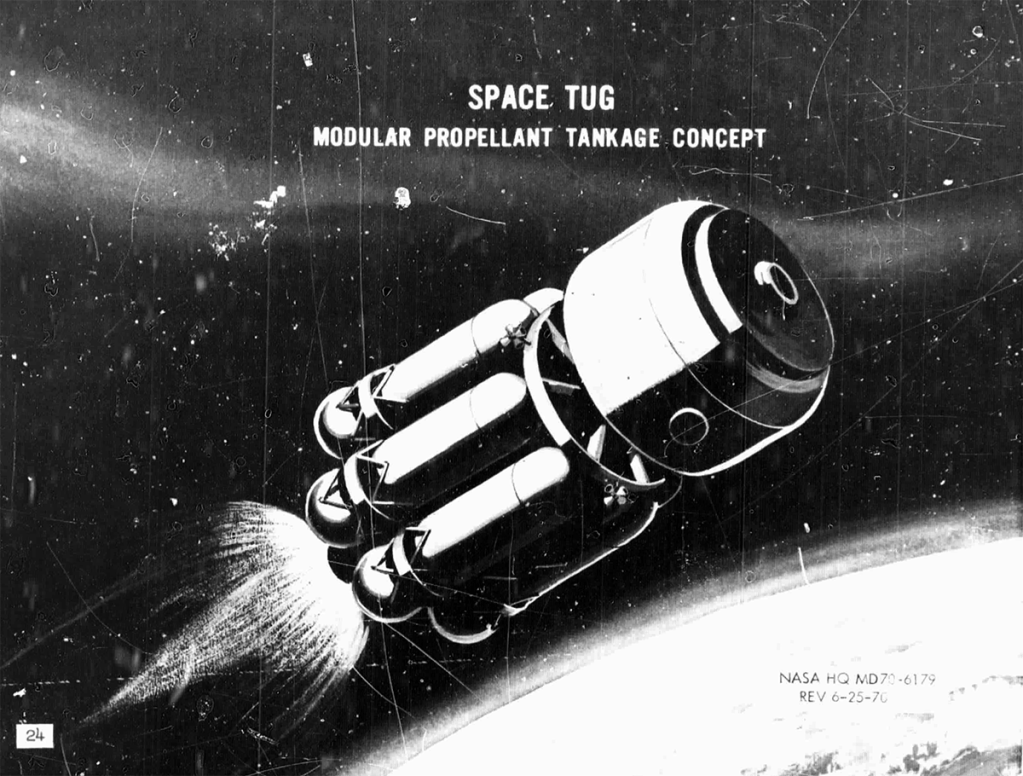
Shown on this chart is an artist’s rendition of a tug configuration which is made up of individual propellant modules and thus provides extreme operational flexibility. The stage is designed to be compatible with a variable number of propellant modules which contain oxidizer, fuel and pressurants. The basic propulsion platform includes engines, control, avionics and primary structure. In concept, the configuration has the option of staging tanks for extremely high performance.
Although this modular concept is extremely versatile, it has a lower mass fraction than one which is designed for a single performance capability.
Image credit: NASA
File source: NASA NTRS
A concept for using the spent external tank from a National Space Transportation System (NSTS) to derive a lunar habitat is described. The external tank is carried into low Earth orbit (LEO) where the oxygen tank-intertank subassembly is separated from the hydrogen tank, berthed to Space Station Freedom and the subassembly outfitted as a 12-person lunar habitat using extravehicular activity (EVA) and intravehicular activity (IVA). A single launch of the NSTS orbiter can place the external tank in LEO, provide orbiter astronauts for disassembly of the external tank, and transport the required subsystem hardware for outfitting the lunar habitat. An estimate of the astronauts’ EVA and IVA is provided. The liquid oxygen-intertank modifications utilize existing structures and openings for man access without compromising the structural integrity of the tank. The modifications include installation of living quarters, instrumentation, and an air lock. Feasibility studies include micrometeoroid and radiation protection, thermal control, environmental control and life support, and propulsion. The converted hmar habitat is designed for unmanned transport and autonomous soft-landing on the lunar surface without need for site preparation.
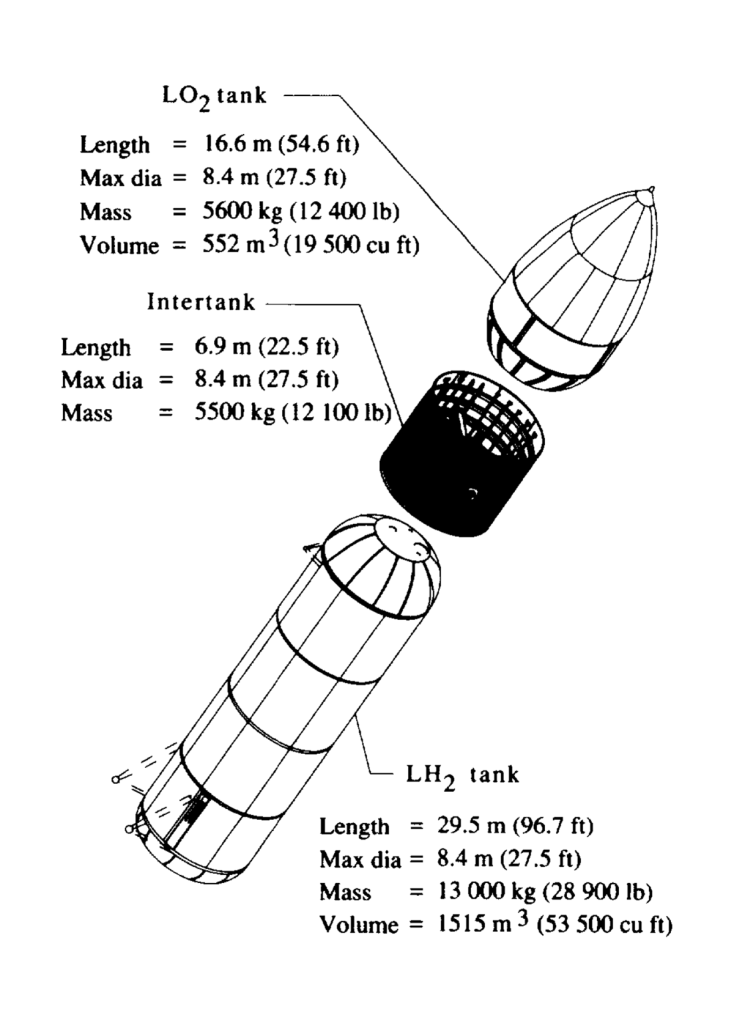
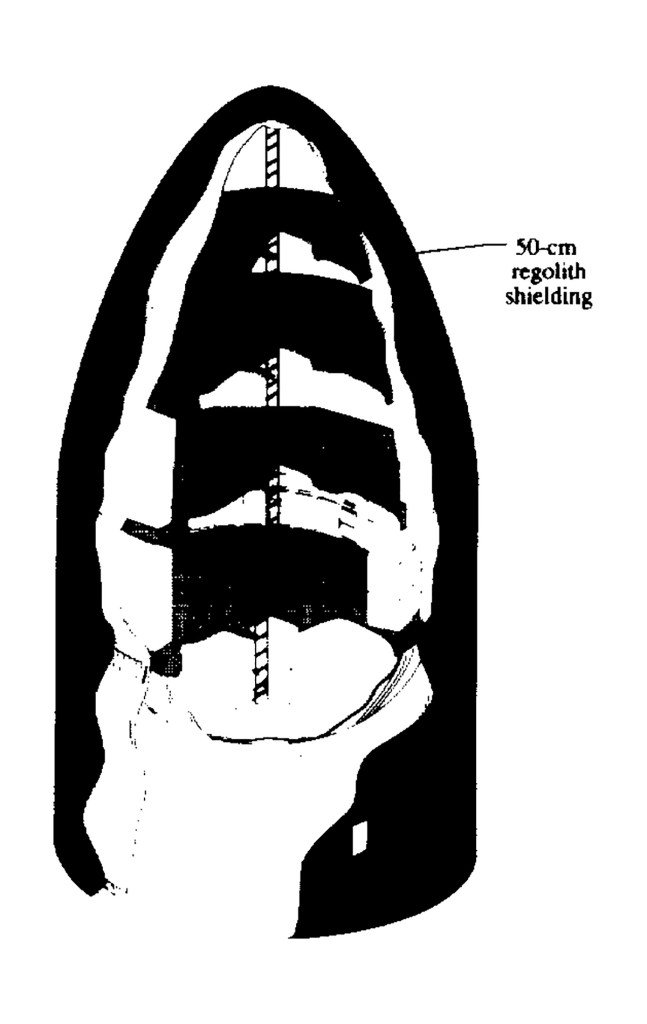
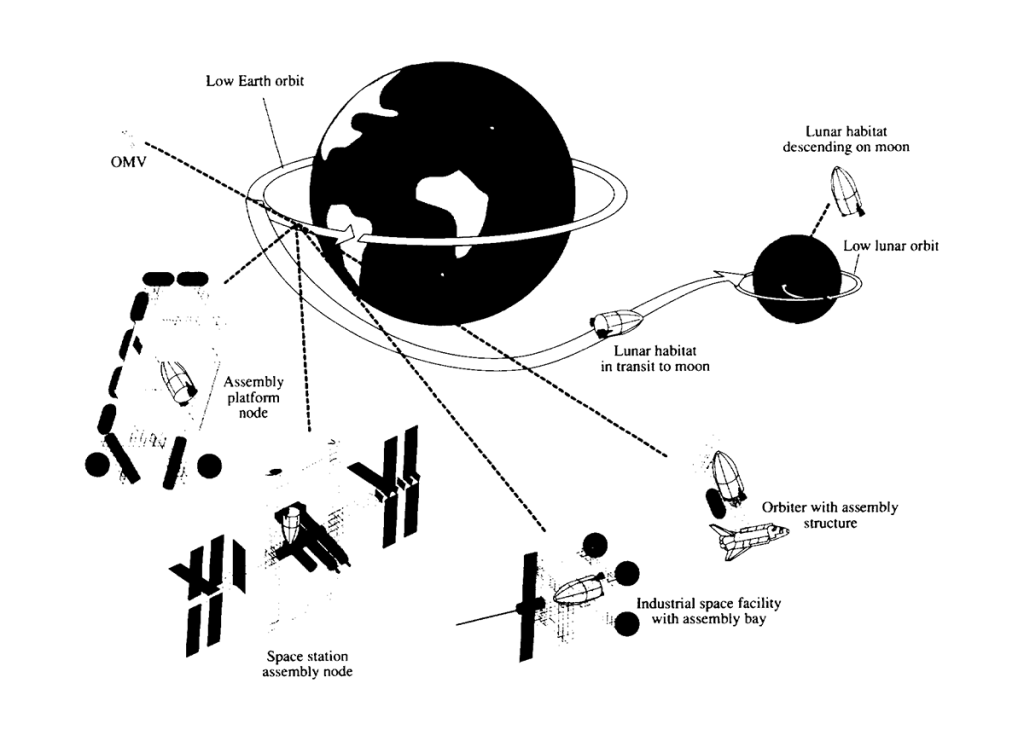
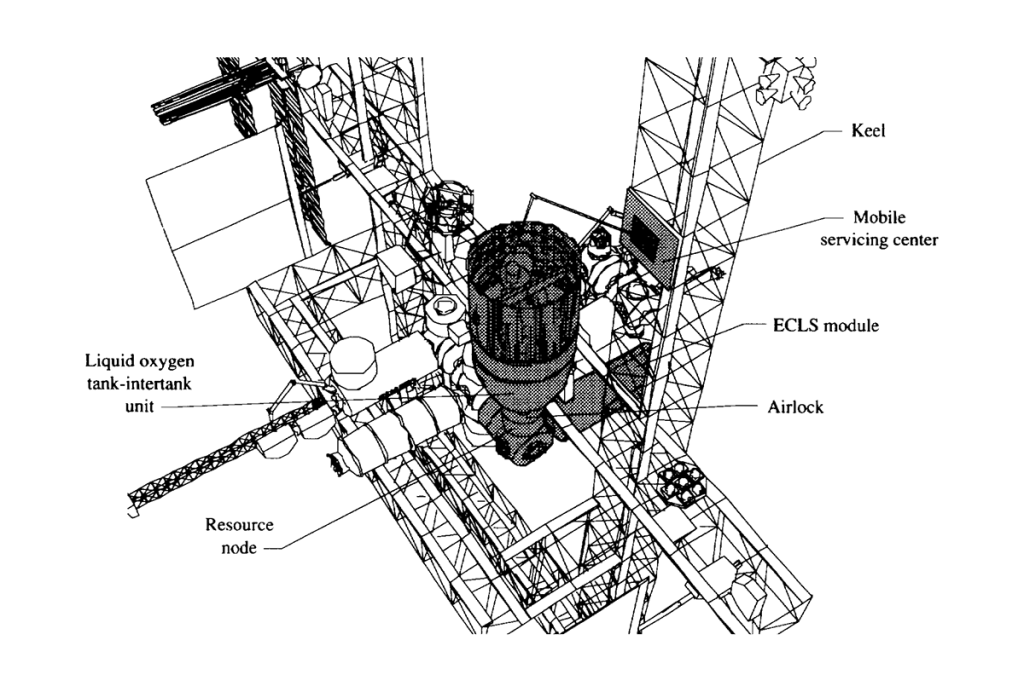
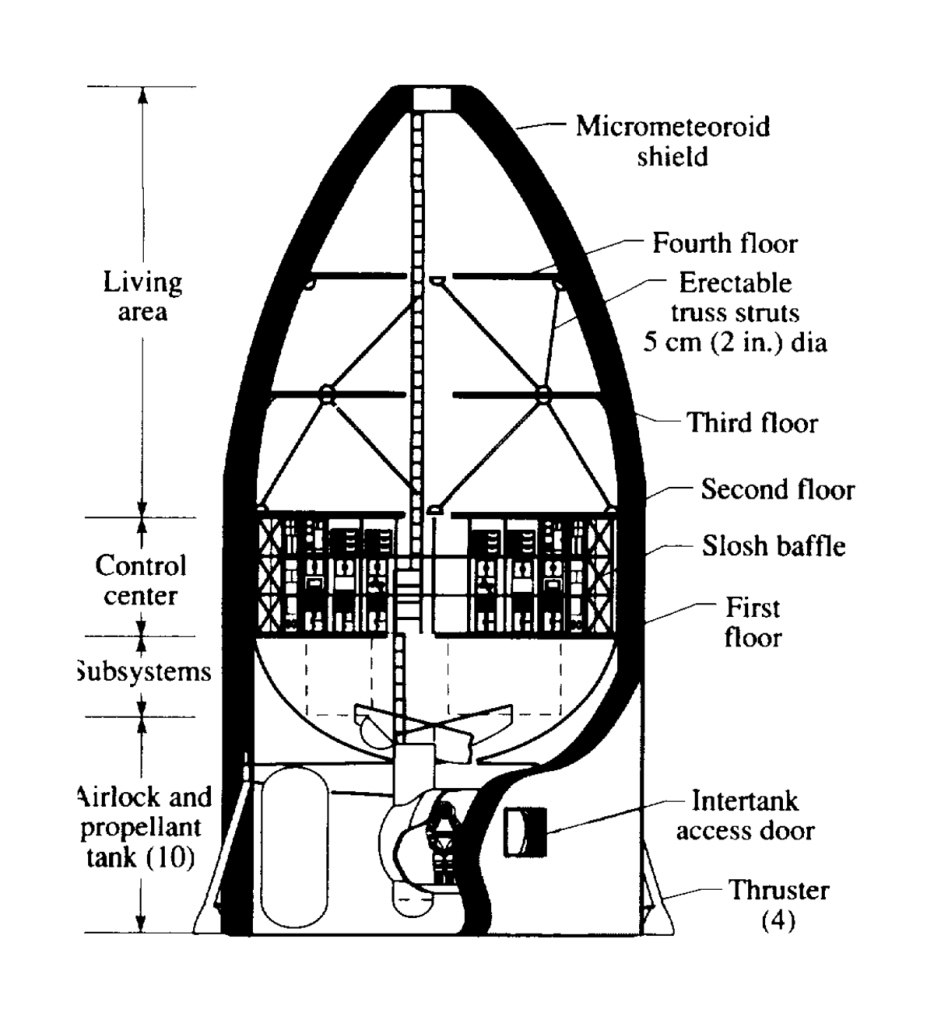
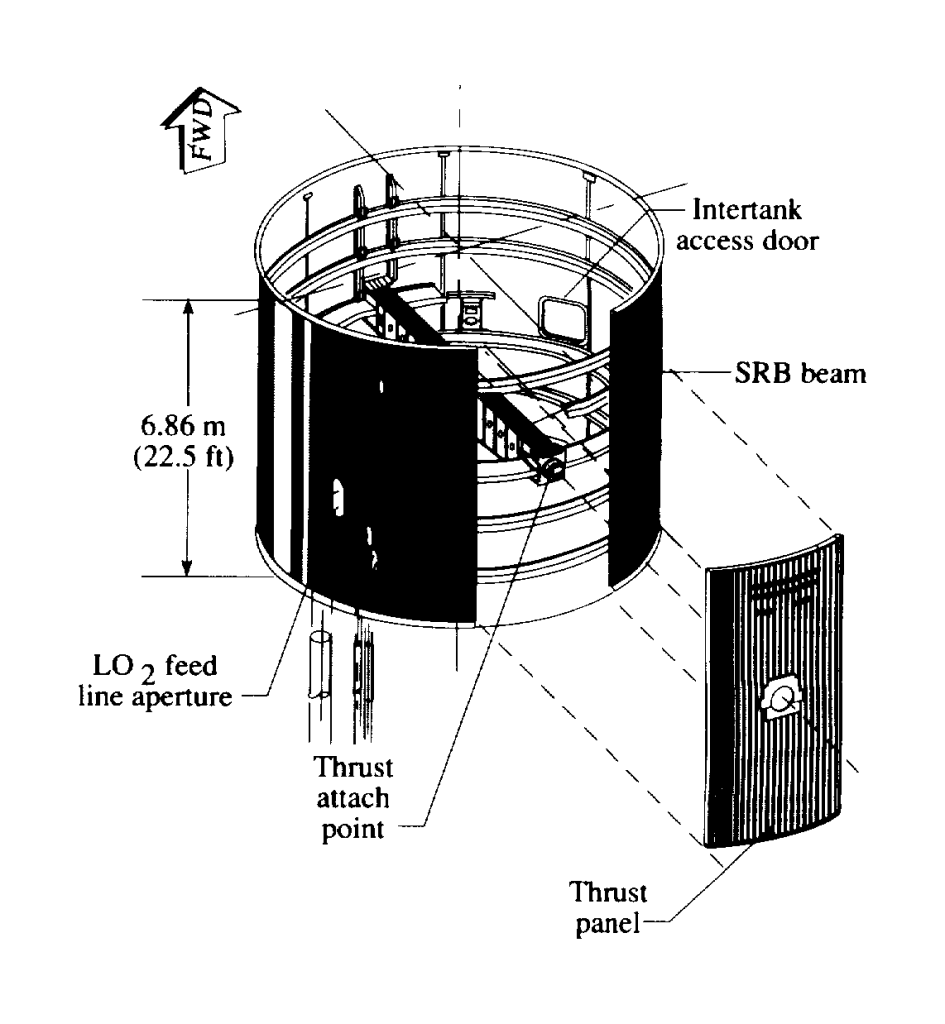
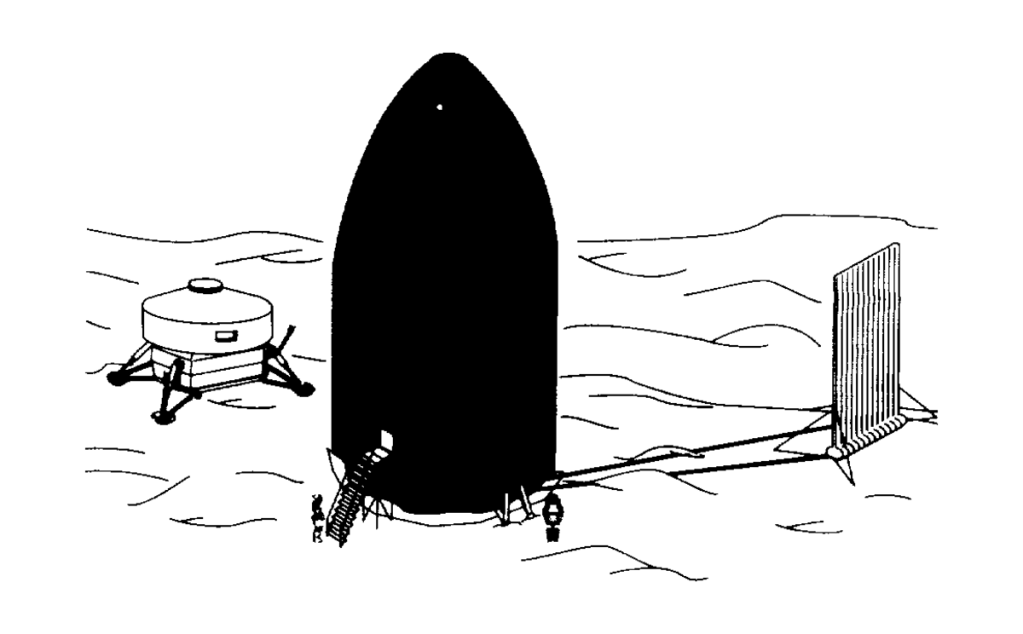
Image credit: NASA
Image source: NASA NTRS
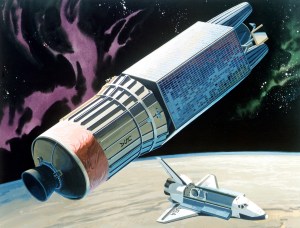
Image credit: NASA
Image source: National Archives

Image credit: General Dynamics
Image source: SDASM Archives
