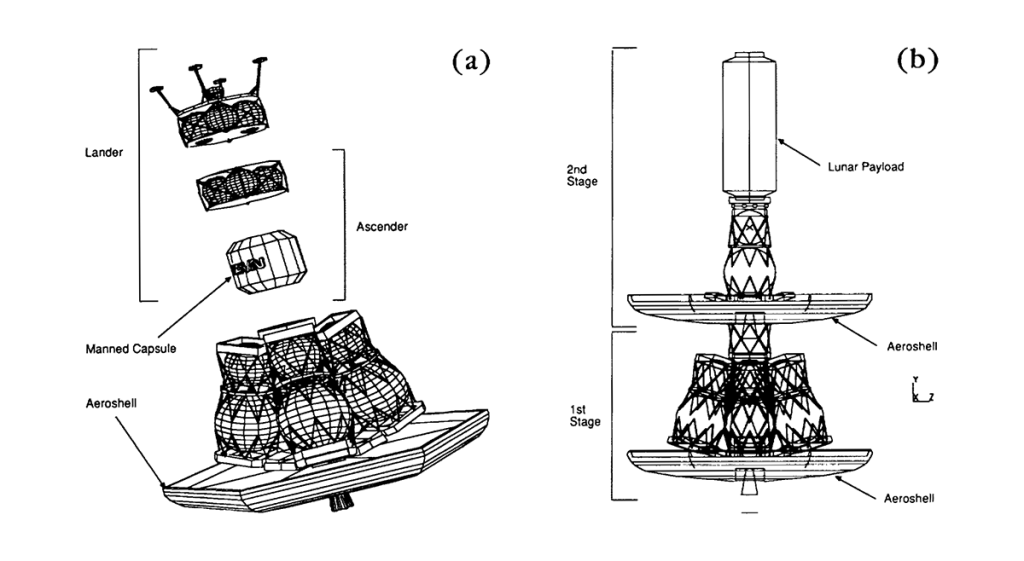
Orbital transfer vehicle (OTV) line drawings (a) one-stage manned and (b) two-stage cargo.
Image credit: NASA
Image source: NASA NTRS
Orbital transfer vehicle (OTV) line drawings (a) one-stage manned and (b) two-stage cargo.
Image credit: NASA
Image source: NASA NTRS
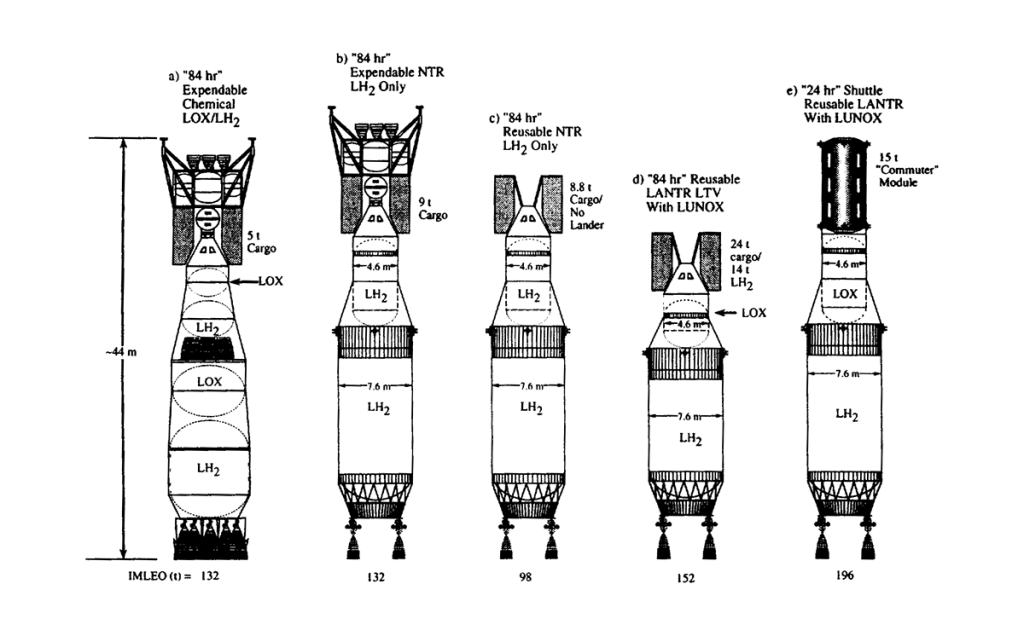
Relative Size/Mass of Chemical and NTR Vehicles Without and With LOX Augmentation
Image credit: NASA
Image source: NASA NTRS
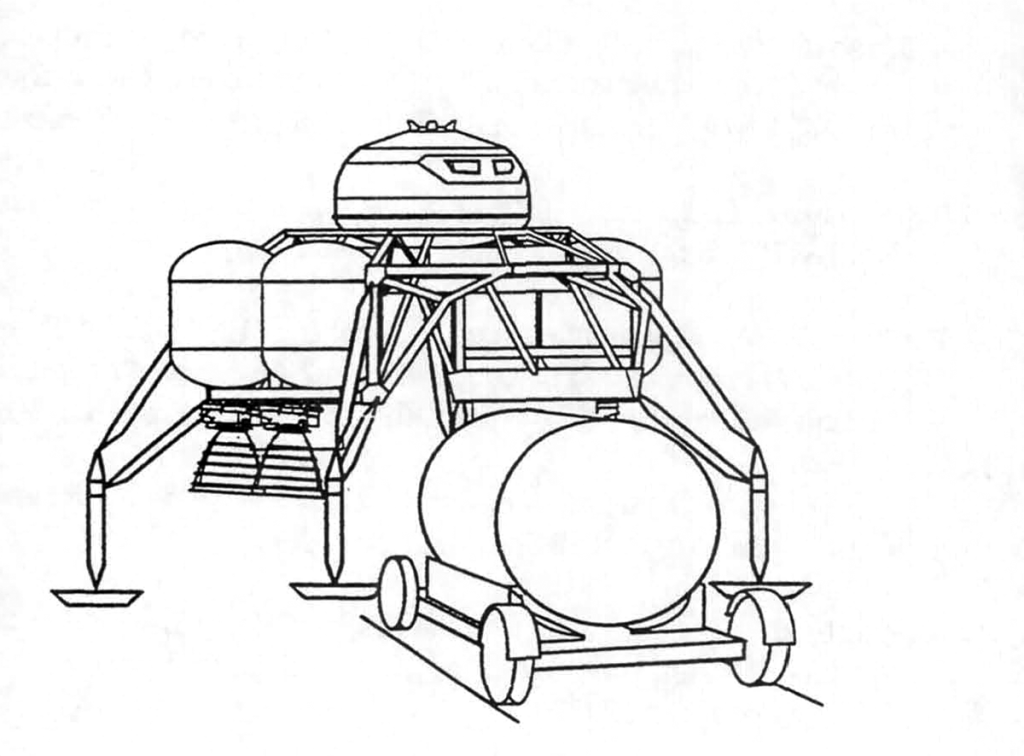
Image credit: NASA
Image source: NASA NTRS
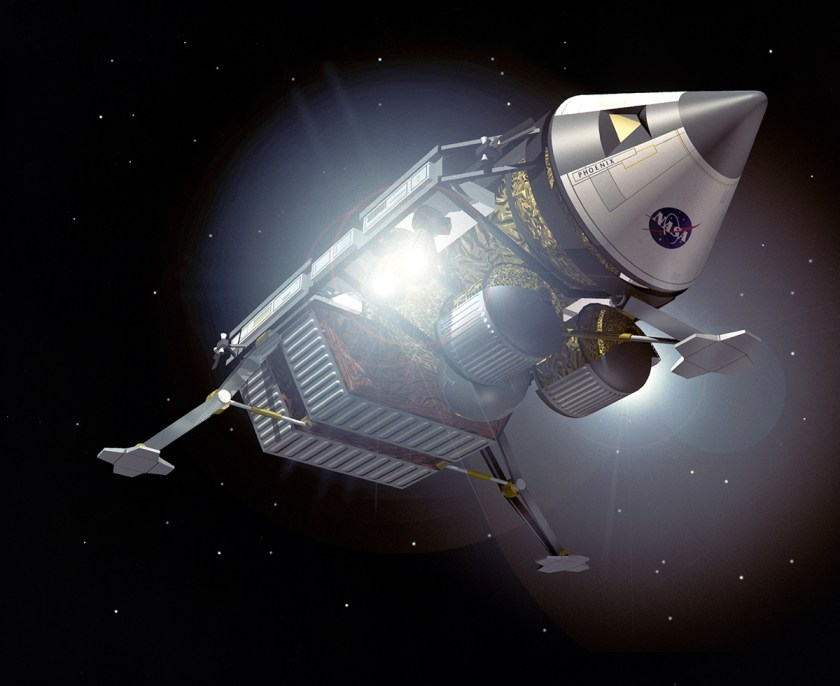
S93-45589 (1993) — (Artist’s concept of possible exploration programs.) A crew of four descends to the lunar surface in a spacecraft designed to utilize oxygen produced on the Moon for propellant. Because of the high performance advantages of in situ propellants, the spacecraft does not need to rendezvous with a second spacecraft in lunar orbit. This image was produced for NASA by John Frassanito and Associates. Technical concepts from NASA’s Planetary Projects Office (PPO), Johnson Space Center (JSC).
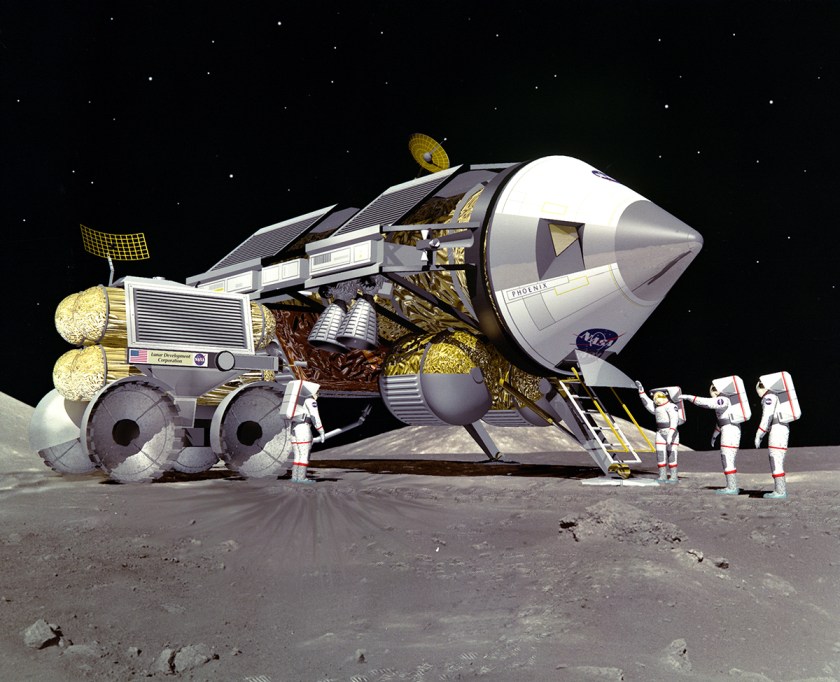
S93-45592 (1993) — (Artist’s concept of possible exploration programs.) The lunar crew refills the propellant tanks on their spacecraft with oxygen produced on the Moon. This allows them to return directly to Earth, reentering the atmosphere in the conical crew module, and touching down at a prepared landing site. This image was produced for NASA by John Frassanito and Associates. Technical concepts from NASA’s Planetary Projects Office (PPO), Johnson Space Center (JSC).
Image credit: John Frassanito and Associates
Image source: NASA Johnson
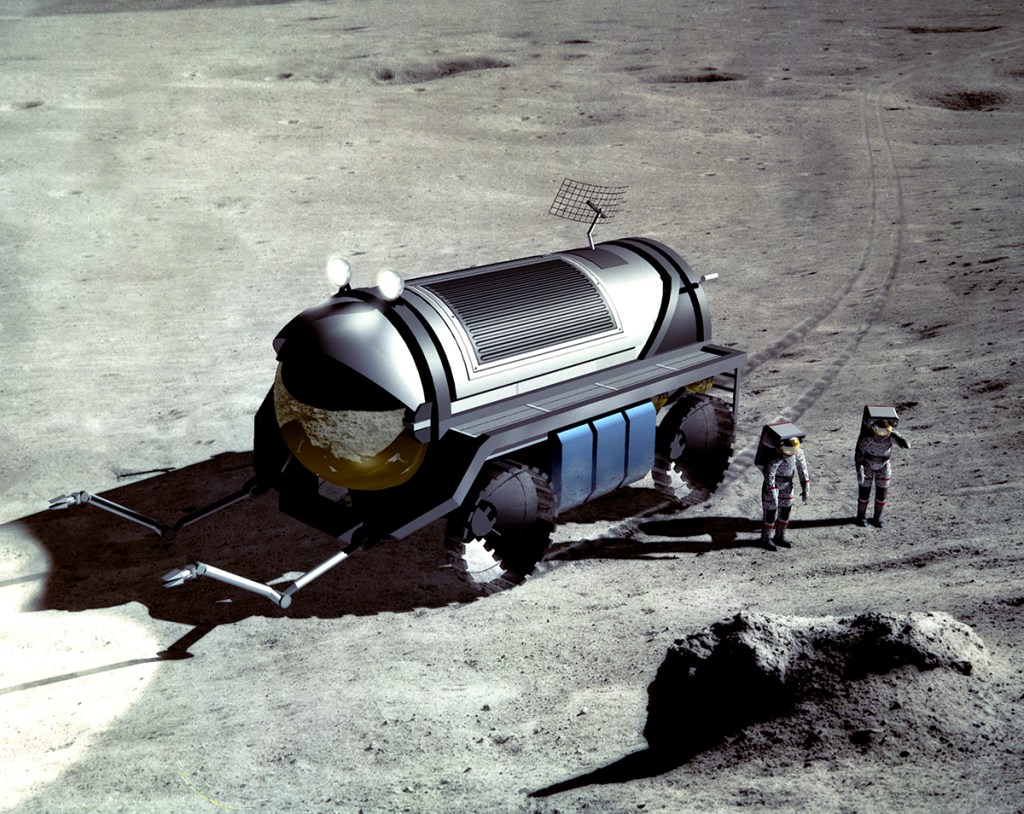
S93-45583 (1993) — (Artist’s concept of possible exploration programs.) Pressurized surface rovers allow lunar explorers to extend their travel capabilities far beyond the limitations imposed by their space suits. The crew can service remote facilities, such as lunar telescopes, and conduct long-range geological traverses. This image was produced for NASA by John Frassanito and Associates. Technical concepts from NASA’s Planetary Projects Office (PPO), Johnson Space Center (JSC).
Image credit: John Frassanito and Associates
Image source: NASA Johnson
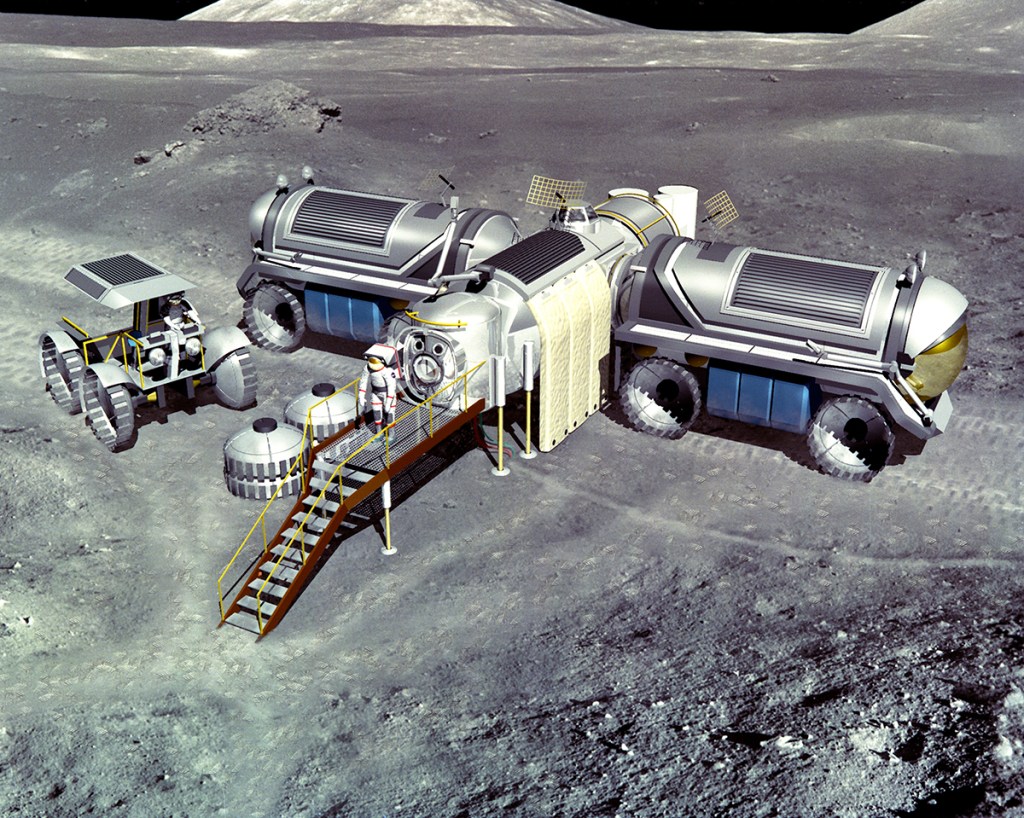
Image credit: John Frassanito and Associates
Image source: NASA Johnson
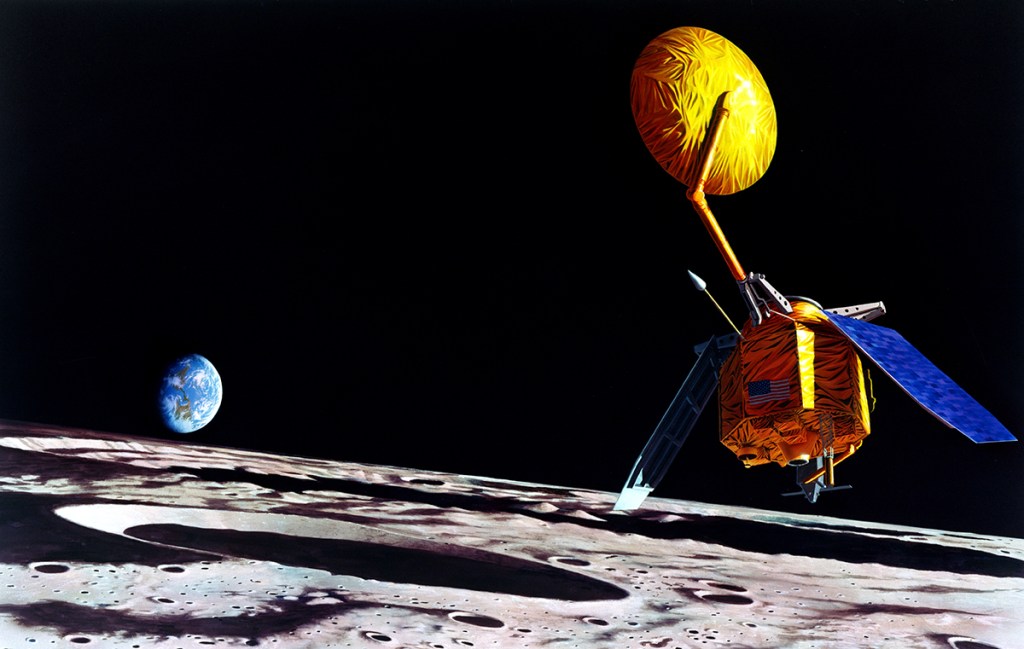
S95-01072 (January 1995) — This artwork is part of a series of depiction’s of proposed projects involving the National Aeronautics and Space Administration (NASA). The Lunar Discovery Orbiter (LDO) is depicted skimming just 20 kilometers over the lunar surface as it approaches Amundsen, a large terraced crater near the Moon’s south pole. Shadows in the crater and in nearby areas may conceal deposits of ice permanently shadowed from the Sun’s rays but quantifiable with LDO’s instruments. LDO is expected to accomplish the first high-resolution global survey of the Moon. Developed by the University of Arizona, the Boeing Defense and Space Group and NASA’s Johnson Space Center (JSC), Houston, Texas, this mission addresses the fundamental questions in lunar and planetary science and prepares for future exploration and use of the Moon. This artwork is a painting done by Pat Rawlings, of SAIC, for NASA.
Image credit: NASA
Image source: NASA Johnson
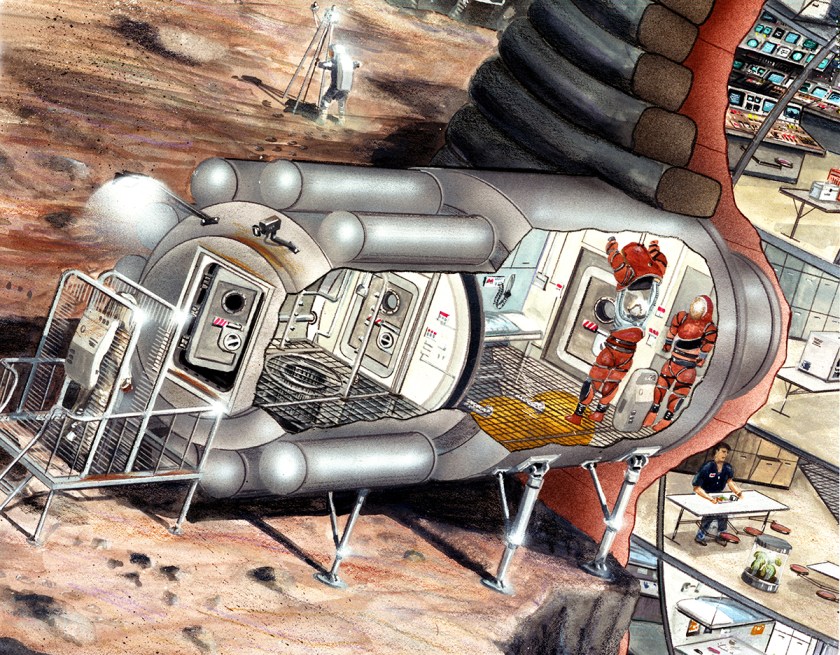
S89-20088 (July 1989) — With a number of studies ongoing for possible lunar explorations, many concepts for living and working on Earth’s natural satellite have been examined. This art concept reflects the evaluation and study at JSC by the Man Systems Division and Johnson Engineering personnel. A major concern of planners is the fine dust which covers the lunar surface and collects easily on astronauts garments, as evidenced by six crews of Apollo moon explorers. This special annex to the 16-meter diameter inflatable habitat (depicted in S89-20084/85) provides possible solutions to the dust problems, according to teams studying possible lunar expeditions. As much dust as possible must be removed, they say, before re-entering the habitat. The astronauts might pass through wickets (far left) which remove much of the dust. A performated metal “porch” would allow dust to fall through. Once inside the dust lock (center) the astronauts would remove their white coveralls. This outer garment would provide an extra layer of dust control and protection for the precision moving joints of the space suit from gritty dust. An air shower could remove remaining dust with strong jets of air. An astronaut at right, after having removed as much dust as possible, would be able then to move into the airlock to doff his suit. The airlock could accommodate up to four astronauts at one time. Suits could be stored there when not in use.
Image credit: NASA
Image source: NASA Johnson
Selected plates from:
(NASA-TM-102999)
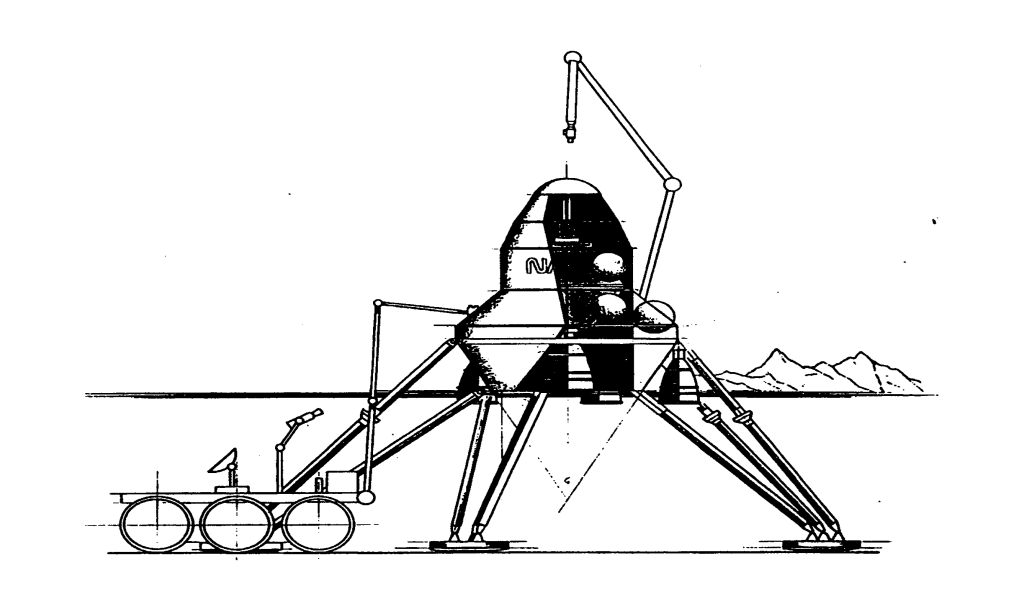
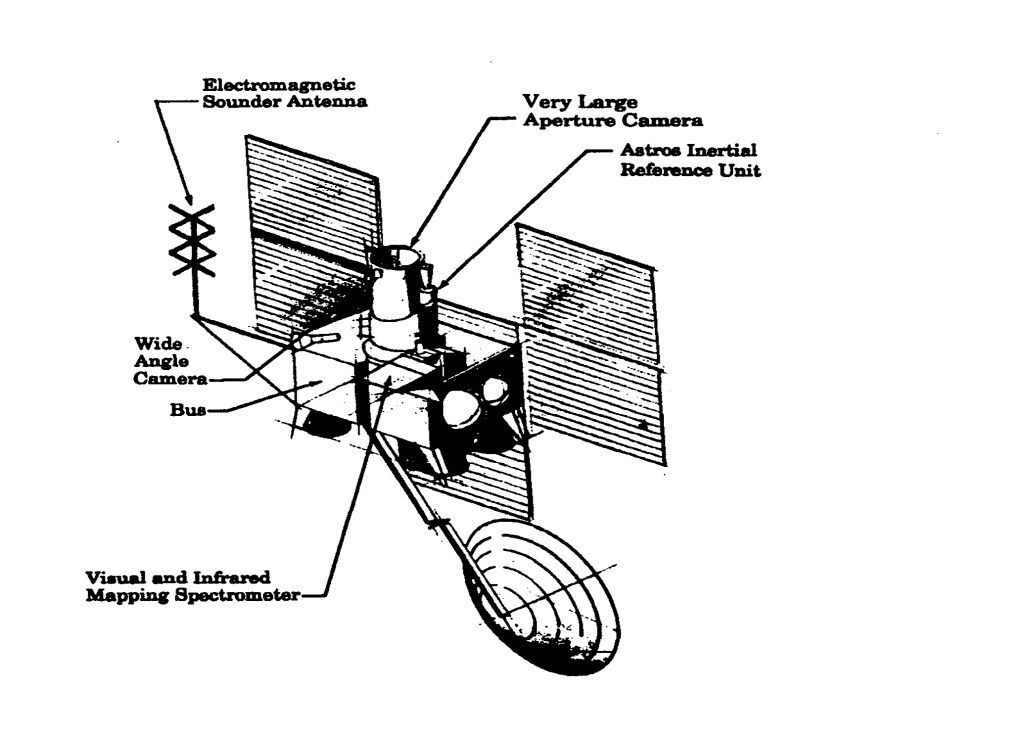
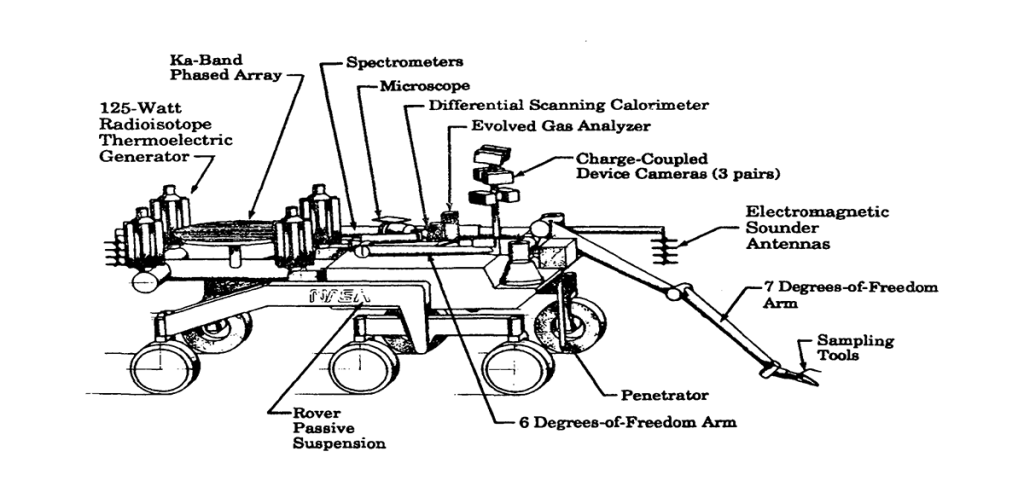
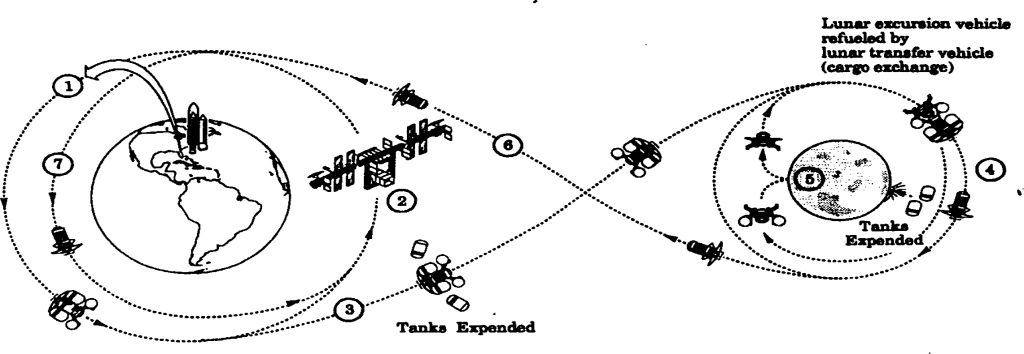
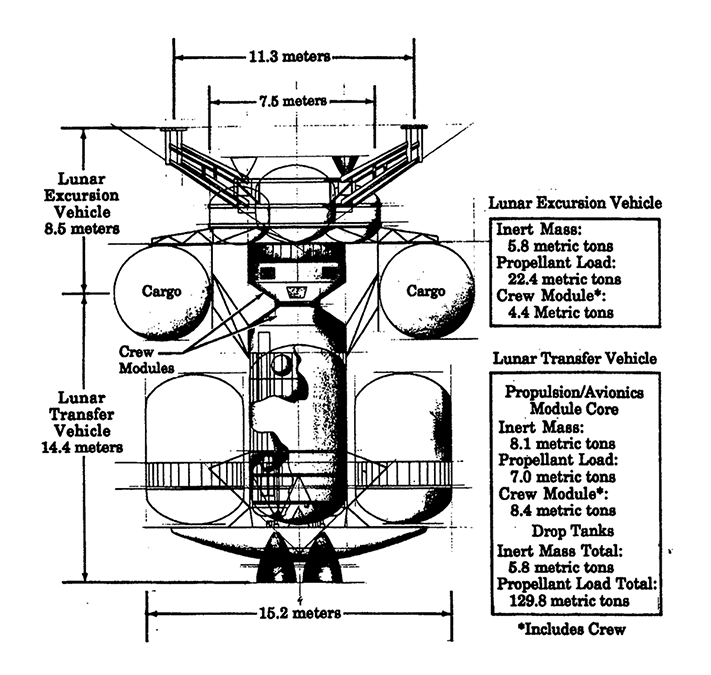
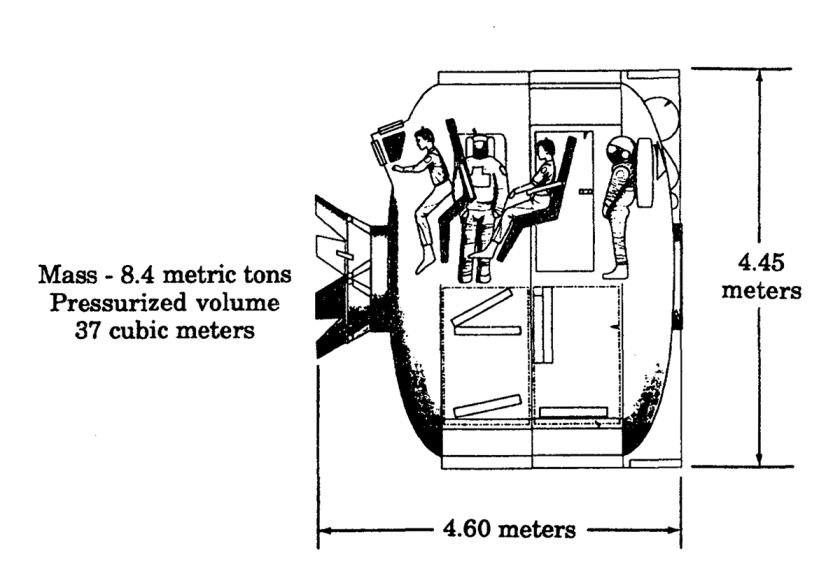
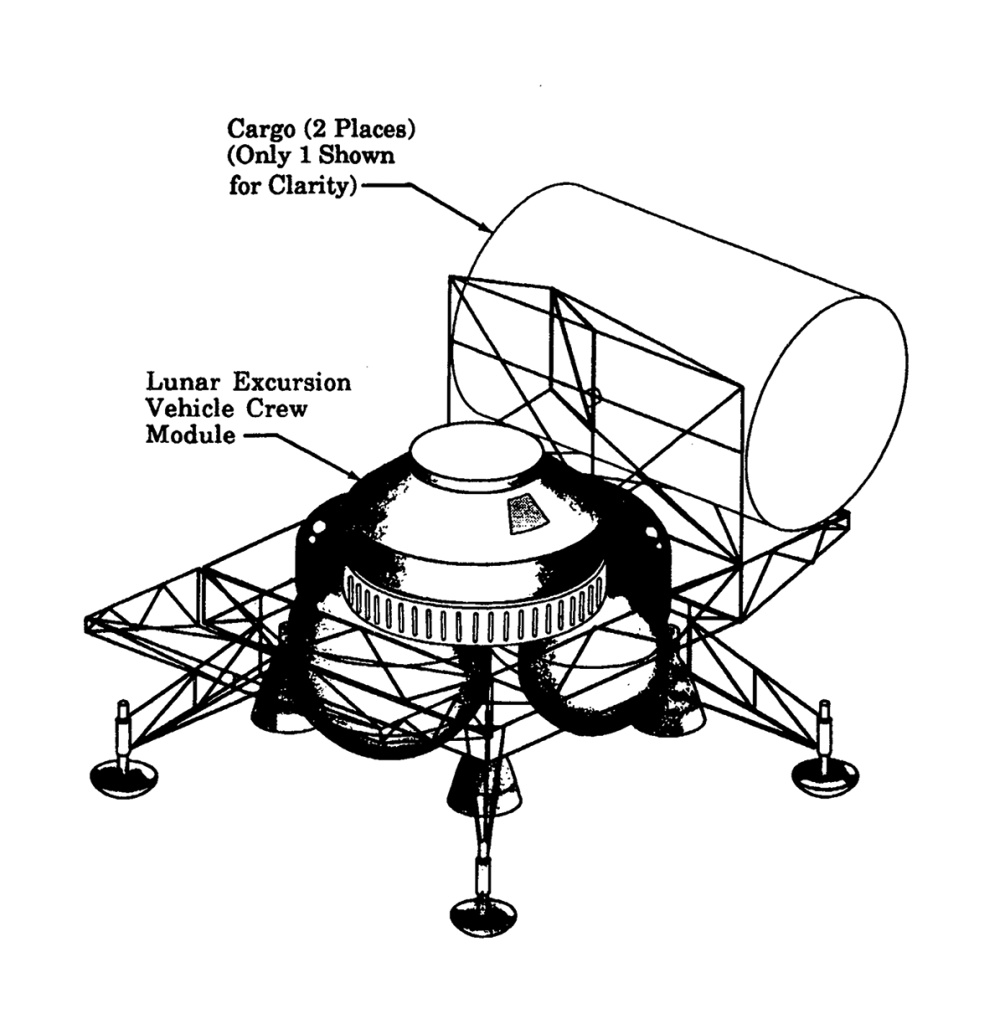
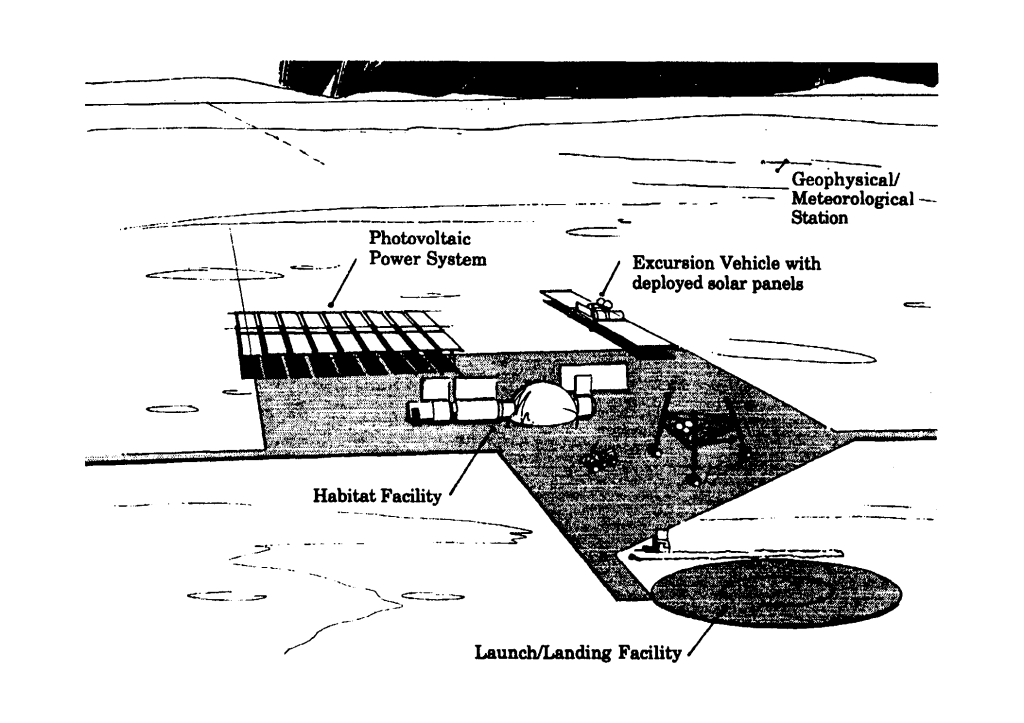
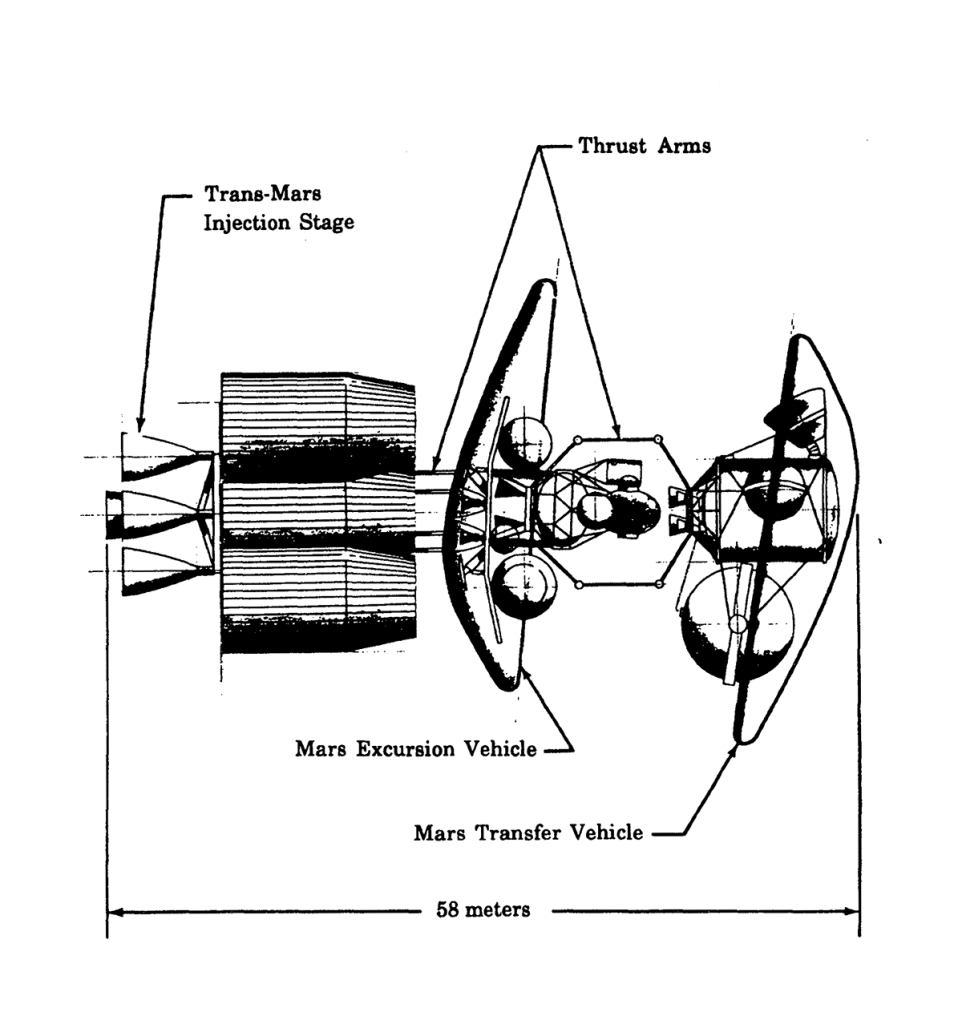
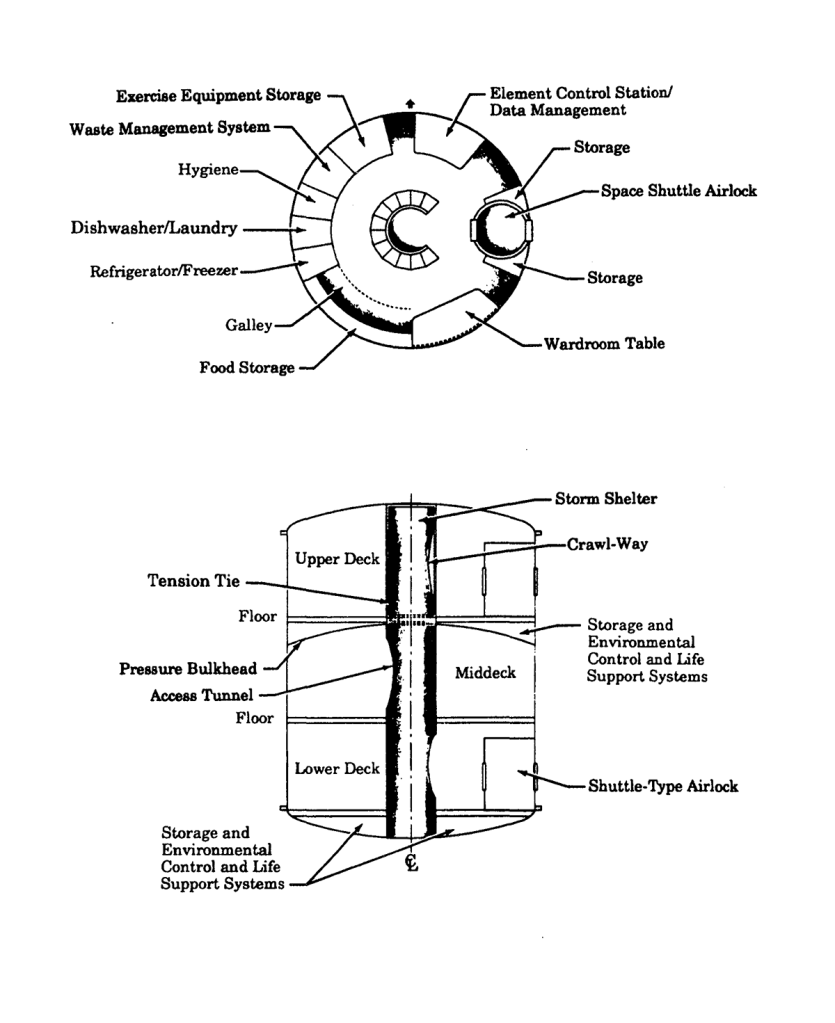
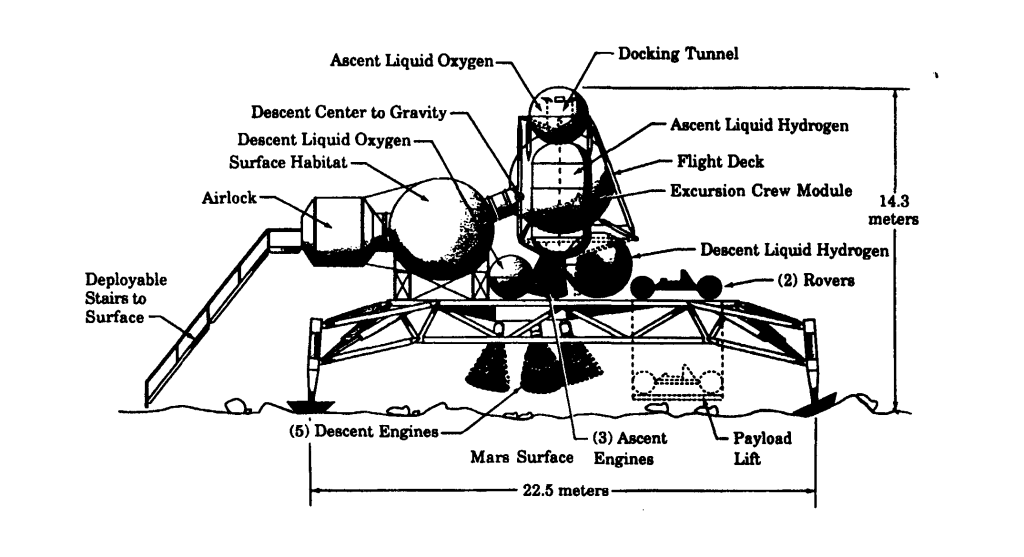
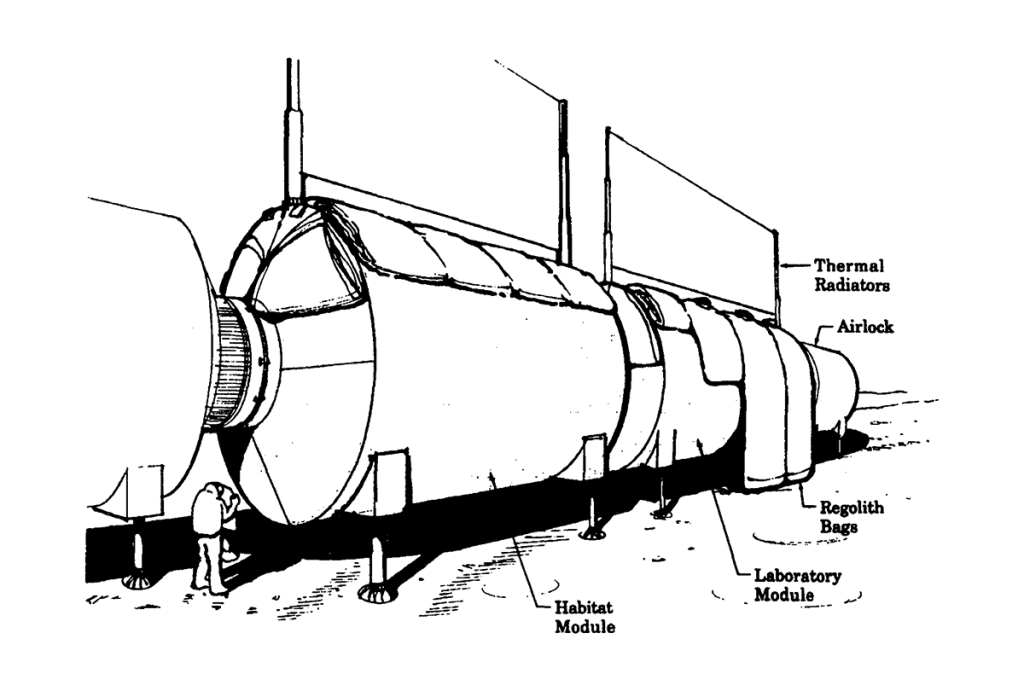
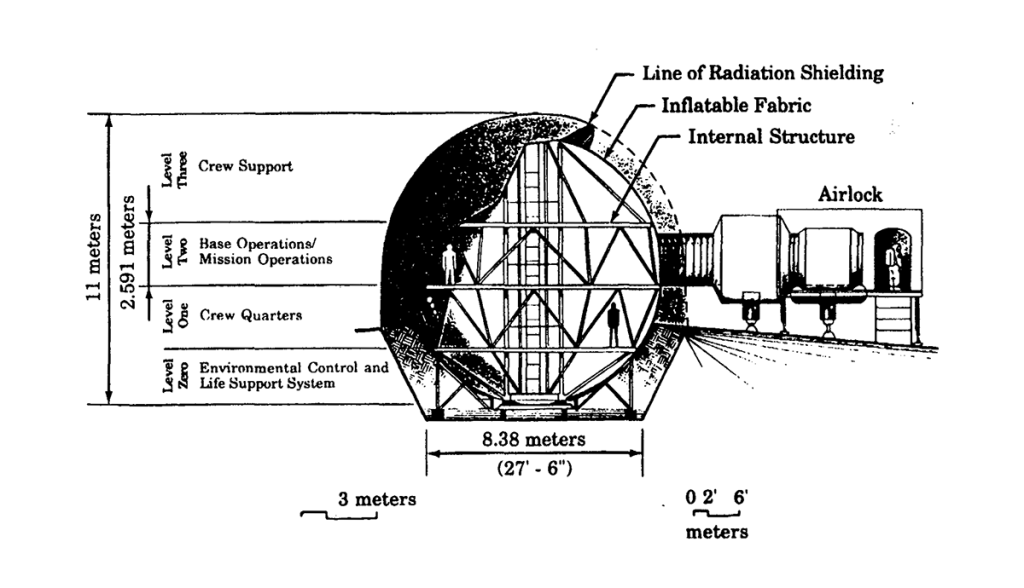
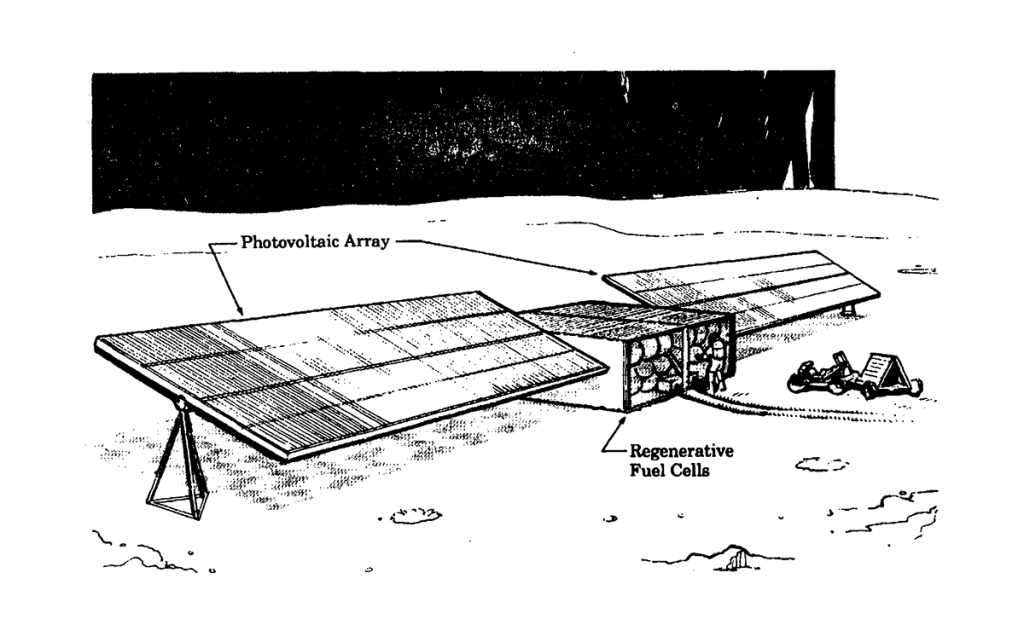
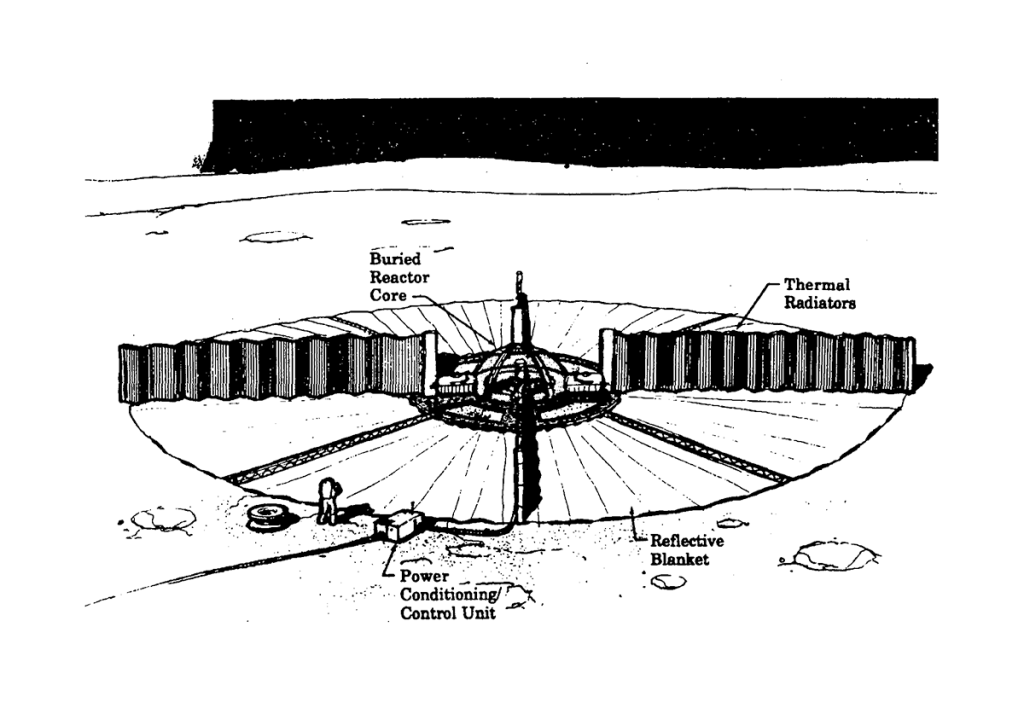
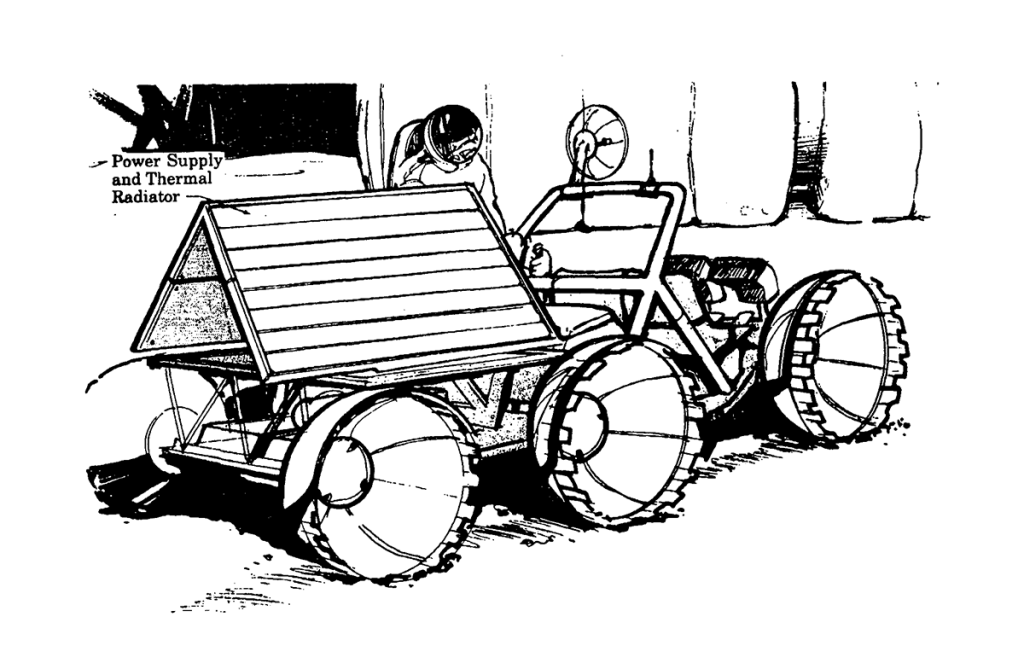
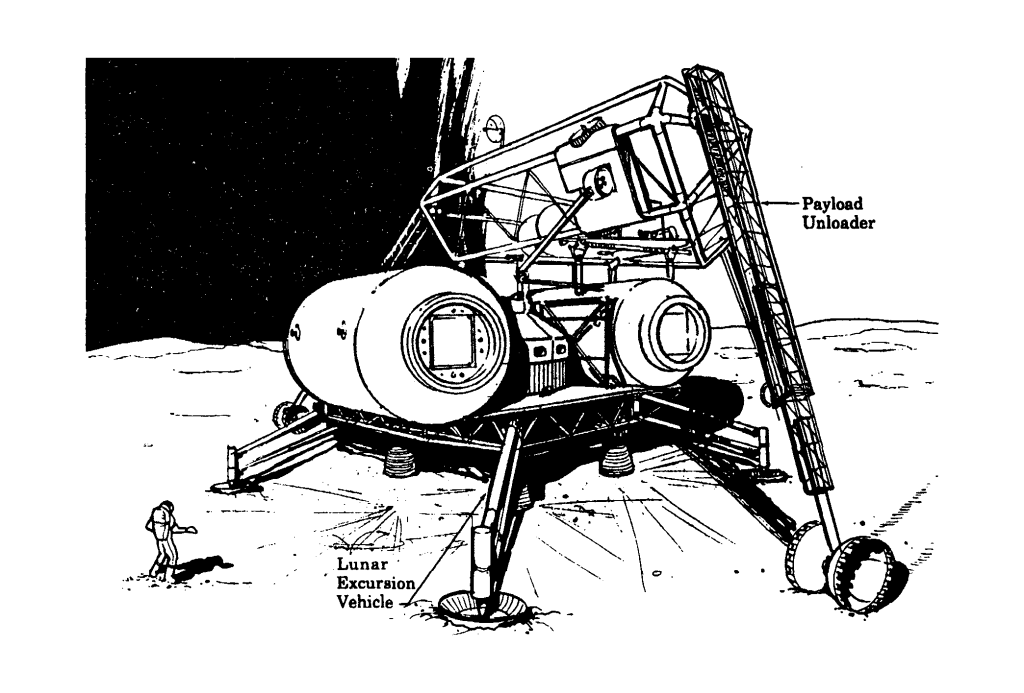
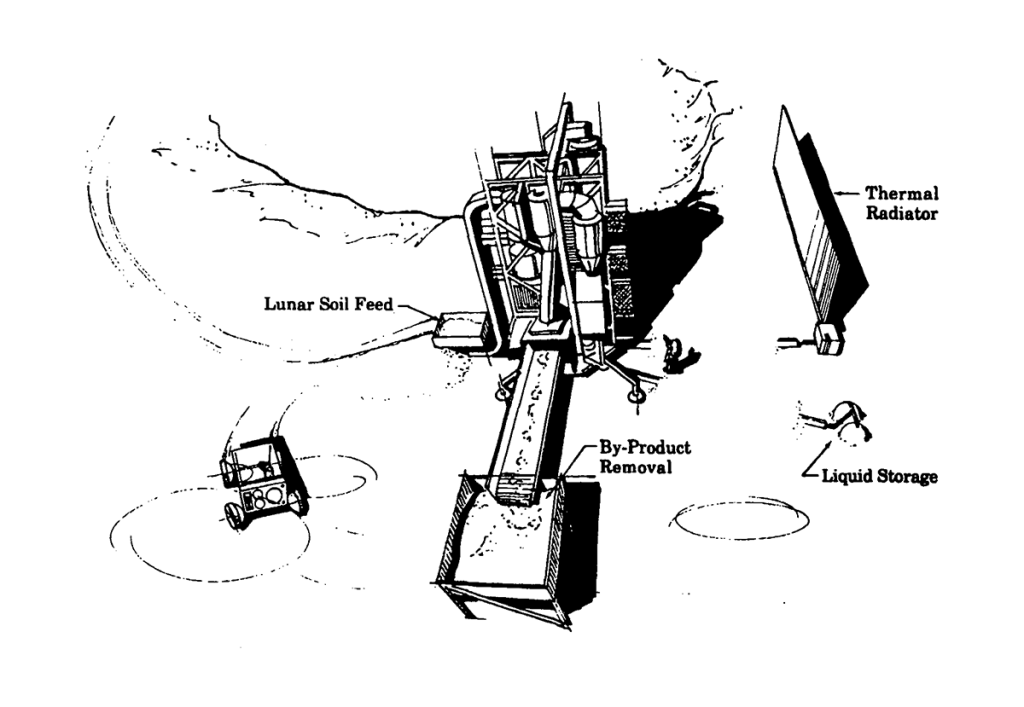
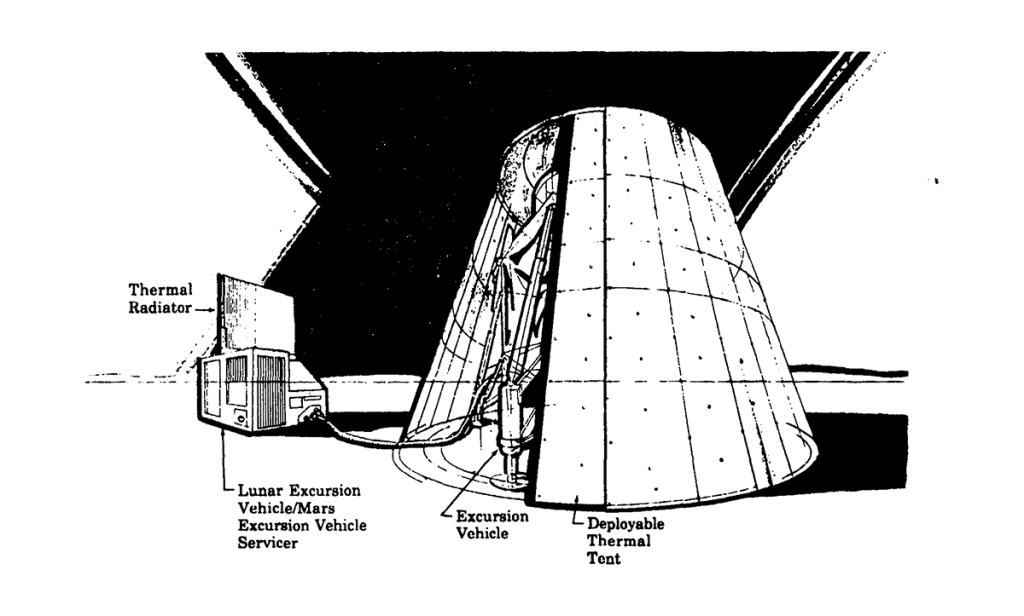
Image credit: NASA
File source: NASA NTRS
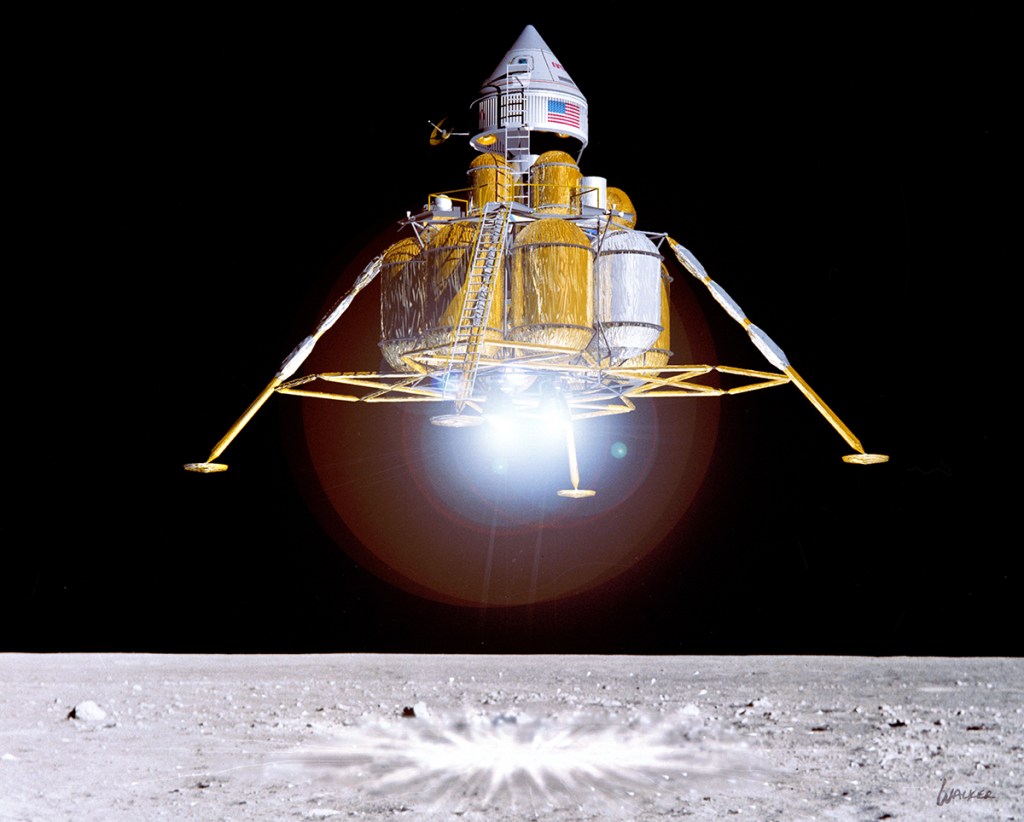
S92-38479 (1992) — (Artist’s concept of possible exploration programs.) Seconds from touchdown, exploration of the Moon continues. This image was produced for NASA by John Frassanito and Associates. Technical concepts from NASA’s Planetary Projects Office (PPO), Johnson Space Center (JSC).
Image credit: NASA
Image source: NASA Johnson
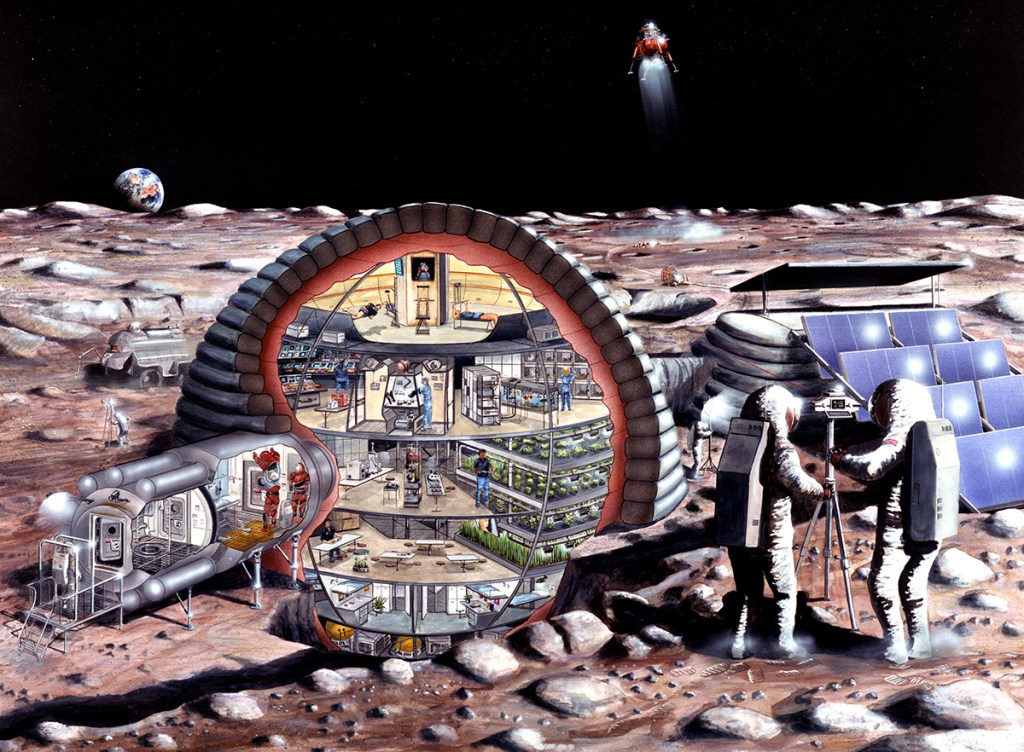
S89-20084 (July 1989)— With a number of studies ongoing for possible lunar expeditions, many concepts for living and working on Earth’s natural satellite have been examined. This art concept reflects the evaluation and study at JSC by the Man Systems Division and Johnson Engineering personnel. A sixteen-meter diameter inflatable habitat such as the one depicted here could accommodate the needs of a dozen astronauts living and working on the surface of the Moon. Depicted are astronauts exercising, a base operations center, a pressurized lunar rover, a small clean room, a fully equipped life sciences lab, a lunar lander, selenological work, hydroponic gardens, a wardroom, private crew quarters, dust-removing devices for lunar surface work and an airlock.
Image credit: NASA
Image source: NASA Johnson