Image credit: Mark Avino
Image source: National Air & Space Museum
Image credit: Mark Avino
Image source: National Air & Space Museum
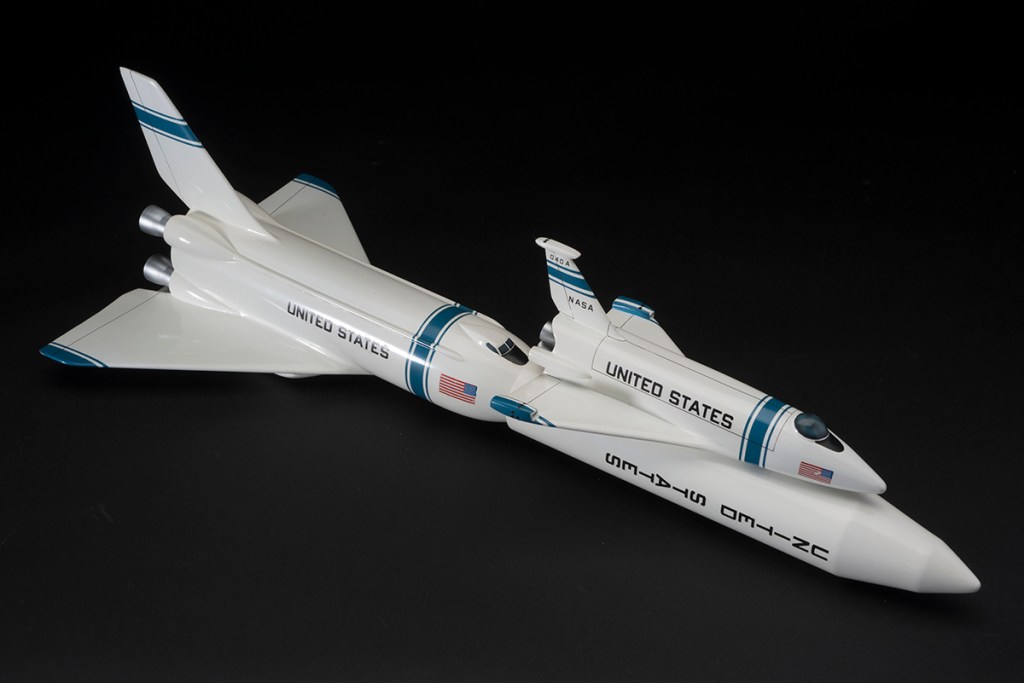
Image credit: Mark Avino
Image source: National Air & Space Museum
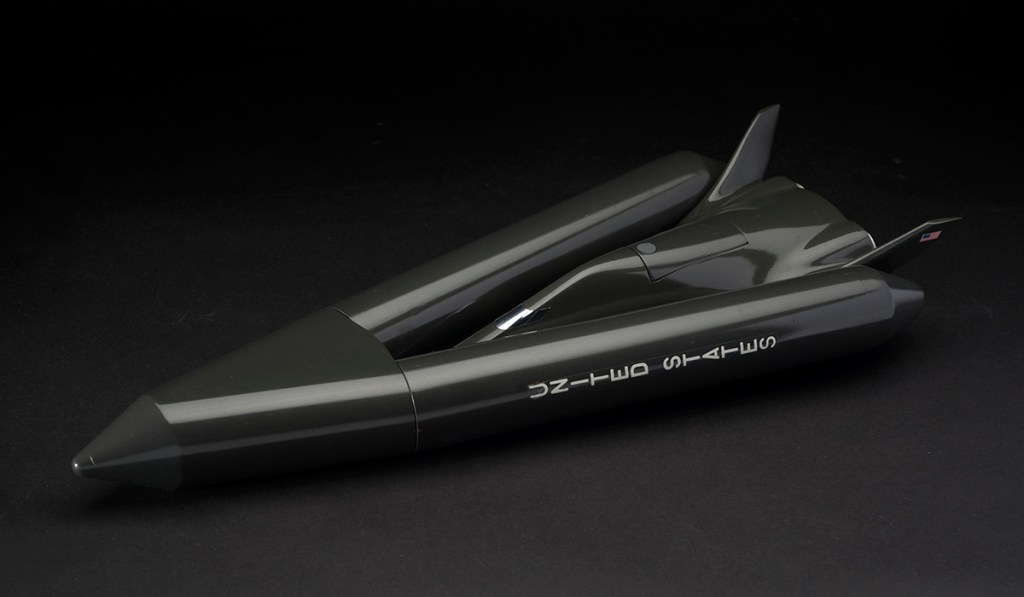
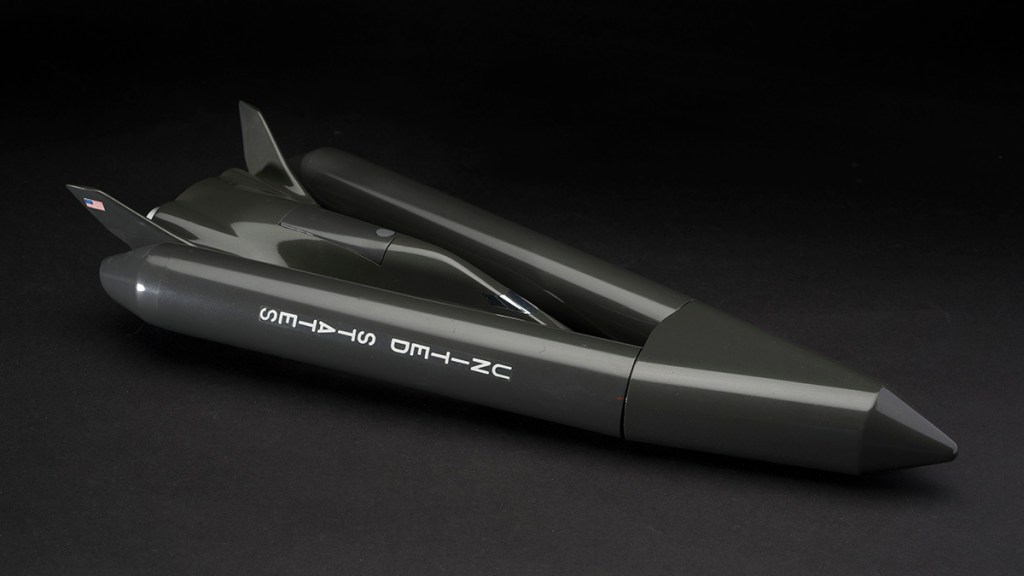
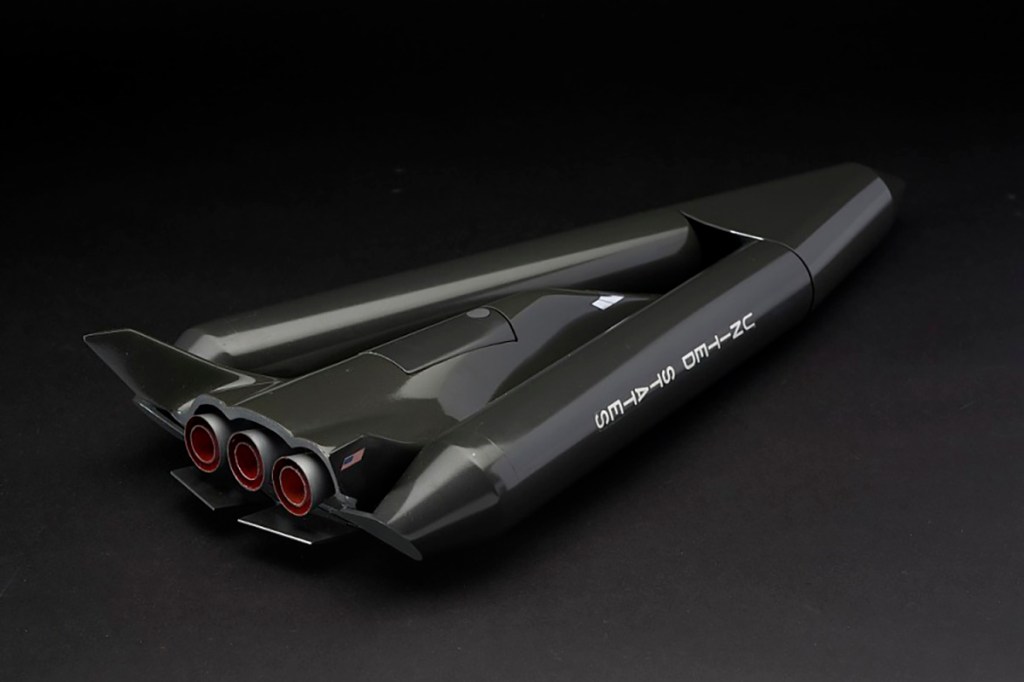
Image credit: NASM
Image source: NASM
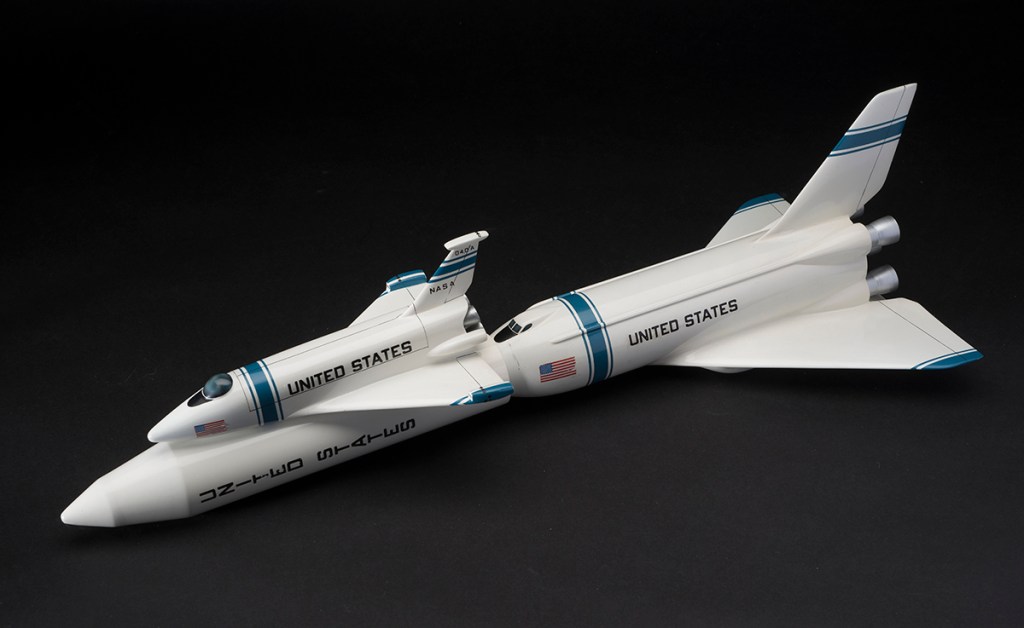
NASA studied this Martin Marietta concept for a fully reusable space transportation system during the Shuttle research effort in 1969-1972. It featured two piloted fly-back vehicles – a twin-fuselage booster craft and a delta-wing orbiter – in a two-stage configuration. The liquid-propellant booster would carry the orbiter to a set altitude, then detach and be piloted back to land. After separation the orbiter would ignite its own engines to reach orbit. Both vehicles had retractable air-breathing jet engines for powered airplane-like flight during descent to landing. NASA transferred a variety of concept models to the Museum after settling on the final Space Shuttle design.
Image credit: NASM
Image source: NASM
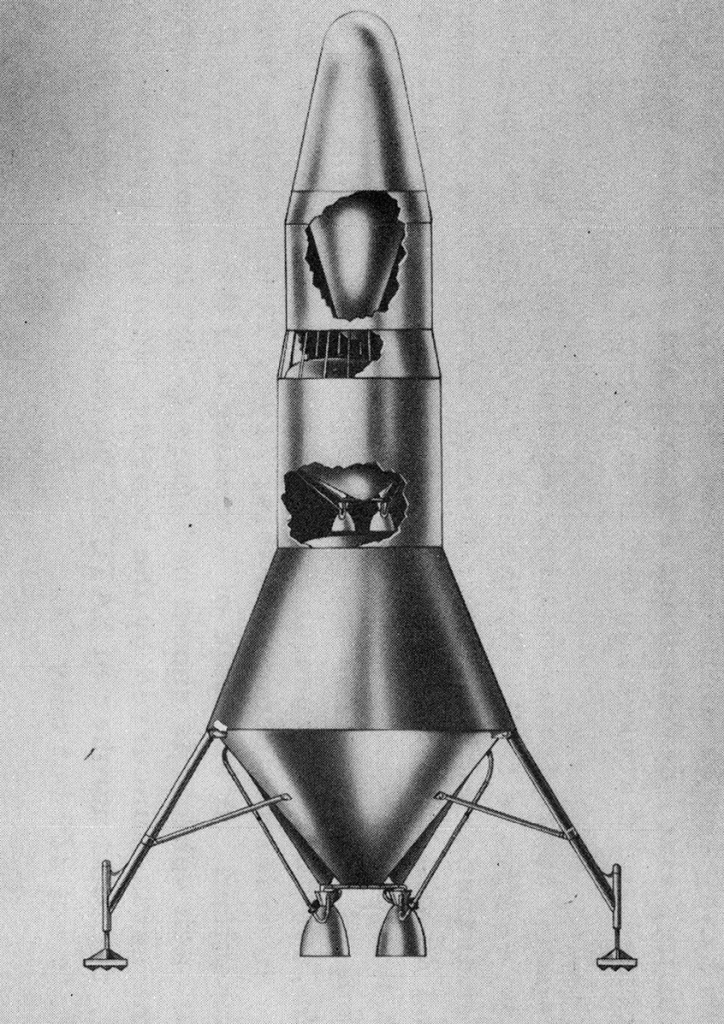

Image credit: United States Army
Image source: Project Horizon Reports, NASM
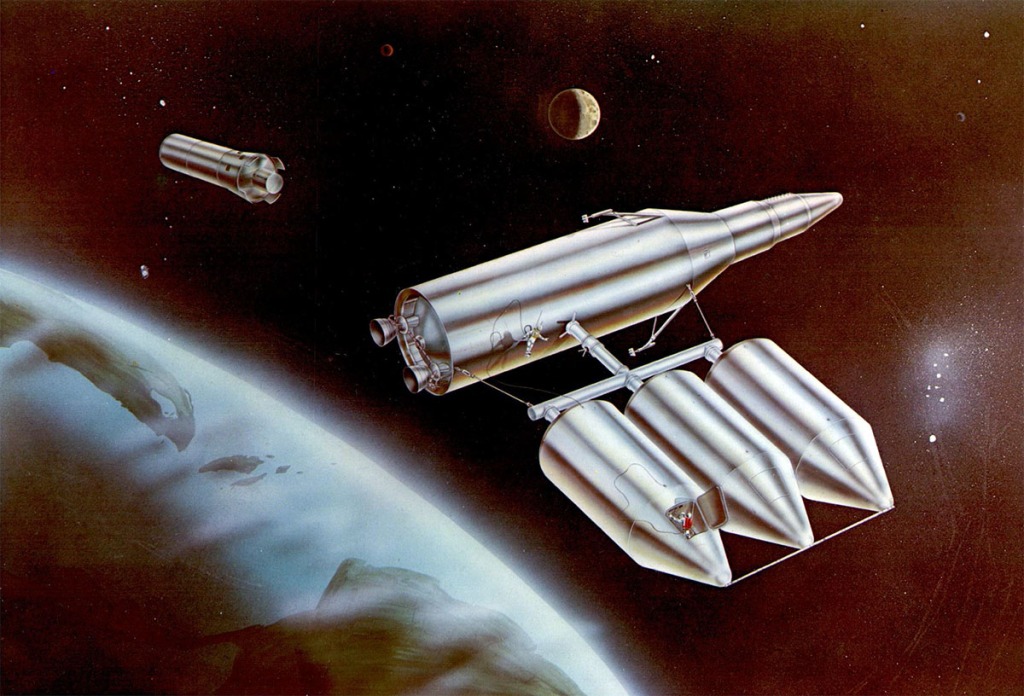
Conceptual view of the operations in the equatorial earth orbit. The operation in orbit is principally one of propellant transfer and it not an assembly job. The vehicle being fueled is the third stage of a SATURN II with a lunar landing and return vehicle attached. The third stage of the SATURN II was used in the combination into orbit and has thus expended its propellants. This stage is fueled into orbit by a detachment of approximately ten men after which the vehicle then proceeds on the moon.
Image credit: United States Army
Image source: NASM