

Image credit: NASA
Image source: Mike Acs

Image credit: Robert Kemp Collection
Image source: SDASM Archives

Image credit: Ryan Aeronautical
Image source: SDASM Archives
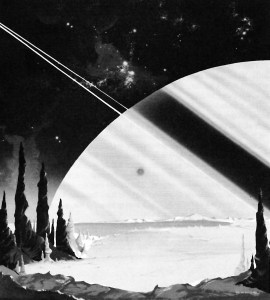
Saturn seen from its satellite Midas
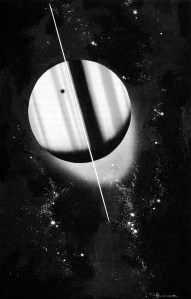
Saturn with its rings seen edge on
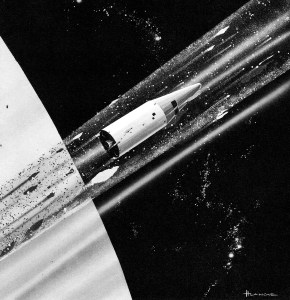
Spaceship explores the rings of Saturn
Conquering the Sun’s Empire
Frederick I. Ordway, III
and Ronald C. Wakeford
Illustrations by Harry H-K Lange
E.P Dutton & Co., 1963
Image source: Numbers Station

Explorers in Miranda viewing the banded atmosphere of Uranus

Uranus and its moons
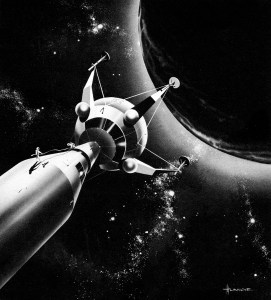
Spaceship approaching Uranus; the squat, rugged landing craft will be detached from the manned spaceship as it approaches the planet.
Conquering the Sun’s Empire
Frederick I. Ordway, III
and Ronald C. Wakeford
Illustrations by Harry H-K Lange
E.P Dutton & Co., 1963
Image source: Numbers Station
Image credit: NASA Marshall
Image source: SDASM Archives
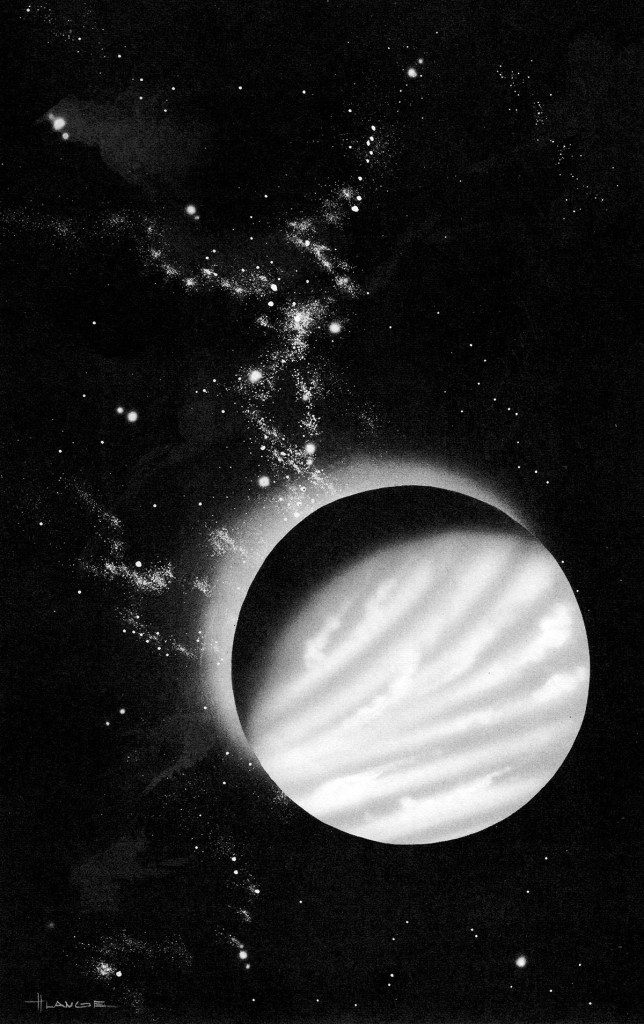
The planet Neptune
Spaceship on Triton
Resupply ship on faraway Nereid preparing for take-off to Pluto
Conquering the Sun’s Empire
Frederick I. Ordway, III
and Ronald C. Wakeford
Illustrations by Harry H-K Lange
E.P Dutton & Co., 1963
Image source: Numbers Station
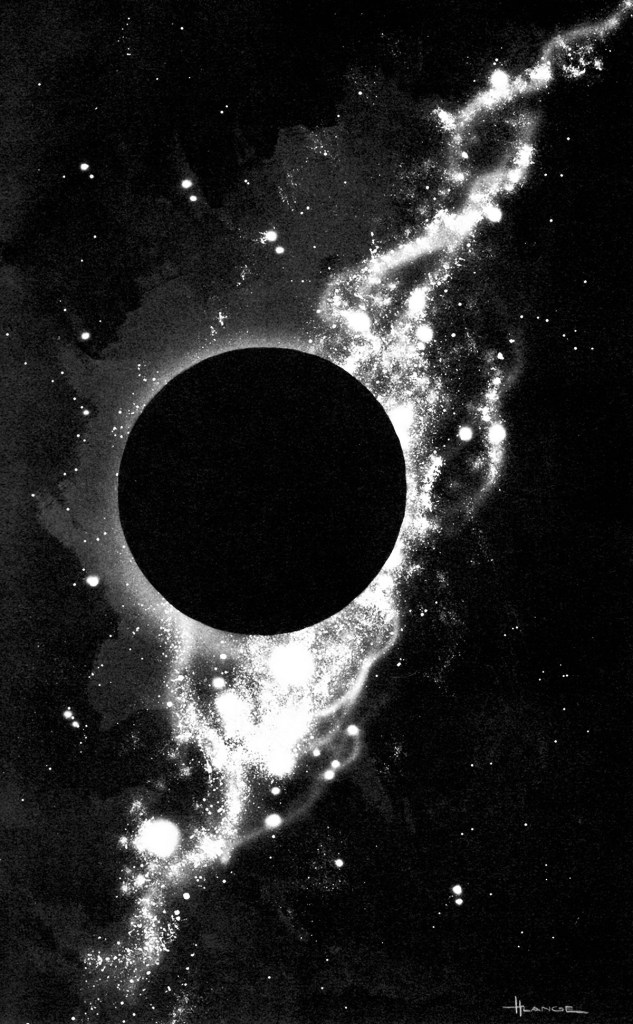
Pluto shadowed against Milky Way galaxy

Ion-propelled spaceship entering into orbit around Pluto
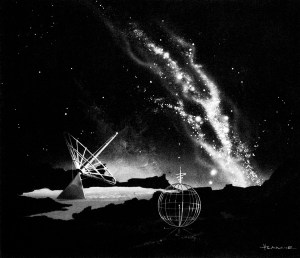
Radio telescope on Pluto studying distant stars
Conquering the Sun’s Empire
Frederick I. Ordway, III
and Ronald C. Wakeford
Illustrations by Harry H-K Lange
E.P Dutton & Co., 1963
Image source: Numbers Station
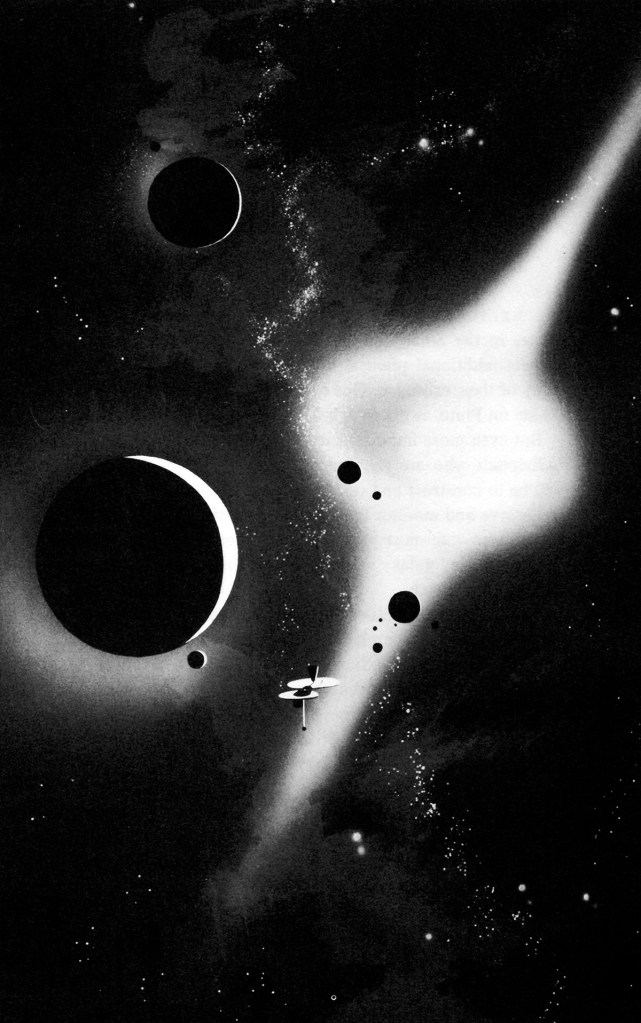
Interstellar spaceship arriving at an alien Solar System trillions of miles away
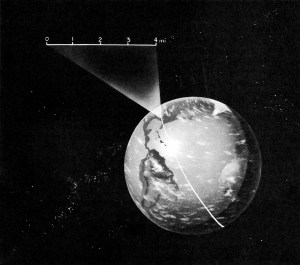
6,250 times as great as the distance from Earth to Pluto. To make such astronomical differences comprehensible we can say that the difference between these two distances is like the difference between the circumference of Earth (25,000 miles) and 4 miles.
Conquering the Sun’s Empire
Frederick I. Ordway, III
and Ronald C. Wakeford
Illustrations by Harry H-K Lange
E.P Dutton & Co., 1963
Image source: Numbers Station
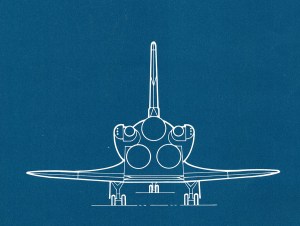

Image credit: North American Rockwell
Image source: Numbers Station
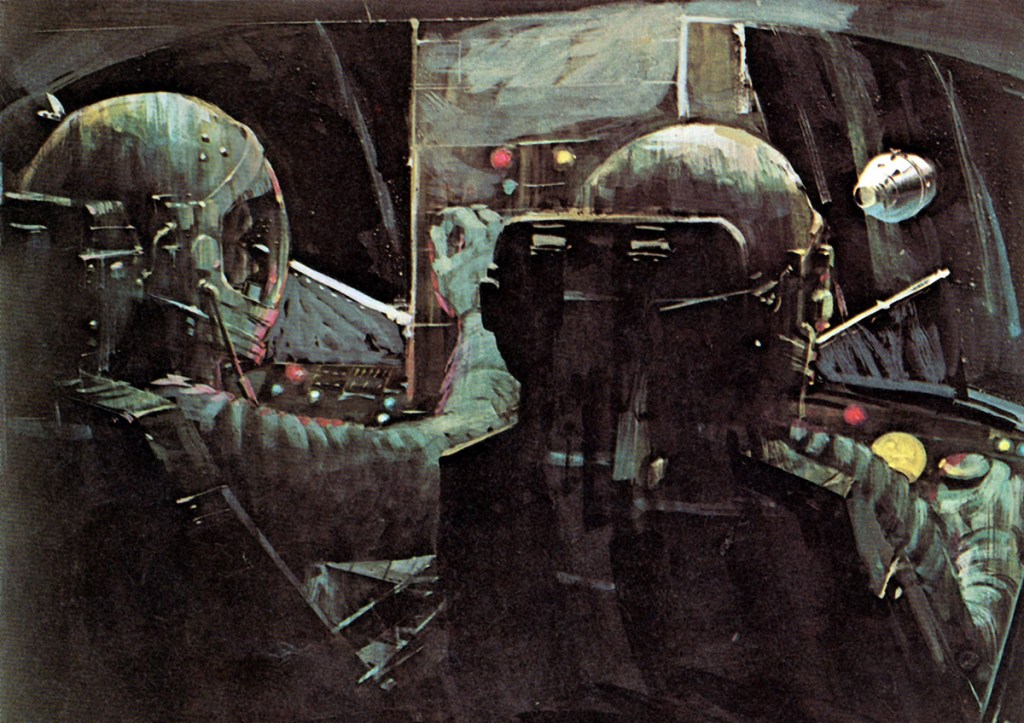
Image credit: North American Rockwell
Image source: Numbers Station
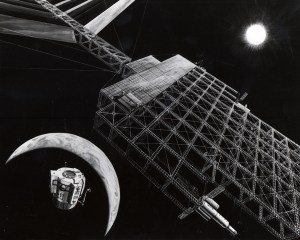
This is what an artist envisioned the Solar Power Satellite would look like. Shown is the assembly of a microwave transmission antenna. The solar power satellite was to be located in a geosynchronous orbit, 36,000 miles above the Earth’s surface.
Image credit: NASA
Image source: NASA on The Commons
