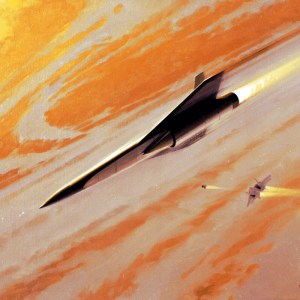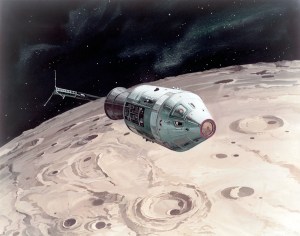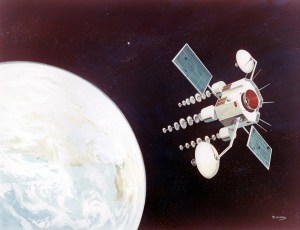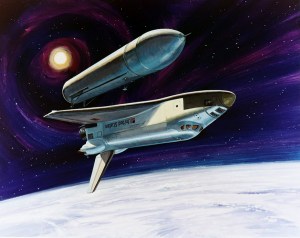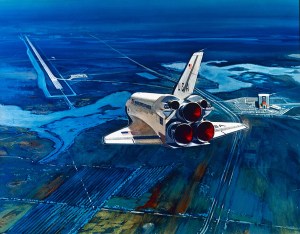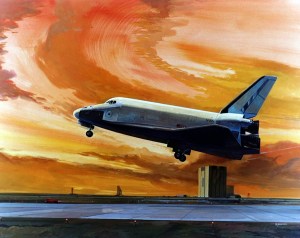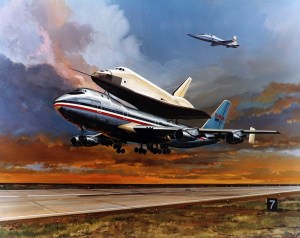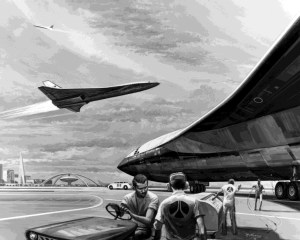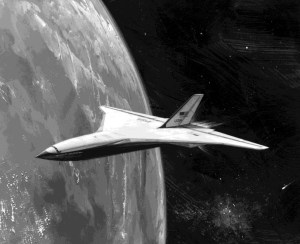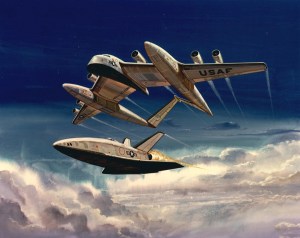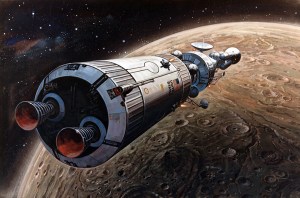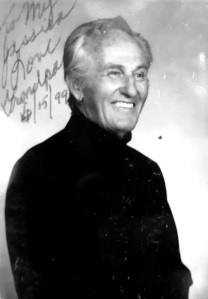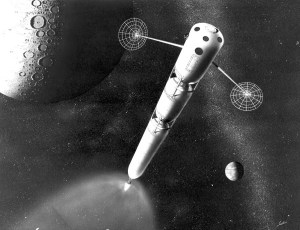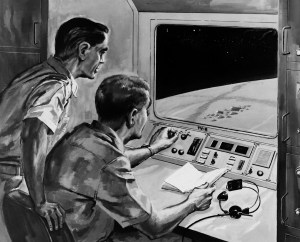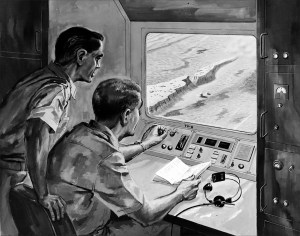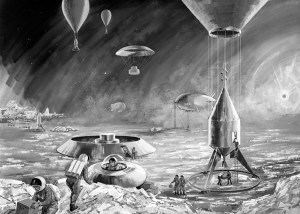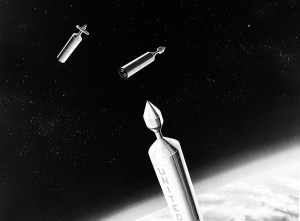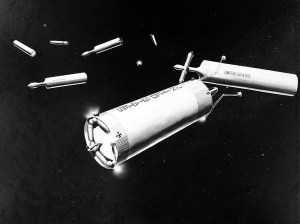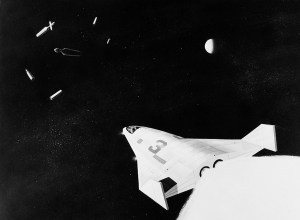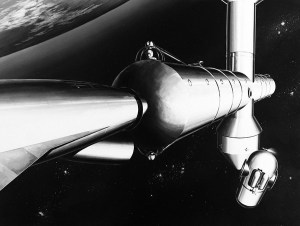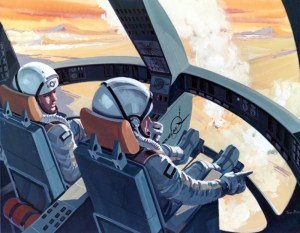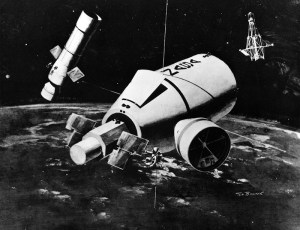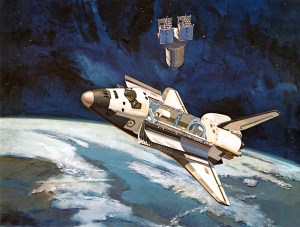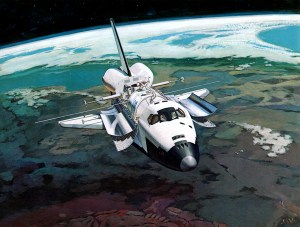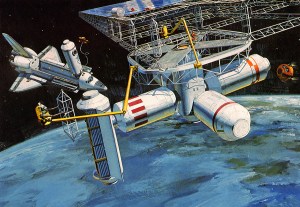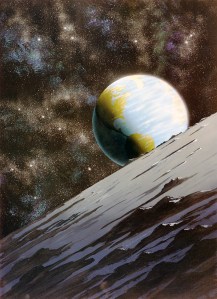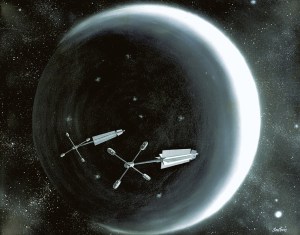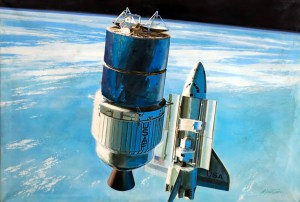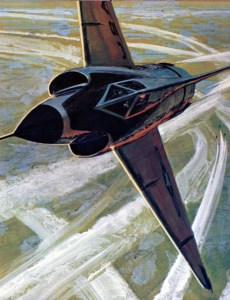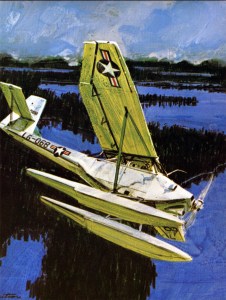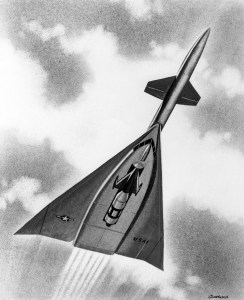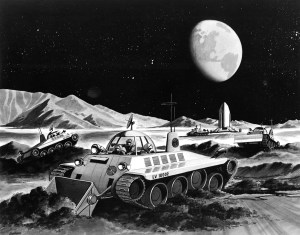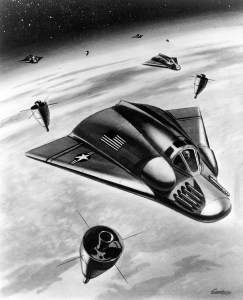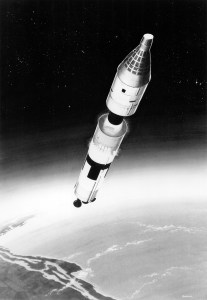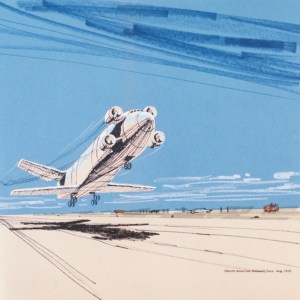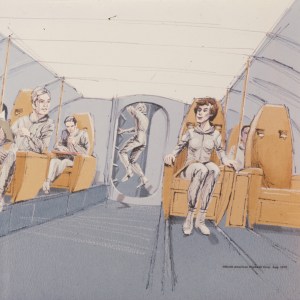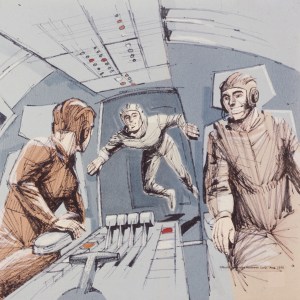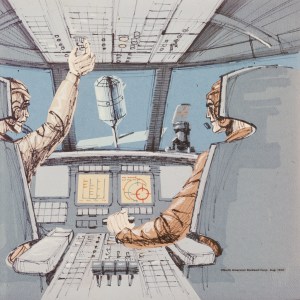
The Robert Watts Interview


I recently sat down with concept artist Robert Watts, for coffee and a chat about his career and by that, I mean Robert graciously agreed to be interviewed by email and took time out of his schedule to answer my questions. It’s entirely  possible one of us was drinking coffee whilst typing.

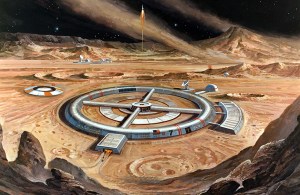
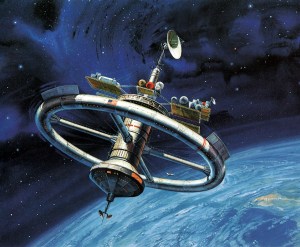
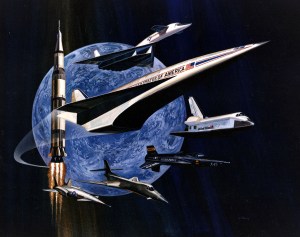
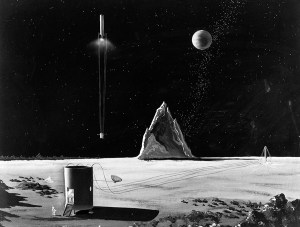
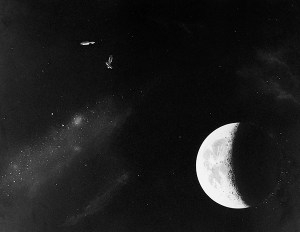
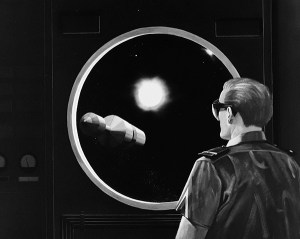
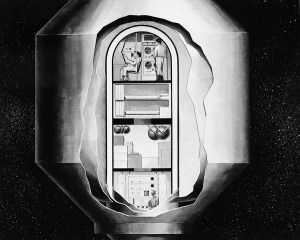
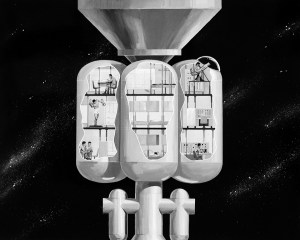
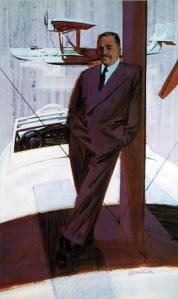
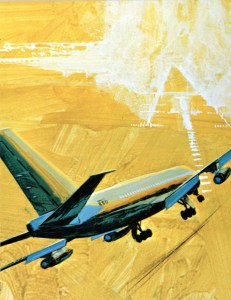
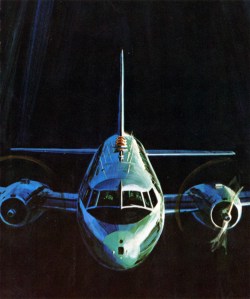
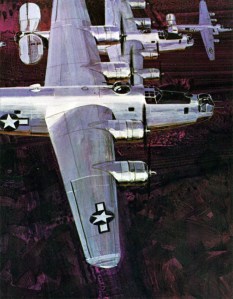
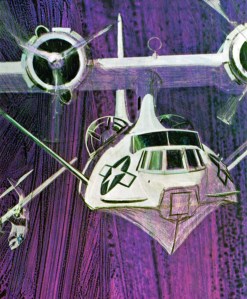
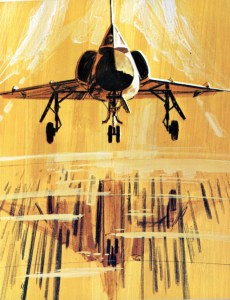
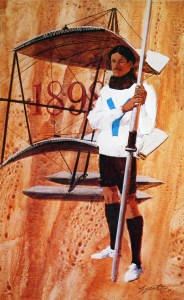
Robert was Lead Illustrator at Ryan Aeronautical during a very interesting time in the company’s history. His former clients include NASA, American Airlines, General Dynamics and the United States Navy. Robert was a Navy Combat Artist during Vietnam, has served as President of the Society of Illustrators of San Diego, and to this day is a highly sought-after architectural illustrator. He is a signature member of the Laguna Plein Air Painters Association and teaches at the school founded by son Jeffery.

He is also an utterly charming man.

Did art run in the family?

My mother and paternal grandfather did some art, but I really did little serious drawing or painting before college. I started out in graphic design at Pratt Institute and later decided to pursue illustration at The Art Center School in L.A.

Two very  prodigious schools. Was concept art always the goal or were you leaning towards a fine art career?

I had always been obsessed with aviation, but I didn’t realize there were aerospace opportunities till Joe Henniger (Art Center – Illustration Head) asked if I would be interested in a job at Ryan Aeronautical  (later Teledyne Ryan)  in San Diego… I said yes!

Wow, so straight to Ryan from college?

First big job, though I did some freelance work in L.A. before starting.
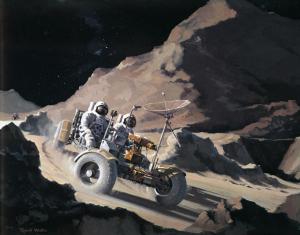
Your Apollo artwork is extremely detailed. Did you have access to the flight hardware?

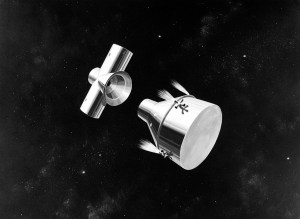
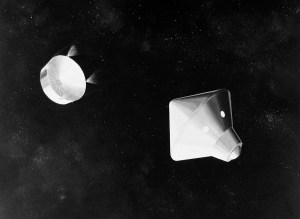
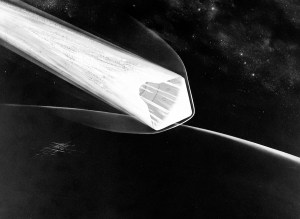
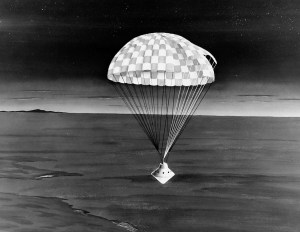
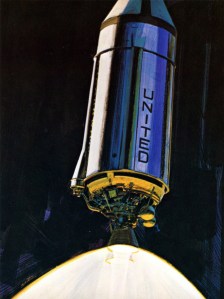
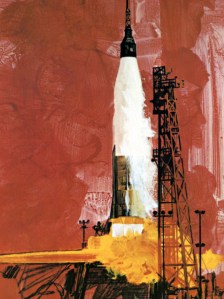
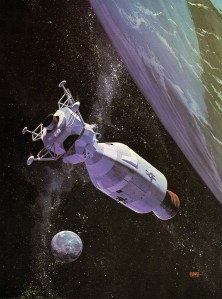
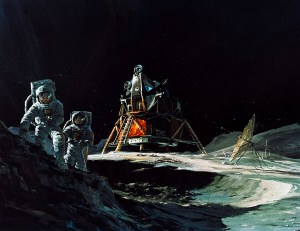
They were obviously all done while at Ryan, and they of course had models and engineering drawings of everything. Ryan Electronics built the Doppler radar landing unit, which was the final vital piece in any landing. My job was to simply attempt a believable depiction of these events. We did work on Skylab during the same period.
How much autonomy were you given?

I had tremendous control over all my work at Ryan. They would simply explain what their intent was and what we should emphasize After leaving Ryan I worked in advertising and had some art direction there. I also did about 3000 architectural renderings after that and my ability to read plans was very useful.  I have always been able to conceive an image in my mind before starting… and that was crucial. I’ve been all over the map in illustration!

Did any of your Apollo era artwork make it home with you?

No… but they were decent pieces so I’m confident someone has them. Piers [Bizony] was kind enough to send me some hi-rez copies! *
Comic book artists love to namecheck Frank Frazetta as an influence. Who inspired you?

I was one of the first to see Franks’ work and continue to be spellbound by anything he did. In aerospace: Robert McCall, Jack Leynnwood. John Steel, R.G. Smith and Chesley Bonestell. In general illustration: Rockwell, Mead Schaeffer, Bernie Fuchs, Dean Cornwell, Bob Peak, John Harris (scifi) David Grove and Drew Struzan… many others too numerous to mention!

You jump effortlessly between media, if you had to paint or draw in one medium for the rest of your career what would it be?

Gouache… it was a medium of emphasis at Art Center and aerospace. I teach it and use it a lot… often on a heavily gesso’d surface for a more textured and painterly feel. I often do the underpainting with casein as well.

Do you still love to paint, or is it just a job now?

It is my life passion… never tire! I teach all manner of illustration topics at my son Jeff’s school: Watts Atelier of the Arts in Encinitas California. I also still do all conceptual work for the world-wide San Diego Zoo Wildlife Alliance. I also sell all types of paintings  at my gallery website.
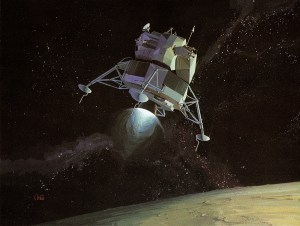
Would you ever consider a commemorative work relating to the Apollo Program, or has that ship sailed for you?

I always consider everything, it is a subject that is iconic for America, so who knows?

Your signature is present on nearly all of the work from your time at Ryan. Was this contractually stipulated or Ryan’s policy?

The subject never arose.

I love that you’re involved with the atelier. Is there anything you’d like people to know about it?

There are streaming classes of mine and others at the school available at very reasonable fees.

Robert again, thank you for your time.

http://www.robertwattsartsale.com

http://www.wattsatelier.com

*. Robert’s 1970 painting of Apollo 13 was used as the cover of The Art of NASA by Piers Bizony.

Images: Mike Acs, NASA Image and Video Library, SDASM Archives
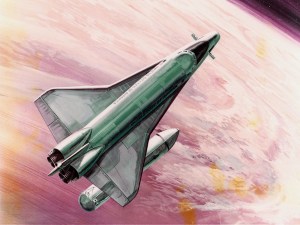
Artist Profile: M. Alvarez

Who is (or was) M.E. Alvarez?

Alvarez was an illustrator at North American Rockwell.

Beyond that, we know nothing about the artist. Not even a first name. There’s probably a box, on a shelf, in a basement somewhere at Boeing with old NAR personnel files that holds a clue. Short of burglary, I can’t see a way to answer the question. HR departments are surprisingly reluctant to give out that kind of information.

I thought perhaps the artist chose to sobriquet or nom-de-guerre to create a firewall between his or her commercial work and a fine art career. It’s not unheard of, I know plenty of artists in animation who take the day job for the benefits and do fine art or illustration in their spare time. Sleuthing just muddies the water. Alvarez is a very common name in the art world, both in the Americas and in Europe. The first hit on Google is almost always the American painter Mabel Alvarez, and I can say with some authority it’s not her. Looking through auction sites at Mabel Alvarez work, I did find a painting attributed to her signed, “M. Alvarez ’98.” Mable died in 1985.

So, like the piece on John Gorsuch, all I can really do is lay out something like a timeline told through art, and hope you enjoy it.

Above: Apollo 15 launching a subsatellite in lunar orbit. Painted in 1970/71. Below: Contractor’s depiction of a satellite, circa 1970.

Mister Shuttle

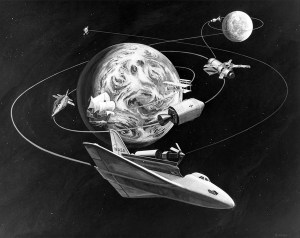
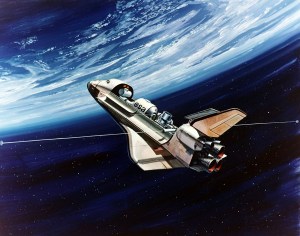
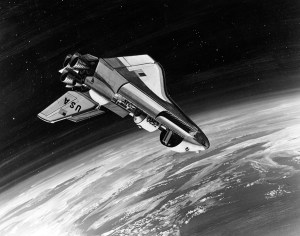
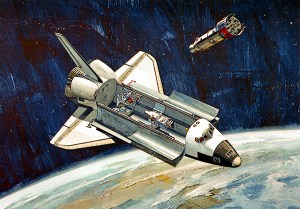
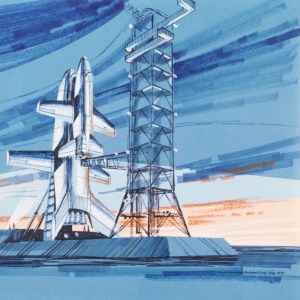
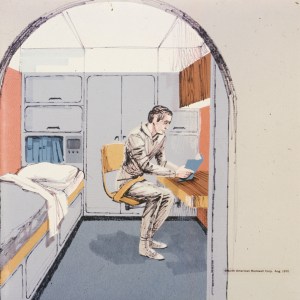
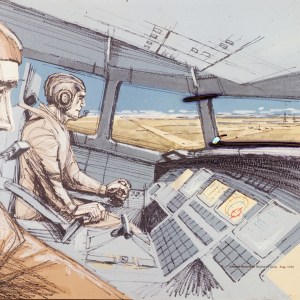
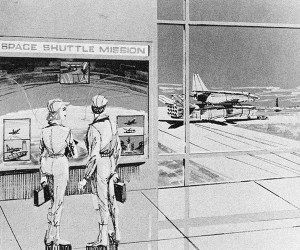
When North American Rockwell became the prime contractor for the Shuttle Program in 1972, it’s art department created the lion’s share of shuttle related art during the seventies. In effect, that made Alvarez Mr. Shuttle.

Above: Painted in 1972 – a first glimpse of the orbiter. Below: 1973, Rockwell engineers consider stowing the SRMS in a hump over the cargo bay and fuselage.

By 1974, the orbiter starts to take a familiar form.

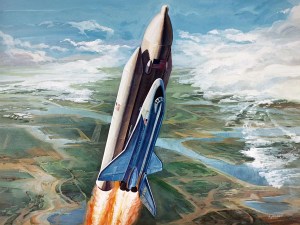
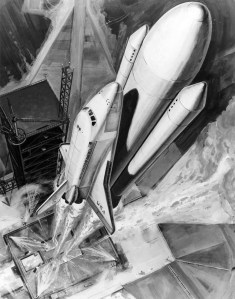
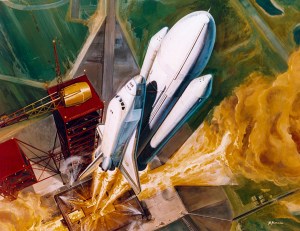
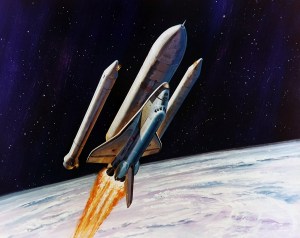
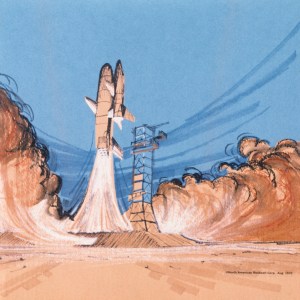
Below Left: Beautiful painting of a shuttle launch. Below Right: The same image found in The National Archives. It’s in poor shape, but un-cropped and in colour.

Above: Iconic Alvarez. Below: From the same year: two versions of the same painting, showing an orbiter with the ESA Spacelab installed.

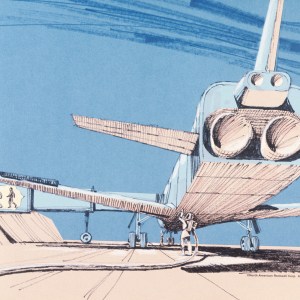
Below: Final arrangement, painted sometime between 1975 and 1976 Bottom: N905NA still in American Airlines cheats.

Below: Third version of this painting I’ve found – and there may be more – Rockwell engineers start playing around with mascara.

I’ve not found any Shuttle Program art by Alvarez after 1977, presumably browned-off after five years of endless revisions, the artist may have hung up his/her shuttle painting boots.

Into The Eighties

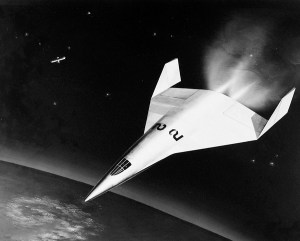
Above: 1977/78. Rockwell International’s Star-raker, a heavy-lift ramjet/rocket HTHL SSTO capable of atmospheric cruise and powered landing. Below: 1980’s Rockwell proposals for AMSC. Middle Row: Lunar base with an oxygen production facility. Bottom Row: A nuclear vehicle arrives in Mars orbit and a surface base.


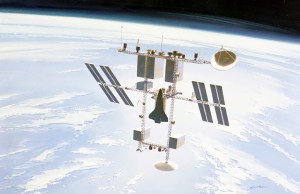
Above: Space station concept found in a 1985 book by Don Dwiggins. Below: “Rockwell Tradition in High Performance Vehicles” depicting Space Shuttle, B-1B, Apollo/Saturn, XB-70, X-15, X-10, and The National Aero-Space Plane. Published in 1988, it’s the latest work I can find from the artist’s time at North American Rockwell. If it is indeed his or her last, then I think it stands as an amazing piece to end a career with.

Image credit: North American Rockwell
Images: AFMC, Internet Archive, Mike Acs, National Archives, Numbers Station, SDASM Archives, NASM

Meet John Sentovic

An interview with John Sentovic’s granddaughter, Jessica Brodie

A couple of months ago I wrote a piece about General Dynamics / Convair artist John Sentovic, based on what I could glean about him from his art and a scrap of an article printed in 1960. As luck would have it, his granddaughter Jessica came across the article, and graciously agreed to talk to me about her grandpa.

Jessica, we’ll talk about your Grandpa John in a minute but why don’t we start with you? Tell us a little about yourself, and how you’re related.

He is my grandfather on my mother’s side. He married my grandmother when my mom was about 16, but he never was considered a step father. They all loved him and considered him dad, so to his grandchildren he was grandpa but we all called him Papas.

What do you remember about him? Do you have a favorite memory?

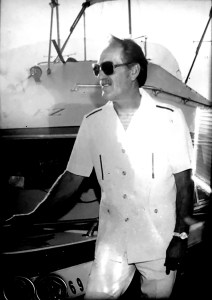
He was a dapper man and always dressed to the nines: aviator sunglasses and gold jewelry. He had this Gold Lincoln Continental – it was huge – we all called it The Rhino Chaser, it had these spacious leather seats that we would slide across when he made turns. He loved that car and knew he was  so cool driving it.  My sister and I spent a lot of time with him and my grandma and he always let us do crazy hairstyles on him and do makeup or whatever we wanted. He never complained, he was a real trooper.  Whenever he saw my sister and I he would always say, “Oh no! Here comes trouble! It’s the apple sisters Seedy and Corey.” These are some of my core memories of him: he was always fun to be around, he taught us to play poker and he let us use his expensive art supplies. He never wanted animals but somehow a stray cat adopted him and he loved and spoiled that cat and he was always caught holding my grandma’s tiny Pomeranian named Petite.  He loved sports and music.  He loved Frank Sinatra and big band music. He was always grooving to the music. If he wasn’t listening to music you could find him watching sports on his favorite recliner.

Jessica sent me these photos of John to share. A dapper man indeed!

Was family important to him? 

Family was the most important thing to him, he was especially close with his mother Pearl, he cared for her and was there for her until the day she died. He was her baby and she called him Bebo.  He was always there for all of us.  As I said earlier he was stepfather to my Mom and her 3 other siblings but he treated us all as if we were his own. 

The short piece I wrote was based on a magazine article from the sixties, and that’s pretty much all I had to go on. Is there anything you’d like to add?

He was an amazing man, everyone loved him and gravitated to him. He was smart but humble, funny, sassy, a man to be respected, kind, caring, great fashion sense and style. He died before he could meet my children. I named my first born son after him and coincidentally my youngest was born on his birthday. My grandma always jokes that I am trying to be his favorite even after he is gone.

Do you have a funny story about him?

One time he was babysitting my sister and I, and we were playing hide-and-seek, and we were laughing so hard and having fun. Apparently we were so loud someone called the police on us for screaming. We thought it was so funny. We laughed so hard. I still smile to this day when I think of that.

During World War II your grandfather served in the Navy, and by choosing burial in a national cemetery, I expect his time in the service meant a lot to him. Are there any family stories about his service you’d like to share?

Like many of that generation he didn’t talk about the war, he never talked much about his job either. He always said it was top secret stuff. He was a humble guy.

Is any of the work he did for Convair with the family?

My grandma has a few of his personal pieces hanging up. They moved from San Diego to Las Vegas in 1992 and then after he passed in 99 she moved back to San Diego. I am not sure if she kept what he had stored in the garage since she had to downsize to a much smaller house, I will have to ask her.  The aerospace museum in San Diego is said to have a number of his pieces , but when I went to inquire they said they must have them archived offsite.

Do you think he had a favorite piece of artwork?

He used to do these special types of portraits , I don’t know the name of the technique but it was on this black paper and he used an X-Acto knife to etch out the portrait. He had a few favorites that are hanging in my grandma’s house. There were a few he favored. One was  of my cousin Matt when he was about 4 years old and the details are amazing. All his little curls and his face, it’s amazing.

Image credit(s): Convair, Brodie Family
Image source(s): SDASM Archives, Mike Acs, and of course, the delightful Jessica Brodie.

EMPIRE Hunting: Part 4

In Orbit

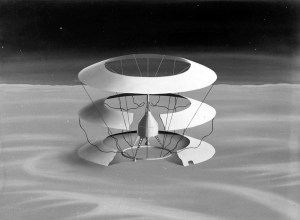
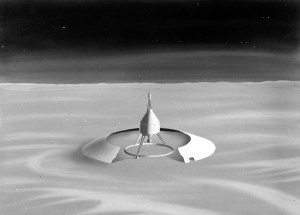
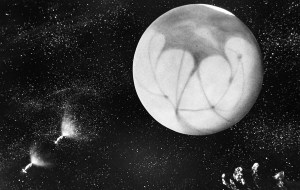
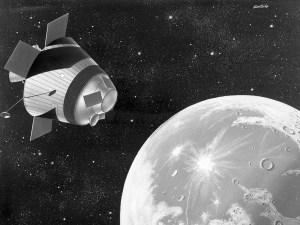
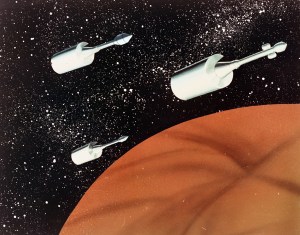
Above: In the flyby scenario, Mars is studied by teleoperated probes. Below Artwork from Ehricke’s time at Convair showing the EMPIRE convoy in orbit. The MEV descends to the surface, landers based on NASA’s Surveyor are dispatched to Deimos and Phobos, a balloon deploys in the Martian atmosphere while a satellite begins to survey the planet.

Transportation [1]
Planets and Planetary Missions

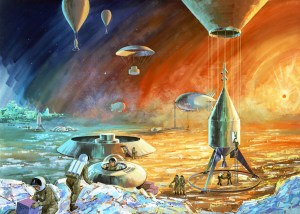
Above: Surface operations. These images are from the SDASM Archive. Below: From the KAE papers, the MEV returns to orbit.

Transportation [1]

Departure

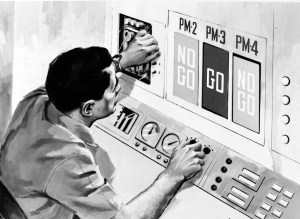
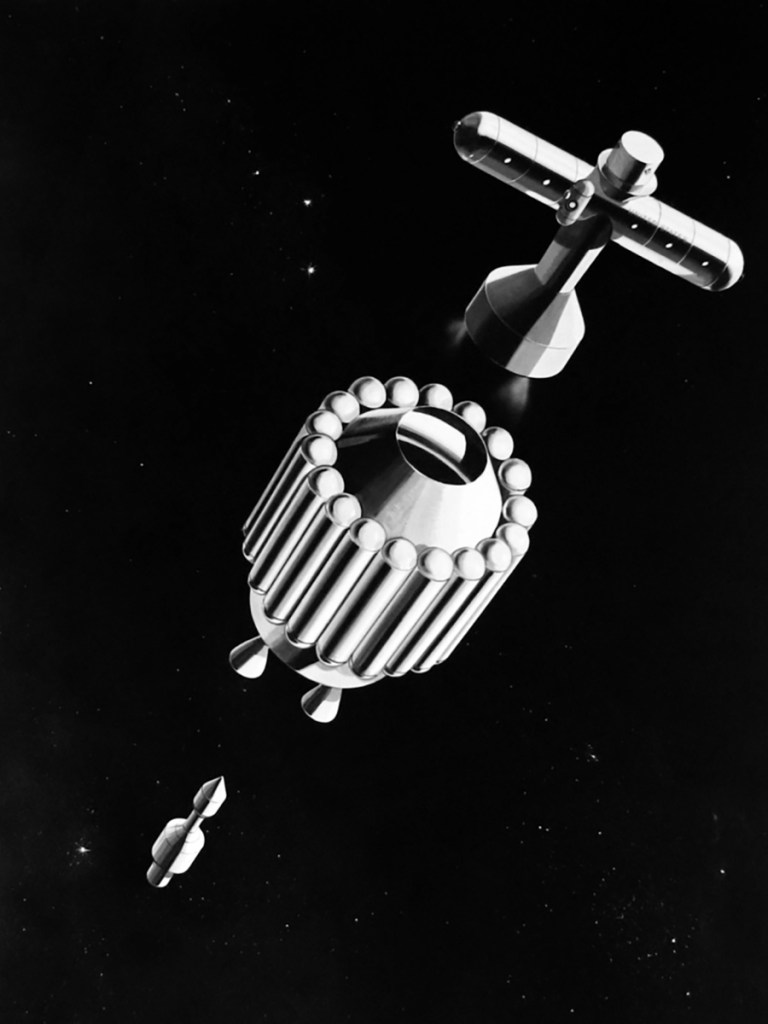
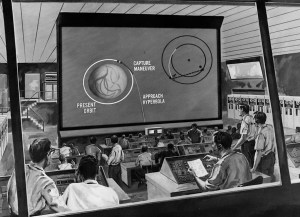
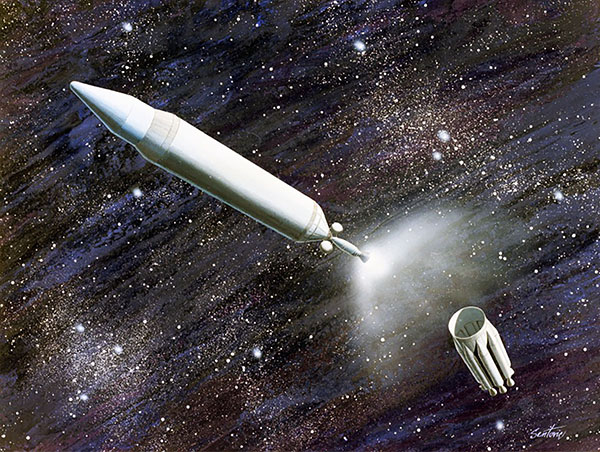
Above: With everything and everyone safely stowed, the fleet get a “Go!” from Mission Control. Below: Free of Mars’ gravitational pull – and on course for Earth – the third stage is discarded.

Transportation [3]

Arriving Home

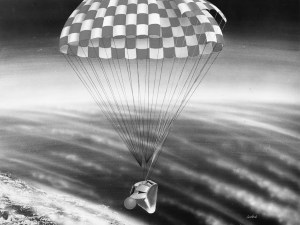
Back in Earth orbit, the crew would transfer to the EEM for re-entry. I think these are from Ehricke’s time at Convair and the paintings by John Sentovic.

Artists’ concepts (Spacecraft) [1 of 6 folders]

1 / 2 / 3 / 4

Image credit: Krafft Ehricke Papers
Image source: NASM

EMPIRE Hunting: Part 3

Let’s go back to Solar Transportation for a minute, because it helps to explain some of the images in the Ehricke Papers. Ehricke’s team detailed a Mars lander that looked a lot like early Apollo concepts, but the some of the folders contain images of a landing using what looks like Gemini hardware. I think this image captioned in Solar Transportation is a clue.

From Solar Transportation:

In 1982, a 69 day Mars capture mission launches. The crew conducts intensive reconnaissance both from orbit, and using probes – including landers and returners – but no manned surface excursions are planned. A mission launched between 1984 is one-way, involving a 529 day stay on Mars. A follow-on mission in 1985 (via Venus) retrieves the crew.

Reading back through the General Dynamics and Douglas UMPIRE reports, I think there’s enough connective tissue to make the argument that the paintings below are at least vicinal to EMPIRE / UMPIRE if not directly related, like kissing cousins. It doesn’t really matter though, because I’m not a real historian, and this isn’t a thesis.

Above: Gemini, on Mars or wherever. Below: Yup, that’s a Mars Lander.

Artists’ concepts (Spacecraft) [1 of 6 folders]
Artists’ concepts (spacecraft) [4 of 6 folders]

1 / 2 / 3 / 4

Image credit: Krafft Ehricke Papers
Image source: NASM

EMPIRE Hunting: Part 2

Leaving Earth

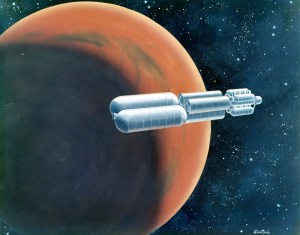
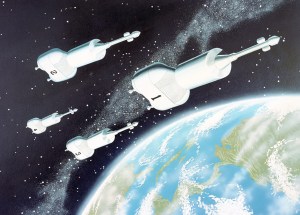
Above: The escape maneuver is performed by firing the first of four nuclear propulsion stages. The stages are jettisoned as each maneuver is complete. The crew ship rotates slowly to provide artificial gravity for the crew. Bottom Right: Drew Carey.

Artists’ concepts (Spacecraft) [1 of 6 folders]

En route to Mars

Left: Enjoying Frogger™ while someone else does the laundry. Right: The LLS is modularized, each module can be sealed off if damaged. Mid-deck and someone is taking a shower because in space someone is ALWAYS taking a shower.

Planets and Planetary Missions

Arrival at Mars

From: Artists’ concepts (Spacecraft) [1 of 6 folders]

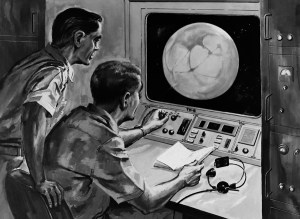
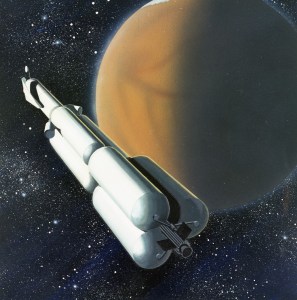
It’s not clear (to me) whether this image represents the convoy arriving at or departing from Mars. Either way, it’s an amazing visual. If it’s arrival, the second stages are fired, slowing the convoy so the can be captured by Mars’ gravity.

Transportation [3]

Mars Orbit

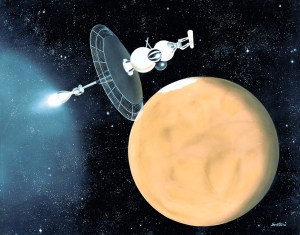
Above: In Mars orbit, the hangar of the Cargo Module is depressurized and the crew remove and deploy surface probes. Below: One last treat, the Convair EMPIRE report went into great detail about the automated Mars probes. One concept was a Mars lander based on NASA’s Surveyor.

Artists’ concepts (Spacecraft) [1 of 6 folders]

1 / 2 / 3 / 4

Image credit: Krafft Ehricke Papers
Image source: NASM

EMPIRE Hunting: Part 1

There’s a section in the Solar Transportation that’s fascinating, as Ehricke describes a Mars capture mission. Everything is calculated; launch windows, vehicles, propulsion systems and a detailed plan for putting it all together in orbit are considered. Apart from graphs and a plan view of the core vehicle module, there’s no artwork in that section of the paper. One other irresistible aspect of Solar Transport is the reference section, where Ehricke lists – well – his references:

From 1962

Ehricke, K. A., Space Flight, Vol II, Dynamics, Chapter 9, Interplanetary Flight, Sec. 9-7: Fast Three-Dimensional Interplanetary Transfer Orbits; Sec. 9-8: Fast Reconnaissance Missions in the Inner Solar System; Sec. 9-9: Interplanetary Flights Involving Several Planets; Sect. 9-14: Capture Operations

From 1963

Ehricke, K. A., Perihelion Brake Maneuver, in a Study of Early Manned Interplanetary Missions, Final Summary Report, no. AOK-001, pp. 7-36/37, General Dynamics/Astronautics, Advanced Studies Office, January 1963

Ehricke, K. A., Study of Interplanetary Missions to Mercury Through Saturn with Emphasis on Manned Missions to Venus and Mars/82 involving Capture, General Dynamics/Astronautics Rep. GD/A 63-0916, September 1963. Paper presented at Symposium on Engineering Problems of Manned Interplanetary Exploration by AIAA, Palo Alto, Calif., September 1963

From 1964

Ehricke, K. A., A Study of Manned Interplanetary Missions, Part 2 of Proceedings of the Symposium on Manned Interplanetary Missions, 1963/64 Status; NASA TM-53049, June 12 1964 (abbreviated version of the internal document)

Ehricke, K. A., A Study of Manned Interplanetary Missions, Study Performance Contract NAS8-5026, January 1964: also A Study of Manned Interplanetary Missions, Contract NAS8-5026, Final Report, volume III, Mission Oriented Studies, July, 1964

Having described the velocity profiles and launch windows required for the MCM, the paper talks about vehicle requirements:

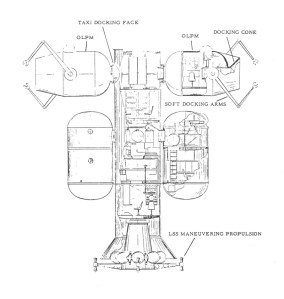
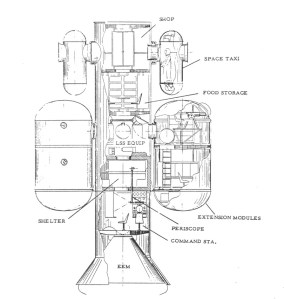
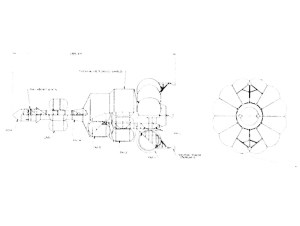
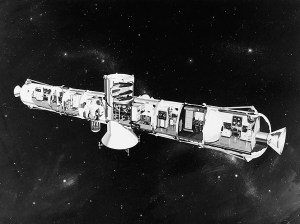
Interplanetary vehicles, whose mission duration requires from 400 to 6000 days, must have an extensive on-board checkout and repair facility located in the Life Support Section (LSS). By placing the LLS in orbit at the beginning of the orbital assembly process, this section serves at the orbit launch facility. In its initial form the LSS has two modifications, compared to its mission configuration which is shown in Figure 21a. Orbit launch preparation modules (OLPM) are attached; and an LSS maneuvering propulsion module occupies the space in which the mission version carries the Earth Entry Module (EEM). The Earth assembly version configuration of the LSS configuration are shown in Figure 21b.

Fig 21a. Radial Life Support Section: Earth Assembly Configuration, acting as Orbit Launch Facility. Orbit Launch Preparation Modules (OLPM) will for mission, be replaced by Taxis. LSS Maneuvering Propulsion Module will be replaced by Earth Entry Module (EEM) (Reference 1964-12).

Fig 21b. Radial Life Support Section: Mission Configuration. Earth Entry Module (EEM) is located at forward end of Interplanetary Space Vehicle. Interface with propulsion section is rearward of the “shop”. External modules are jettisonable. (Reference 1964-12).

This is EMPIRE hardware, best described by David S.F. Portree in Humans to Mars which you can read for free at NASA History Division. Chapter 3: EMPIRE and After breaks down EMPIRE into delightful bite sized chunks and one of those chunks is about the General Dynamics contribution. I won’t try and paraphrase it, so just go and read Chapter 3. I’ll happily wait………

And now that you’re back, take a look at these images from A Study of Manned Interplanetary Missions and the report that contains it:

Venus Mission Vehicles

Fig. 2-1 Convoy consisting of Crew Vehicle and Service Vehicle (Cut-A-Way)

Fig. 2-2 Four basic configurations for interplanetary vehicles.

Mars Mission Vehicles

There are a couple of boxes in the Ehricke Papers that are really interesting because they appear to relate to the EMPIRE and UMPIRE studies, but they are presented without context. They’re undated and uncaptioned. What follows is my attempt to connect some of the dots. You might reach the same conclusions if you’ve read the same references I did. Your mileage may vary.

According to the report – and depending on the configuration – the launch vehicles would either be RIFT, NERVA, NOVA or Saturn boosters.

These paintings are from the Krafft Arnold Ehricke Papers and this is where our story starts:

Equipment Launch into LEO

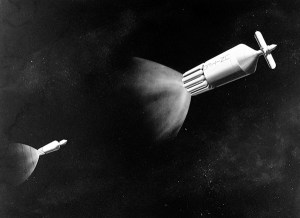
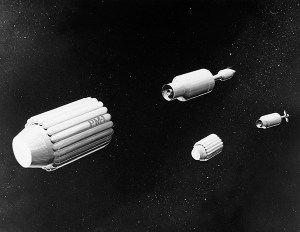
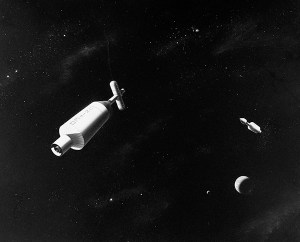
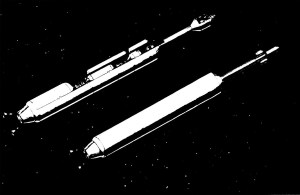
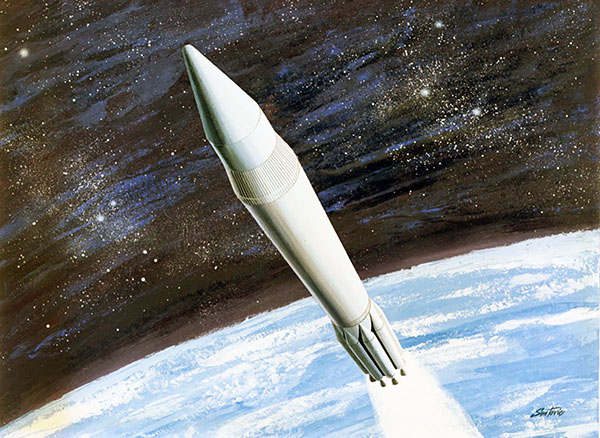
Above: Familiar artwork from (I believe) Ehricke’s time at Convair and most likely painted by John Sentovic. Below: Also from box one, this series appears to show the launch of the LSS by an unmanned rocket and arrival of the initial crew.

Vehicle Assembly

The EMPIRE vehicles would have been modular, assembled in LEO orbit before being sent along their way.

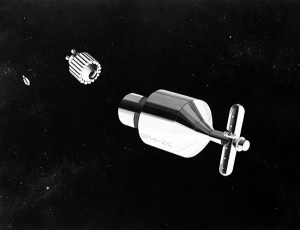
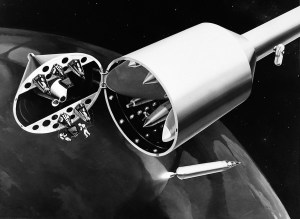
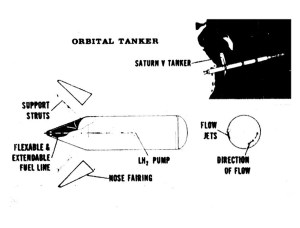
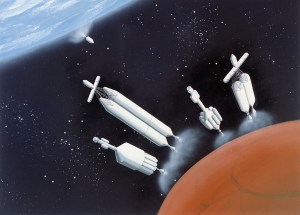
Above: The Propulsion Module combines with the Life Support Section to become – what’s referred to in Solar Transportation as – a Heliocentric Interorbital Space Vehicle or HISV. Below: Propulsion Modules arrive in orbit, vehicle assembly begins and the Orbital Tanker Vehicle begins fueling the fleet. Checkout complete, the mission crew arrive in a ferry vehicle.

Artists’ concepts (Spacecraft) [1 of 6 folders]

1 / 2 / 3 / 4

Image credit: Krafft Ehricke Papers
Image source: NASM

Artist Profile: Ted Brown

I like Teds. My grandfather was a Ted. Everyone called him Ted because he hated Timothy and nobody was going to call him Tim to his face. He was a lovely man and that’s how I got my middle name. Teds are cool. 

Today we are taking another Ted: Ted Brown.

There are few artists in the aerospace industry whose career was as varied or accomplished as Ted Brown. Ted began as a graphic designer with Douglas in 1962, and over the next four decades carved out an enviable career: he illustrated everything from the Buck Rogers imaginings of Philip Bono, Gemini and Apollo to the Shuttle Program. His art permeates the story of space exploration. It is in industry periodicals, newspapers and books and has been since the early sixties. You know his work. He is as ubiquitous as he is anonymous and that’s something I love about him, because I imagine that is exactly how he wanted it. So, this is the story of Ted Brown.

Theodore Bartholomew Brown was born in 1931 in Los Angeles, California. He attended Manual Arts High School, Pasadena City College, and the  ArtCenter of Design in Los Angeles. In 1951 Ted joined the United States Air Force, serving for two years including a posting in Japan. At home, he led the youth ministry and sang in the chorus of his local church, where he met Martha Shepherd Palmer. They married in 1957.

In 1962, Ted began working as a graphic artist for Douglas. At that time the art department had a very strong house style, so his work is often hard to pick out but it’s there.

Top Row: Project Deimos, a Mars expedition proposed by Bono in the mid-1960’s using his ROMBUS SSTO as the propulsion system to Mars and back. Bottom Row: Ithacus, the ROMBUS reimagined as a 1200 soldier intercontinental troop transport.

Manned Orbital Research Laboratory (MORL), painted for Boeing in 1966 or possibly earlier.

Beautiful work by Ted of the Manned Orbiting Laboratory, painted sometime in 1968. I would regard this as his masterpiece.

Rockwell International Space Systems Group released these paintings of the Space Shuttle in the late seventies as part of their charm offensive on the taxpayer.

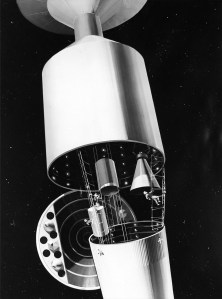
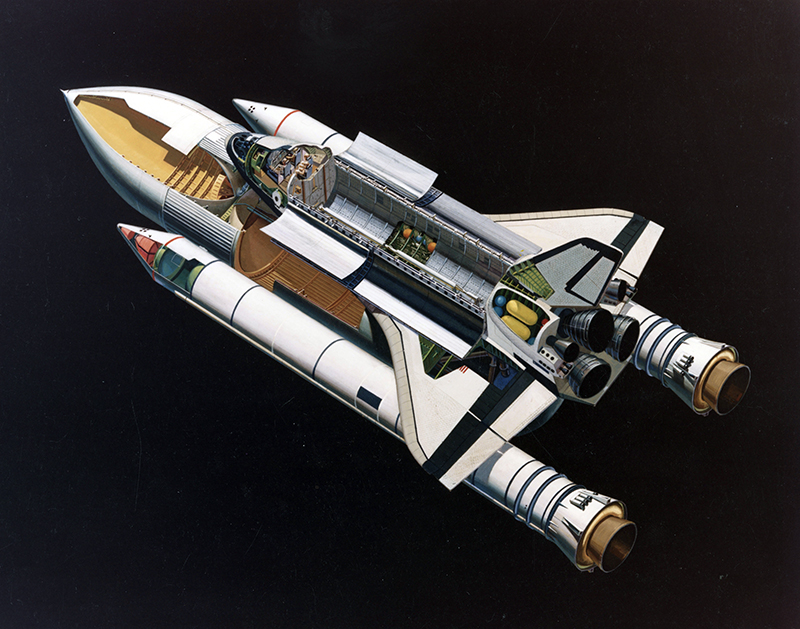
This incredible cutaway painted by Ted will be familiar to anyone who’s read the Piers Bizony book: The Art of NASA. There was some serious detective work done to confirm the artist, which you can read about here.

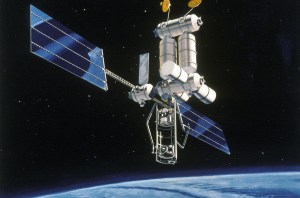
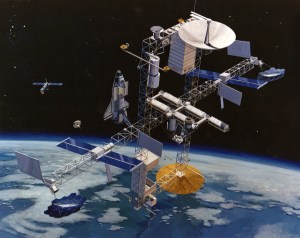
Top Row: Space Station Designs (1982) Bottom Left: Dual Keel Station Bottom Right: Austere Modular Space Station

In 1980, Ted led a team that created this mural entitled Space Products. Unveiled to the public at the Kennedy Space Center Visitor Complex, it was later moved to the Launch Control Center. In addition to his aerospace work, Ted was also a portrait and abstract painter. An unassuming and humble man, he never had any real interest in promoting or selling his art, most of which he gifted to friends and family.

Ted retired in 2002, and passed away peacefully in 2017 at the age of 86, survived by second wife Afsanch and the children of both his marriages: Pamela Victoria, Angela Carole, Jonathan Michael, Andrew Christopher, and Arman Jason.

People who knew him described him a man who defined class, gentility, kindness and humor.

There’s scant information about Ted available online, but you can read a little bit more about him here.

Image credit(s): McDonnell Douglas, Boeing, North American Rockwell
Image source(s): Mike Acs, SDASM Archives, Numbers Station, National Archives

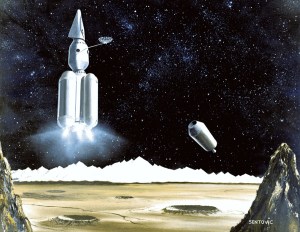
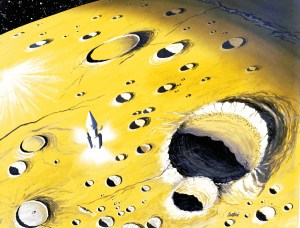
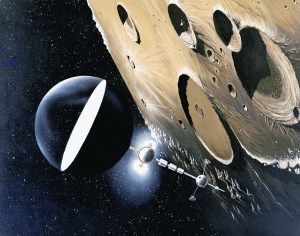
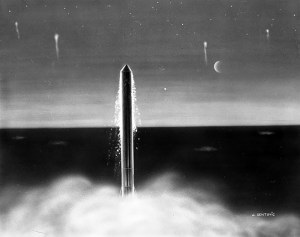
Artist Profile: John Sentovic

John M. Sentovic

Born:  1924 – Lead, South Dakota

That’s pretty much everything the internet has to offer on John Sentovic. He lived. And maybe he died. And that’s something of a tragedy to me, because he is/was a rather amazing artist who painted some incredible things for a company that was in the business of making incredible things.

And that’s John Sentovic, Sentovic  the unknowable. Or he was, until a week or so ago when I got an email from Mike, who’d come across a piece that SPACE AGE ran about him in 1960.

So John was indeed born in 1924, in Leed South Dakota. In 1925 his family moved San Diego where he graduated as an art major from San Diego High in 1943. A month after graduating he joined the Navy and served as a gunner’s mate aboard a tanker in the Pacific. In 1945 he was transferred to the Naval Ammunition Depot at Hawthorne Nevada, where he was – amongst other things – the staff artist and sports writer for the base newspaper. After his discharge in 1946, Sentovic was playing semi-pro ball in San Diego while waiting for G.I. approval of his plans to attend art school. A scout for the Boston Braves asked him to play ball for a Brave farm team.

“I was torn between two loves – art and baseball,” John said. “Finally, after a long talk with myself, I chose the field of art.”

After attending La Jolla, John worked at an advertising agency, then spent time as a staff artist for the San Diego Union-Tribune before joining Convair in 1953. In 1954, Krafft Ehricke, who had just joined Convair to work on the Atlas, became interested in John’s art which is when their partnership began.

In 1958, just a year after Sputnik 1, Ehricke designed a four-man space station known as Outpost. The illustrations above show the arrival of the Atlas vehicle in orbit, conversion into a station and installation of a nuclear powerplant. The design inspired the Hawk Atlas Space Station kit released in 1960.

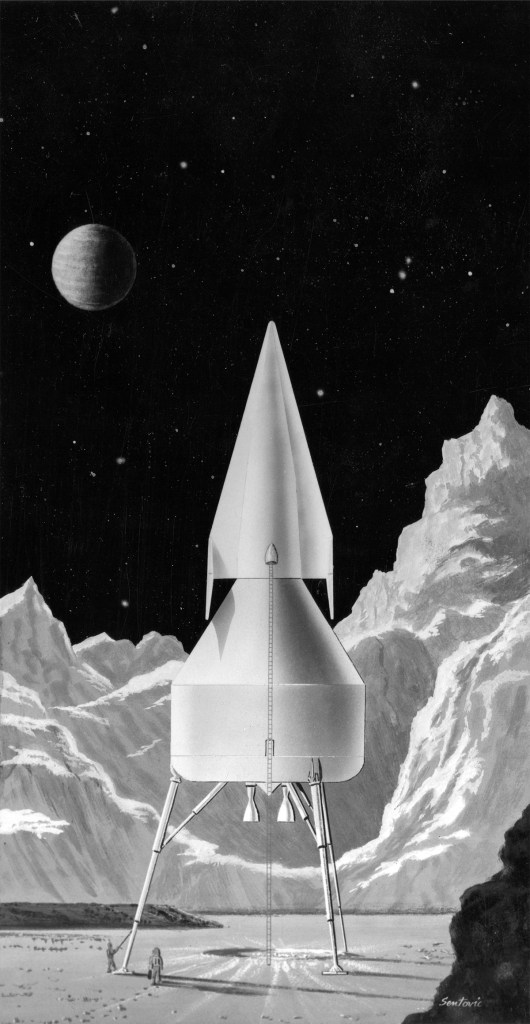
The iconic Ehricke lunar lander beautifully painted by John in the late fifties.

Solar-powered vehicle in lunar orbit by Sentovic, painted around 1959. If John had a masterpiece, I think this is it.

Illustrations depicting HELIOS, a nuclear ferry design.

Convair’s Apollo M-1 proposal is a fascinating “what-if”, expertly rendered by John in 1962.

John created these renderings of the Saturn RIFT in the early sixties.

Begun in 1962, EMPIRE was the first study of a Mars mission conducted under NASA’s auspices. Three contractors were selected: Aeronutronic, General Dynamics, and Lockheed. Ehricke led General Dynamic’s EMPIRE team, the result was an exhaustive study of Mars orbiter and landing missions.

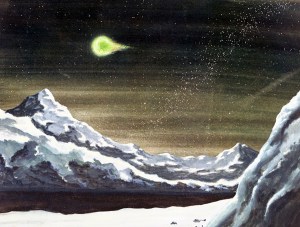
John put his airbrush aside for some of his paintings of EMPIRE surface operations , creating amongst others this unusually lush vision of the Martian surface.

John never lost his love for sports; he liked to swim, played a round of golf once a week and played shortstop on the Convair softball team and thats’s almost where the trail runs cold. I don’t know for sure when John retired, but he passed away in 1999 and was laid to rest at the Fort Rosecrans National Cemetery in San Diego. The San Diego Air & Space Museum has shared over one hundred of John’s pieces of their Flickr account, but for convenience sake I’ve created a gallery here if you’d like to dig a little deeper.

Image credit: Convair
Image source(s): Mike Acs, SDASM Archives
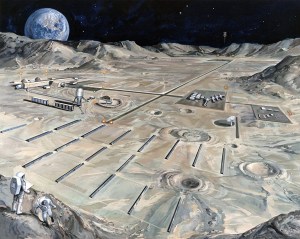
Artist Profile: Roy Gjertson

Born in Minnesota in 1925, Roy served as a crewman on Army Air Corps Liberators during World War II. Returning to civilian life, Roy and his wife Elnar Fay settled in San Pedro. After taking art lessons, Roy worked for several aviation companies in the Los Angeles area in the fifties and sixties. Accepting  a position at Convair, Roy and his family moved to San Diego in 1967.

Roy’s candy-colored art of past, present and future projects enlivened General Dynamics reports, brochures and proposals for over two decades. Roy’s paintings are loose, almost cartoony but beautifully composed.

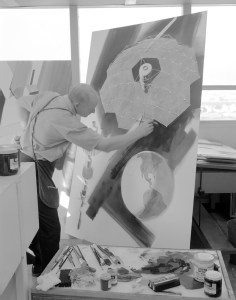
The artist at work in the studio.

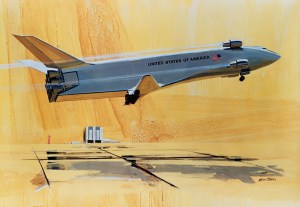
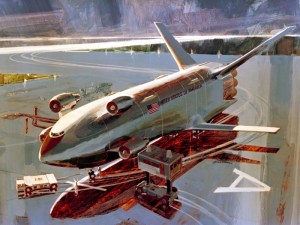
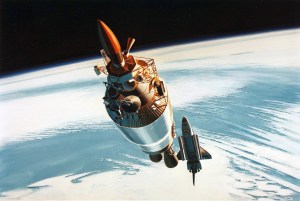
Roy’s incredible paintings of fly-back boosters Convair developed for the Shuttle Program were part of the inspiration for this blog. 

Demonstrative of his range, Roy’s more technical illustrations are sombre and atmospheric. The pop art colours give way to a muted palette and his lighting shifts towards a chiaroscuro look.

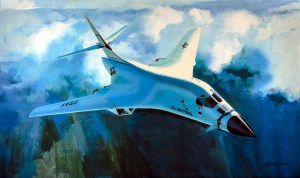
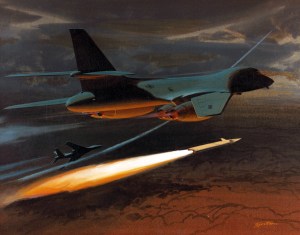
Roy retired in 1992. A large number of Roy’s works were donated to the San Diego Air & Space Museum when General Dynamics shuttered the San Diego division in 1993, including these two particularly ominous paintings of the Rockwell B-1 Lancer. 

Roy passed away in 2018, survived by children Erica and Dennis and Dennis’ wife Kathy. Elnar Fay died in 2006. They’re interred together at Fort Rosecrans National Cemetery.

Image credit: Convair
Images: SDASM Archives
Artist Profile: John Gorsuch

I thought it would be fun to do something I’ve been planning for a while, and take an in-depth look at one artist: John Gorsuch. Gorsuch worked as an illustrator for the Glenn L. Martin company for at least two decades. He began his career there when Martin was still in the propliner business and continued to create illustrations for them into the late sixties, when Martin had become Martin Marietta and shifted their focus to missile and space products. Beyond that there isn’t a lot to tell, we know next to nothing about the man. Some of his art survived and that and the fact it’s here, is in no small part due to efforts of people like Mike and Ed. Do enjoy!

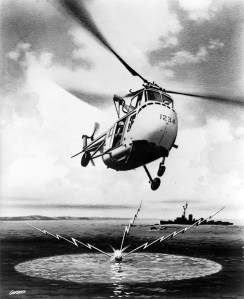
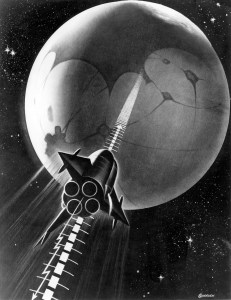
Above (L-R): John’s kinetic 1959 illustration shows a Sikorsky H-19 Chickasaw (S-55) recovering a film canister dropped from an orbiting satellite. From the same year, a concept of radar-guided spaceship heading for Mars.

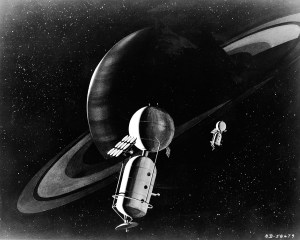
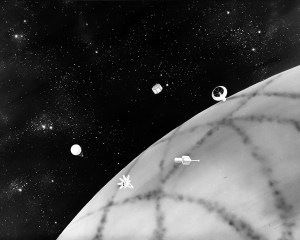
Above: Painted sometime between 1959 and 1961, Gorsuch’s illustration of a more modern looking pair of manned satellites in orbit around Saturn. John created these beautiful paintings of Ranger probes in 1960. Below: John created these beautiful paintings of Ranger probes in 1960.
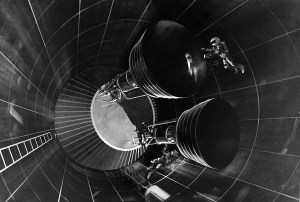
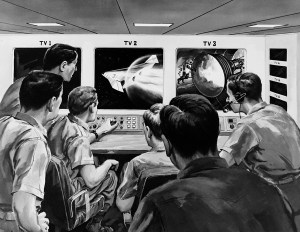
Dated December 4, 1960, a B-70-type aircraft carrying something nefarious looking.

Gorsuch created this painting of a primordial Earth in 1961, for an article by Dr. Israel Monroe Levitt.

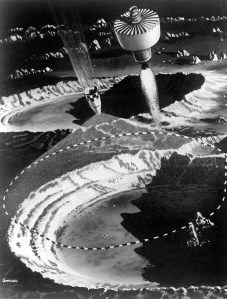
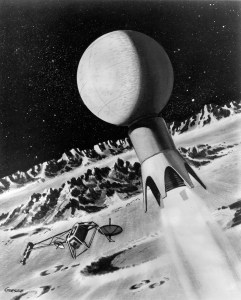
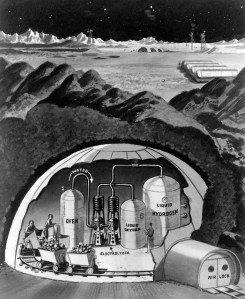
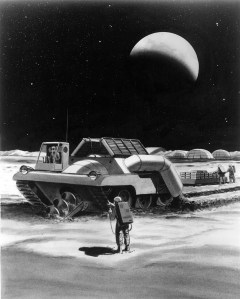
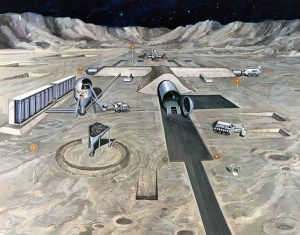
If you’re going to build a moon base in 1962, you’re going to need tanks. Space tanks and lots of them!

From 1963, “mobile fighter satellites ‘ride herd’ on their flock of offensive satellites to protect them from possible destruction by the enemy.” If you don’t love this image you may not have a soul.

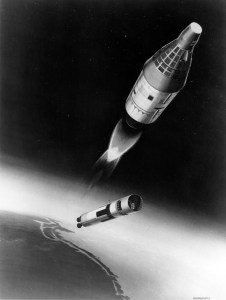
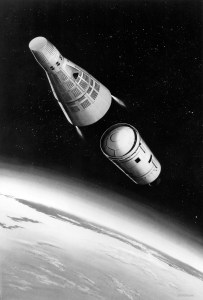
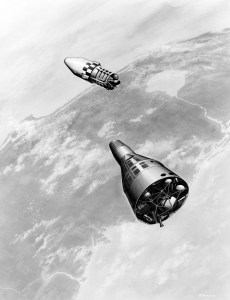
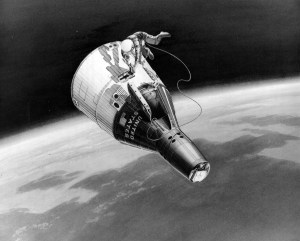
Taut, dramatic depictions of Project Gemini spacecraft. The bottom piece was used by NASA as an official press release, S-66-50809 and can be found in that form here, on the New Mexico Museum of Space History’s Flickr page.

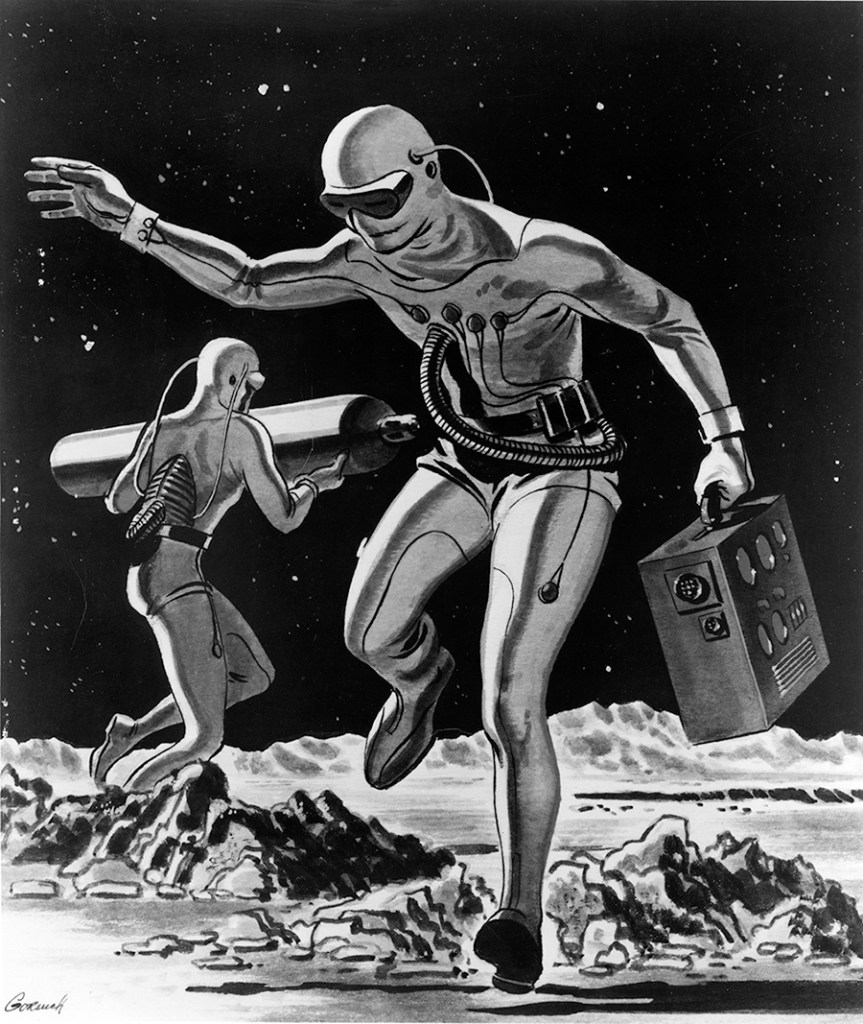
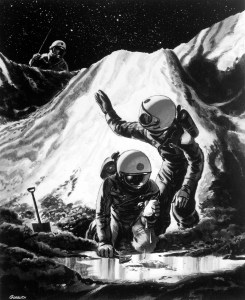
Top Left and Right: Art from 1964 and 1967 illustrating articles by Dr. I.M. Levitt. I’m especially amused by the driver of the vehicle on the right. Is it even remotely possibly that that is The Invisible Man? Bottom: Beautifully composed and impeccably lit painting from 1969, depicting astronauts discovering a lunar ice deposit.

John’s high contrast sensibility lent perfectly to reproduction in black and white – but like most agency art – the originals were likely all created in color.

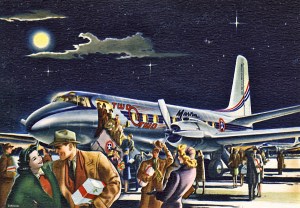
Glenn L. Martin Company Christmas card for 1948 highlighting their newest product, the 2-0-2 airliner.

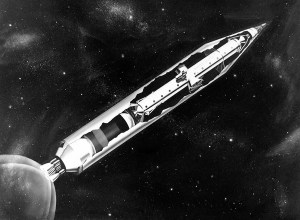
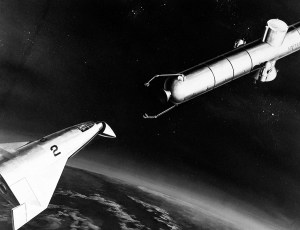
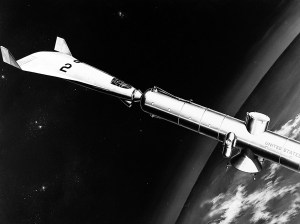
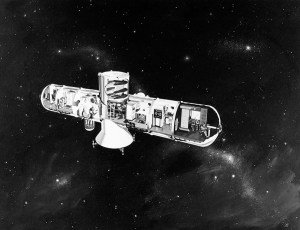
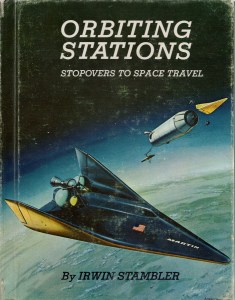
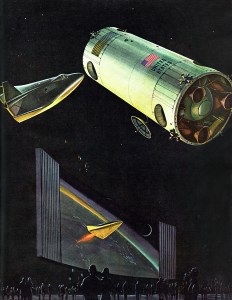
Top Left: An FDL-8 in orbit graced the cover of Irwin Stambler’s 1965 book Orbiting Stations. Top Right: From the official souvenir book of The New York World’s Fair 1964-65 – I’m pretty sure this is Gorusch – Martin Company art depicting their Space Taxi about to dock with a space station. I might be wrong about the attribution, so don’t be afraid to drop me a line if you know otherwise. Incidentally, Rendezvous in Space, the short film that accompanied the exhibit survived and is on YouTube: Rendezvous in Space – Part A, Rendezvous In Space – Part B. This 1964 clip from CBS is a fun watch too. Bottom: Beautiful image of the X-24A flying under rocket power, with Gorsuch’s signature in the lower right corner.

Image credit: Glenn L. Martin Company / Martin Marietta
Image source(s): Mike Acs, Ed Dempsey, Drew Granston, Numbers Station

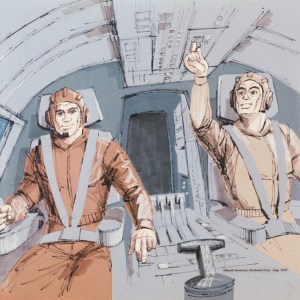
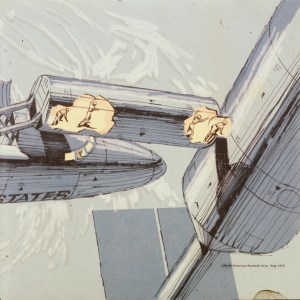
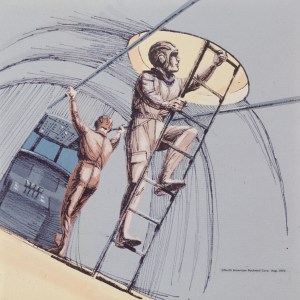
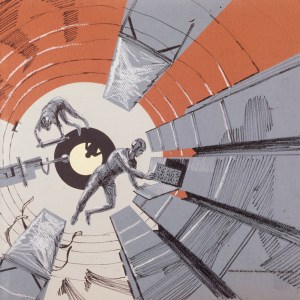
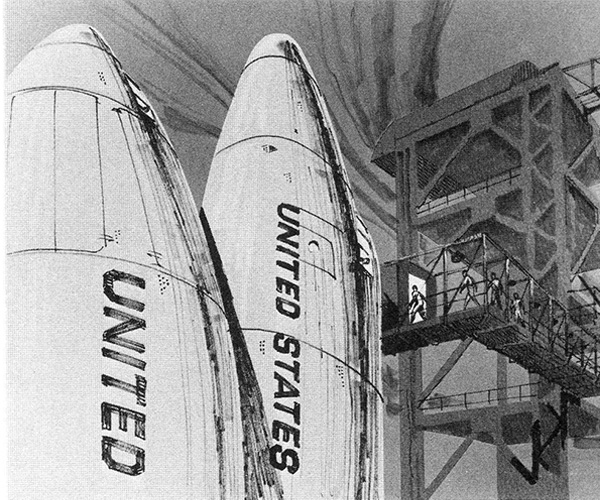
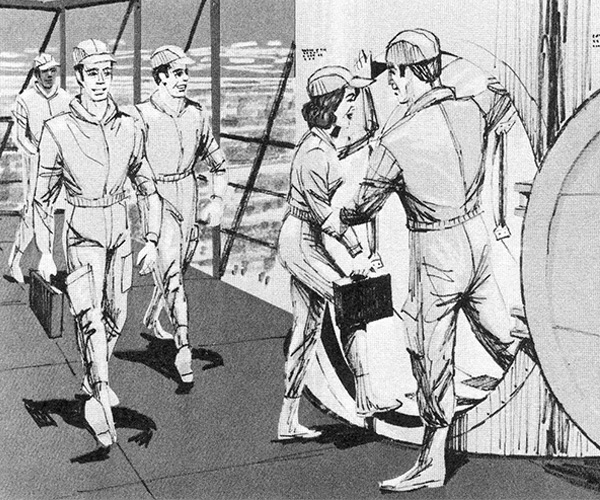
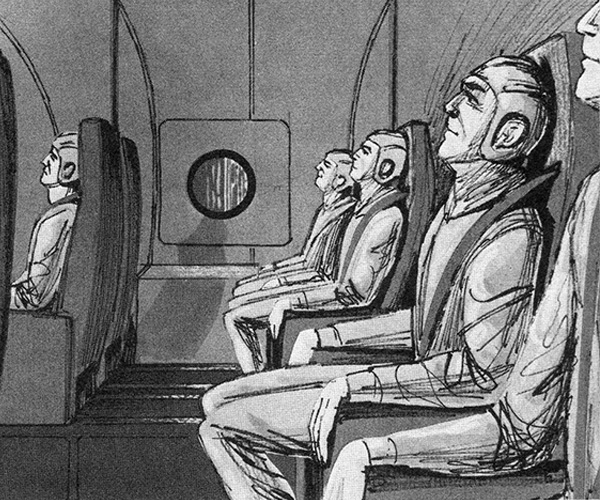
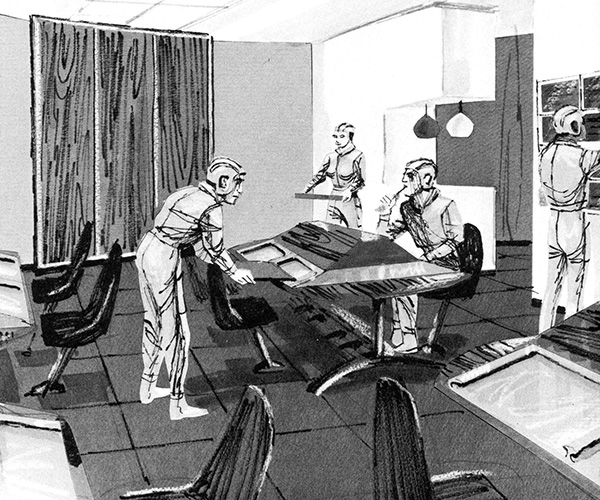
Crew Exchange Mission

see also:

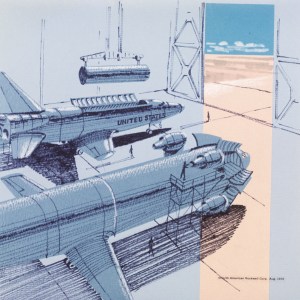
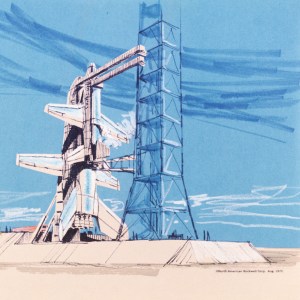
Image credit: North American Rockwell
Images: Numbers Station, Ed Dempsey