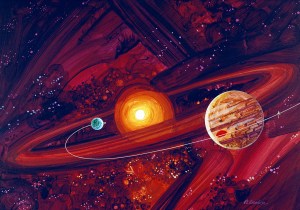
Crossing The Asteroid Belt

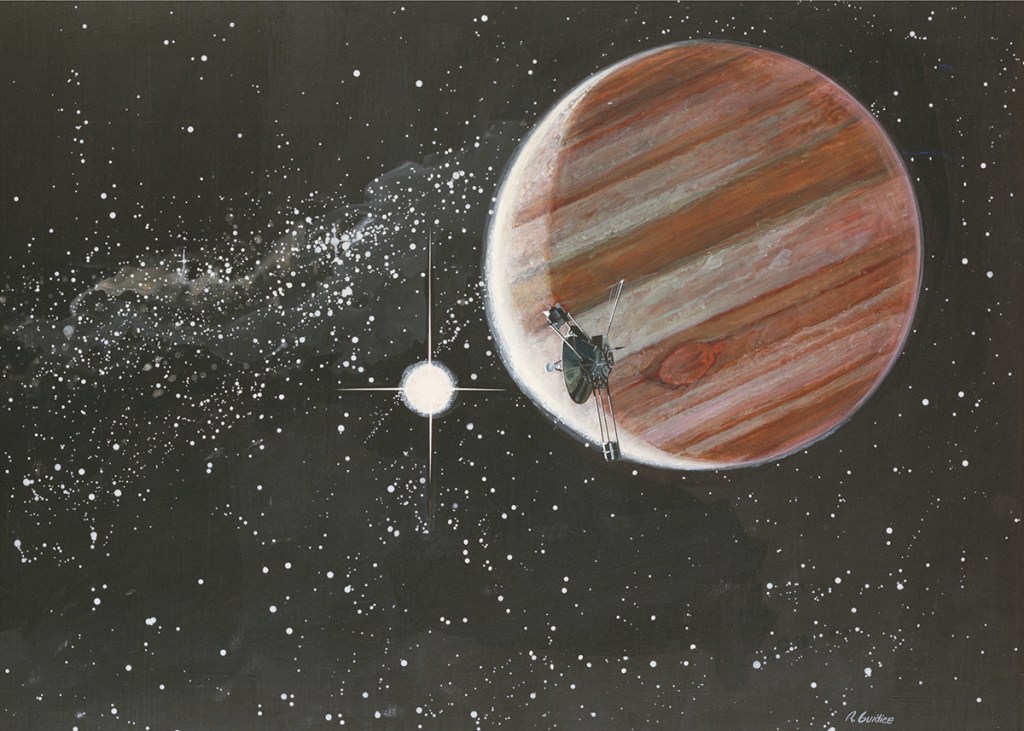
Image credit: NASA ARC
Image source: NASA Images
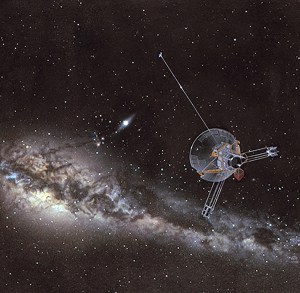
Leaving The Solar System

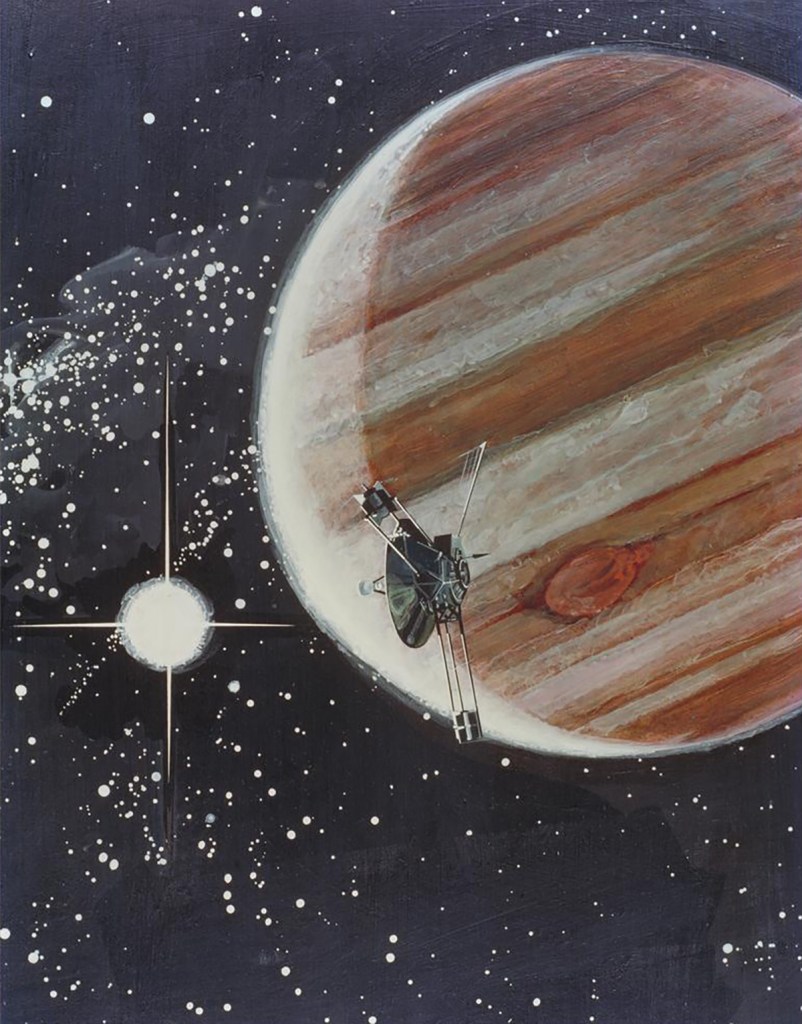
Image credit: NASA ARC
Image source: NASA Images
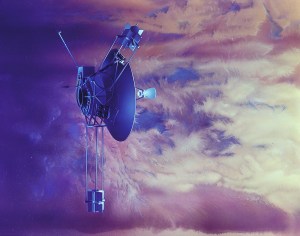
Pioneer 10

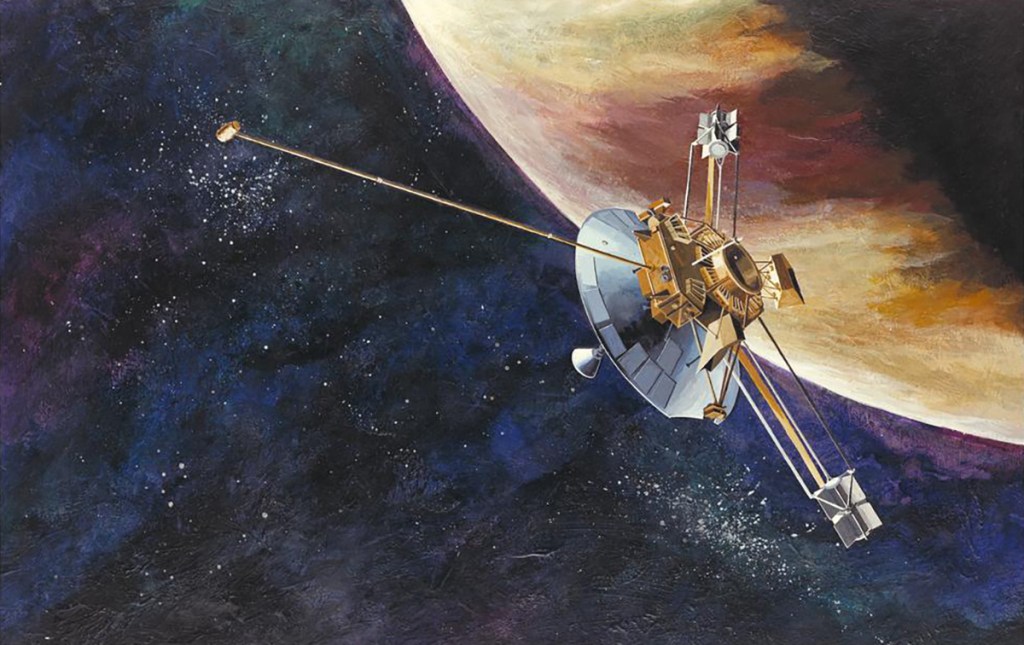
Image credit: NASA ARC
Image source: NASA Images
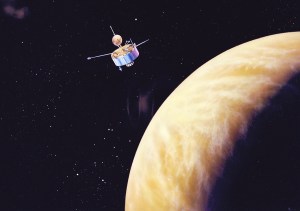
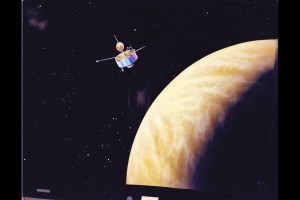
Pioneer Venus

I have to admit, the uncropped version of this image by Don Davis made me smile. That’s acetate sheet, and you can see the punch holes to line up the levels on an Acme Pegbar. That takes me back.

Image credit: NASA ARC
Image source: NASA Images
Pioneer 10 Passing Jupiter

Image credit: NASA
Image source: NASA ARC
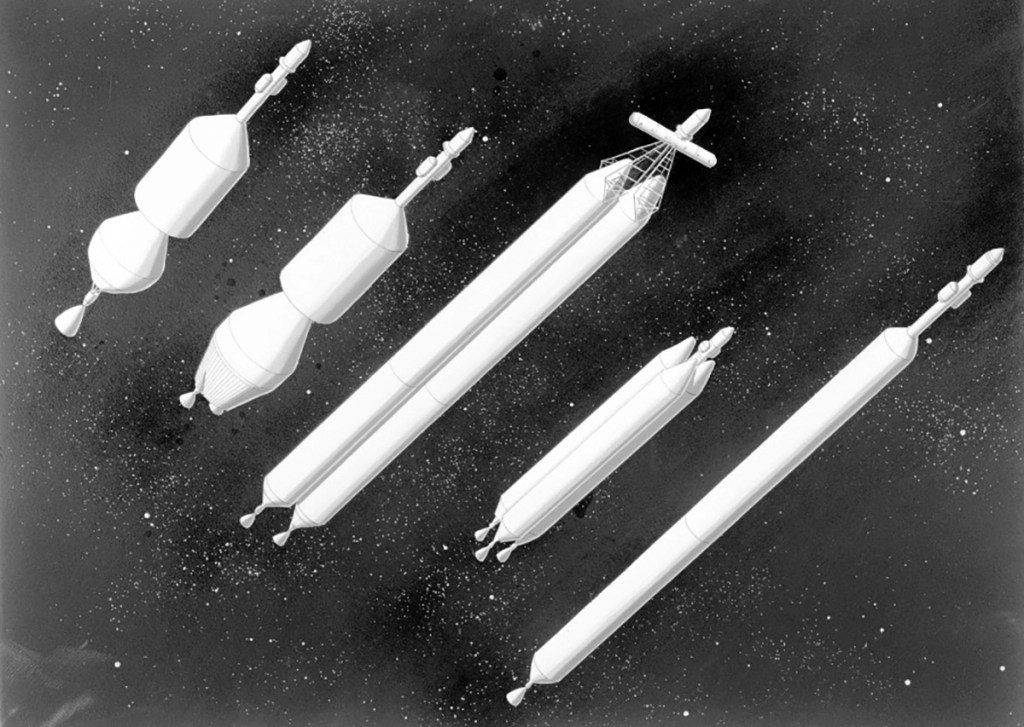
Vehicle Comparison

Image credit: General Dynamics / Astronautics
Image source: SDASM Archives
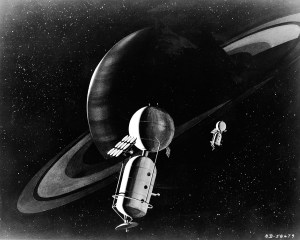
Saturn Expedition

Image credit: Martin Marietta
Image source: Ed Dempsey
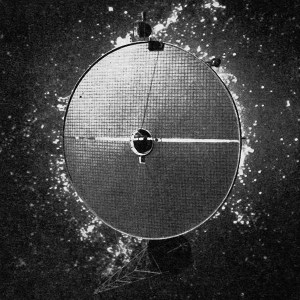
Martian Explorer

A Boeing design study for a Mars exploration probe, 40 ft. in diameter and weighing 600 lb. Assembled and launched at a space-station, the unmanned probe would draw its power from the Sun. Propelled by an ion rocket, it would take three years to orbit Mars and return.

Eagle Book of Rockets and Space
Longacre Press, 1961

Right:
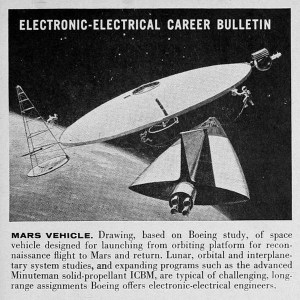
MARS VEHICLE. Drawing, based on Boeing study, of space vehicle designed for launching from orbiting platform for reconnaissance flight to Mars and return. Lunar, orbital and interplanetary system studies, and expanding programs such as the advanced Minuteman solid-propellant ICBM, are typical of challenging assignments Boeing offers electronic-electrical engineers.

Missiles and Rockets
December 7, 1959

Image credit: Boeing Aircraft Company
Image source(s): Numbers Station, Internet Archive
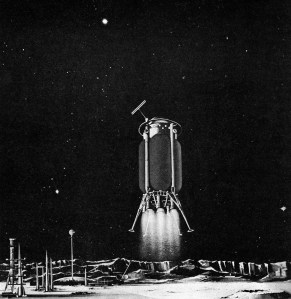
Satellite Observatory

Image credit: Boeing Aircraft Company
Image source: Mike Acs

A Grand Tour

  1. A “deep-space” craft, which does not need to take off or re-enter through Earth’s atmosphere, needs no streamlining and can utilise a very light structure. Such a space-ship is shown here landing at a lunar base.
  2. Having refuelled at a lunar base, the space-ship is shown before leaving the Moon for a journey to one of the other planets of the solar system. The cabin for the crew is separated from the rocket engines by a cluster of huge propellant tanks.
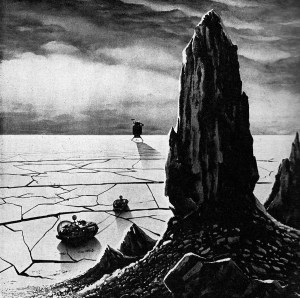
  3. After landing in the twilight one of Mercury, the explorers set out in small tracked vehicles across the parched, cracked, lifeless surface of this innermost planet of our solar system.
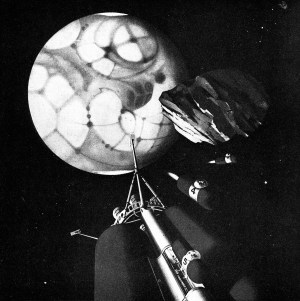
  4. After entering an orbit high above Mars, the space-shop releases a number of small landing vehicles which will carry explorers down to the “red planet”. Also in orbit, is a meteorite, representing one of the hazards of space flight.
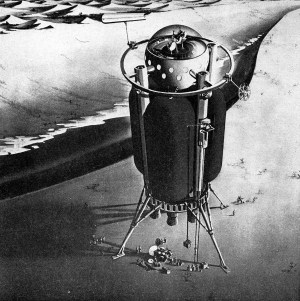
  5. After a pre-liminary reconnaissance by the small craft, the main space-ship has landed on the surface of Mars, near one of the mysterious “canals” that have puzzled astronomers for years. Soon the riddle will be solved.
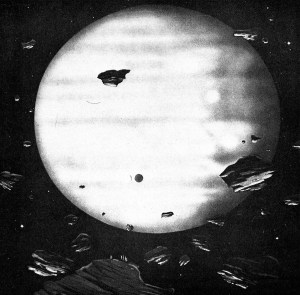
  6. Although they cannot land on Jupiter, with its dense atmosphere of poisonous gases, the explorers are able to observe it from a distant perch on an orbiting meteorite. One of the planet’s moons casts a shadow on the clouds as it passes.
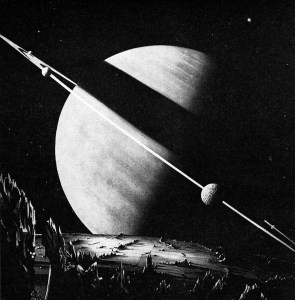
  7. Show piece of the whole solar system is Saturn, with its spectacular rings. Although this is another planet on which explorers from Earth may never land, it should be possible to observe Saturn from one if its moon, as depicted.
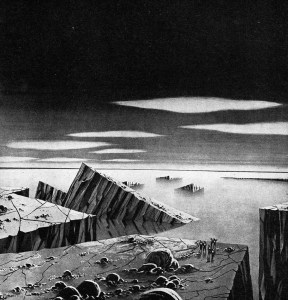
  8. Somewhere in space, explorers have discovered a dead world. Perhaps Uranus might look like this, or Pluto. Nobody knows at present,. But nobody doubts any longer than man will one day be able to learn the secrets of every corner of his own solar system.

Eagle Book of Rockets and Space
by John W.R. Taylor and Maurice Allward
Longacre Press, 1961

Image credit: The Eagle
Image source: Numbers Station
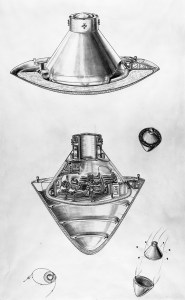
EMPIRE Re-Entry Vehicle

Image credit: Convair
Image source: SDASM Archives
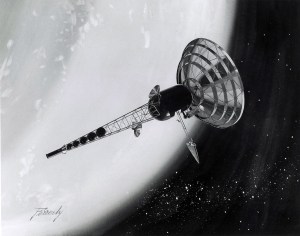
Mars Returner

Image credit: Convair
Image source: SDASM Archives