Image credit: Boeing
Image source: SDASM Commons
Tag: mars glider
Removing The Reactor
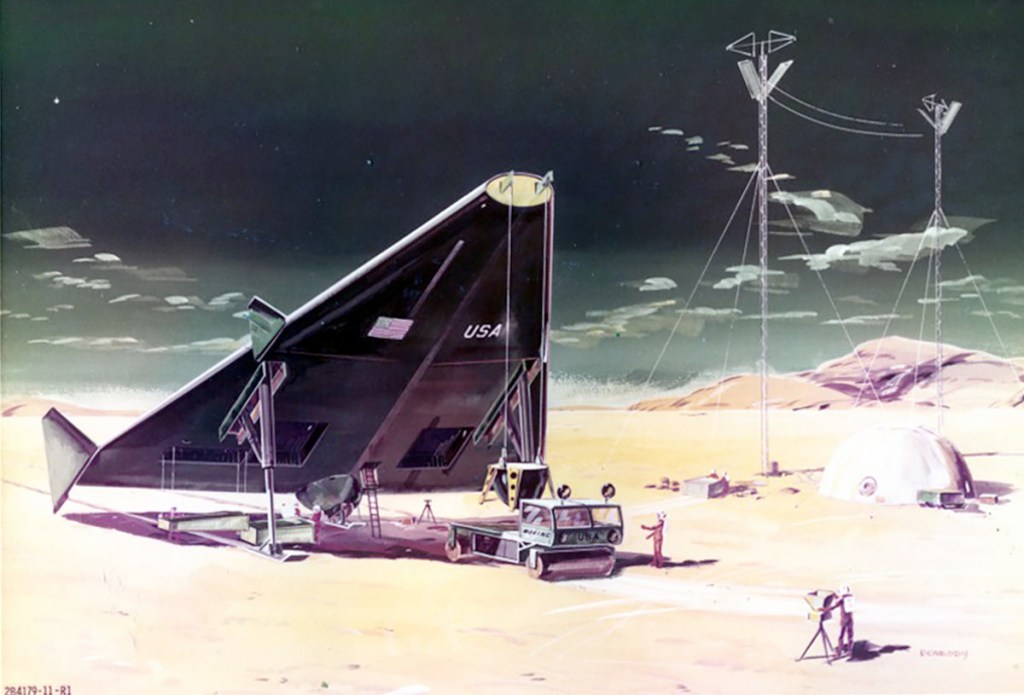
Image credit: Boeing
Image source: SDASM Archives
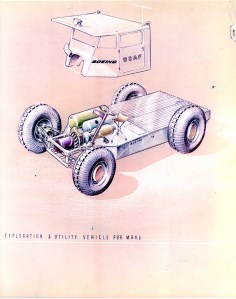
Exploration & Utility Vehicle
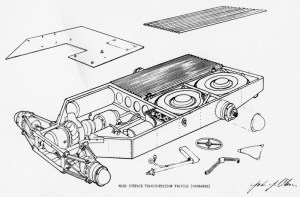
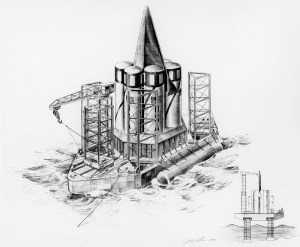
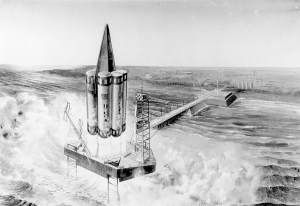
Mars Launch Vehicle
Can We Get to MARS?
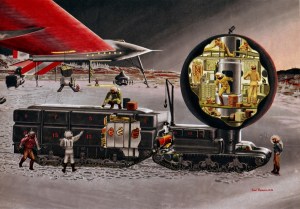
- Cutaway of plane in the foreground shows personnel, tractors in ship.
- Advance party, after landing on Martian snow in ski-equipped plane, prepares for trip to equator. Men live in inflatable, pressurized spheres mounted on tractors, enter and leave through air locks in the central column. Sphere on tractor is just being blown up. Cutaway of tractor, foreground, shows closed-circuit engine, run by hydrogen peroxide, oil. Trailer cutaway shows fuel supply, cargo.
Is there Life on Mars?
Collier’s, April 30, 1954
Image credit: Collier’s
Image source: AIAA Houston
620 Miles Above Mars
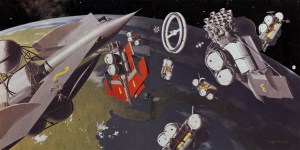
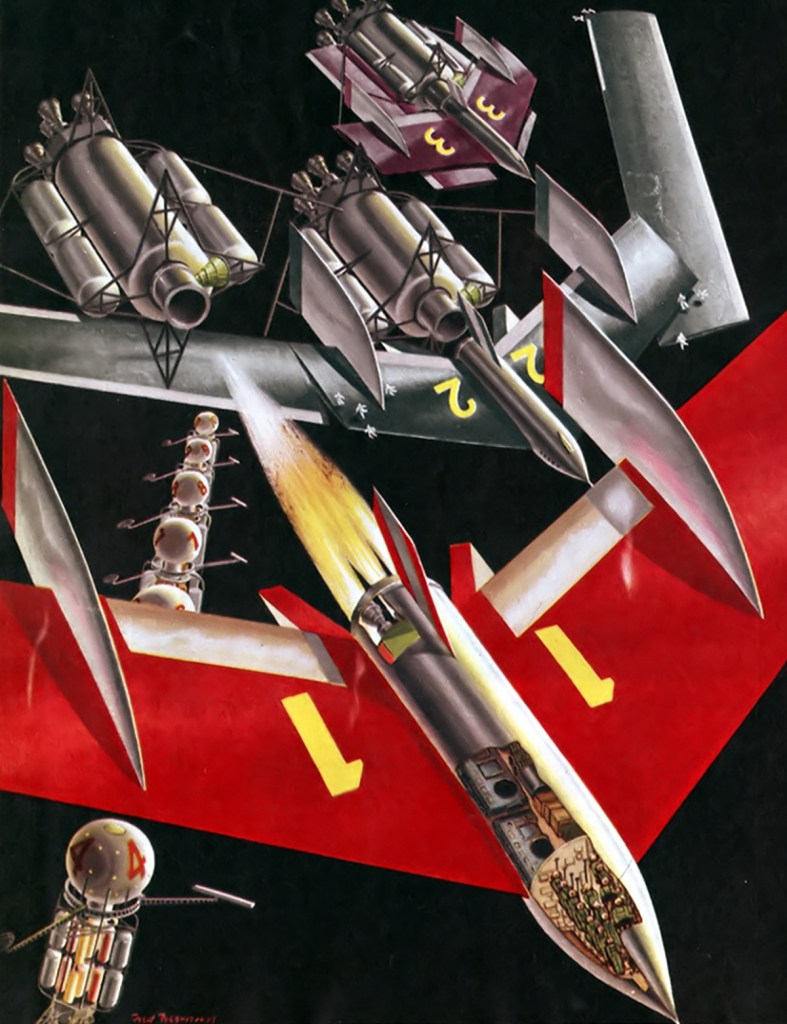
- Near wheel-shaped space station 1,000 miles from the earth, built especially for assembly of the Mars expedition, weightless workers put together 10 rocket ships required for the flight. Three of the huge space craft have torpedo noses which convert to planes for landing on the planet.
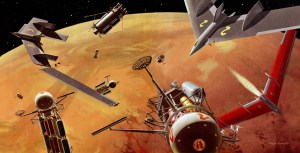
- The first landing party takes off for Mars. Two other landing planes will wait until runway is prepared for them, and then the remaining seven ships will stay in 600-mile orbit. Arms on cargo ships hold screenlike dish antennas (for communication), trough-shaped solar mirrors (for power).
Is there Life on Mars?
Collier’s, April 30, 1954
Image credit: Collier’s
Image source: AIAA Houston
Mars Launch
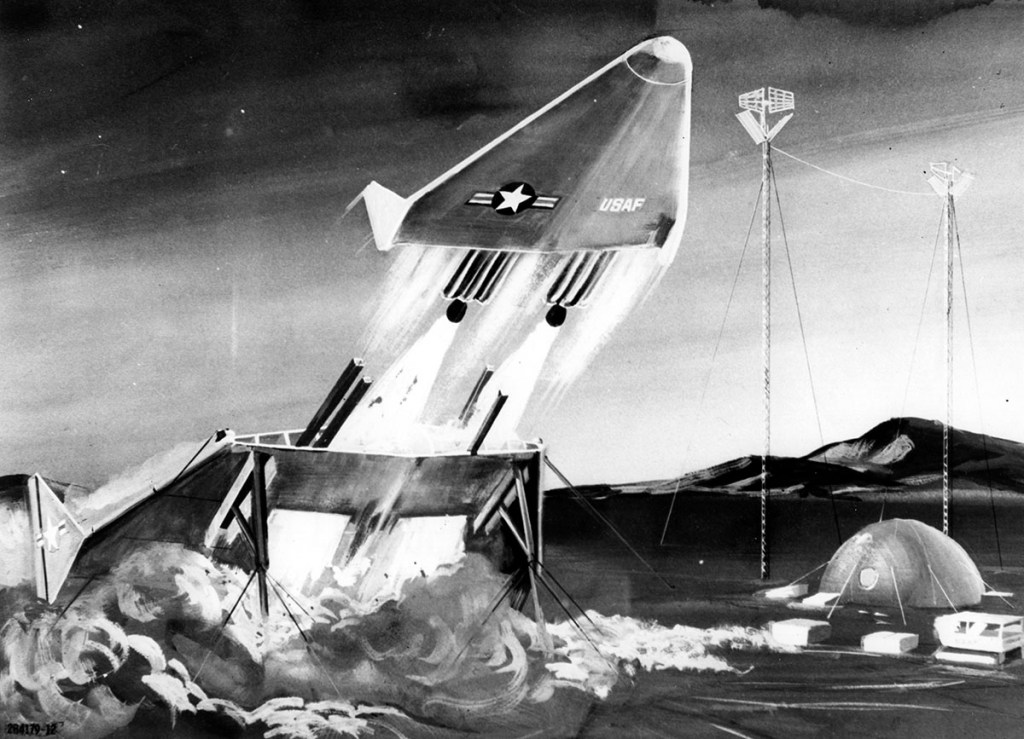
Image credit: Boeing / Chicago Daily News
Image source: Numbers Station
Mars Operational Phase
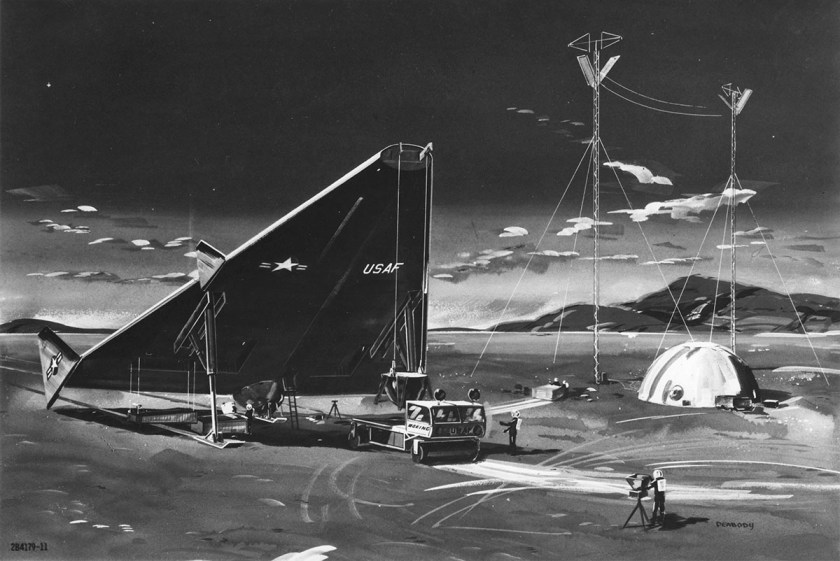
It’s January 1972.
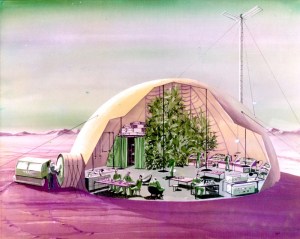
Having safely glided to a stop on a Martian plateau, this illustration depicts the Operational Phase of the mission. The crew have already inflated their six meter habitat (it’s a tent), assembled the flat-pack steamroller and are shown removing the nuclear reactor so it can be dragged at least a kilometer from base camp so it won’t kill them.
With the reactor at a safe distance, the crew of eight have 479 days to explore the surface of Mars and maybe do a spot of gardening.
You can read more about this fascinating 1960 Boeing Study here.
Image credit: Boeing / Chicago Daily News
Image source: Numbers Station
Manned Return (B&W Plates)
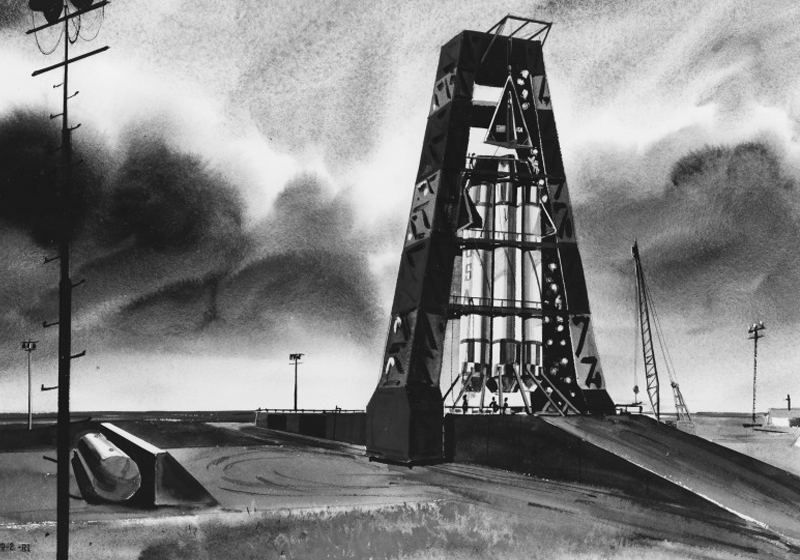
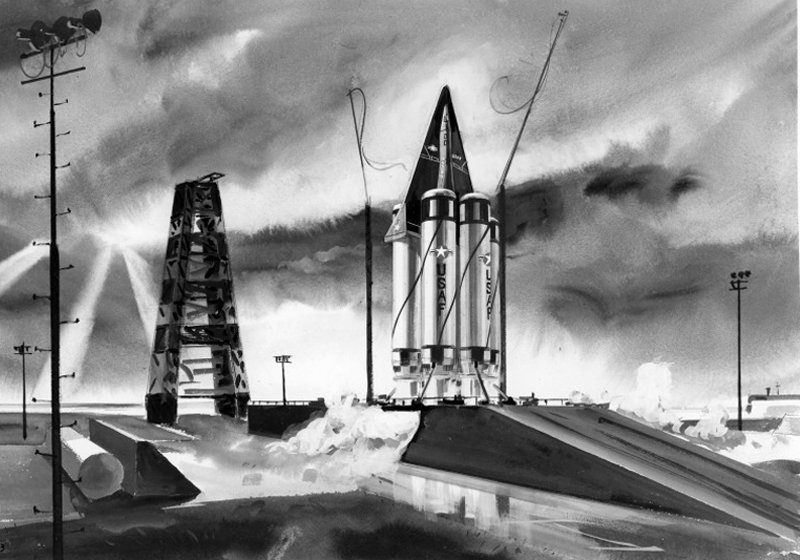
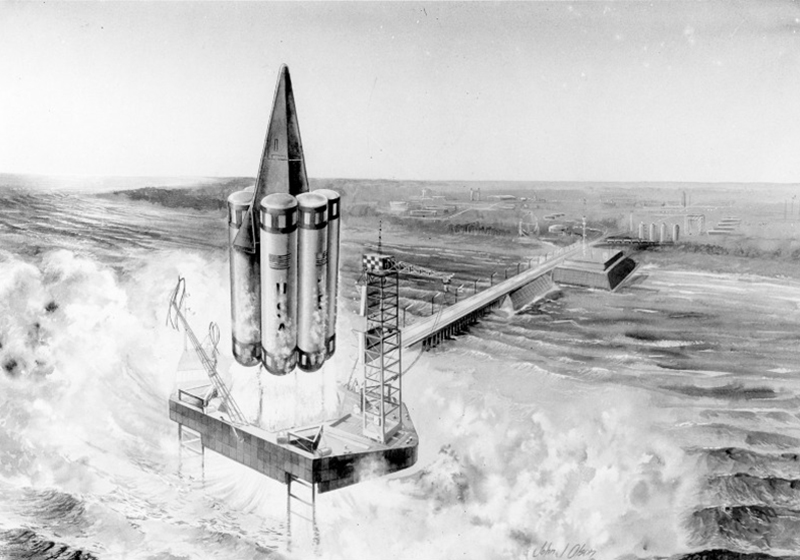
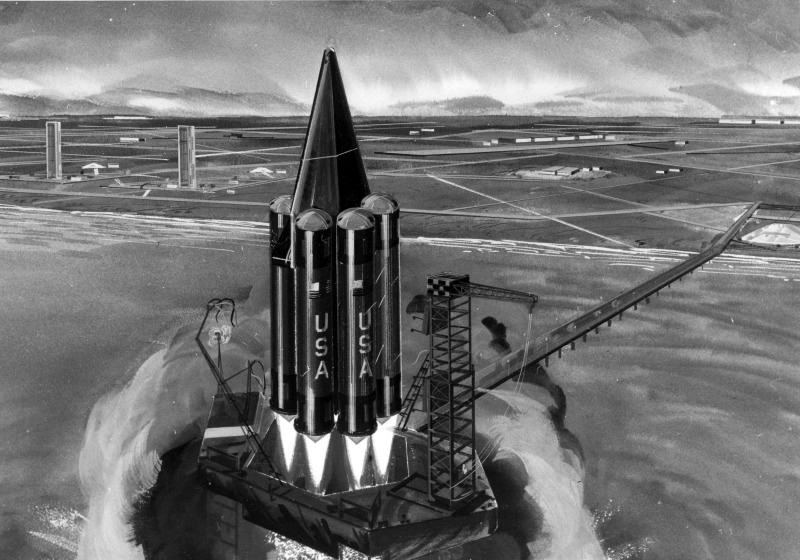
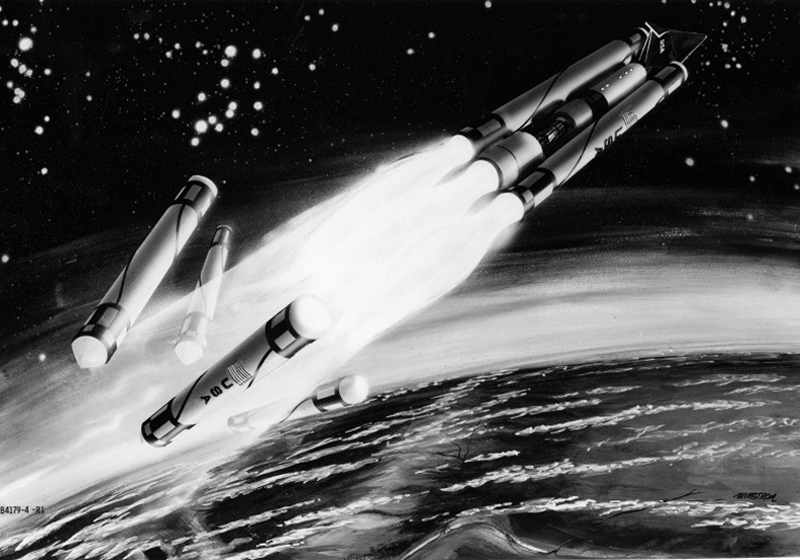
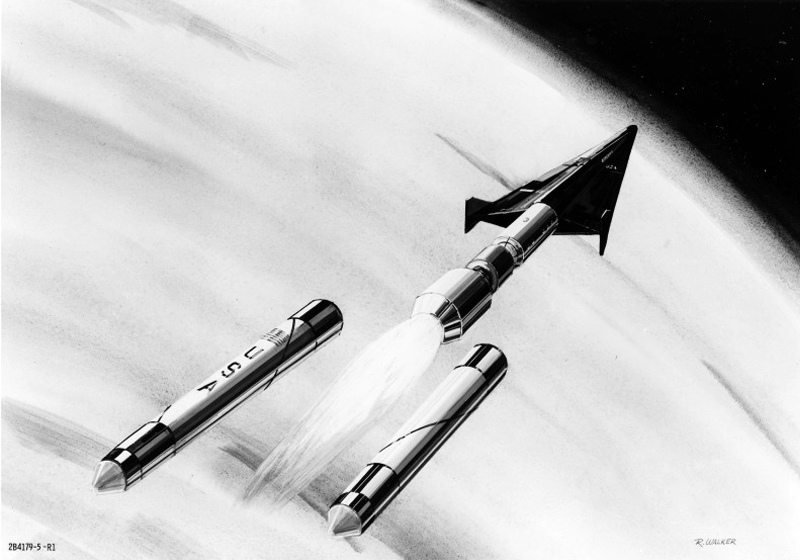
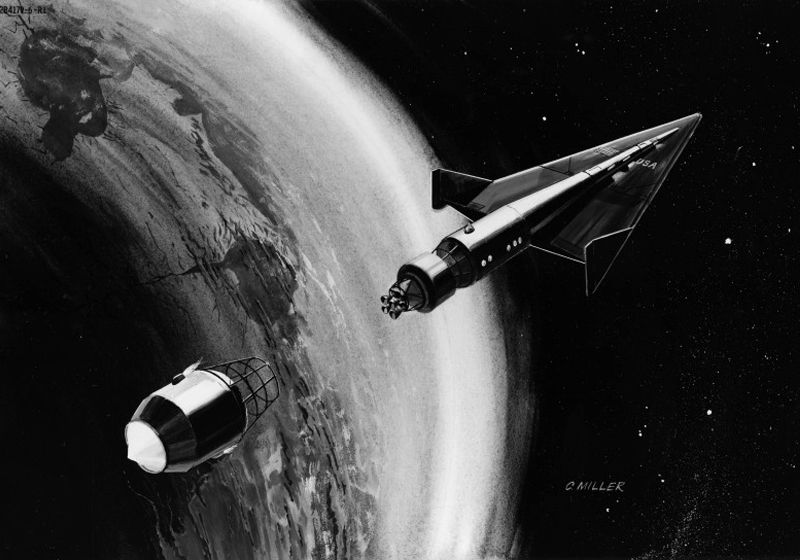
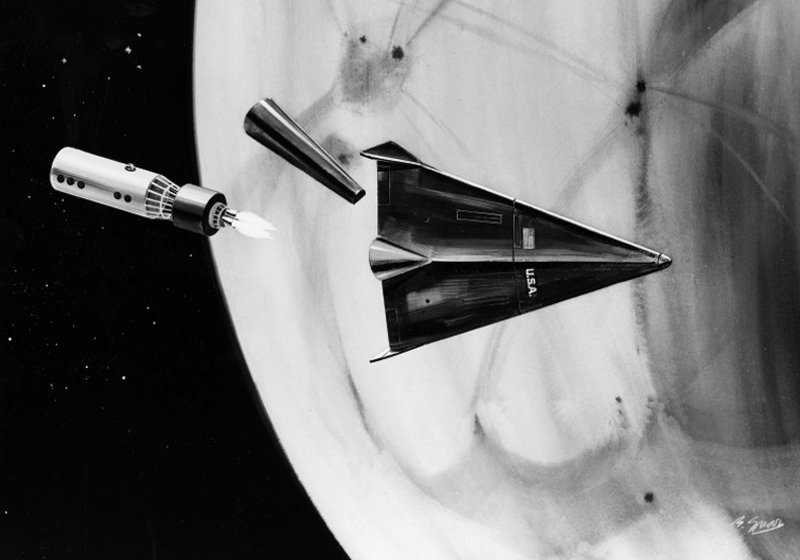
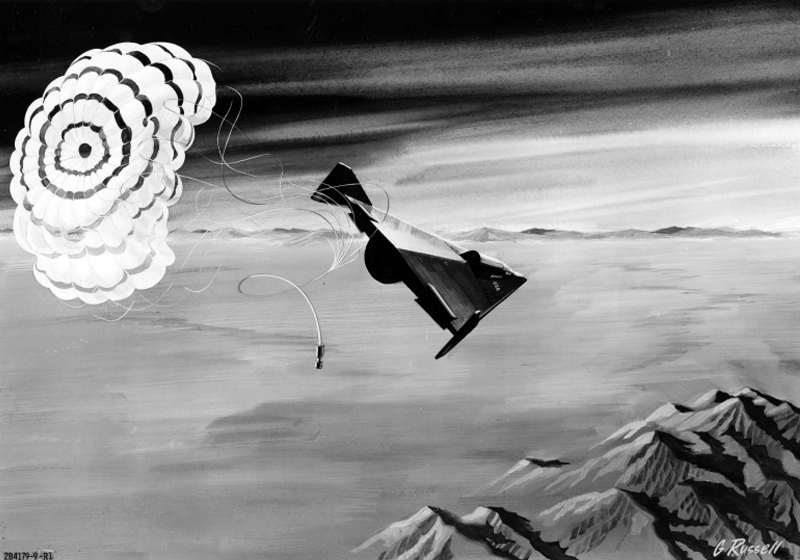
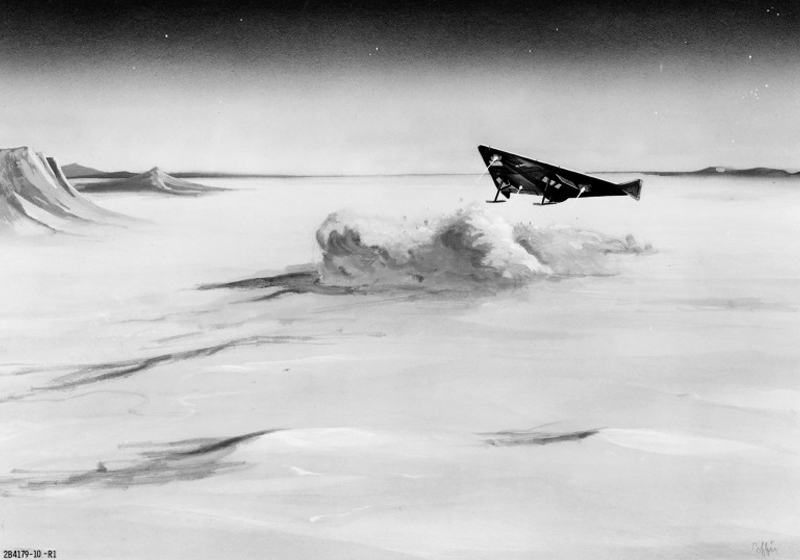
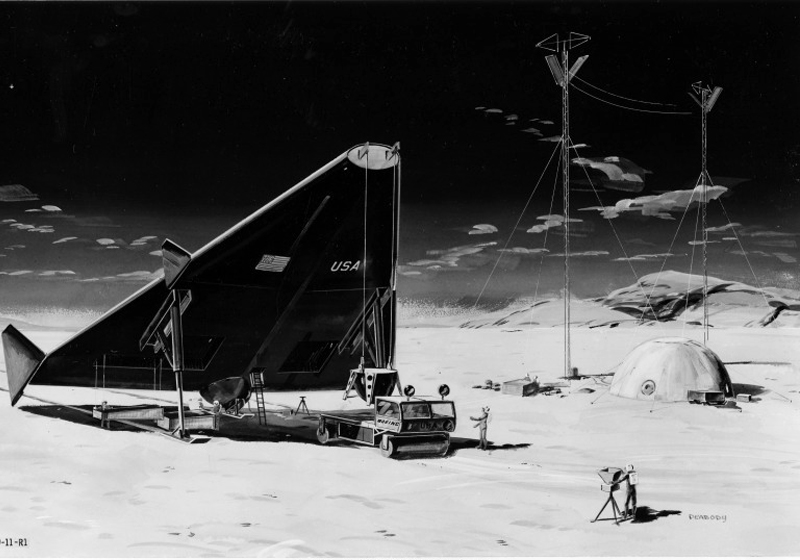
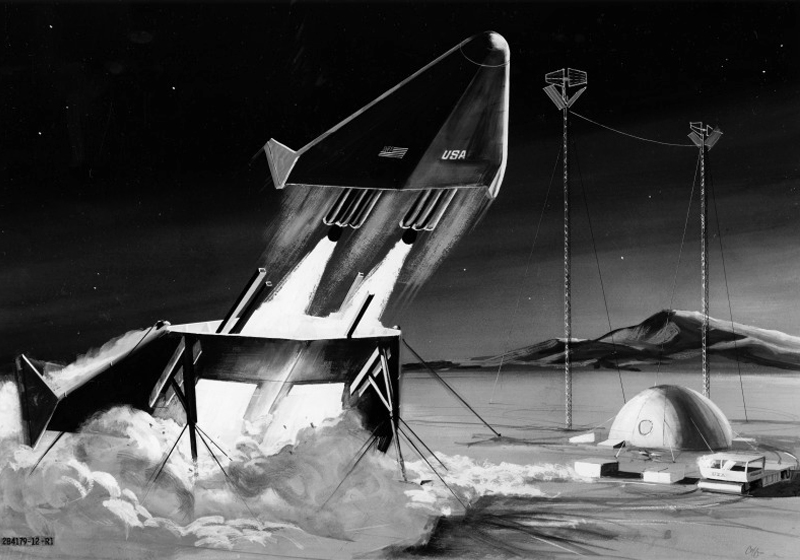
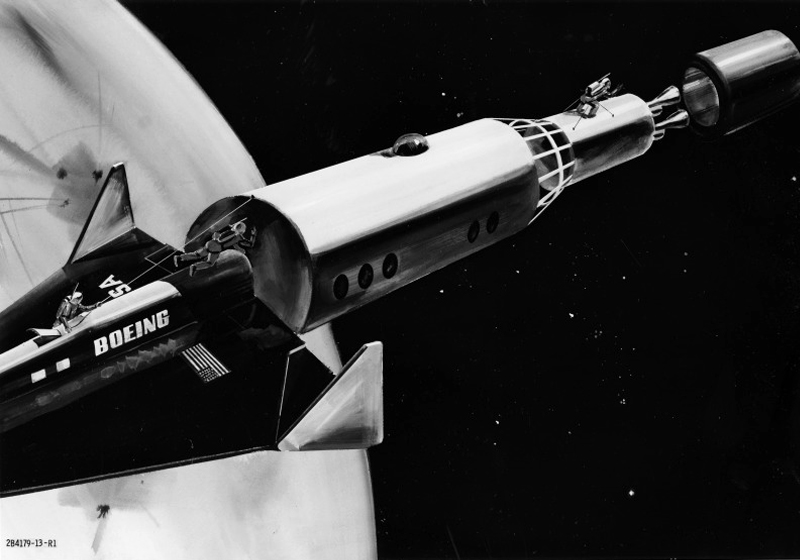
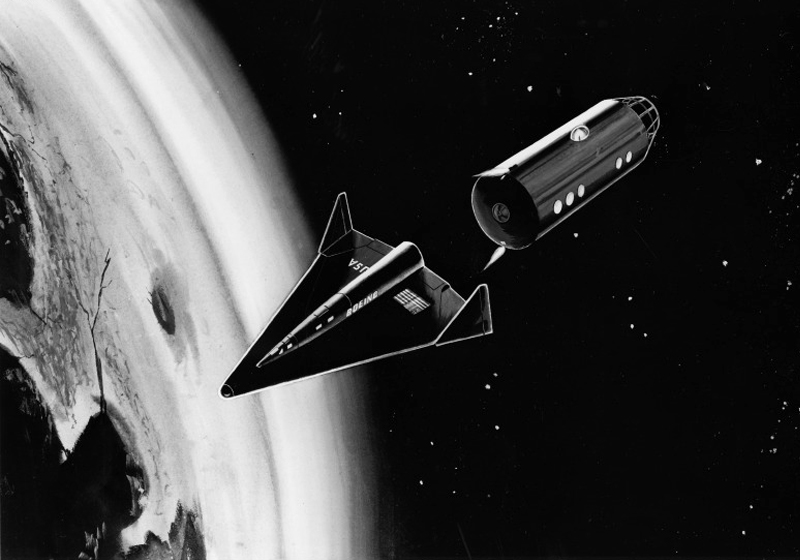
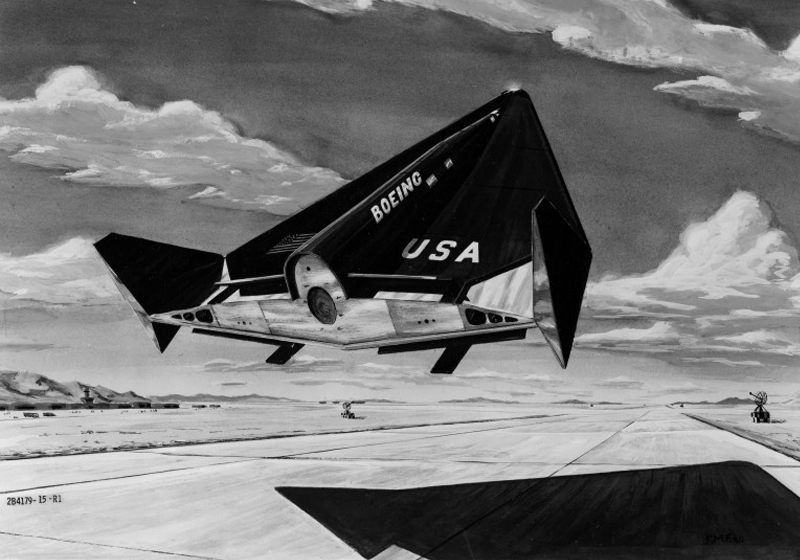
Image credit: Boeing
Image source: SDASM Archives
Manned Mars Vehicle
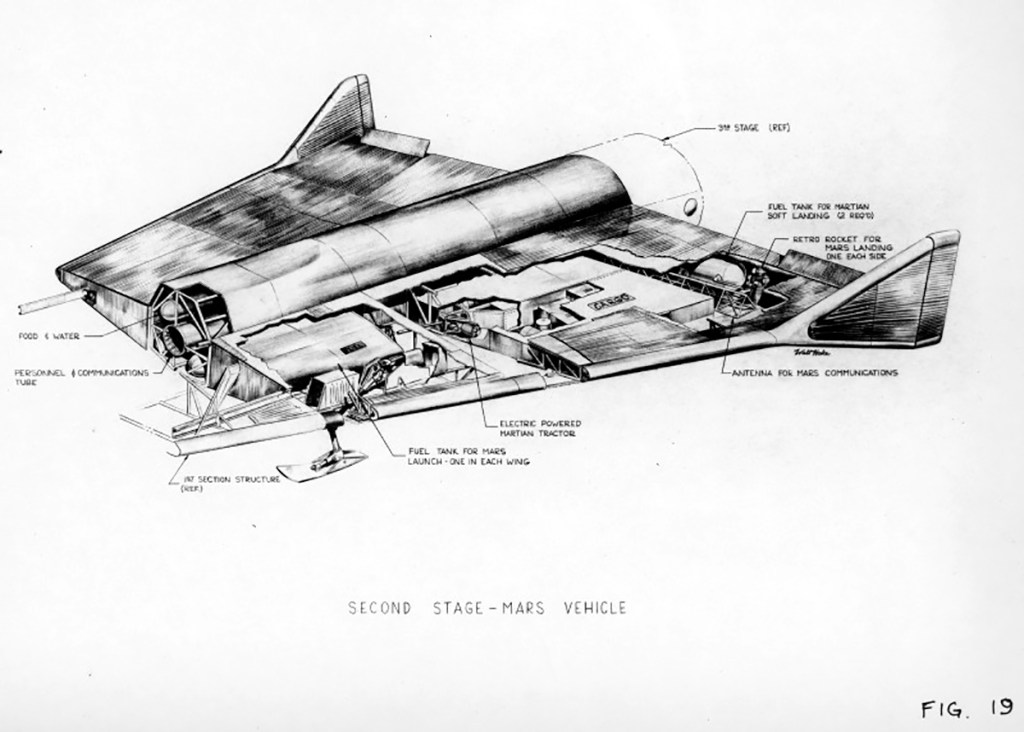
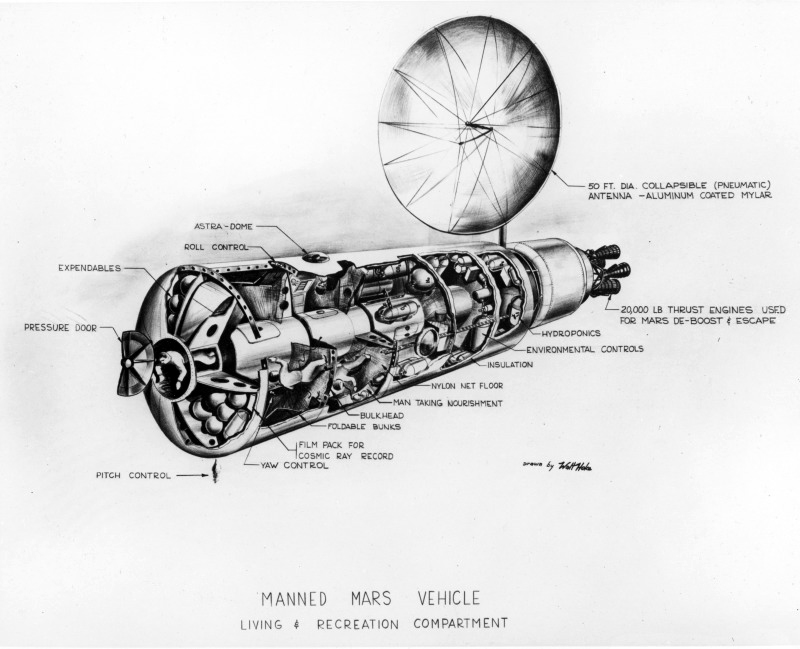
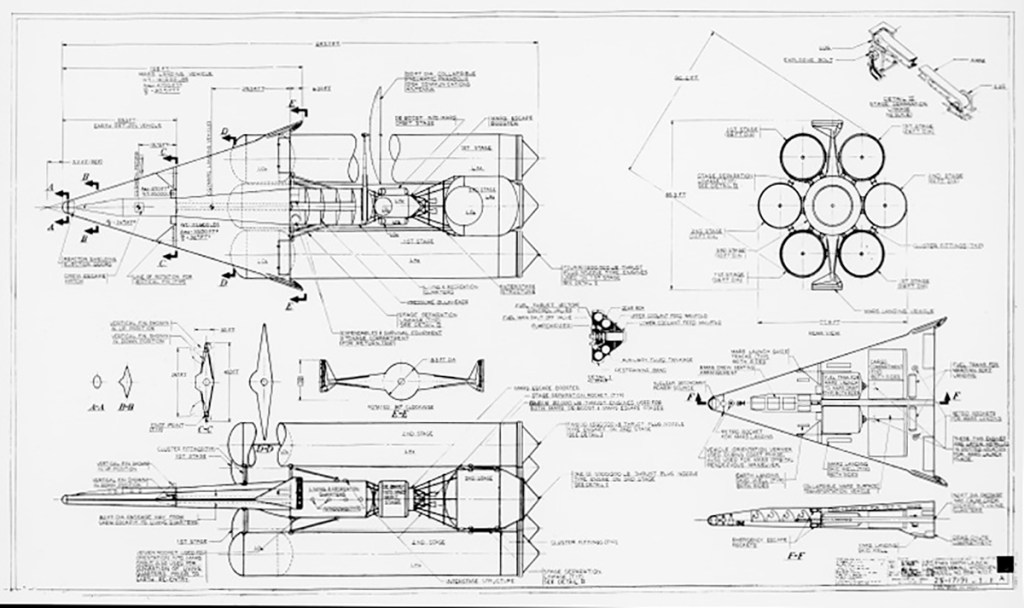
Mars Glider (1960)
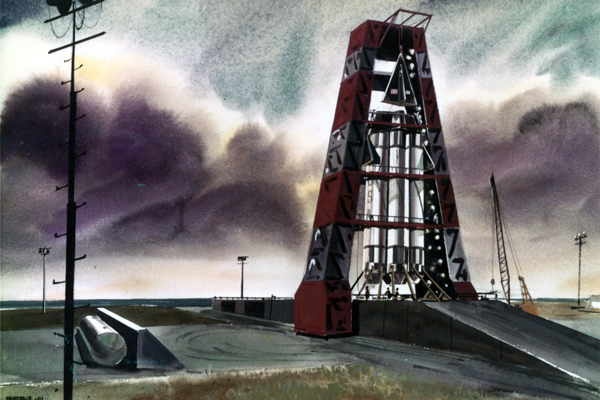
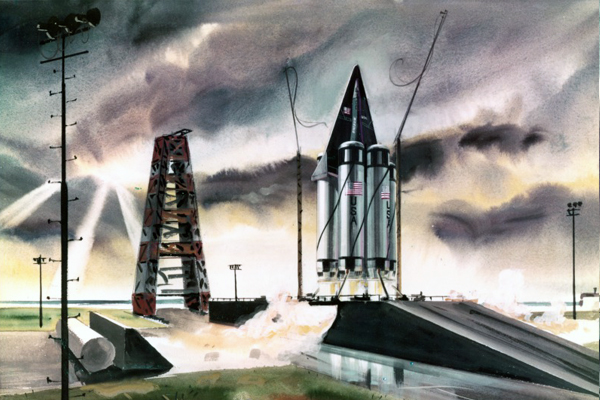
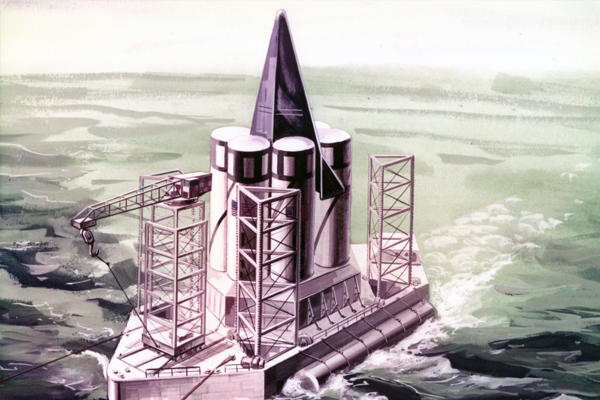
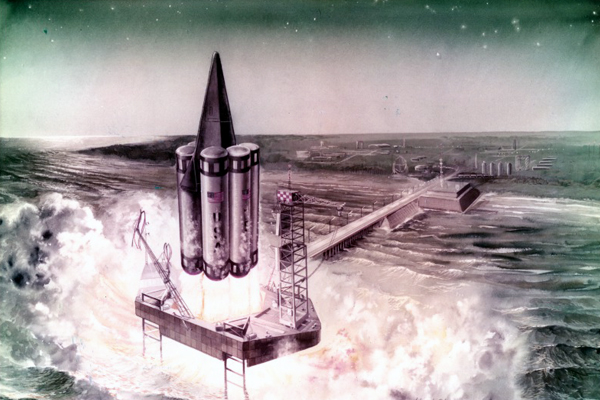
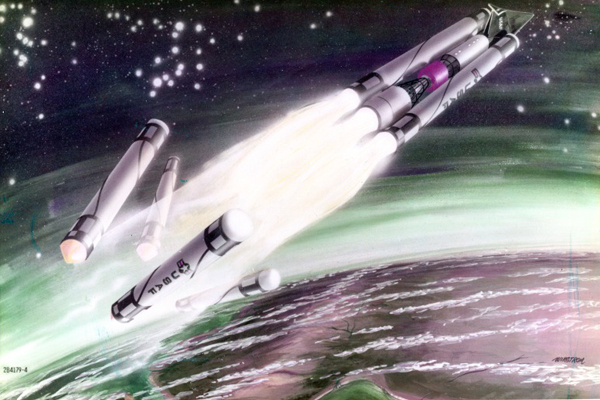
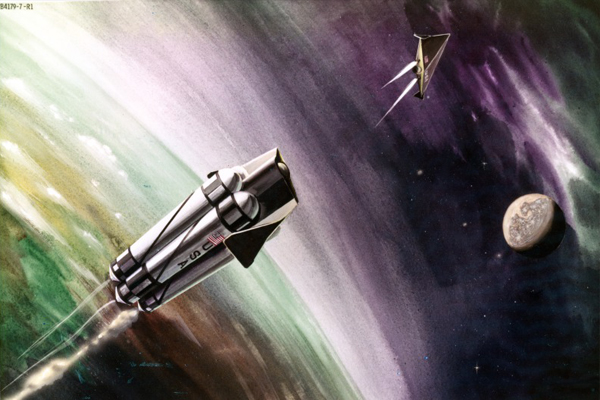
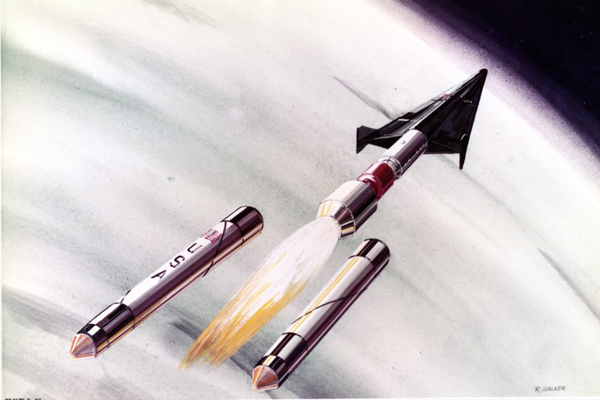
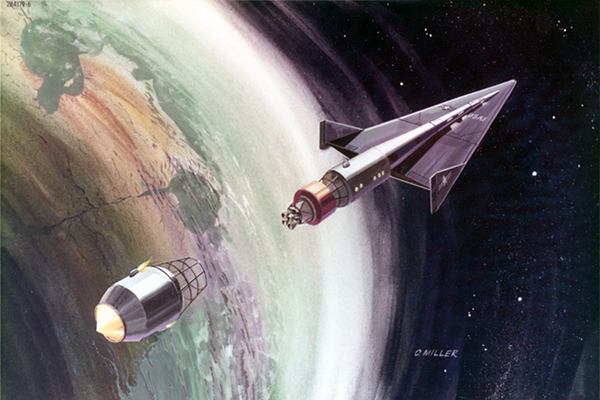
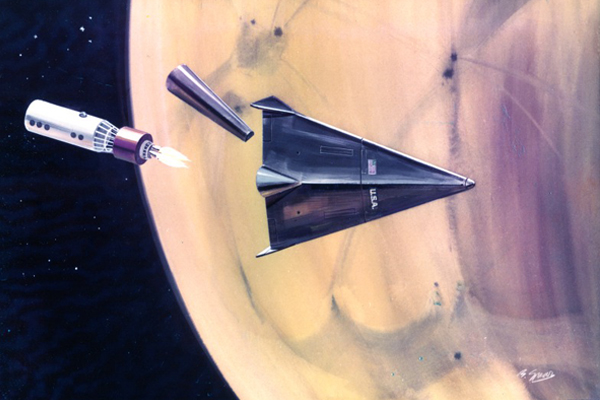
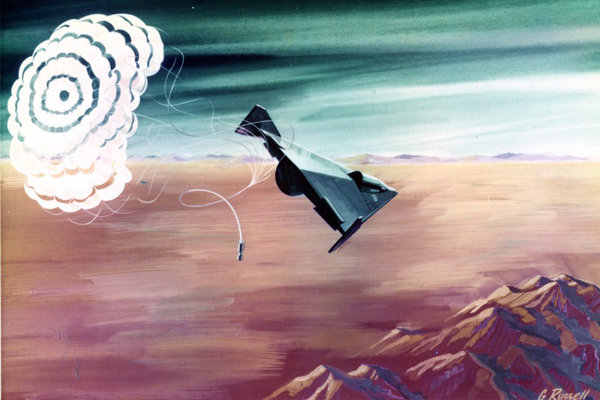
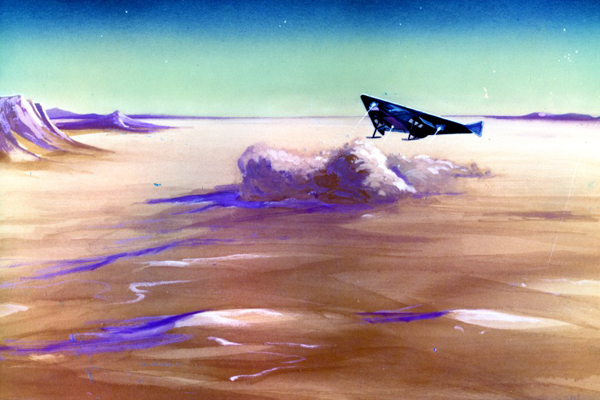
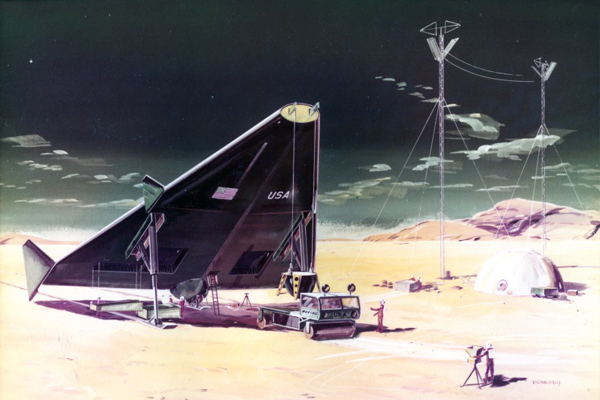
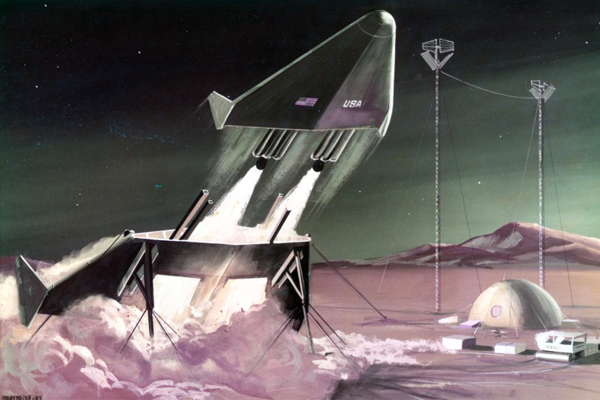
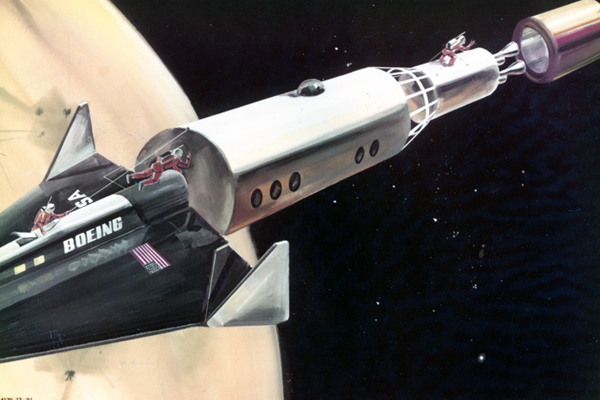
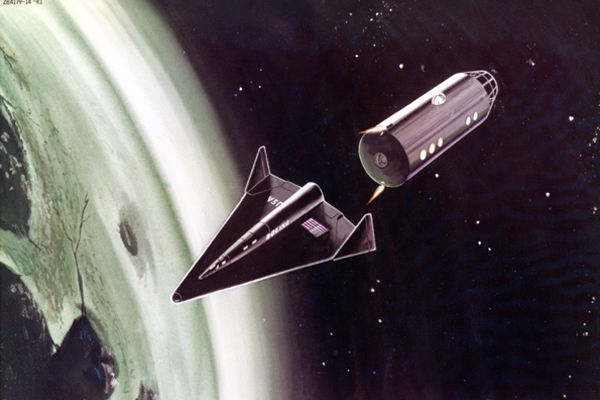
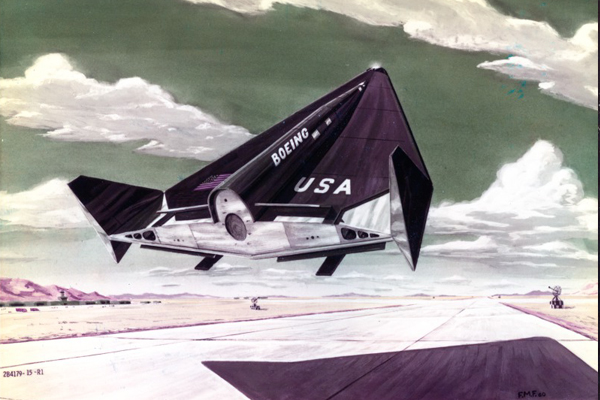
Image credit: Boeing
Image source: SDASM Archives
