Image credit: NASA
Image source: National Archives
Image credit: NASA
Image source: National Archives
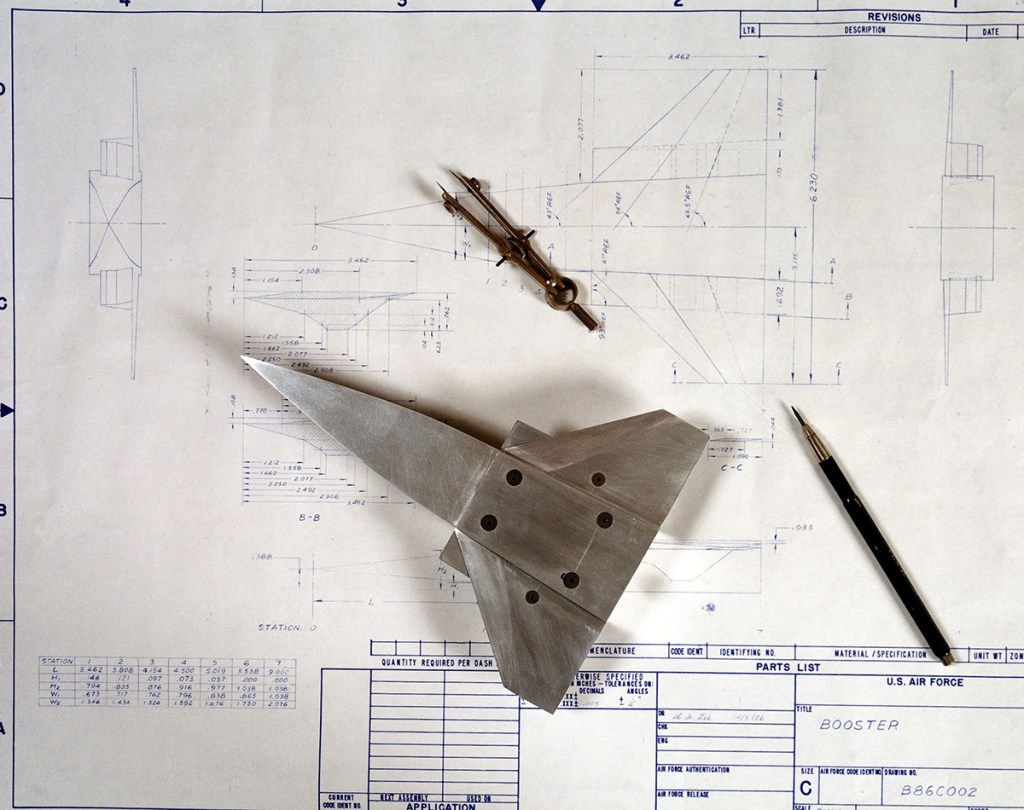
A view of a model of the first stage of a two-stage horizontal takeoff and landing vehicle designed to place shuttle class payloads in low earth orbit. The model will be used in launcher studies by the Aeromechanics Division of the Flight Dynamics Laboratory.
Image credit: NASA
Image source: National Archives
Image credit: NASA
Image source: National Archives
Image credit: NASA
Image source: National Archives
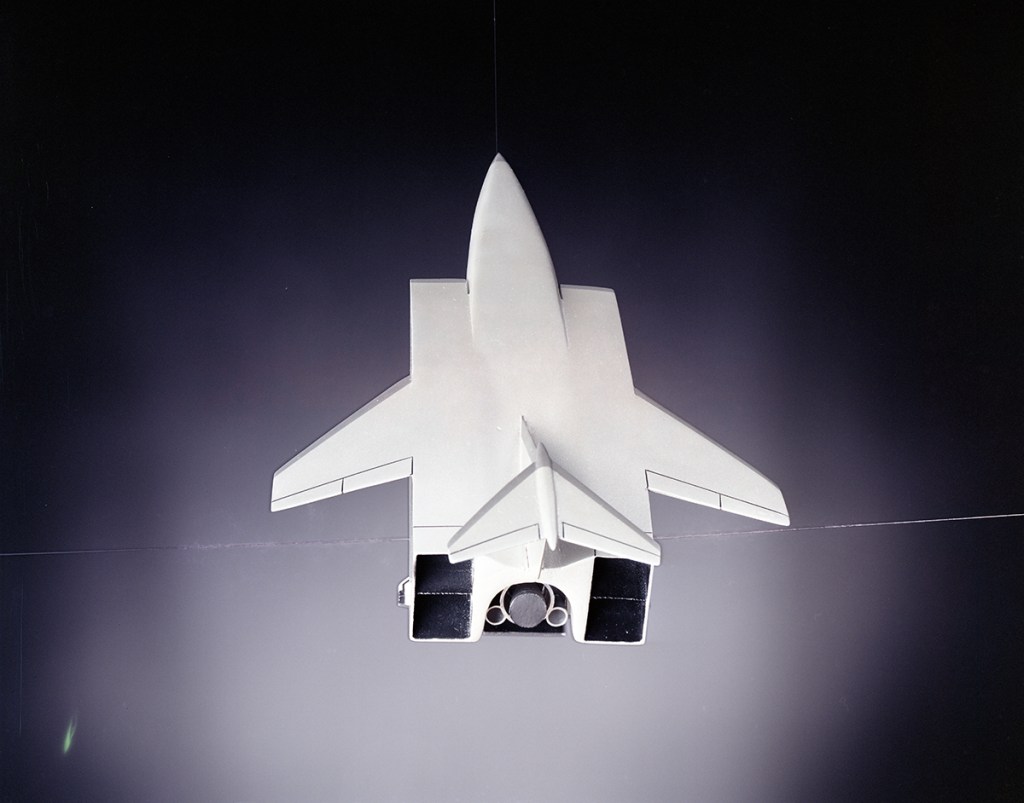
Image credit: NASA
Image source: National Archives
Image credit: NASA LRC
Image source: NASA Images




In this series by Lewis Research Center artist Les Bossinas, an astronaut demonstrates multi-purpose solar arrays. As it harnesses the power of the sun, the first can be configured as a wind-tunnel for protecting strawberries or used as a tent for children’s garden parties. The second model can be used as a balance beam for gymnastics, a ping pong table, or folded up to create a porch screen. Just the thing for an evening cocktail while watching the sunset.
Image credit: NASA LRC
Image source: DVIDS

Or, “Articulated Lunar Rover Lunar Excavator.”
Image credit: NASA LRC
Image source: DVIDS
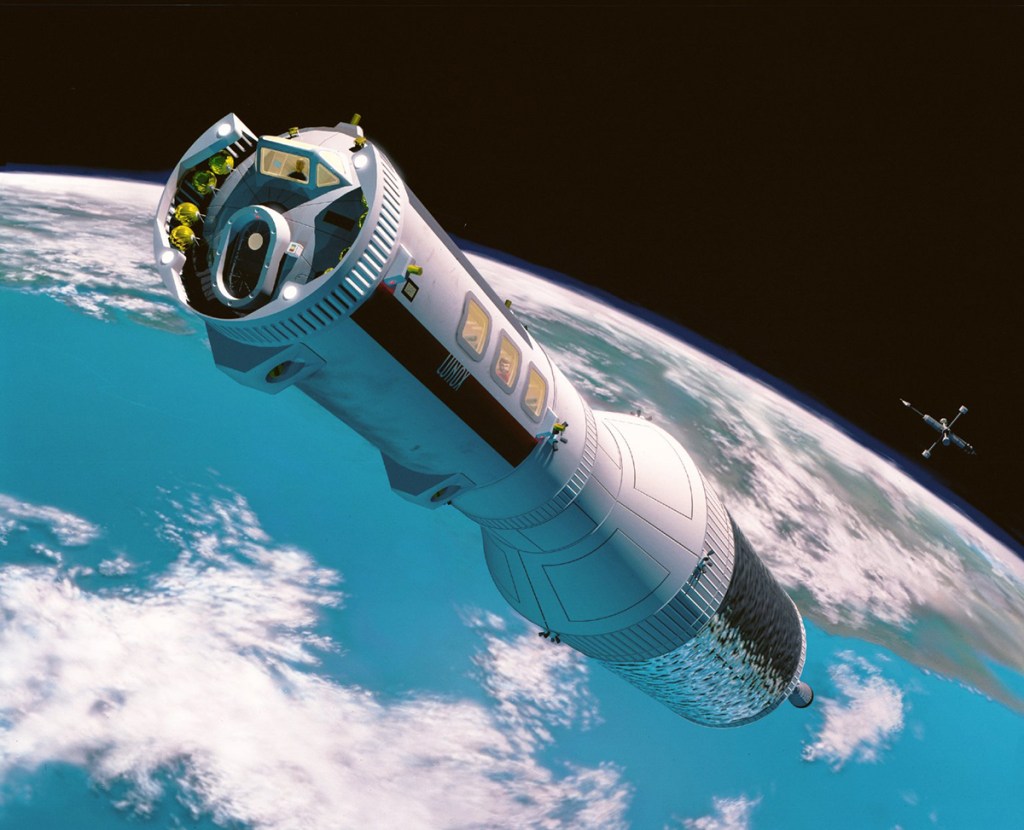
S99-04186 (1996) — Routine 24-hour flights to the Moon could employ detachable crew modules atop nuclear thermal transfer vehicles. By transferring the module from one propulsion element to the next, the passengers could complete their trip to the lunar surface without ever leaving the module. This image produced for NASA by Pat Rawlings and Bill Gleason, (SAIC). Technical concepts for NASA’s Exploration Office, Johnson Space Center (JSC).
Image credit: NASA LRC
Image source: Internet Archive
Image credit: NASA
Image source: National Archives

