Image credit: Mark Avino
Image source: National Air & Space Museum
Image credit: Mark Avino
Image source: National Air & Space Museum
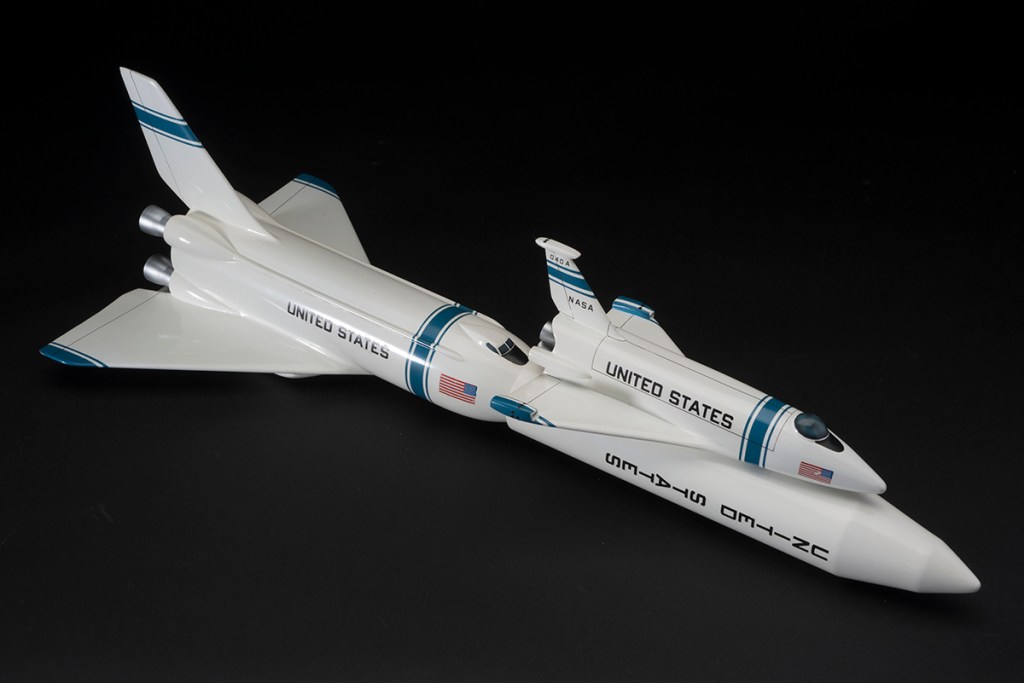
Image credit: Mark Avino
Image source: National Air & Space Museum
Artists’ concepts (Spacecraft) [1 of 6 folders]
Image credit: Krafft Ehricke Papers
Image source: NASM
Artists’ concepts (Spacecraft) [1 of 6 folders]
Image credit: Krafft Ehricke Papers
Image source: NASM
Artists’ concepts (Spacecraft) [1 of 6 folders]
Image credit: Krafft Ehricke Papers
Image source: NASM
Artists’ concepts (Spacecraft) [1 of 6 folders]
Image credit: Krafft Ehricke Papers
Image source: NASM
Artists’ concepts (Spacecraft) [1 of 6 folders]
Image credit: Krafft Ehricke Papers
Image source: NASM
Artists’ concepts (Spacecraft) [1 of 6 folders]
Image credit: Krafft Ehricke Papers
Image source: NASM
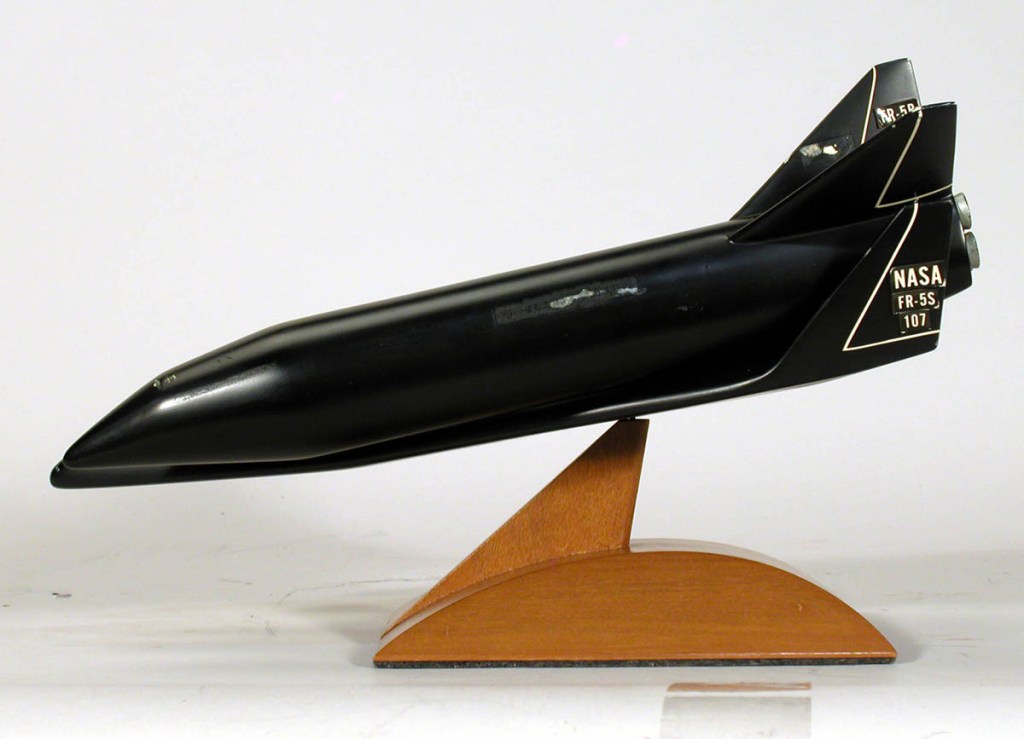
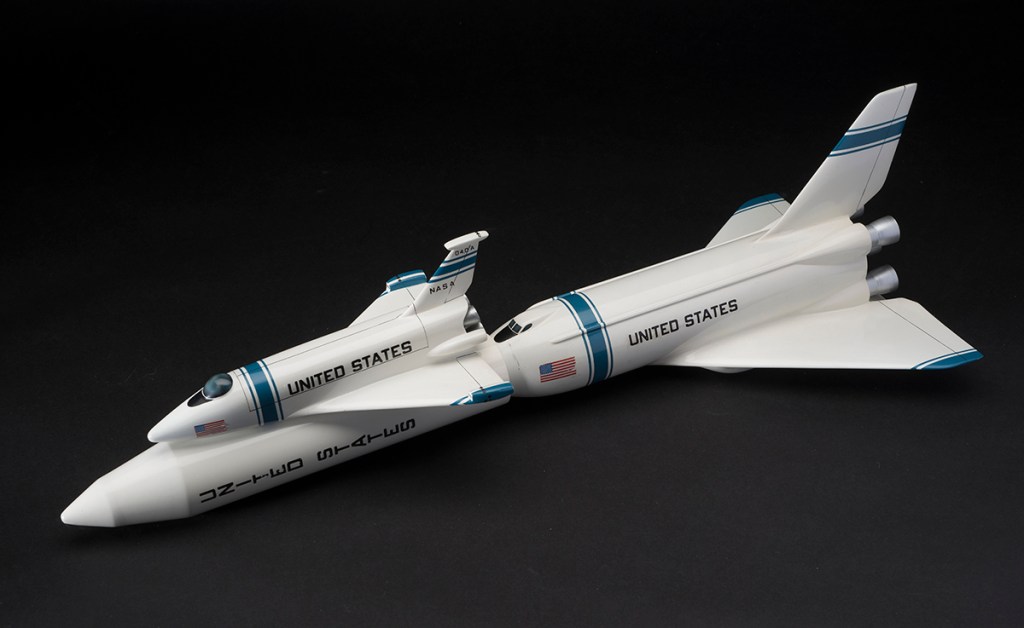
NASA studied this Martin Marietta concept for a fully reusable space transportation system during the Shuttle research effort in 1969-1972. It featured two piloted fly-back vehicles – a twin-fuselage booster craft and a delta-wing orbiter – in a two-stage configuration. The liquid-propellant booster would carry the orbiter to a set altitude, then detach and be piloted back to land. After separation the orbiter would ignite its own engines to reach orbit. Both vehicles had retractable air-breathing jet engines for powered airplane-like flight during descent to landing. NASA transferred a variety of concept models to the Museum after settling on the final Space Shuttle design.
Image credit: NASM
Image source: NASM
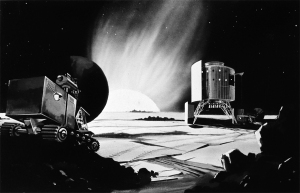
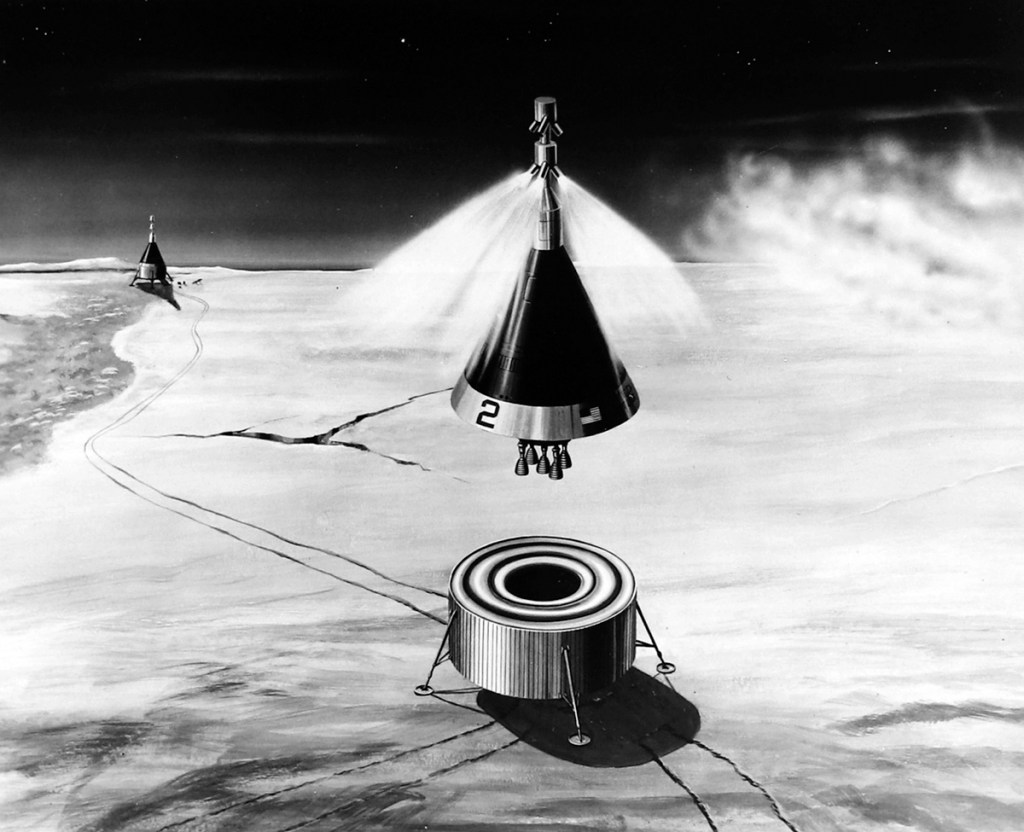
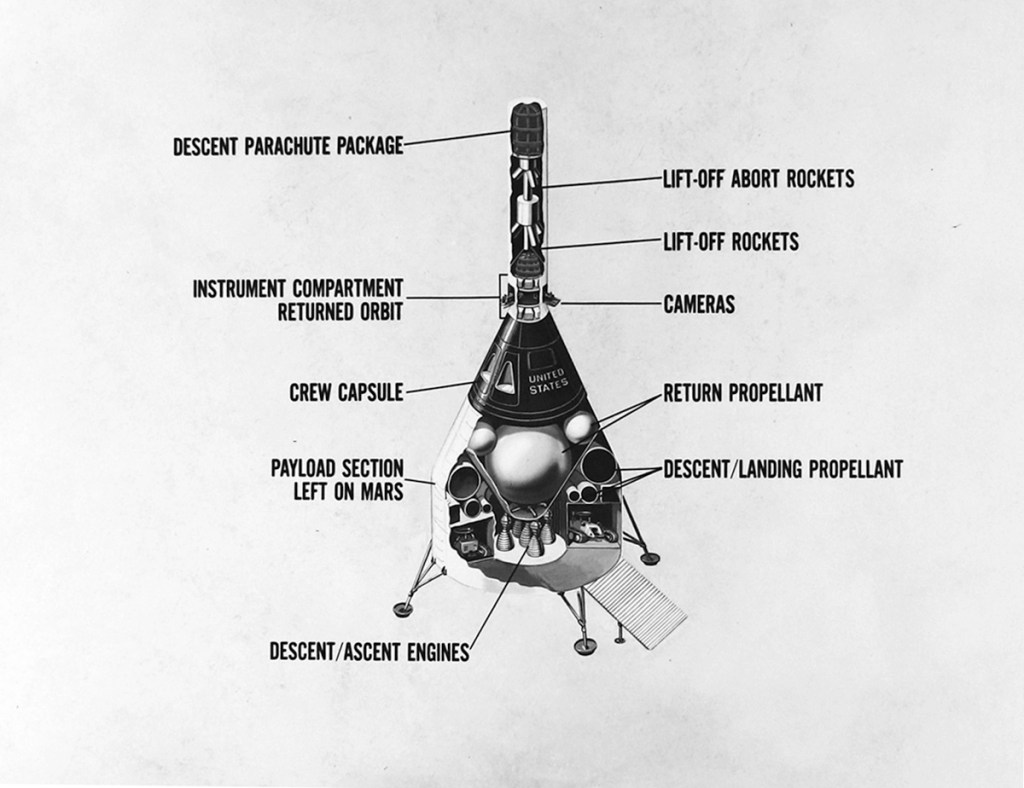
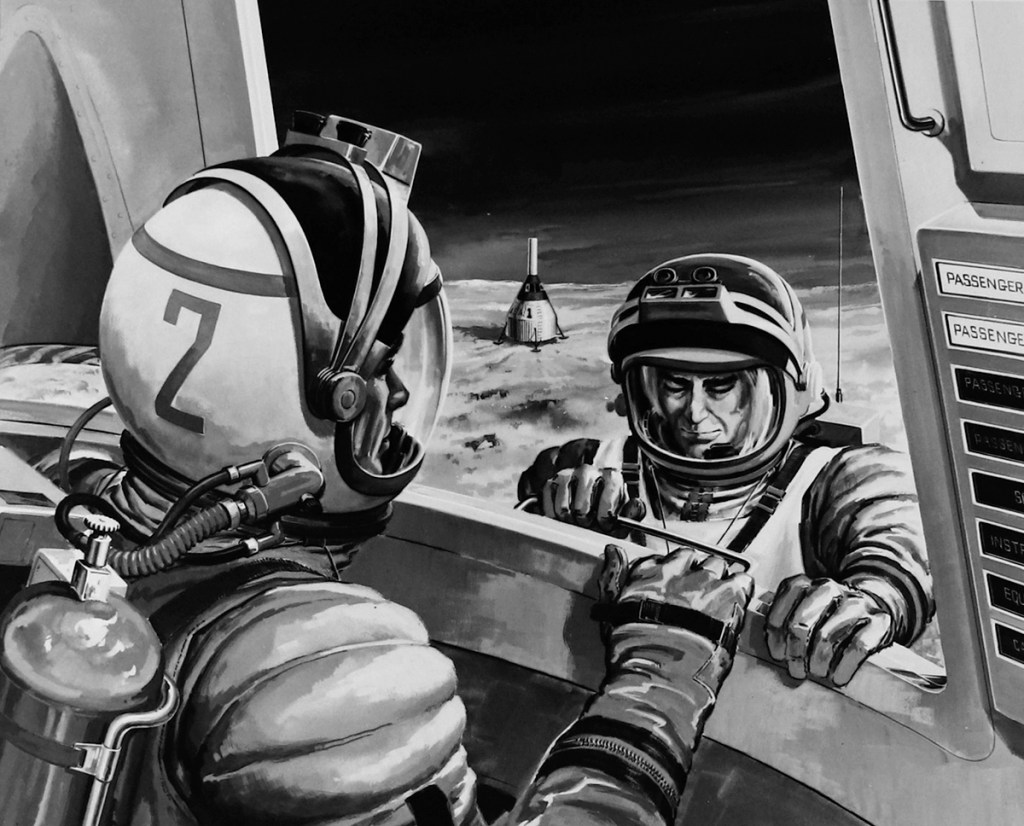
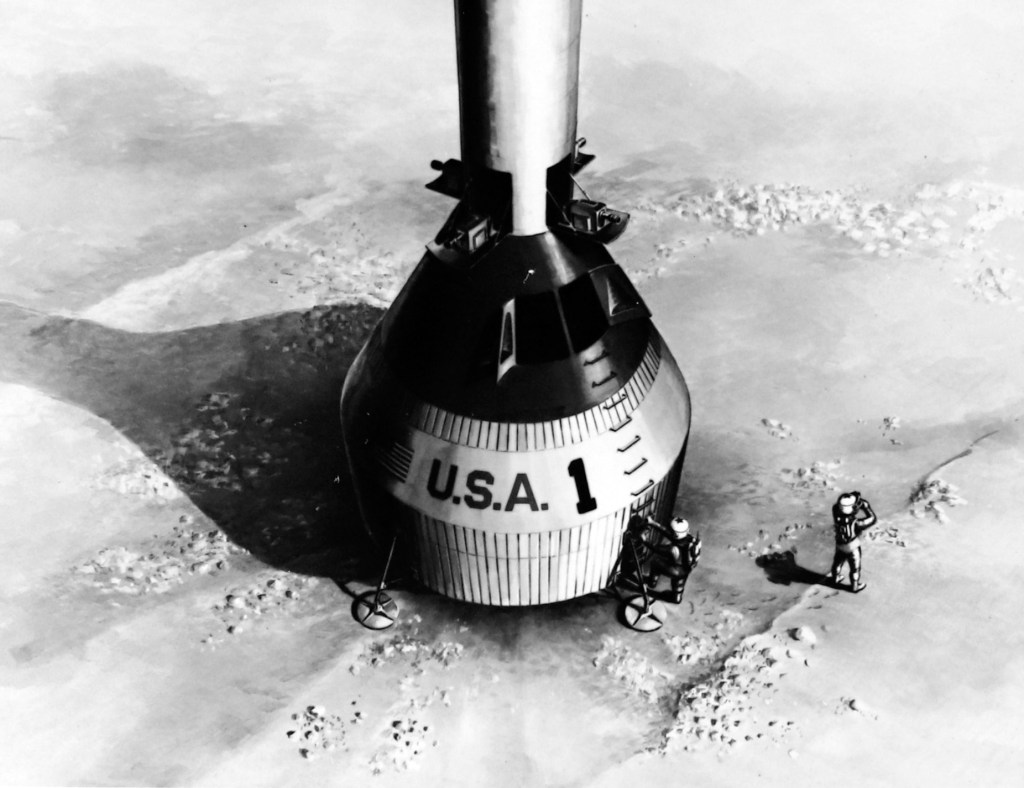
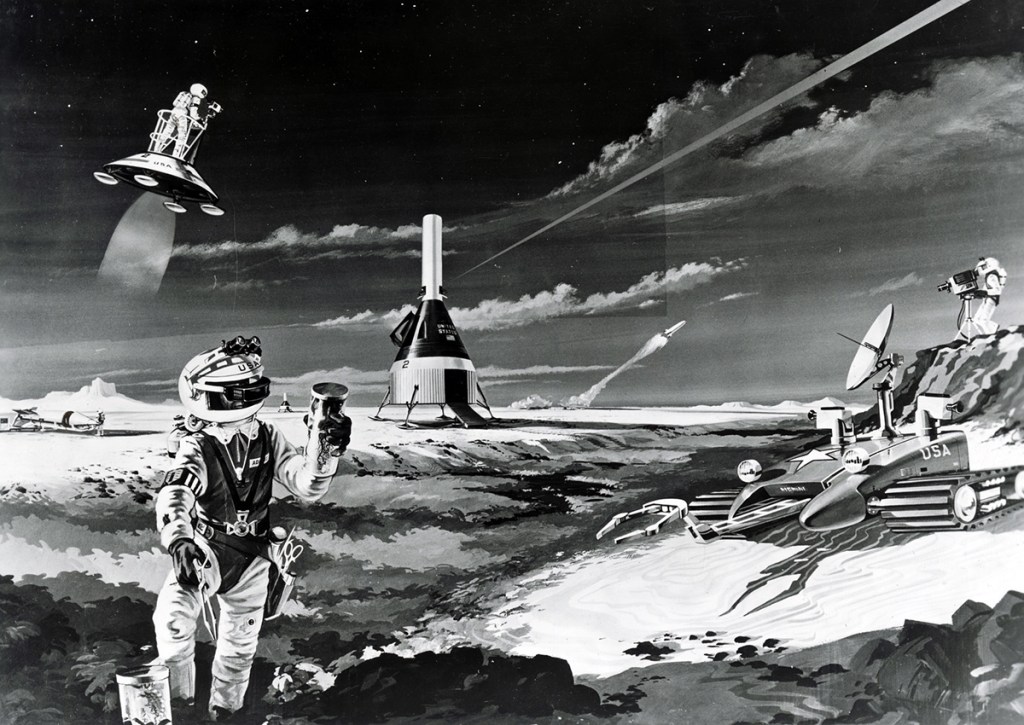
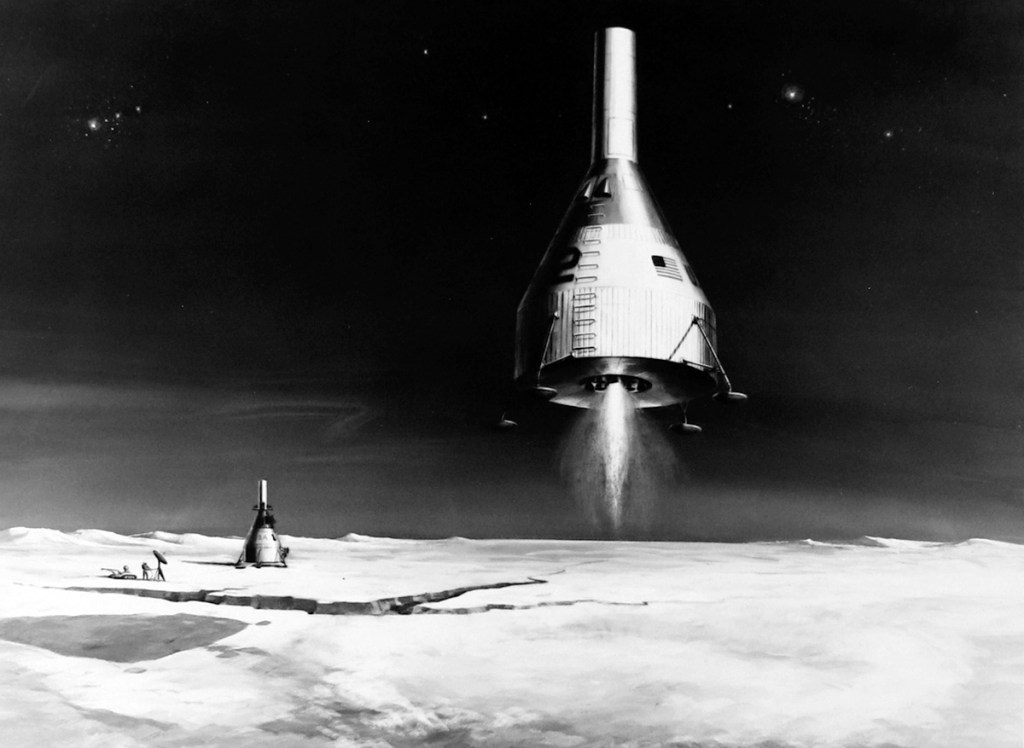
Let’s go back to Solar Transportation for a minute, because it helps to explain some of the images in the Ehricke Papers. Ehricke’s team detailed a Mars lander that looked a lot like early Apollo concepts, but the some of the folders contain images of a landing using what looks like Gemini hardware. I think this image captioned in Solar Transportation is a clue.

From Solar Transportation:
In 1982, a 69 day Mars capture mission launches. The crew conducts intensive reconnaissance both from orbit, and using probes – including landers and returners – but no manned surface excursions are planned. A mission launched between 1984 is one-way, involving a 529 day stay on Mars. A follow-on mission in 1985 (via Venus) retrieves the crew.
Reading back through the General Dynamics and Douglas UMPIRE reports, I think there’s enough connective tissue to make the argument that the paintings below are at least vicinal to EMPIRE / UMPIRE if not directly related, like kissing cousins. It doesn’t really matter though, because I’m not a real historian, and this isn’t a thesis.


Above: Gemini, on Mars or wherever. Below: Yup, that’s a Mars Lander.

Artists’ concepts (Spacecraft) [1 of 6 folders]
Artists’ concepts (spacecraft) [4 of 6 folders]
Image credit: Krafft Ehricke Papers
Image source: NASM
Image credit: Krafft Ehricke Papers / North American Aviation
Image source: NASM