Exploratory Vehicle

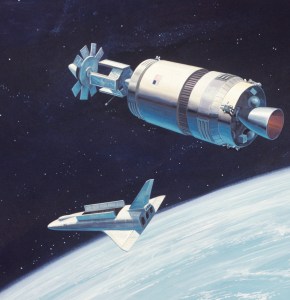
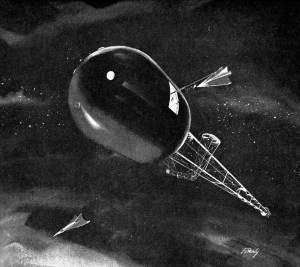
A Boeing design for a manned orbital or interplanetary reconnaissance vehicle. The vehicle would be built in orbit around the earth around the Earth, inside a plastic bubble having controlled atmosphere and pressure, permitting technicians to work without space suits. Propelled by a nuclear-powered plasma jet, it could travel to planets within our solar-system , carrying shuttle vehicles to make the actual observations of planet surfaces. Nylon nets, rather than flooring, would divide the vehicle into seven levels.

Eagle Book of Rockets and Space
by John W.R. Taylor and Maurice Allward
Longacre Press, 1961

Image credit: Boeing Aircraft Company
Image source: Numbers Station
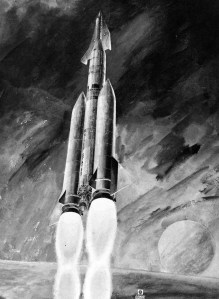
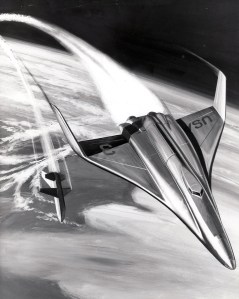
X-20 by George Mathis

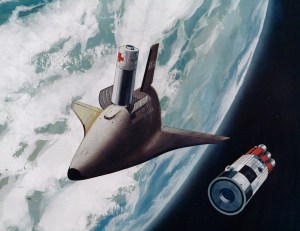
330-PSA-279-62 (USAF 167026): Artwork by George Mathis of how the Air Force Titan III Standard Launch Vehicle may look boosting the United States Air Force X-20 (Dyna-Soar) into orbit, August 1962.

Image credit: Boeing
Image source: National Museum of U.S. Navy

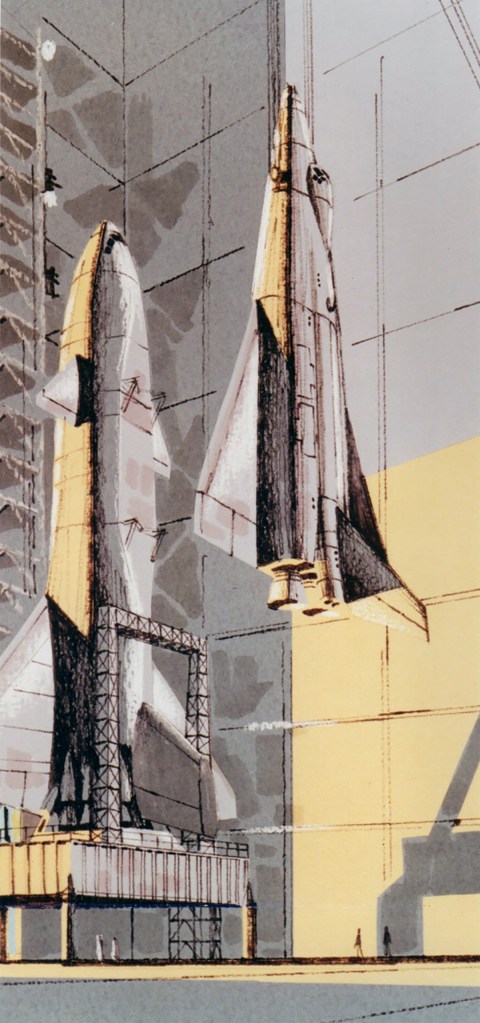
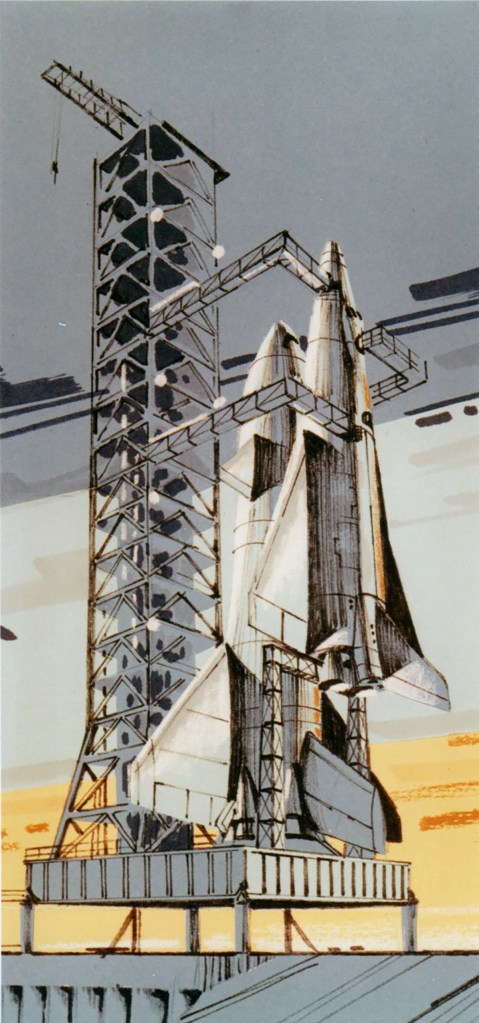
Assembly & Launch

Image credit: North American Rockwell
Image source: Numbers Station
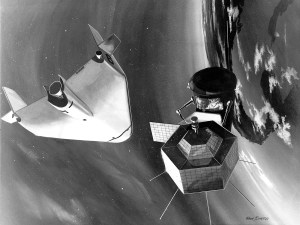
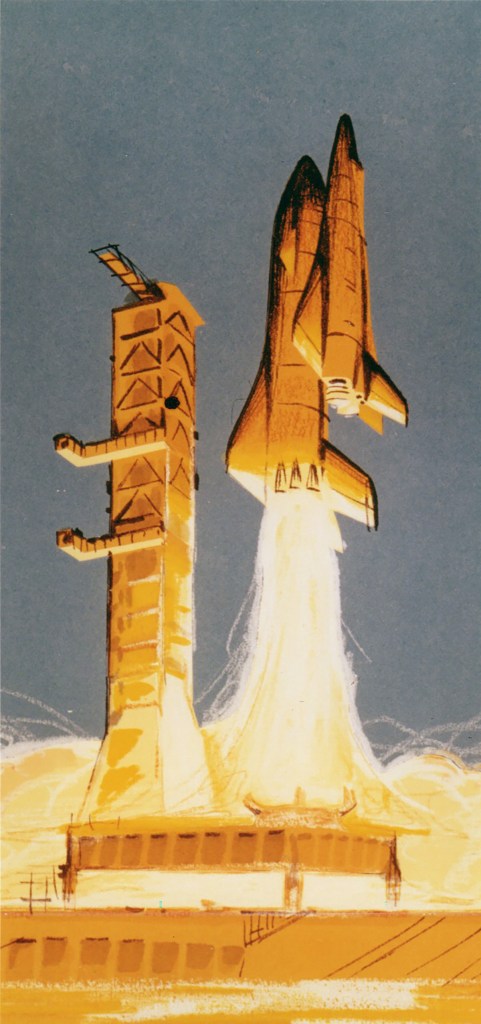
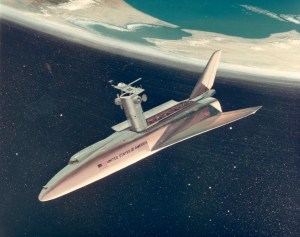
Artist’s Rendering

Image credit: North American Rockwell
Image source: Numbers Station
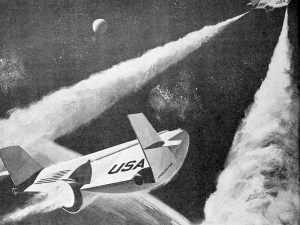
S70-26310

Just to illustrate just how utterly massive the R-134B would have been, take a look at this illustration from a report written by Jack Swigert for The Society of Experimental Test Pilots:

Image credit: NASA
Image source: Mike Acs

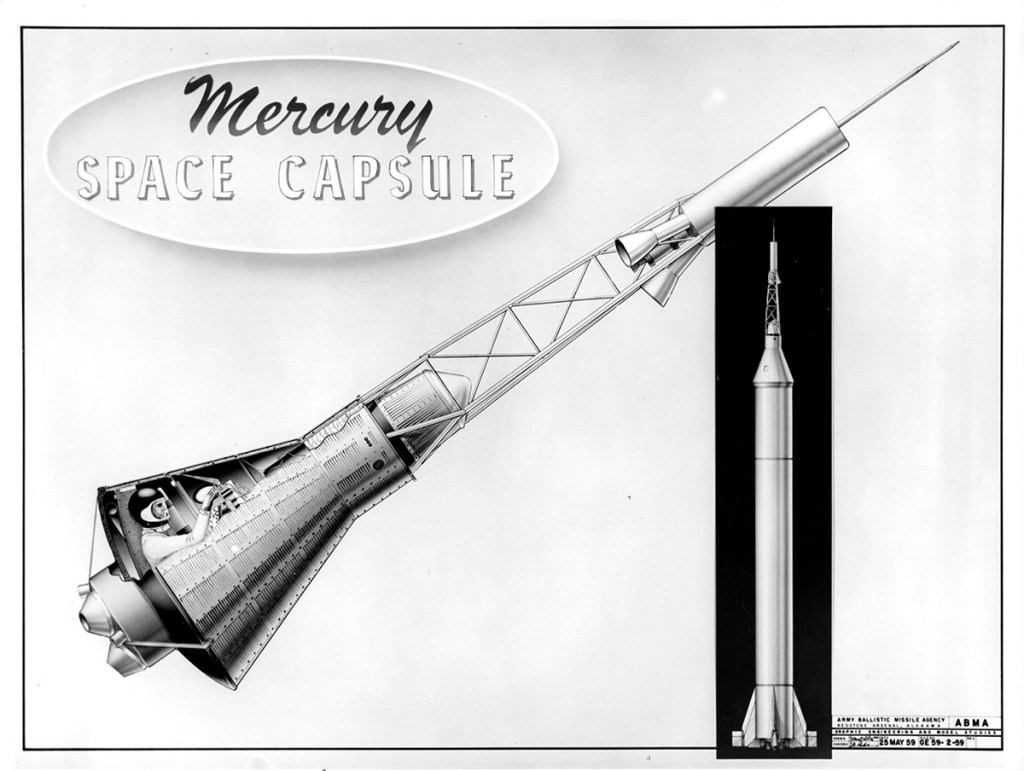
Mercury Space Capsule

Image credit: ABMA
Image source: Numbers Station
Do The Astro!

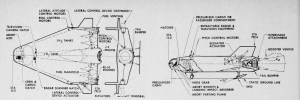
ASTRO — a manned reusable spacecraft concept developed by Douglas Aircraft.

PLAN AND ELEVATION views of ASTRO A2 vehicle. Note booster vehicle attachment at aft end.

Missiles and Rockets, September 3, 1962

Image credit: Douglas
Image source: Internet Archive