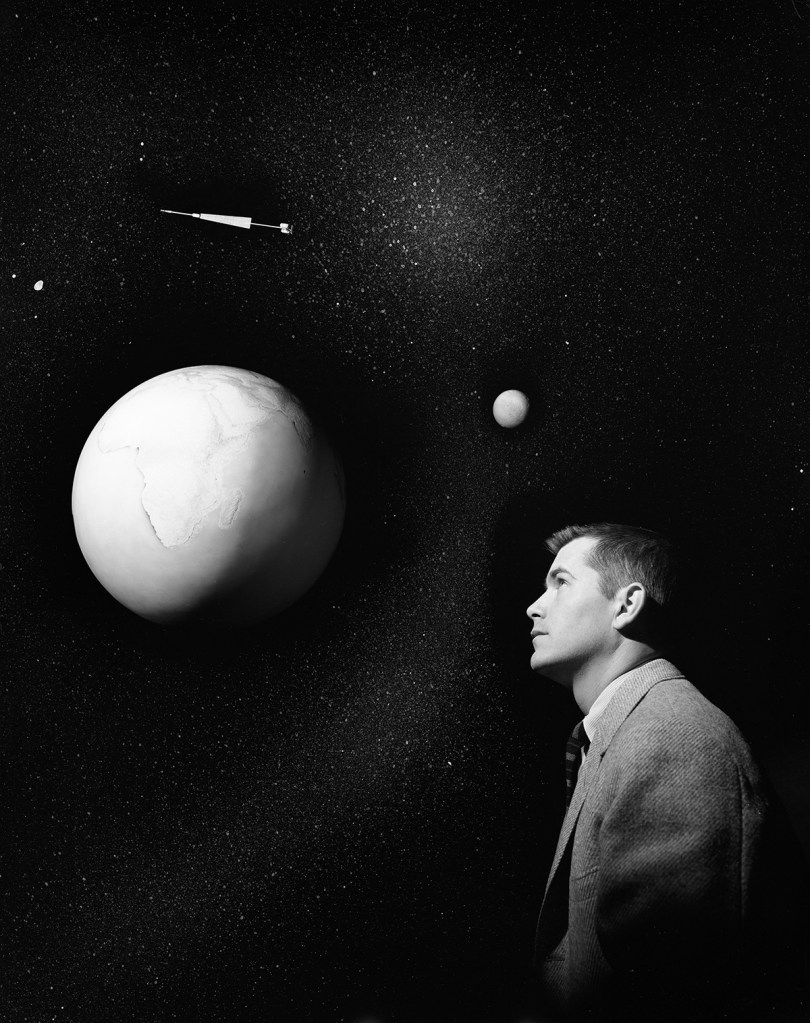
VINCE LAVIN AND MARS SPACE VEHICLE WITH WORLD AND MOON MODELS
Image credit: NASA LRC
Image source: National Archives
VINCE LAVIN AND MARS SPACE VEHICLE WITH WORLD AND MOON MODELS
Image credit: NASA LRC
Image source: National Archives
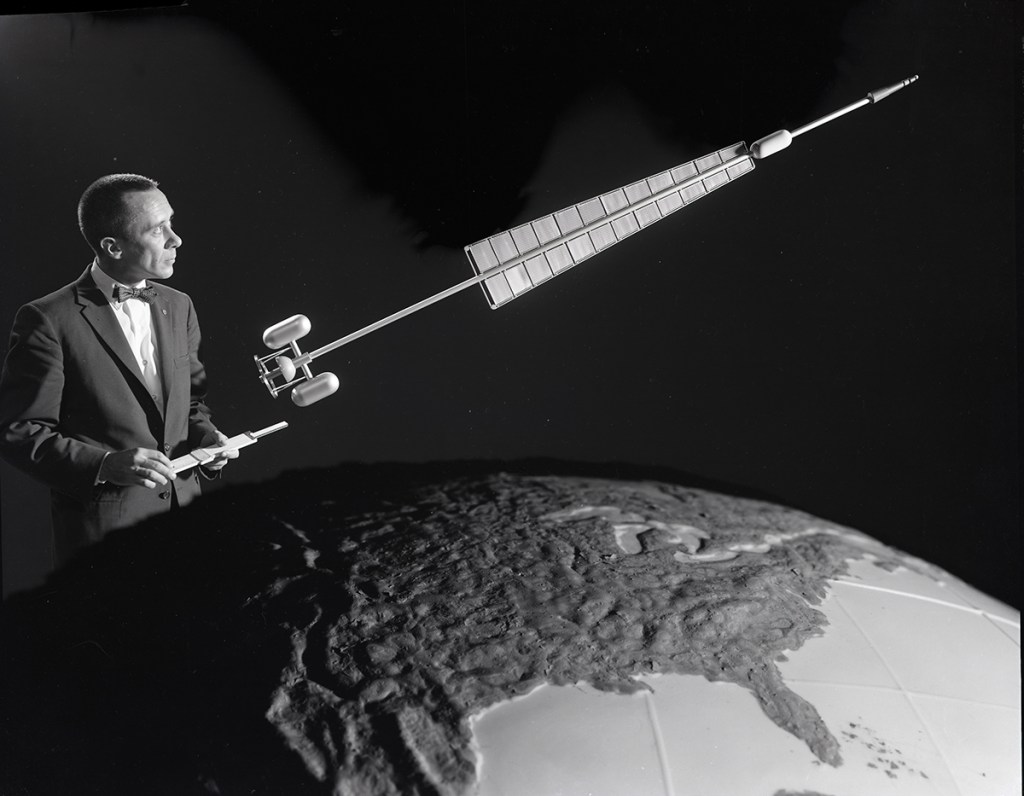
Description: ELECTRIC SPACE VEHICLE MODEL FOR 8 MAN MARS EXPEDITION
Image credit: NASA LRC
Image source: National Archives
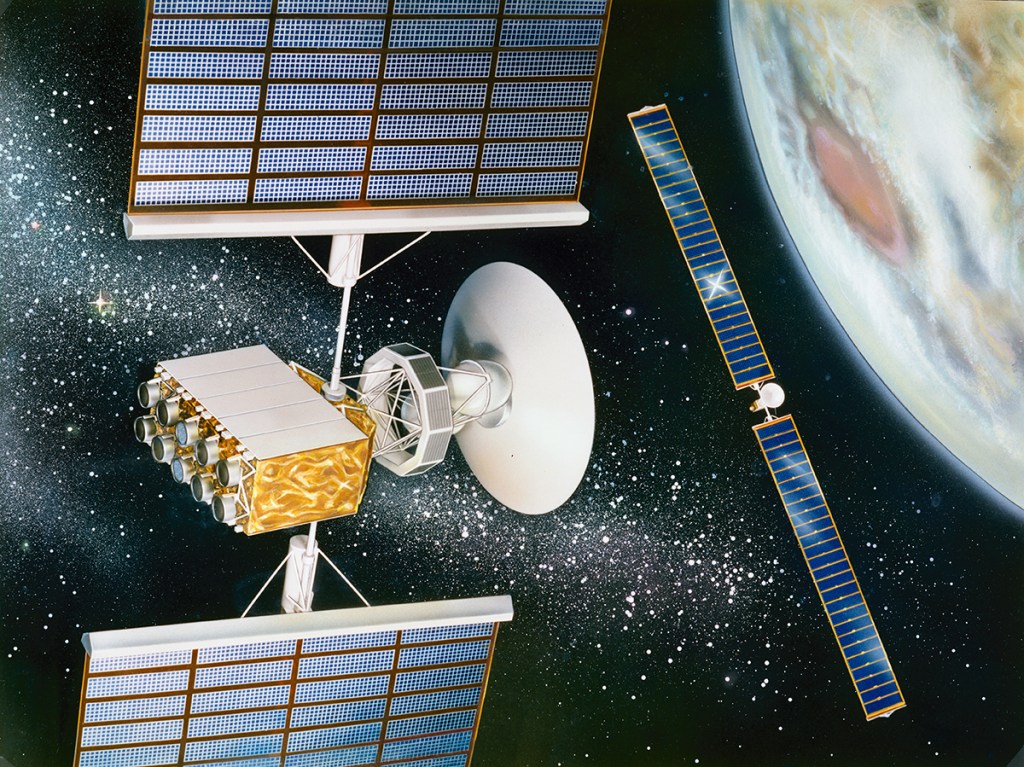
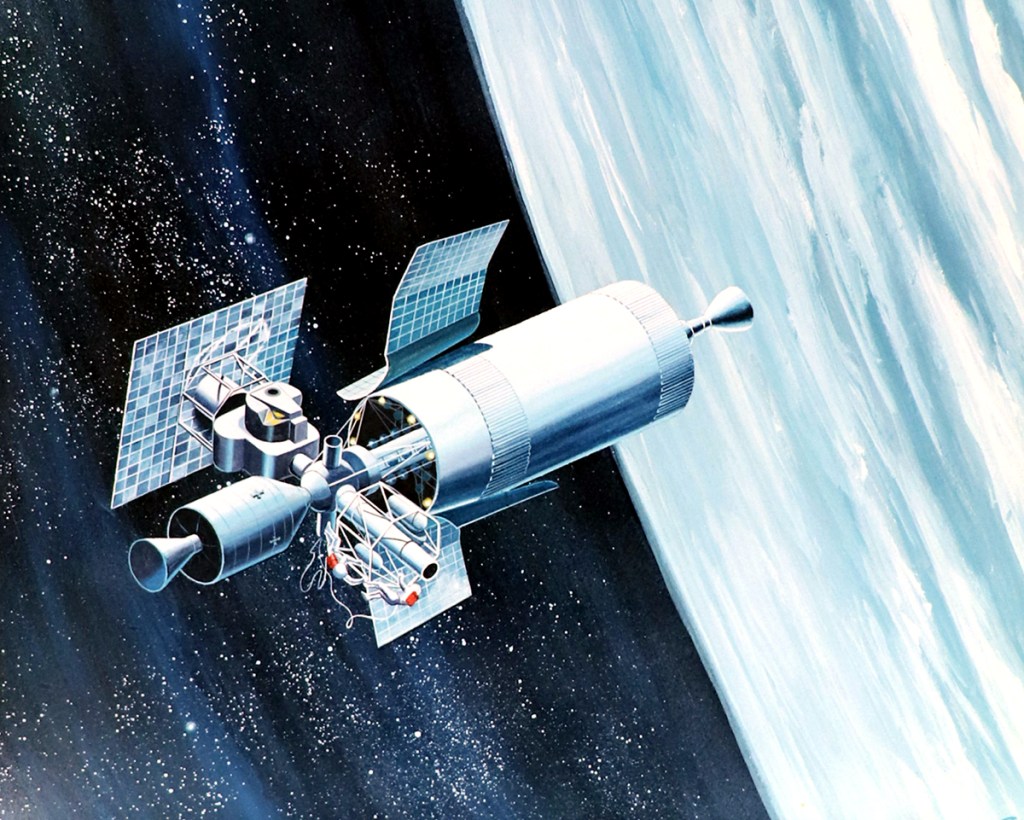
Image credit: NASA
Image source: National Archives
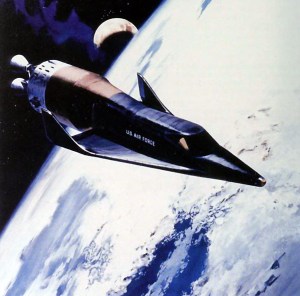
Image credit: Boeing
Image source: Numbers Station
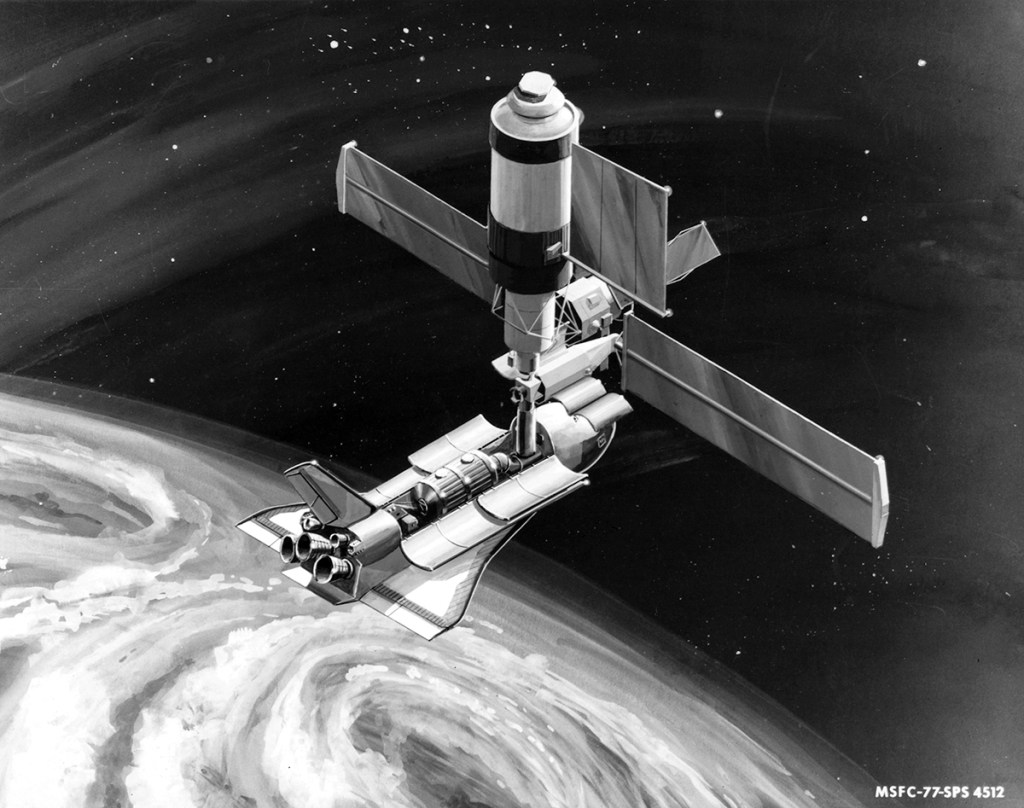
Image credit: NASA
Image source: Mike Acs
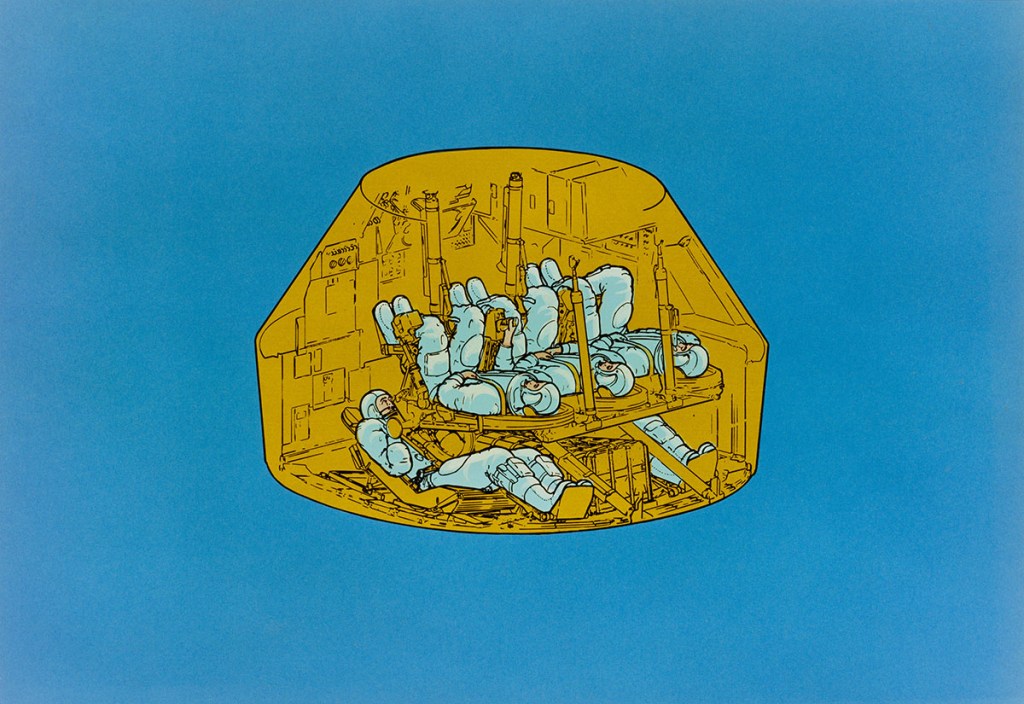
S73-31922 (1973) — An artist’s concept illustrating a cutaway view of the general arrangement of the Skylab Rescue Command Module (CM). The standard Skylab CM accommodates a crew of three with storage lockers on the aft bulkhead for resupply of experiment film and other equipment as well as the return of exposed film, data tapes and experiment samples. To convert the standard CM to a rescue vehicle, the storage lockers are removed and replaced with two crew couches in order to seat five crewmen. The rescue CM would then be launched with a crew of two.
Image credit: NASA
Image source: NASA Johnson
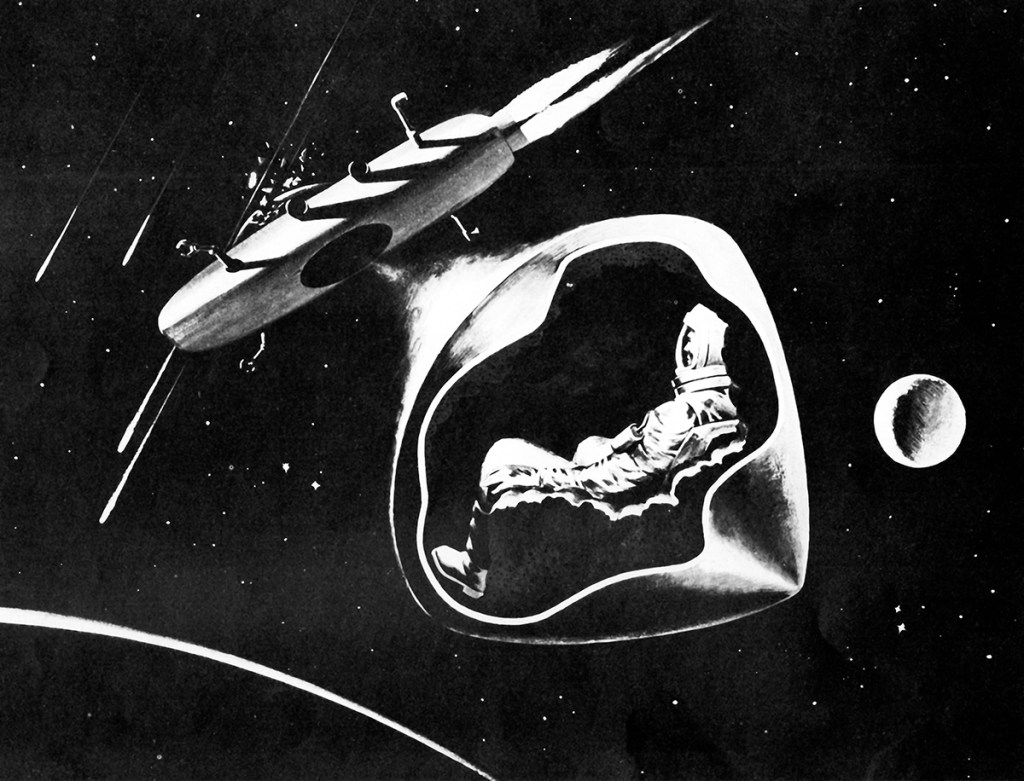
After escape from damaged ship, rescue is possible from this “lifeboat’ of space.
Space World
December 1964, VOL. A-14
Image credit: Space World
Image source: Numbers Station
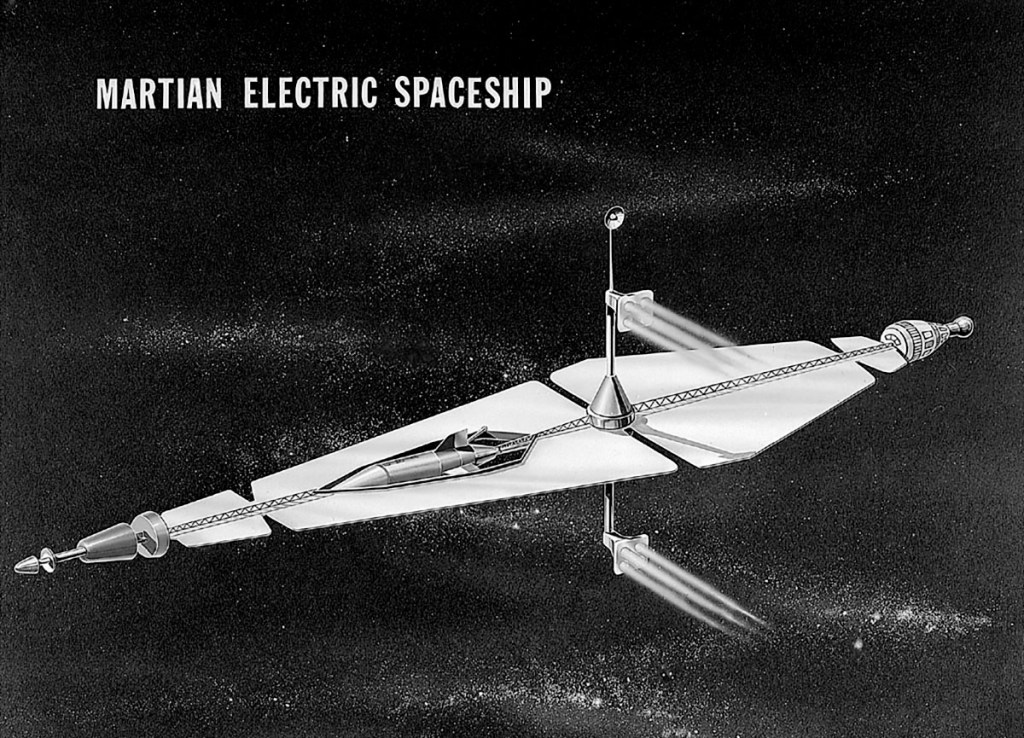
This artist’s concept from 1962 show a three hundred-sixty ton spaceship, powered by a forty-megawatt nuclear-electric power plant, transporting a three-man crew to Mars. As envisioned by Marshall Space Flight Center engineers, a five-ship convoy would make the round trip journey in about five hundred days.
Image credit: NASA MSFC
Image source: NASA Images
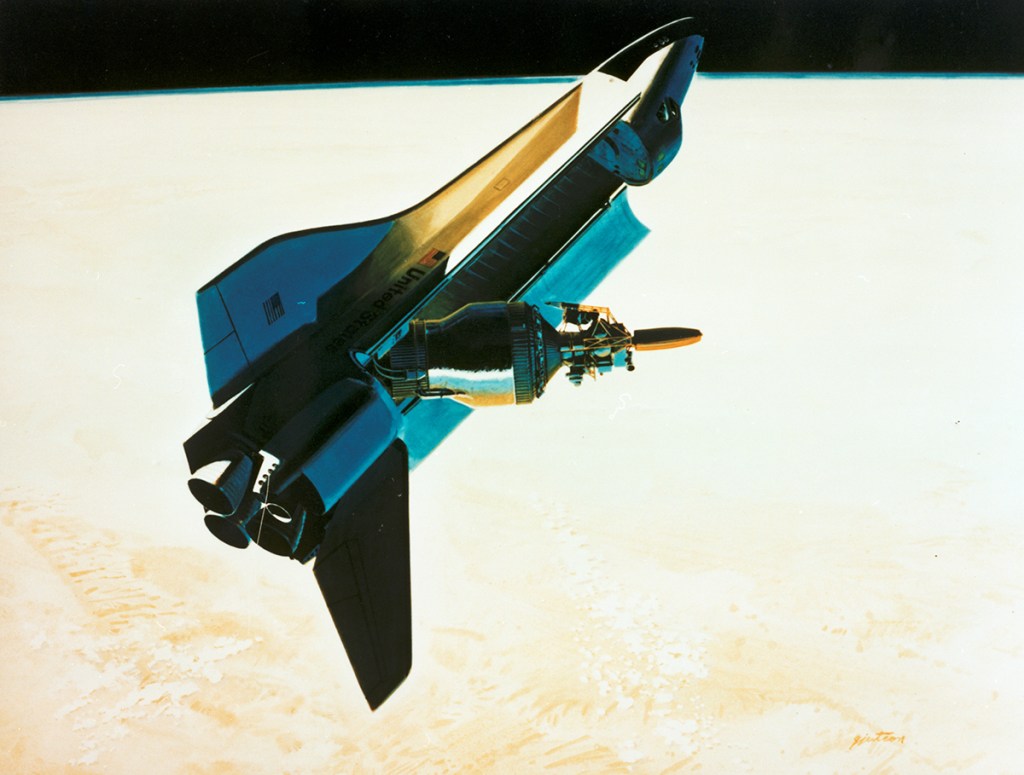
Image credit: Convair
Image source: National Archives
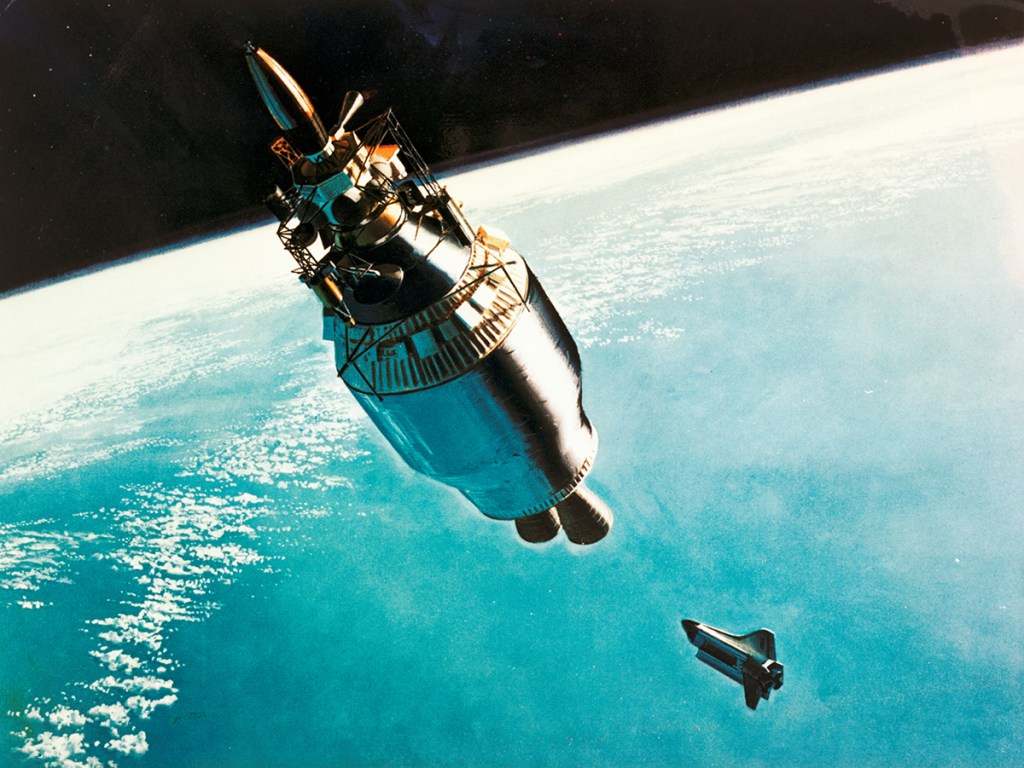
Image credit: Convair
Image source: National Archives
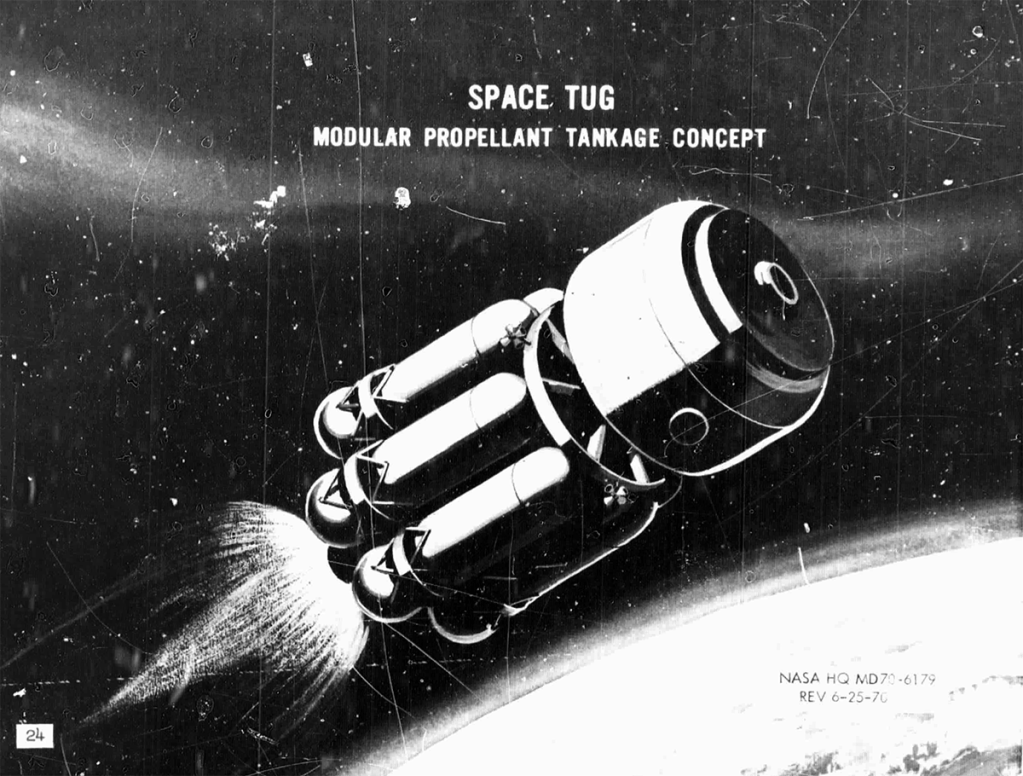
Shown on this chart is an artist’s rendition of a tug configuration which is made up of individual propellant modules and thus provides extreme operational flexibility. The stage is designed to be compatible with a variable number of propellant modules which contain oxidizer, fuel and pressurants. The basic propulsion platform includes engines, control, avionics and primary structure. In concept, the configuration has the option of staging tanks for extremely high performance.
Although this modular concept is extremely versatile, it has a lower mass fraction than one which is designed for a single performance capability.
Image credit: NASA
File source: NASA NTRS