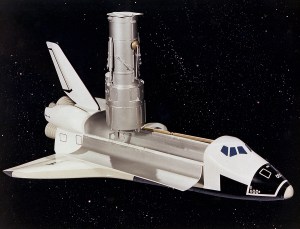
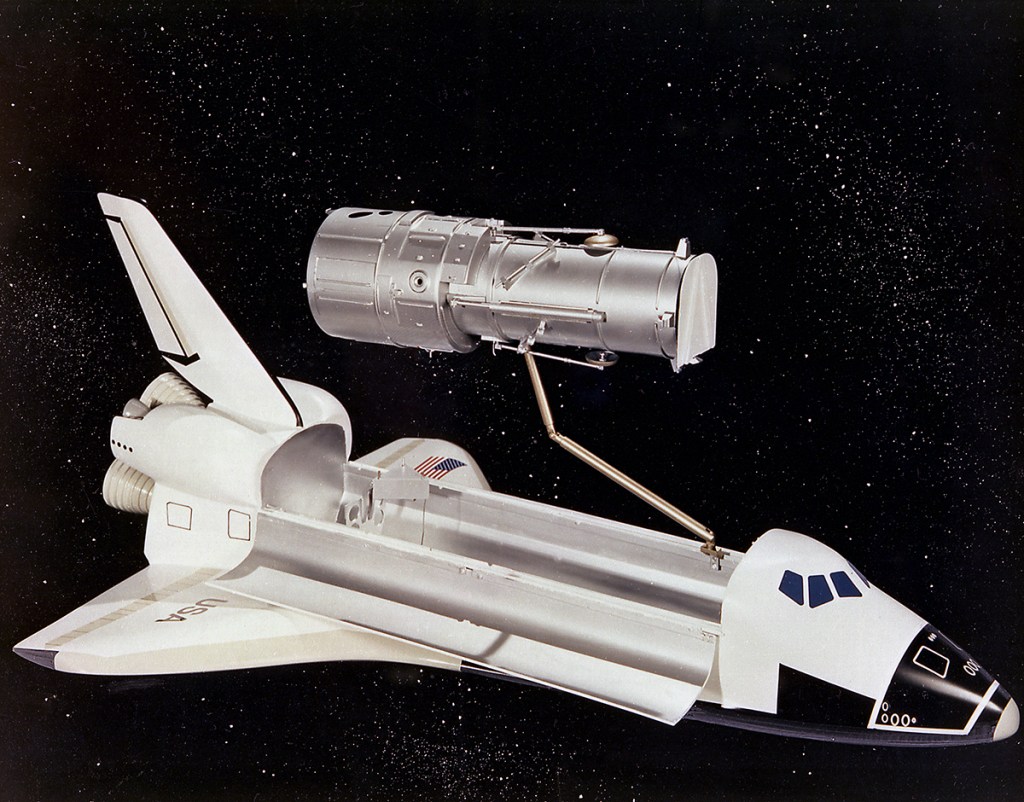
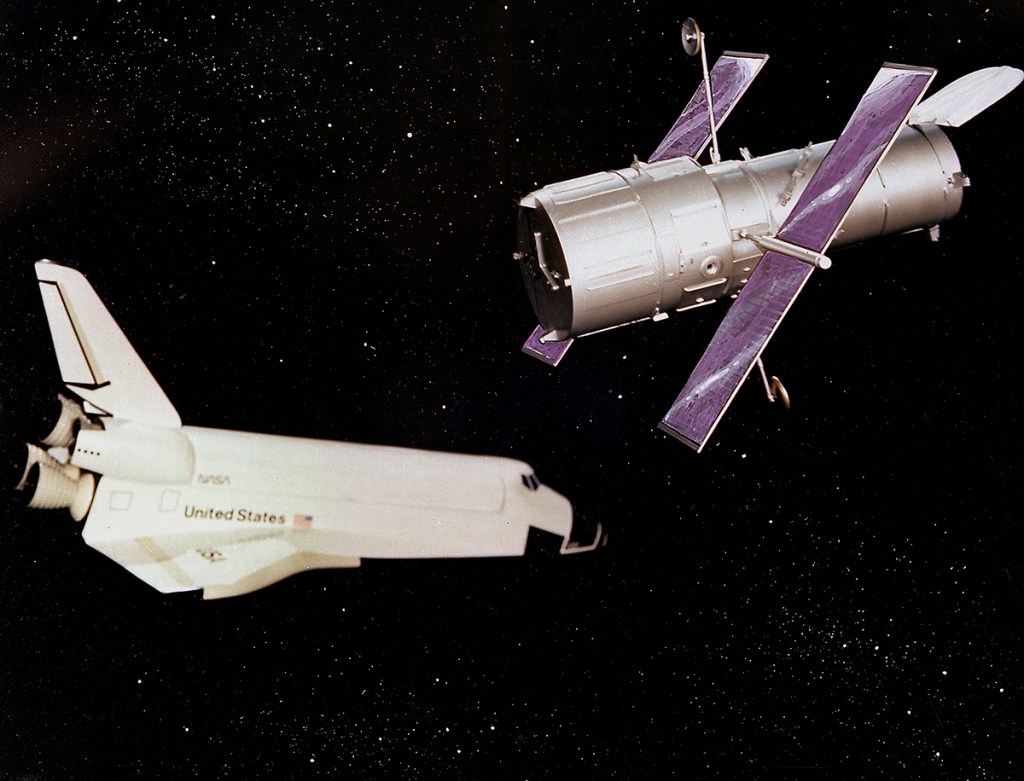
Image credit: North American Rockwell
Images: NASA, Mike Acs
Image credit: North American Rockwell
Images: NASA, Mike Acs
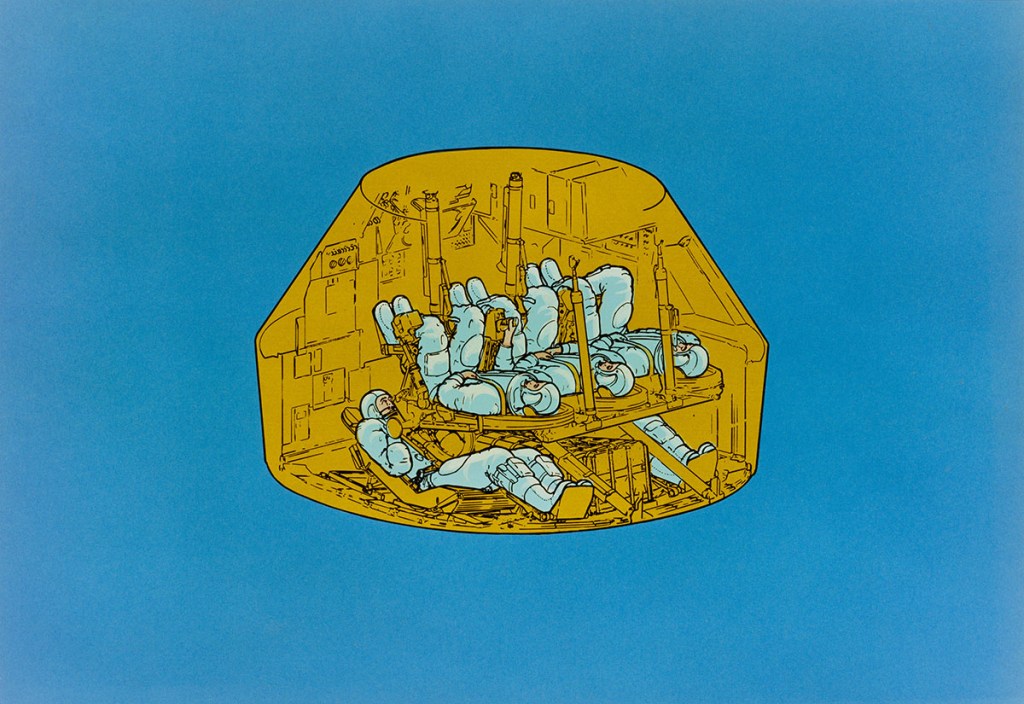
S73-31922 (1973) — An artist’s concept illustrating a cutaway view of the general arrangement of the Skylab Rescue Command Module (CM). The standard Skylab CM accommodates a crew of three with storage lockers on the aft bulkhead for resupply of experiment film and other equipment as well as the return of exposed film, data tapes and experiment samples. To convert the standard CM to a rescue vehicle, the storage lockers are removed and replaced with two crew couches in order to seat five crewmen. The rescue CM would then be launched with a crew of two.
Image credit: NASA
Image source: NASA Johnson
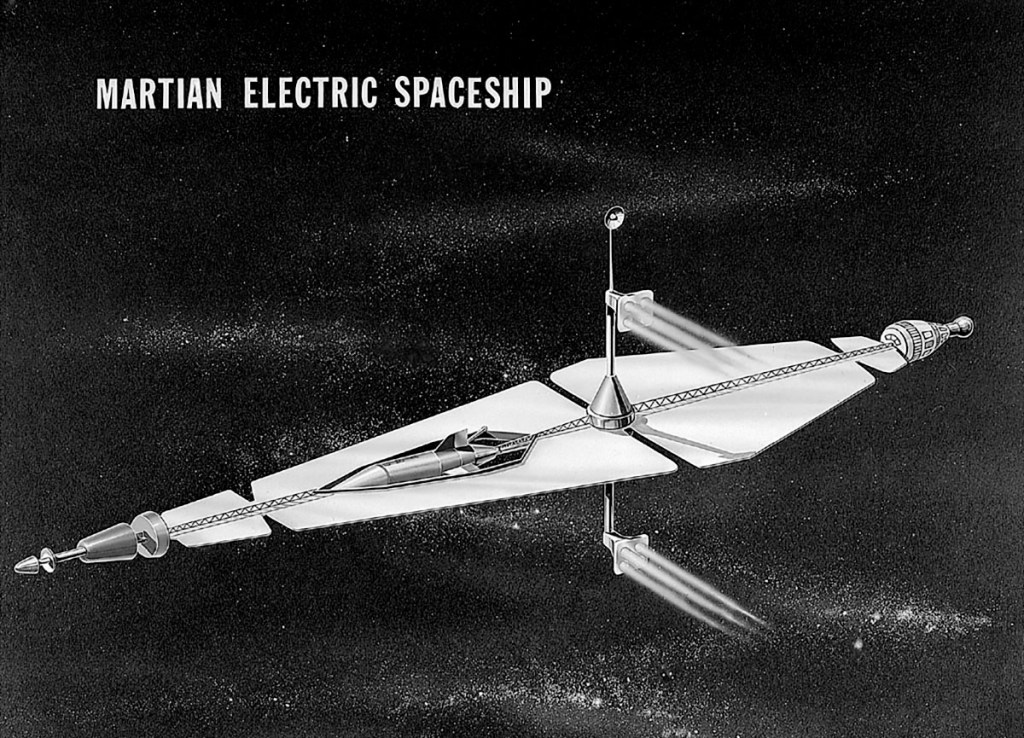
This artist’s concept from 1962 show a three hundred-sixty ton spaceship, powered by a forty-megawatt nuclear-electric power plant, transporting a three-man crew to Mars. As envisioned by Marshall Space Flight Center engineers, a five-ship convoy would make the round trip journey in about five hundred days.
Image credit: NASA MSFC
Image source: NASA Images
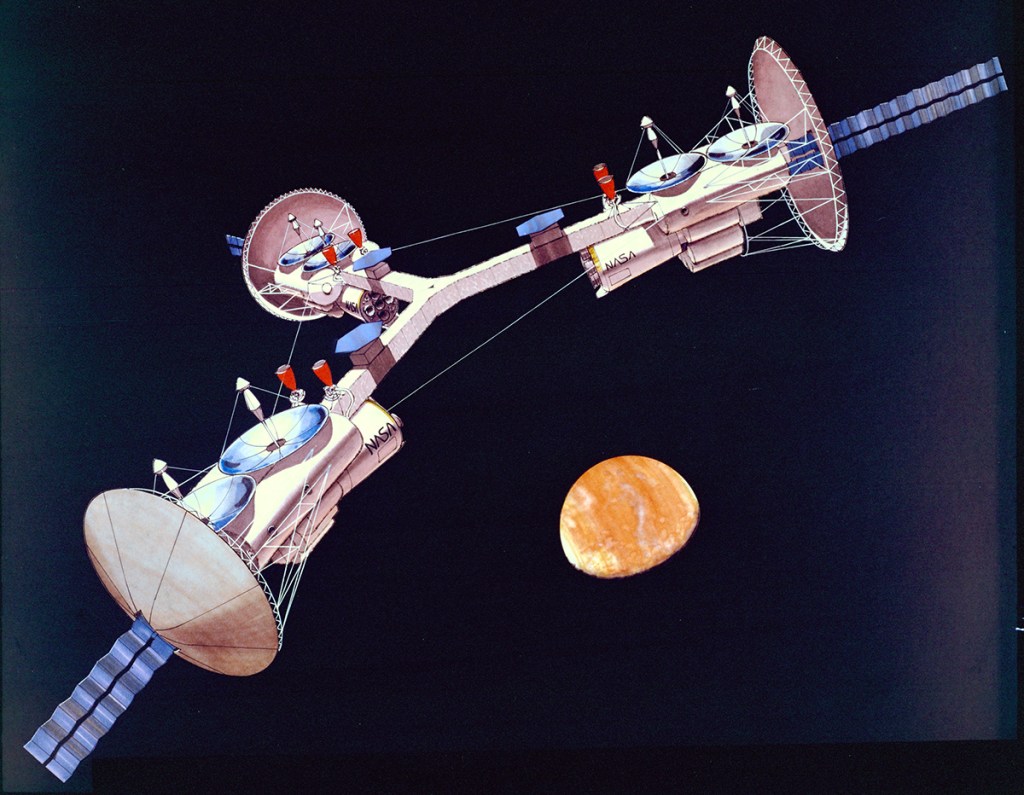
Image credit: NASA ARC
Image source: NASA Images
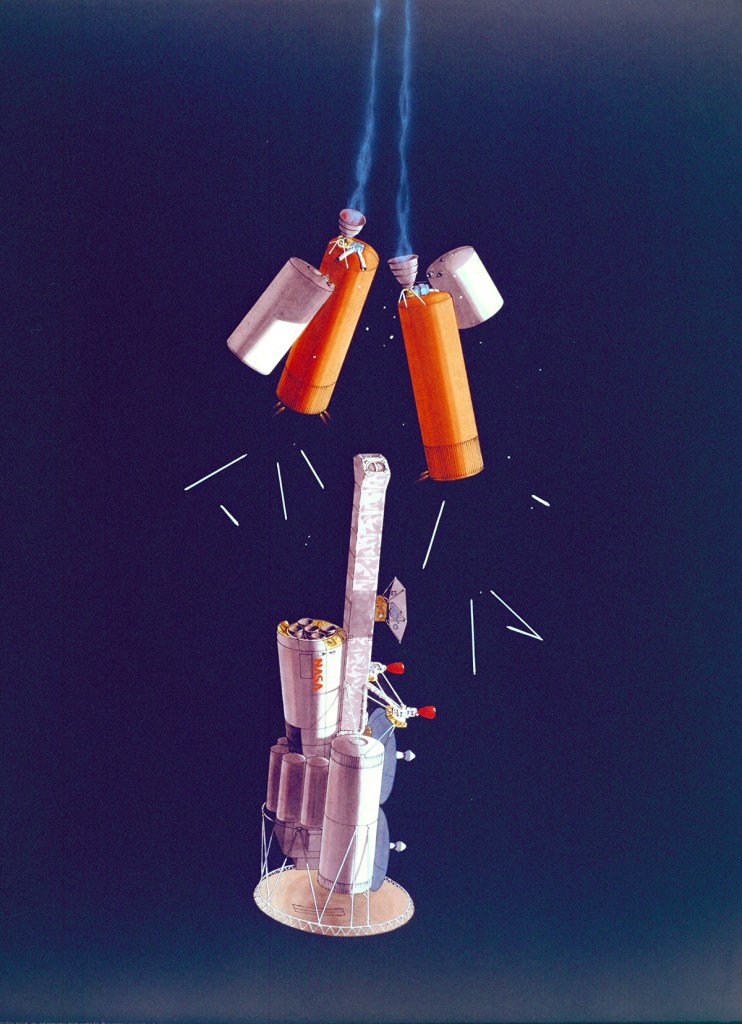
Image credit: NASA ARC
Image source: NASA Images
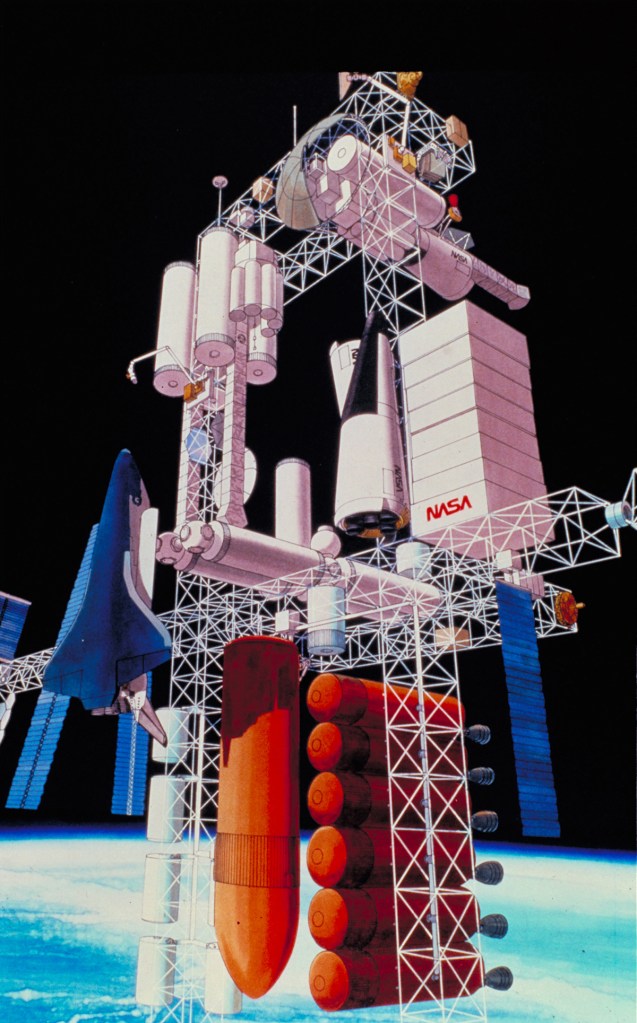
Image credit: NASA ARC
Image source: NASA Images
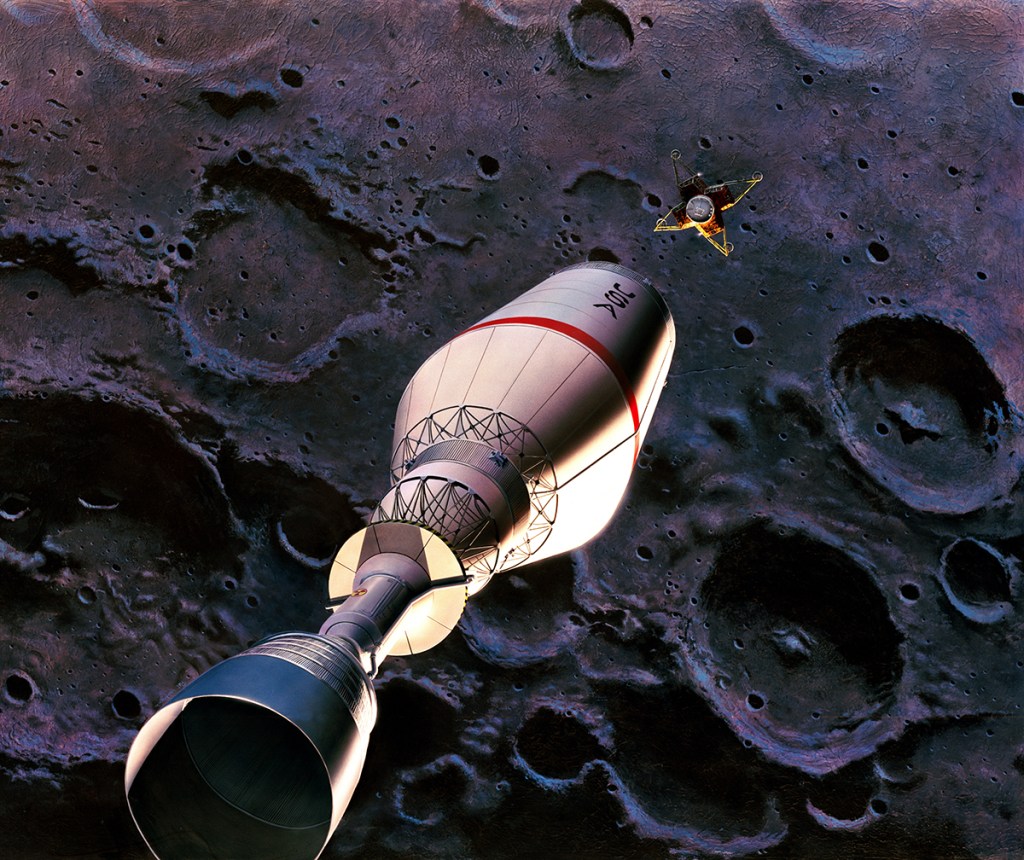
S92-49970 (February 1992) — (Artist’s concept of possible exploration programs.( Passing from sunlight into the Earth-lit shadow of the Moon, a nuclear thermal transfer vehicle prepares to dock with a lunar lander. Using a building block approach, a Mars transfer vehicle could be constructed from components common to the lunar stage. Artwork by Pat Rawlings, of SAIC.
Image credit: NASA
Image source: National Johnson
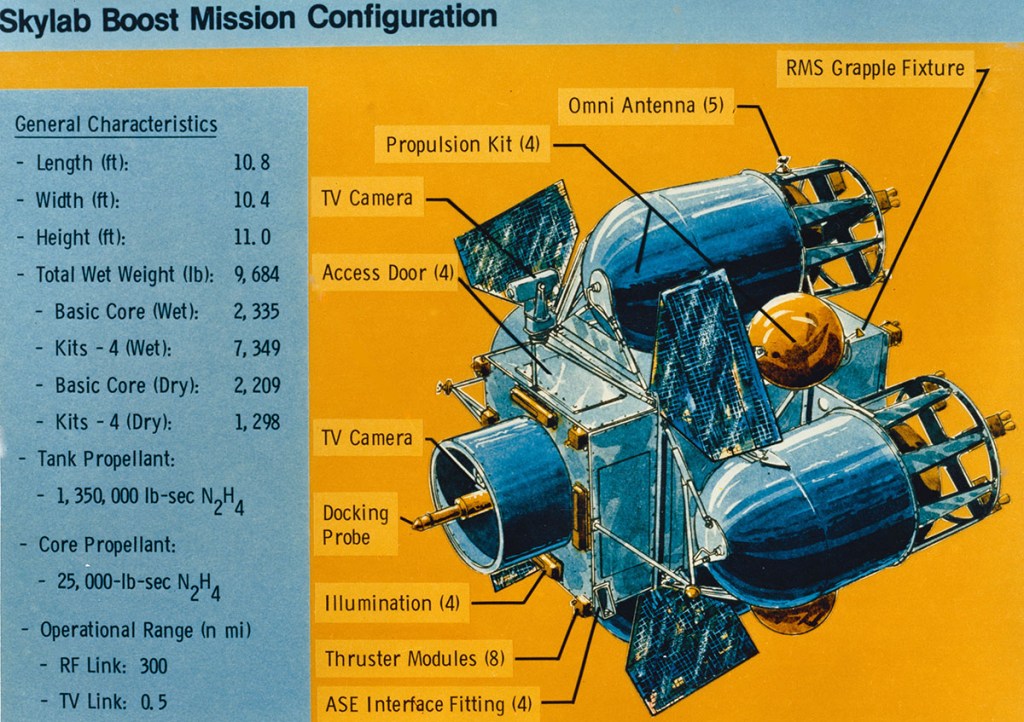
S78-23631 (1978) — A labeled drawing of a Teleoperator Retrieval System (TRS) which is being developed by NASA.
Image credit: NASA
Image source: NASA Johnson
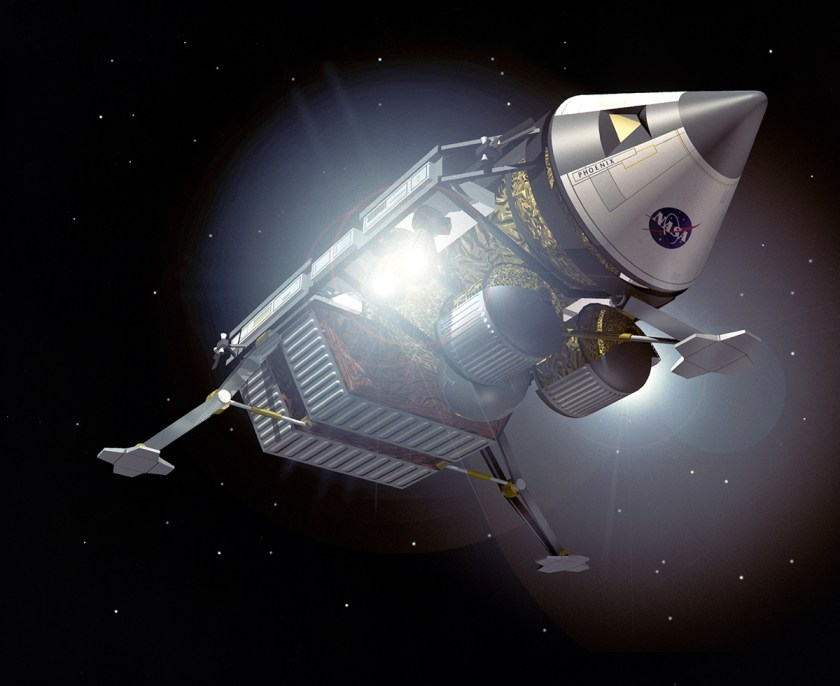
S93-45589 (1993) — (Artist’s concept of possible exploration programs.) A crew of four descends to the lunar surface in a spacecraft designed to utilize oxygen produced on the Moon for propellant. Because of the high performance advantages of in situ propellants, the spacecraft does not need to rendezvous with a second spacecraft in lunar orbit. This image was produced for NASA by John Frassanito and Associates. Technical concepts from NASA’s Planetary Projects Office (PPO), Johnson Space Center (JSC).
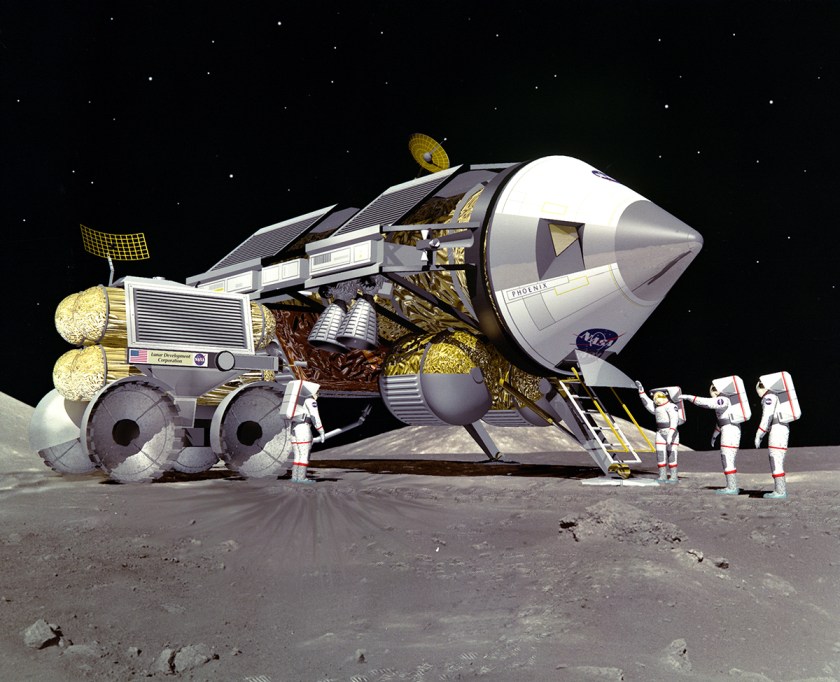
S93-45592 (1993) — (Artist’s concept of possible exploration programs.) The lunar crew refills the propellant tanks on their spacecraft with oxygen produced on the Moon. This allows them to return directly to Earth, reentering the atmosphere in the conical crew module, and touching down at a prepared landing site. This image was produced for NASA by John Frassanito and Associates. Technical concepts from NASA’s Planetary Projects Office (PPO), Johnson Space Center (JSC).
Image credit: John Frassanito and Associates
Image source: NASA Johnson
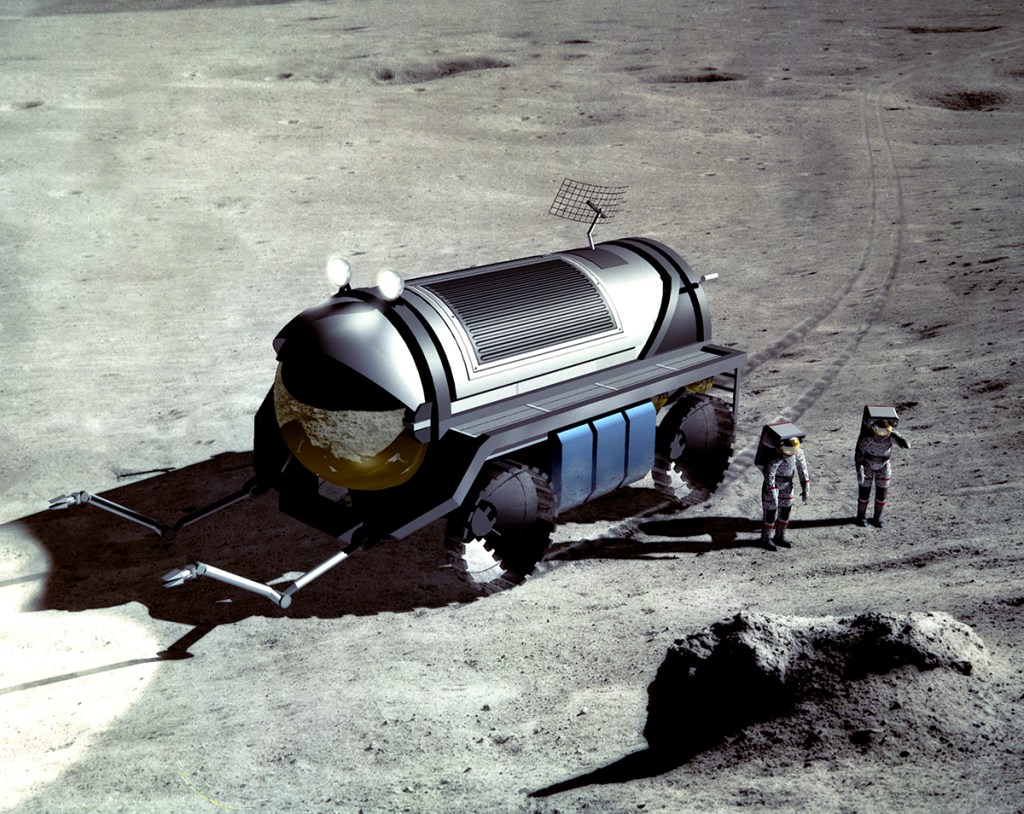
S93-45583 (1993) — (Artist’s concept of possible exploration programs.) Pressurized surface rovers allow lunar explorers to extend their travel capabilities far beyond the limitations imposed by their space suits. The crew can service remote facilities, such as lunar telescopes, and conduct long-range geological traverses. This image was produced for NASA by John Frassanito and Associates. Technical concepts from NASA’s Planetary Projects Office (PPO), Johnson Space Center (JSC).
Image credit: John Frassanito and Associates
Image source: NASA Johnson
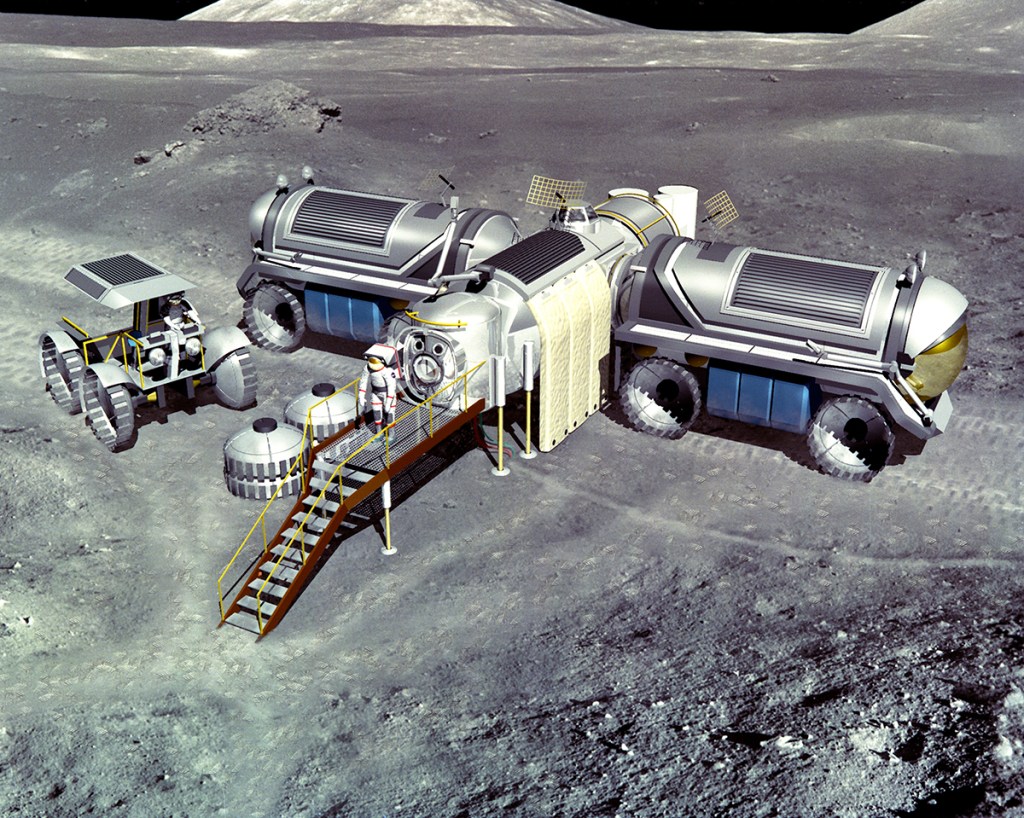
Image credit: John Frassanito and Associates
Image source: NASA Johnson