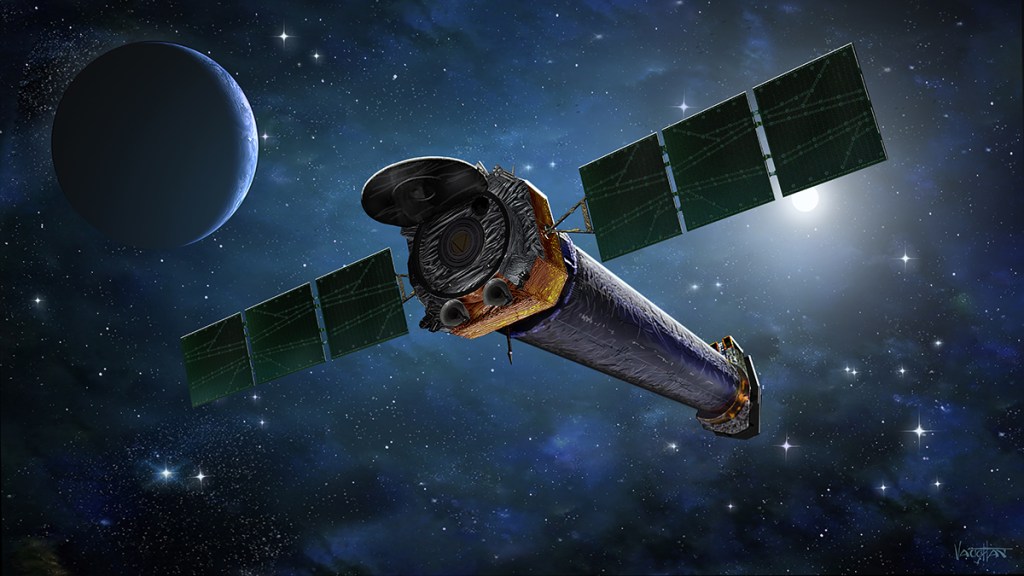
Image credit: NASA/SAO
Image source: Chandra X-Ray Observatory
Image credit: NASA/SAO
Image source: Chandra X-Ray Observatory

I don’t know the provenance of this image, all I can say is I picked it up on eBay. It’s mid-sixties and appears to depict a manned space telescope, and it’s gorgeous. So it will live here in the grey bin until I come across any information that will make sense of it.
Image credit: NASA
Image source: Numbers Station
Image credit: NASA
Image source: National Archives
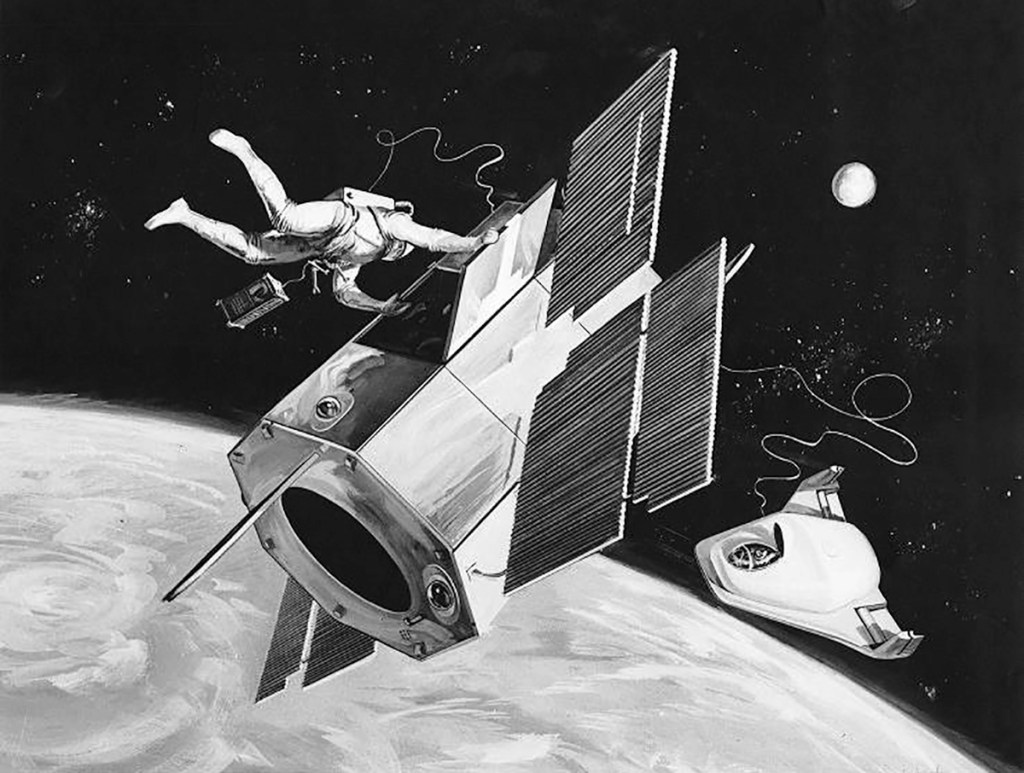
Image credit: Grumman
Image source: Cradle of Aviation Museum
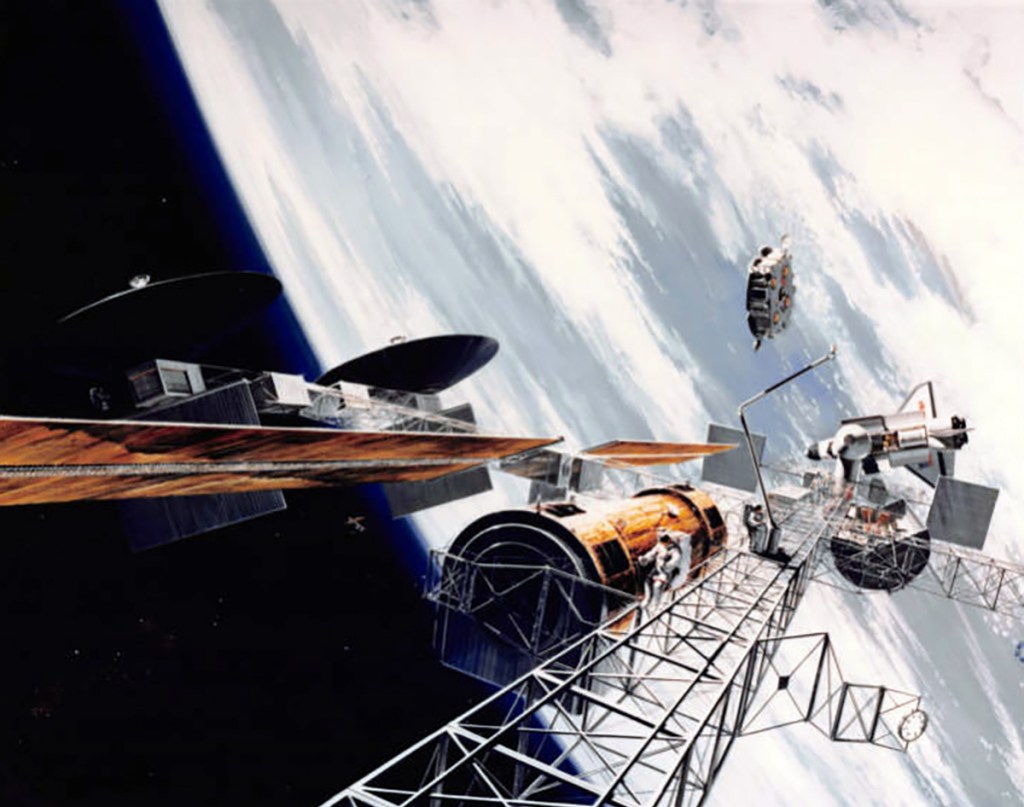
Image credit: NASA
Image source: Cradle of Aviation Museum
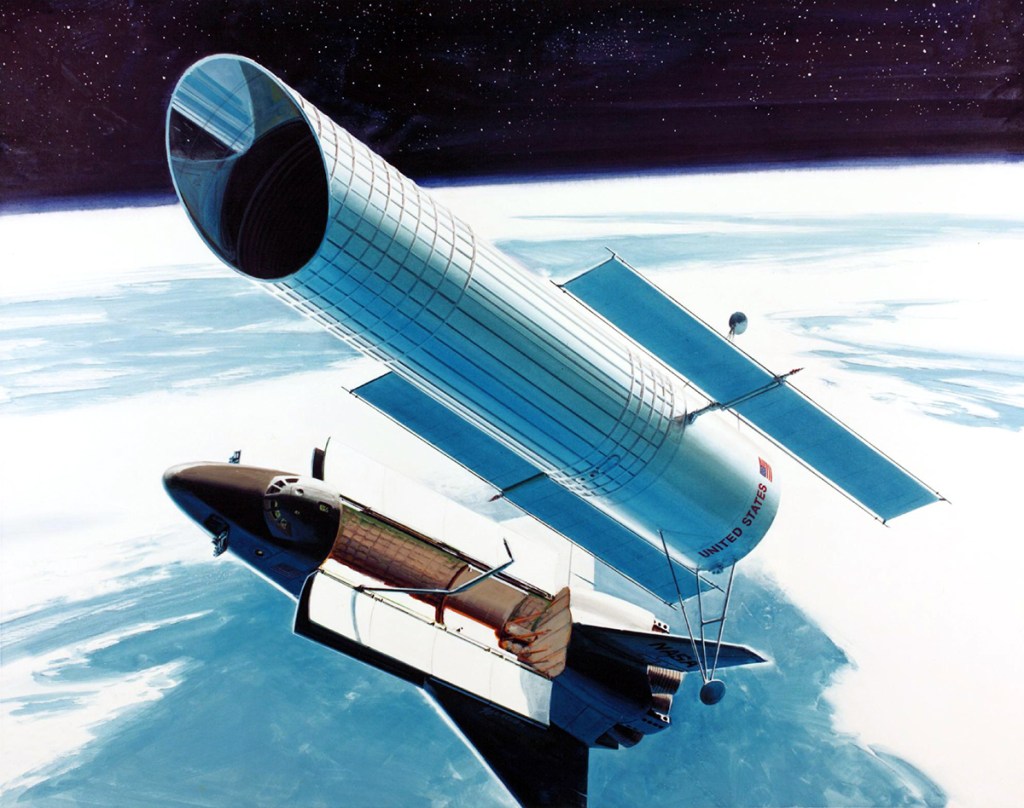

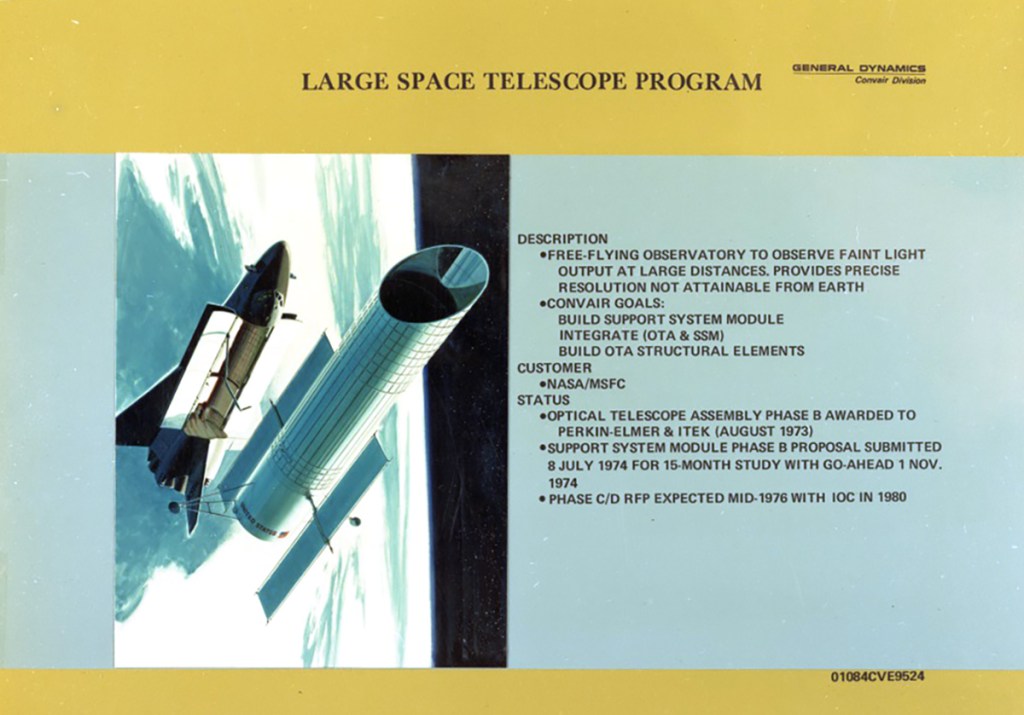
Image credit: Convair
Image source: SDASM Archives
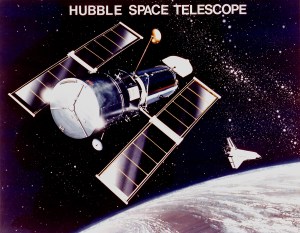
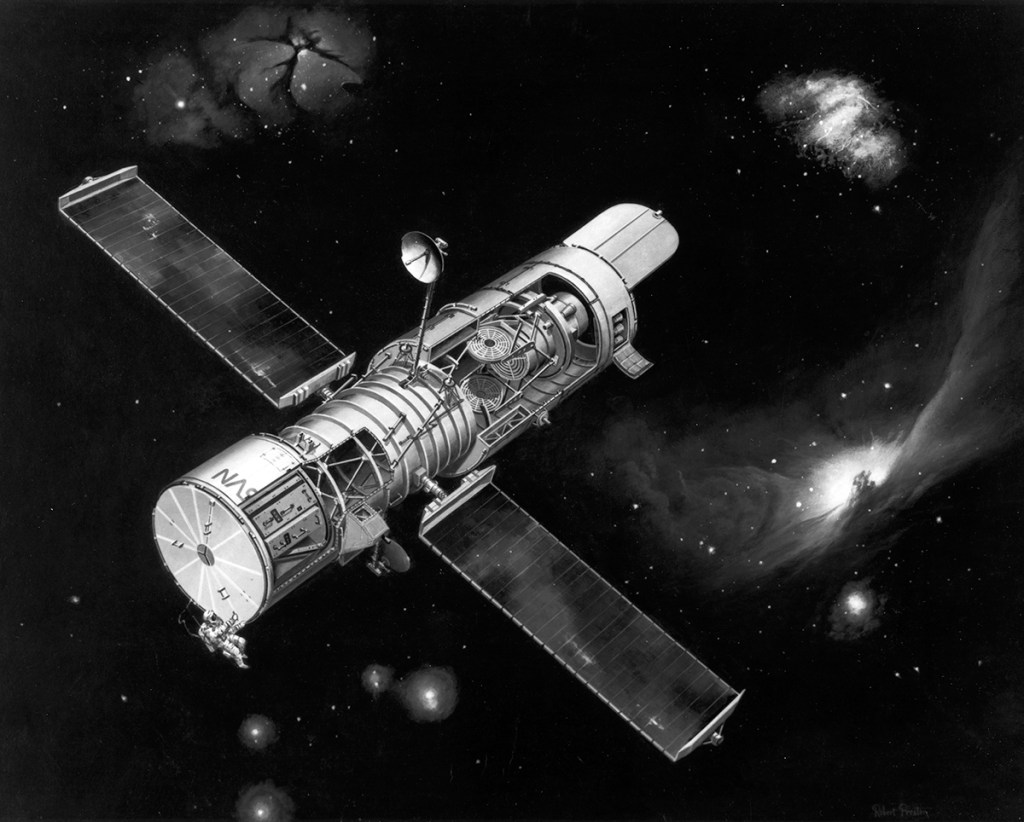
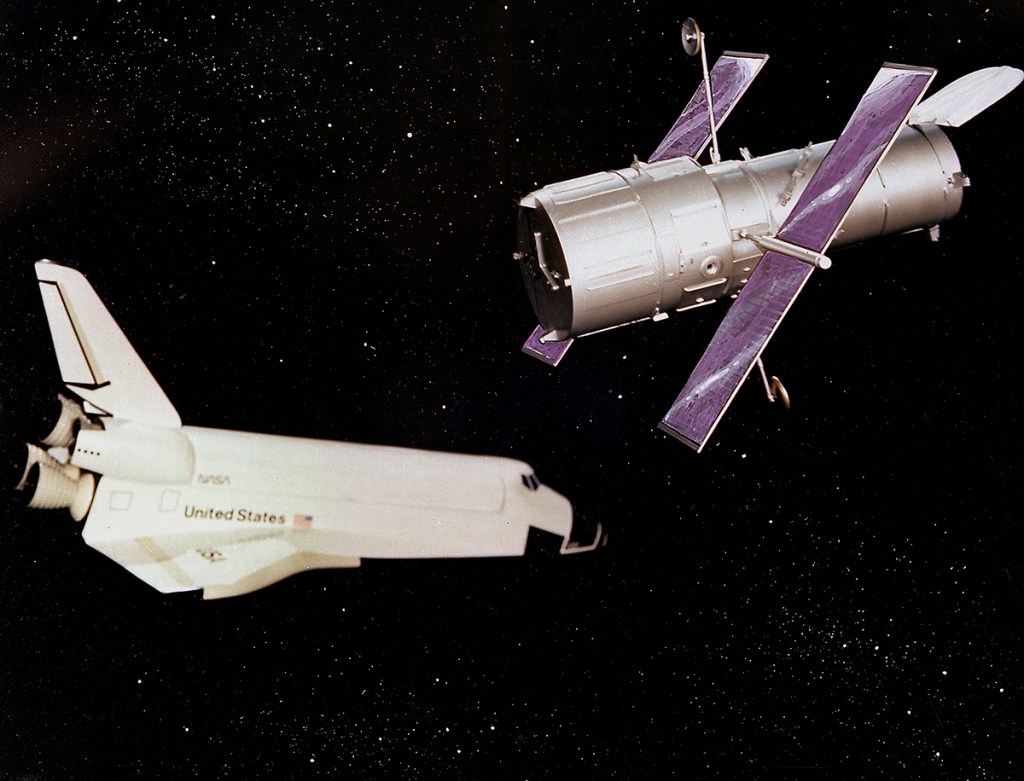
This is an artist’s concept of the Hubble Space Telescope (HST). The HST is the product of a partnership between NASA, European Space Agency Contractors, and the international community of astronomers. It is named after Edwin P. Hubble, an American Astronomer who discovered the expanding nature of the universe and was the first to realize the true nature of galaxies. The purpose of the HST, the most complex and sensitive optical telescope ever made, is to study the cosmos from a low-Earth orbit. By placing the telescope in space, astronomers are able to collect data that is free of the Earth’s atmosphere. The HST detects objects 25 times fainter than the dimmest objects seen from Earth and provides astronomers with an observable universe 250 times larger than is visible from ground-based telescopes, perhaps as far away as 14 billion light-years. The HST views galaxies, stars, planets, comets, possibly other solar systems, and even unusual phenomena such as quasars, with 10 times the clarity of ground-based telescopes. The major elements of the HST are the Optical Telescope Assembly (OTA), the Support System Module (SSM), and the Scientific Instruments (SI). The HST is approximately the size of a railroad car, with two cylinders joined together and wrapped in a silvery reflective heat shield blanket. Wing-like solar arrays extend horizontally from each side of these cylinders, and dish-shaped anternas extend above and below the body of the telescope. The HST was deployed from the Space Shuttle Discovery (STS-31 mission) into Earth orbit in April 1990. The Marshall Space Flight Center had responsibility for design, development, and construction of the HST. The Perkin-Elmer Corporation, in Danbury, Connecticut, developed the optical system and guidance sensors. The Lockheed Missile and Space Company of Sunnyvale, California produced the protective outer shroud and spacecraft systems, and assembled and tested the finished telescope.
Image credit: NASA MSFC
Image source: NASA Images
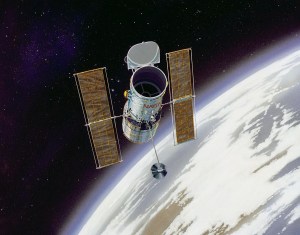
This artist concept shows the Hubble Space Telescope (HST) in operational configuration orbiting the Earth after its deployment from Discovery, Orbiter Vehicle (OV) 103 during STS-31. The high gain antennas (HGAs) and solar arrays (SAs) have been extended. HST’s aperture door is open as it views the universe from a vantage point above the Earth’s atmosphere. View provided by the Marshall Space Flight Center (MSFC).
Image credit: NASA MSFC
Image source: NASA Images