Image credit: NASA JSC
Image source: NASA Images
Image credit: NASA JSC
Image source: NASA Images
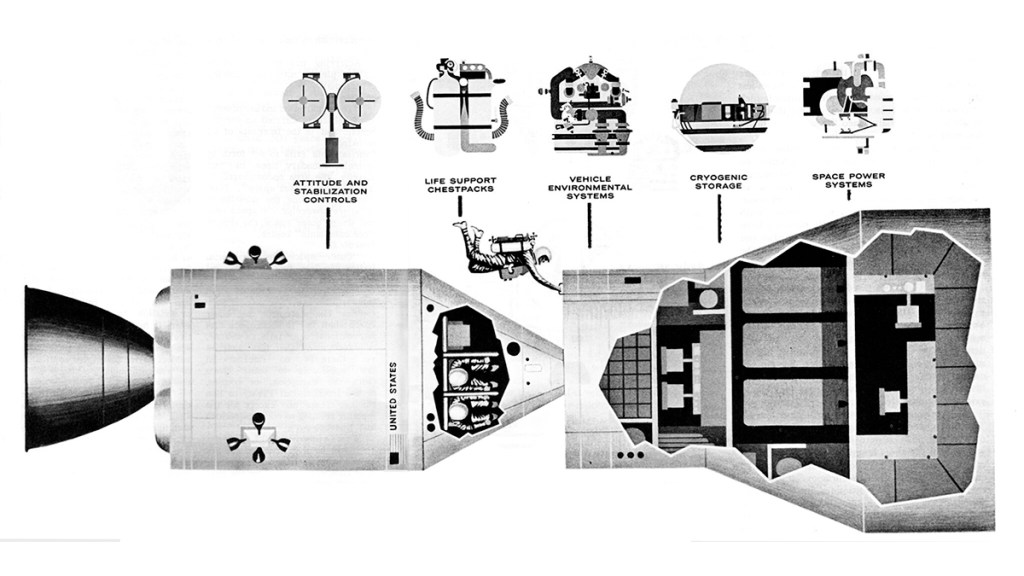
An “extended” Apollo would be able to travel for several months in space. Garrett concepts of environmental system, cryogenic storage, life-support and attitude control can be adapted to this vehicle.
Space World
December 1964, VOL. A-14
Image credit: Marquardt Corporation
Image source: Numbers Station

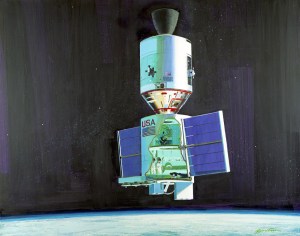
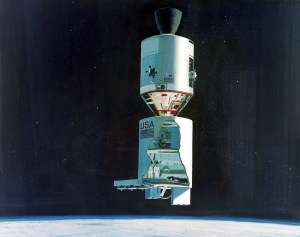
The Marquardt Corporation is conducting studies under contract to North American’s Space and Information Systems Division on advanced rocket reaction control systems for Apollo X. The Extended Apollo Mission is depicted above in conjunction with a space laboratory system, one of several concepts to determine additional applications of the Apollo spacecraft by NASA. Marquardt’s four-engine reaction control system cluster is illustrated above on the surface of the Apollo X service module. Similar systems are being developed by Marquardt for the current Project Apollo lunar mission on both the service and lunar excursion module.
Space World
April 1965, VOL. B-4.18
Image credit: Marquardt Corporation
Image source: Numbers Station
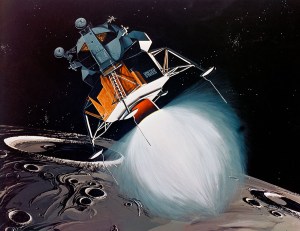
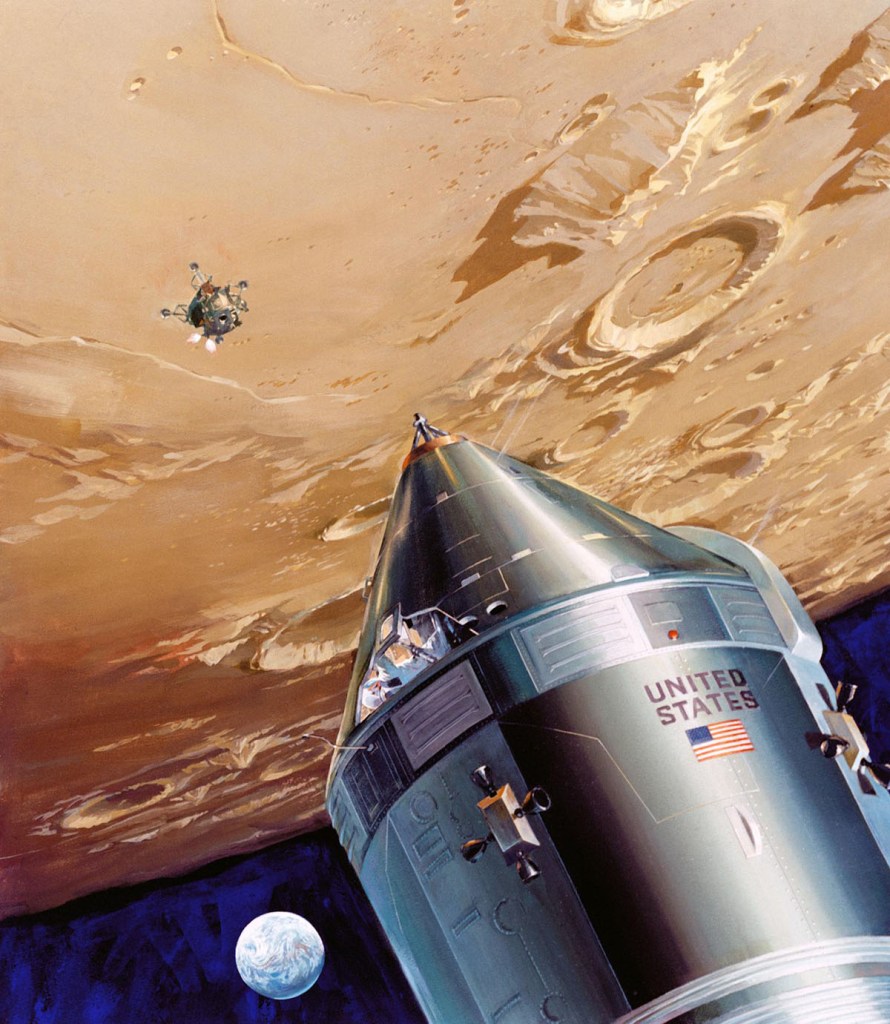
S69-33765 (12 May 1969) — Artist’s concept depicting the firing of the Apollo 10 Lunar Module descent engine for 42 seconds to propel “Snoopy” back into a higher lunar orbit for rendezvous and docking with the Command and Service Modules. Earlier, the LM descent engine will be fired for 27 seconds to take astronauts Thomas P. Stafford, Apollo 10 commander; and Eugene A. Cernan, lunar module pilot, to within 10 miles of the moon’s surface. Astronauts John W. Young, command module pilot, will remain in the Command Module, “Charlie Brown,” in lunar orbit. Developed by TRW’s Systems Group at Redondo Beach, California, under Grumman subcontract, the throttleable descent engine will be used to soft land the LM on the lunar surface during Apollo 11 and subsequent Apollo missions.
Image credit: NASA JSC
Image source: NASA Images