Report of the 90-day study on human exploration of the Moon and Mars
Robotic Missions
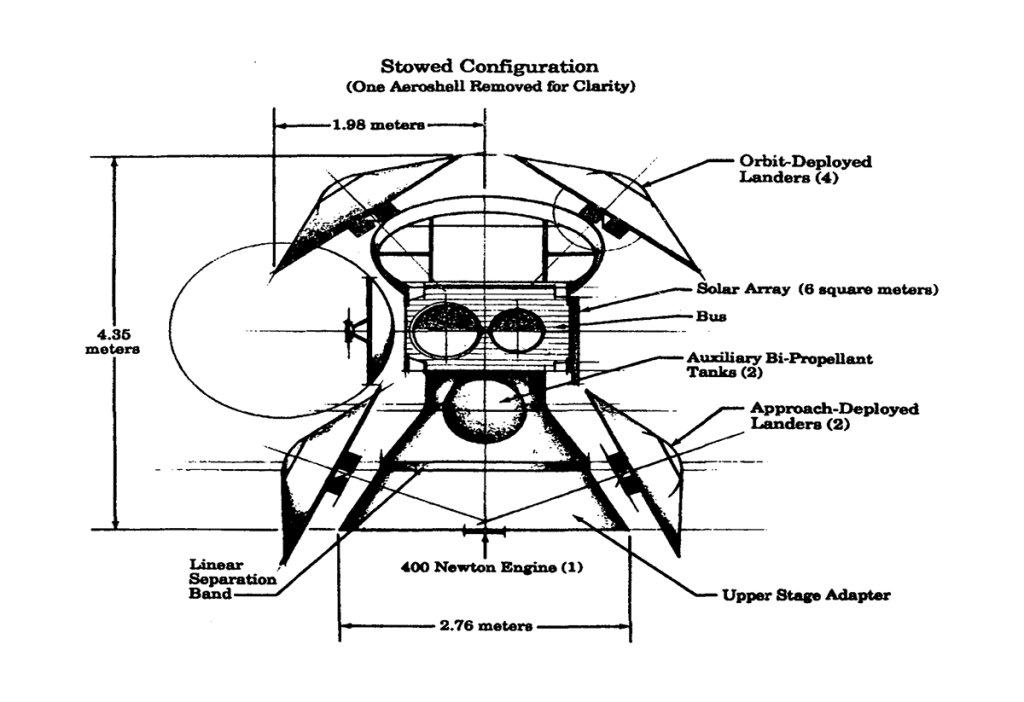
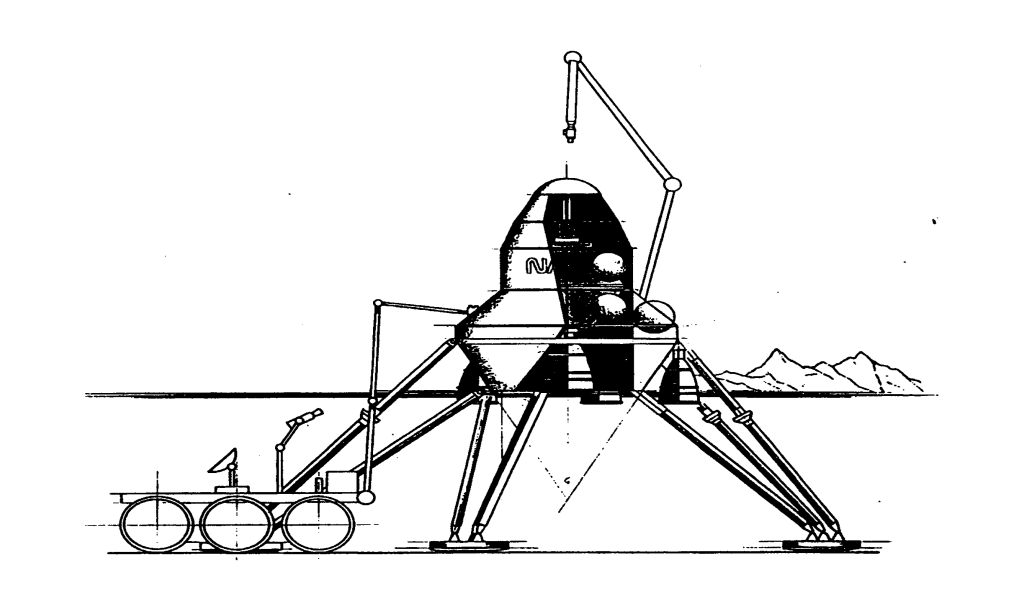
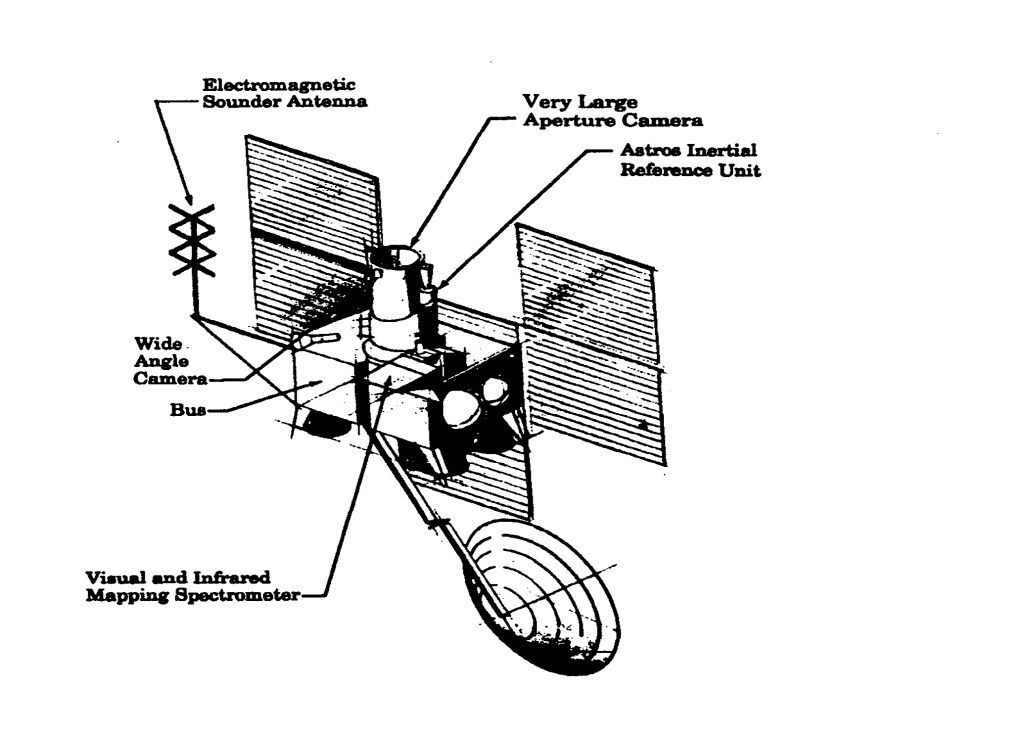
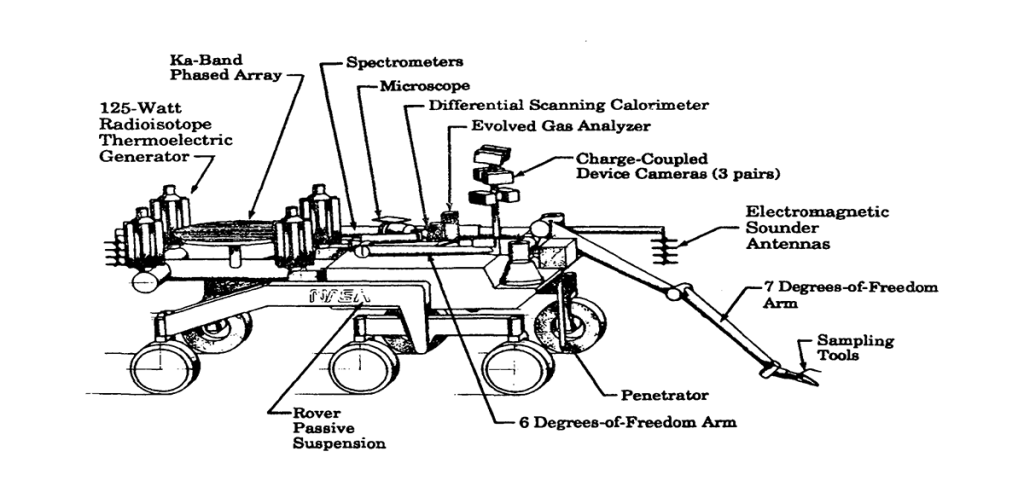
Mars Global Network Mission Vehicle Concept Using LandersSample Return Vehicle with Local RoverMars Site Reconnaissance Orbiter ConceptLong Range Mars Rover
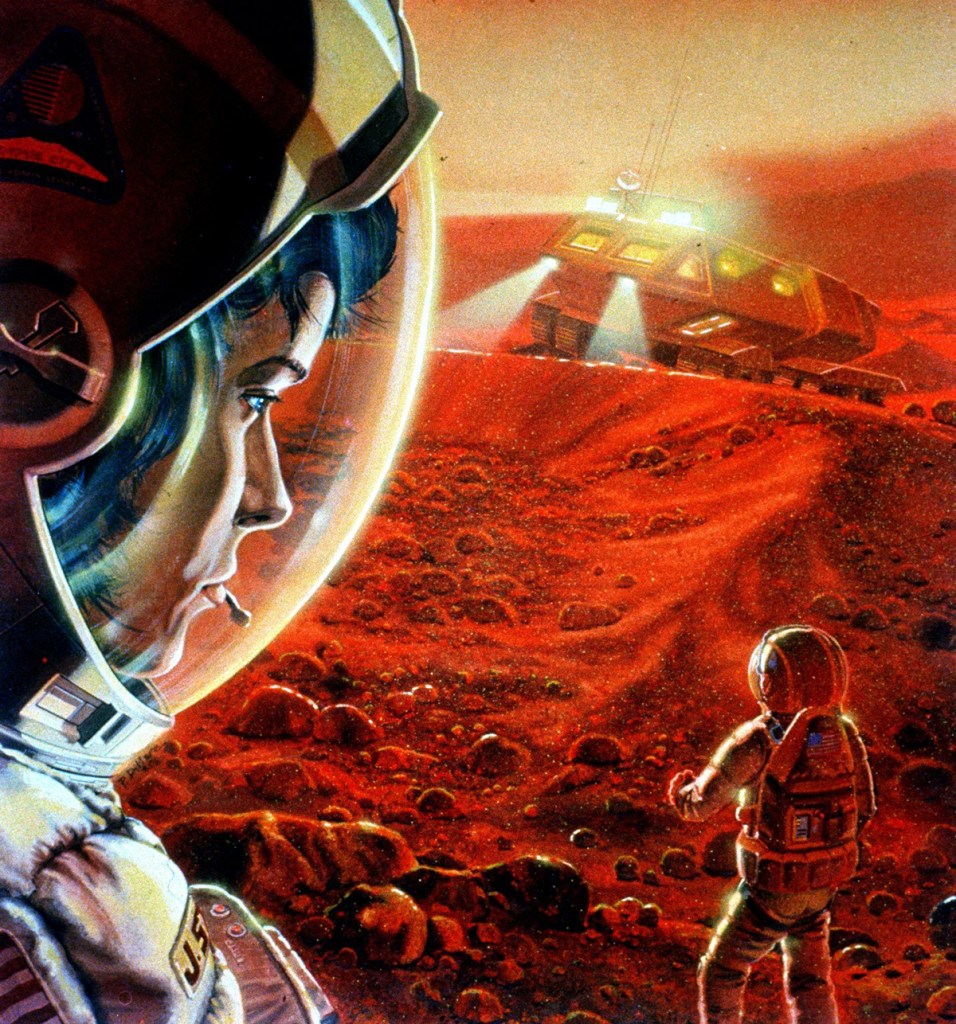
S89-25056 (January 1989) — This is an artist’s concept depicting a possible scene of astronauts walking on Mars during a dust storm. The artwork was part of a NASA new initiatives study which surveyed possible future manned planetary expeditionary activity. Scientists and researchers involved in the study, realizing that a hostile environment will confront long-distance space travelers, note the requirement of highly specialized technologies and systems, e.g., the durable type suits, depicted here, for protection against the dust storm. This painting was done by Paul DiMare.
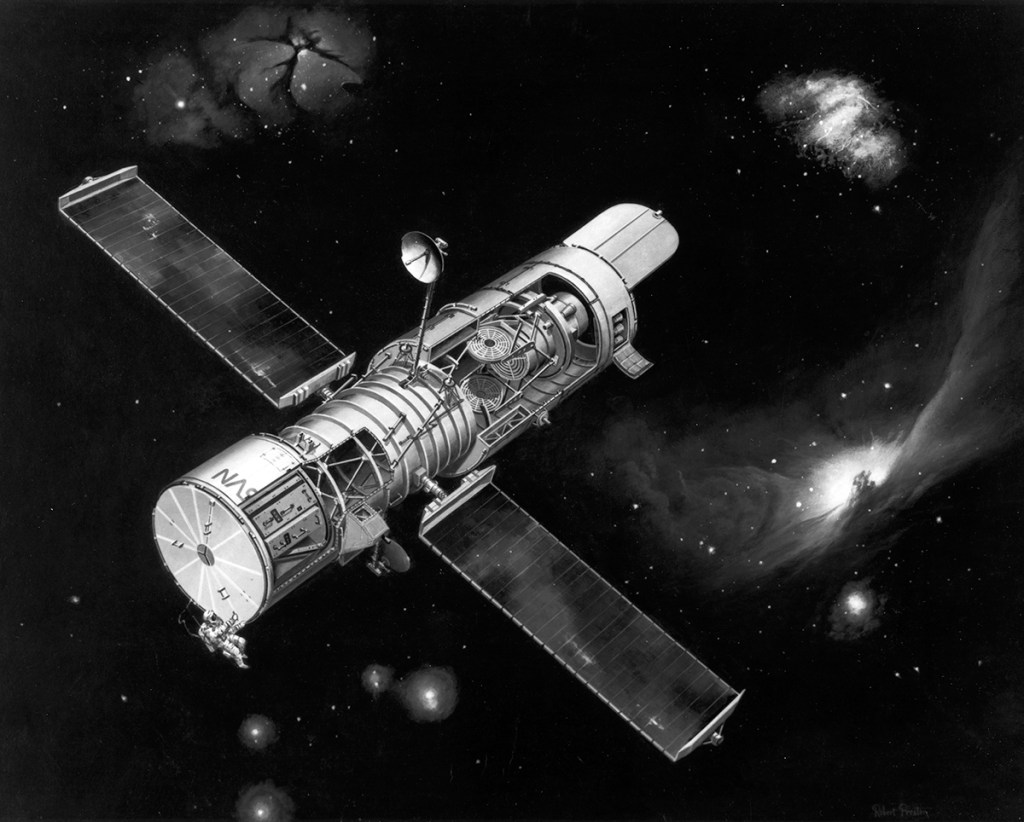
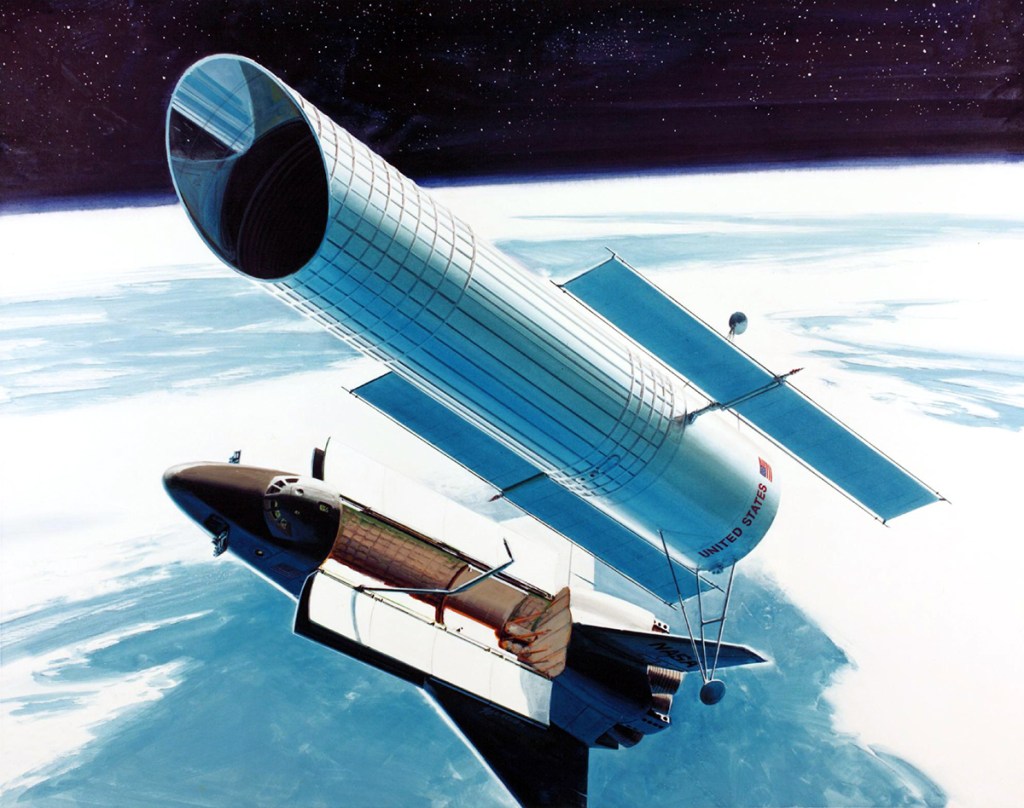
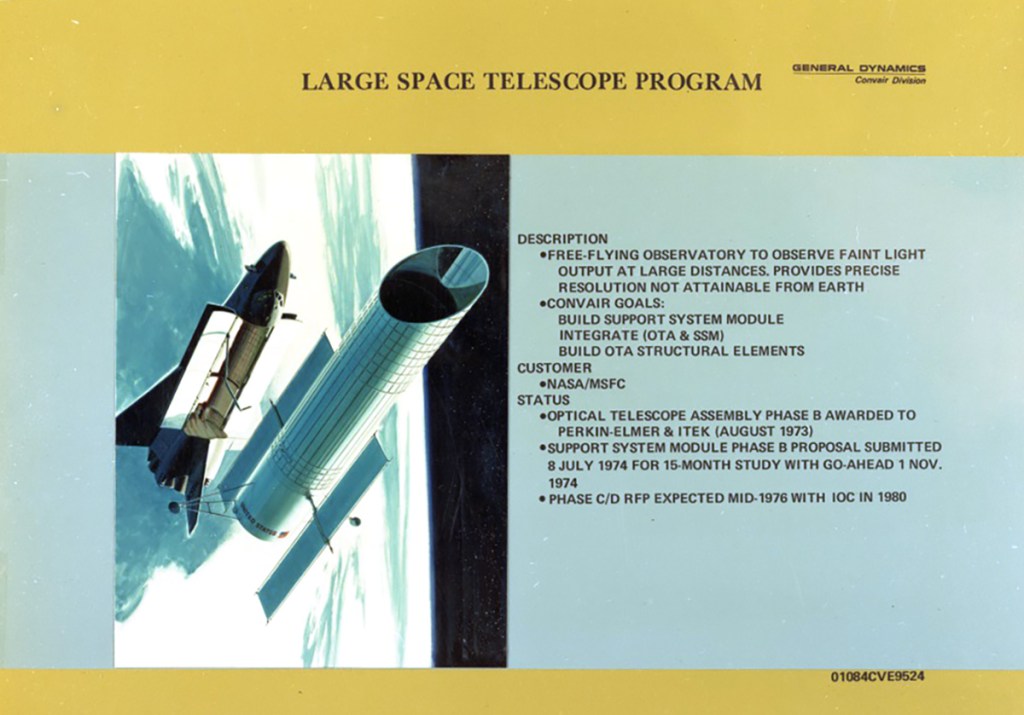
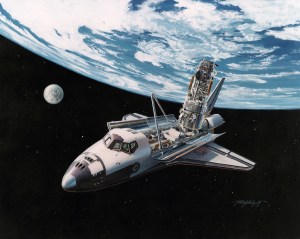
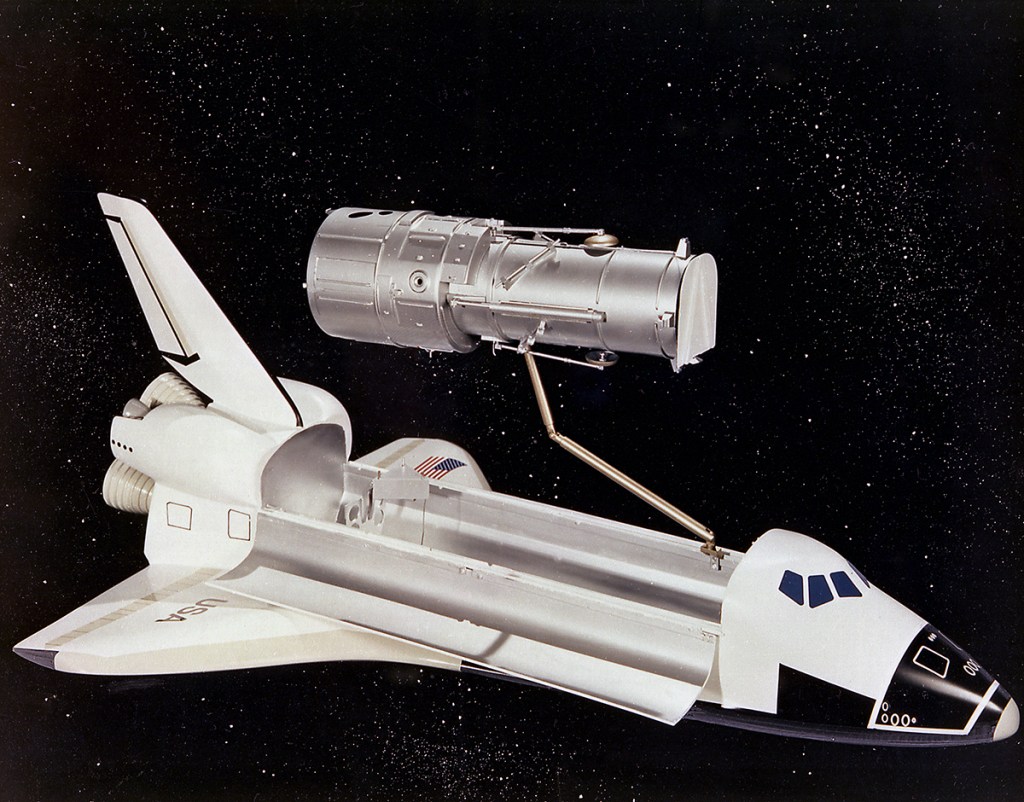
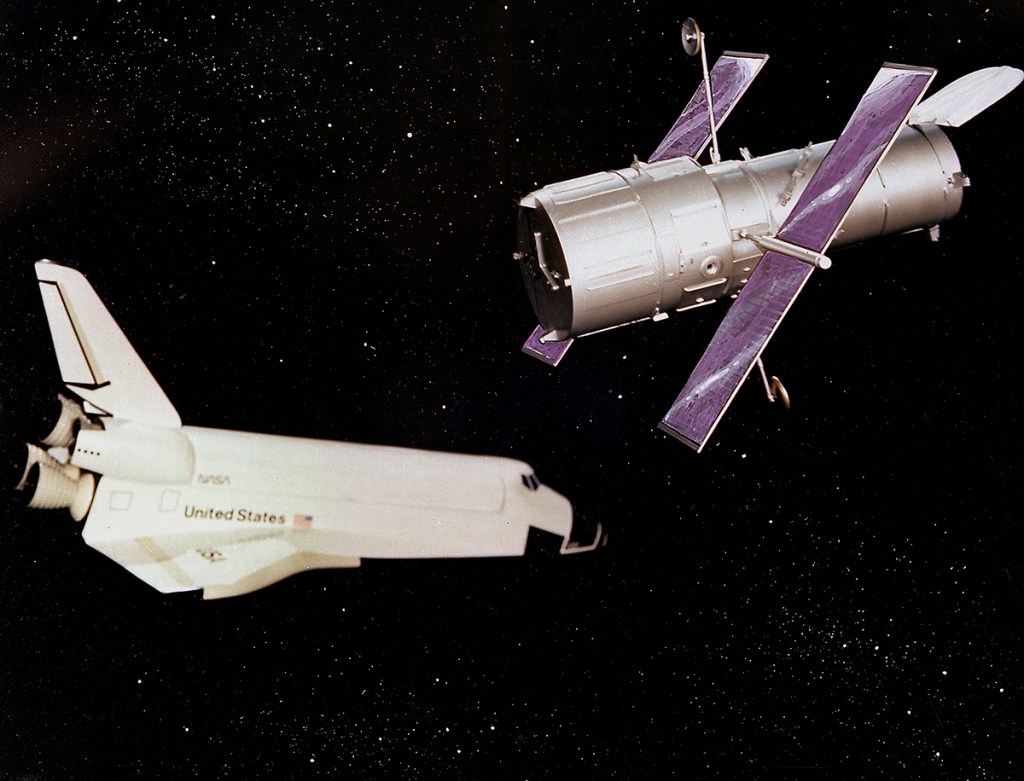
This is an artist’s concept of the Hubble Space Telescope (HST). The HST is the product of a partnership between NASA, European Space Agency Contractors, and the international community of astronomers. It is named after Edwin P. Hubble, an American Astronomer who discovered the expanding nature of the universe and was the first to realize the true nature of galaxies. The purpose of the HST, the most complex and sensitive optical telescope ever made, is to study the cosmos from a low-Earth orbit. By placing the telescope in space, astronomers are able to collect data that is free of the Earth’s atmosphere. The HST detects objects 25 times fainter than the dimmest objects seen from Earth and provides astronomers with an observable universe 250 times larger than is visible from ground-based telescopes, perhaps as far away as 14 billion light-years. The HST views galaxies, stars, planets, comets, possibly other solar systems, and even unusual phenomena such as quasars, with 10 times the clarity of ground-based telescopes. The major elements of the HST are the Optical Telescope Assembly (OTA), the Support System Module (SSM), and the Scientific Instruments (SI). The HST is approximately the size of a railroad car, with two cylinders joined together and wrapped in a silvery reflective heat shield blanket. Wing-like solar arrays extend horizontally from each side of these cylinders, and dish-shaped anternas extend above and below the body of the telescope. The HST was deployed from the Space Shuttle Discovery (STS-31 mission) into Earth orbit in April 1990. The Marshall Space Flight Center had responsibility for design, development, and construction of the HST. The Perkin-Elmer Corporation, in Danbury, Connecticut, developed the optical system and guidance sensors. The Lockheed Missile and Space Company of Sunnyvale, California produced the protective outer shroud and spacecraft systems, and assembled and tested the finished telescope.