Image credit: North American Rockwell
Image source: Numbers Station
Image credit: North American Rockwell
Image source: Numbers Station
Image credit: North American Rockwell
Image source: Numbers Station
Image credit: NASA
Image source: SDASM Archives
Image credit: Grumman
Image credit: Grumman
File source: NASA NTRS

FOR RELEASE AT 9:00 A.M., PDT, SEPTEMBER 22, 1960
DYNA SOAR GLIDER RE-ENTERING EARTH’S ATMOSPHERE
This is a Boeing artist’s impression of how the Dyna Soar manned space glider will look when it re-enters the earth’s atmosphere after a flight into space. Leading edges of the craft will glow from the heat created by the friction of the vehicle passing into the atmosphere. Dyna Soar will be boosted into space by a modified Titan intercontinental ballistic missile. After being separated from its booster, the glider will be left in a piloted, near orbital flight. Its pilot later could glide to a conventional landing at an Air Force base. The Boeing Company, under supervision of the Air Force, is prime contractor for the system and the glider. The Martin Company is prime contractor for the Titan booster.
— Boeing Airplane Company Photo
FROM:
News Bureau
Boeing Airplane Company
Seattle 24, Washington
Image credit: Boeing
Image source: Numbers Station
Image credit: Grumman
Image source: Numbers Station
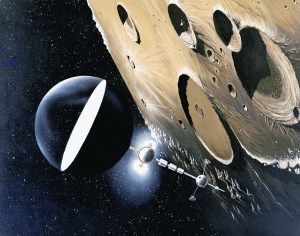
This glorious painting by John Sentovic depicts a solar-powered ship in lunar orbit, as envisioned by Krafft A. Ehricke.
Image credit: Convair
Image source: SDASM Archives
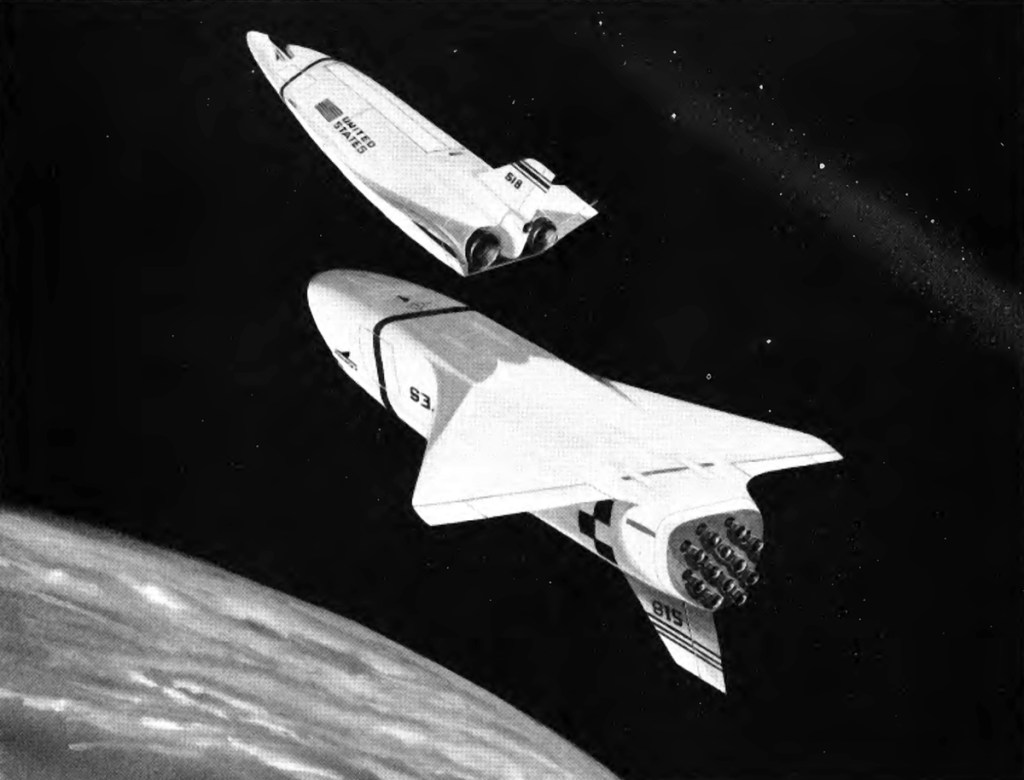
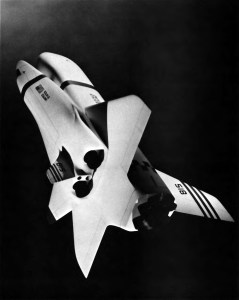
Image credit: Grumman
File source: NASA NTRS

Image credit: NASA
Image source: SDASM Archives
Image credit: North American Rockwell
Image source: Numbers Station
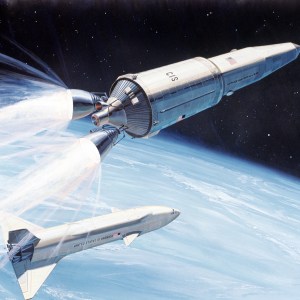
Image credit: North American Rockwell
Image source: Numbers Station
