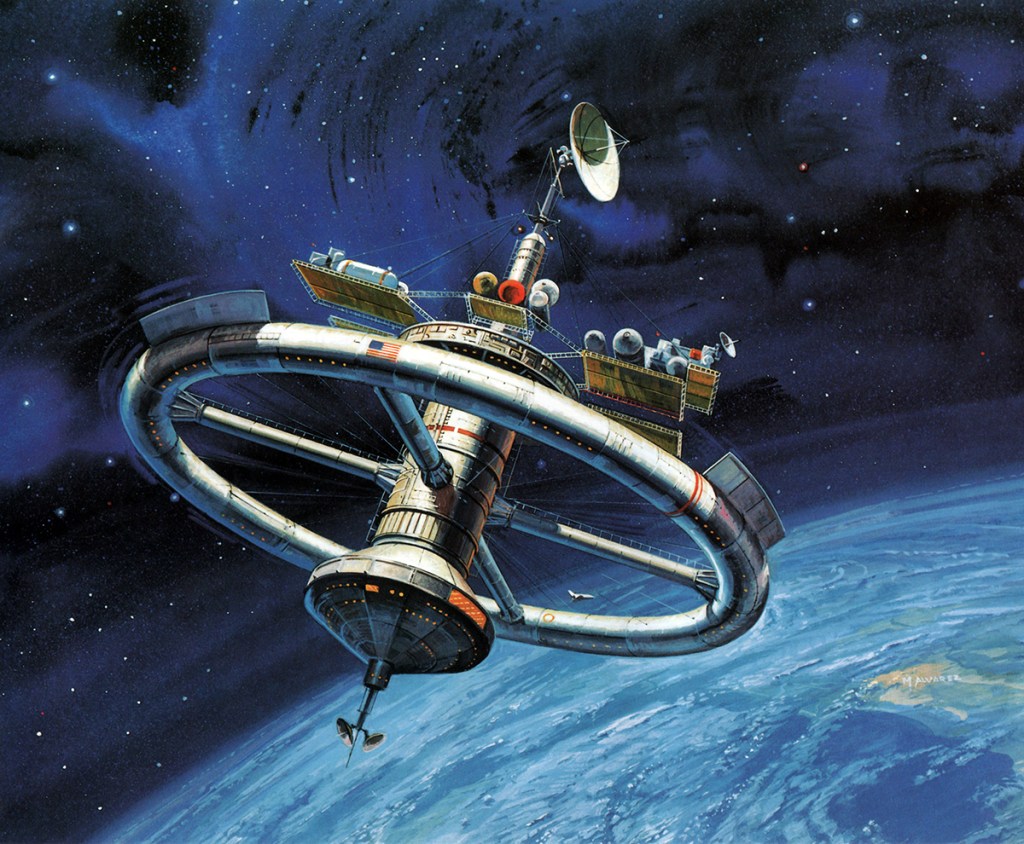
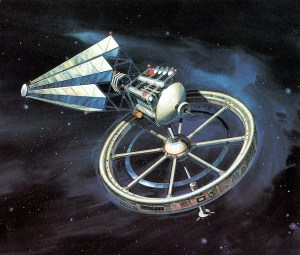
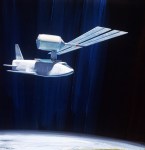
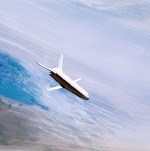
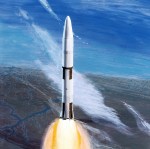
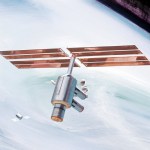
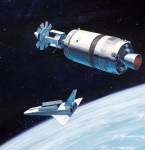
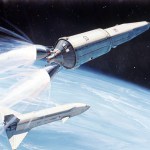
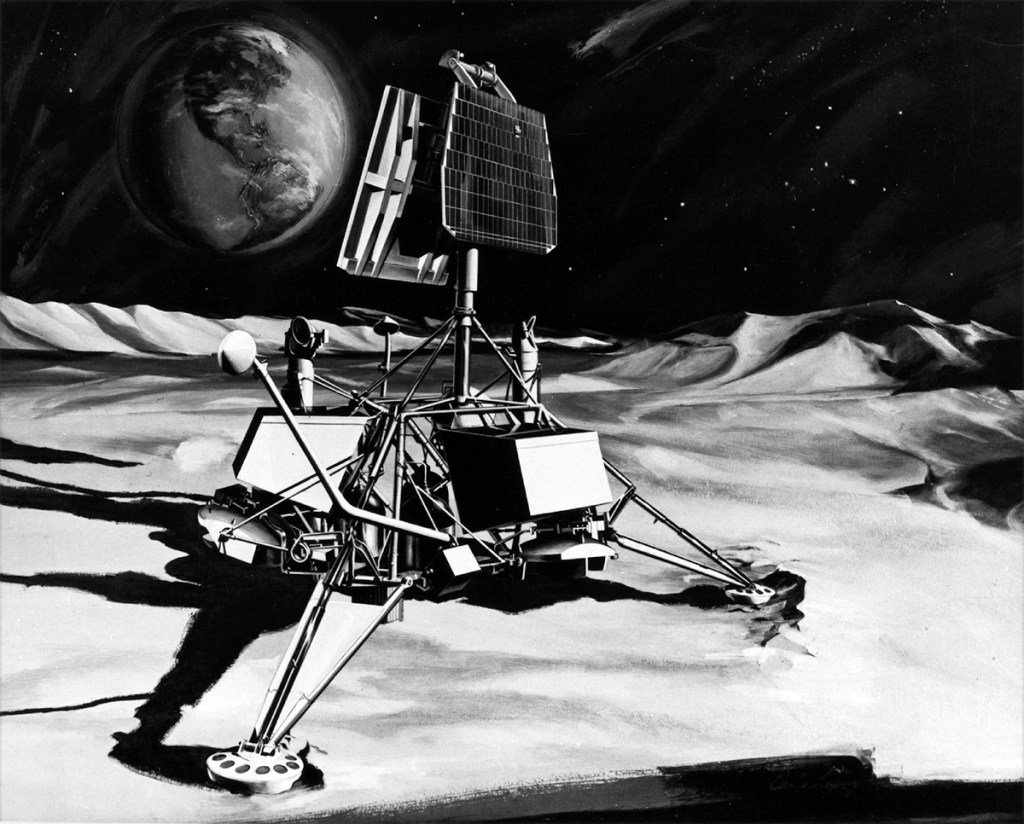
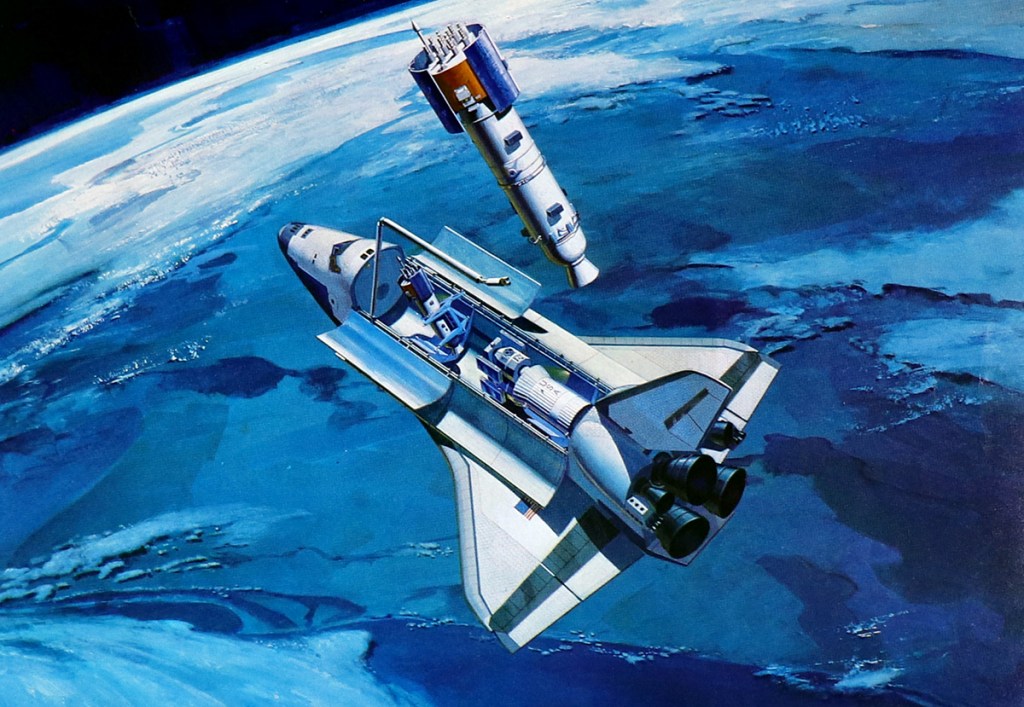
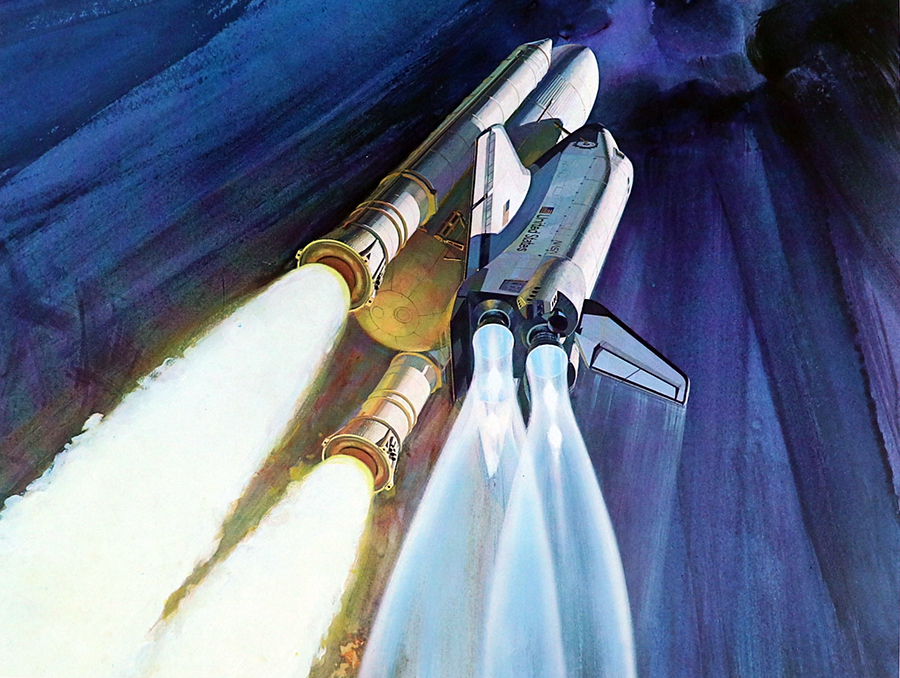
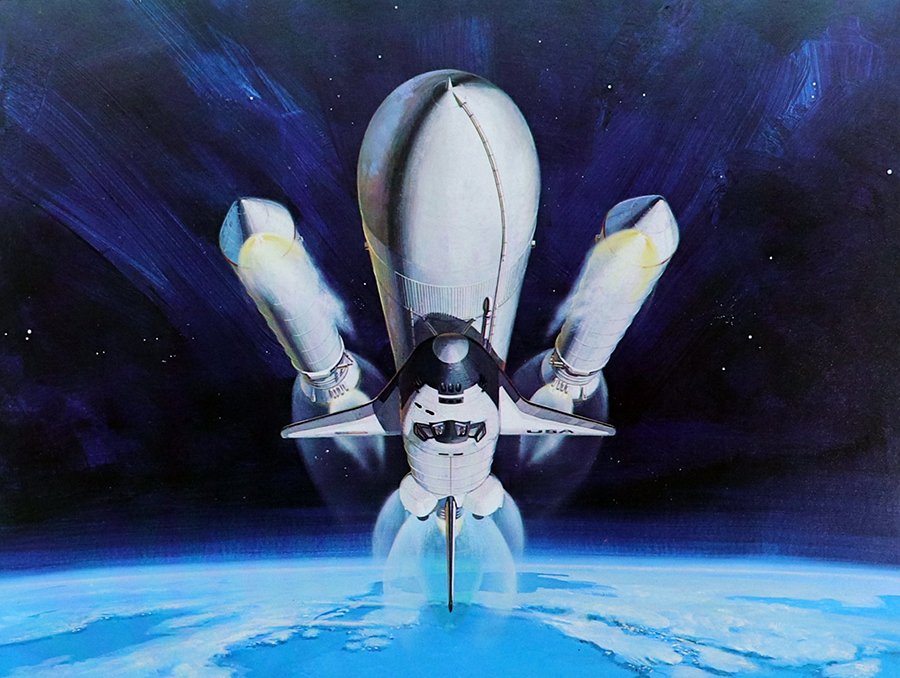
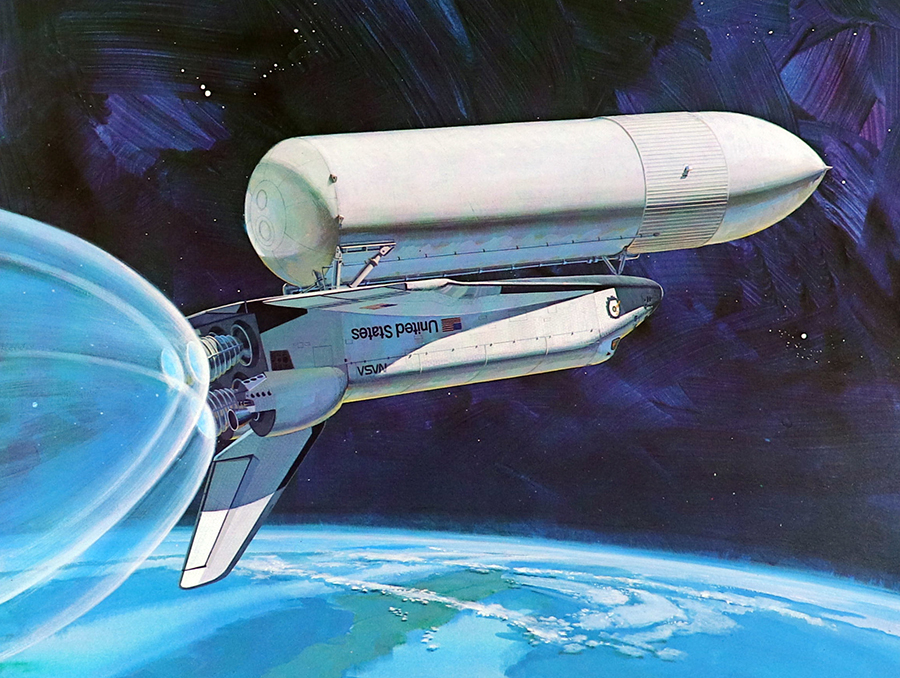
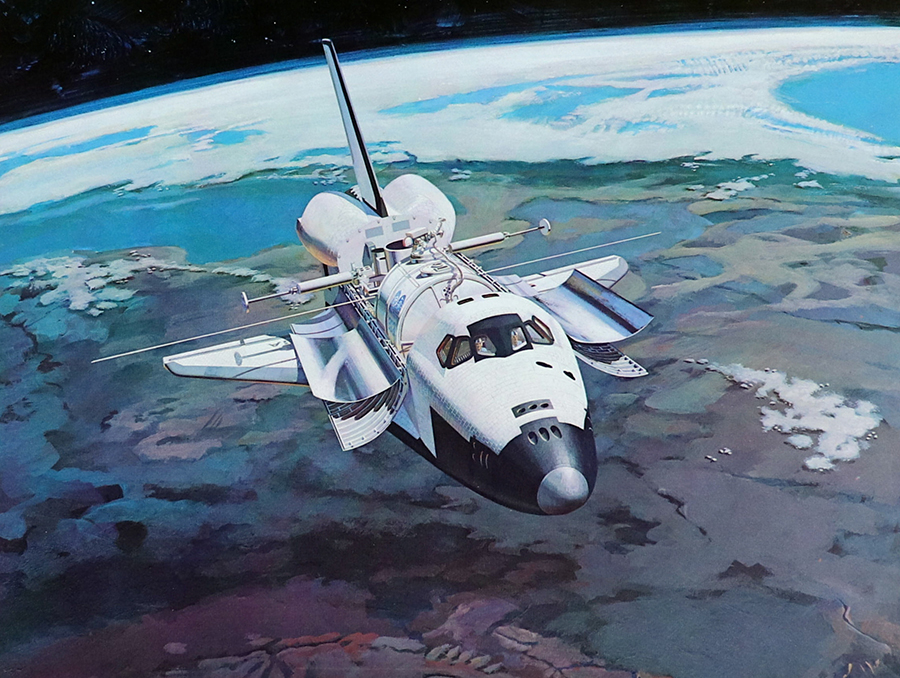
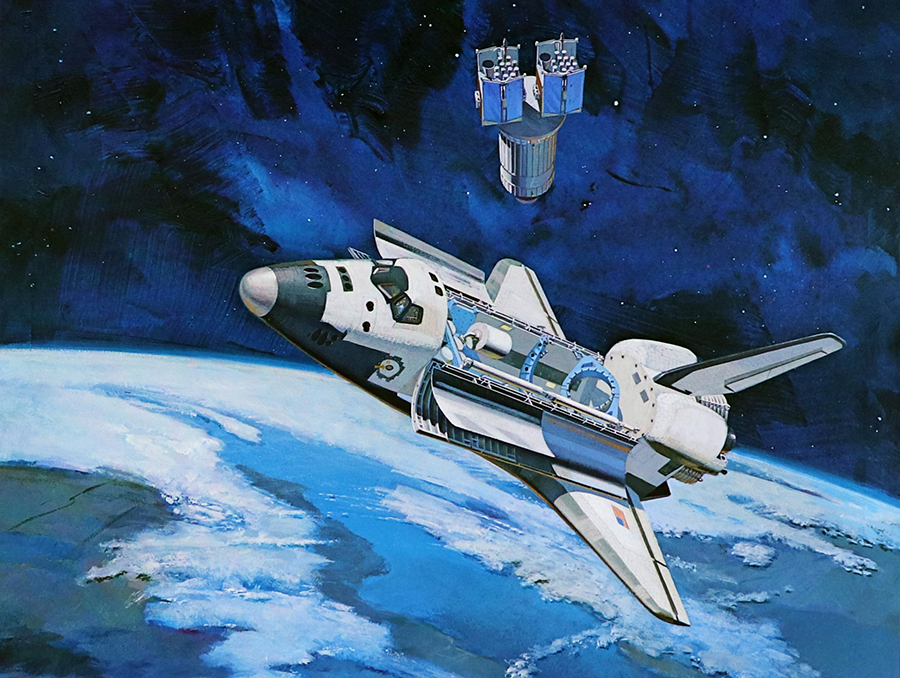
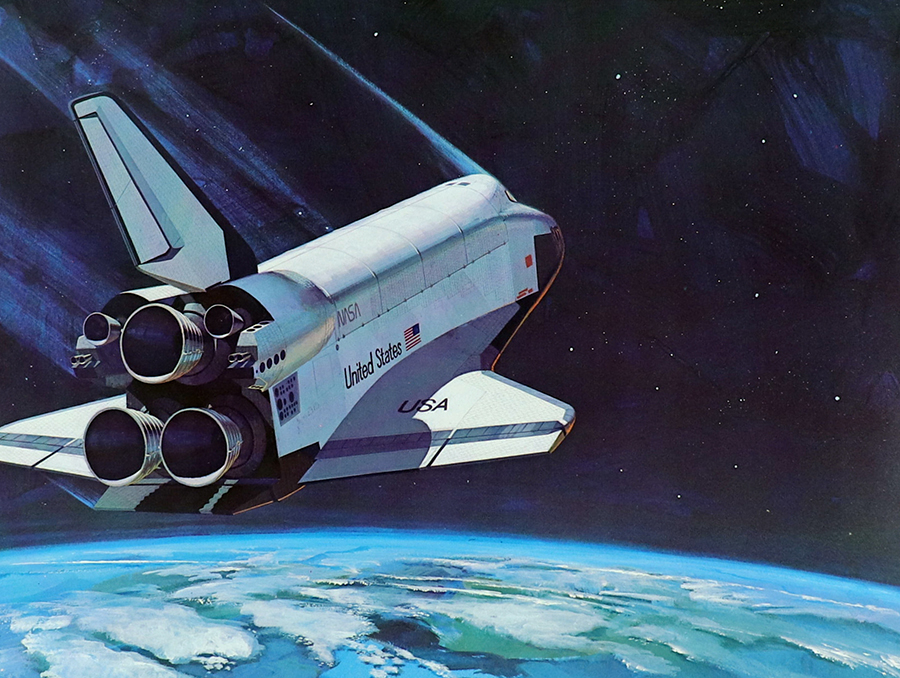
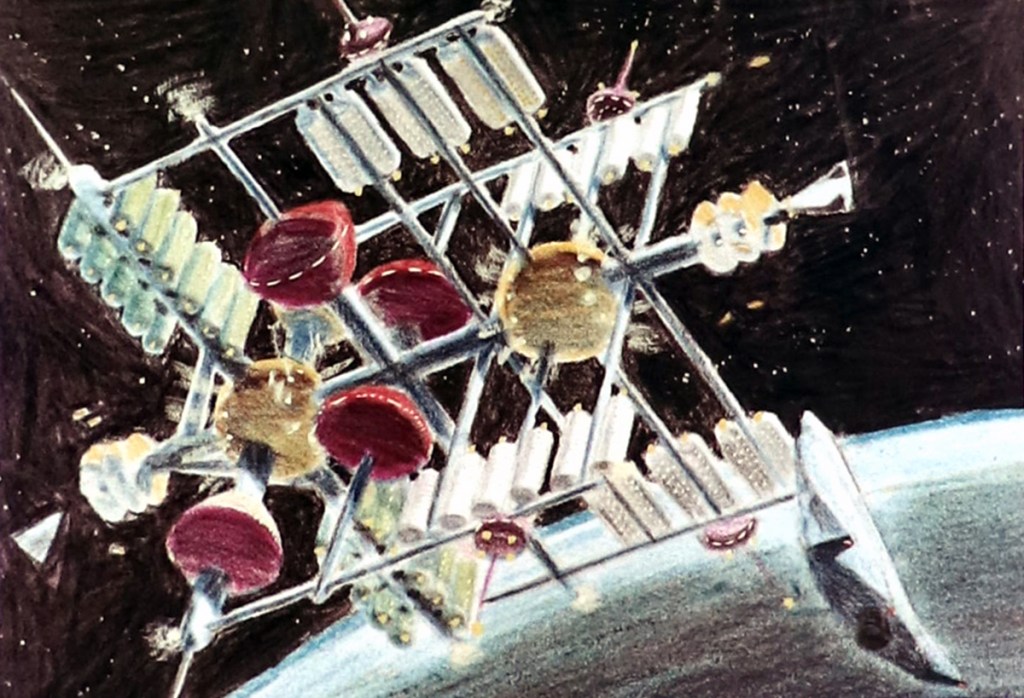
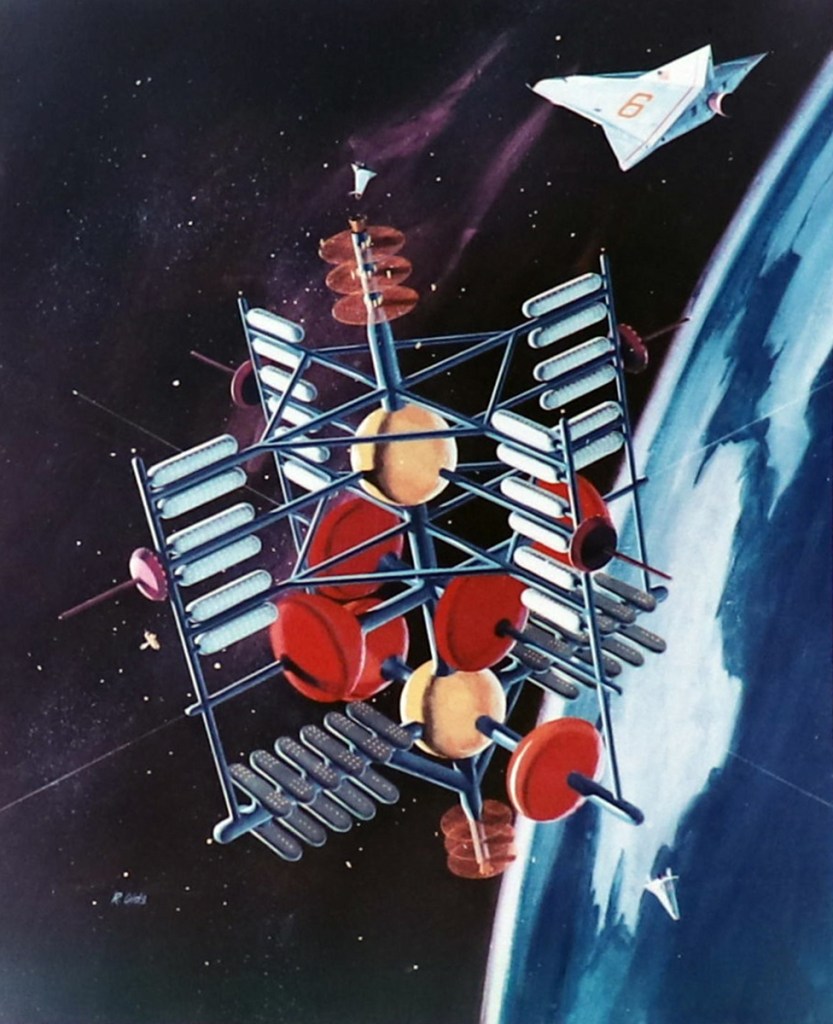
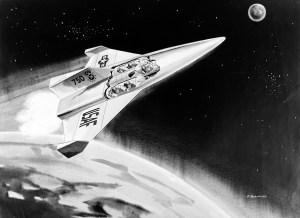
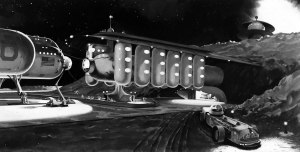
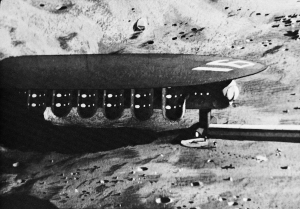
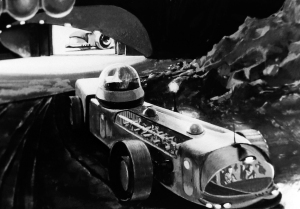
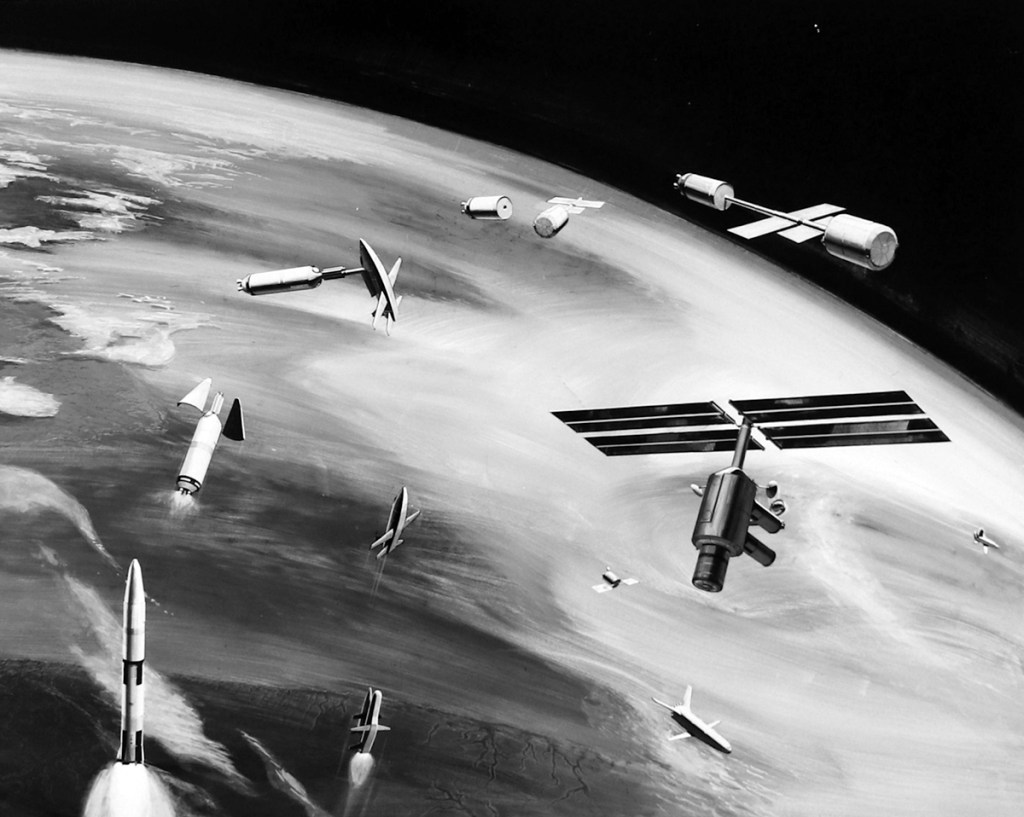
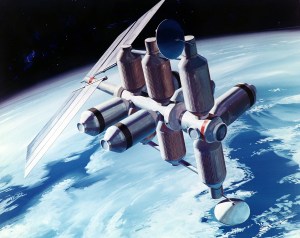
I’m pretty sure the top piece is by North American master illustrator M. Alvarez because he/she signed it. I think the bottom is by the same hand. What are we looking at? It’s a space station, but you knew that. You now know as much as I do. Parked here only because it shares the same page in Flying the Space Shuttles as the 1982 concept by Ted Brown I shared earlier.
Flying the Space Shuttles Don Dwiggins Dodd, Mead & Co., 1985
Unmanned probe approaching Pluto. Probe is powered by thermionic radioisotope power generator. The laser beams for surface illumination, with optical sensors slaved to the beams. Other equipment comprises radiation counters as well as field, plasma and particle sensors.
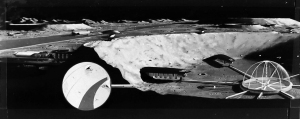
Selenopolis, named after Selene, Goddess of the Moon, is a lunar city-state that could exist by 2029. With a population of about 100,000, it contains all the comforts of “home” (Earth) — plus many features that we don’t have in the terrestrial environment.
Selenopolis is a network of “Quonset hut” – shaped “half tunnel” sections stretching across the lunar surface and covering about 100 square miles. Each section is several miles long, with internal dimensions of 3200 feet across at floor level, and 1600 feet height to the center of a curved ceiling. The sections are joined at dome-shaped intersections. The entire complex is laid out for expansion.
On the inside, each section is separated from the other by a solid but transparent “curtain”, because each section of the habitat represents a different Earth-like climate and season. Selenopolis embodies urban, rural, agricultural, industrial and resort areas, and the “weather” inside is controlled and simulated accordingly. In other words, normal atmosphere conditions for Earth are maintained, and the regional climates of Earth are simulated.
Real sunlight illuminates the interior. A system of mirrors reflects it through the ceiling. Since a lunar day is 15 Earth-dats long, some of the mirrors are colored to provide the same time-changes and sky colors that we experience on Earth, from morning to night, and from season to season.
Public utilities (water, power etc.) are sub-surface. There is also a sub surface lake.
Image credit: Krafft Ehricke Papers / Space Global Image source: NASM