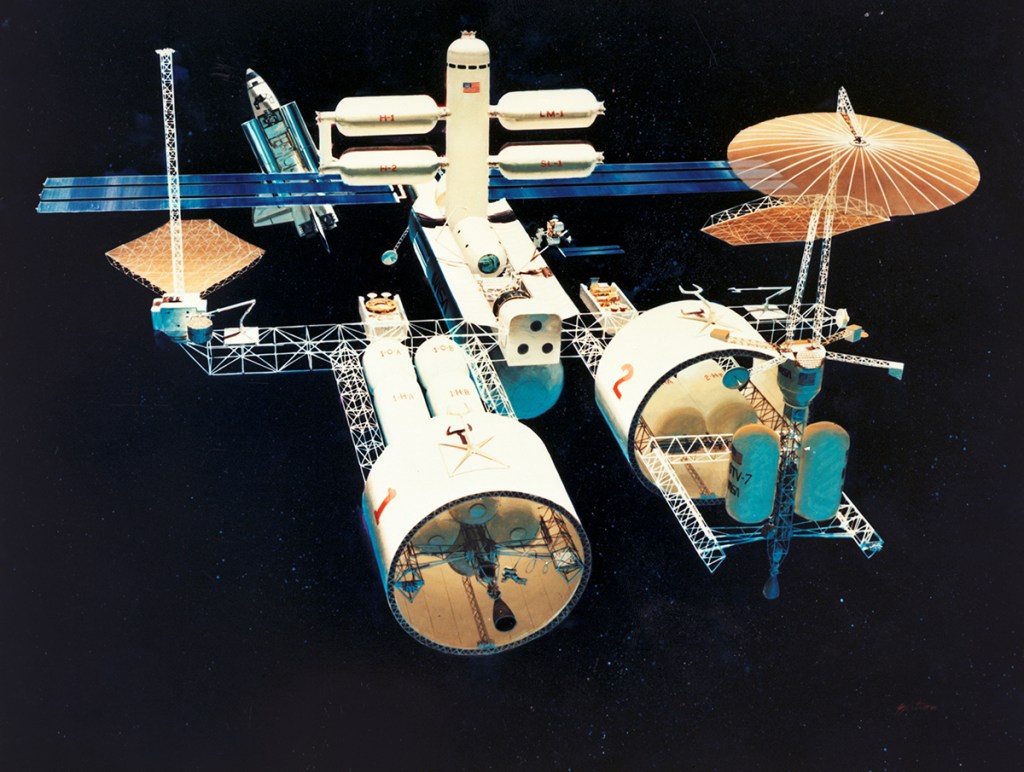
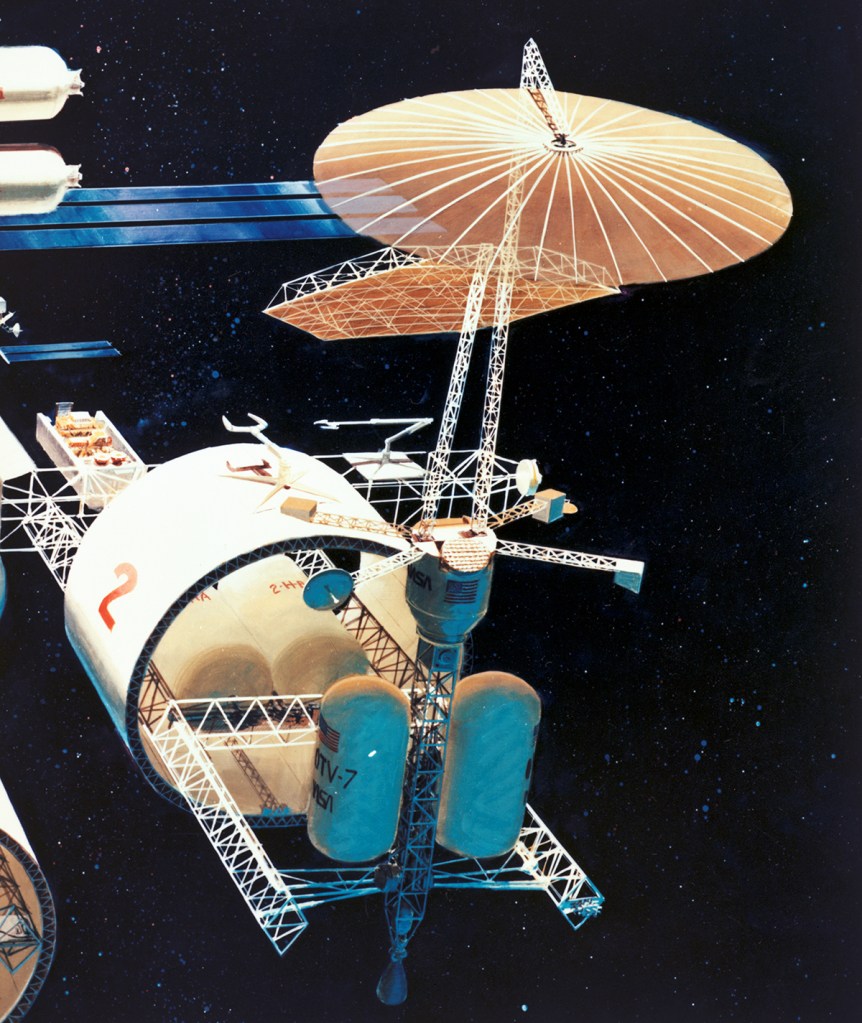
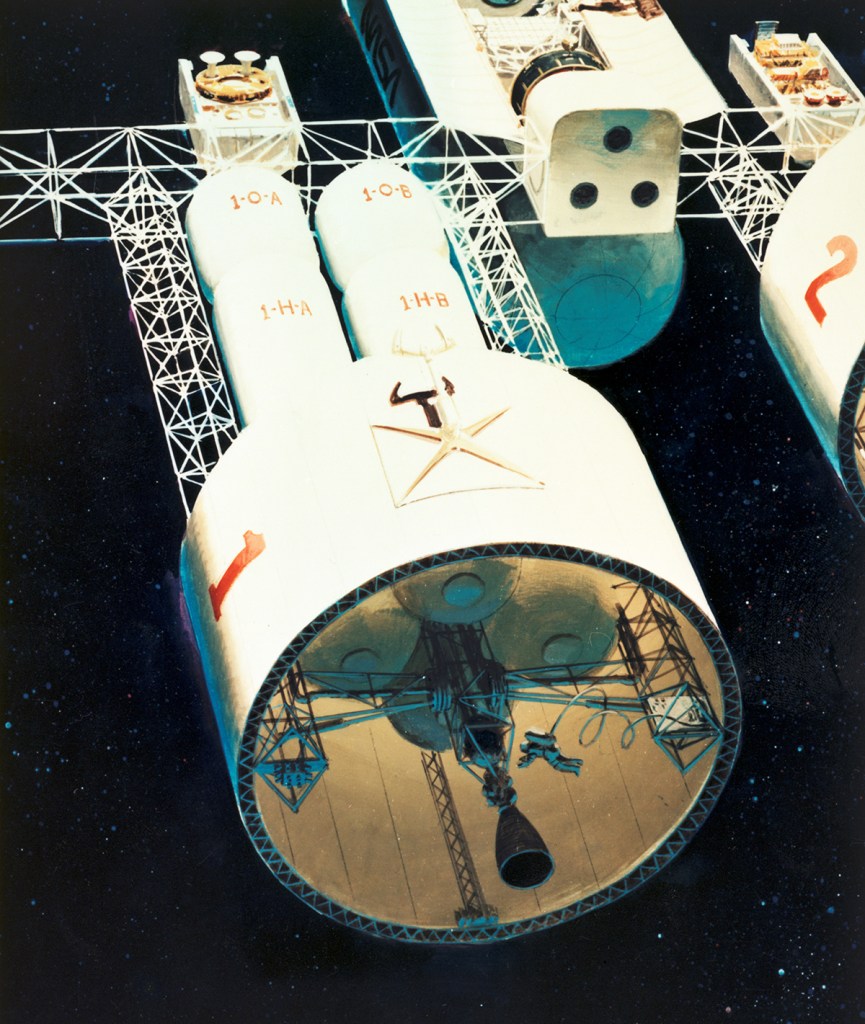
Image credit: General Dynamics / Convair
Images: National Archives
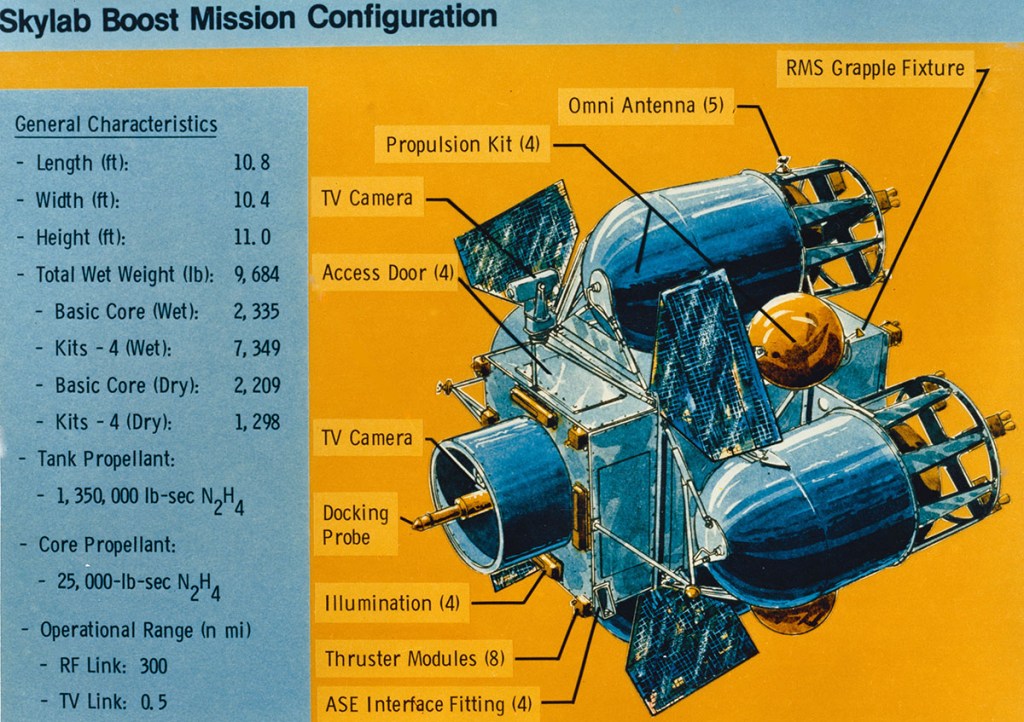
S78-23631 (1978) — A labeled drawing of a Teleoperator Retrieval System (TRS) which is being developed by NASA.
Image credit: NASA
Image source: NASA Johnson
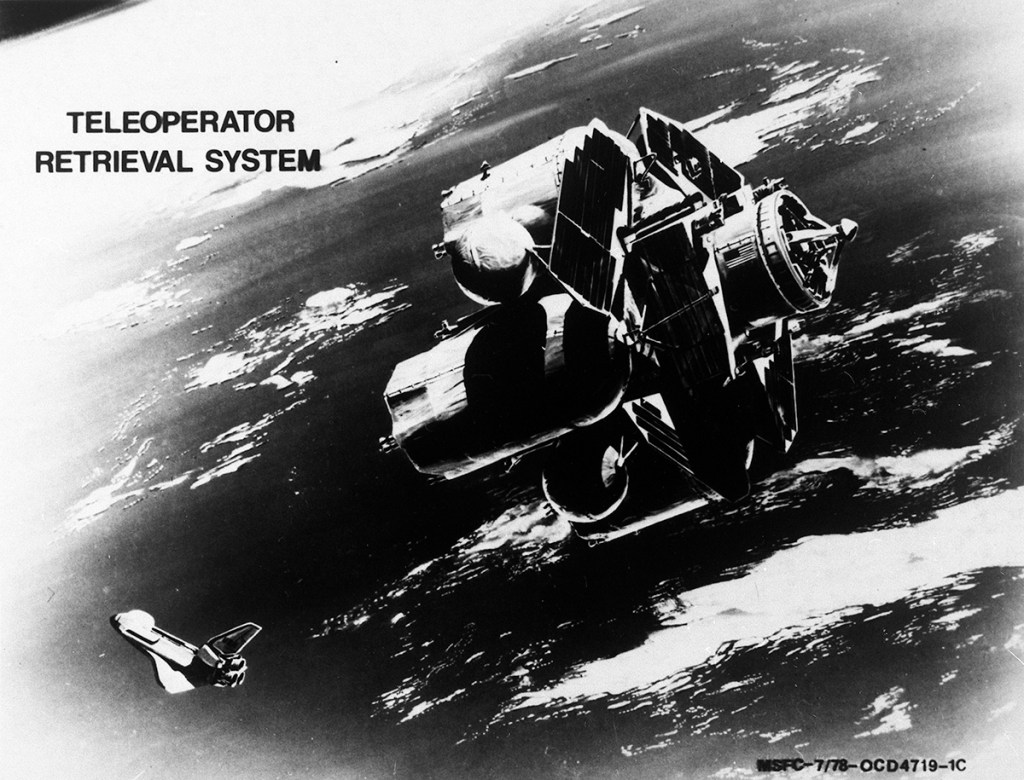
Image credit: NASA
Image source: National Archives
Image credit: NASA
Image source: National Archives
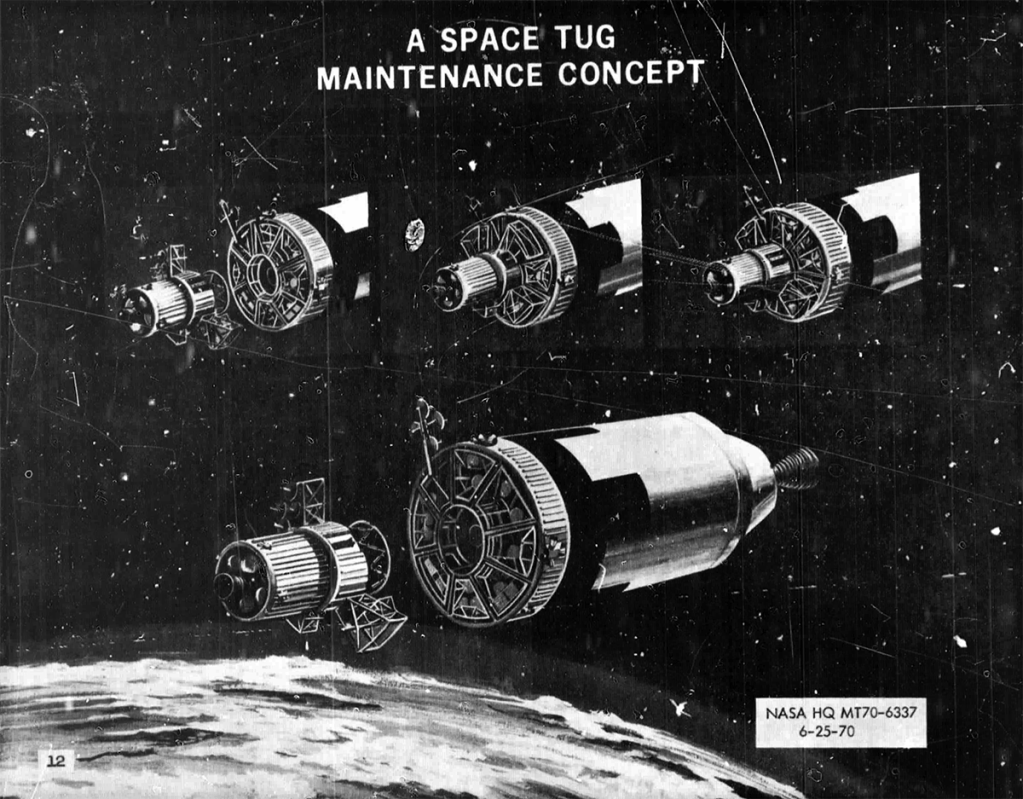
The overall view shows a Cislunar Shuttle being approached by an unmanned maintenance Tug. The Tug has three replacement modules attached to a turntable assembly. The first view shows an expanded section of the Cislunar Shuttle with the Tug approaching. The Tug will be docked with the Cislunar Shuttle using a standard docking mechanism. The second small view shows the Tug harddocked to the Cislunar Shuttle. A module is being removed from the Shuttle. The third small view shows the turntable rotated and a module being installed in the Cislunar Shuttle. After the operation is completed the two vehicles are demated and the Tug backed off as depicted in the lower illustration.
Image credit: NASA
File source: NASA NTRS
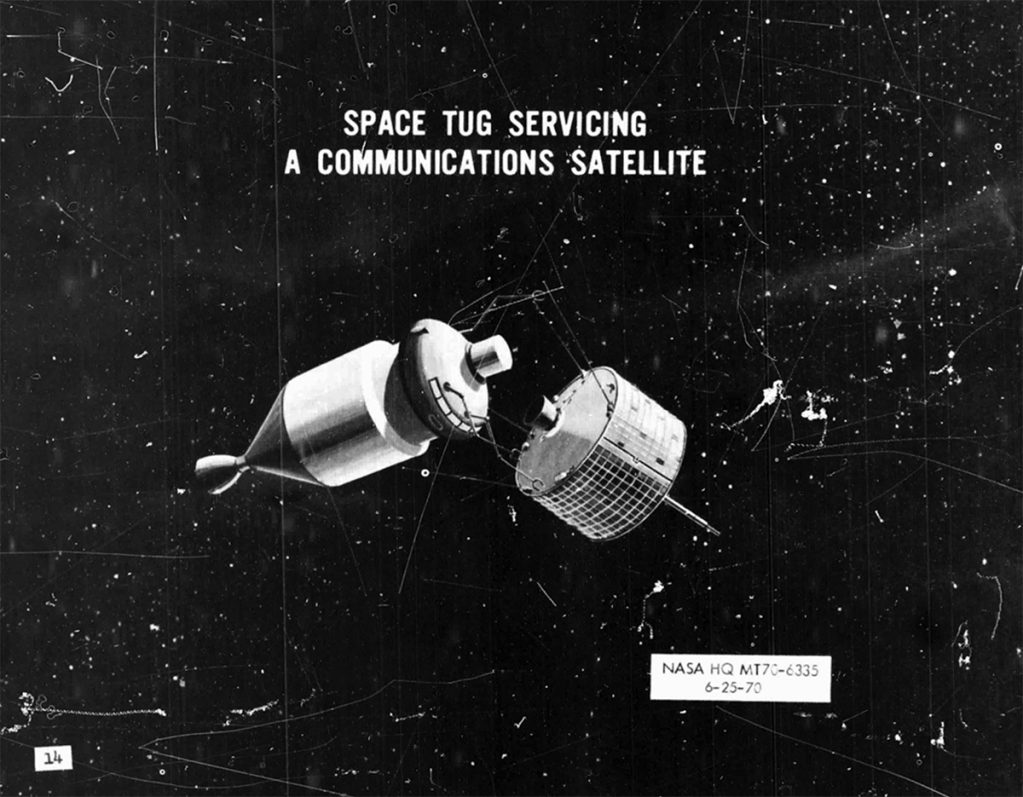
Shown here is an artist’s concept of a manned Space Tug servicing a communications satellite. Servicing of satellites will be economical and desirable in many cases in the future. However, the satellites will have to be designed to permit servicing. Existing satellite systems which are designed without consideration of inspace maintenance probably could not be effectively serviced even by a highly sophisticated maintenance kit used in conjunction with a manned Tug.
Image credit: NASA
File source: NASA NTRS
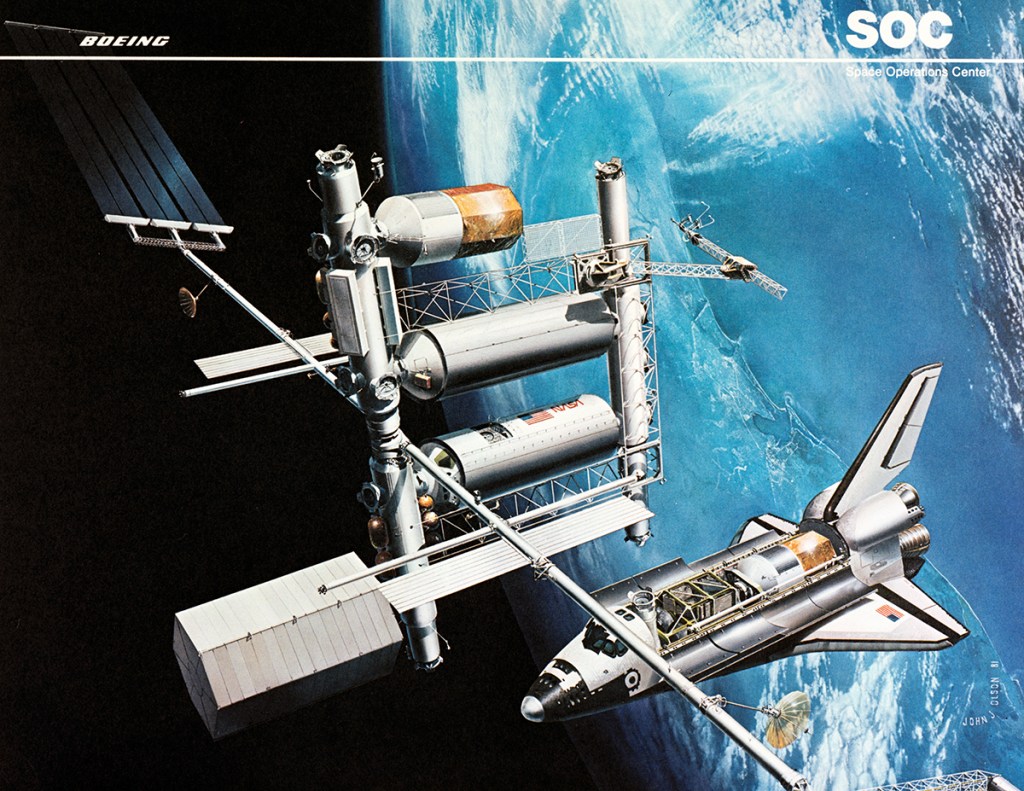
Image credit: Boeing
Image source: National Archives
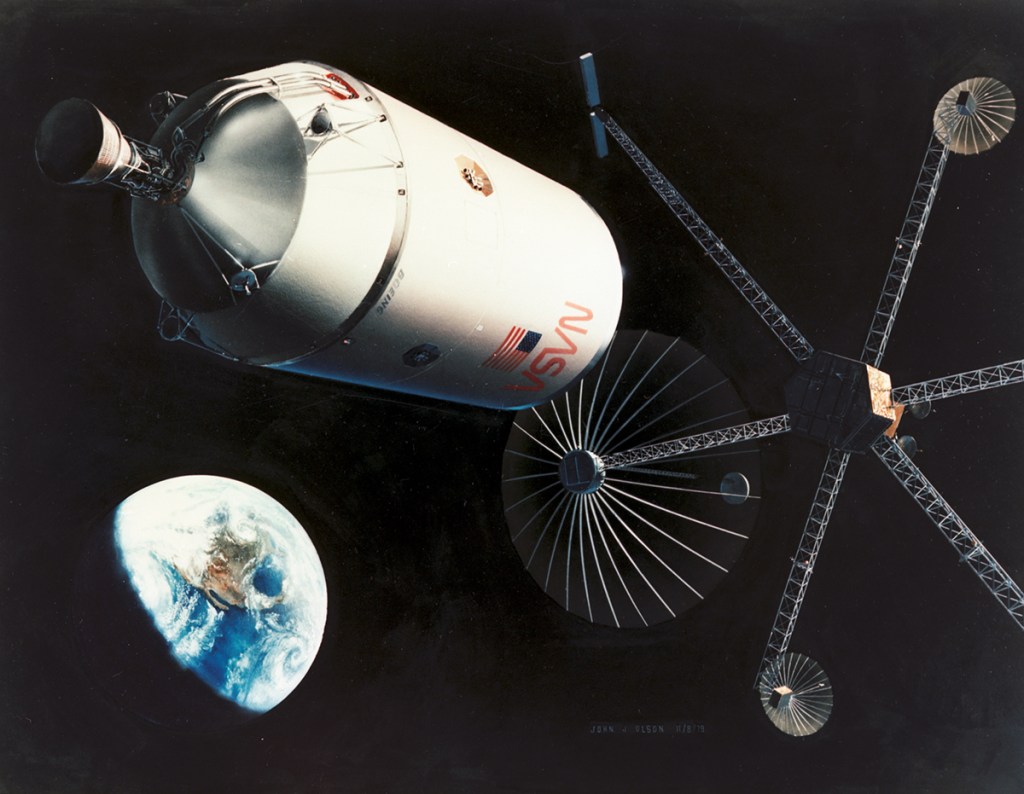
Image credit: Boeing
Image source: National Archives
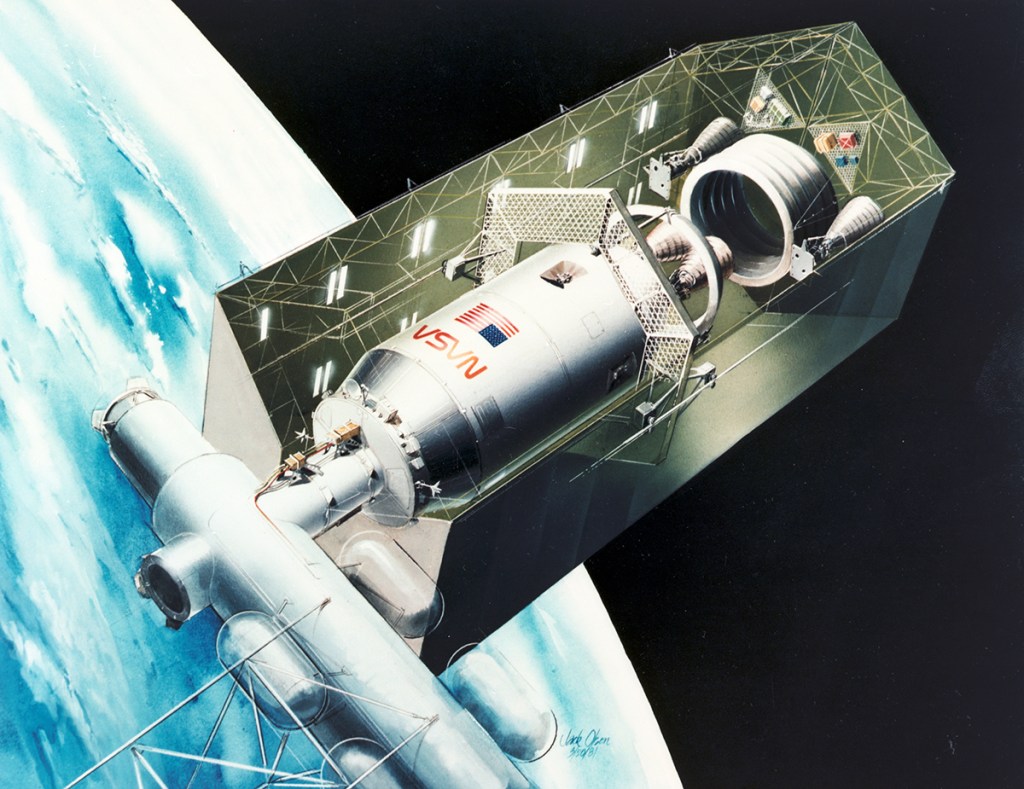
Image credit: Boeing
Image source: National Archives
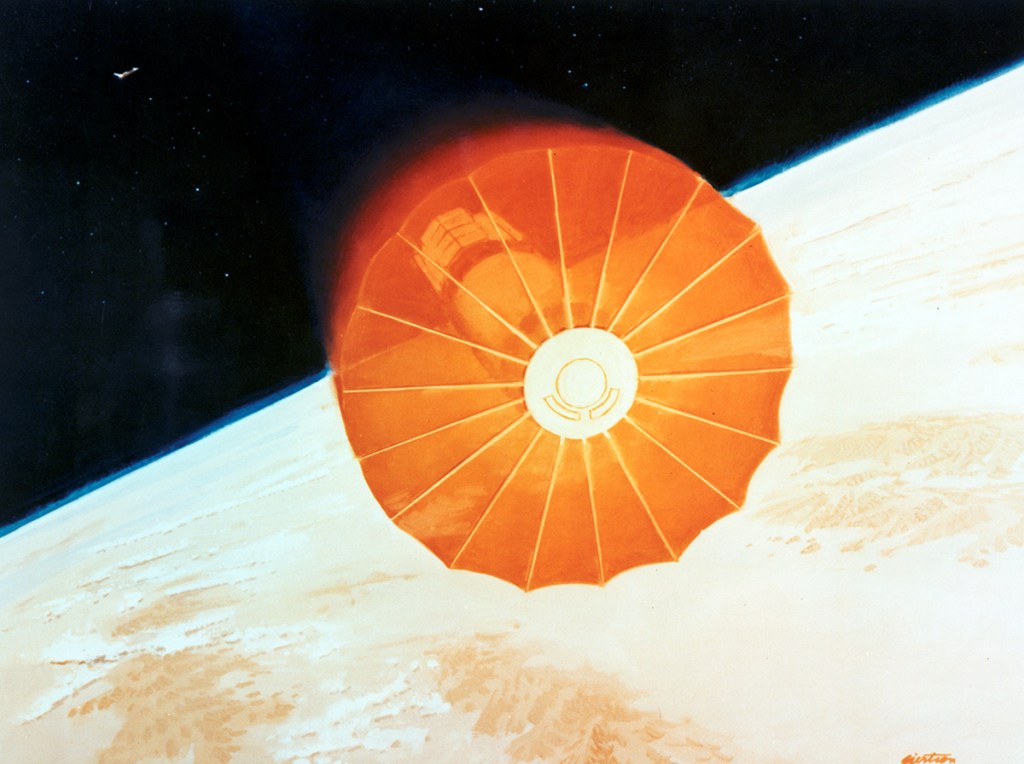
Image credit: General Dynamics
Image source: National Archives
Image credit: Boeing
Image source: National Archives
B-0992
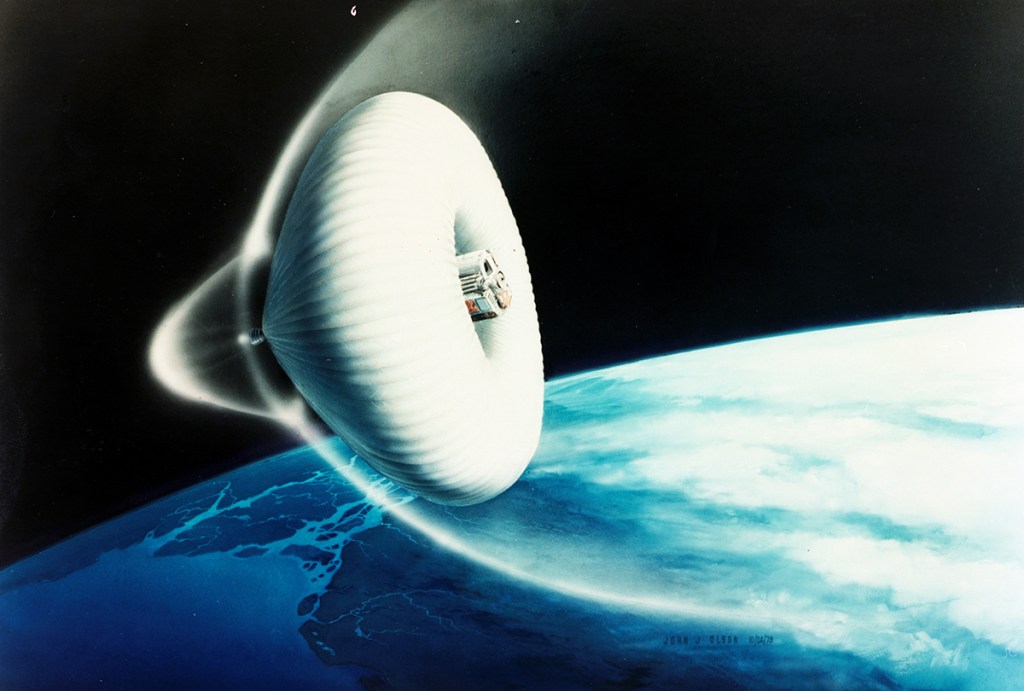
A hypersonic shockwave system envelopes an Aeroassisted Orbital Transfer Vehicle (AOTV) as it grazes the atmosphere before returning to the Space Shuttle in low Earth orbit. In this drawing, the main engine and the balloon-like parachute, or ballute, which encases the AOTV, provide protection from the reentry heat and drag to slow the vehicle as it enters a lower orbit. After reaching low Earth orbit, the ballute would be deflated and the AOTV would rendezvous with the Shuttle for reuse. This aerobraking technique is one of several being studied by Boeing Aerospace Company under contract to NASA’s Marshall Space Flight Center in Huntsville, Alabama.
BOEING AEROSPACE COMPANY
Image credit: Boeing
Image source: National Archives
