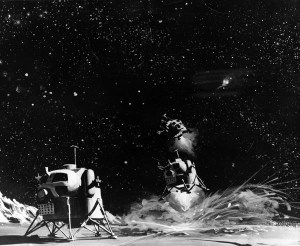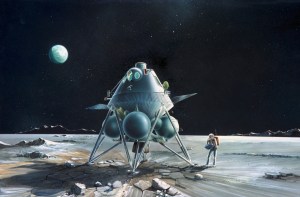
Image credit: North American
Image source: Paul Carsola
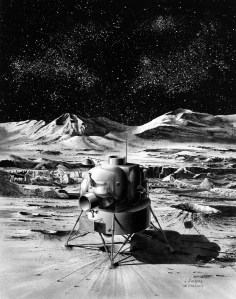
Image credit: North American
Image source: Paul Carsola
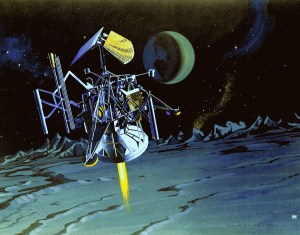
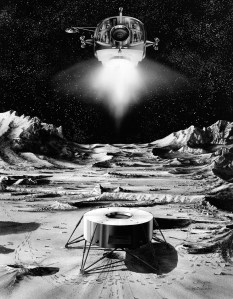
Image credit: Ryan Aeronautical
Image source: SDASM Archives

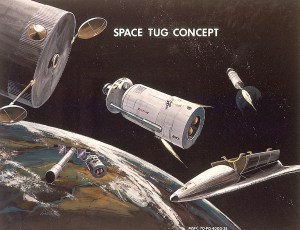
Image credit: Lockheed
Image source: NASA History Division
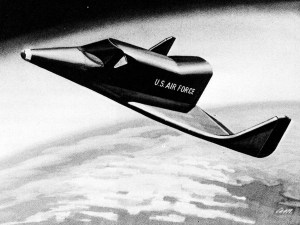
Dyna-Soar in space was never to be, for the program was canceled in December 1963. One of reasons was the development of a new type of aerospace plane, the lifting body.
Orbiting Stations: Stopovers to Space Travel
Irwin Stambler
G.P. Putnam’s Sons, 1965
Image credit: Boeing
Image source: Numbers Station
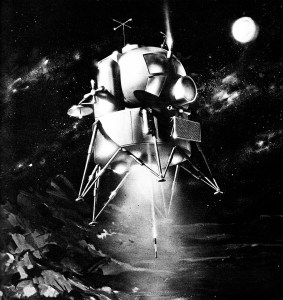
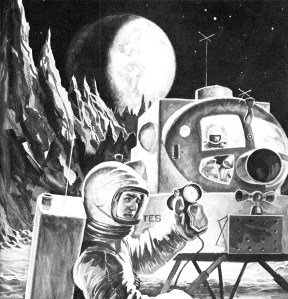
Mars: Planet for Conquest
by Erik Bergaust
G.P Putnam’s Sons, 1967
Image source: Numbers Station

Electrostatic ion-powered five-man spacecraft passing over Mars’ moon Phobos on the way to Mars. One of two “scout cars” will land on the tiny moon and rendezvous with the ship later.
Mars: Planet for Conquest
by Erik Bergaust
G.P Putnam’s Sons, 1967
Rocketdyne
Image source: Numbers Station
Image credit: NASA
Image source: Mike Acs