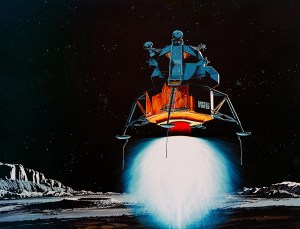
S69-39011

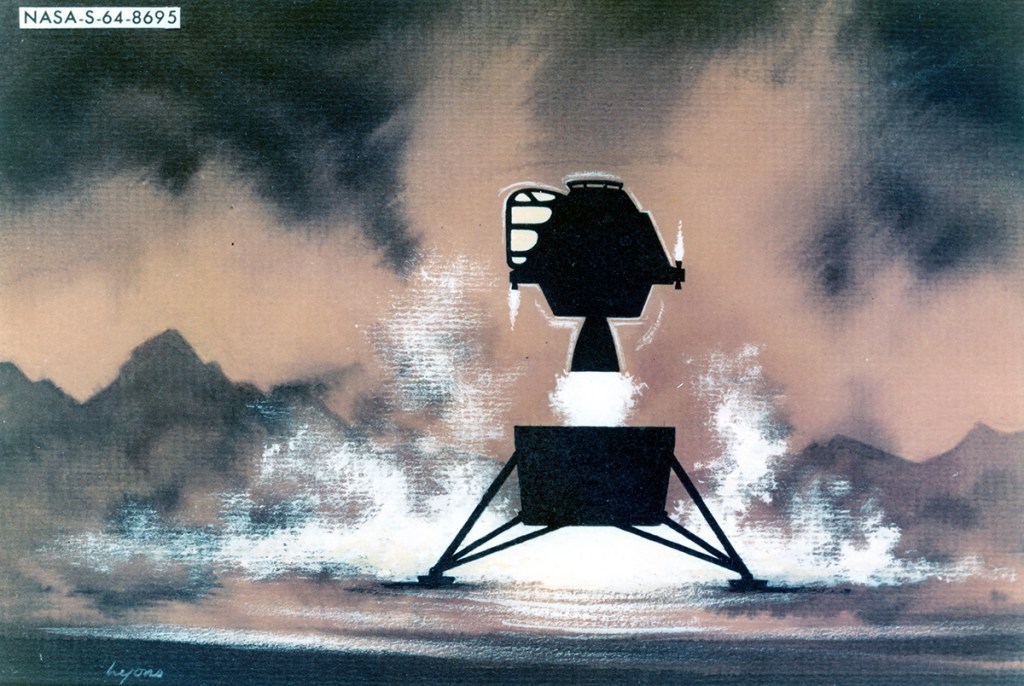
S69-39011 (July 1969) — TRW Incorporated’s artist concept depicting the Apollo 11 Lunar Module (LM) descending to the surface of the moon. Inside the LM will be astronauts Neil A. Armstrong, commander, and Edwin E. Aldrin Jr., lunar module pilot. Astronaut Michael Collins, command module pilot, will remain with the Command and Service Modules (CSM) in lunar orbit. TRW’s LM descent engine will brake Apollo 11’s descent to the lunar surface. The throttle-able rocket engine will be fired continuously the last 10 miles of the journey to the moon, slowing the LM to a speed of two miles per hour at touchdown. TRW Incorporated designed and built the unique engine at Redondo Beach, California under subcontract to the Grumman Aircraft Engineering Corporation, Bethpage, New York, the LM prime contractor.

Image credit: NASA JSC
Image source: NASA Images
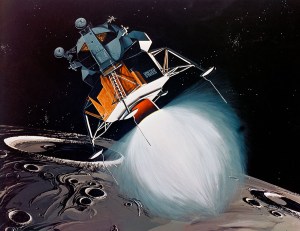
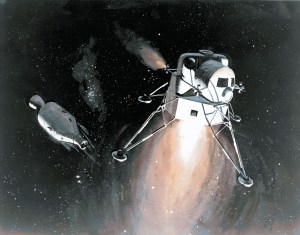
S69-33765

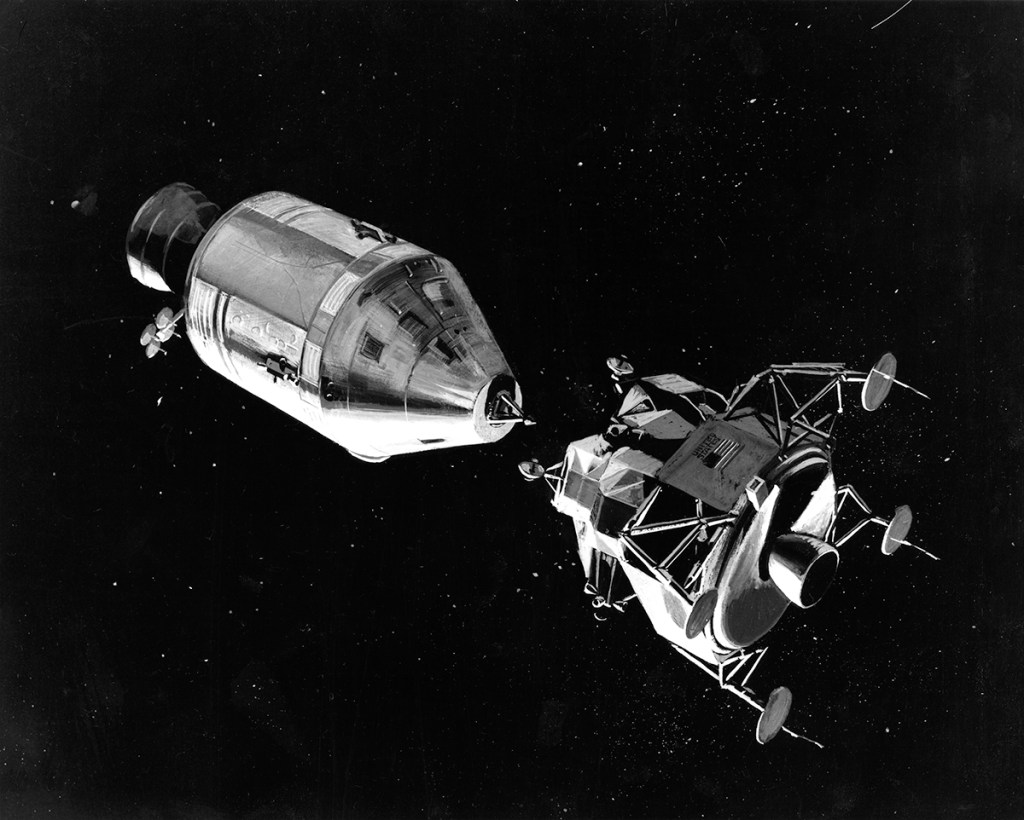
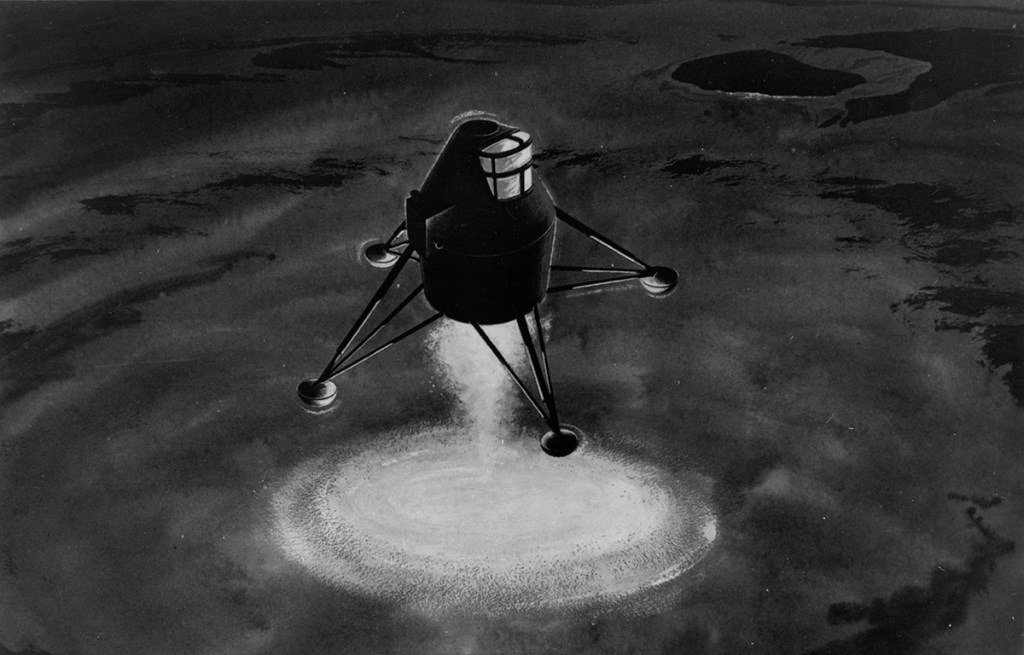
S69-33765 (12 May 1969) — Artist’s concept depicting the firing of the Apollo 10 Lunar Module descent engine for 42 seconds to propel “Snoopy” back into a higher lunar orbit for rendezvous and docking with the Command and Service Modules. Earlier, the LM descent engine will be fired for 27 seconds to take astronauts Thomas P. Stafford, Apollo 10 commander; and Eugene A. Cernan, lunar module pilot, to within 10 miles of the moon’s surface. Astronauts John W. Young, command module pilot, will remain in the Command Module, “Charlie Brown,” in lunar orbit. Developed by TRW’s Systems Group at Redondo Beach, California, under Grumman subcontract, the throttleable descent engine will be used to soft land the LM on the lunar surface during Apollo 11 and subsequent Apollo missions.

Image credit: NASA JSC
Image source: NASA Images

S63-00048

Image credit: NASA
Image source: Internet Archive

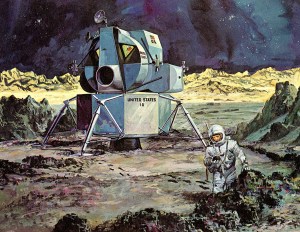
Collecting Lunar Samples

From Drew Granston‘s collection: a beautiful early rendering of Grumman’s LM by Craig Kavafes.

Image credit: NASA
Image source: Drew Granston

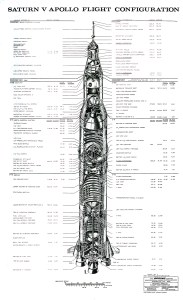
Apollo Flight Configuration

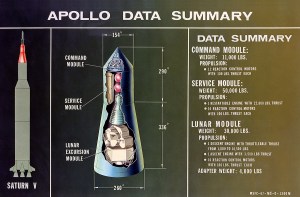
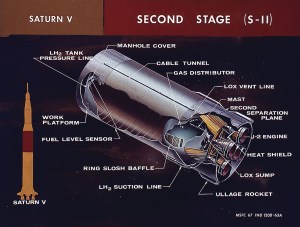
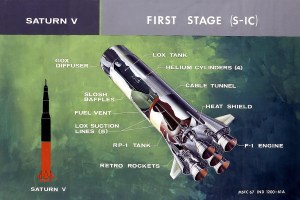
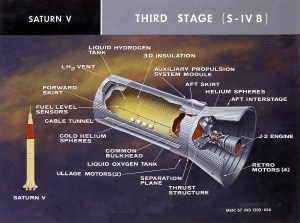
The Saturn V configuration is shown in inches and meters as illustrated by the Boeing Company. The Saturn V vehicle consisted of three stages: the S-IC (first) stage powered by five F-1 engines, the S-II (second) stage powered by five J-2 engines, the S-IVB (third) stage powered by one J-2 engine. A top for the first three stages was designed to contain the instrument unit, the guidance system, the Apollo spacecraft, and the escape system. The Apollo spacecraft consisted of the lunar module, the service module, and the command module. The Saturn V was designed perform lunar and planetary missions and it was capable of placing 280,000 pounds into Earth orbit.

Image credit: NASA MSFC
Image source: NASA Images
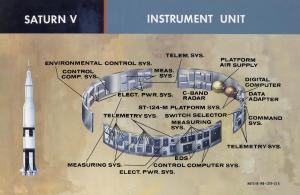
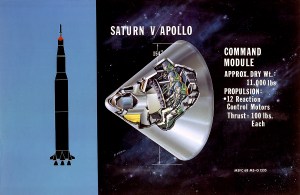
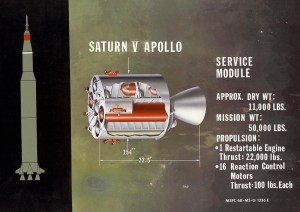
Saturn V Apollo

Image credit: NASA MSFC
Image source: NASA Images
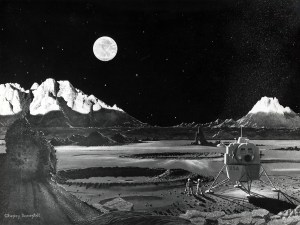
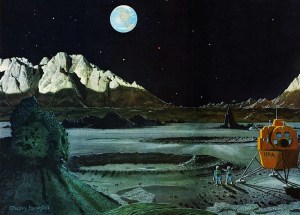
Bonestell Moonscape

Image credit: NASA
Images: Mike Acs, Dan Beaumont Space Museum

Early Lander Concept

Image credit: NASA
Images: Mike Acs, Drew Granston

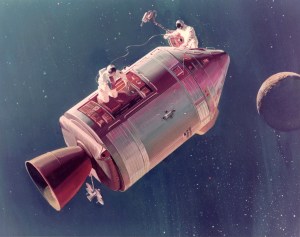
Deep Space EVA

Image credit: NASA
Image source: Mike Acs