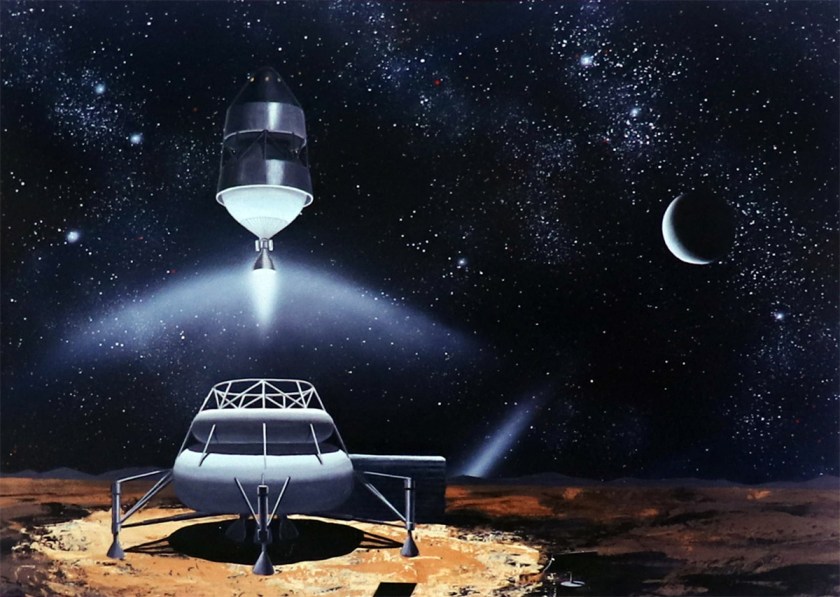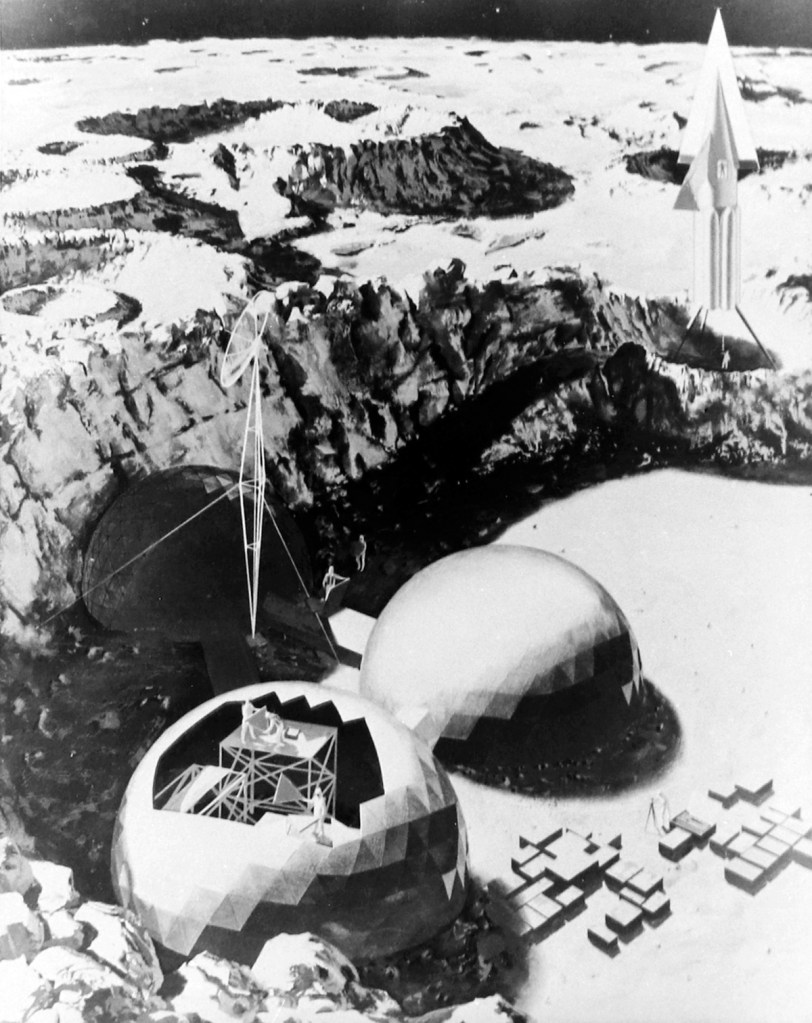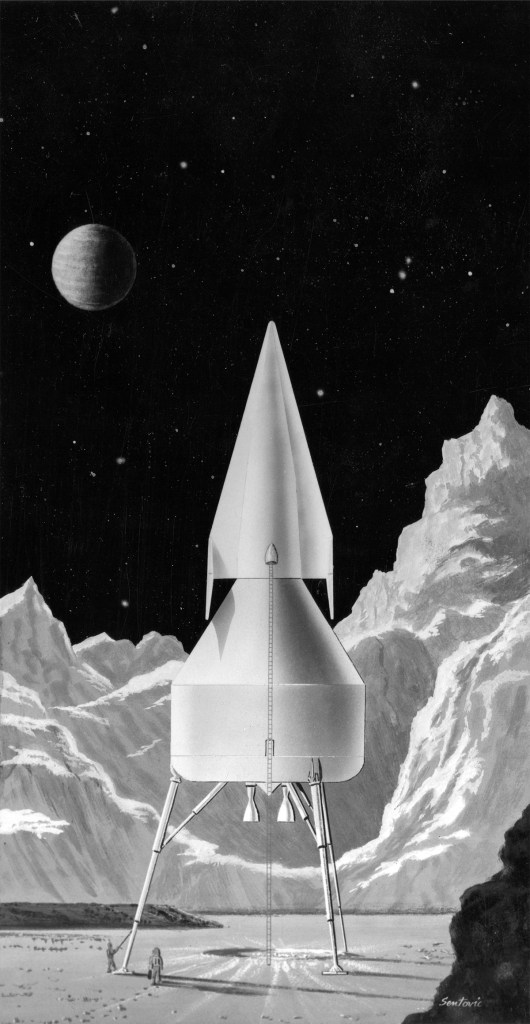
Image credit: Convair
Image source: SDASM Archives
Image credit: Convair
Image source: SDASM Archives
Image credit: Convair
Image source: SDASM Archives
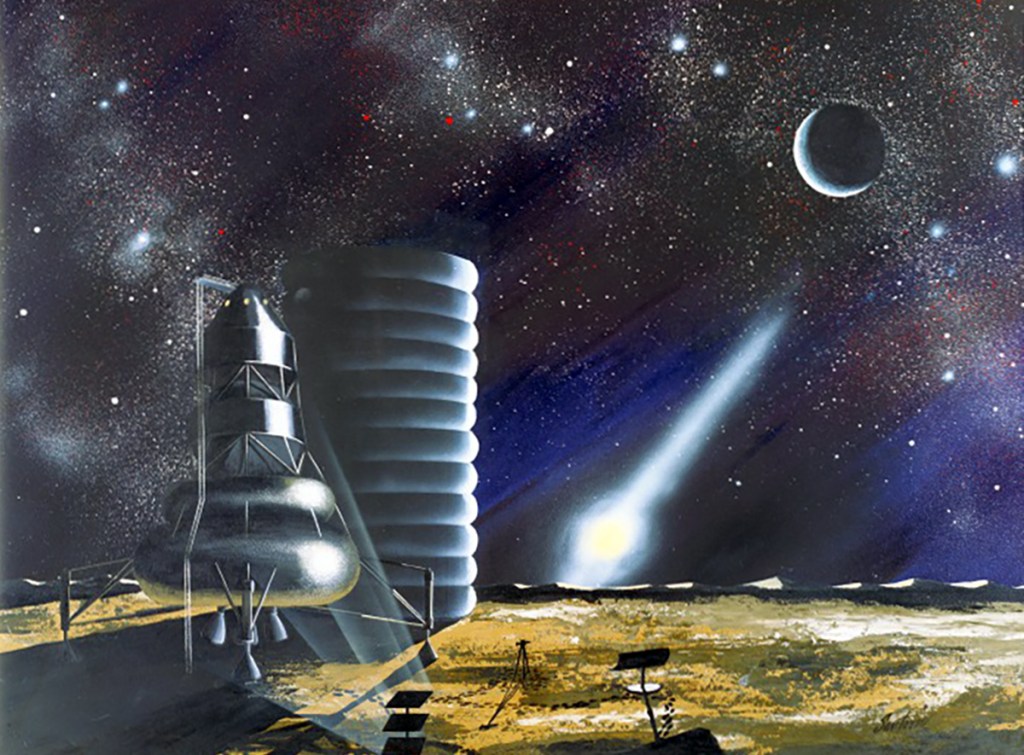
Image credit: Convair
Image source: SDASM Archives
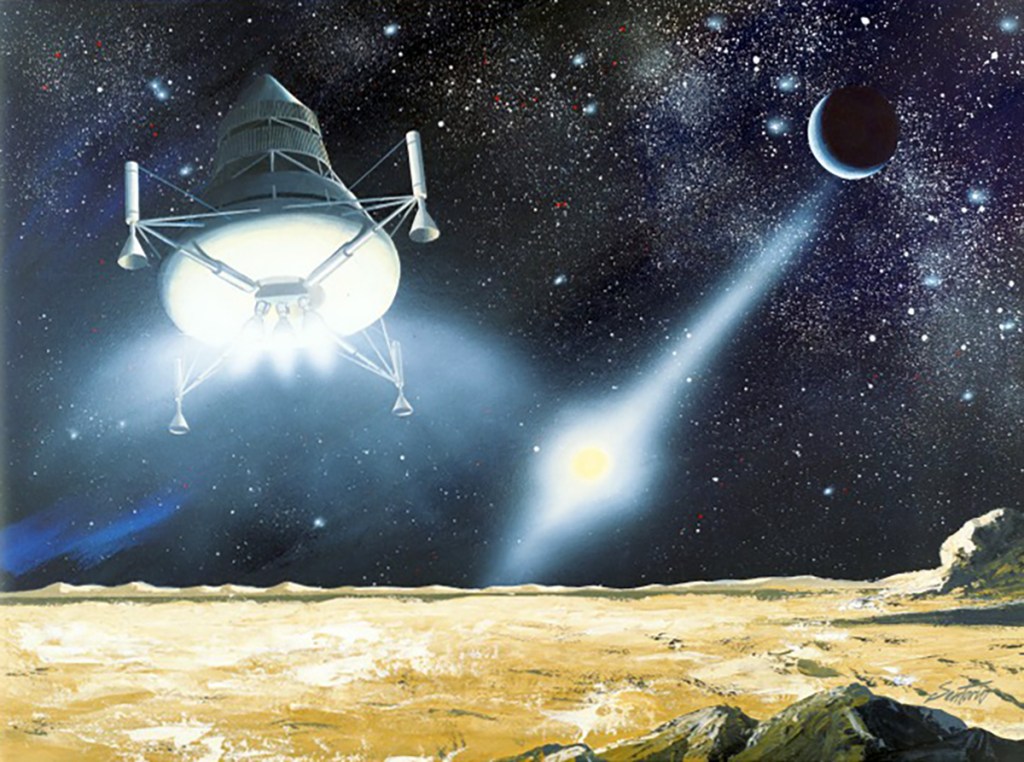
Image credit: Convair
Image source: SDASM Archives
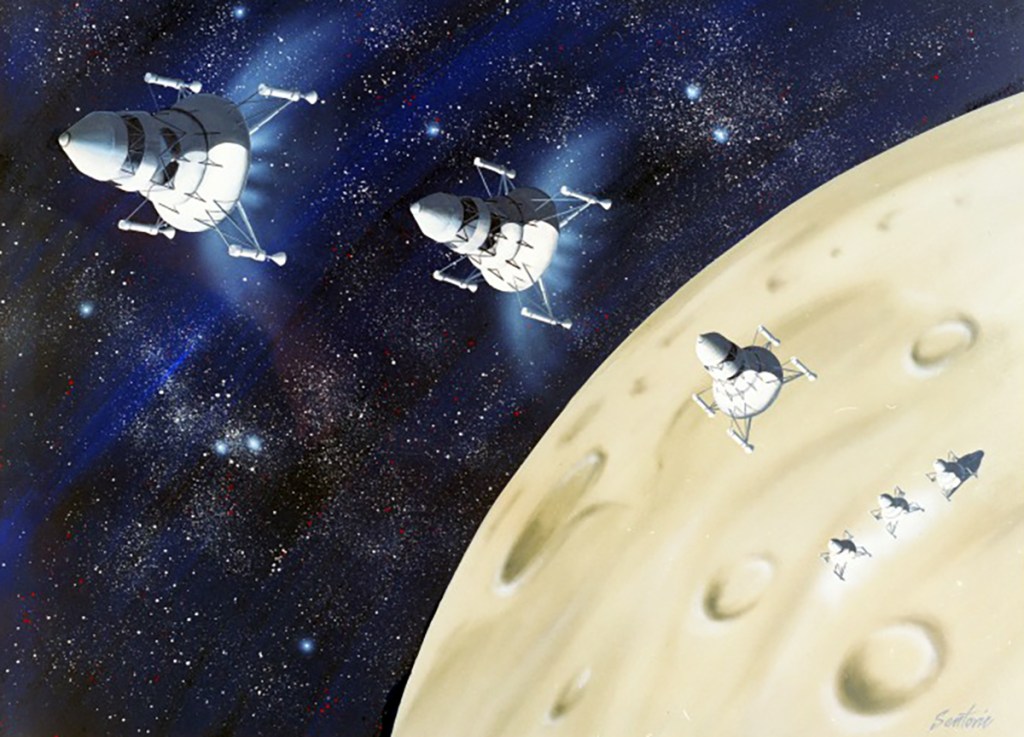
Image credit: Convair
Image source: SDASM Archives

Just for a lark, here’s the original finding aid:
Description: ARTISST CONCEPT OF UPGRADED CENTAUR Photographer: REQUESTER
That’s not super helpful, and knowing the paining was photographed in 1991 just tells me it’s pre-1992. The dual thrusters made me think of Centaur, and the uncrewed Shuttle-C in the bottom left corner gives some context. Either way, it’s a beautiful image and you didn’t come here for an education, you came here to look at pretty pictures of cool stuff. Right?
So, I think this is a shuttle-launched Centaur upper stage or ‘Shuttle-Centaur’ bound for lunar orbit. If you know otherwise, please do let me know. I read all the comments, and I super promise I won’t be offended.
Image credit: NASA Glenn
Image source: National Archives
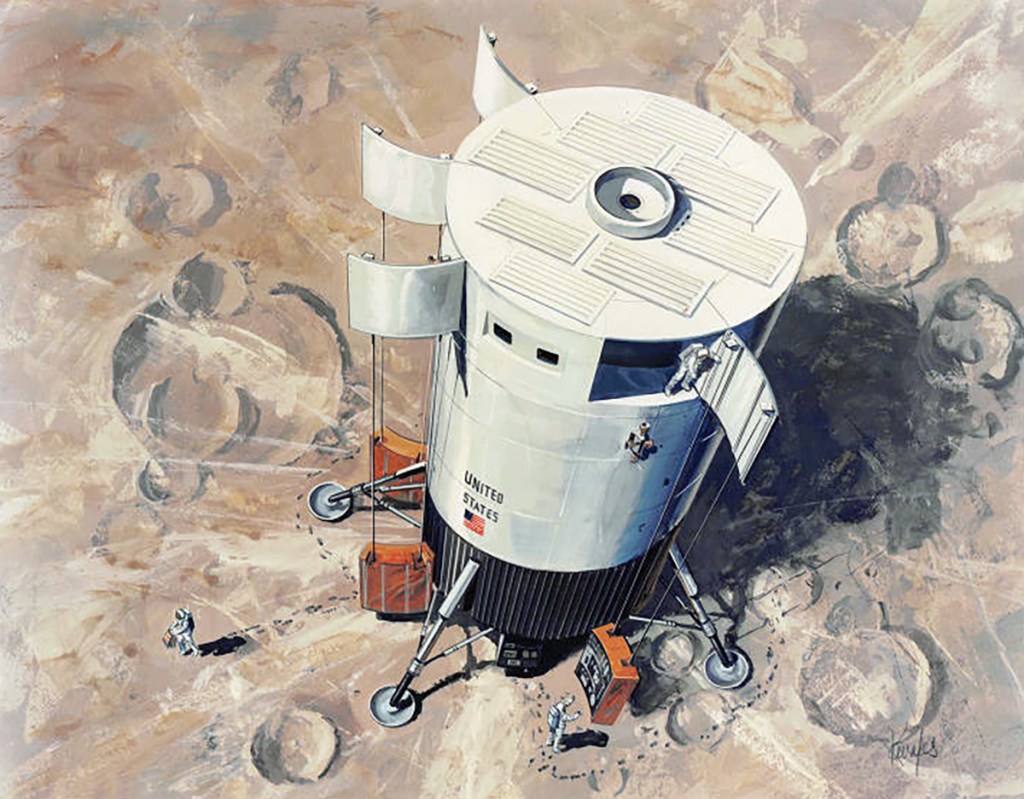
Image credit: Grumman
Image source: Cradle of Aviation Museum
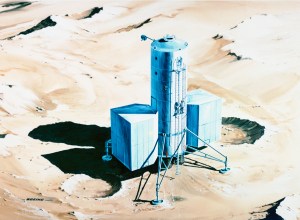
Image credit: NASA GRC
Image source: National Archives
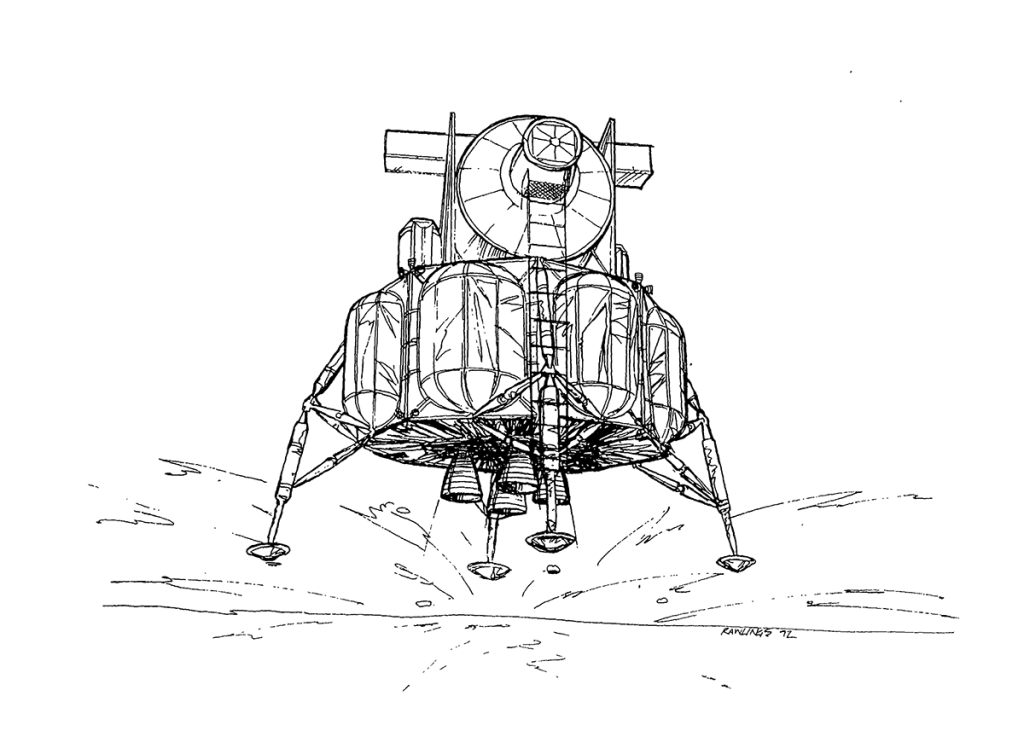
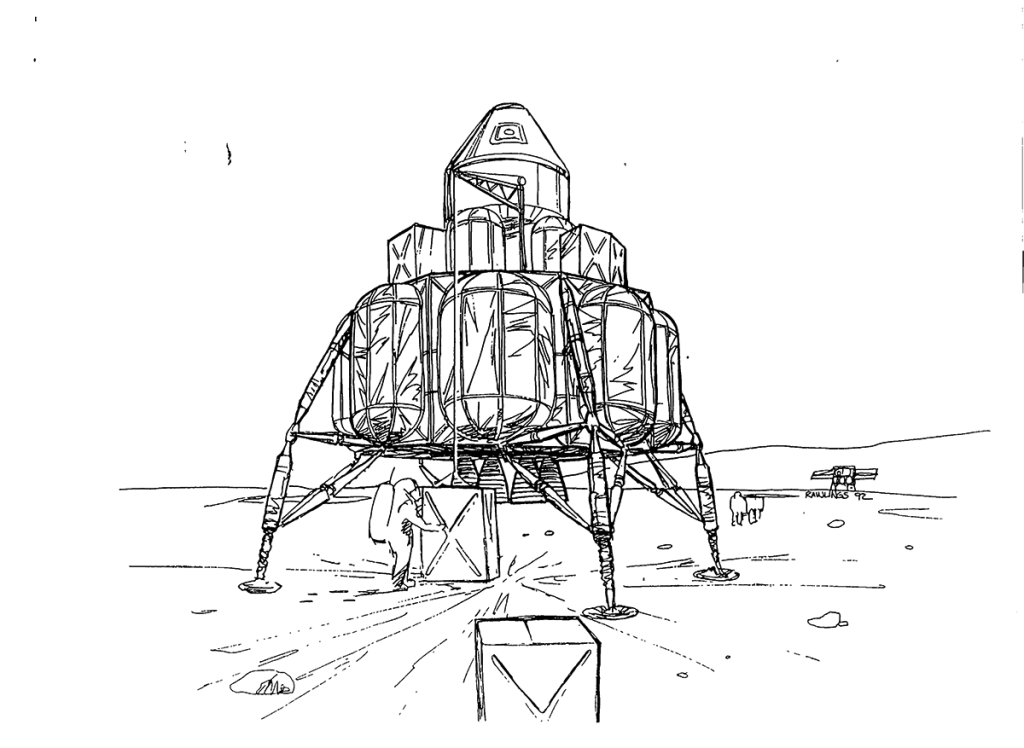
Image credit: NASA
Image source: NASA NTRS
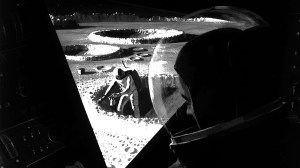
Mar 17 1969
When America’s first two-man team lands on the moon, one of their first tasks will be to obtain a sample of lunar material as quickly as possible in event they have to make an emergency takeoff. If things go well, they will spend 25 hours on the surface, gathering up to 80 pounds of rocks, dust and other material to be put into vacuum-sealed containers. This sketch shows one astronaut gathering samples from a crater while his companion watches from the lunar module. Later, the two will roam up to 300 feet from the craft, working on a “buddy” system, to plant several measuring devices on the surface which will radio information to earth.
MAR 17 1969 COPYRIGHT, SEATTLE TIMES CO.
Image credit: NASA
Image source: Numbers Station