Image credit: USAF
Image source: National Archives
Image credit: USAF
Image source: National Archives
Third release week of November 15, 1971
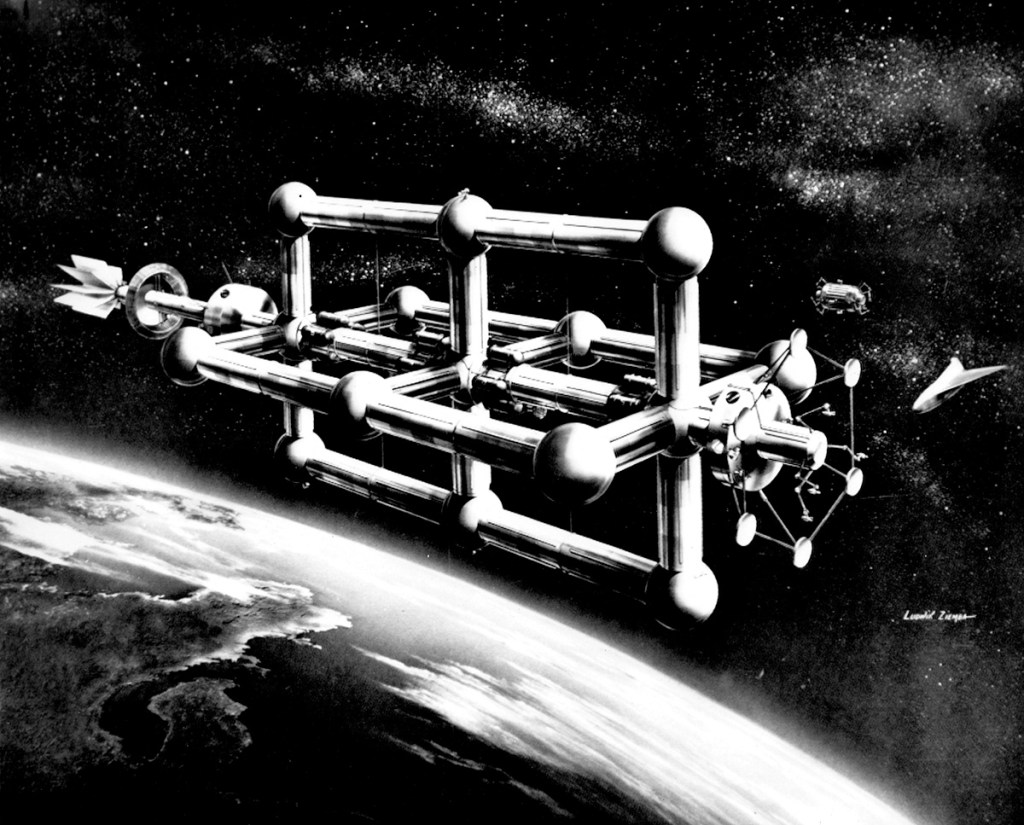
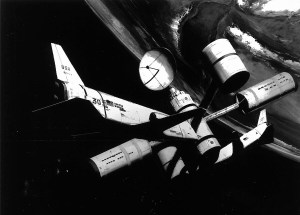
THE 6:10 INTO SPACE. NASA is working on the design of a winged shuttle craft to resupply the manned space stations of the next decade. The giant space transports shown here can carry 50,000 pounds of men and cargo to the cluster of cylinders that make up a space base, the return to Earth and land like airplanes.
Credit: North American Rockwell
Image credit: North American Rockwell
Image source: Numbers Station
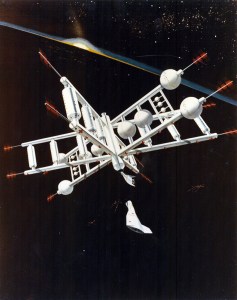
Image credit: North American Aviation
Image source: Numbers Station
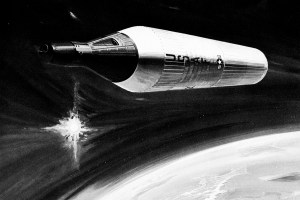
Into The Unknown
by Don Dwiggins
Golden Gate Books, 1971
Image credit: McDonnell
Image source: Numbers Station
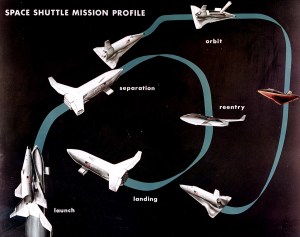
Image credit: NASA
Image source: Mike Acs

Image credit: Lockheed
Image source: NASA History Division
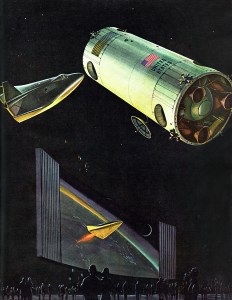
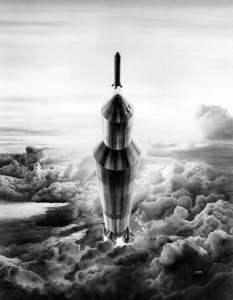
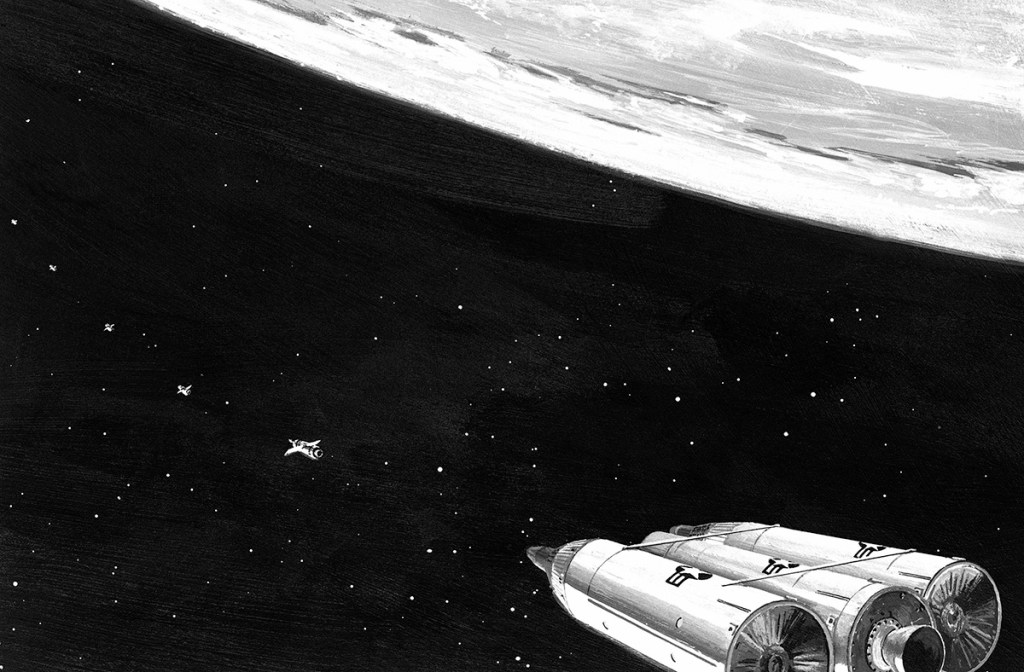
A spaceport and supply rocket designed by the Martin Marietta Corporation in mid-air in this scene from the Hall of Science space show. In such a port, astronauts may orbit for half a year.
New York World’s Fair 1964/1965
Official Souvenir Book
Time Life, 1964
Image credit: Martin Marietta
Image source: Numbers Station

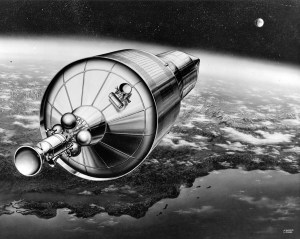
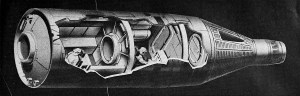
A manned orbital space space laboratory would be able to operate for several months without resupply. Basic Garrett-AiResearch systems could be slightly modified to meet requirements for environmental control, life support, cryogenic storage, power and attitude control for both the command module and laboratory.
Space World
December 1964, VOL. A-14
Image credit: Garrett-AiResearch
Image source: Numbers Station
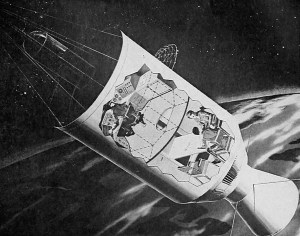
GENERAL DYNAMICS / ASTRONAUTICS artist’s conception of a three-man Manned Astronautical Research Station (MARS) in operation 200 miles above earth. The station in orbit would be linked to a spent Centaur vehicle. The two bodies would rotate about each other, the resulting centrifugal force providing the necessary artificial gravity.
Missiles and Rockets, Feb 10, 1964
Image credit: General Dynamics
Image source: Internet Archive