S89-20088

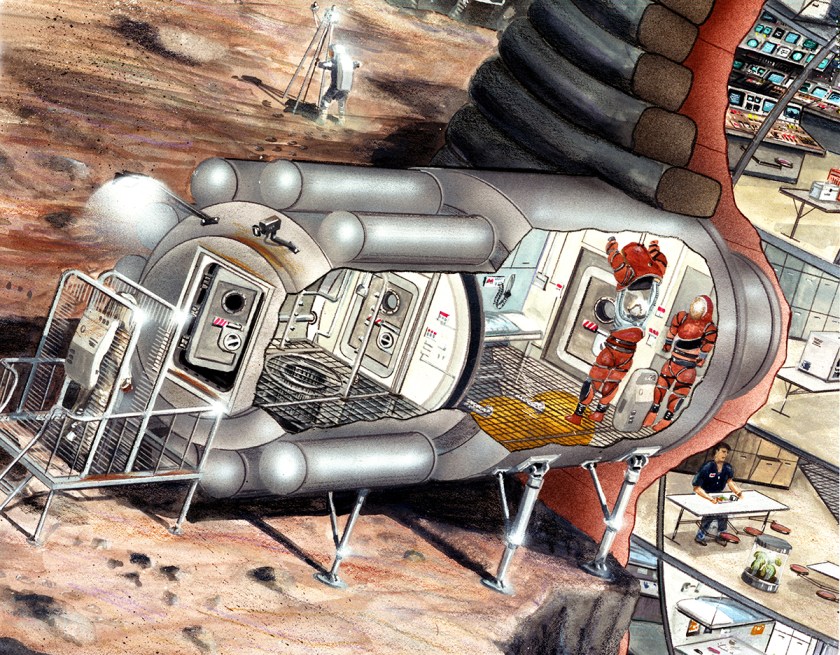
S89-20088 (July 1989) — With a number of studies ongoing for possible lunar explorations, many concepts for living and working on Earth’s natural satellite have been examined. This art concept reflects the evaluation and study at JSC by the Man Systems Division and Johnson Engineering personnel. A major concern of planners is the fine dust which covers the lunar surface and collects easily on astronauts garments, as evidenced by six crews of Apollo moon explorers. This special annex to the 16-meter diameter inflatable habitat (depicted in S89-20084/85) provides possible solutions to the dust problems, according to teams studying possible lunar expeditions. As much dust as possible must be removed, they say, before re-entering the habitat. The astronauts might pass through wickets (far left) which remove much of the dust. A performated metal “porch” would allow dust to fall through. Once inside the dust lock (center) the astronauts would remove their white coveralls. This outer garment would provide an extra layer of dust control and protection for the precision moving joints of the space suit from gritty dust. An air shower could remove remaining dust with strong jets of air. An astronaut at right, after having removed as much dust as possible, would be able then to move into the airlock to doff his suit. The airlock could accommodate up to four astronauts at one time. Suits could be stored there when not in use.

Image credit: NASA

Image source: NASA Johnson
S89-20084

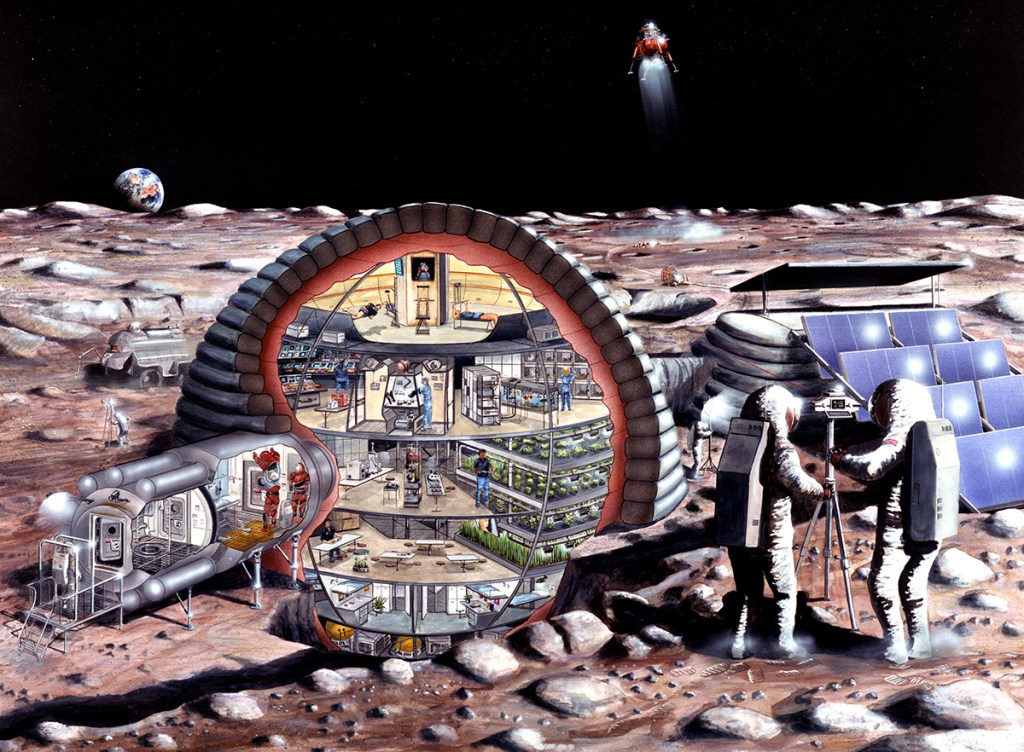
S89-20084 (July 1989)— With a number of studies ongoing for possible lunar expeditions, many concepts for living and working on Earth’s natural satellite have been examined. This art concept reflects the evaluation and study at JSC by the Man Systems Division and Johnson Engineering personnel. A sixteen-meter diameter inflatable habitat such as the one depicted here could accommodate the needs of a dozen astronauts living and working on the surface of the Moon. Depicted are astronauts exercising, a base operations center, a pressurized lunar rover, a small clean room, a fully equipped life sciences lab, a lunar lander, selenological work, hydroponic gardens, a wardroom, private crew quarters, dust-removing devices for lunar surface work and an airlock.

Image credit: NASA

Image source: NASA Johnson
255-GRC-1980-01115

Image credit: NASA GRC
Image source: National Archives

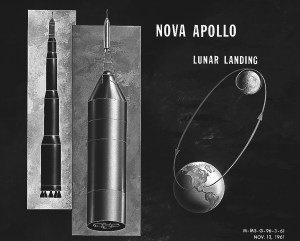
Nova Apollo

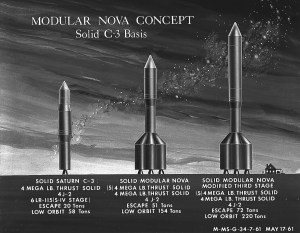
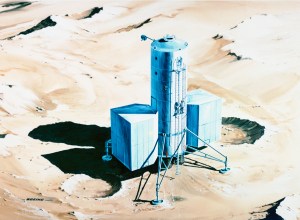
This artist’s concept illustrates the Module Nova concept – Solid C-3 Basis. From 1960 to 1962, the Marshall Space Flight Center considered the Nova launch vehicle as a means to achieve a marned lunar landing with a direct flight to the Moon. Various configurations of the vehicle were examined. The latest configuration was a five-stage vehicle using eight F-1 engines in the first stage. Although the program was canceled after NASA planners selected the lunar/orbital rendezvous mode, the proposed F-1 engine would eventually be used in the Apollo Program to propel the first stage of the Saturn V launch vehicle.

This artist’s concept illustrates the Module Nova concept – Solid C-3 Basis. From 1960 to 1962, the Marshall Space Flight Center considered the Nova launch vehicle as a means to achieve a marned lunar landing with a direct flight to the Moon. Various configurations of the vehicle were examined. The latest configuration was a five-stage vehicle using eight F-1 engines in the first stage. Although the program was canceled after NASA planners selected the lunar/orbital rendezvous mode, the proposed F-1 engine would eventually be used in the Apollo Program to propel the first stage of the Saturn V launch vehicle.

Image credit: NASA MSFC
Image source: NASA Images

Reactor Development

Image credit: AEC
Image source: U.S. Department of Energy

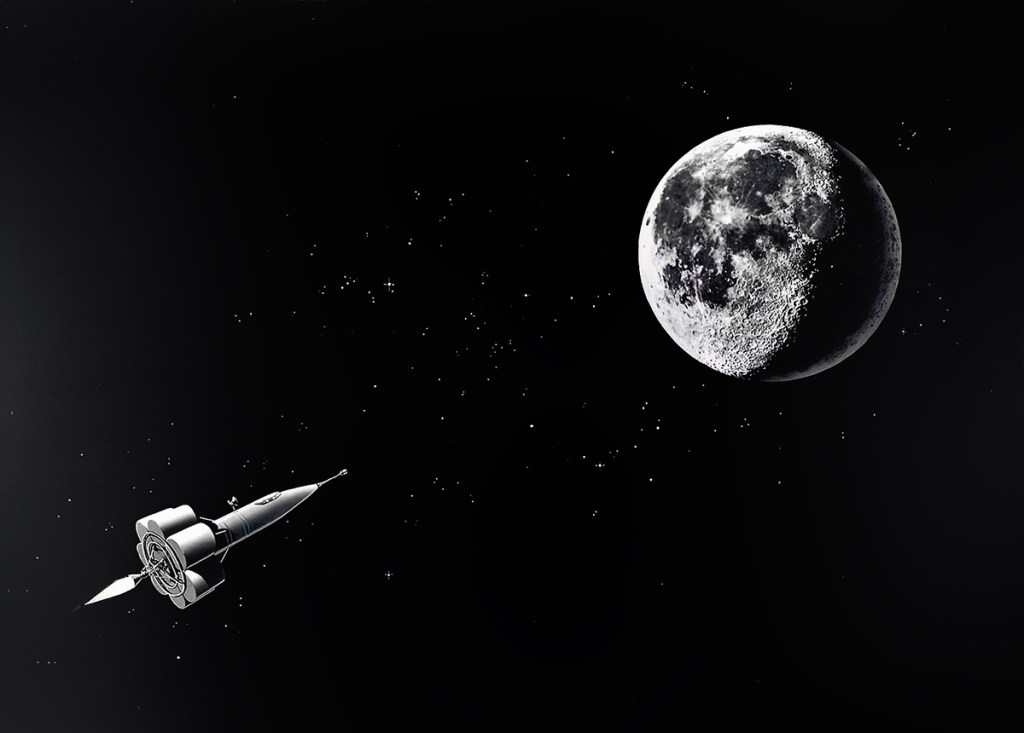
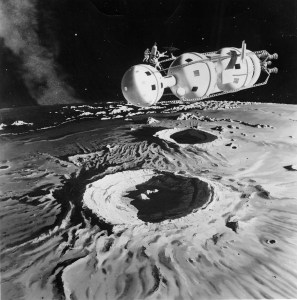
The Round-The-Moon Ship

The first trip to our moon will be without landing, in a ship designed to travel in space only, taking off near the Space Station and returning to it. Here the round-the-moon ship is some 240,000 miles from earth, 50 miles above the lunar surface. The large crater is Aristillus (diameter 35 miles); the other crater is Autolycus; the distant mountains are the lunar Apennines.

Man will Conquer Space Soon
Collier’s, March 22, 1953

Image credit: Collier’s
Image source: Mike Acs

Stowed Vent Array

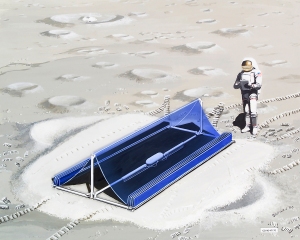
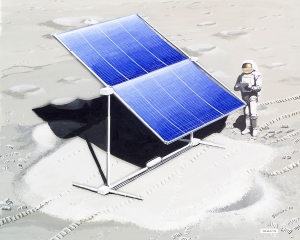
In this series by Lewis Research Center artist Les Bossinas, an astronaut demonstrates multi-purpose solar arrays. As it harnesses the power of the sun, the first can be configured as a wind-tunnel for protecting strawberries or used as a tent for children’s garden parties. The second model can be used as a balance beam for gymnastics, a ping pong table, or folded up to create a porch screen. Just the thing for an evening cocktail while watching the sunset.

Image credit: NASA LRC
Image source: DVIDS

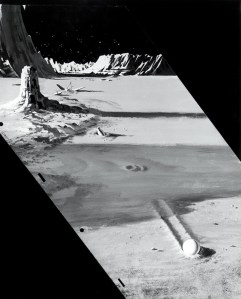
Moving The Playhouse

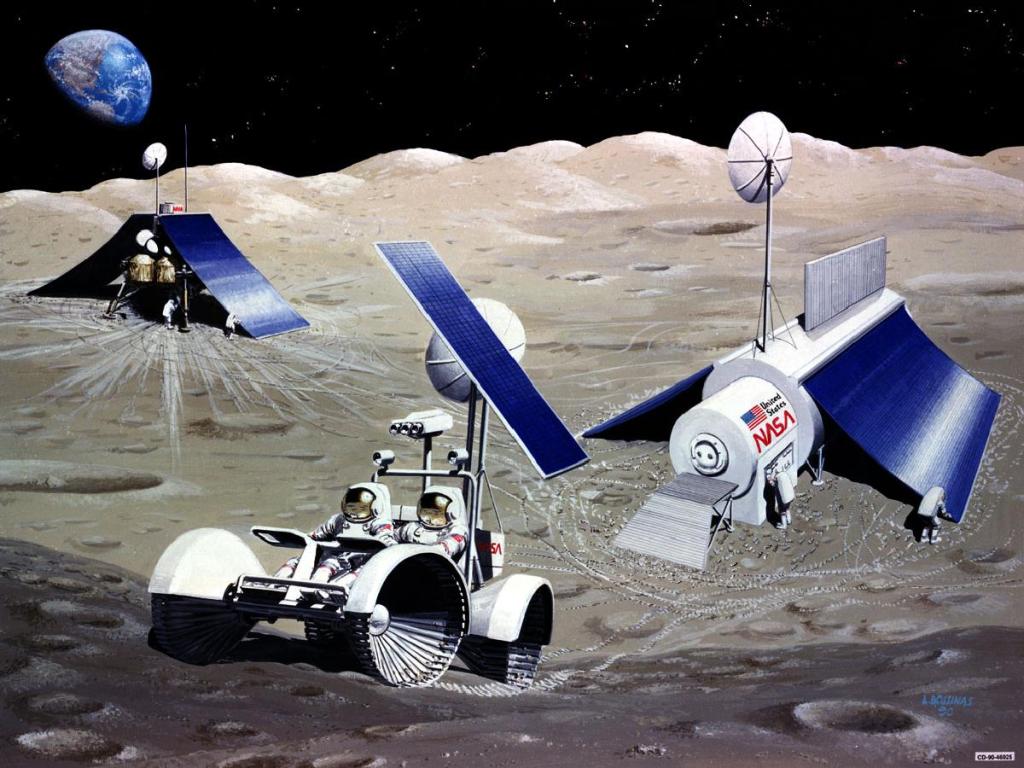
Or, “Articulated Lunar Rover Lunar Excavator.”

Image credit: NASA LRC
Image source: DVIDS