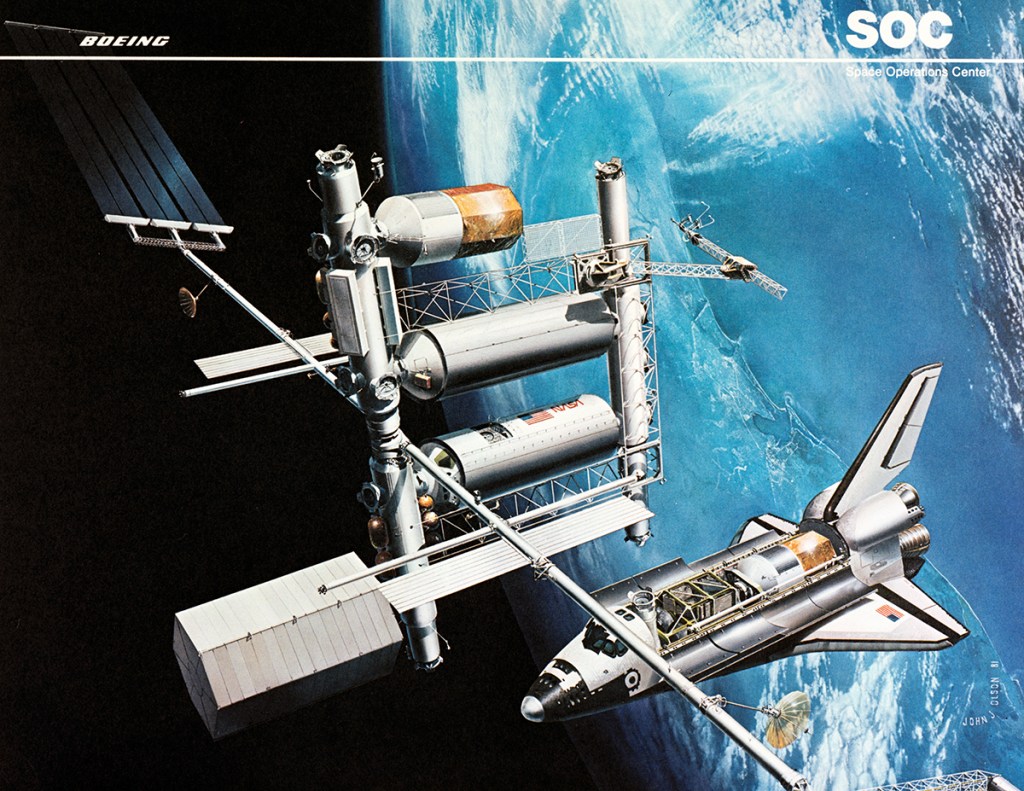
Image credit: Boeing
Image source: National Archives
Image credit: Boeing
Image source: National Archives
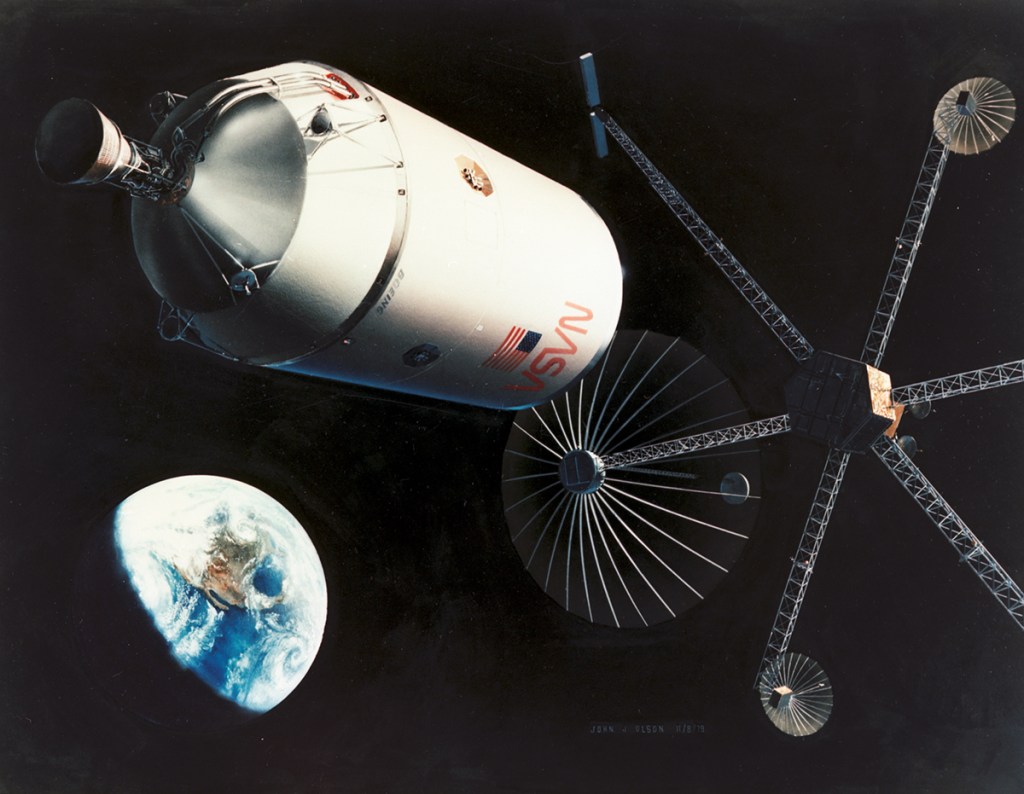
Image credit: Boeing
Image source: National Archives
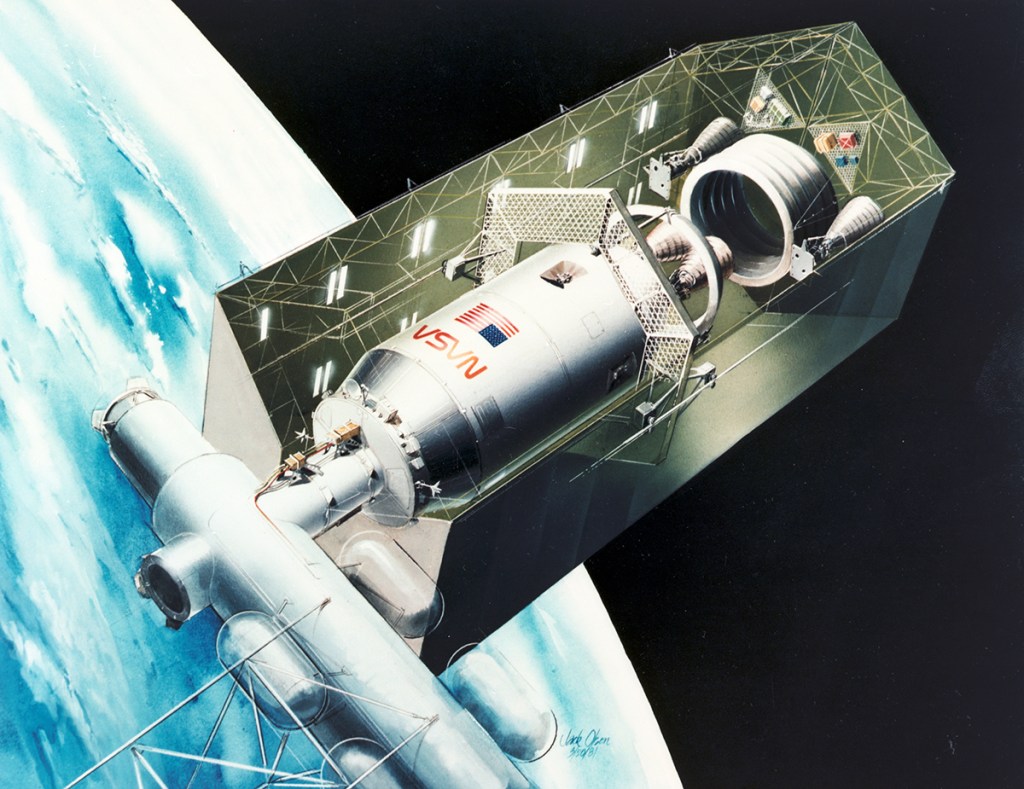
Image credit: Boeing
Image source: National Archives
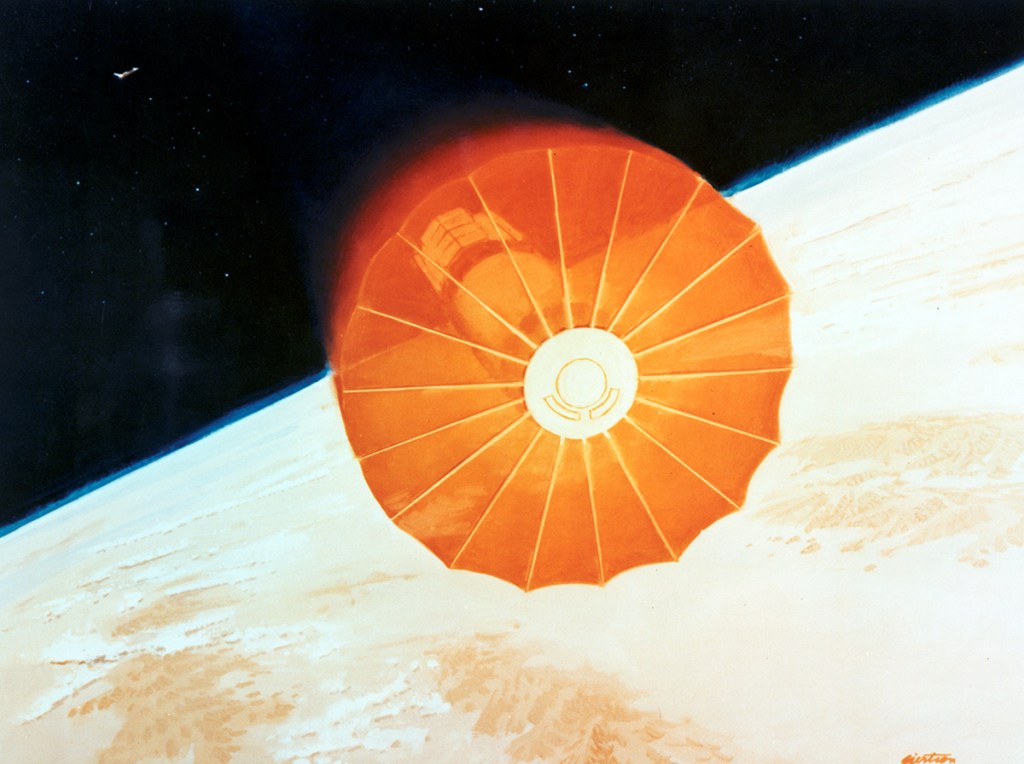
Image credit: General Dynamics
Image source: National Archives
Image credit: Boeing
Image source: National Archives
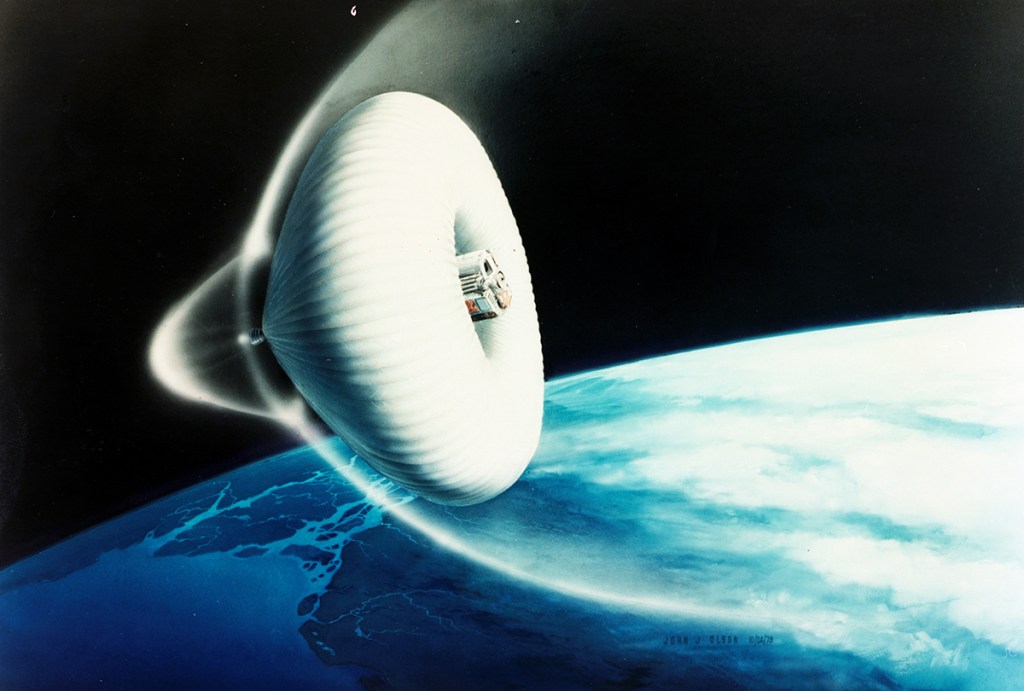
B-0992
A hypersonic shockwave system envelopes an Aeroassisted Orbital Transfer Vehicle (AOTV) as it grazes the atmosphere before returning to the Space Shuttle in low Earth orbit. In this drawing, the main engine and the balloon-like parachute, or ballute, which encases the AOTV, provide protection from the reentry heat and drag to slow the vehicle as it enters a lower orbit. After reaching low Earth orbit, the ballute would be deflated and the AOTV would rendezvous with the Shuttle for reuse. This aerobraking technique is one of several being studied by Boeing Aerospace Company under contract to NASA’s Marshall Space Flight Center in Huntsville, Alabama.
BOEING AEROSPACE COMPANY
Image credit: Boeing
Image source: National Archives
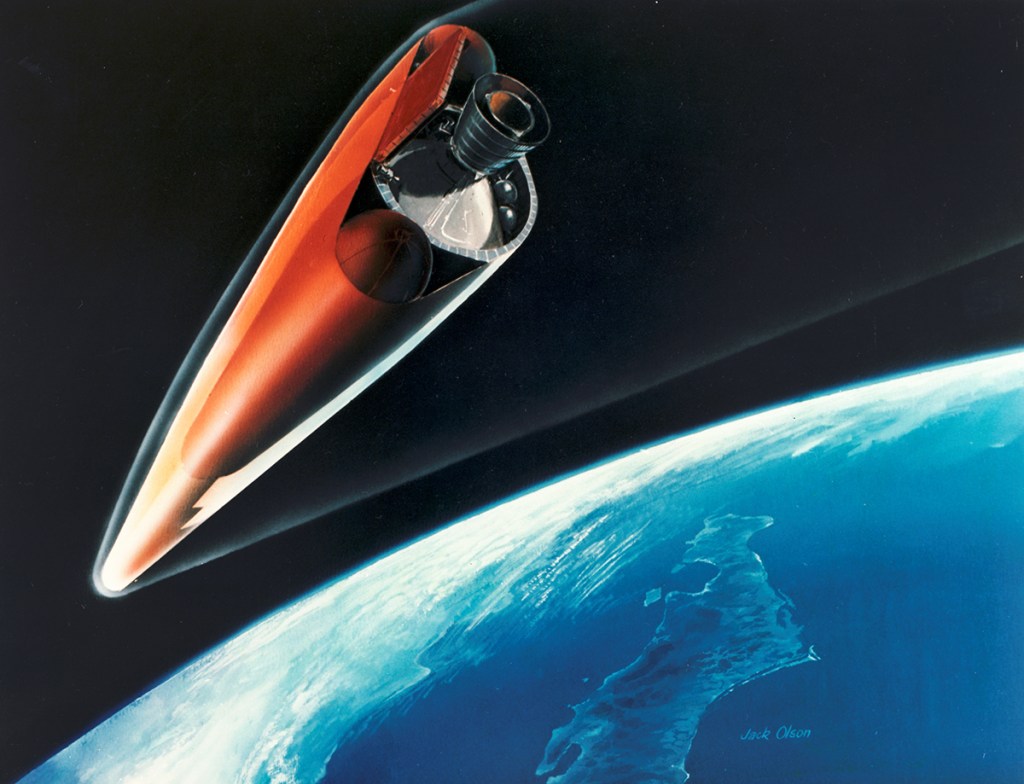
An Aeroassisted Orbital Transfer Vehicle is shown using the Earth’s atmosphere to slow itself down and lift itself into another orbit before returning to the Space Shuttle for reuse. Inflatable wings are located on each side of the core propulsion module and covered by a high temperature heat shield material. The spacecraft payload bay is located in the forward section of the nose cone. Boeing is studying how the atmosphere can be used as a brake for this proposed Air Force spacecraft under contract to the Air Force’s Flight Dynamics Laboratory at Wright-Patterson Air Force Base, Ohio.
BOEING AEROSPACE COMPANY
Image credit: Boeing
Image source: National Archives

Image credit: General Dynamics
Image source: DVIDS
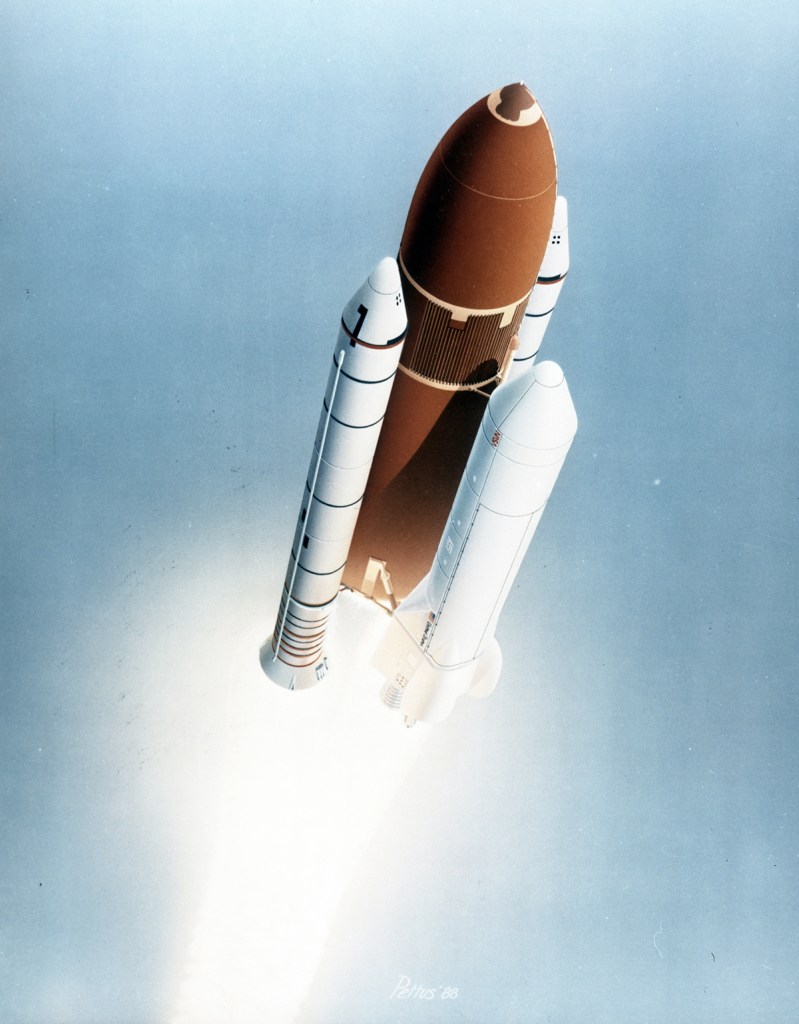
Image credit: NASA GRC
Image source: National Archives
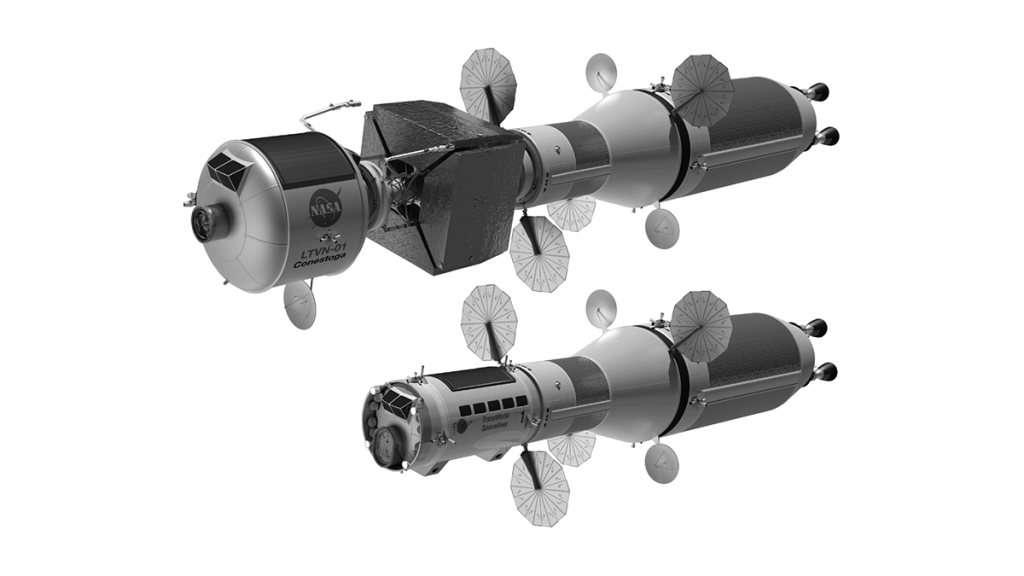
Space-based LANTR LTVs using a Common NTPS and Customized In-Line LO2 Tank
Image credit: NASA
Image source: NASA NTRS
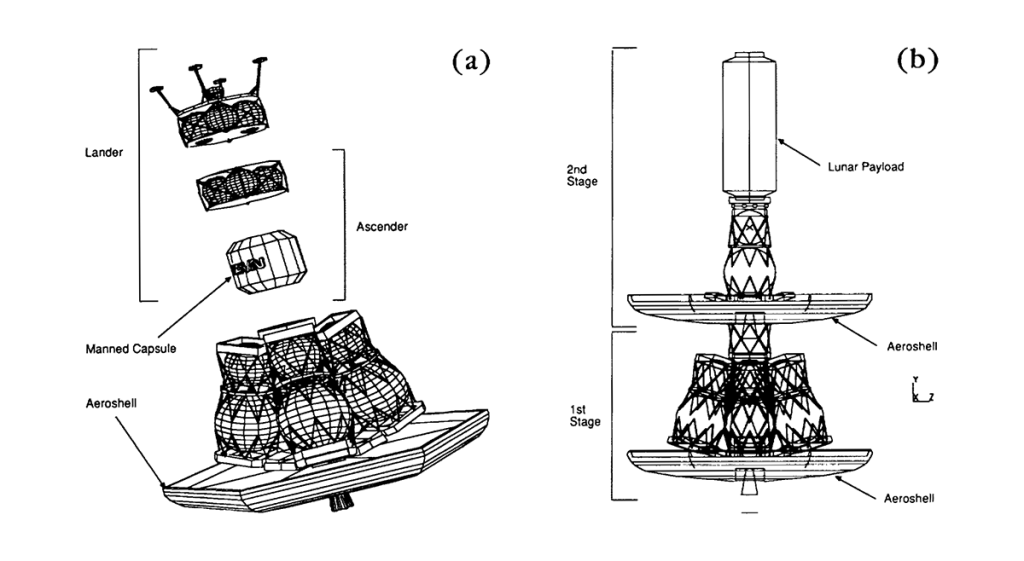
Orbital transfer vehicle (OTV) line drawings (a) one-stage manned and (b) two-stage cargo.
Image credit: NASA
Image source: NASA NTRS
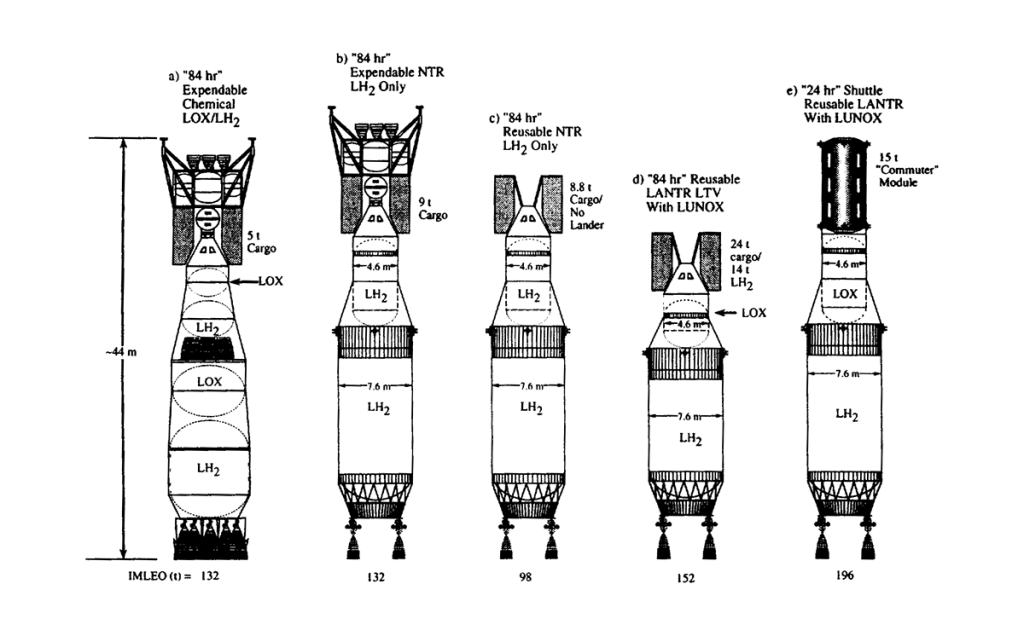
Relative Size/Mass of Chemical and NTR Vehicles Without and With LOX Augmentation
Image credit: NASA
Image source: NASA NTRS
