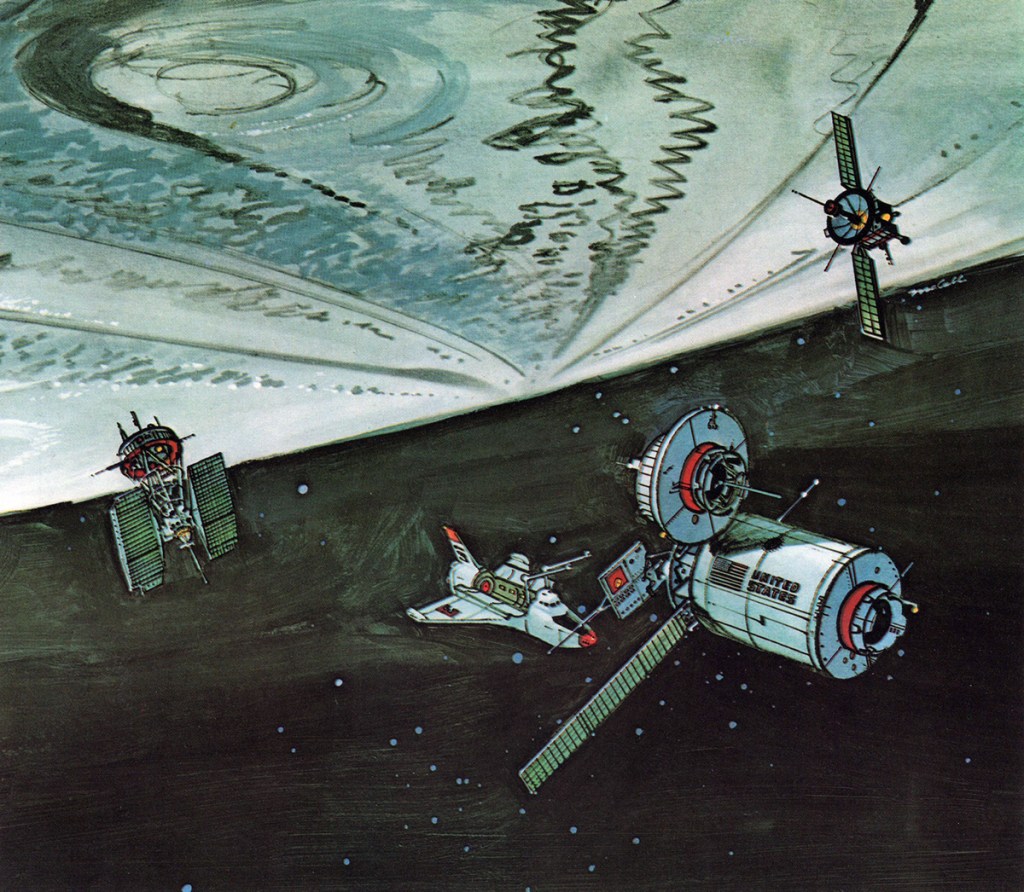
Our World in Space
Robert McCall & Isaac Asimov
New York Graphic Society, 1974
Image credit: Robert McCall
Image source: Numbers Station
Our World in Space
Robert McCall & Isaac Asimov
New York Graphic Society, 1974
Image credit: Robert McCall
Image source: Numbers Station
Image credit: NASA
Image source: NASA Johnson
Image credit: NASA JSC
Image source: NASA Images
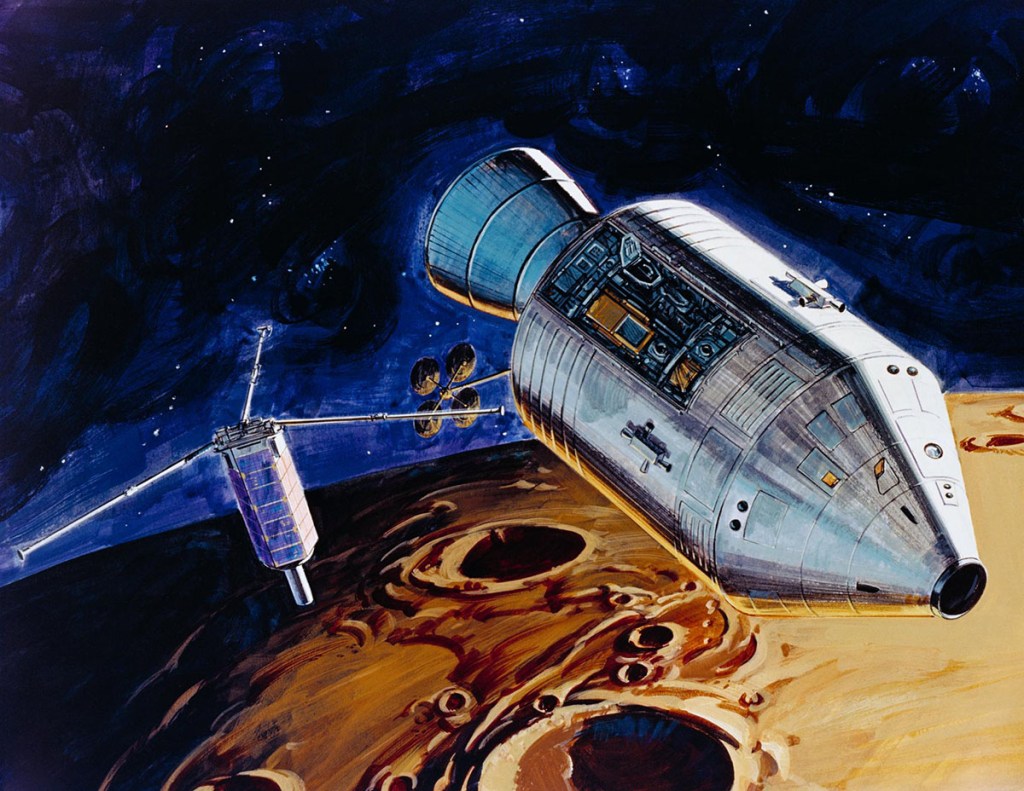
S71-39481 (July 1971) — An artist’s concept showing TRW’s small lunar subsatellite being ejected into lunar orbit from the SIM bay of the Apollo 15 Service Module. The 80-pound satellite will remain in orbit a year or more, carrying scientific experiments to study space in the vicinity of the moon. The satellite carries three experiments: S-Band Transponder; Particle Shadows/Boundary Layer Experiment; and Subsatellite Magnetometer Experiment. The subsatellite is housed in a container resembling a rural mailbox, and when deployed is spring-ejected out-of-plane at 4 fps with a spin rate of 140 rpm. After the satellite booms are deployed, the spin rate is stabilized at about 12 rpm. The subsatellite is 31 inches long and has a 14 inch hexagonal diameter. The exact weight is 78.5 pounds. The folded booms deploy to a length of five feet. Subsatellite electrical power is supplied by a solar cell array outputting 25 watts for dayside operation and a rechargeable silver-cadmium battery for nightside passes.
Image credit: NASA JSC
Image source: NASA Images
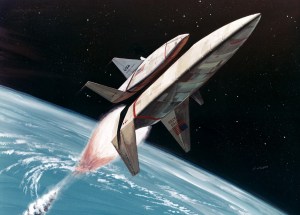
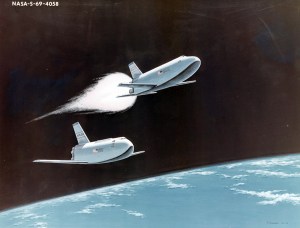
I think this is Henry Lozano Jr. rendering of the NAR A, or at least I thought I did. Tony Landis describes it as a Boeing VTOHL proposal. Tony Landis is a writer and archivist at the AFMC History Office. Tony knows his stuff. I’m going to stick to my guns for now, do a little more digging and we’ll see if I wind up moving this post down the road.
Image credit: North American Rockwell
Image source: AFMC
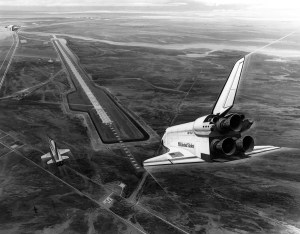
Image credit: North American Rockwell
Image source: Mike Acs
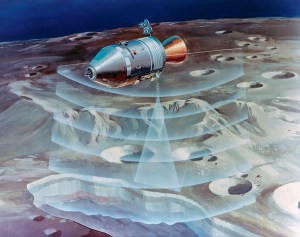
S72-53472 (November 1972) — An artist’s concept illustrating how radar beams of the Apollo 17 lunar sounder experiment will probe three-quarters of a mile below the moon’s surface from the orbiting spacecraft. The Lunar Sounder will be mounted in the SIM bay of the Apollo 17 Service Module. Electronic data recorded on film will be retrieved by the crew during trans-Earth EVA. Geologic information on the lunar interior obtained by the sounder will permit scientific investigation of underground rock layers, lava flow patterns, rille (canyon) structures, mascon properties, and any areas containing water. A prototype lunar sounder has been flight tested in aircraft over selected Earth sites to confirm the equipment design and develop scientific analysis techniques. The Lunar Sounder Experiment (S-209) was developed by North American Rockwell’s (NR) Space Division for NASA’s Manned Spacecraft Center to provide data for a scientific investigation team with representatives from the Jet Propulsion Laboratory, University of Utah, University of Michigan, U.S. Geological Survey, and NASA Ames Research Center.
Image credit: NASA JSC
Image source: NASA Images
Image credit: North American Rockwell
Image source: SDASM Archives