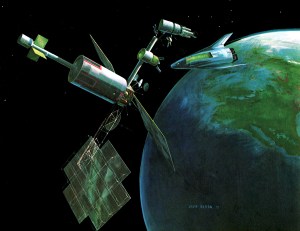
Image credit: Boeing
Image source: Numbers Station
Image credit: Boeing
Image source: Numbers Station
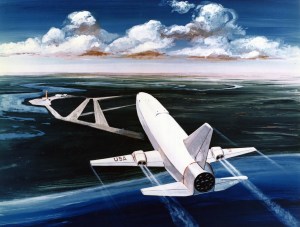
Image credit: North American Rockwell
Image source: National Archives

Image credit: Liebig
Image source: Numbers Station
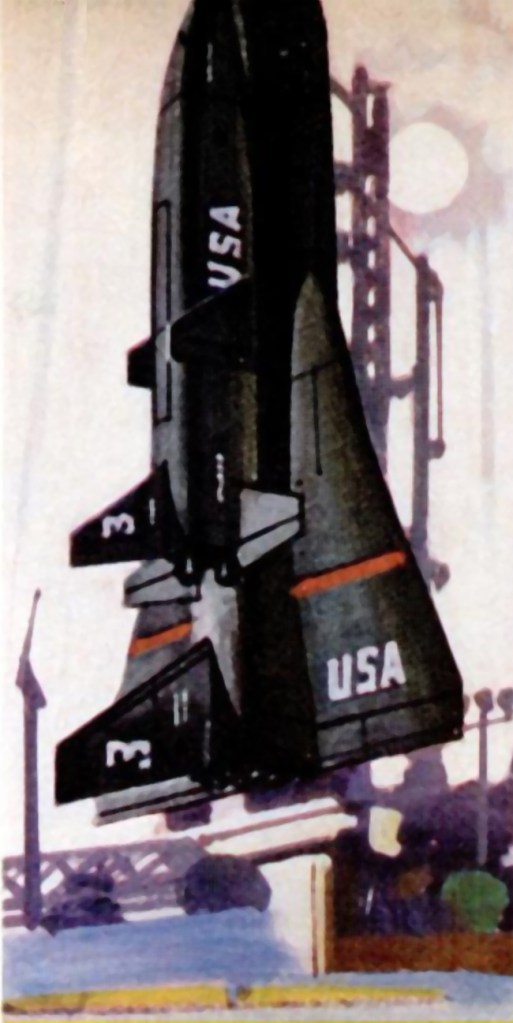
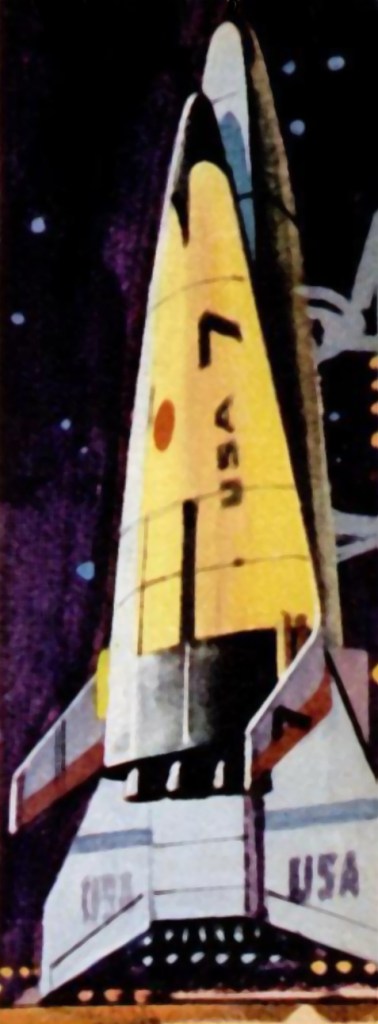
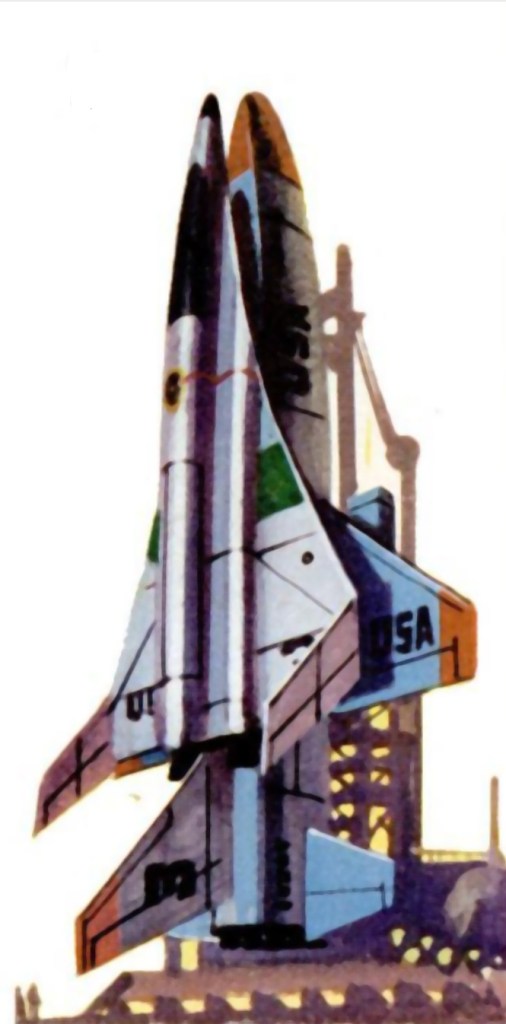
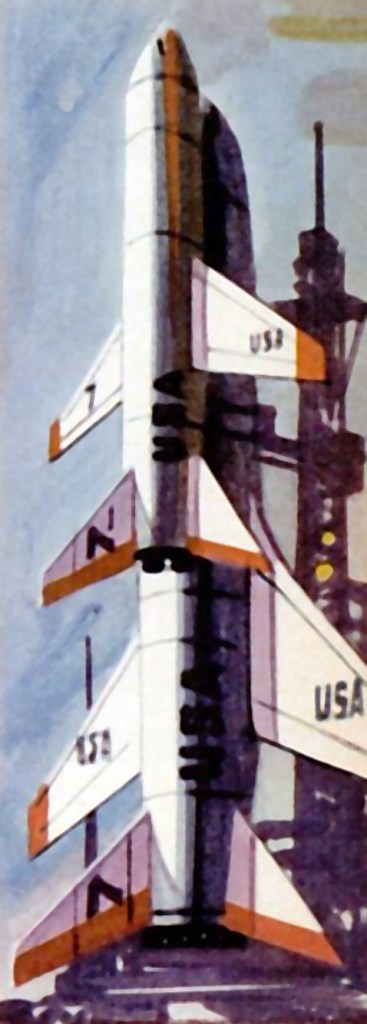
Here are examples of tentative designs for a space shuttle, made public by members of the four industrial teams competing in the project:
Each of pictured space-shuttle versions is a composite craft consisting of two stages, a booster and an orbiter, and is launched vertically like a space rocket, as shown. It’s two stages separate in space, and both return to earth for re-use.
Image credit: Robert McCall
Text and Images: Popular Science

Image credit: NASA KSC
Image source: Numbers Station
Image credit; McDonnell Douglas
Image source: Numbers Station
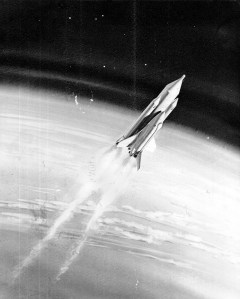
(ADV: FOR AMS WED, NOV, 8. WITH AAA WIRE STORY BY JACK LEFLER)
(LA3-NOV.2) LOS ANGELES, Nov. 7 — PUTTING IT UP WILL CREATE JOBS — An army of 10,000 subcontractors is being recruited by North American Rockwell Corp., to help put the $2.6 billion space shuttle into orbit. The White House estimates 160,000 workers will be directly or indirectly involved in the project. This artist’s concept shows the space shuttle orbiter roaring spaceward. (AP Wirephoto)(rhs52015ho) 1972
Image credit: North American Rockwell
Image source: Numbers Station
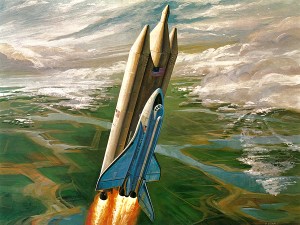
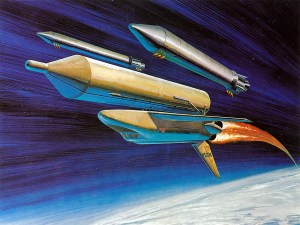
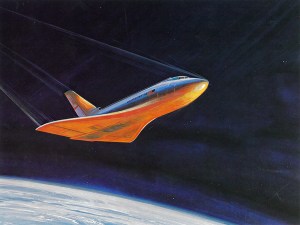
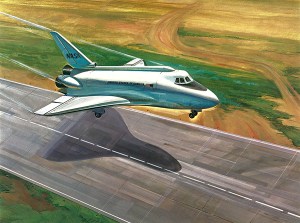
Image credit: North American Rockwell
Images: Numbers Station
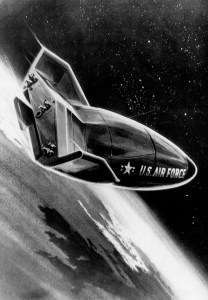
Image credit: USAF
Image source: Numbers Station
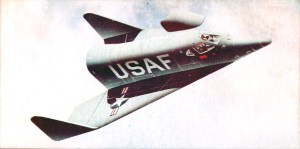
In addition to Mercury, Gemini, and Apollo, the U.S. is working on two other manned aerospace programs. The first is using the X-15, a piloted research vehicle, which flies as high as 50 miles above the Earth and at about 4,000 miles an hour, It is powered by a rocket engine but has wings and a tail, and can be controlled like an airplane. While the X-15 does not actually operate in space, vehicles similar to it will.
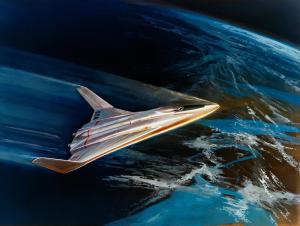
The other program is based on Project Dyna Soar. Dyna Soar will be launched like a missile, orbit the earth as a controlled satellite, and return through the atmosphere like an airplane. It is so named because it is expected that in the sky it will achieve boost-glide flight – also known as dynamic soaring. In space, the Dyna Soar pilot will be able to use rocket power to maneuver left or right thousands of miles in any flight path.
In the artist’s concept of the craft, the pilot of the Dyna Soar discards the no-longer need cockpit heat shield in order to land.
Image credit: Boeing
Image source: Numbers Station