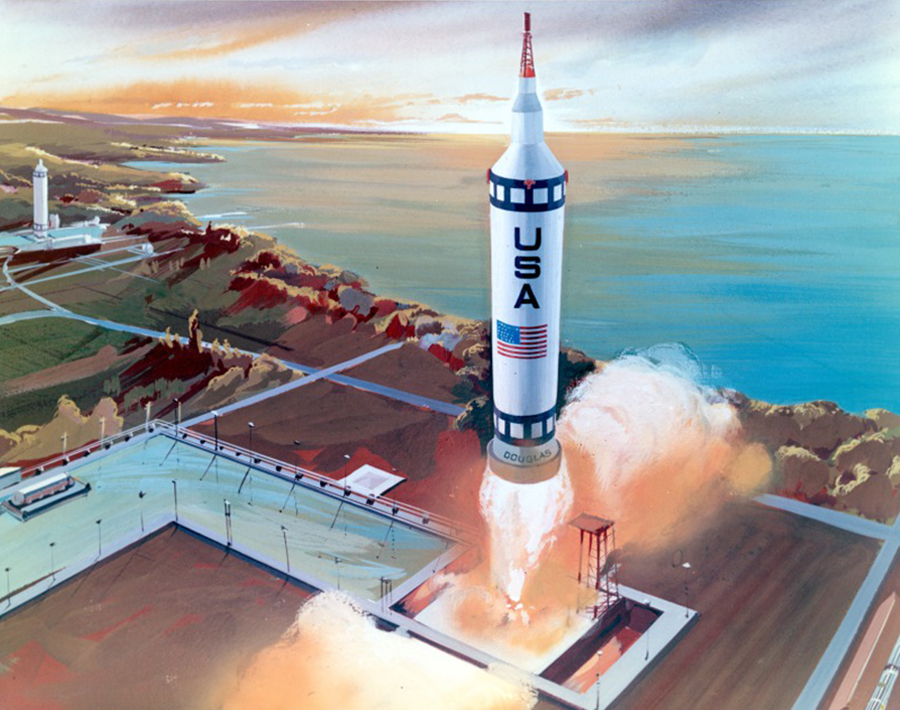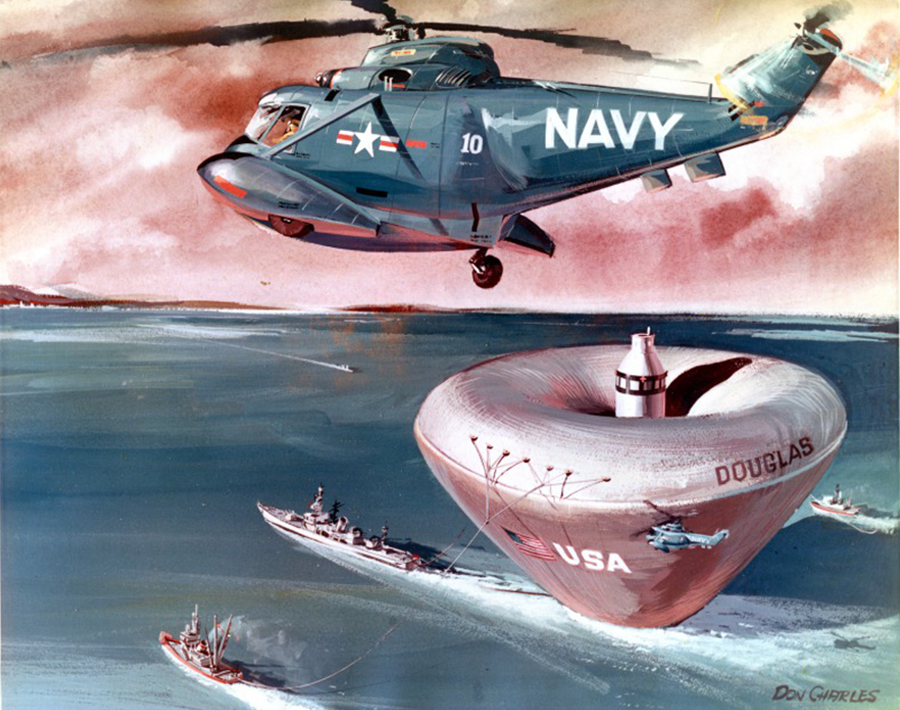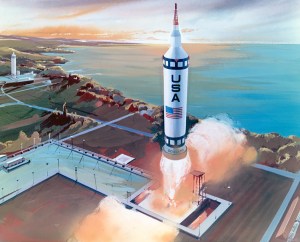
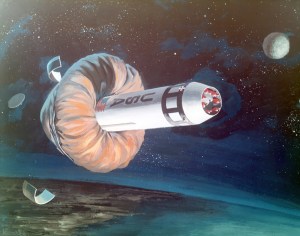
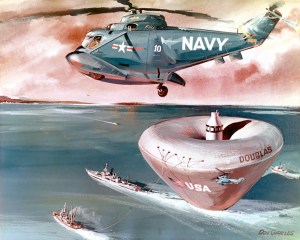
- ROOST was designed for giant single-stage boosters of future like that in drawings here. The boosters, 50 feet in diameter and 173 feet tall, would weigh 10 million pounds loaded and have a cluster of 12 engines generating a mighty thrust of 12 million pounds.
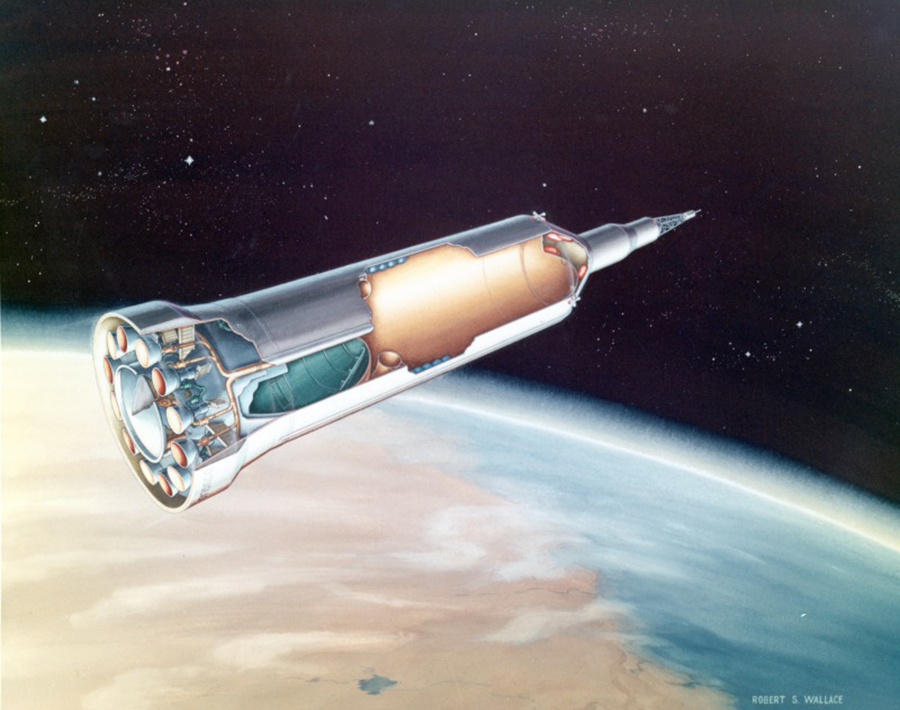
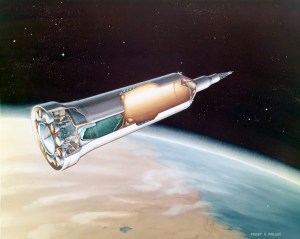
- Booster speeds toward earth orbit carry a 160-ton payload that might be a nuclear stage with a manned capsule for moon or outer-space exploration. Cutaway of the booster shows how the deflated recovery bags are stored.
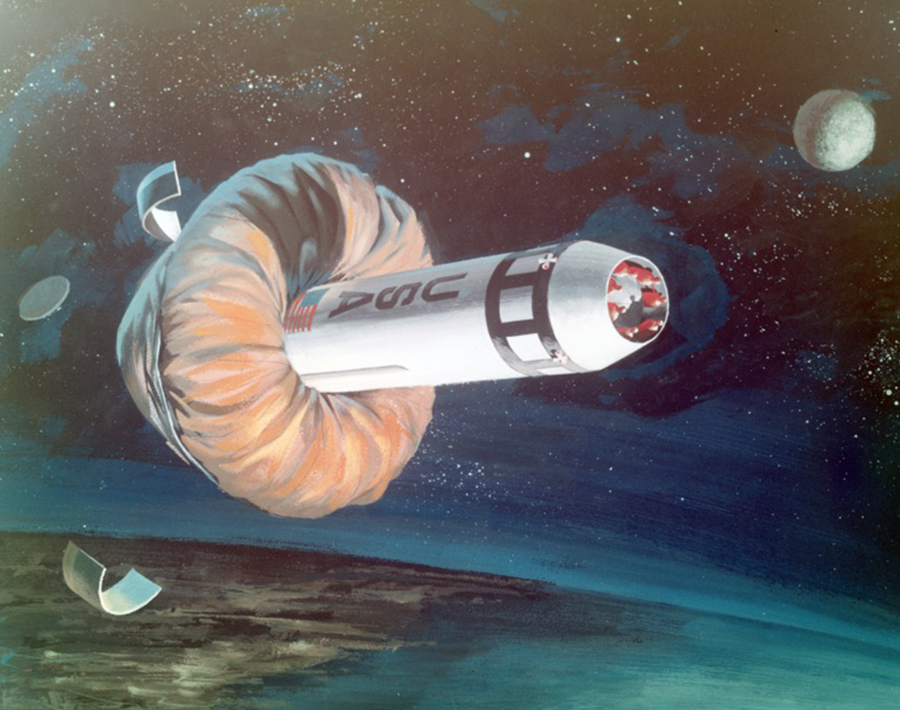
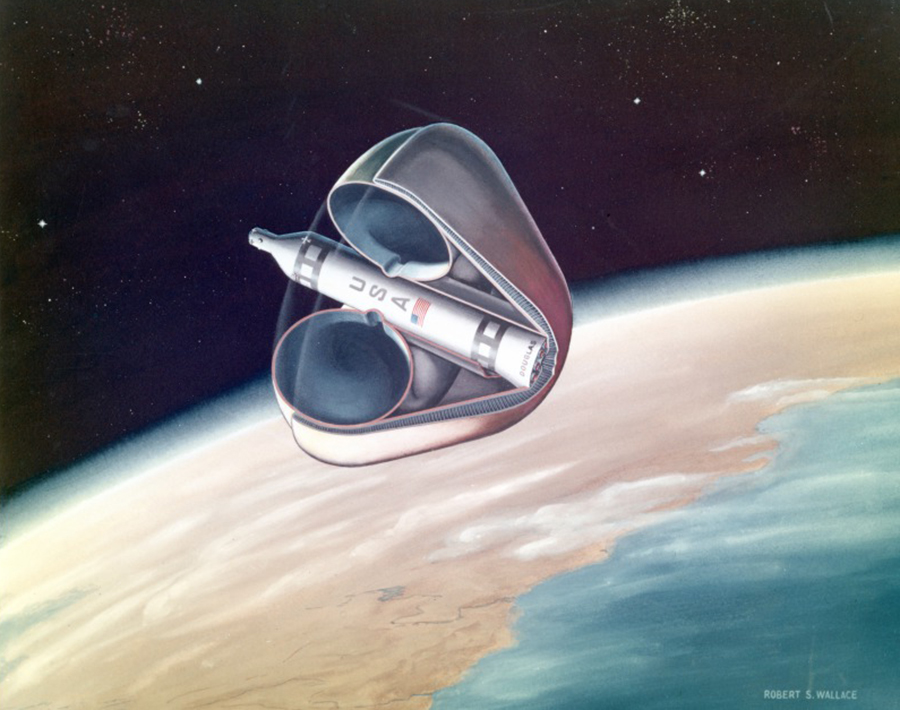
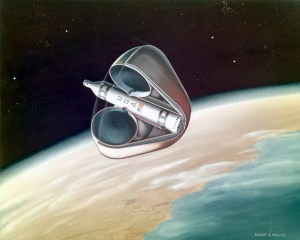
- In earth orbit, payload has separated, and recovery bags popped out from rear of rocket begin to inflate, throwing off protective plates. Here conical bag begins to take shape.
- Inflated cone-shaped bag enshrouds rocket while doughnut grips its middle like a choke collar. Booster can remain in orbit 24 hours until triggered for re-entry.
- As Roost settles gently in the sea, waiting surface ships pick up the dangling towlines to salvage the costly booster.
Popular Science
July 1963
Image credit: Douglas
Image source: SDASM Archives