see also:
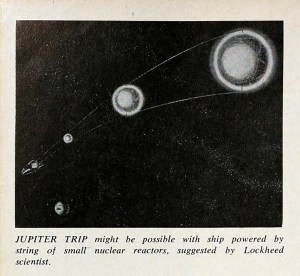
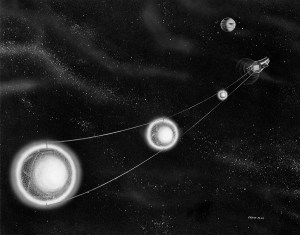
Missiles and Rockets, August 22, 1960
Image credit: Lockheed
Images: Numbers Station, Internet Archive
see also:
Missiles and Rockets, August 22, 1960
Image credit: Lockheed
Images: Numbers Station, Internet Archive
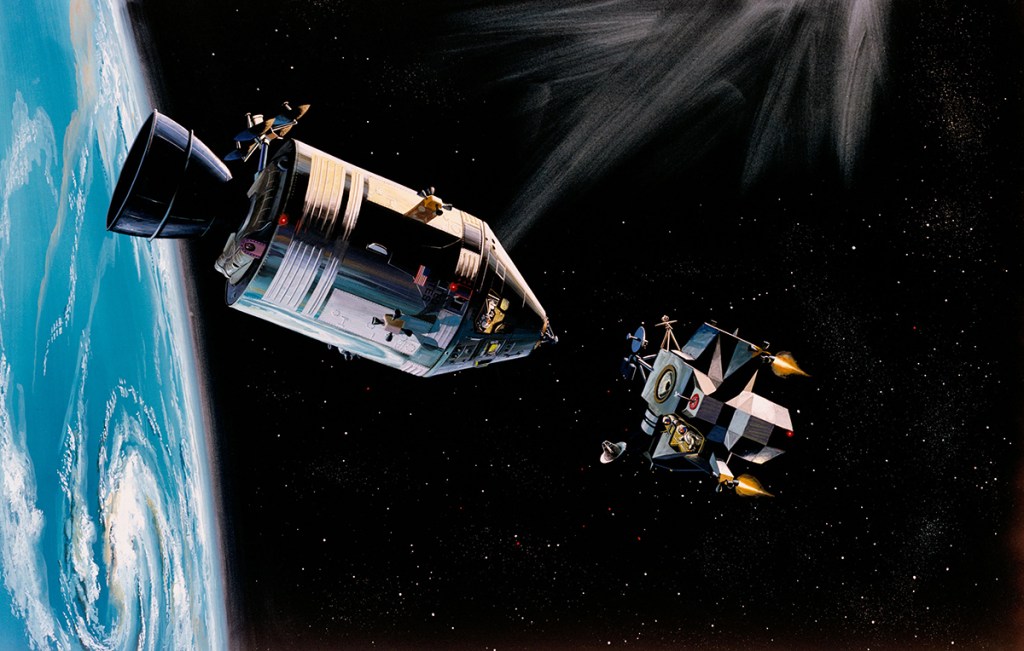
S69-18546 (February 1969) — North American Rockwell artist’s concept illustrating the docking of the Lunar Module ascent stage with the Command and Service Modules during the Apollo 9 mission. The two figures in the Lunar Module represent astronauts James A. McDivitt, Apollo 9 commander; and Russell L. Schweickart, lunar module pilot. The figure in the Command Module represents astronaut David R. Scott, command module pilot. The Apollo 9 mission will evaluate spacecraft lunar module systems performance during manned Earth-orbital flight.
Image credit: NASA JSC
Image source: NASA Images

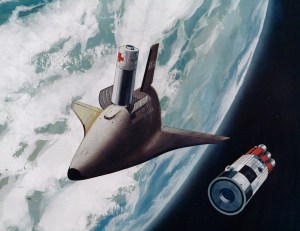
Image credit: McDonnell Douglas
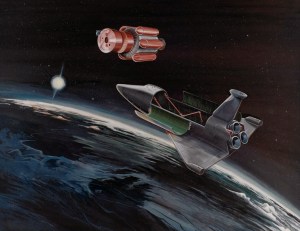
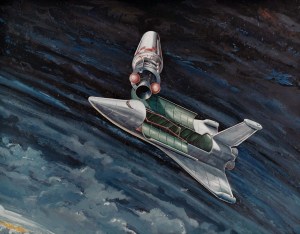
Image credit: McDonnell Douglas
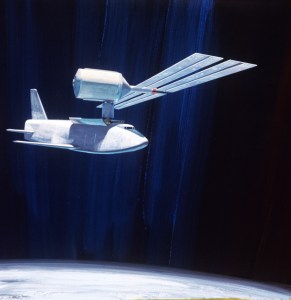
Image credit: North American Rockwell
Image source: Numbers Station
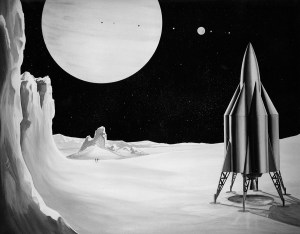
Jupiter Lunar Landing
From one of Jupiter’s 12 moons, earth astronauts gaze on this impressive, but bleak, view of the 86,900 mile-diameter planet. More than 316 times the mass of the Earth, Jupiter is seven times further from the sun than Earth; would require voyage of one to two months to reach at velocity of one million feet per second. Max Hunter, Douglas Aircraft Company engineer predicts economically feasible trips to Jupiter will be made through development of nuclear thrust spaceship engines.
Douglas Aircraft Company, Inc. General Offices, Santa Monica, Calif.
Image credit: Douglas Aircraft Company
Image source: Numbers Station
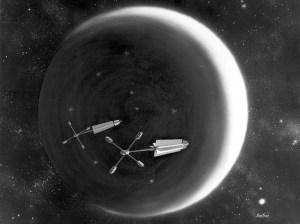
Image credit: Convair
Image source: SDASM Archives
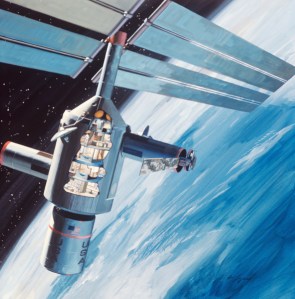
Image credit: North American Rockwell
Image source: Numbers Station
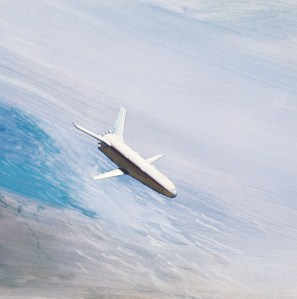
Image credit: North American Rockwell
Image source: Numbers Station
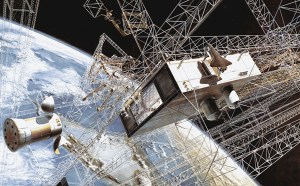
Image credit: NASA
Image source: SDASM Archives
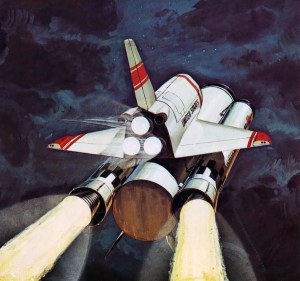
Image credit: Grumman