Lockheed C

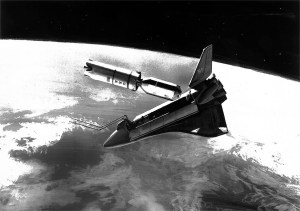
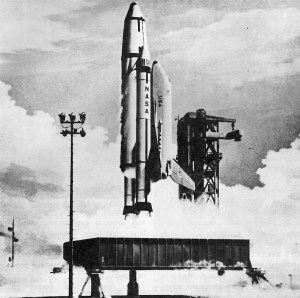
The space shuttle is launched from Cape Kennedy in this artist’s concept by Lockheed Missiles & Space Co. Firing at the same time as the two solid-propellant boosters are the liquid-fueled engines of the orbiter, right. The two solid boosters will be jettisoned next, and the orbiter will continue into orbit.

Space World
November 1972, VOL. I-11-107

Image credit: Lockheed
Image source: Numbers Station
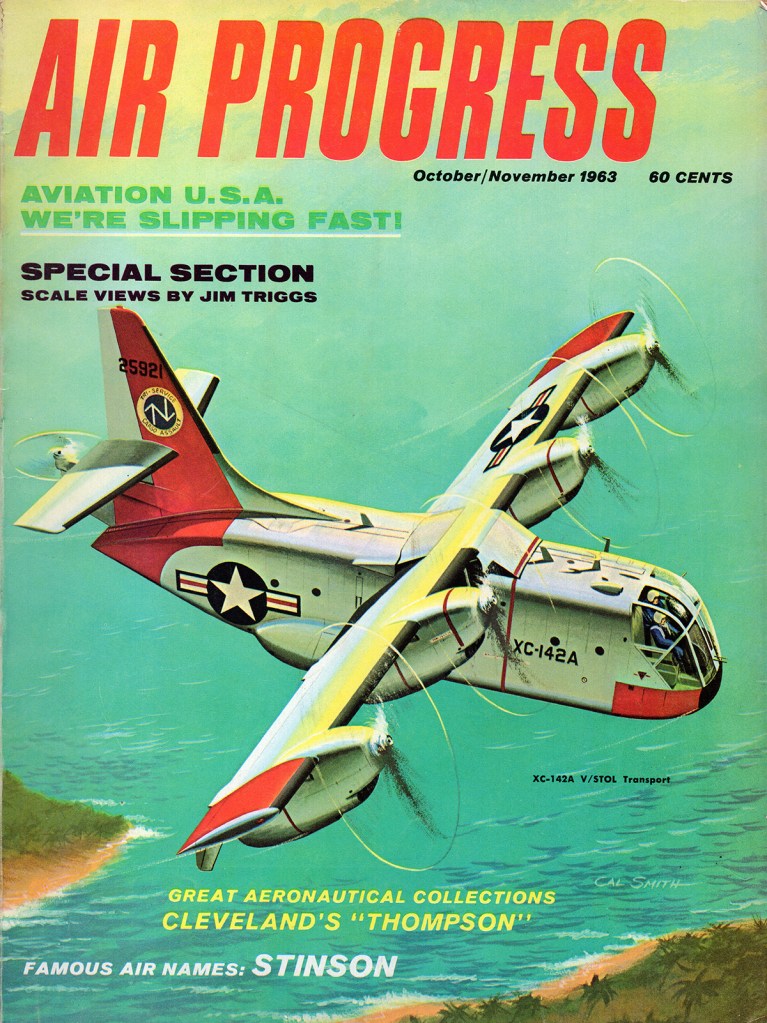
October/November 1963

Image credit: Air Progress
Image source: Numbers Station
Mar 17, 1969

Mar 17 1969

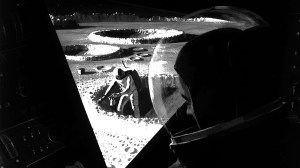
When America’s first two-man team lands on the moon, one of their first tasks will be to obtain a sample of lunar material as quickly as possible in event they have to make an emergency takeoff. If things go well, they will spend 25 hours on the surface, gathering up to 80 pounds of rocks, dust and other material to be put into vacuum-sealed containers. This sketch shows one astronaut gathering samples from a crater while his companion watches from the lunar module. Later, the two will roam up to 300 feet from the craft, working on a “buddy” system, to plant several measuring devices on the surface which will radio information to earth.

 MAR 17 1969 COPYRIGHT, SEATTLE TIMES CO.

Image credit: NASA
Image source: Numbers Station

NAR 134

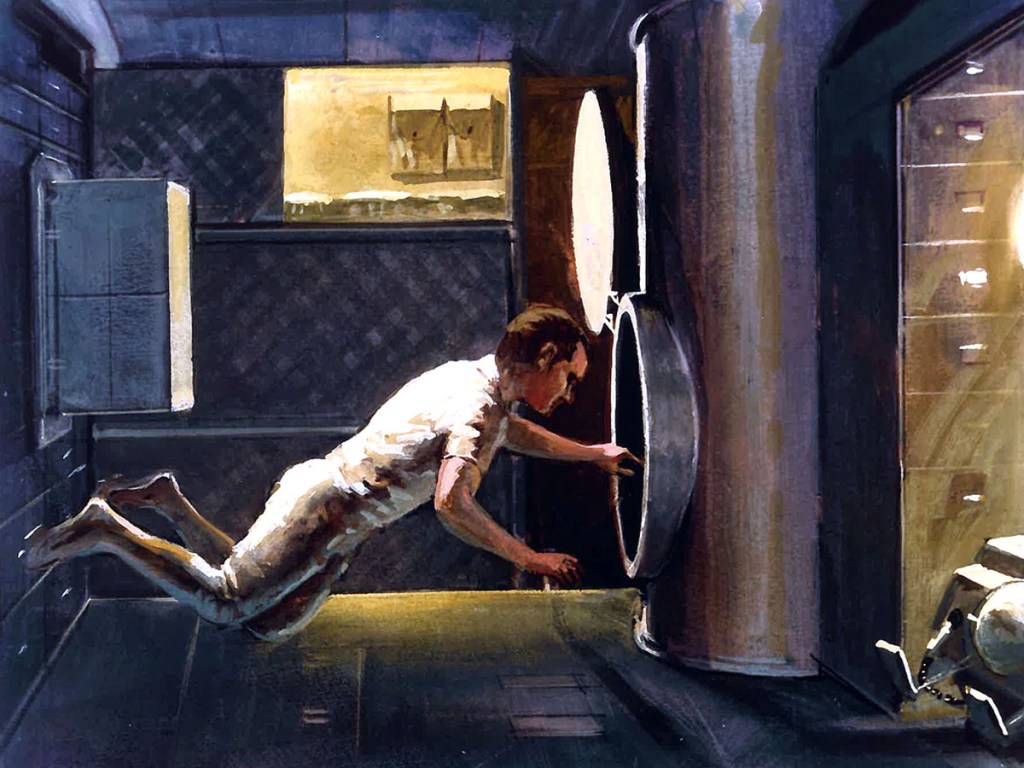
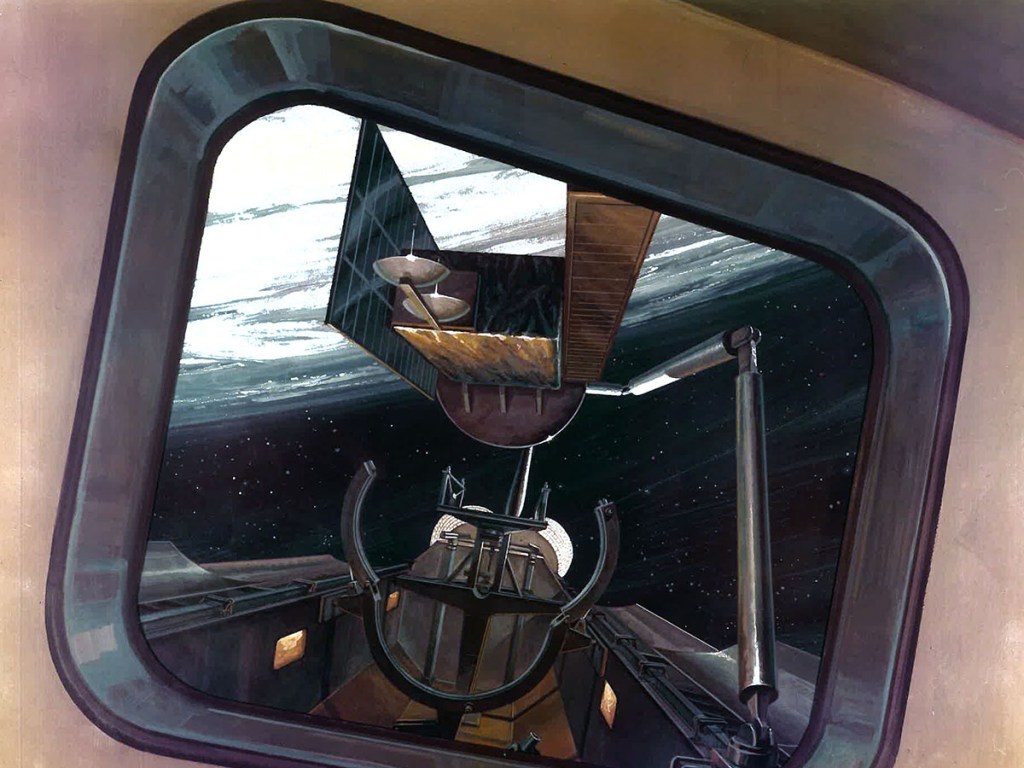
Our World in Space
Robert McCall & Isaac Asimov
New York Graphic Society, 1974

Image credit: Robert McCall

Image credit: NASA
Image source: Numbers Station

Operations in 1978

NOV 1 1972 

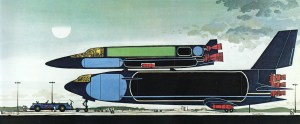
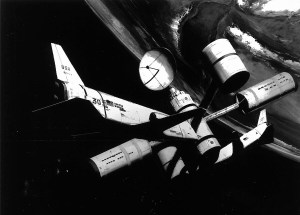
THIS SPACE SHUTTLE IS SCHEDULED TO START OPERATIONS IN 1978

Vehicle will make round trips ferrying men into orbit and the returning them to earth.

Image credit: North American Rockwell
Image source: Numbers Station
6:10 INTO SPACE

Third release week of November 15, 1971 

THE 6:10 INTO SPACE. NASA is working on the design of a winged shuttle craft to resupply the manned space stations of the next decade. The giant space transports shown here can carry 50,000 pounds of men and cargo to the cluster of cylinders that make up a space base, the return to Earth and land like airplanes.

 Credit: North American Rockwell

Image credit: North American Rockwell
Image source: Numbers Station
Saturn: The Ringed Beauty

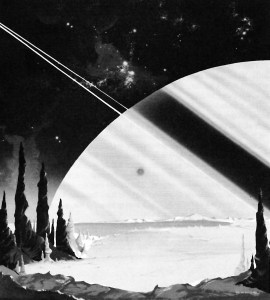
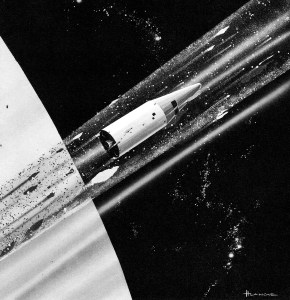
Saturn seen from its satellite Midas

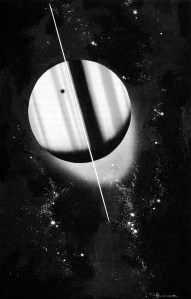
Saturn with its rings seen edge on

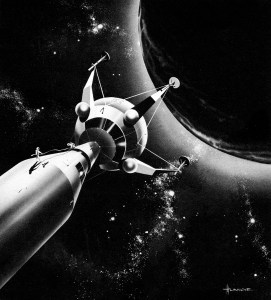
Spaceship explores the rings of Saturn

Conquering the Sun’s Empire
Frederick I. Ordway, III
and Ronald C. Wakeford

Illustrations by Harry H-K Lange

E.P Dutton & Co., 1963

Image source: Numbers Station
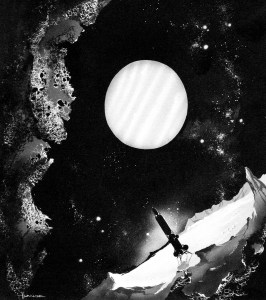
Uranus: Planet on Its Side

Explorers in Miranda viewing the banded atmosphere of Uranus

Uranus and its moons

Spaceship approaching Uranus; the squat, rugged landing craft will be detached from the manned spaceship as it approaches the planet.

Conquering the Sun’s Empire
Frederick I. Ordway, III
and Ronald C. Wakeford

Illustrations by Harry H-K Lange

E.P Dutton & Co., 1963

Image source: Numbers Station
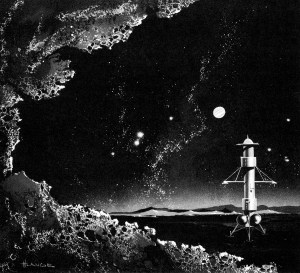
Neptune: Greenish Dot in Space

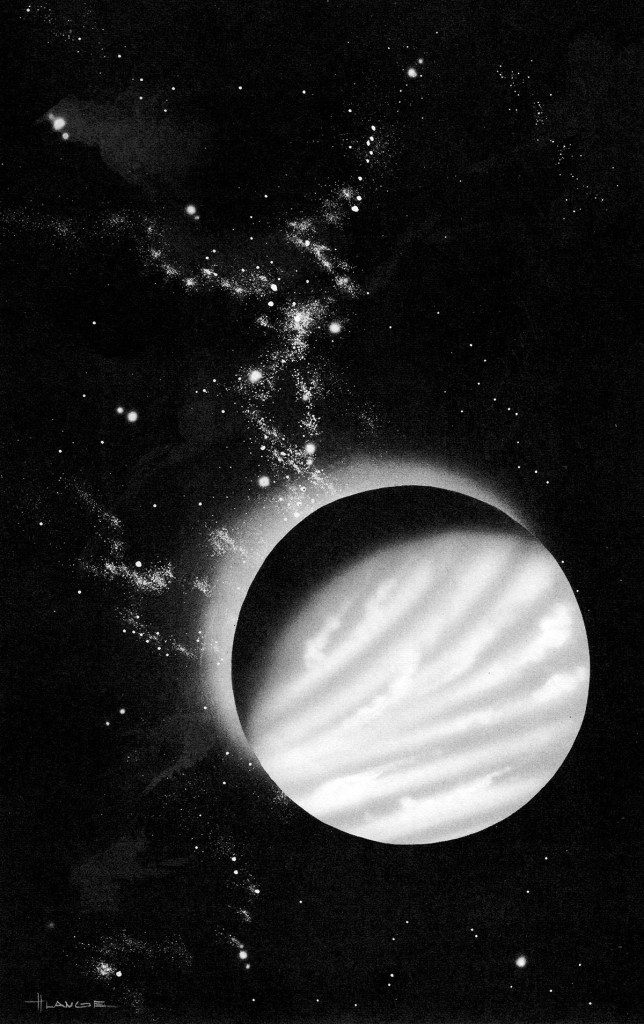
The planet Neptune

Spaceship on Triton

Resupply ship on faraway Nereid preparing for take-off to Pluto

Conquering the Sun’s Empire
Frederick I. Ordway, III
and Ronald C. Wakeford

Illustrations by Harry H-K Lange

E.P Dutton & Co., 1963

Image source: Numbers Station
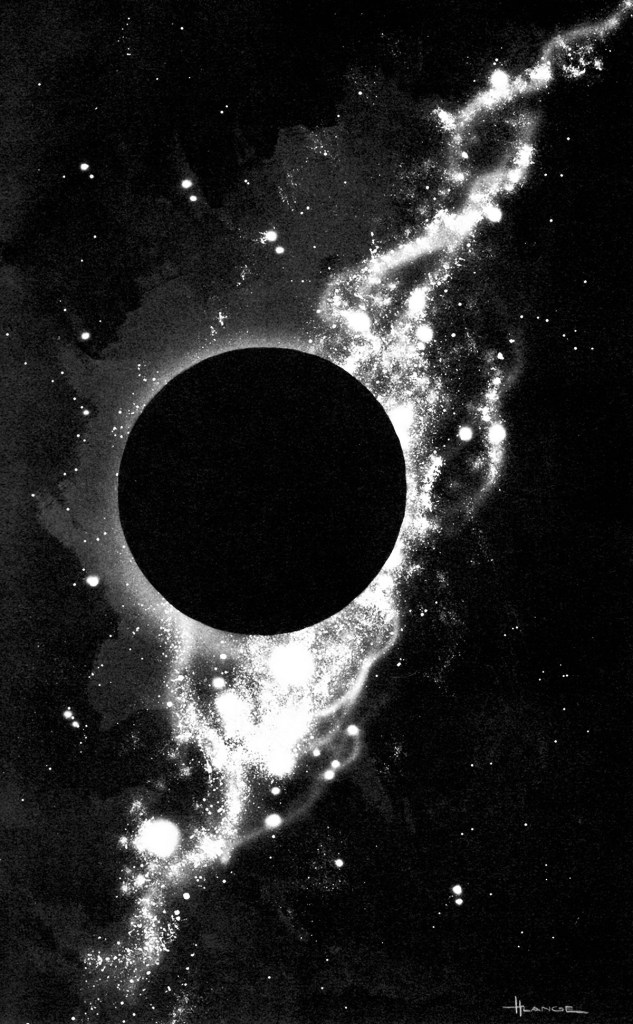
Pluto: The Lonely Outpost

Pluto shadowed against Milky Way galaxy

Ion-propelled spaceship entering into orbit around Pluto

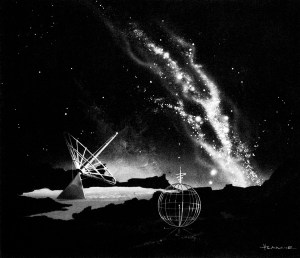
Radio telescope on Pluto studying distant stars

Conquering the Sun’s Empire
Frederick I. Ordway, III
and Ronald C. Wakeford

Illustrations by Harry H-K Lange

E.P Dutton & Co., 1963

Image source: Numbers Station

Interstellar Depths

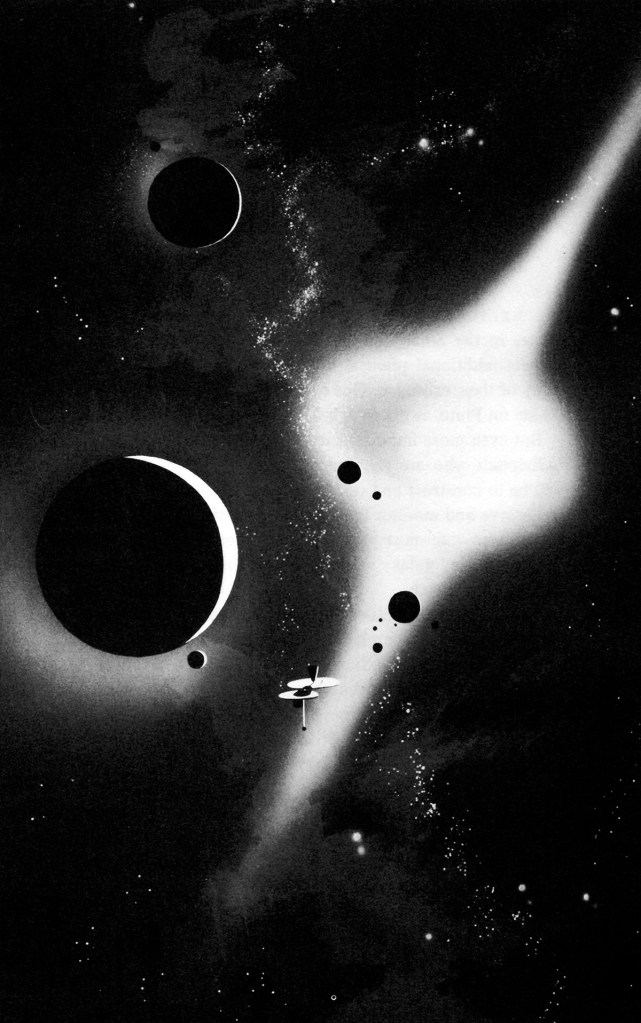
Interstellar spaceship arriving at an alien Solar System trillions of miles away

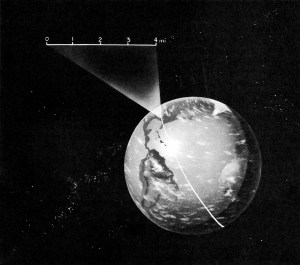
6,250 times as great as the distance from Earth to Pluto. To make such astronomical differences comprehensible we can say that the difference between these two distances is like the difference between the circumference of Earth (25,000 miles) and 4 miles.

Conquering the Sun’s Empire
Frederick I. Ordway, III
and Ronald C. Wakeford

Illustrations by Harry H-K Lange

E.P Dutton & Co., 1963

Image source: Numbers Station