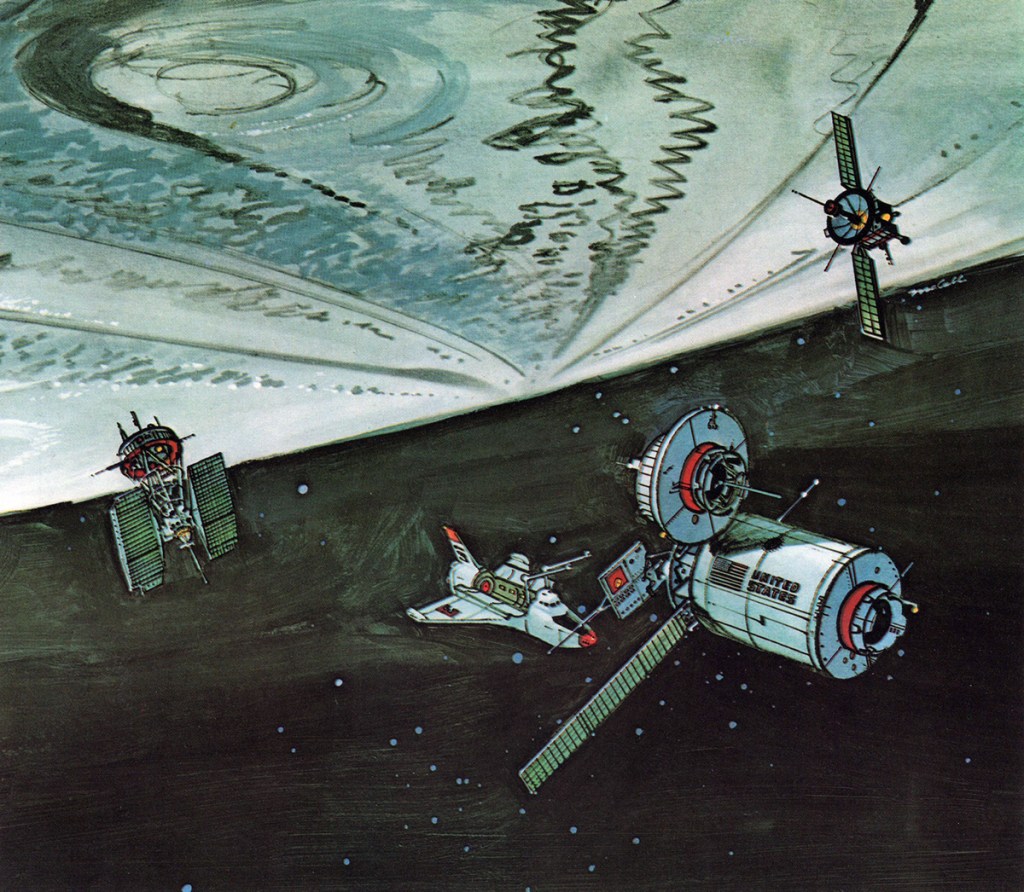
Our World in Space
Robert McCall & Isaac Asimov
New York Graphic Society, 1974
Image credit: Robert McCall
Image source: Numbers Station
Our World in Space
Robert McCall & Isaac Asimov
New York Graphic Society, 1974
Image credit: Robert McCall
Image source: Numbers Station
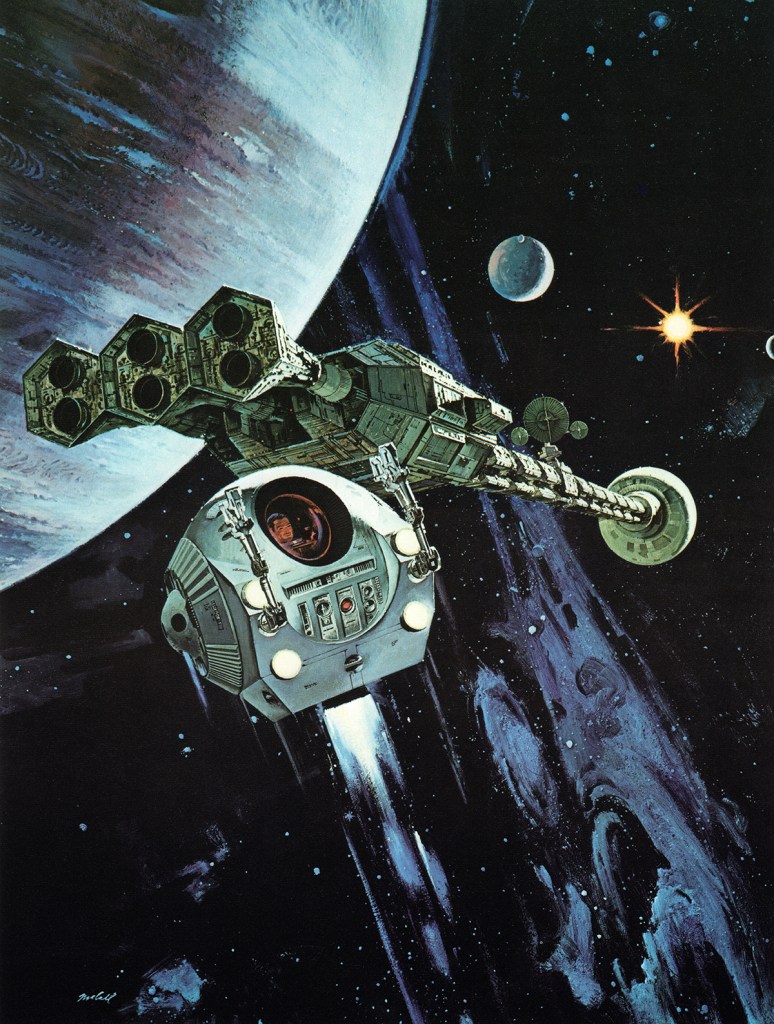
Our World in Space
Robert McCall & Isaac Asimov
New York Graphic Society, 1974
Image credit: Robert McCall
Image source: Numbers Station
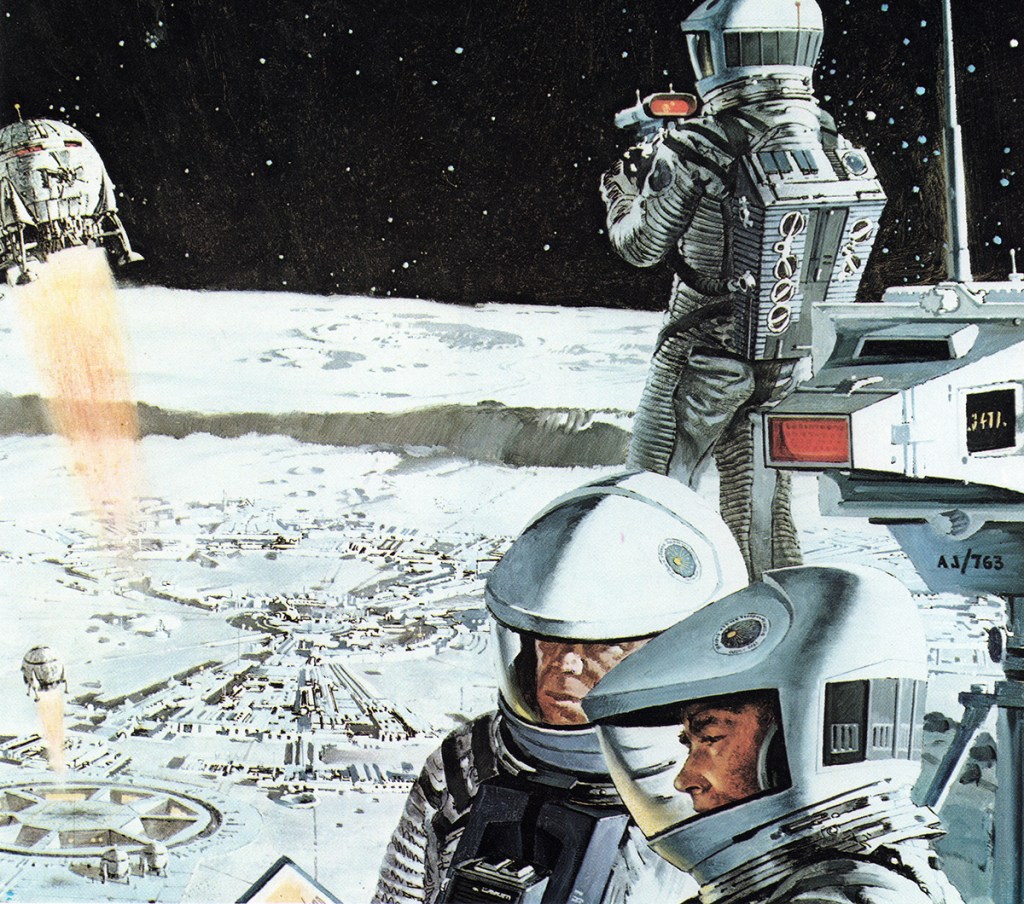
Our World in Space
Robert McCall & Isaac Asimov
New York Graphic Society, 1974
Image credit: Robert McCall
Image source: Numbers Station
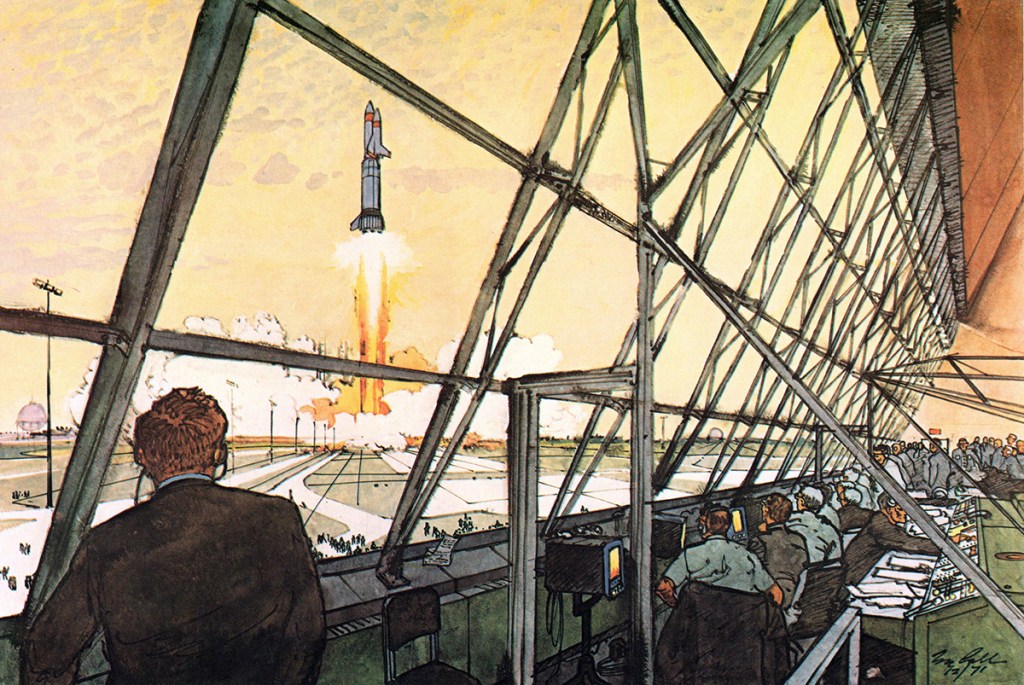
Our World in Space
Robert McCall & Isaac Asimov
New York Graphic Society, 1974
Image source: Numbers Station
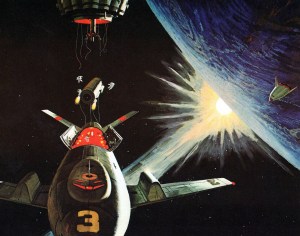
A shuttle in Earth orbit deploying its payload.
Our World in Space
Robert McCall & Isaac Asimov
New York Graphic Society, 1974
Image credit: Robert McCall
Image source: Numbers Station
Image credit: Boeing Aircraft Company
Image source: Numbers Station

Scientists differ on whether sites should be underground in a lunar crater or “ocean” or if they should be blasted out of the sides of mountains.
The Next Fifty Years On The Moon
by Erik Bergaust
G.P. Putnam’s Sons, 1974
Image credit: United States Army
Image source: Numbers Station

First-stage lunar base. This is the type of shelter proposed for the construction crew responsible for building permanent quarters.
The Next Fifty Years On The Moon
by Erik Bergaust
G.P. Putnam’s Sons, 1974
Image credit: Boeing
Image source: Numbers Station
Image credit: NASA
Image source: Numbers Station

A combine of three lunar shelters provides adequate quarters for a construction of eighteen men. It will take many years to complete a major moon colony for 100 or more men-and women.
The Next Fifty Years On The Moon
by Erik Bergaust
G.P. Putnam’s Sons, 1974
Image credit: Boeing
Image source: Numbers Station

Image credit: Bell
Image source: Numbers Station
Exploring Tomorrow in Space
Thomas Becker
Sterling, 1972
Image credit: NASA
Image source: Numbers Station
