Image credit: NASA MSFC
Image source: Wikipedia
Image credit: NASA MSFC
Image source: Wikipedia
Image credit: NASA GRC
Image source: National Archives
Image credit: NASA
Image source: National Archives
Image credit: NASA
Image source: National Archives
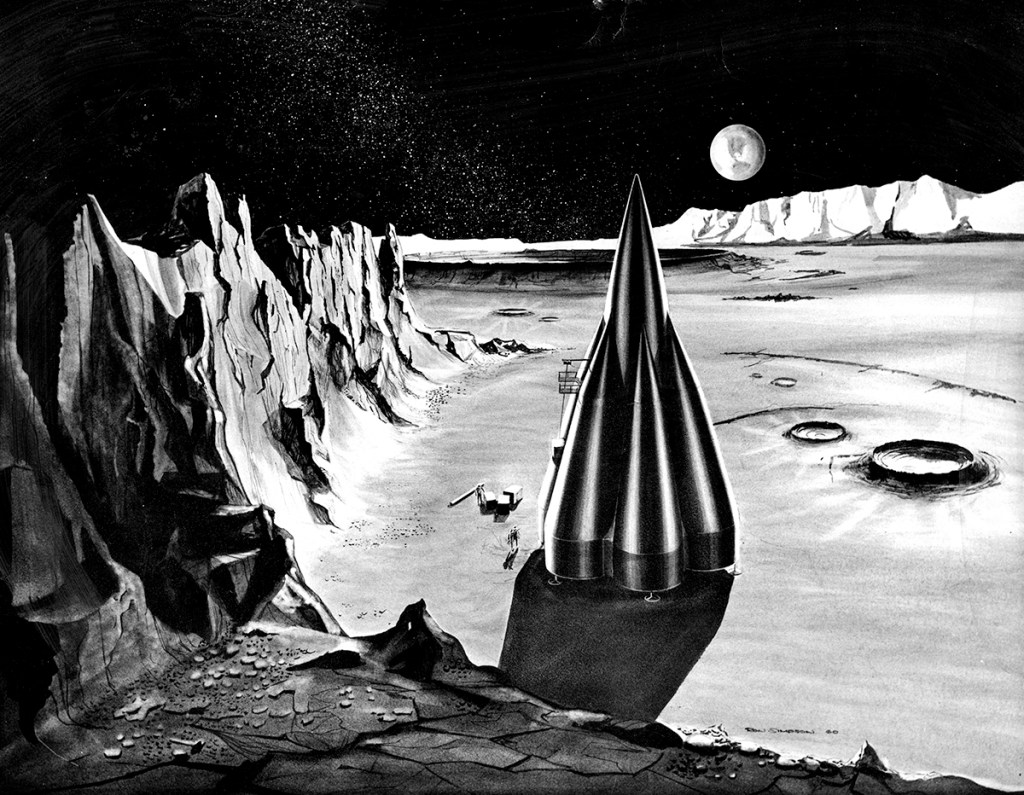
Image credit: Douglas
Image source: Mike Acs
A concept for using the spent external tank from a National Space Transportation System (NSTS) to derive a lunar habitat is described. The external tank is carried into low Earth orbit (LEO) where the oxygen tank-intertank subassembly is separated from the hydrogen tank, berthed to Space Station Freedom and the subassembly outfitted as a 12-person lunar habitat using extravehicular activity (EVA) and intravehicular activity (IVA). A single launch of the NSTS orbiter can place the external tank in LEO, provide orbiter astronauts for disassembly of the external tank, and transport the required subsystem hardware for outfitting the lunar habitat. An estimate of the astronauts’ EVA and IVA is provided. The liquid oxygen-intertank modifications utilize existing structures and openings for man access without compromising the structural integrity of the tank. The modifications include installation of living quarters, instrumentation, and an air lock. Feasibility studies include micrometeoroid and radiation protection, thermal control, environmental control and life support, and propulsion. The converted hmar habitat is designed for unmanned transport and autonomous soft-landing on the lunar surface without need for site preparation.
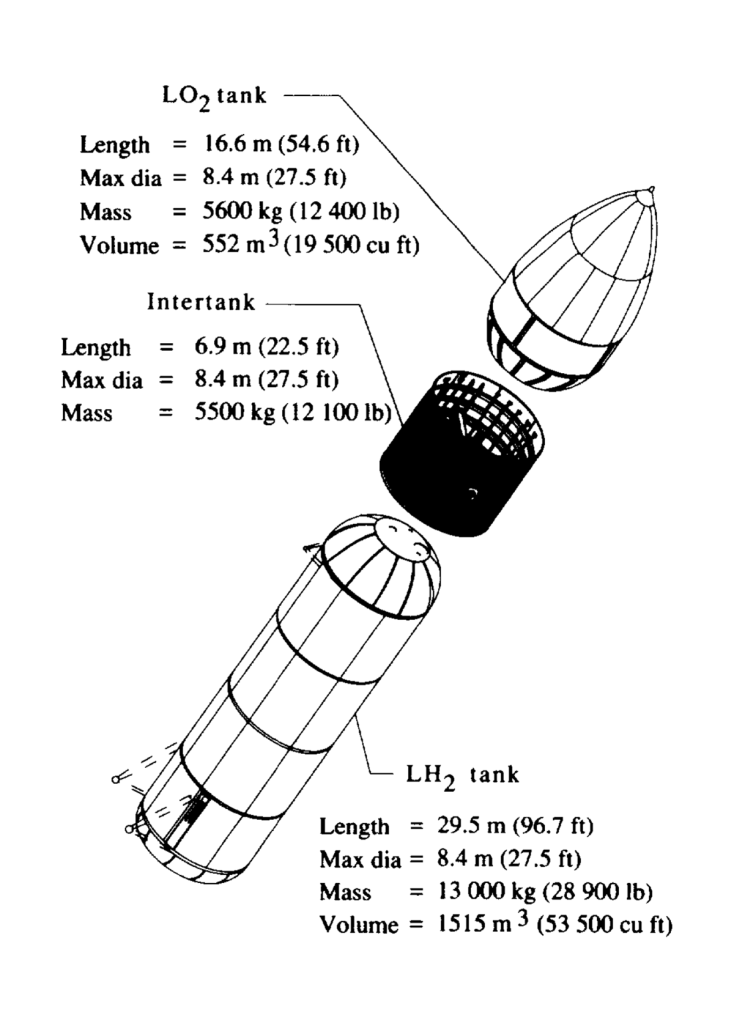
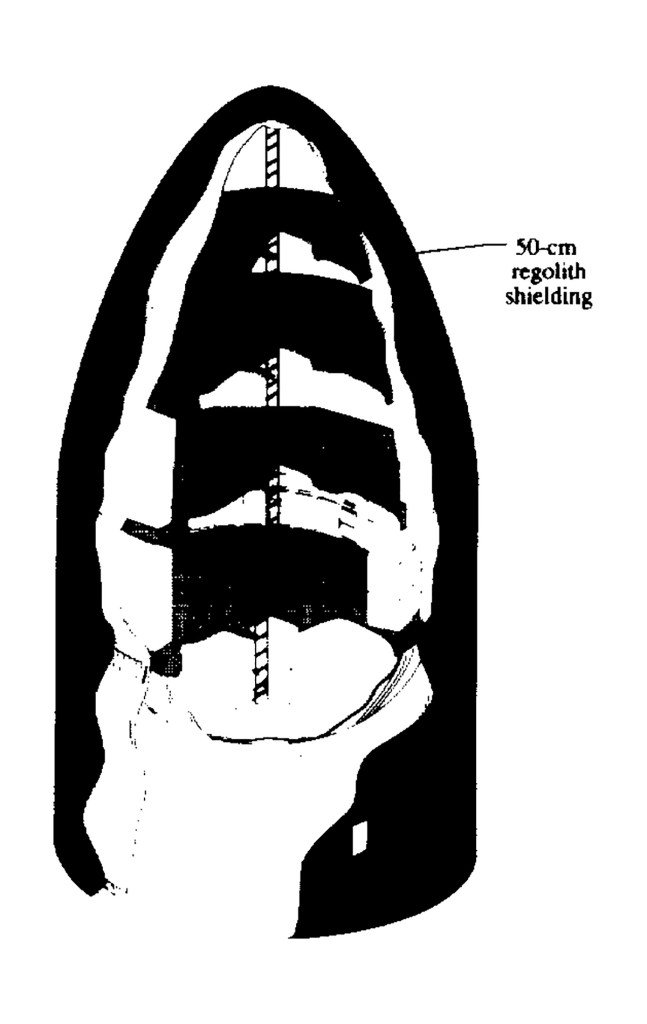
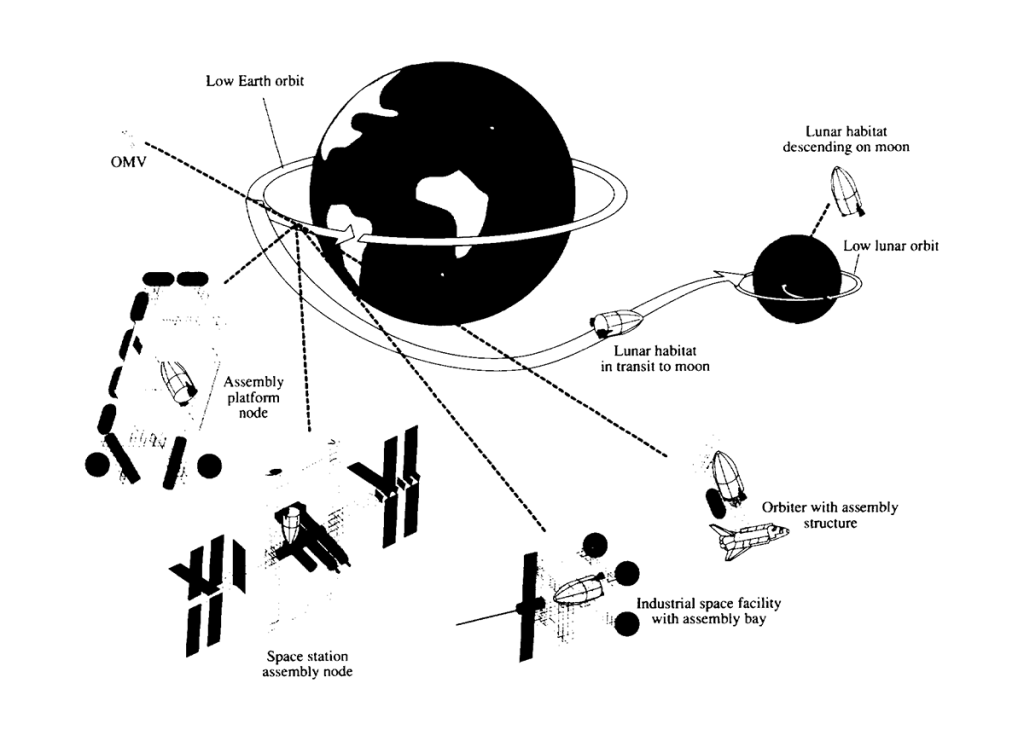
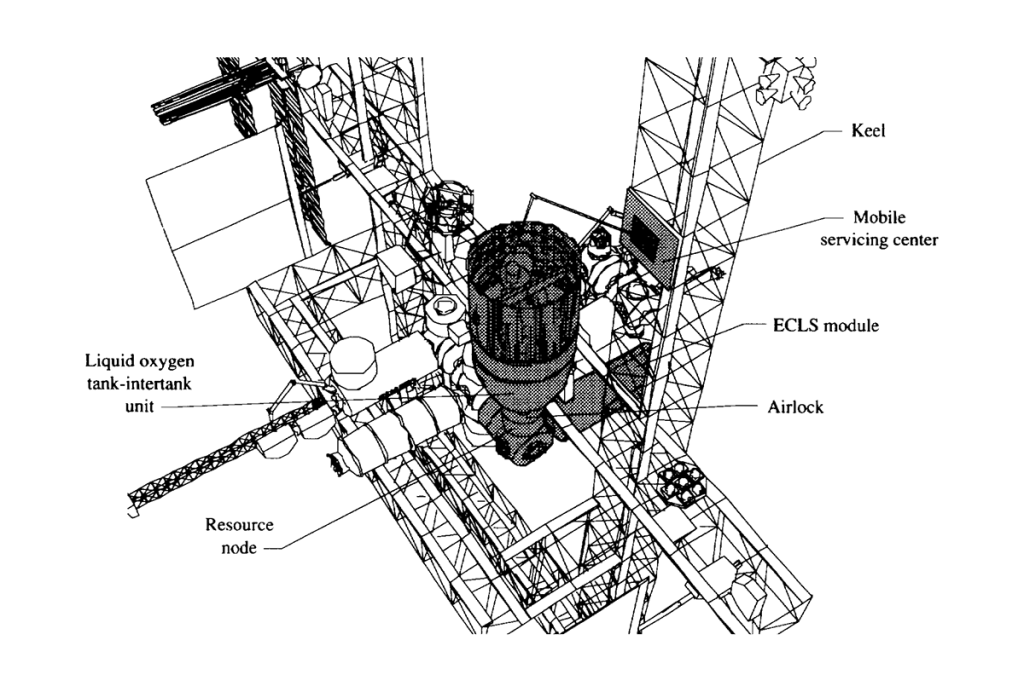
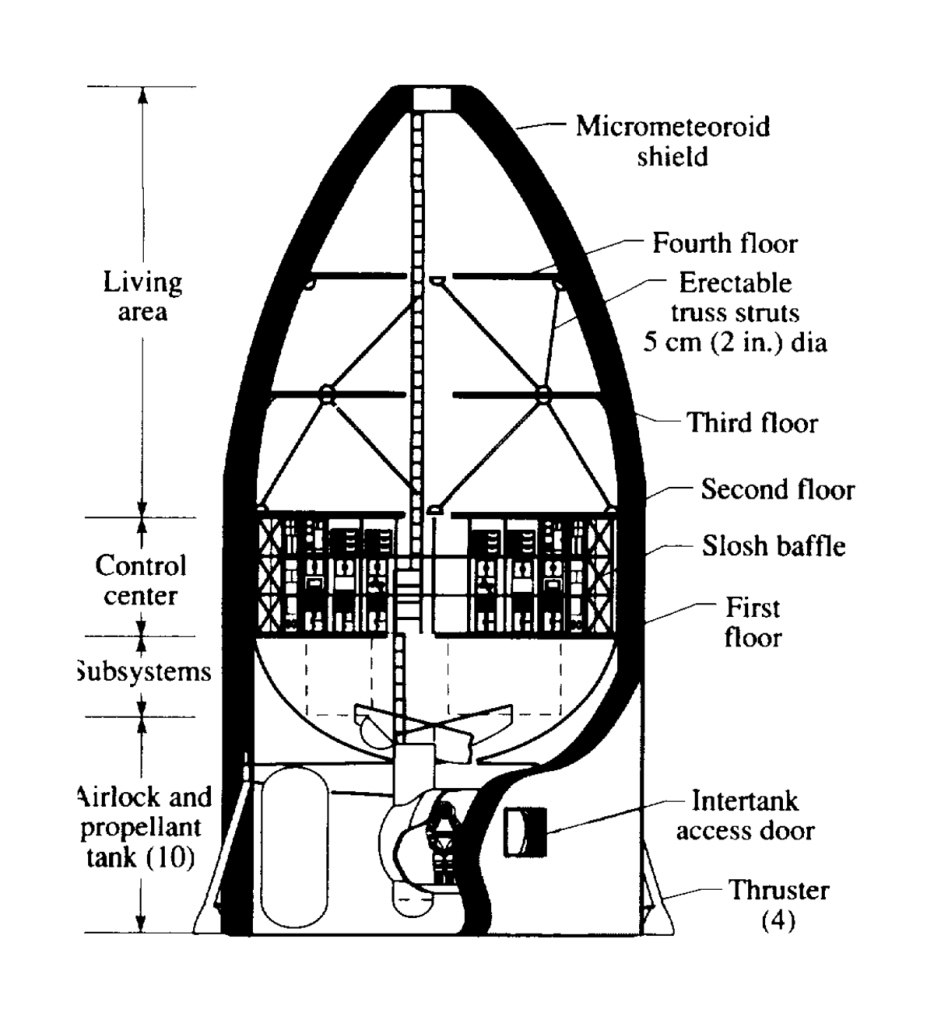
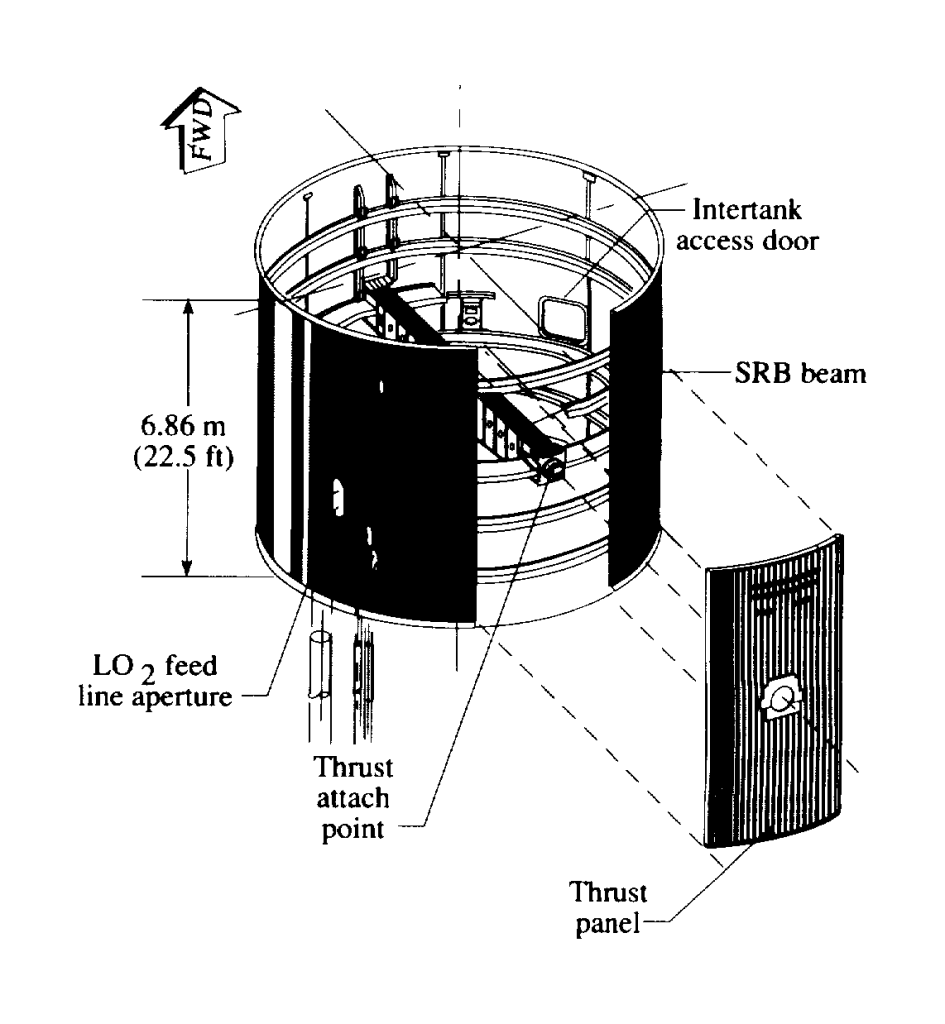
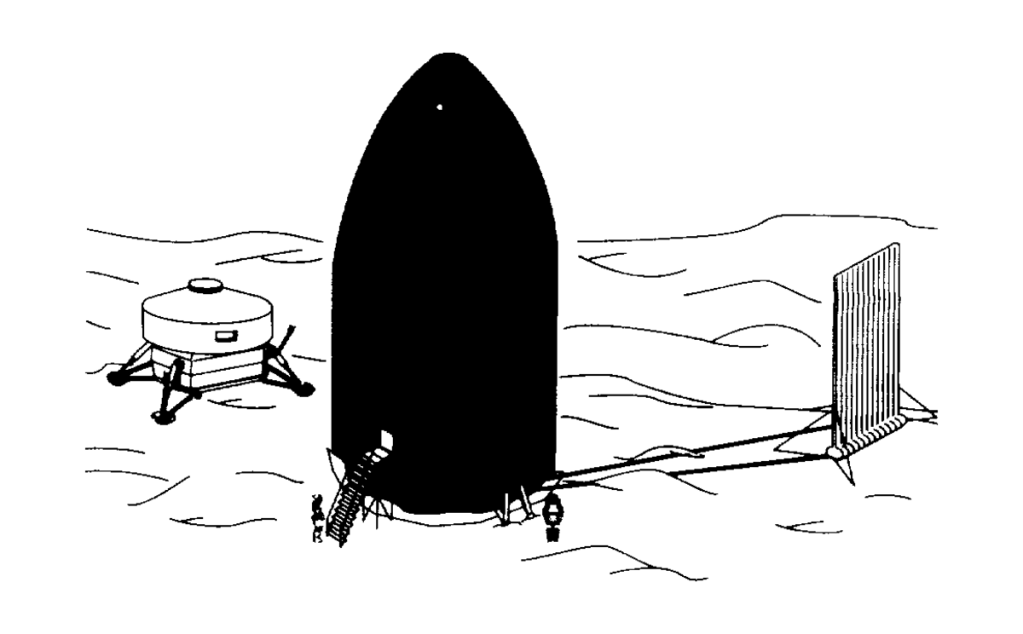
Image credit: NASA
Image source: NASA NTRS
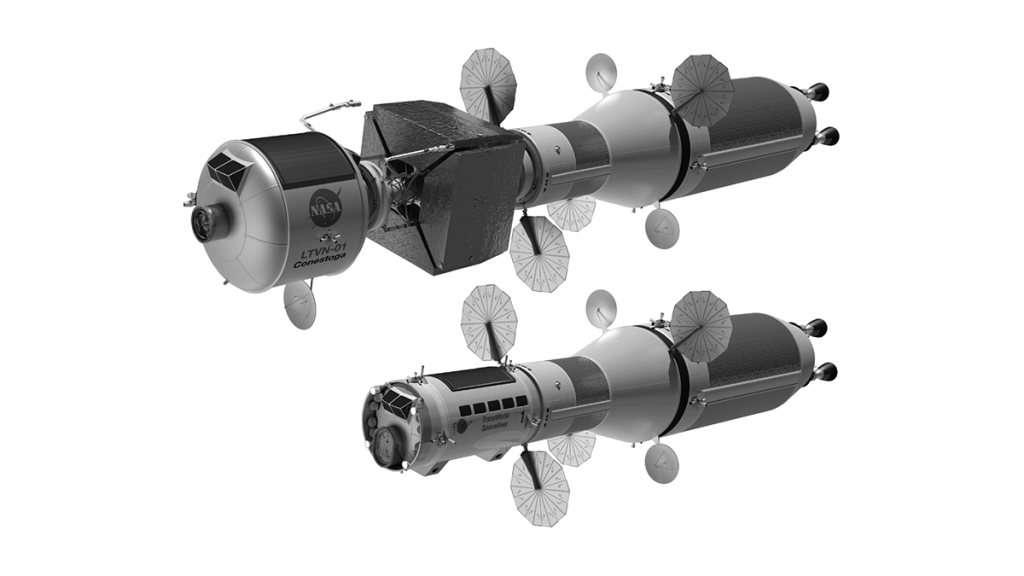
Space-based LANTR LTVs using a Common NTPS and Customized In-Line LO2 Tank
Image credit: NASA
Image source: NASA NTRS
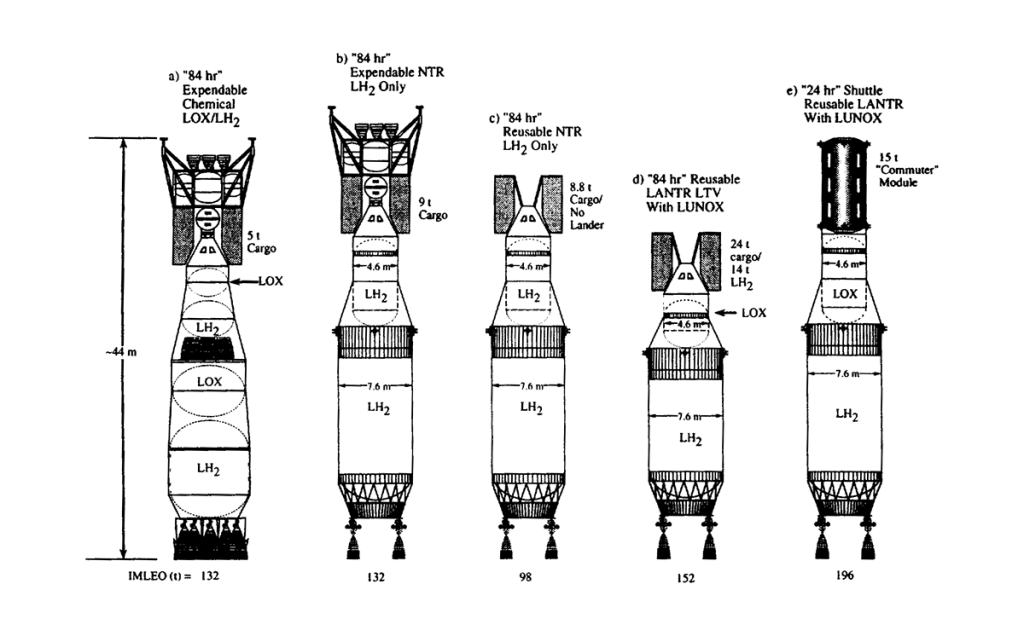
Relative Size/Mass of Chemical and NTR Vehicles Without and With LOX Augmentation
Image credit: NASA
Image source: NASA NTRS
Image credit: NASA
Image source: NASA NTRS