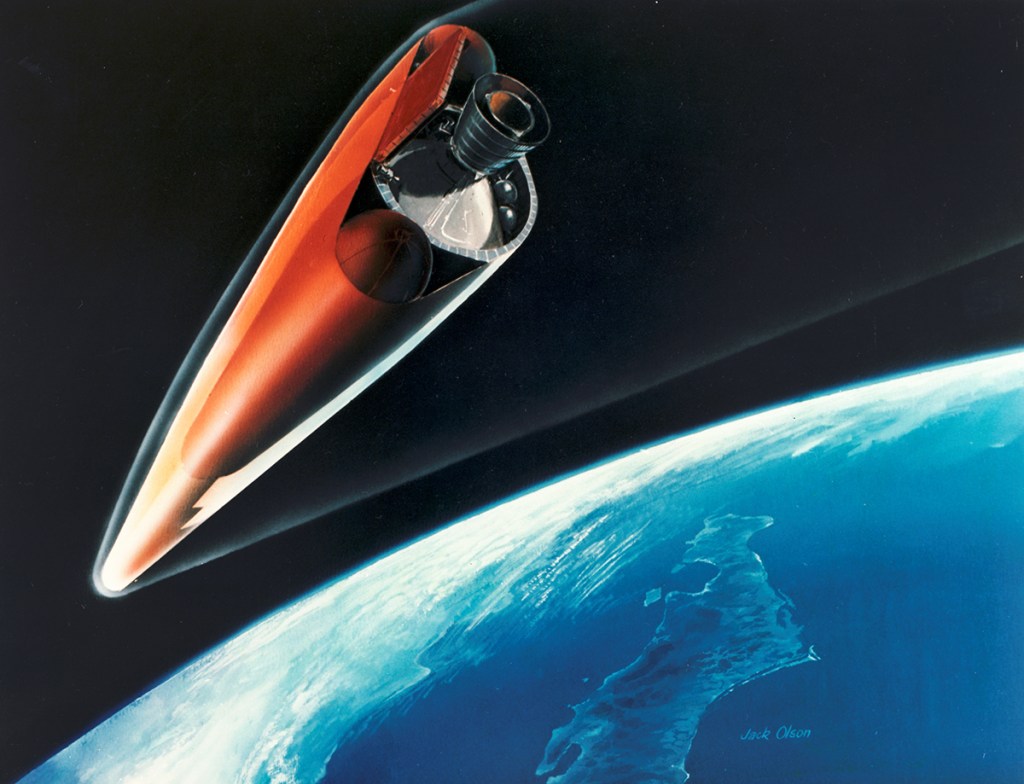
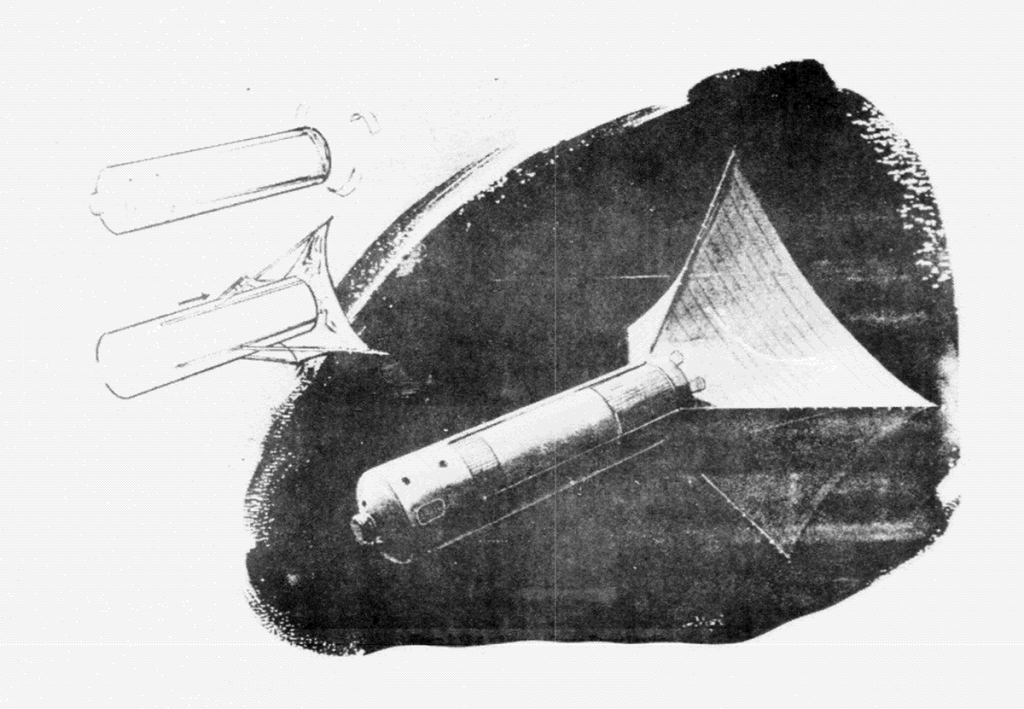
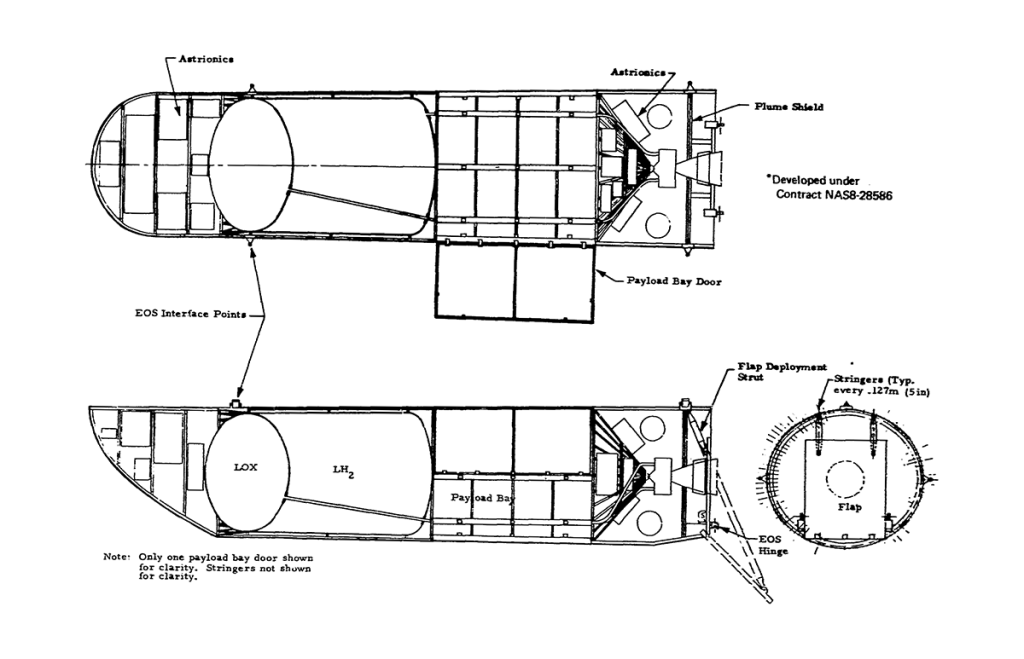
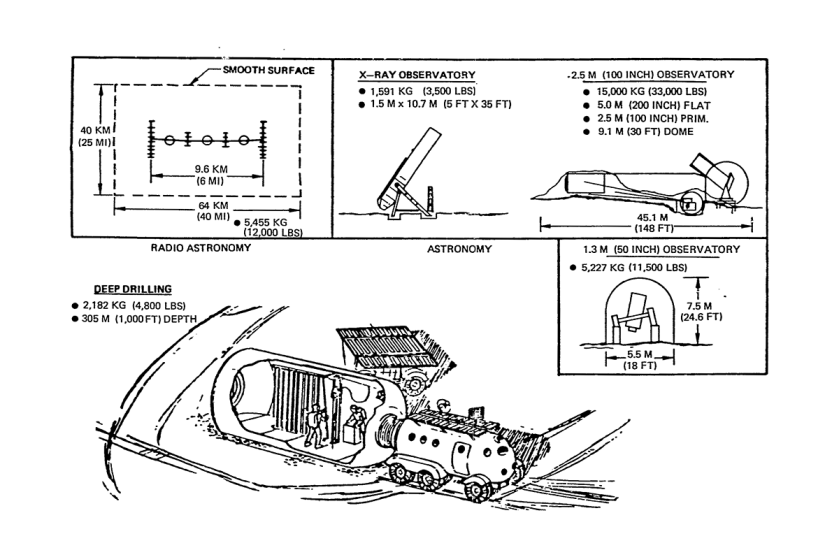
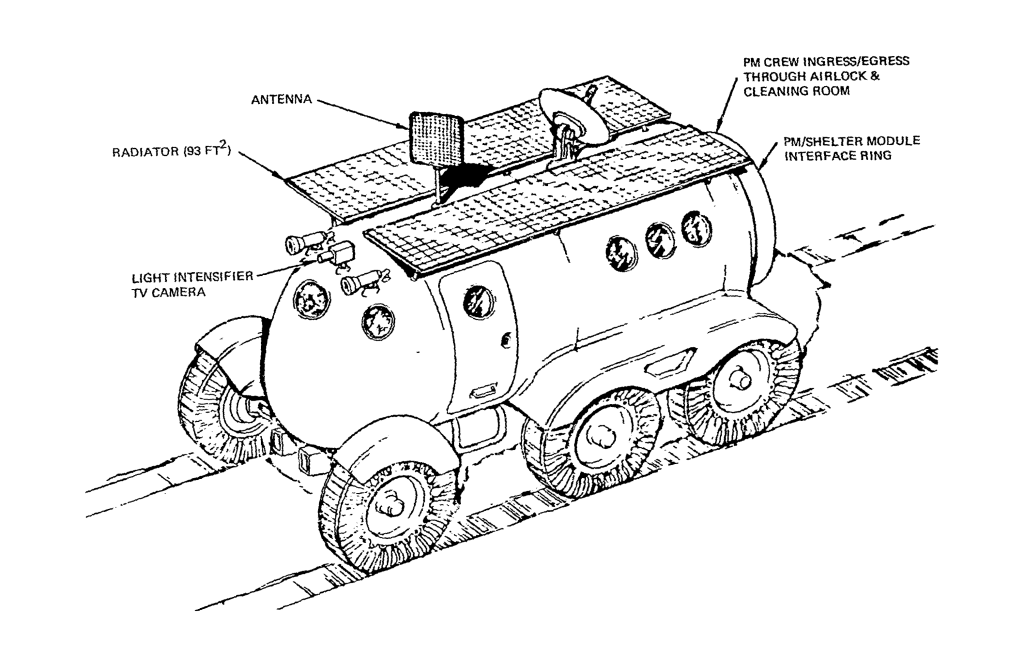
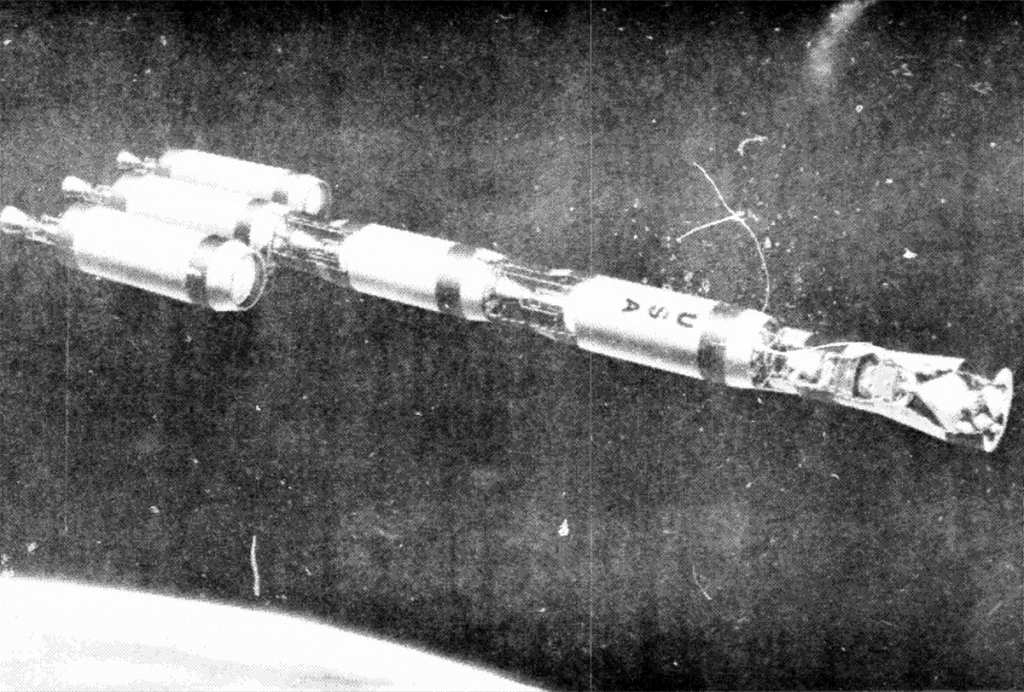
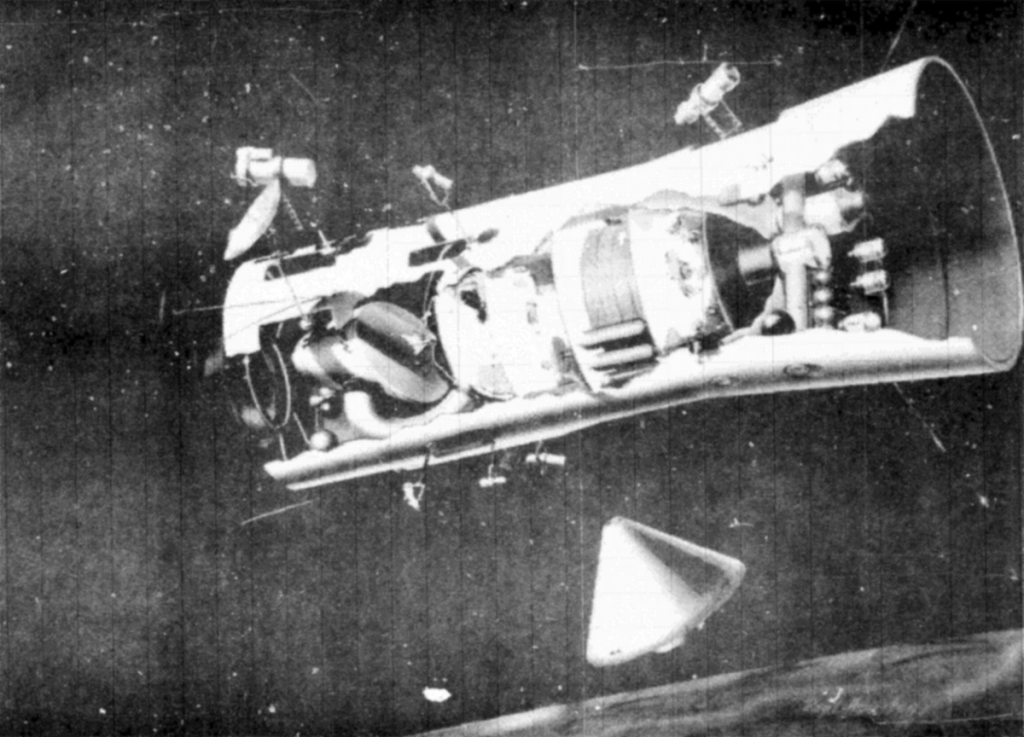
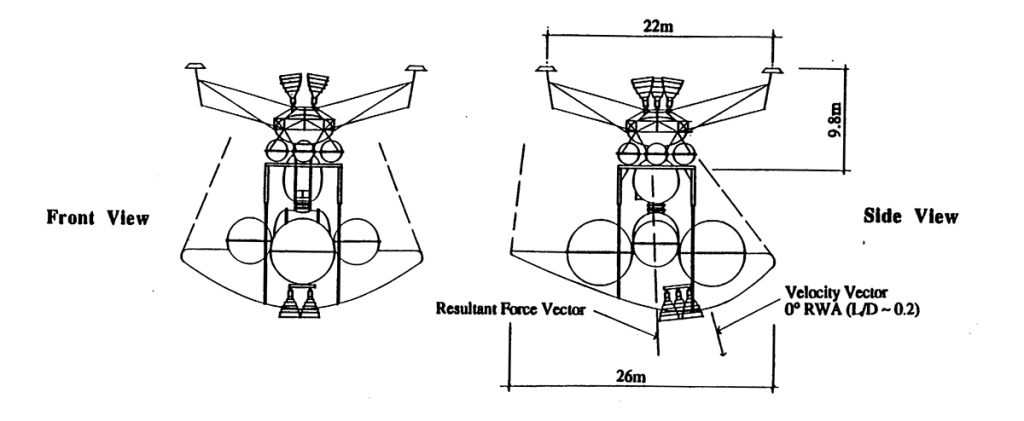
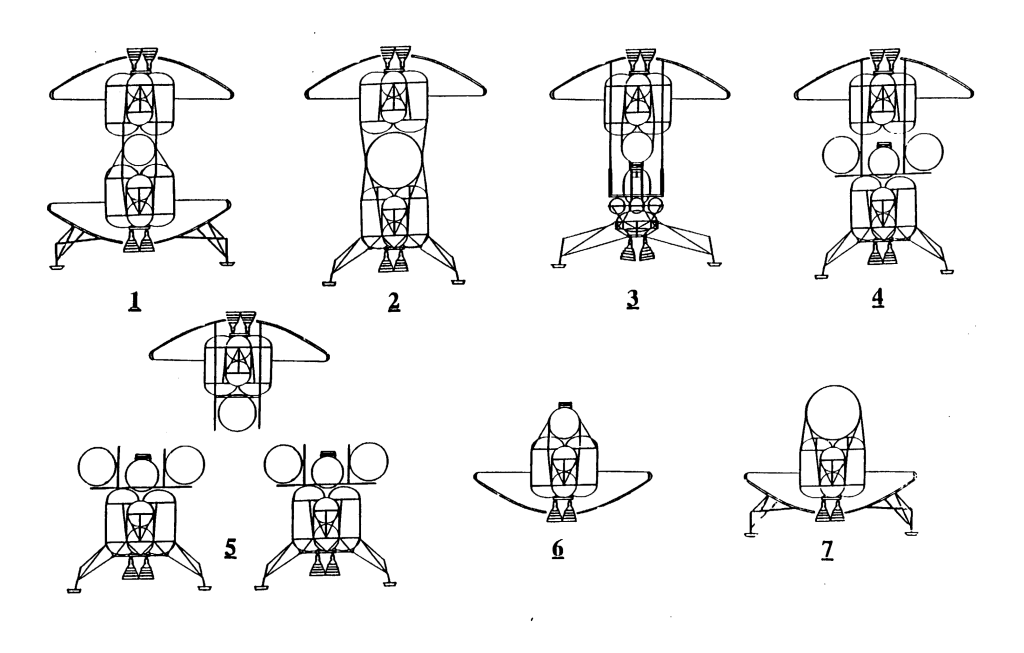
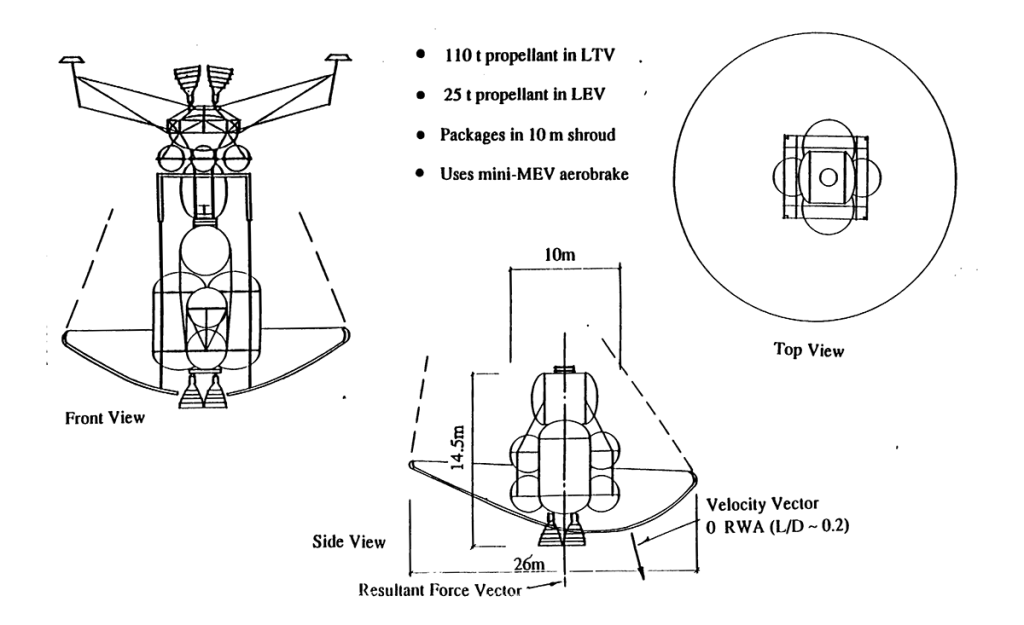
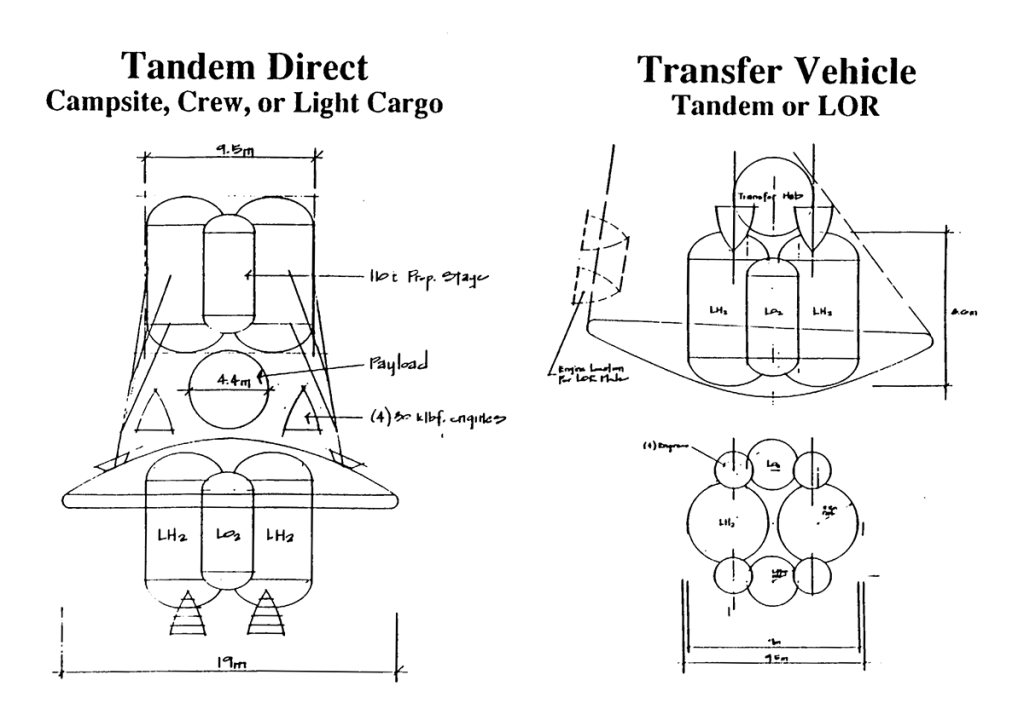
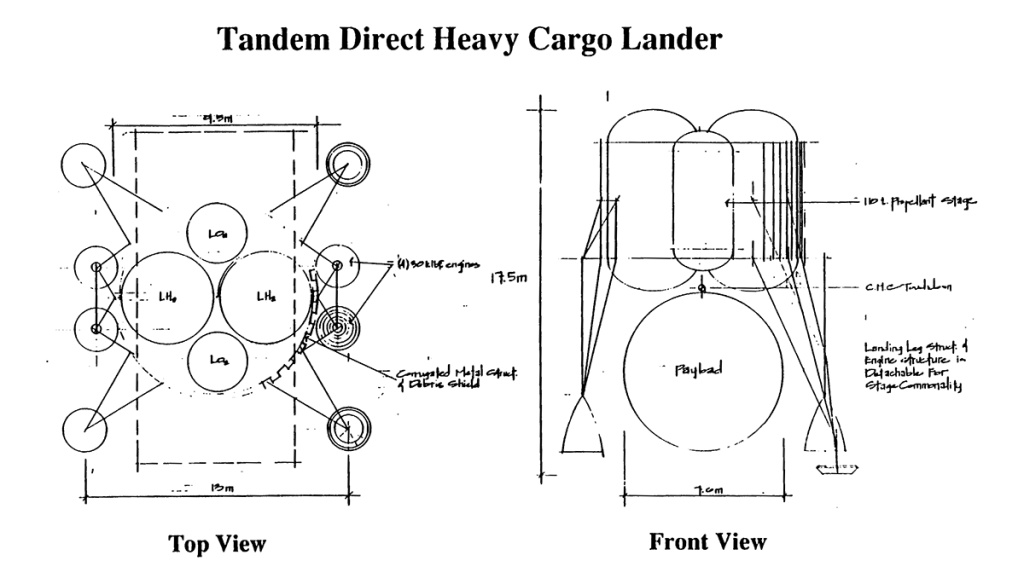
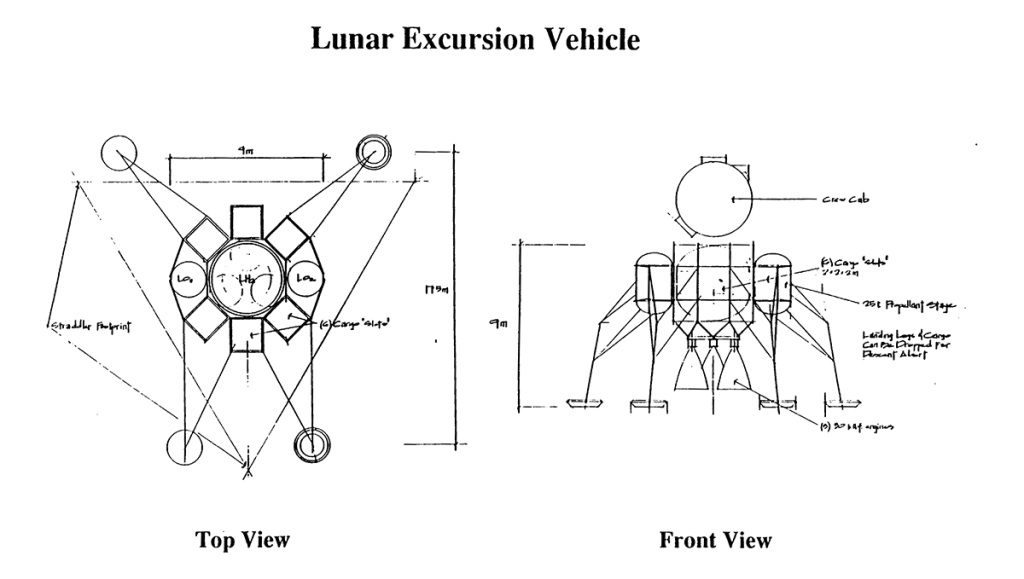
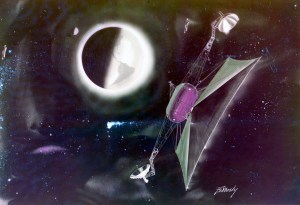
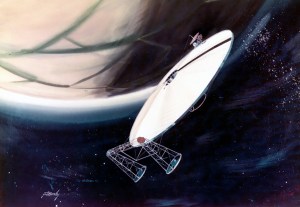
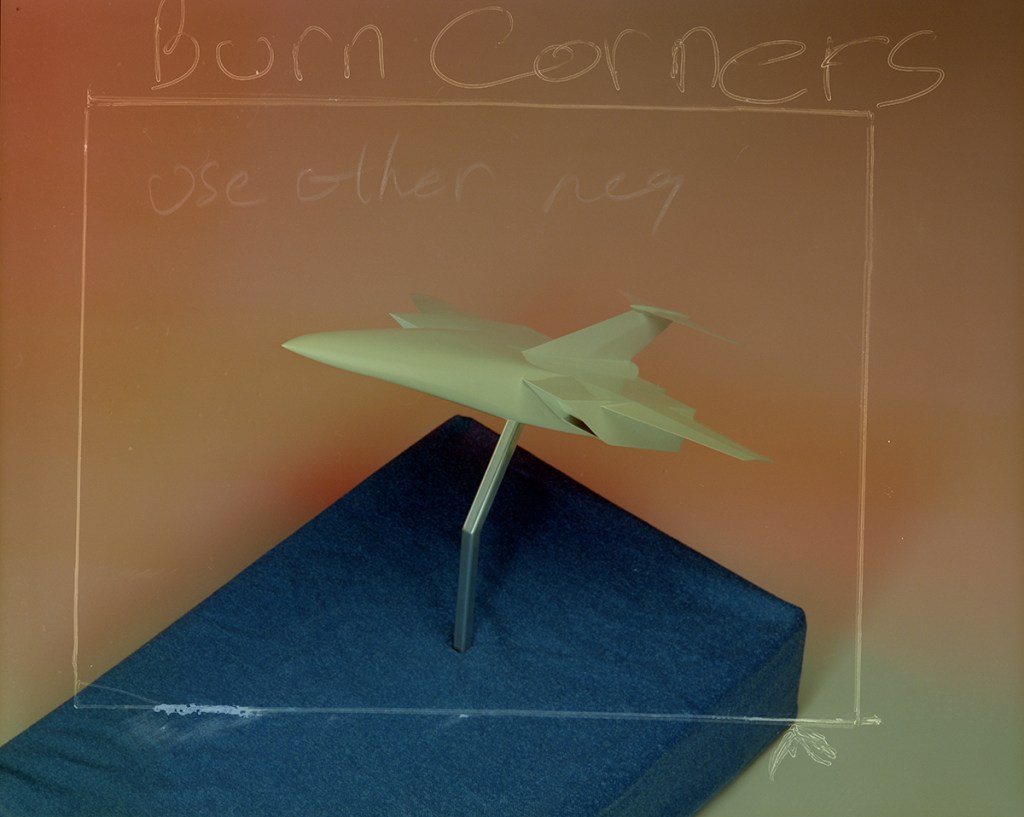
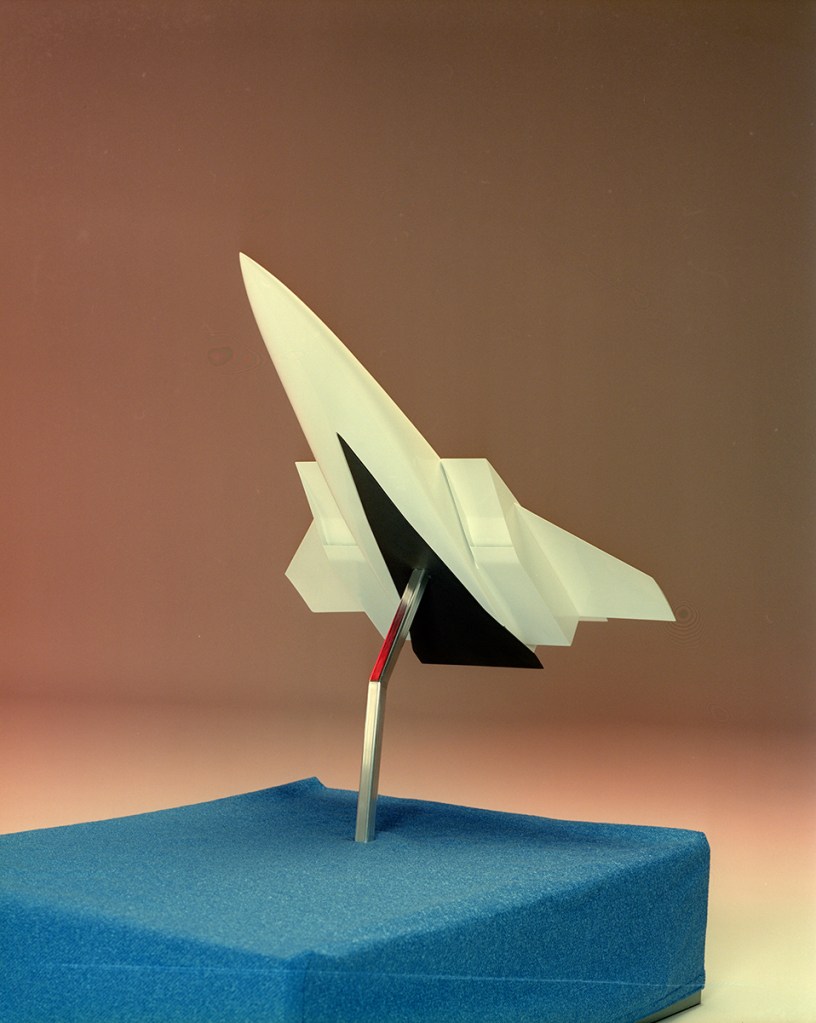
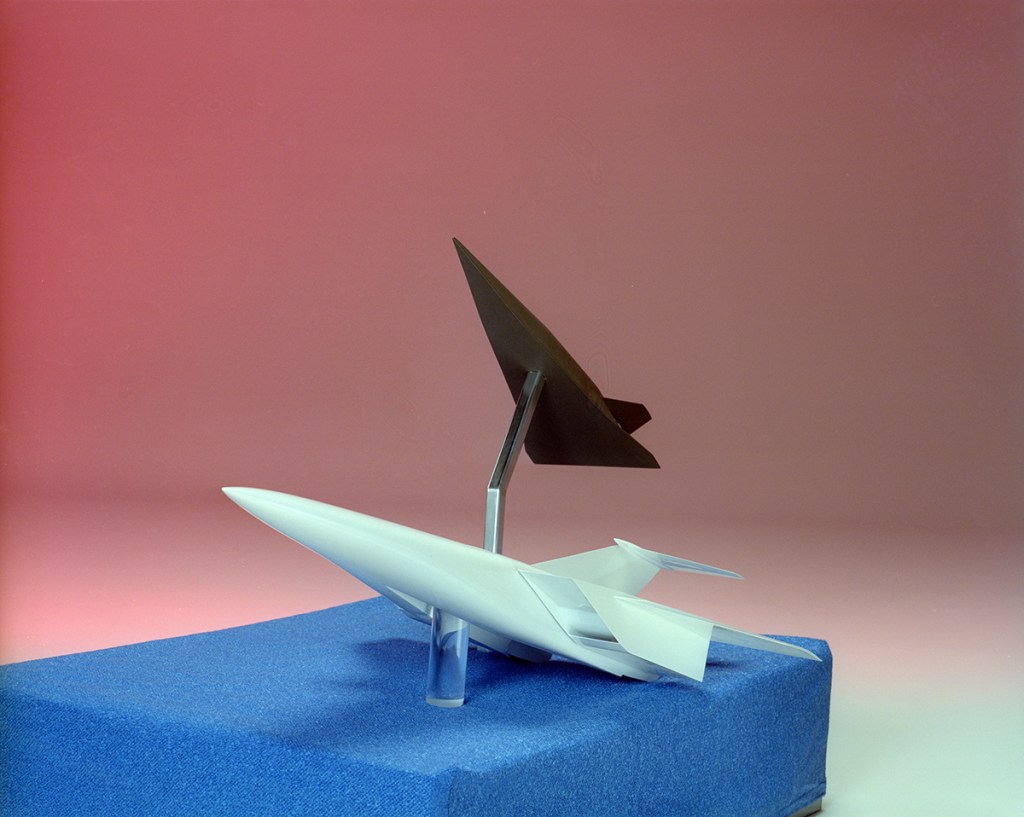
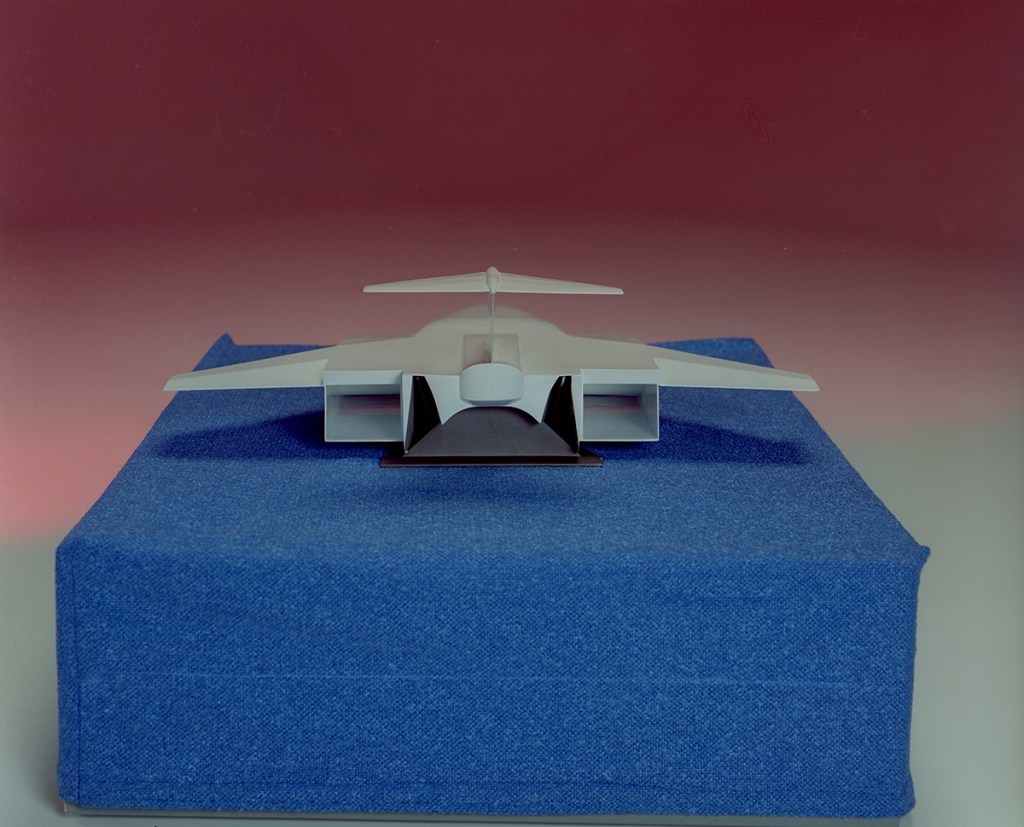
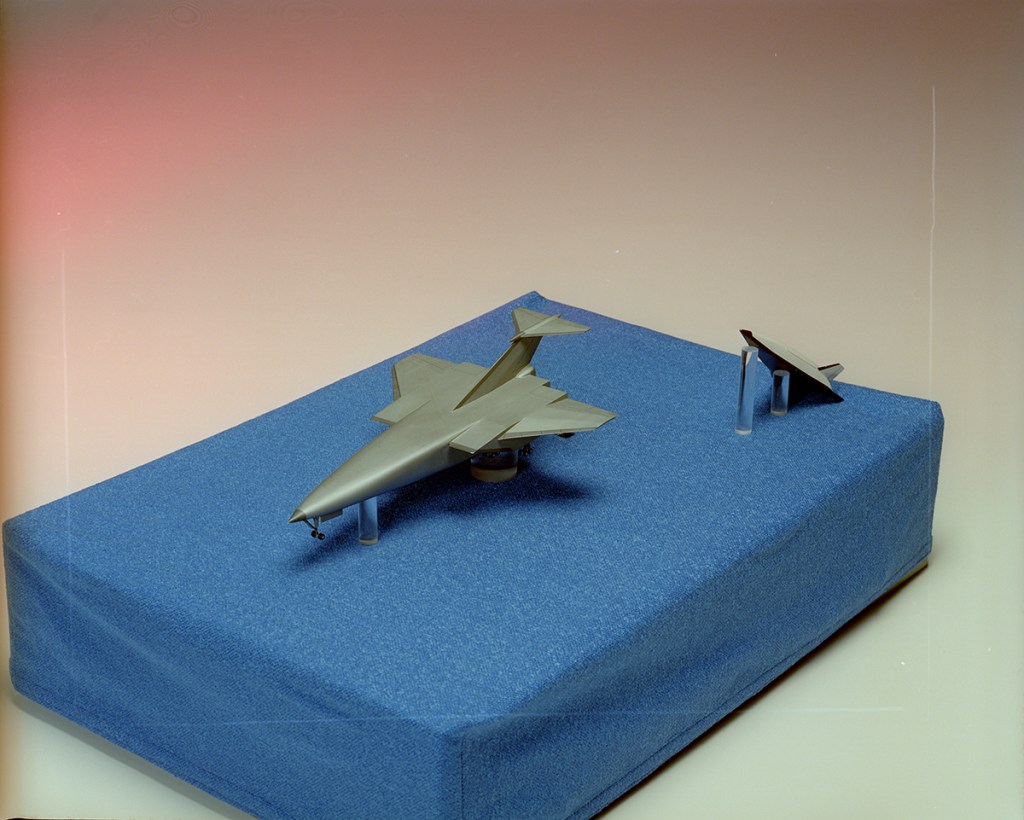
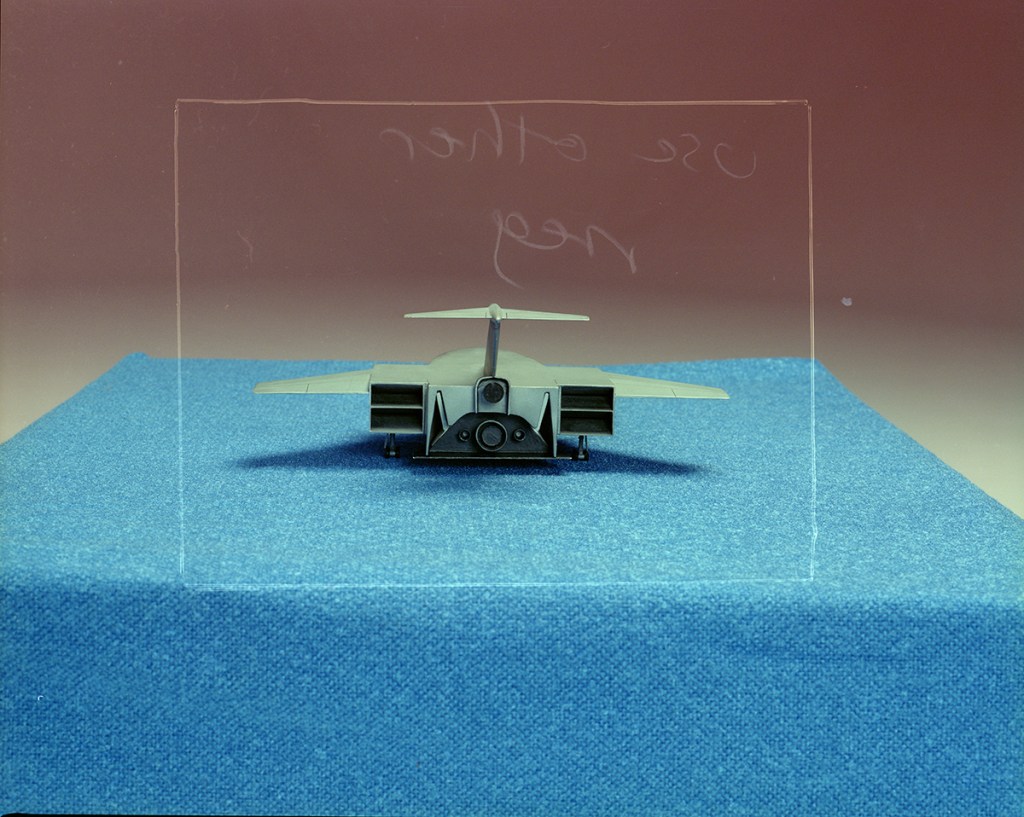
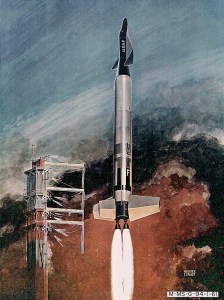
An Aeroassisted Orbital Transfer Vehicle is shown using the Earth’s atmosphere to slow itself down and lift itself into another orbit before returning to the Space Shuttle for reuse. Inflatable wings are located on each side of the core propulsion module and covered by a high temperature heat shield material. The spacecraft payload bay is located in the forward section of the nose cone. Boeing is studying how the atmosphere can be used as a brake for this proposed Air Force spacecraft under contract to the Air Force’s Flight Dynamics Laboratory at Wright-Patterson Air Force Base, Ohio.
BOEING AEROSPACE COMPANY
Image credit: Boeing Image source: National Archives
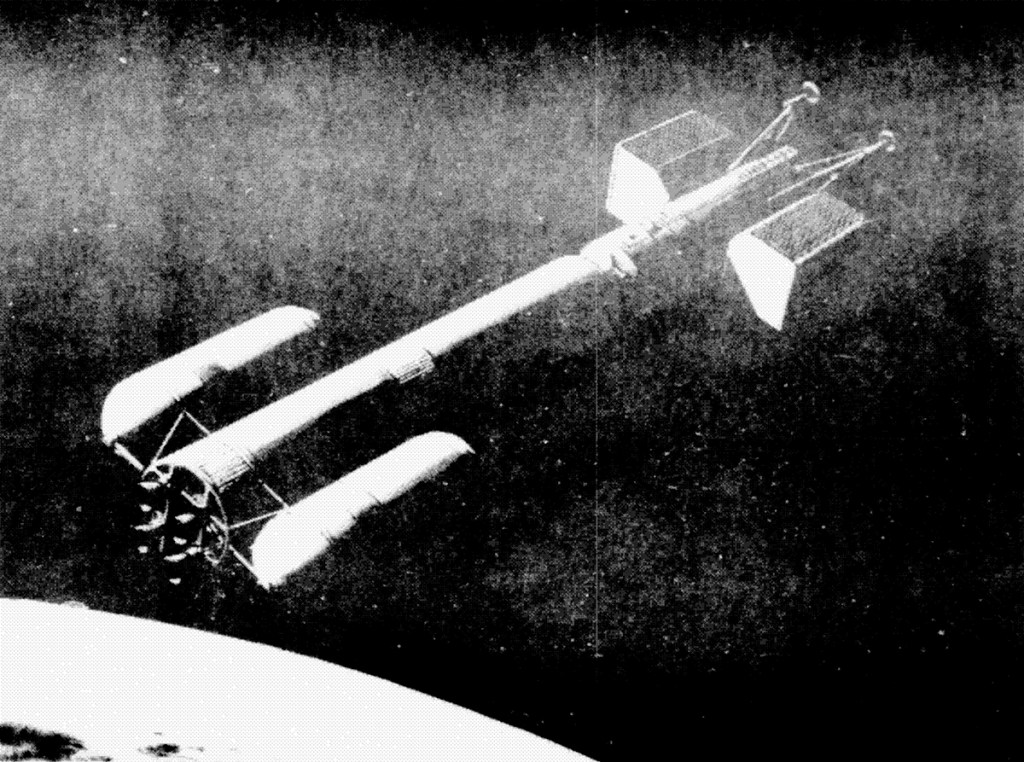
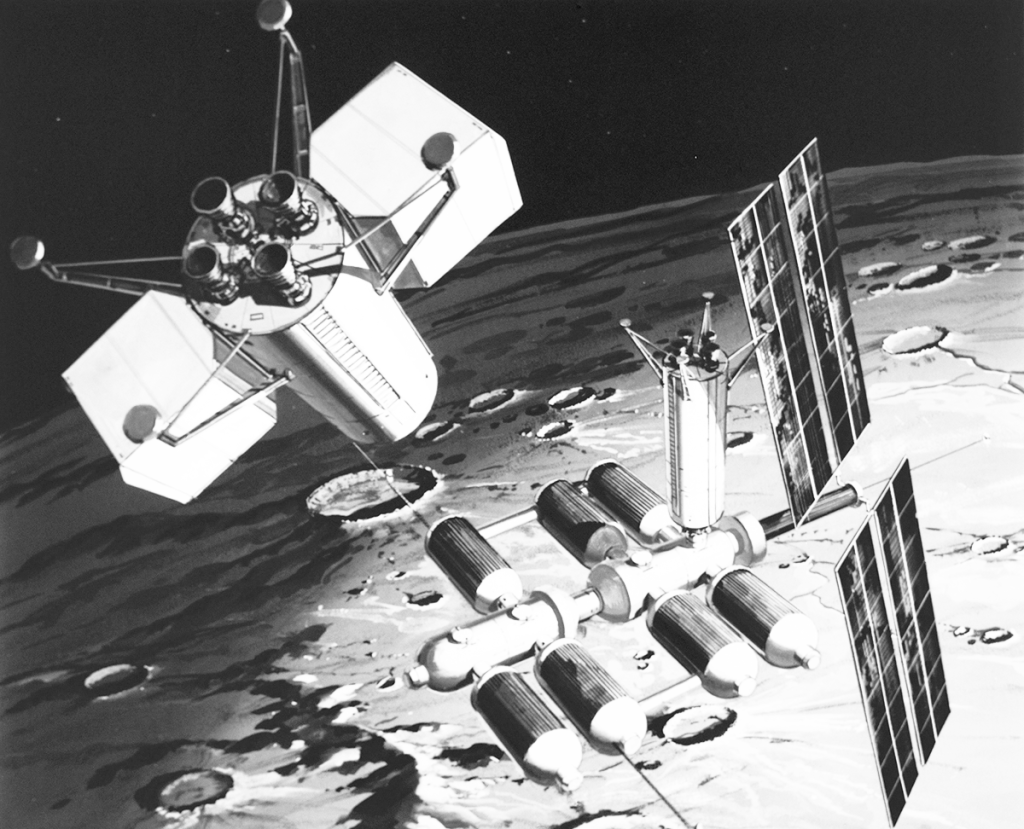
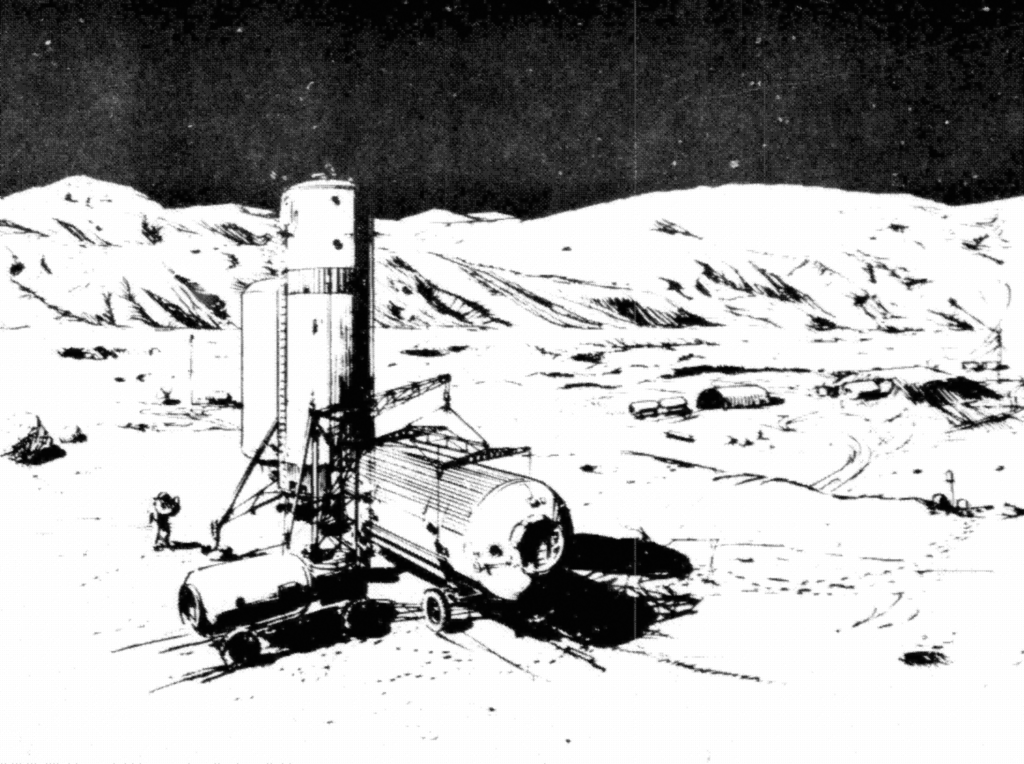
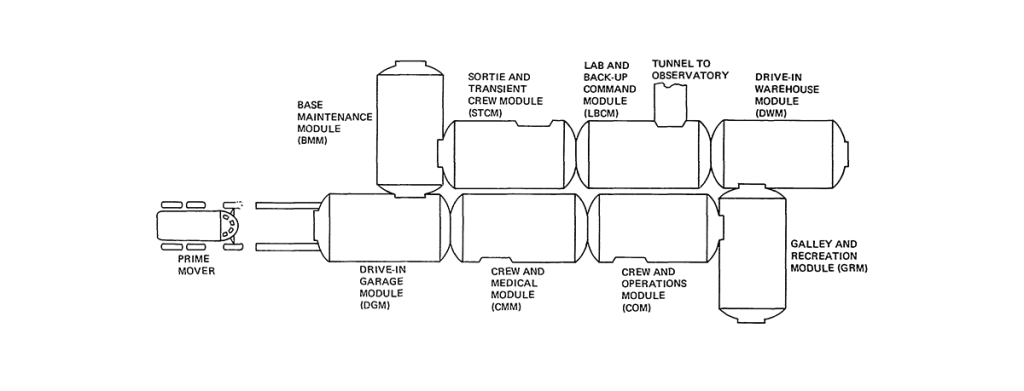
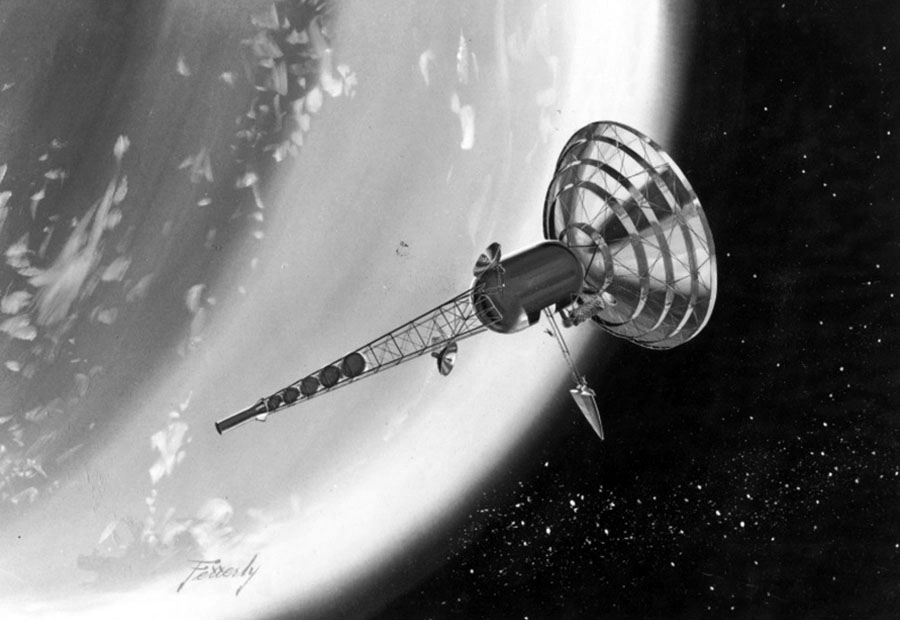
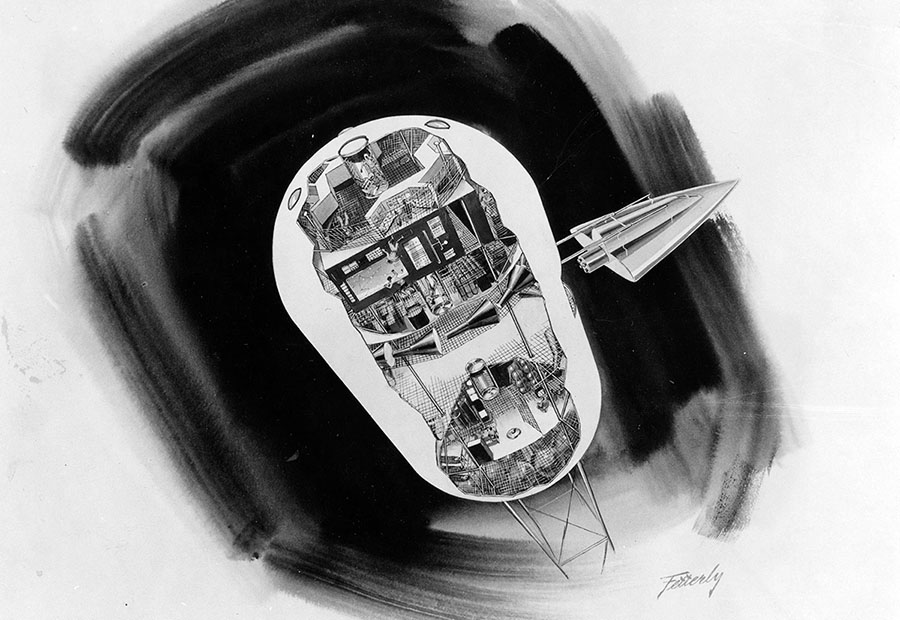
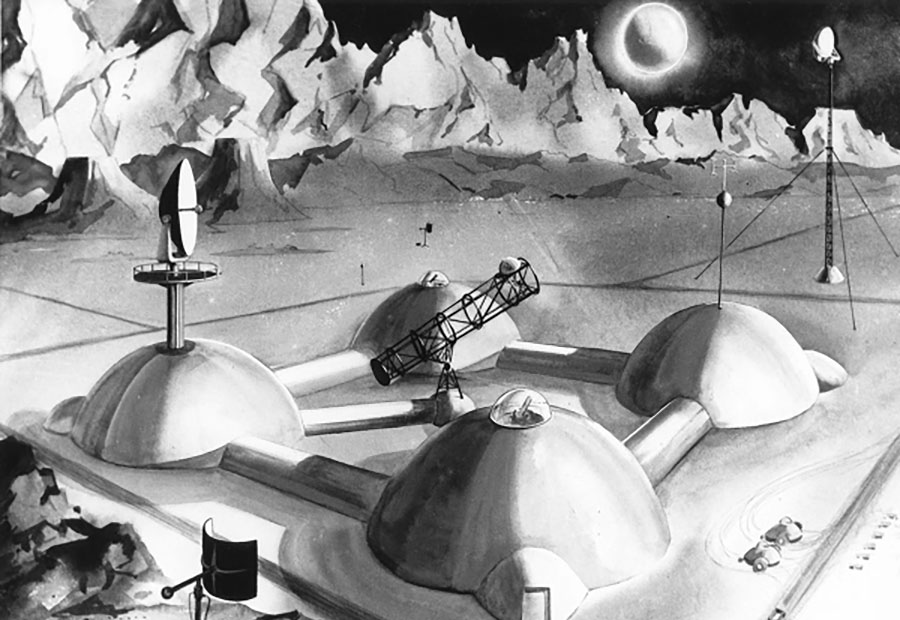
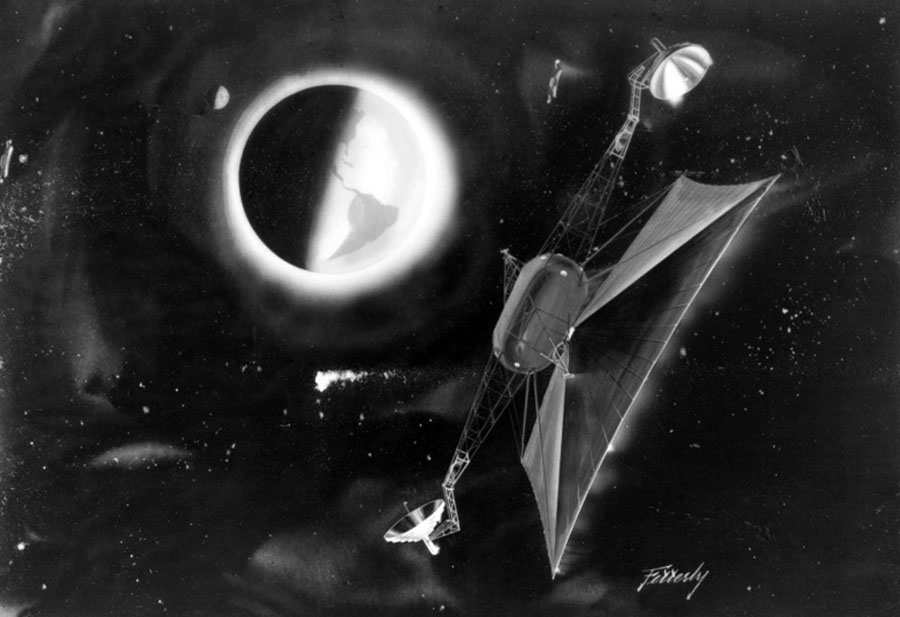
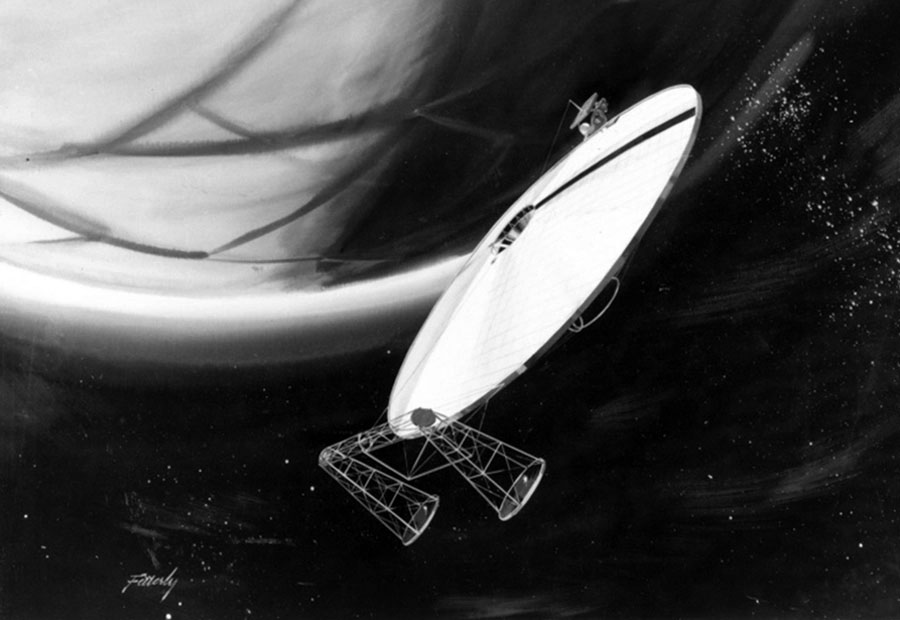
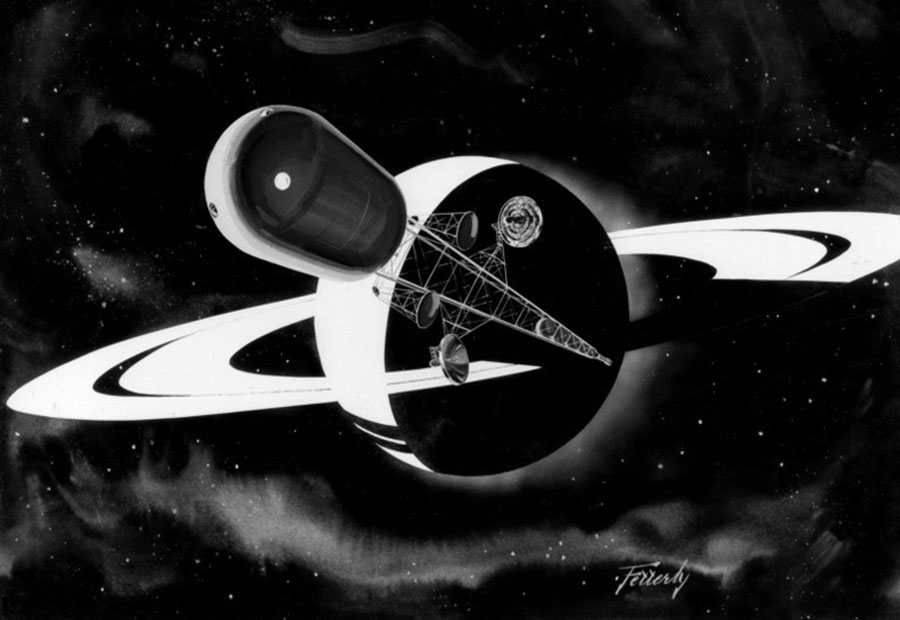
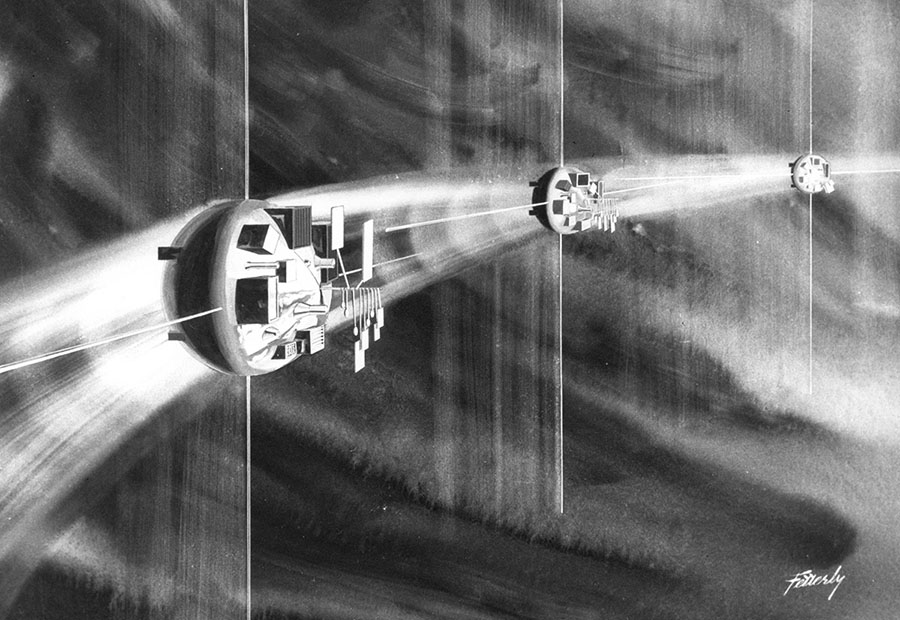
In the late fifties the Boeing Aircraft Company conducted an exhaustive study that culminated in what they called the Program for Astronomical Research and Scientific Experiments Concerning Space. In essence, PARSESCS was a roadmap to a future in space that begins with manned spaceflight in earth orbit and ends with human exploration of other worlds. Boeing released a number of reports relating to PARSECS, notably one that accompanied a talk given by (then) SVP Wellwood E. Beall at the Commodore Hotel in New York in April, 1960 for the Society of Automotive Engineers. In the accompanying paper, Beall says: “The program has the general objective of providing a focus for Boeing personnel engaged in space-oriented research not directly associated with military programs. Specifically it tabulates requirements for space research drawn from many sources and then defines the vehicles and systems to accomplish the resultant broad scope of objectives.”
If you’re yearning for more information, I’ll suggest this thread on Secret Projects Forum. The technical paper that accompanied Beall’s SAE presentation can be downloaded here.
PARSECS MISSIONS
Mission I – Earth Satellite Observatory
Mission II – Moon Colony
Mission III – Counter Moon
Mission IV – Interplanetary Probes
Mission V – Close Solar Orbit
Mission VI – Trojan-Point Observatories
Mission VII – Out-Of-Ecliptic-Orbit
Mission VIII – Planetary Exploration
Image credit: Boeing Aircraft Company Images: Mike Acs, SDASM Archives