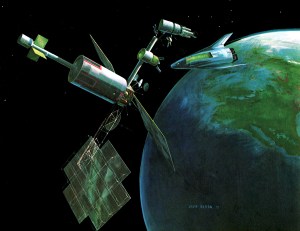
Image credit: Boeing
Image source: Numbers Station
Image credit: Boeing
Image source: Numbers Station
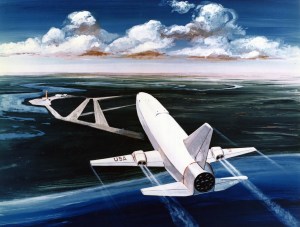
Image credit: North American Rockwell
Image source: National Archives

Image credit: Liebig
Image source: Numbers Station

Image credit: NASA KSC
Image source: Numbers Station
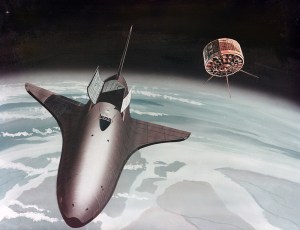
Image credit; McDonnell Douglas
Image source: Numbers Station
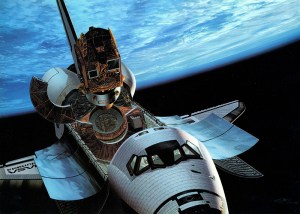
Image credit: Orbital Sciences Corporation
Image source: Numbers Station
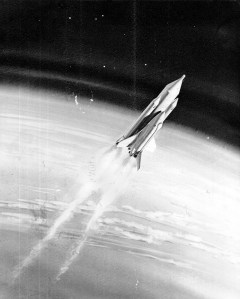
(ADV: FOR AMS WED, NOV, 8. WITH AAA WIRE STORY BY JACK LEFLER)
(LA3-NOV.2) LOS ANGELES, Nov. 7 — PUTTING IT UP WILL CREATE JOBS — An army of 10,000 subcontractors is being recruited by North American Rockwell Corp., to help put the $2.6 billion space shuttle into orbit. The White House estimates 160,000 workers will be directly or indirectly involved in the project. This artist’s concept shows the space shuttle orbiter roaring spaceward. (AP Wirephoto)(rhs52015ho) 1972
Image credit: North American Rockwell
Image source: Numbers Station

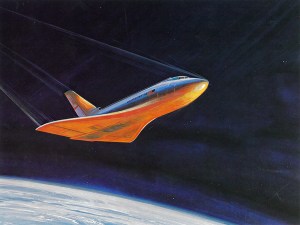
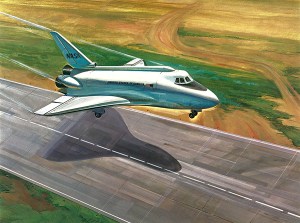
Image credit: North American Rockwell
Images: Numbers Station
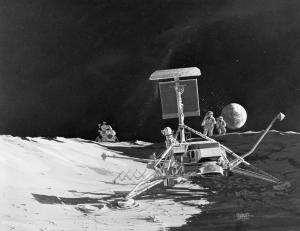
Ryan Aeronautical Company artist’s concept depicting a close-up view of Surveyor 3 resting in the Ocean of Storms on the lunar nearside. Two Apollo 12 astronauts are seen approaching in the background. The Apollo 12 Lunar Module (LM) is in the left background. The Earth is in the right background. The inspection of Surveyor 3, which has been resting on the moon since April 1967, is an important objective of the Apollo 12 lunar landing mission. Selected pieces of Surveyor 3 will be brought back to Earth for scientific examination. Ryan landing radar has guided both Surveyor and Apollo spacecraft to soft landings on the moon.
Image credit: NASA JSC
Image source: NASA Images