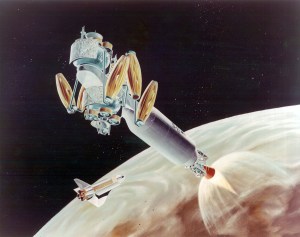
Image credit: NASA
Image source: Numbers Station
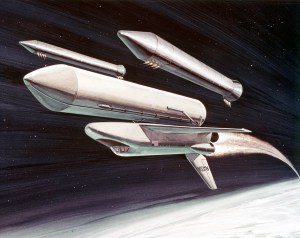
Image credit: NASA
Image source: Numbers Station

The solid-rocket boosters (SRB’s) are separated during ascent when Space Shuttle is about 28 miles (45 km) above the earth. Landing in the ocean, the SRB’s are recovered, refurbished and reused. Propelled by it’s three own engines, Shuttle continues its climb with increasing velocity.
Rockwell International
Space Systems Group
Image credit: NASA
Image source: Numbers Station
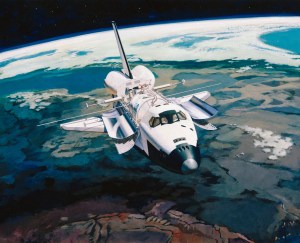
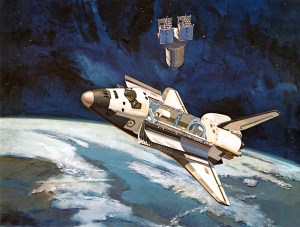
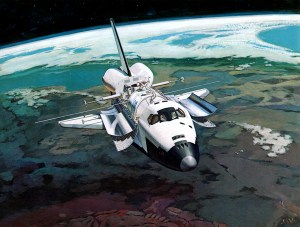
Artist Concept of Shuttle in-orbit flight with Earth limb in the background.
Image credit: NASA JSC
Image source: NASA Images
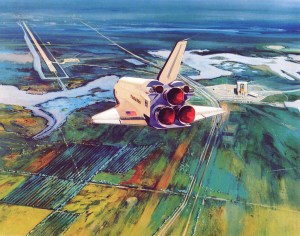
Shuttle Orbiter Landing Approach at Kennedy Space Center
SPACE SHUTTLE LANDING APPROACH. A Space Shuttle Orbiter approaches a landing field at NASA’s Kennedy Space Center, Florida, following a flight in space. The Orbiter will be able to land on a conventional runway similar to that used by present-day jet aircraft. The development and integration of the Space Shuttle system is the responsibility of NASA’s Johnson Space Center. Rockwell international Space Division, Downey , California is building the Orbiter under contract to NASA.
JSCL – 154
U.S. GOVERNMENT PRINTING OFFICE: 1977 772-876
Image credit: North American Rockwell
Image source: Numbers Station

Image credit: North American Rockwell
Image source: Internet Archive

Image credit: NASA
Image source: Numbers Station
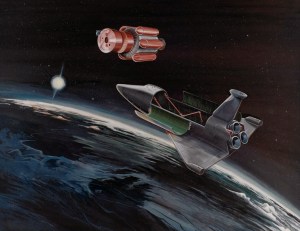
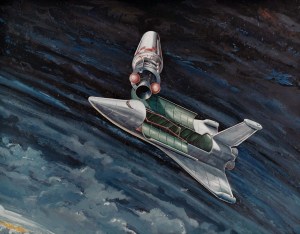
Image credit: McDonnell Douglas
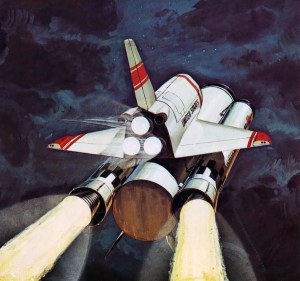
Image credit: Grumman
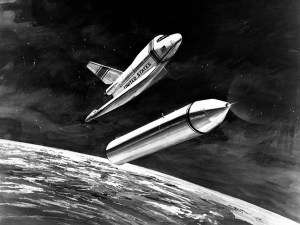
Image credit: Grumman
Image source: Numbers Station

Previously shared here, the same Alvarez artwork without the overpaint:
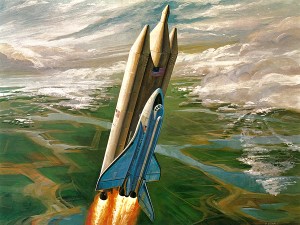
Image credit: NASA
Images: NASA GRC, Numbers Station