NASA Spinoff – 1982
Image credit: TRW
Image source: Internet Archive
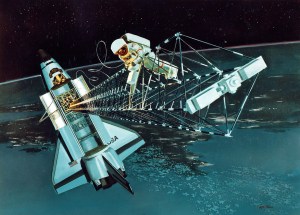
Image credit: Convair
Image source: SDASM Archives
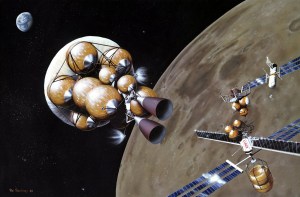
S83-28321 (14 March 1983) — In this artist’s concept of future lunar operations, a lunar ferry is about to burn out of lunar orbit for the trip back to facilities in low Earth orbit. The ferry vehicle carries tank modules filled with liquid oxygen, which has been produced from mining operations on the surface of the Moon. One possibility for such operations would be to have manned facilities in low lunar orbit, such as illustrated here. At the upper right side of the photo is a small orbiting manned station. At the lower right side of the photo is a liquid oxygen propellant dump, to which a lunar landing vehicle carrying liquid oxygen is about to dock. The lunar ferry vehicle itself is representative of one type of aerobraking system. The balloon-like torus around the center of the ferry-craft would inflate to several times its illustrated size and, once the vehicle has swooped down close to the Earth’s outer atmosphere on the return journey, would use atmospheric drag to slow the craft and place itself in low Earth orbit. The liquid oxygen would then be used in operations there for fueling various vehicles, including an orbital transfer vehicle for trips to geosynchronous Earth orbit. This concept is part of a study done for the Johnson Space Center by Eagle Engineering of Houston. The artist was Pat Rawlings.
Image credit: Eagle Engineering
Image source: Internet Archive
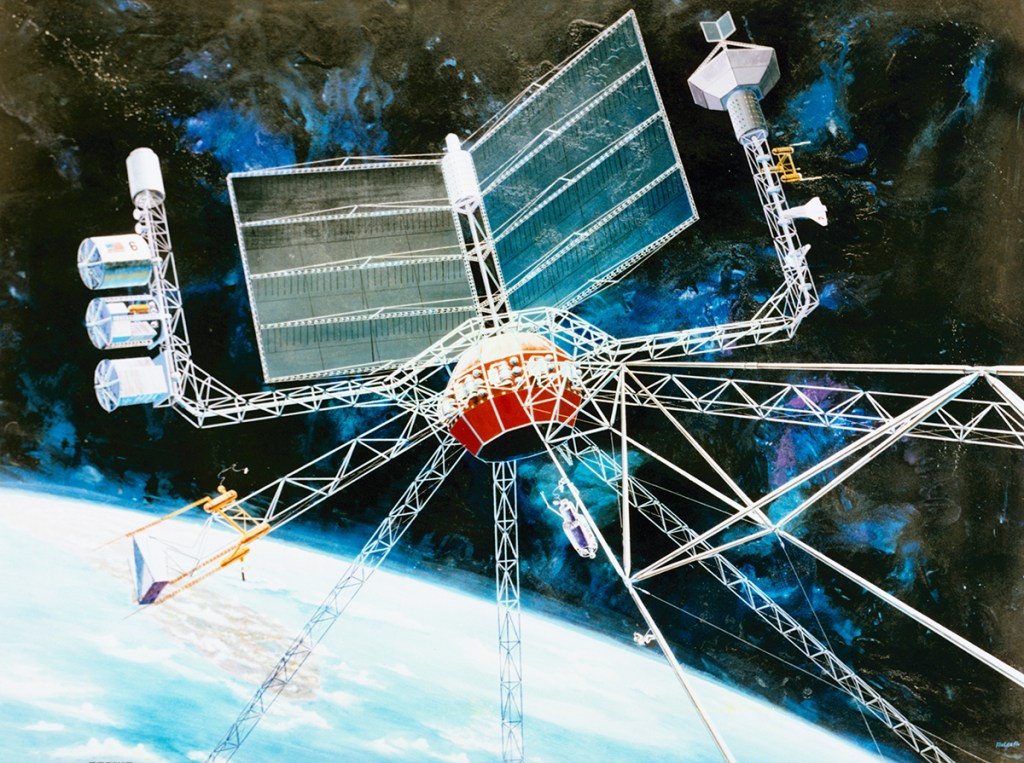
Image credit: Boeing
Image source: National Archives
Image credit: Boeing
Image source: Internet Archive
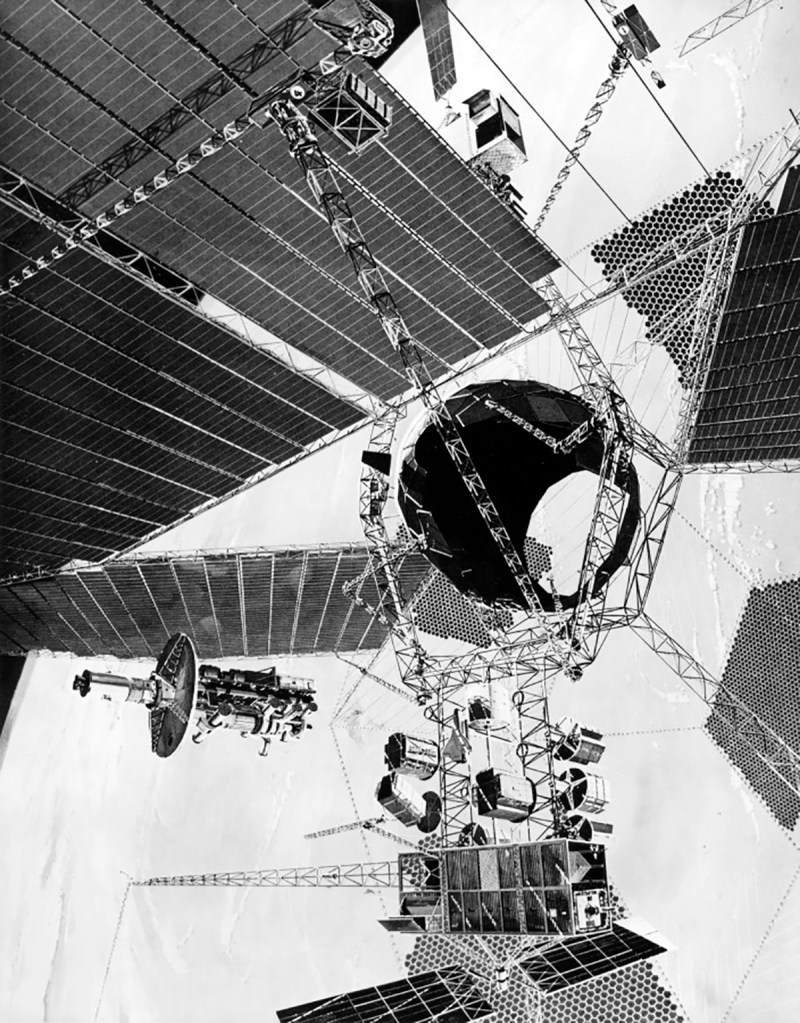
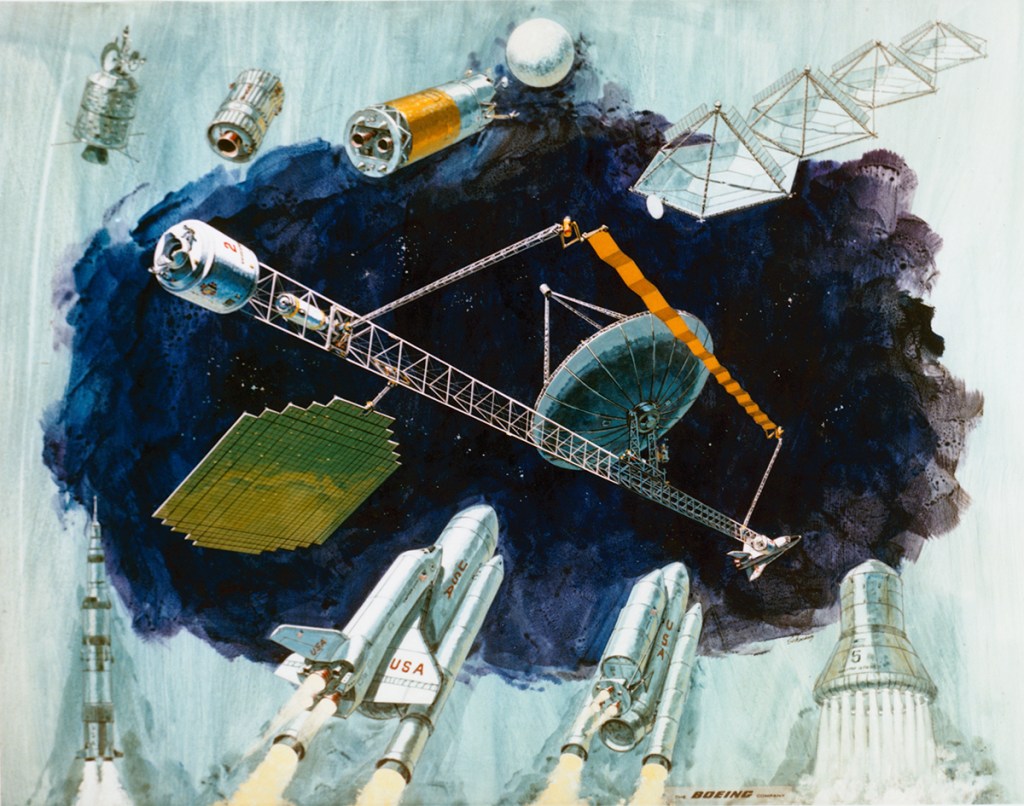
In the aftermath of the ’70s oil crisis, Boeing designed a solar power satellite system that could supply most of the the United States with electricity. Boeing’s plan envisioned satellites the size of small cities placed in geosynchronous orbit, transmitting electrical energy back to Earth as microwaves. The satellites would either be constructed in low Earth orbit for later deployment into a higher orbit or constructed directly at the higher orbit.
Image credit: Boeing
Image source: SDASM Archives
Image credit: Boeing
Image source: National Archives