Image credit: NASA
Image source: Mike Acs
Image credit: NASA
Image source: Mike Acs
Heavy-Lift Launch Vehicle (HLLV)
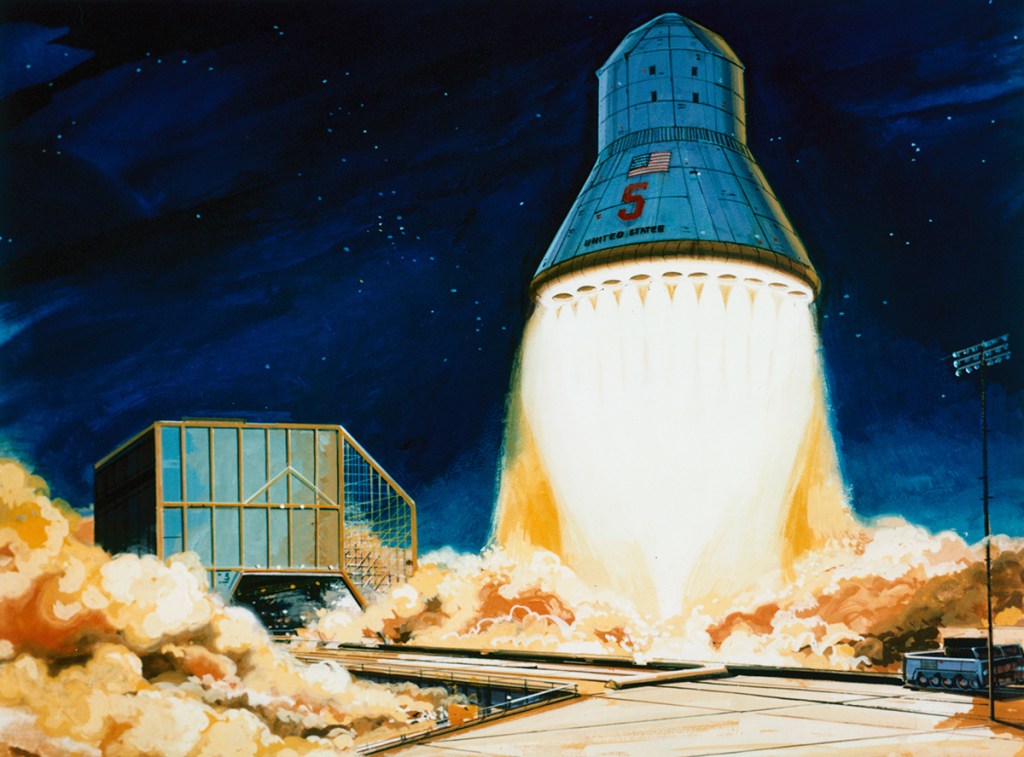
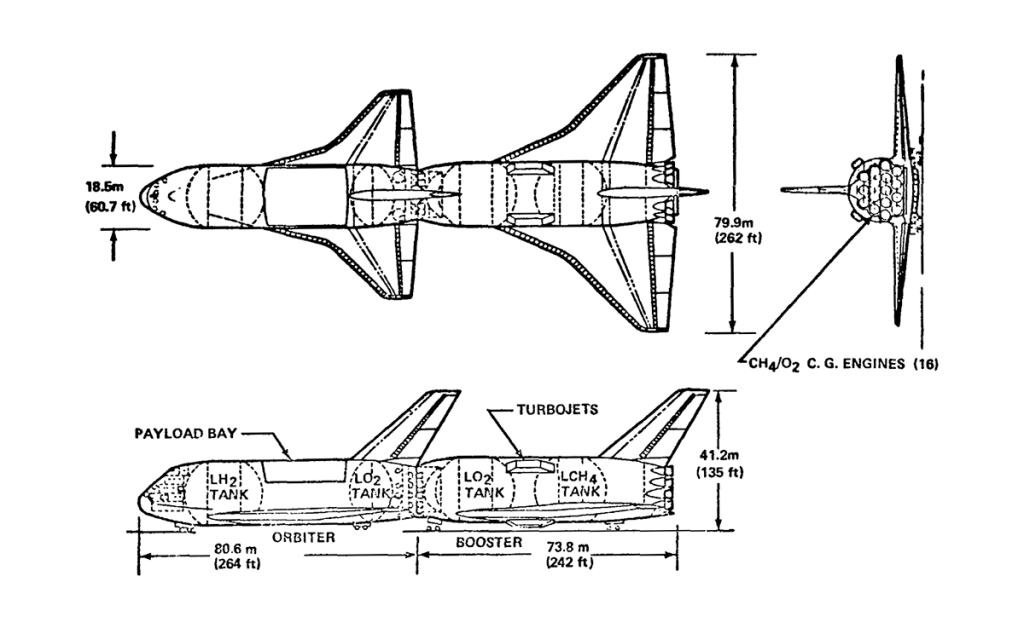
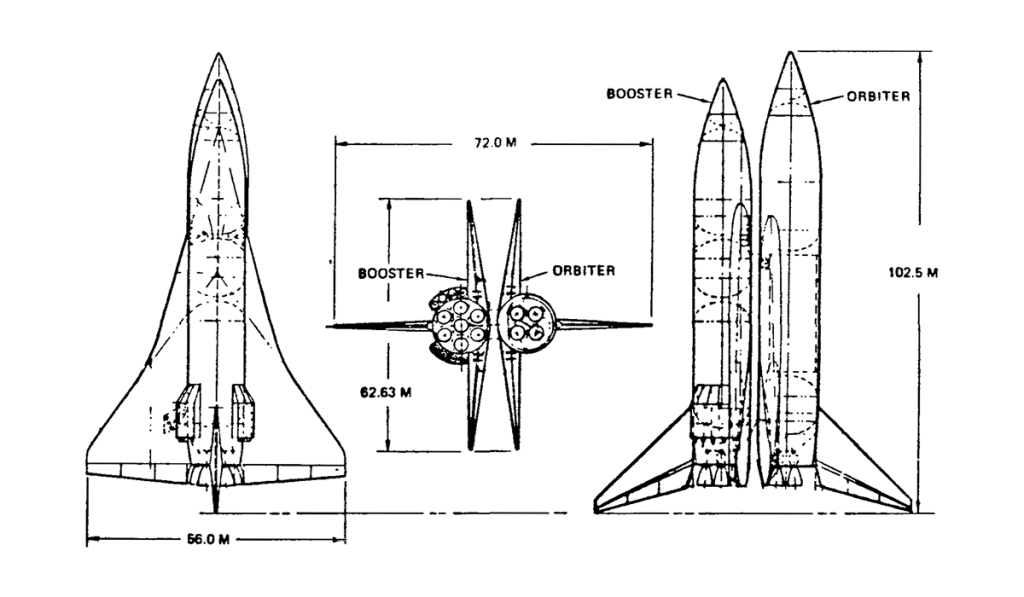
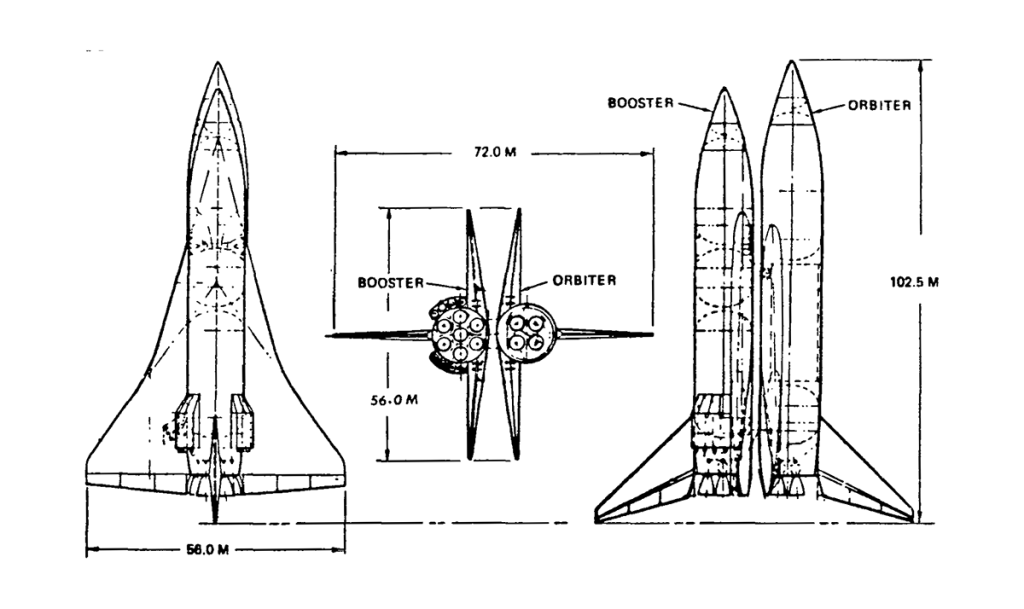
The reference HLLV is a two-stage, vertical takeoff, horizontal landing (VTOHL), fully reusable winged launch vehicle. The launch configuration and overall geometry are detailed in Figure 1. The vehicle uses sixteen CH4/02 engines on the booster (first stage) and 14 standard SSME’S on the orbiter (second stage). The booster engines employ a gas generator cycle and provide a vacuum thrust of 9.79X1O6 newtons each. The orbiter SMME’s provide a thrust of 2.O9x1O6 newtons each at 100% power level. The gross liftoff weight of the HLLV is 11,040 metric tons with a payload to LEO of 424 metric tonnes.
Personnel Launch Vehicle (PLV)
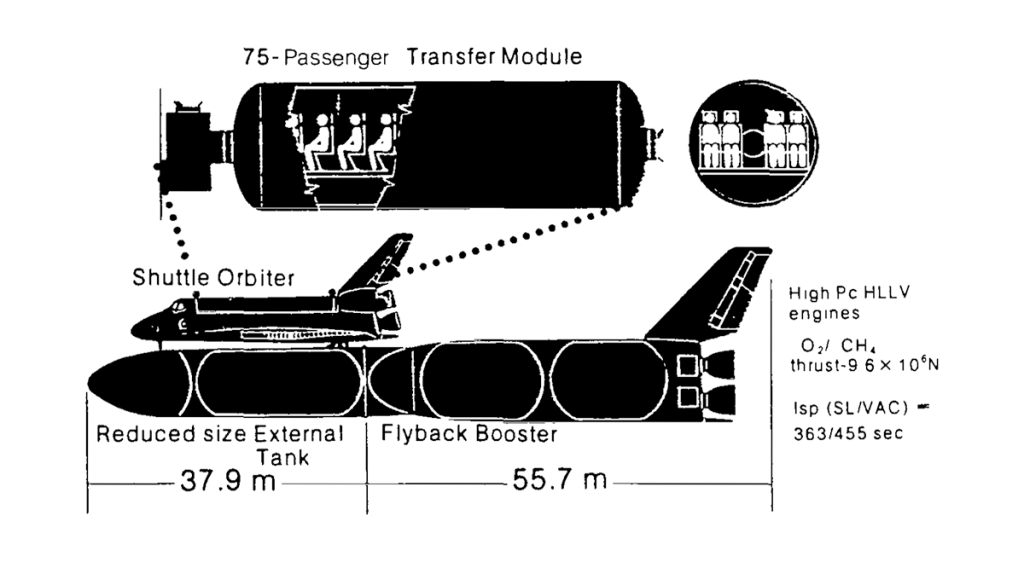
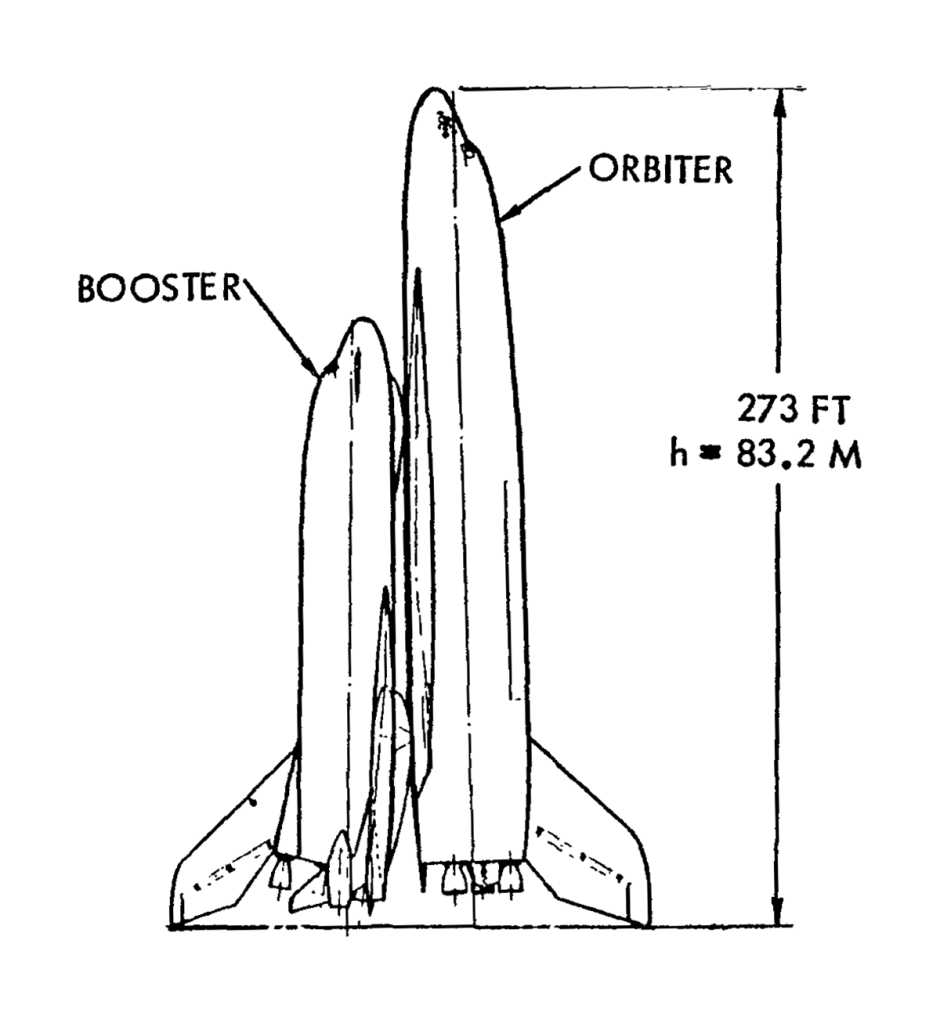
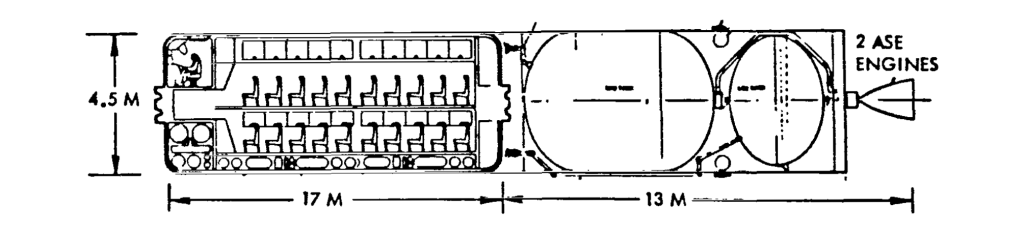
The PLV provides for the transportation of personnel and priority cargo between Earth and low orbit. The reference vehicle is derived from the current Space Shuttle system. It incorporates a winged fly-back booster instead of the solid rocket boosters and has a personnel compartment in the orbiter payload bay capable of transporting 75 passengers. The overall configuration and vehicle characteristics are shown in Figure 2. The passenger module is also shown in the figure.
Personnel Orbital Transfer Vehicle (POTV)
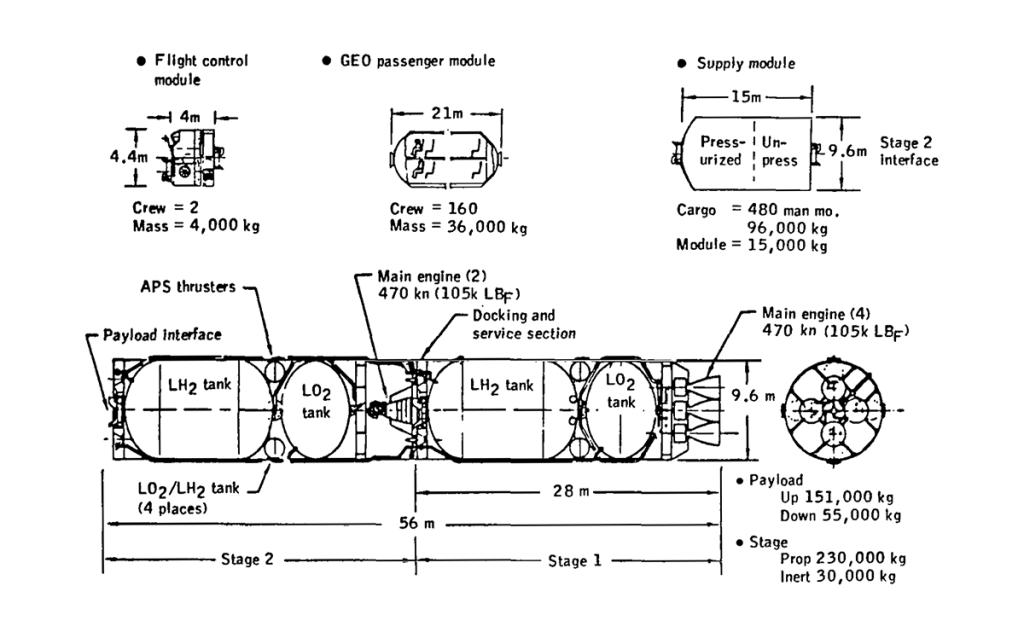
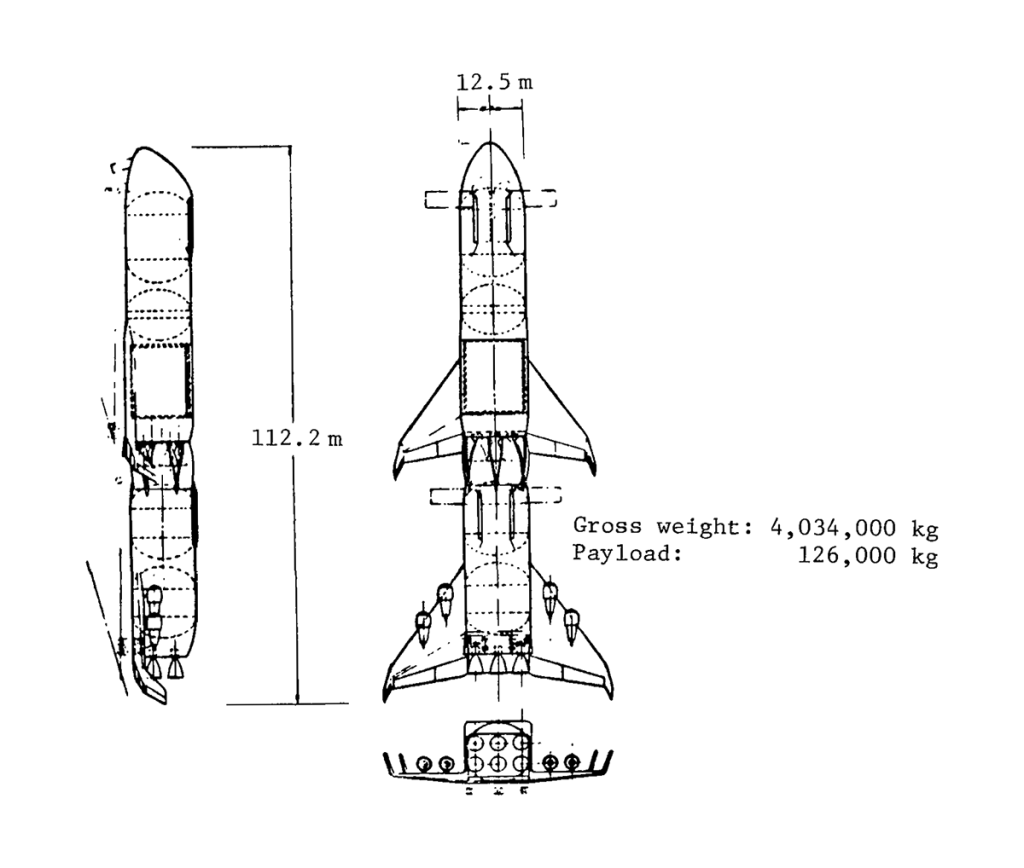
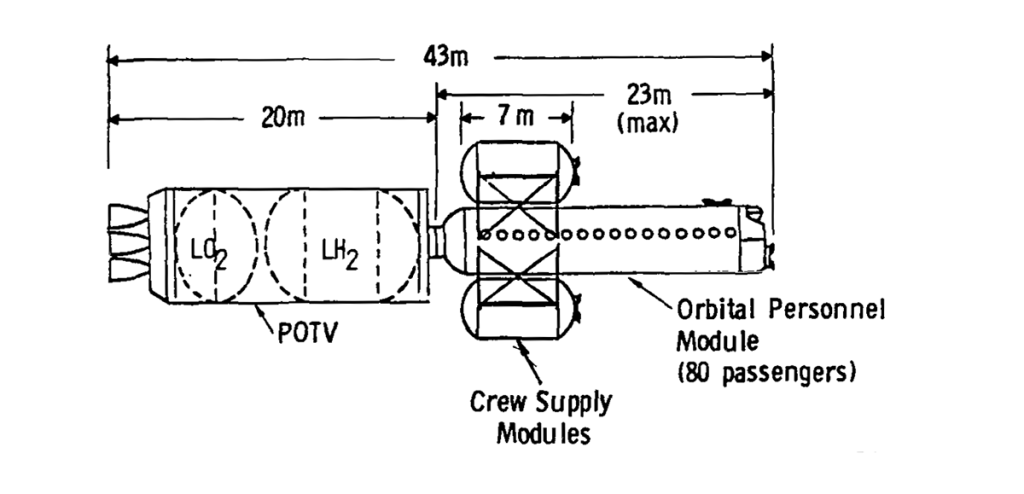
The functions of the POTV are to deliver personnel and cargo from LEO to GEO and to return personnel from GEO to LEO. The reference vehicle is a two-stage (common stage) LO2/LH2 configuration as illustrated in Figure 3.
Heavy-Lift Launch Vehicle (HLLV)
Personnel Orbital Transfer Vehicle (POTV)
As previously stated, the reference POTV concept utilized a two (common) stage propulsive element to transport crew and crew supplies and priority cargo to GEO. The stages are fueled in LEO and are capable of a roundtrip mission.
Earth-to-Orbit Systems
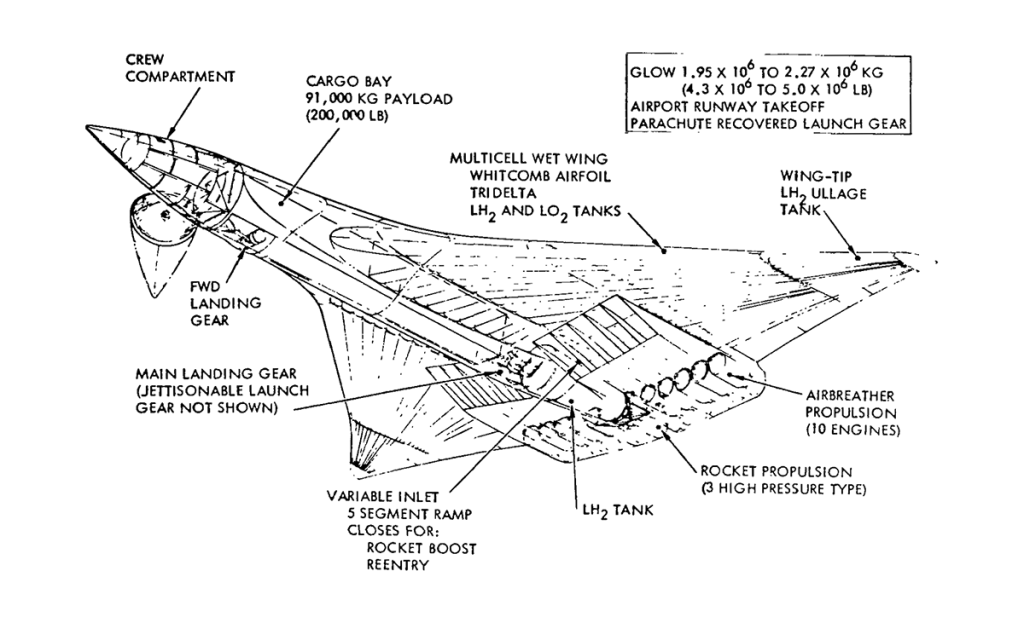
A PB/VTO/HL HLLV configuration is shown in Figure 1.2-1 in the launch. configuration. As shown, both stages have common body diameter, wing and vertical stabilizer; however, the overall length of the second stage (orbiter)is approximately 5 m greater than the first stage (booster). The vehicle gross lift off weight (GLOW) is 7.14 million kg with a payload capability of 230,000 kg to the referenced earth orbit.
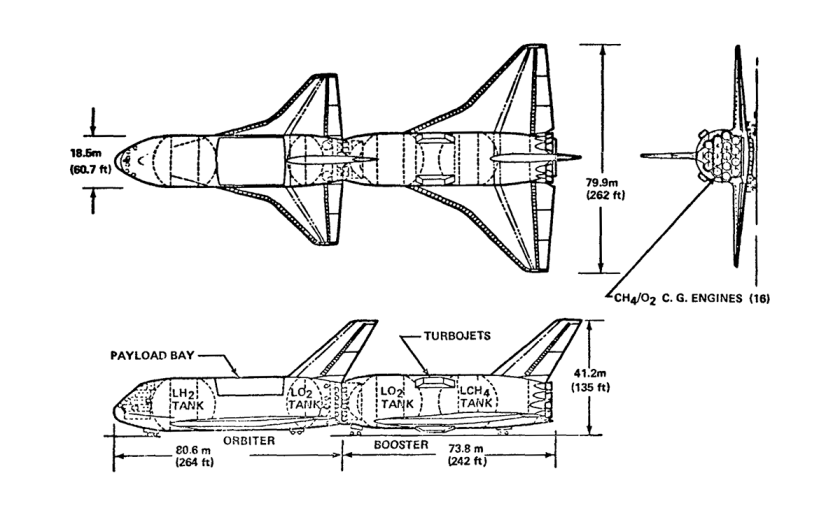
An alternate (smaller payload) configuration of more conservative design (i.e, more closely resembling the STS configuration) is depicted in the launch configuration, Figure 1.4-1. This configuration was adopted to permit the use of documented STS aerodynamic and performance data to address certain specific technical issues relative to VTO/HL vehicle concepts.
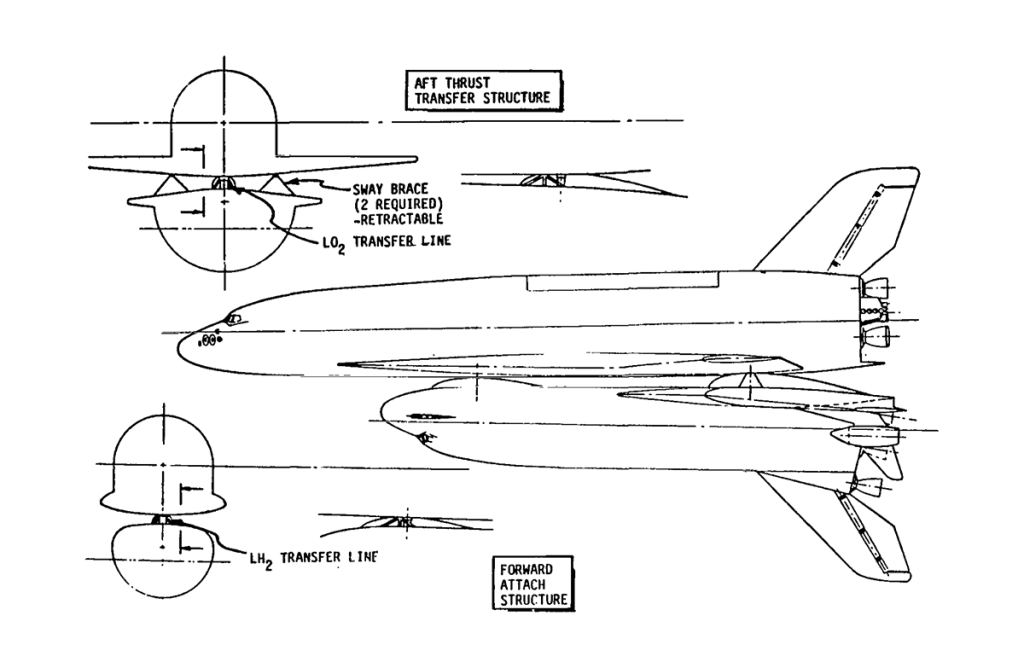
Image credit: NASA
File source: NASA NTRS
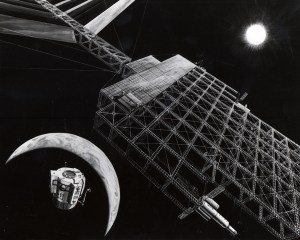
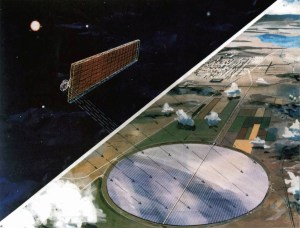
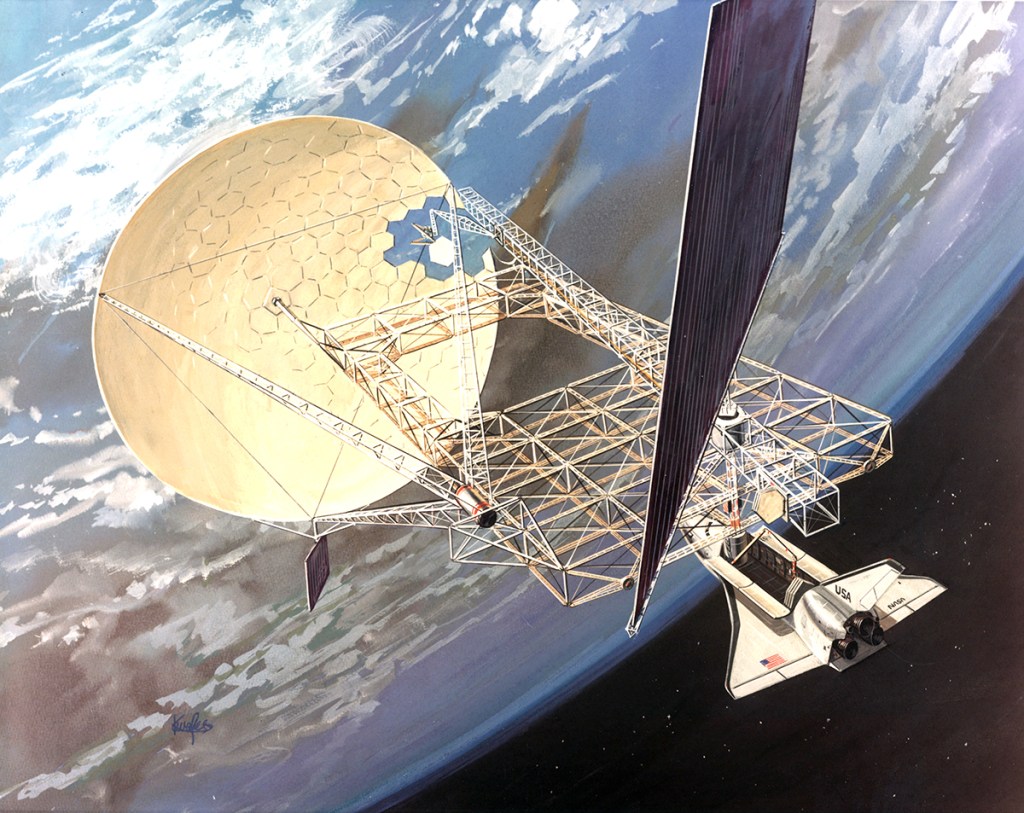
This is what an artist envisioned the Solar Power Satellite would look like. Shown is the assembly of a microwave transmission antenna. The solar power satellite was to be located in a geosynchronous orbit, 36,000 miles above the Earth’s surface.
Image credit: NASA
Image source: NASA on The Commons
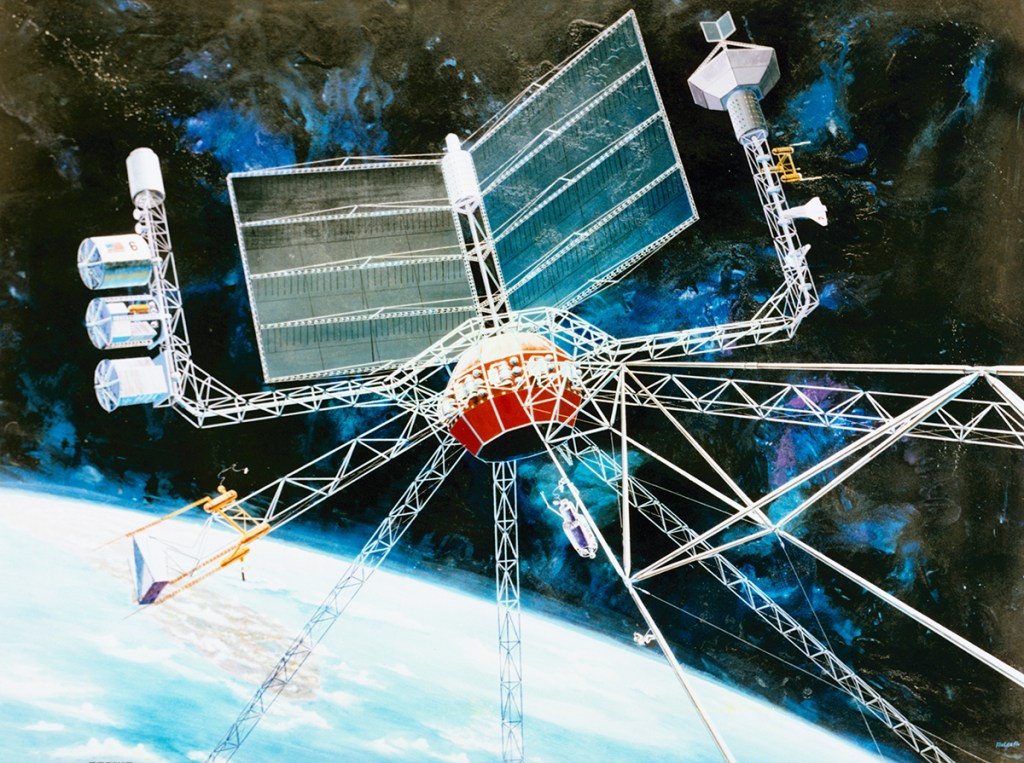
Image credit: Boeing
Image source: National Archives
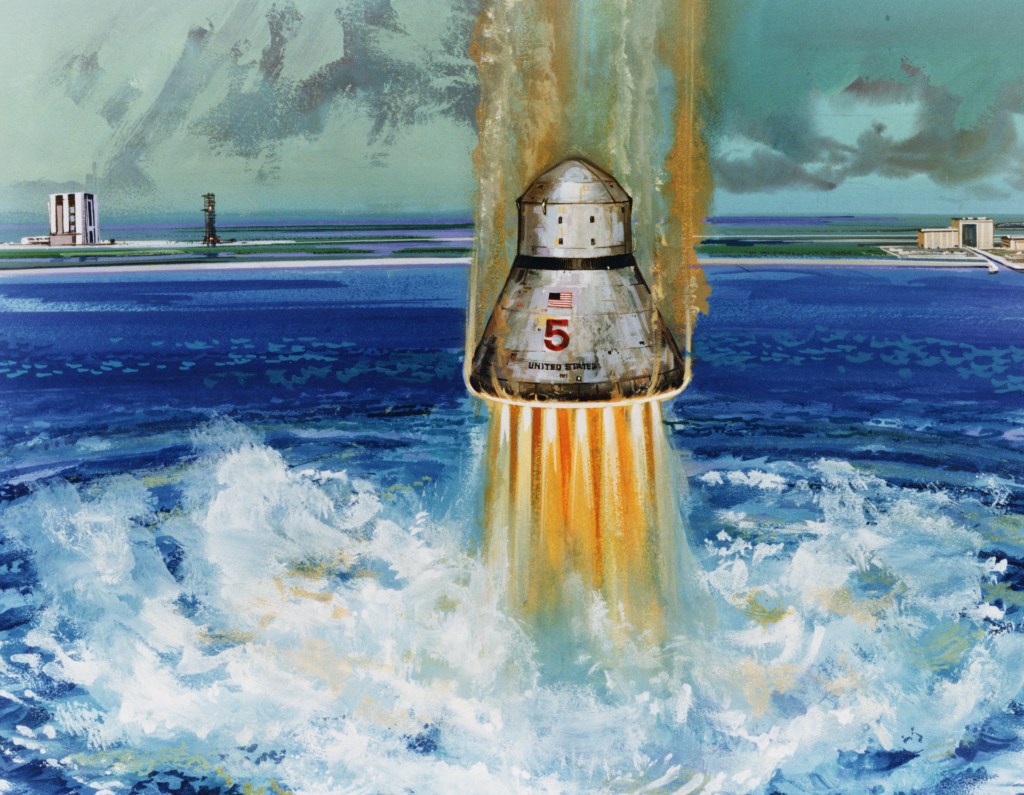
Image credit: Boeing
Image source: Internet Archive
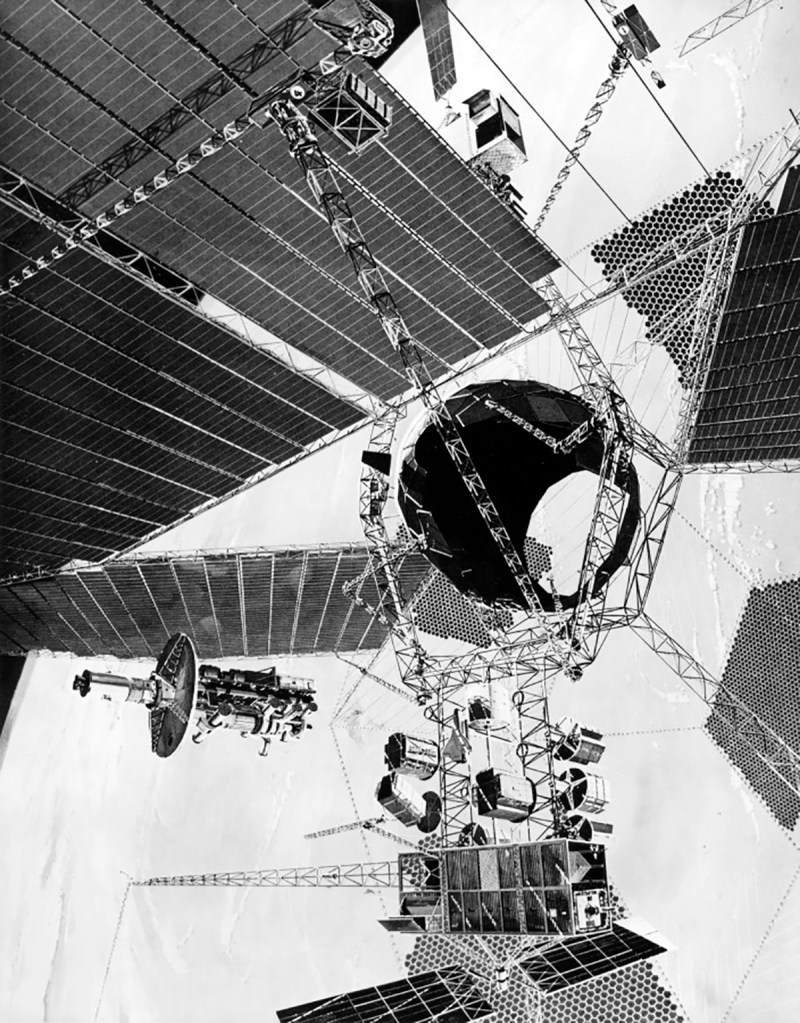
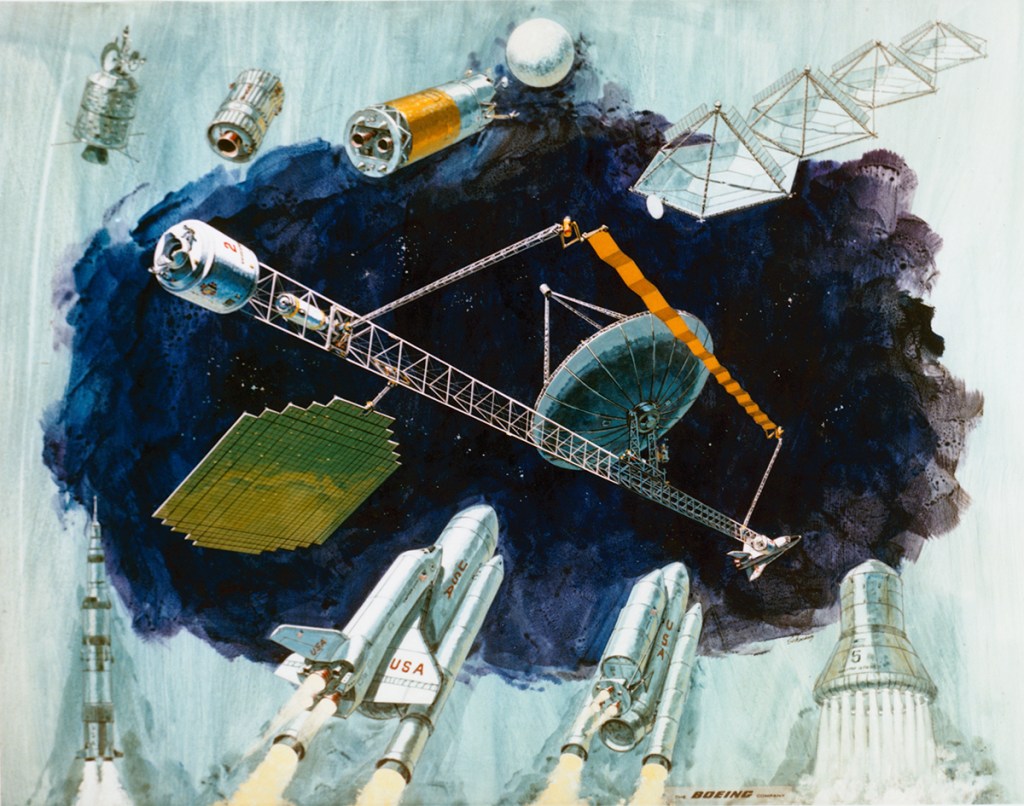
In the aftermath of the ’70s oil crisis, Boeing designed a solar power satellite system that could supply most of the the United States with electricity. Boeing’s plan envisioned satellites the size of small cities placed in geosynchronous orbit, transmitting electrical energy back to Earth as microwaves. The satellites would either be constructed in low Earth orbit for later deployment into a higher orbit or constructed directly at the higher orbit.
Image credit: Boeing
Image source: SDASM Archives
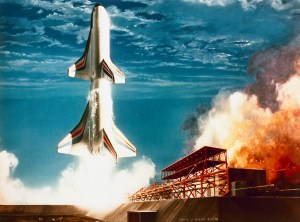
Image credit: Boeing
Image source: National Archives
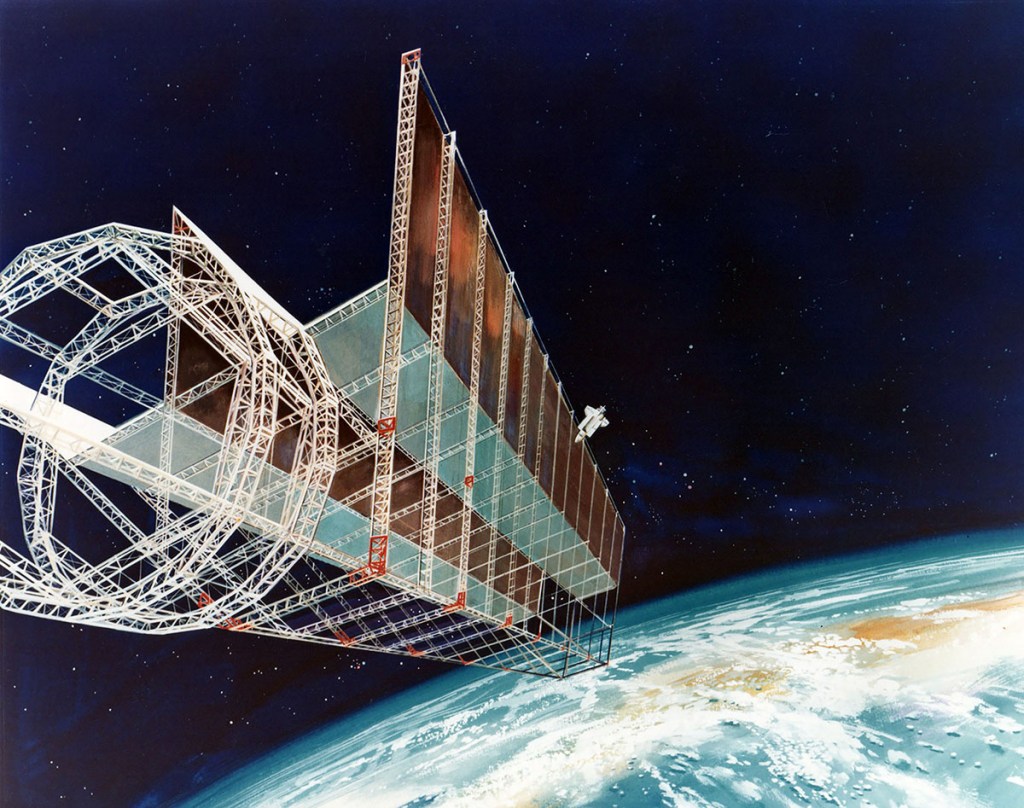
Image credit: North American Rockwell
Image source: Numbers Station
Image credit: NASA
Image source: SDASM Archives