S75-25941

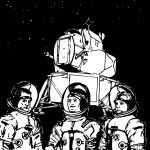
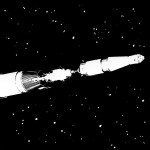
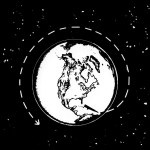
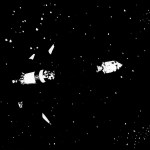
S75-25941 (April 1975) — An Apollo-Soyuz Test Project (ASTP) symbolic painting by artist Bert Winthrop of Rockwell International Space Division, Downey, California. The artwork is composed of the ASTP mission insignia, the docked Apollo-Soyuz spacecraft, and portraits of the five ASTP prime crewmen, all superimposed against Earth’s sphere in the center of the picture. The launches of both the American ASTP space vehicle (on left) and the Soviet ASTP space vehicle are depicted in the lower right corner. The five crewmen are, clockwise from the ASTP emblem, astronaut Thomas P. Stafford, commander of the American crew; astronaut Donald K. Slayton, docking module pilot of the American crew; astronaut Vance D. Brand, command module pilot of the American crew; cosmonaut Valeriy N. Kubasov, engineer on the Soviet crew; and cosmonaut Aleksey A. Leonov, commander of the Soviet crew. The joint U.S.-USSR ASTP docking mission in Earth orbit is scheduled for July 1975.

Image credit: NASA JSC
Image source: NASA Images
6868469

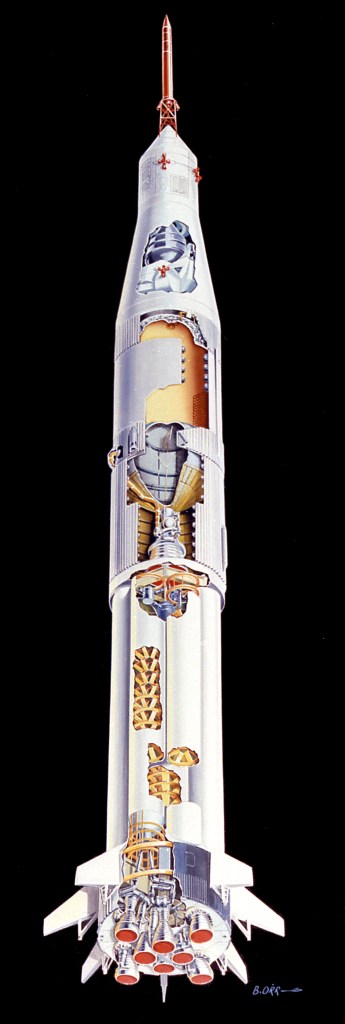
This undated cutaway drawing illustrates the Saturn IB launch vehicle with its two booster stages, the S-IB and S-IVB. Developed by the Marshall Space Flight Center (MSFC) as an interim vehicle in MSFC’s “building block” approach to the Saturn rocket development, the Saturn IB utilized Saturn I technology to further develop and refine the larger boosters and the Apollo spacecraft capabilities required for the marned lunar missions.

Image credit: NASA MSFC
Image source: NASA Images

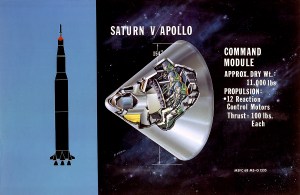
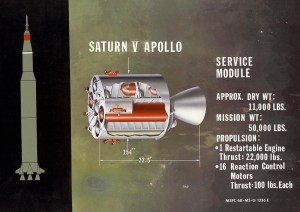
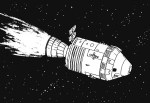
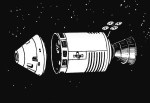
Apollo CSM

Image credit: NASA
Image source: NASA MSFC

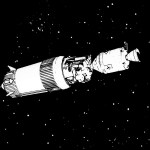
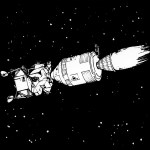
Apollo 9 Storyboard

Launch Day

Top Left: Flight Crew Preparation
Top Right: Orbital Insertion
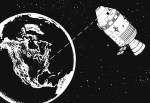
Middle Left: 103 N. Mile Orbit
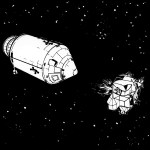
Middle Right: Separation
Bottom Left: Docking
Bottom Right: Docked SPS Burn

Second Day

Top Left: Landmark Tracking
Top Right: Pitch Maneuver
Bottom Left: Yaw-Roll Maneuver
Bottom Right: High Apogee Orbits

Third Day

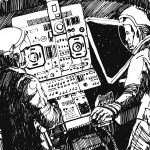
Left: Crew Transfer
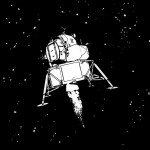
Right: LM System Evaluation

Fourth Day

Top Left: Camera
Top Right: Day-Night EVA
Bottom Left: Golden Slippers
Bottom Right: TV – Texas, Florida

Fifth Day

Top Left: Vehicles Undocked
Top Right: Burns For Rendezvous
Middle Left: Maximum Separation
Middle Right: APS Burn
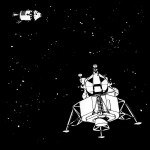
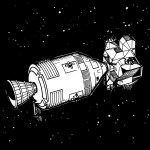
Bottom Left: Formation Flying And Docking
Bottom Right: LM Jettison Ascent Burn

Sixth Thru Ninth Days

Left: Service Propulsion Burns
Right: Landmark Sightings, Photograph Special Tests

Tenth Day

Top Left: CM/SM Separation
Top Right: Re-Entry

Image credit: NASA JSC
Images: NASA Images

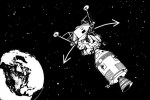
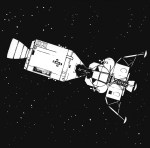
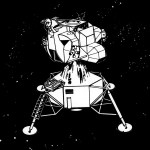
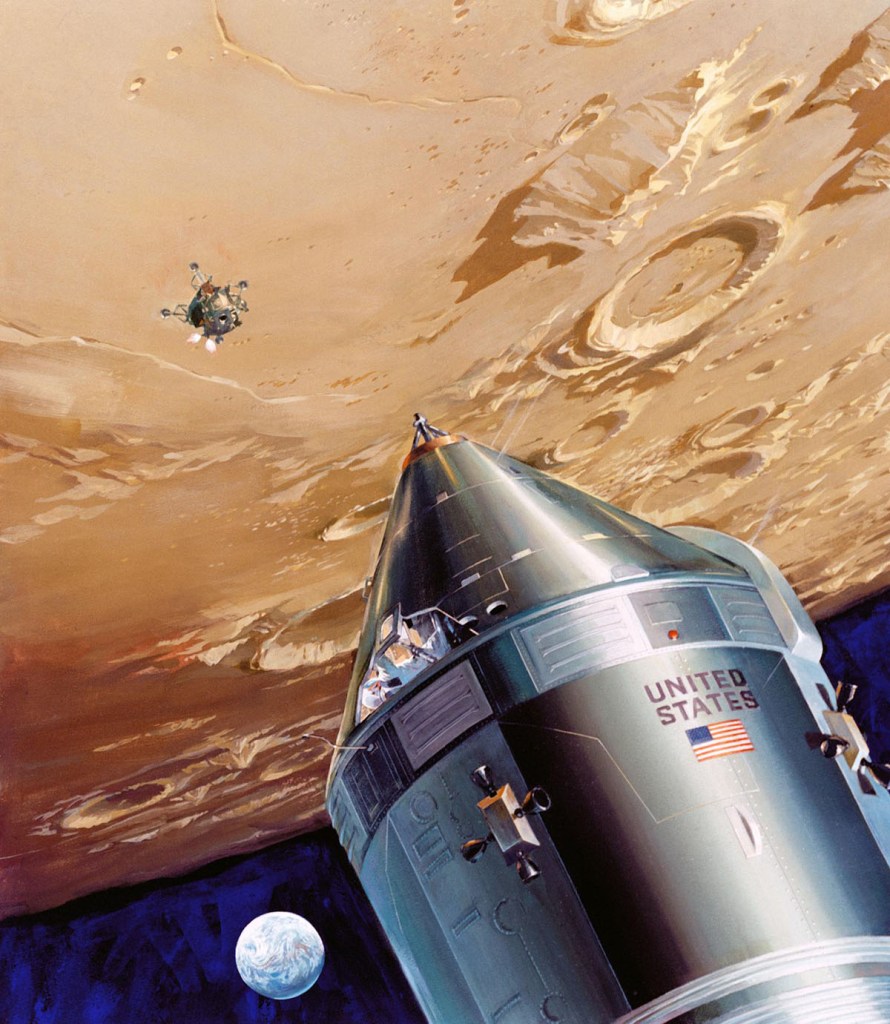
Snoopy & Charlie Brown

Image credit: NASA JSC
Image source: NASA Images
S71-39481

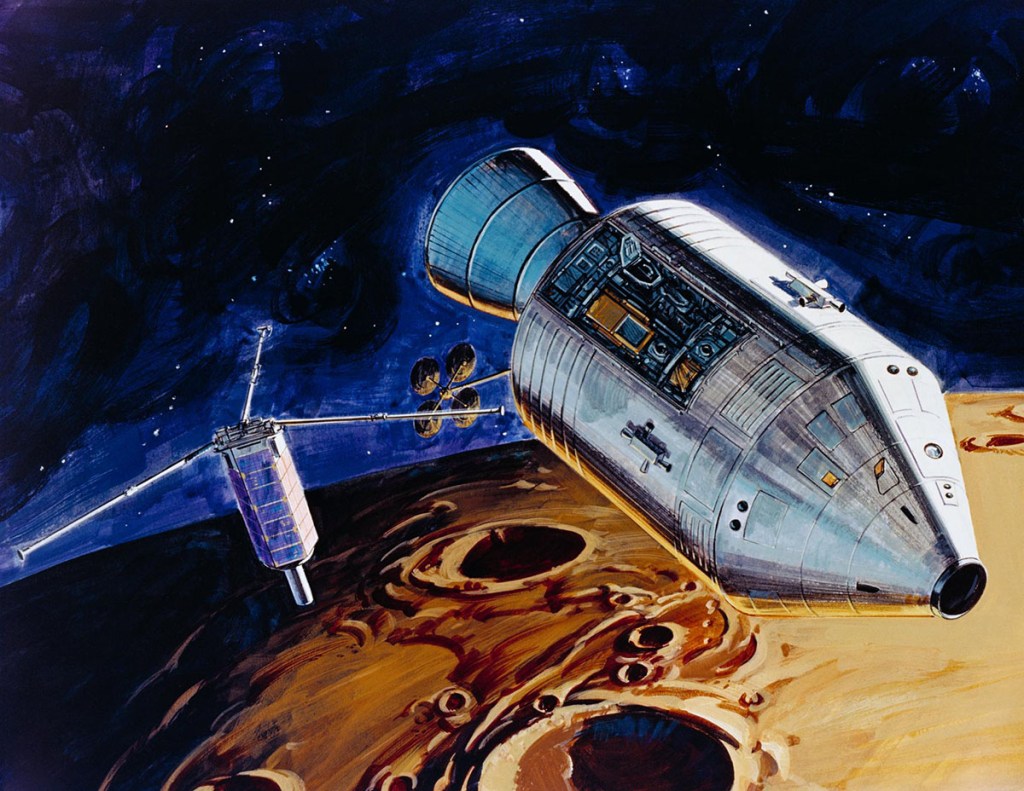
S71-39481 (July 1971) — An artist’s concept showing TRW’s small lunar subsatellite being ejected into lunar orbit from the SIM bay of the Apollo 15 Service Module. The 80-pound satellite will remain in orbit a year or more, carrying scientific experiments to study space in the vicinity of the moon. The satellite carries three experiments: S-Band Transponder; Particle Shadows/Boundary Layer Experiment; and Subsatellite Magnetometer Experiment. The subsatellite is housed in a container resembling a rural mailbox, and when deployed is spring-ejected out-of-plane at 4 fps with a spin rate of 140 rpm. After the satellite booms are deployed, the spin rate is stabilized at about 12 rpm. The subsatellite is 31 inches long and has a 14 inch hexagonal diameter. The exact weight is 78.5 pounds. The folded booms deploy to a length of five feet. Subsatellite electrical power is supplied by a solar cell array outputting 25 watts for dayside operation and a rechargeable silver-cadmium battery for nightside passes.
Image credit: NASA JSC
Image source: NASA Images