Can We Get to MARS?

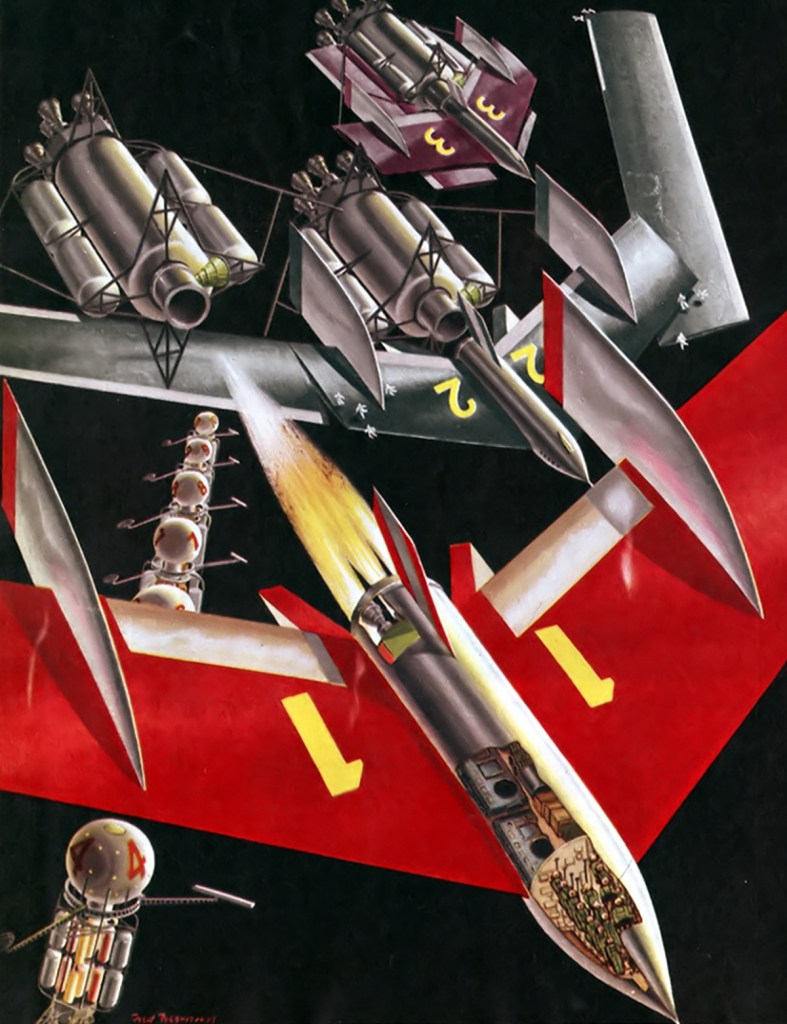
  1. Cutaway of plane in the foreground shows personnel, tractors in ship.
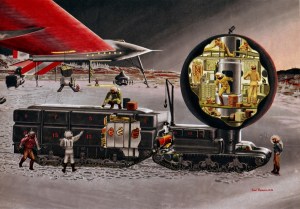
  2. Advance party, after landing on Martian snow in ski-equipped plane, prepares for trip to equator. Men live in inflatable, pressurized spheres mounted on tractors, enter and leave through air locks in the central column. Sphere on tractor is just being blown up. Cutaway of tractor, foreground, shows closed-circuit engine, run by hydrogen peroxide, oil. Trailer cutaway shows fuel supply, cargo.

Is there Life on Mars?
Collier’s, April 30, 1954

Image credit: Collier’s
Image source: AIAA Houston
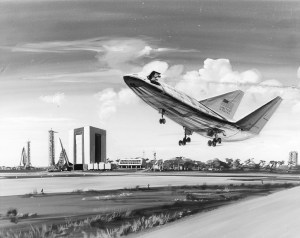
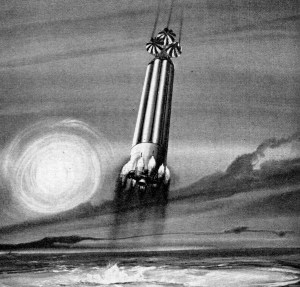
Short Final

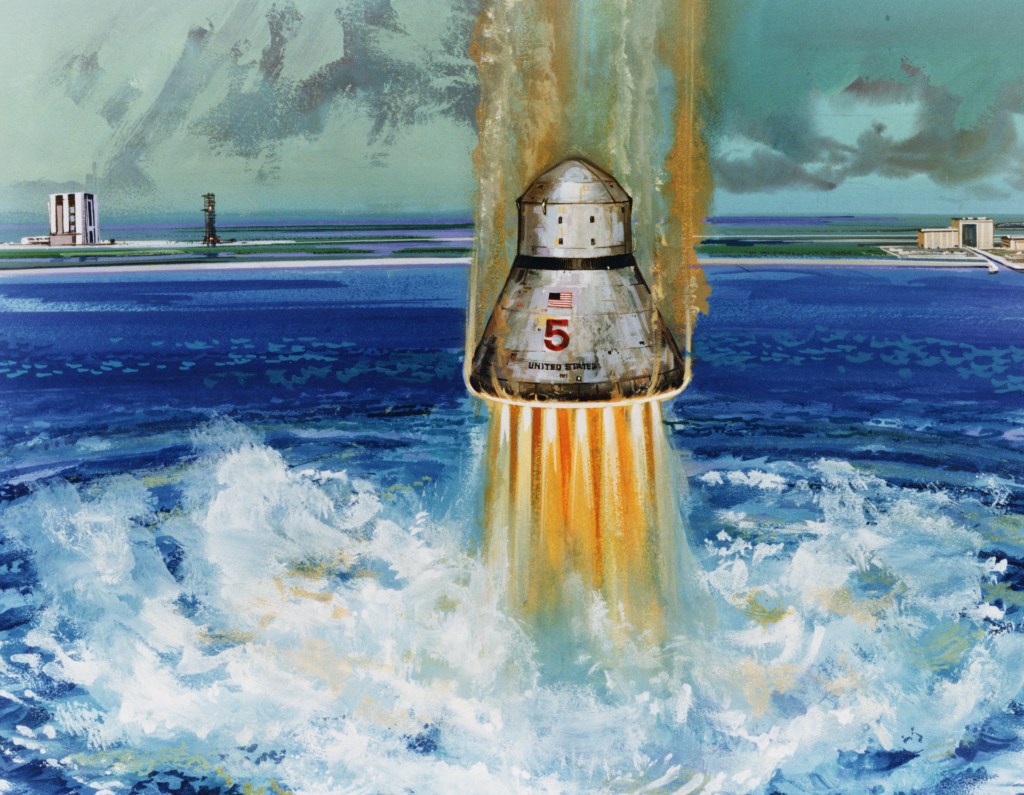
Stunning representation of a NAR Phase A orbiter about to land by Henry Lozano Jr., from the collection of everyone’s favorite space archivist.

Image credit: North American Rockwell
Image source: Mike Acs
S-76-24322

Image credit: Boeing
Image source: National Archives
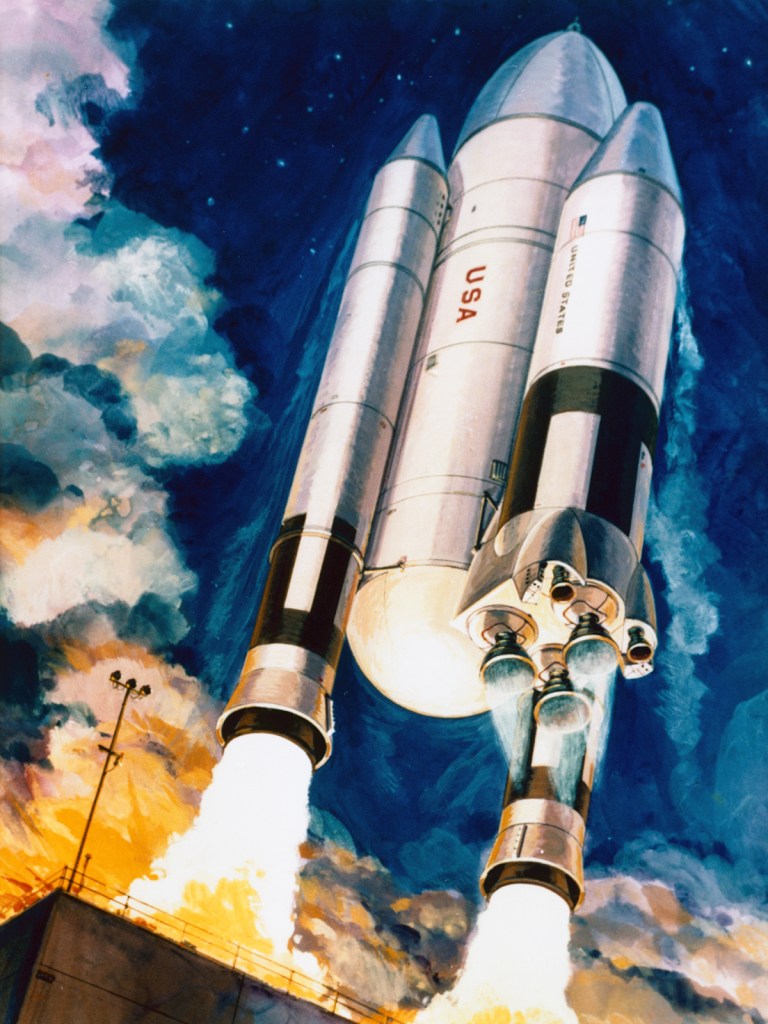
Sol Dember

Eagle Book of Rockets and Space
by John W.R. Taylor and Maurice Allward
Longacre Press, 1961

Image credit: NASA
Image source: Numbers Station
Pioneer G

Image credit: NASA
Image source: Numbers Station
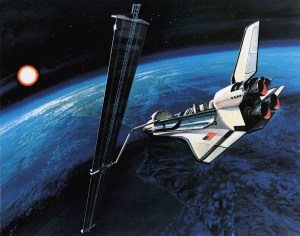
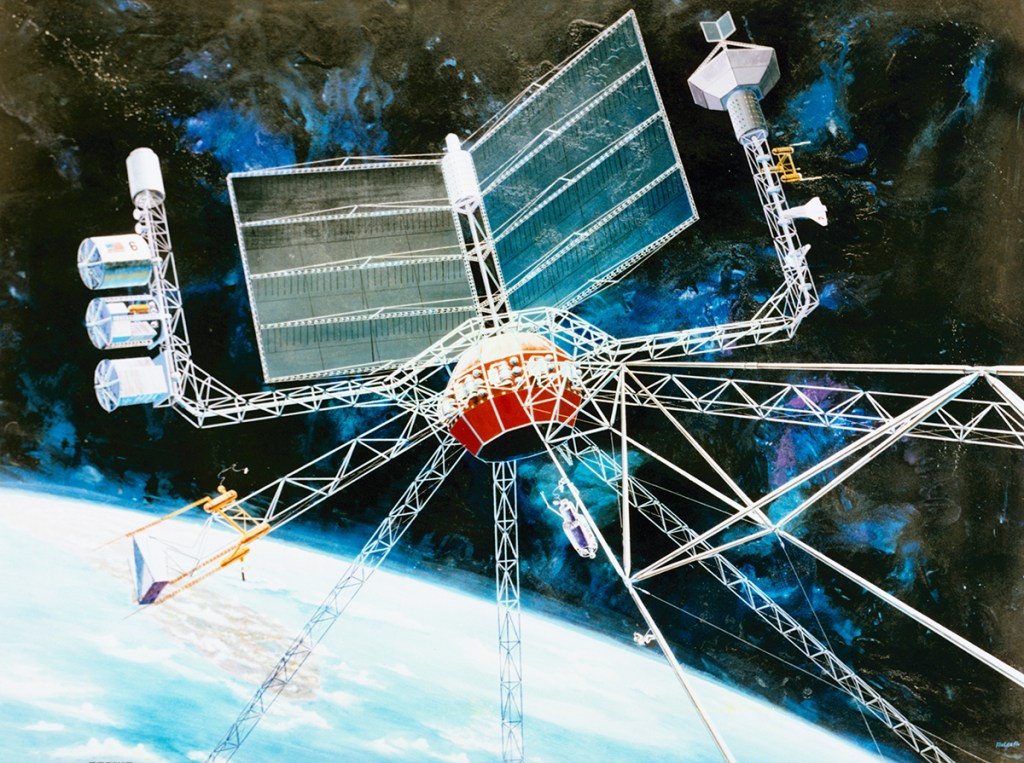
SPS

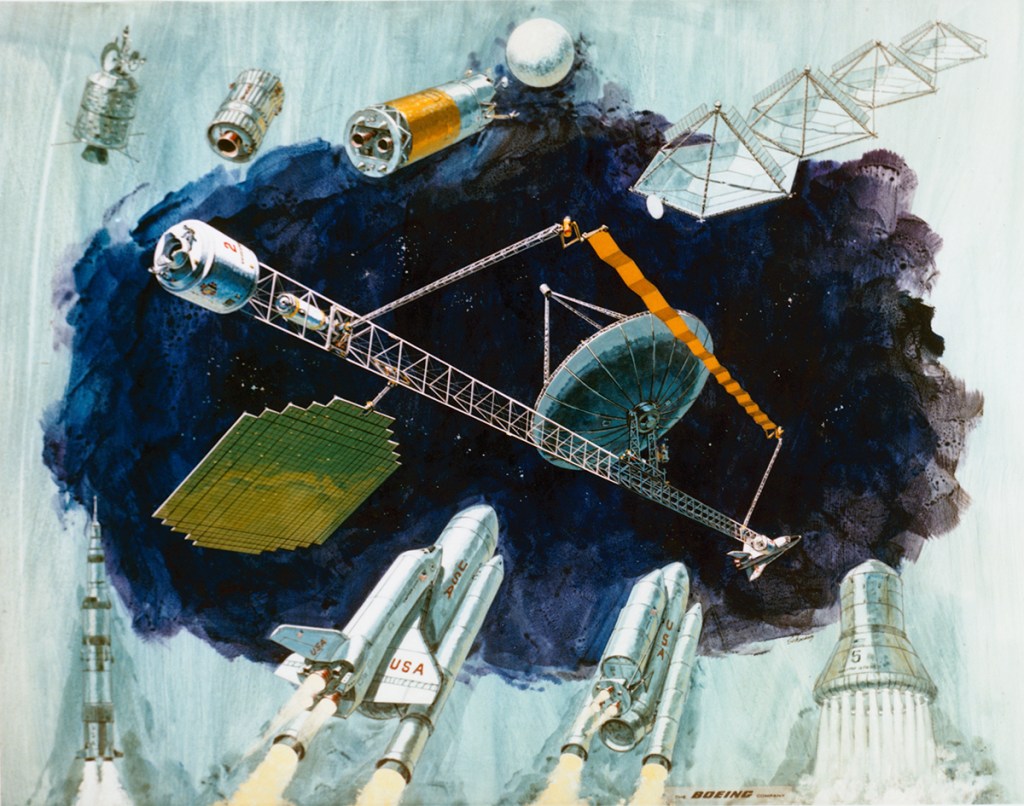
In the aftermath of the ’70s oil crisis, Boeing designed a solar power satellite system that could supply most of the the United States with electricity. Boeing’s plan envisioned satellites the size of small cities placed in geosynchronous orbit, transmitting electrical energy back to Earth as microwaves. The satellites would either be constructed in low Earth orbit for later deployment into a higher orbit or constructed directly at the higher orbit.

Image credit: Boeing
Image source: SDASM Archives

255-GRC-1980-01085

Image credit: Boeing
Image source: National Archives

330-CFD-DF-ST-85-11979

Image credit: Boeing
Image source: National Archives