see also:
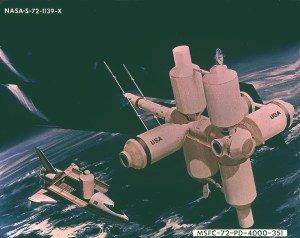
Image credit: North American Rockwell, NASA MSFC
Images: Numbers Station, NASA MSFC
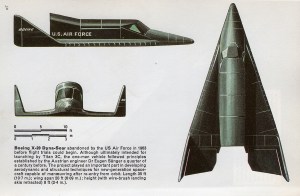
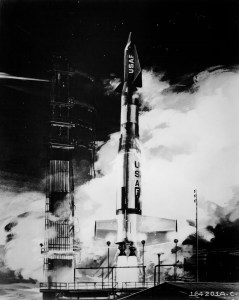
Boeing X-20 Dyna-Soar abandoned by the US Air Force in 1963 before flight trials could begin. Although ultimately intended for launching by Titan 3C, this one-man vehicle followed principles established by the Austrian engineer Dr Eugen Stänger a quarter of a century before. The project played an important part in developing aerodynamic and structural techniques for new-generation space-craft capable of maneuvering after re-entry from orbit. Length 35 ft (10.7m.) wingspan 20 ft (6.09m.); height (with wire-brush landing skis retracted) 8 ft (2.4m.).
Frontiers of Space
Philip Bono & Kenneth Gatland
Macmillan, 1969
Image credit: Macmillan
Image source: Numbers Station
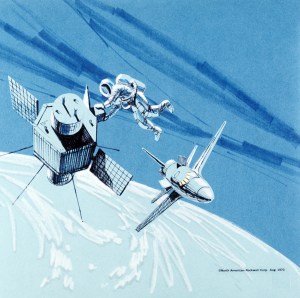
Image credit: North American Rockwell
Image source: Numbers Station

Previously shared here, the same Alvarez artwork without the overpaint:
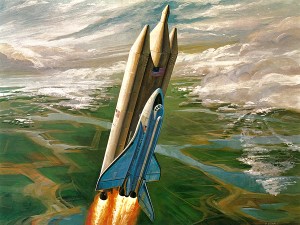
Image credit: NASA
Images: NASA GRC, Numbers Station
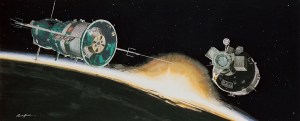

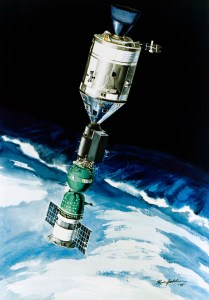


In case you’re wondering, Paul (as of 2019) is still actively painting and maintains a stunning online gallery at pfinspace.com. He makes some of his digital art available to buy as prints on Fine Art America, that page is here.
Image credit: NASA JSC
Image source: NASA Images

Image credit: NASA JSC
Image source: NASA Images
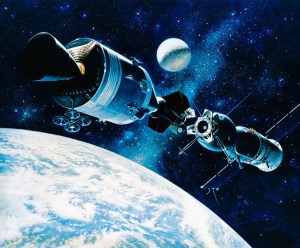
Image credit: NASA JSC
Image source: NASA Images
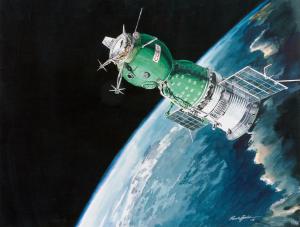
Image credit: NASA JSC
Image source: NASA Images

S74-24913 (August 1973) — An artist’s concept illustrating an Apollo-type spacecraft (left) about to dock with a Soviet Soyuz-type spacecraft. A recent agreement between the United States (USA) and the Union of Soviet Socialist Republic (USSR) provides for the docking in space of the Soyuz and Apollo-type spacecraft in Earth orbit in 1975. The joint space venture is called the Apollo-Soyuz Test Project (ASTP).
Image credit: NASA JSC
Image source: NASA Images
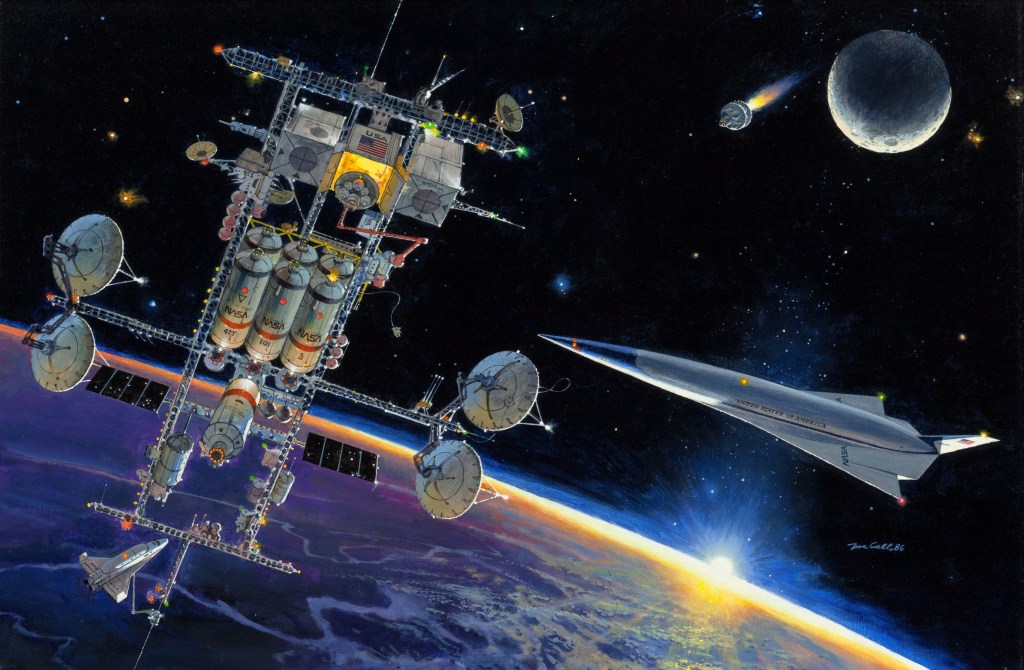
Image credit: NASA