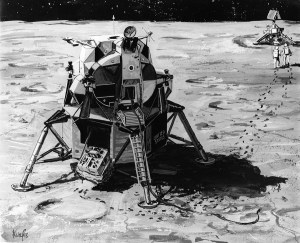
Image credit: NASA Marshall
Image source: NASA Images
Image credit: NASA Marshall
Image source: NASA Images
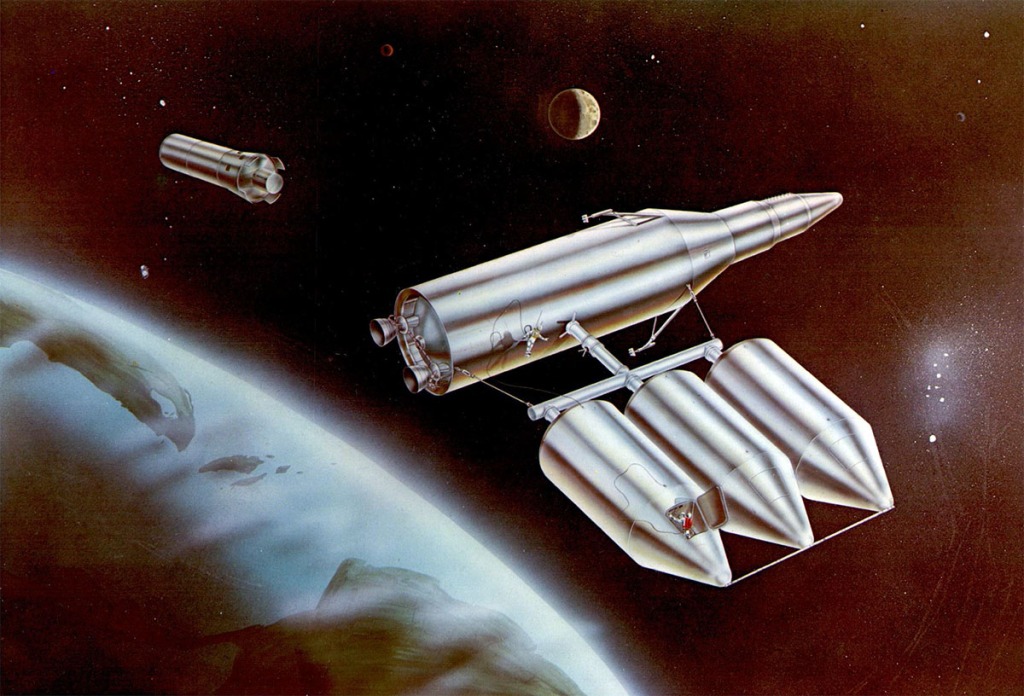
Conceptual view of the operations in the equatorial earth orbit. The operation in orbit is principally one of propellant transfer and it not an assembly job. The vehicle being fueled is the third stage of a SATURN II with a lunar landing and return vehicle attached. The third stage of the SATURN II was used in the combination into orbit and has thus expended its propellants. This stage is fueled into orbit by a detachment of approximately ten men after which the vehicle then proceeds on the moon.
Image credit: United States Army
Image source: NASM
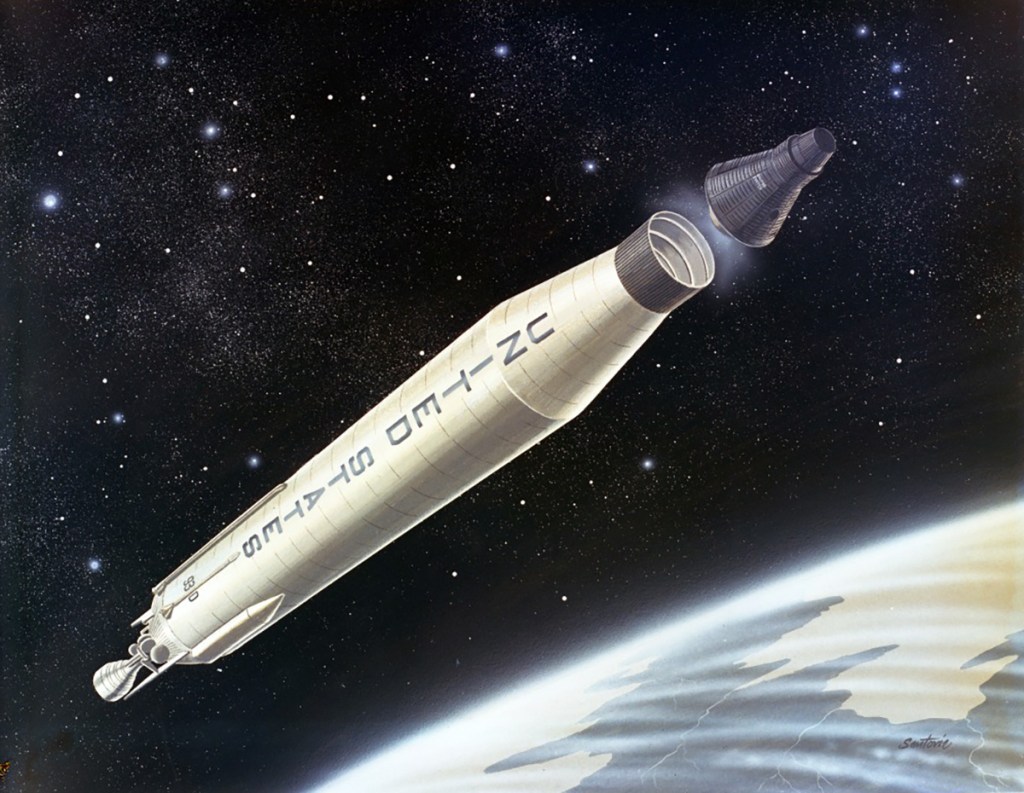
Image credit: Convair
Image source: SDASM Archives

Image credit: NASA
Image source: SDASM Archives
Image credit: JPL
Image source: NASA Images

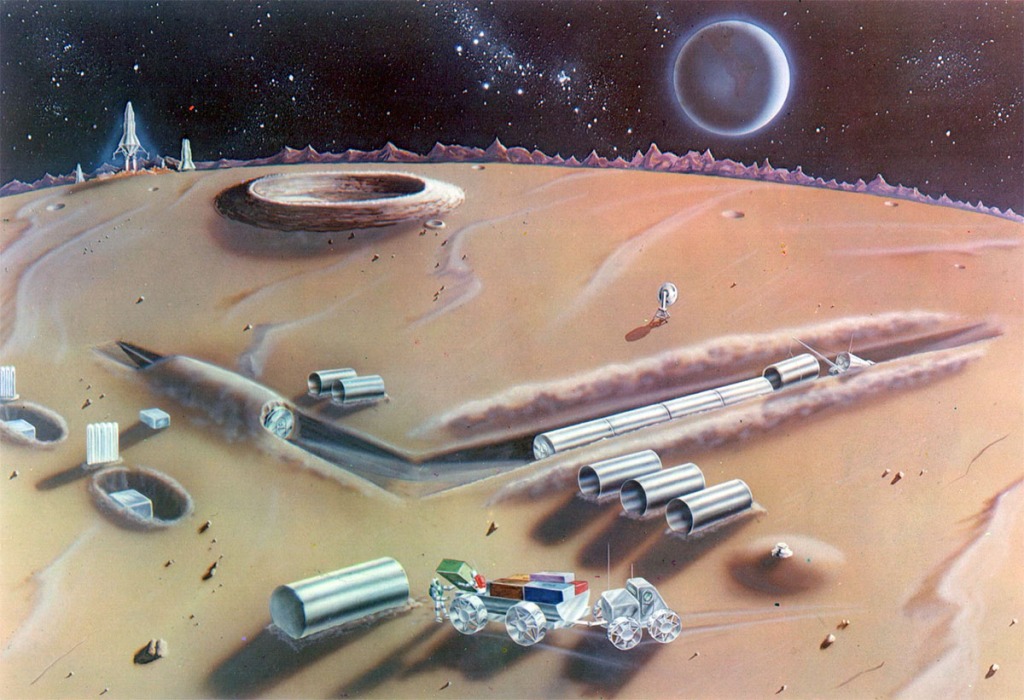
First-stage lunar base. This is the type of shelter proposed for the construction crew responsible for building permanent quarters.
The Next Fifty Years On The Moon
by Erik Bergaust
G.P. Putnam’s Sons, 1974
Image credit: Boeing
Image source: Numbers Station
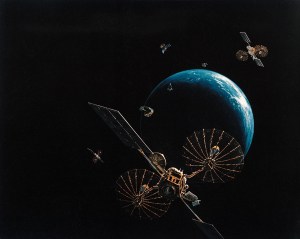
Image credit: NASA JSC
Image source: NASA Images
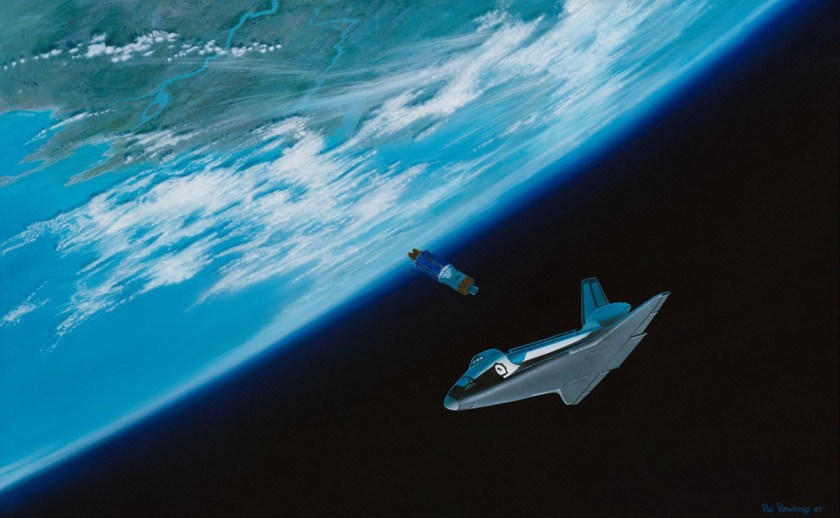
STS-26 Discovery, Orbiter Vehicle (OV) 103, artwork depicts tracking and data relay satellite C (TDRS-C) deployment. OV-103 orbits above Earth in bottom-to-sun attitude, moments after TDRS-C’s release into space. TDRS-C is seen just below open payload bay (PLB). Artwork was done by Pat Rawlings of Eagle Engineering.
Image credit: NASA JSC
Image source: NASA Images