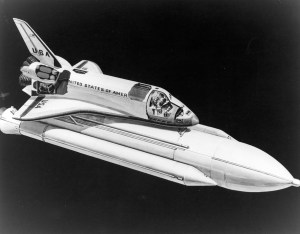
Mysterious Alvarez

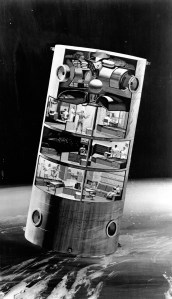
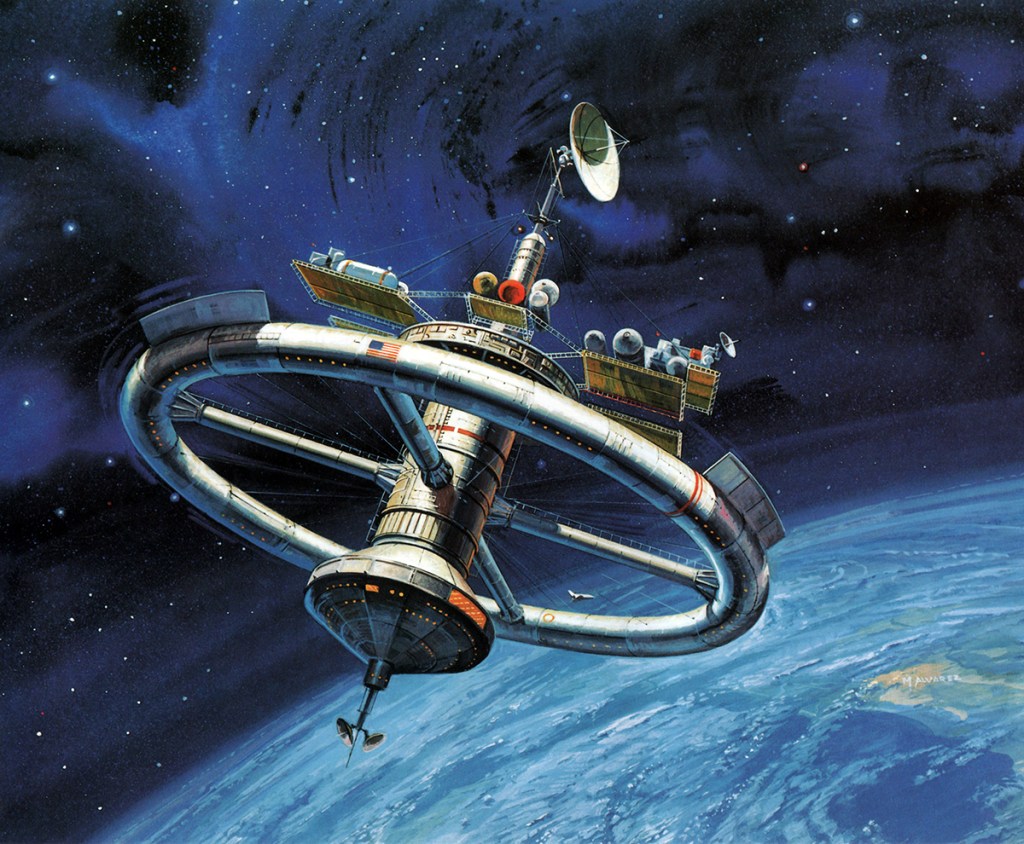
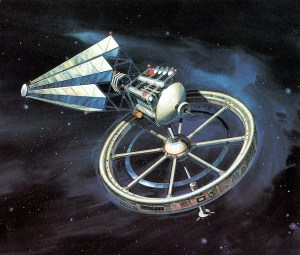
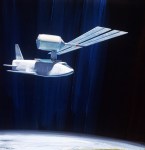
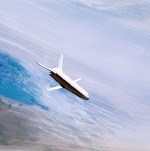
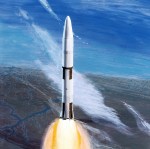
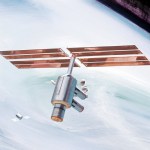
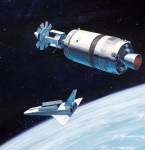
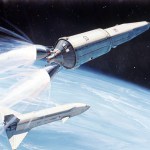
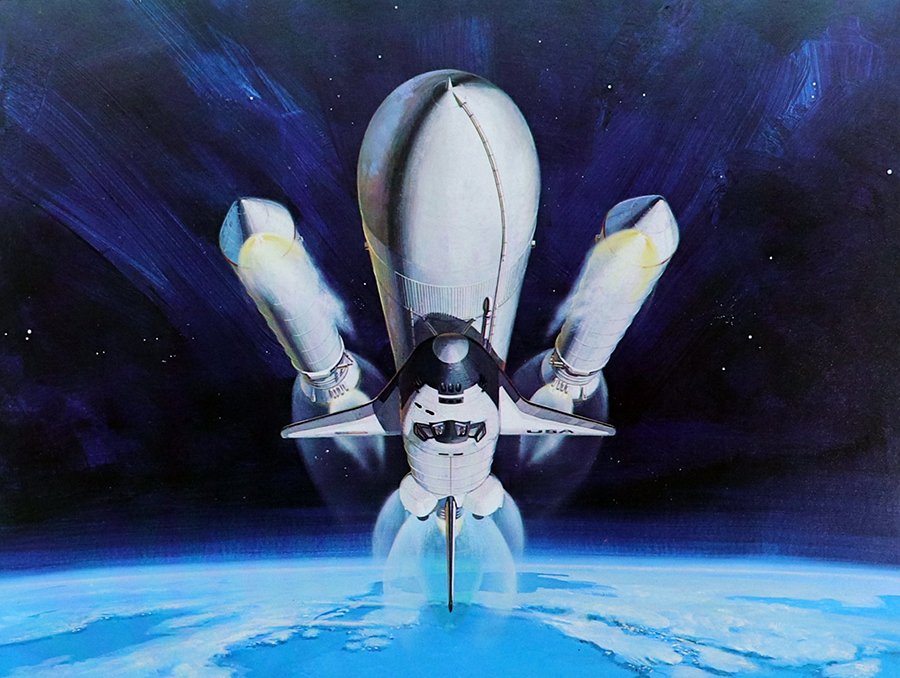
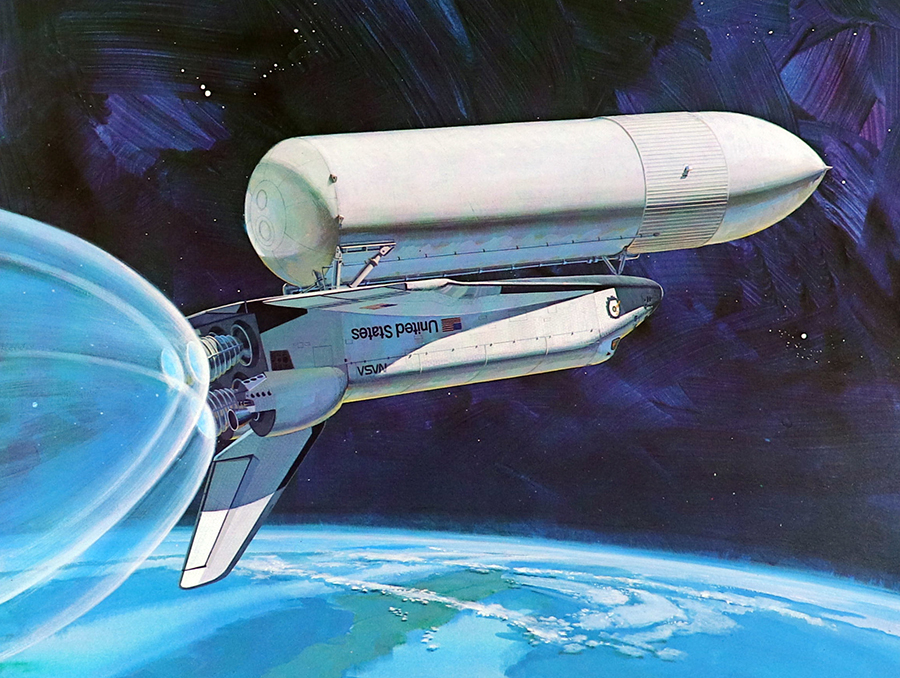
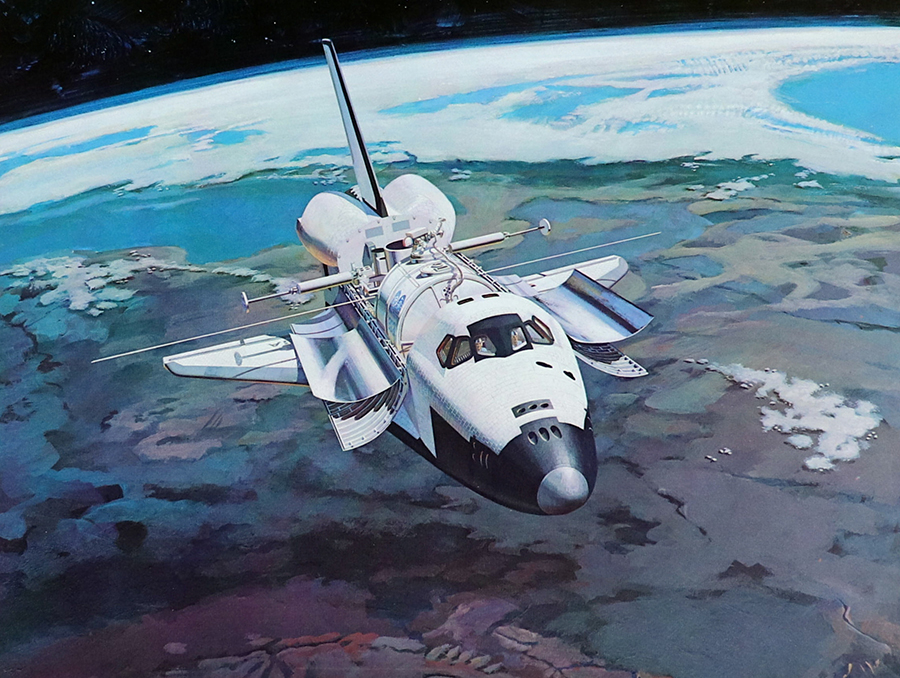
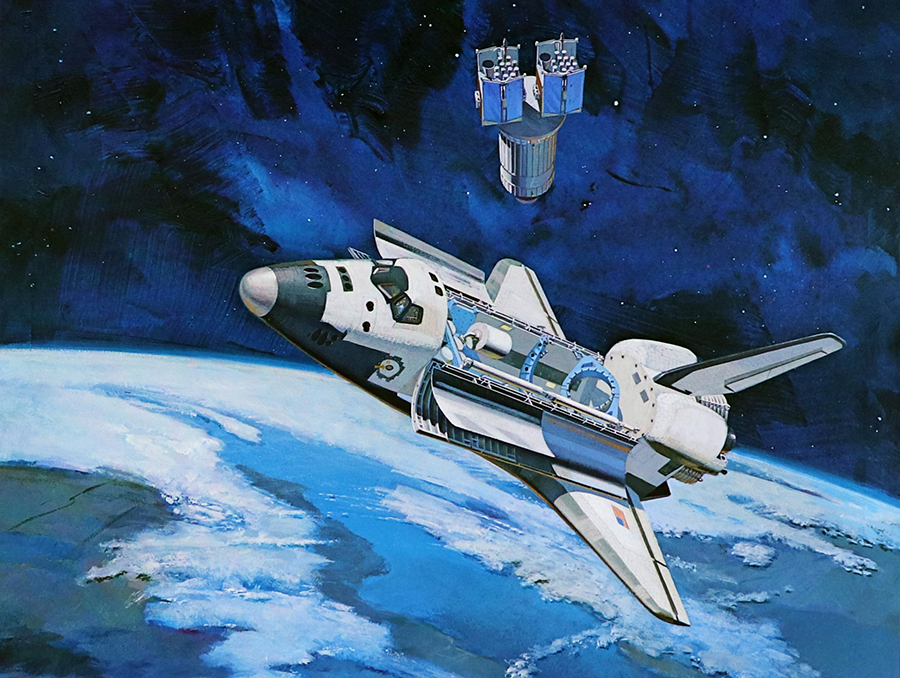
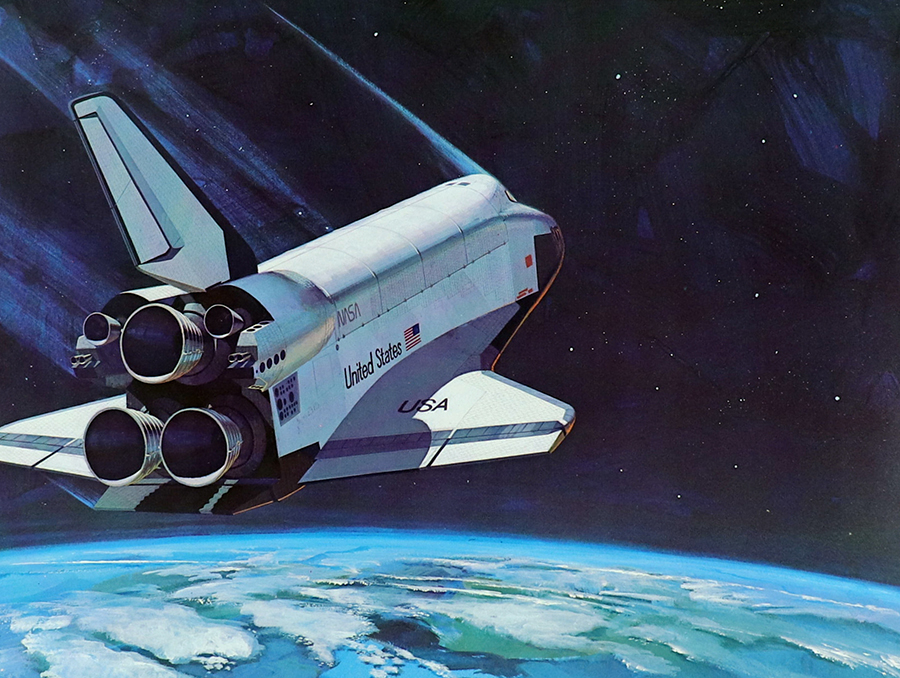
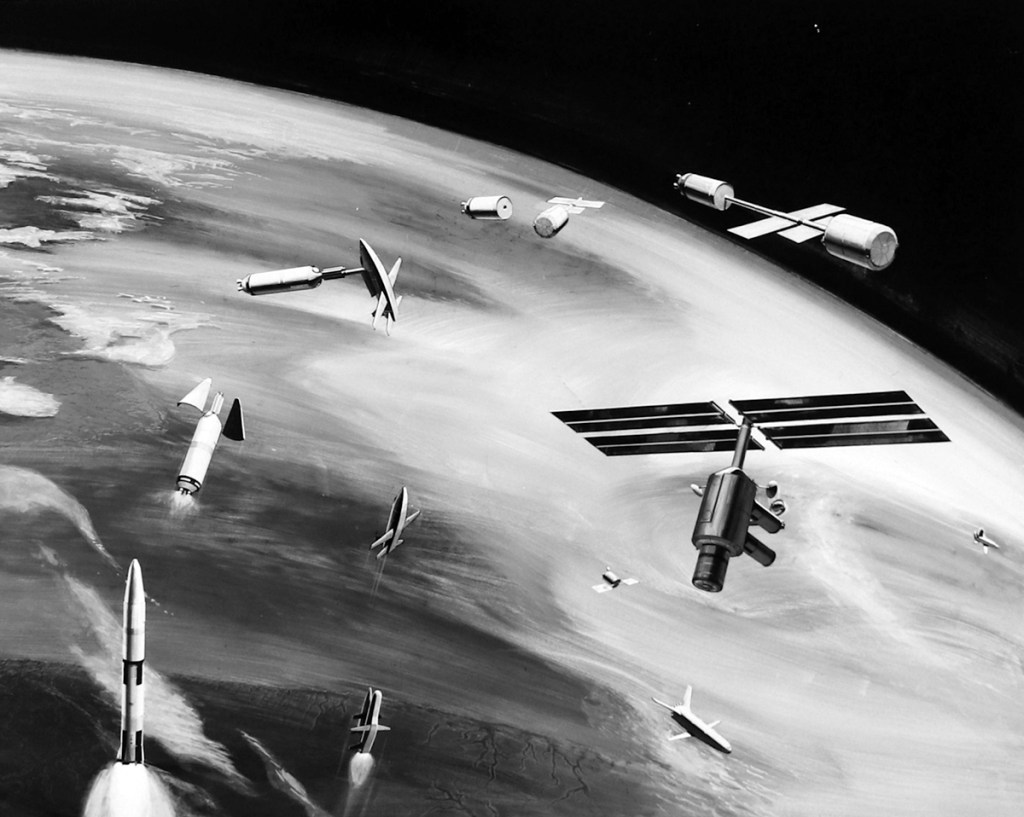
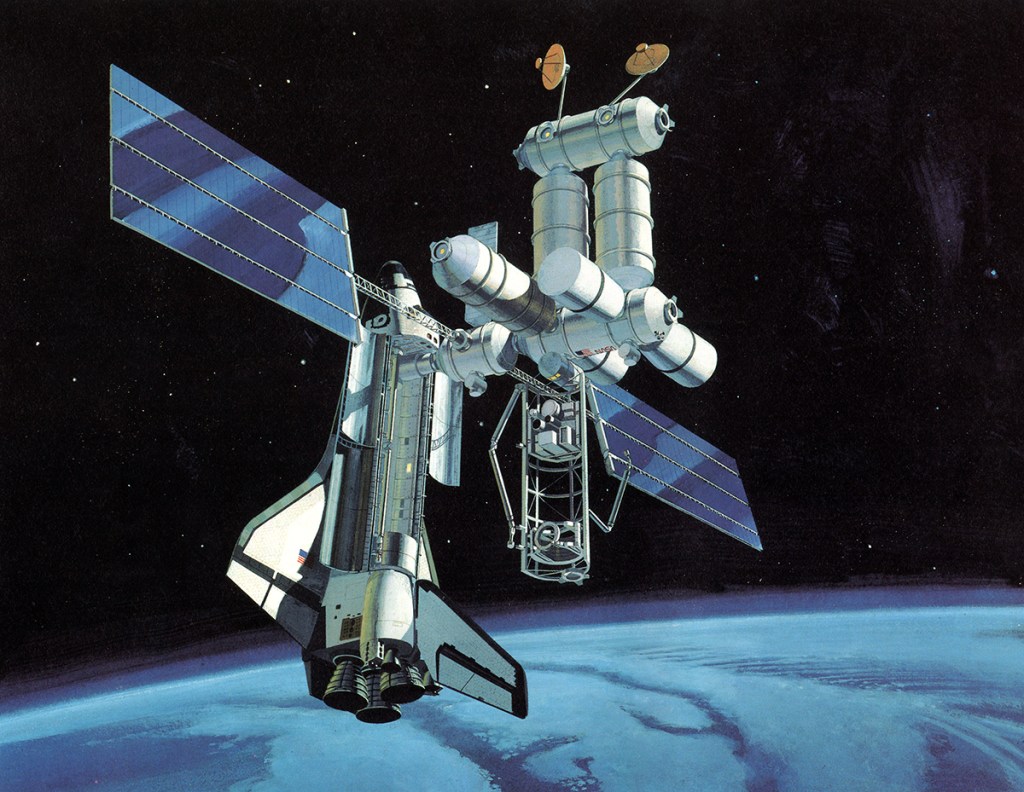
I’m pretty sure the top piece is by North American master illustrator M. Alvarez because he/she signed it. I think the bottom is by the same hand. What are we looking at? It’s a space station, but you knew that. You now know as much as I do. Parked here only because it shares the same page in Flying the Space Shuttles as the 1982 concept by Ted Brown I shared earlier.

Flying the Space Shuttles
Don Dwiggins
Dodd, Mead & Co., 1985

Image credit: NASA
Image source: Numbers Station

Henry Lozano Jr. Gallery

Image credit: North American Rockwell
Image source: Numbers Station

More Ted Brown? Yes please!

Image credit: Rockwell International
Image source: NASM

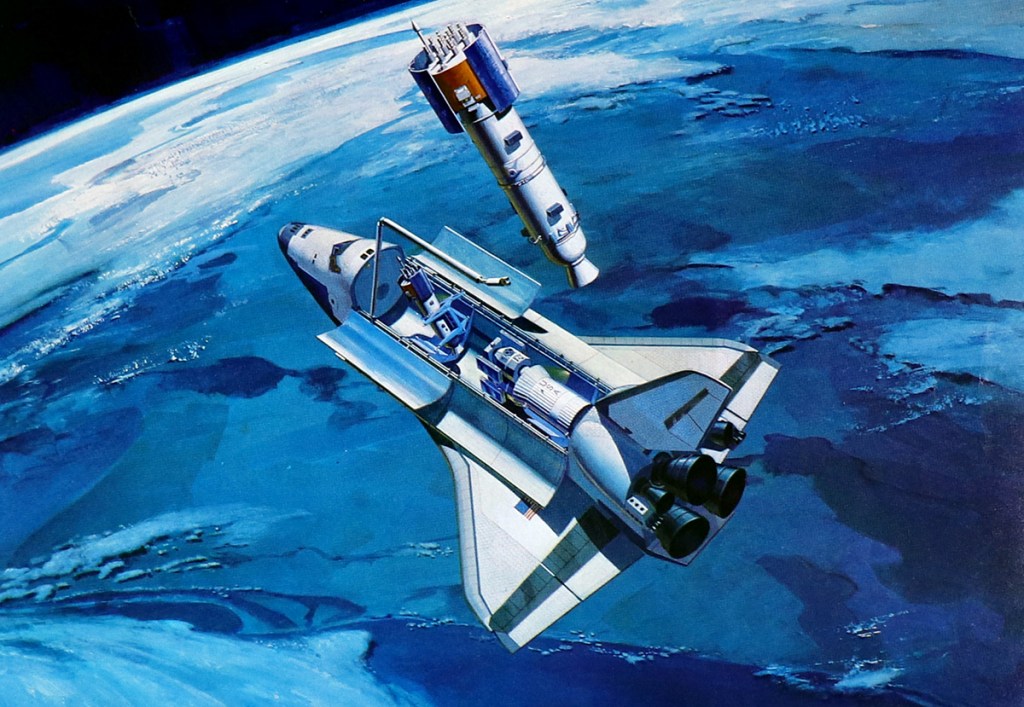
Shuttle Doing Shuttle Stuff

Image credit: Rockwell International
Image source: NASM

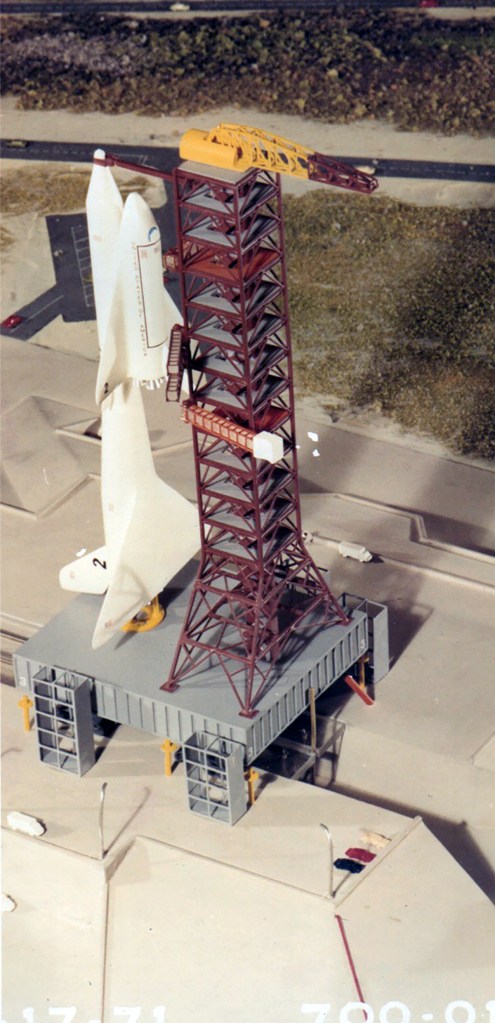
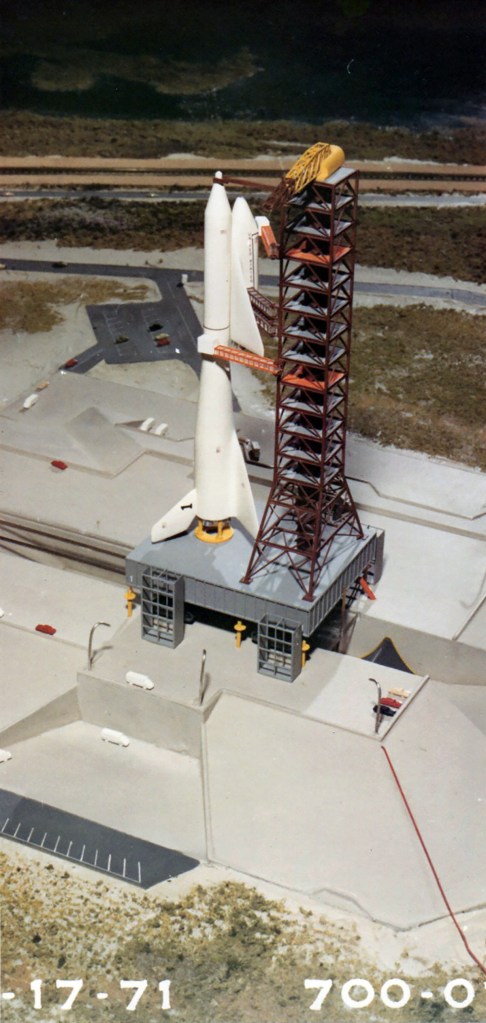
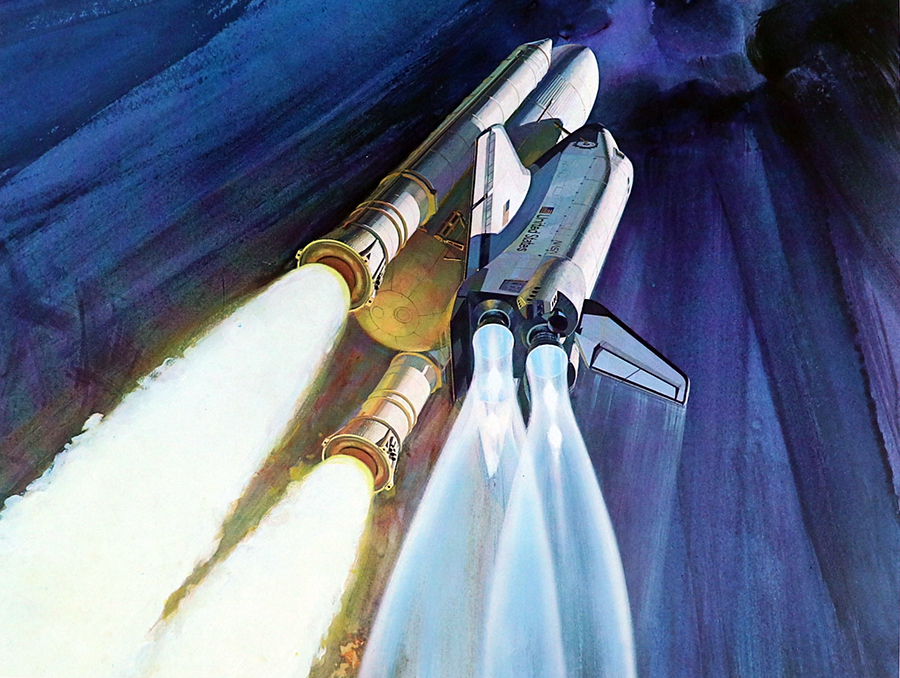
Space Station Launch Sequence

Image credit: Krafft Ehricke Papers, North American Rockwell
Image source: NASM

KAE Papers

Planetary Illustrations (artists’ concepts)

Image credit: Krafft Ehricke Papers / North American Rockwell
Image source: NASM

Cutaway Diagram

Image credit: Rockwell International
Image source(s): NASM, Mike Acs

Shuttle Docking

Our World in Space
Robert McCall & Isaac Asimov
New York Graphic Society, 1974

Image credit: Robert McCall
Image source: Numbers Station

Snoopy & Charlie Brown

Image credit: NASA JSC
Image source: NASA Images

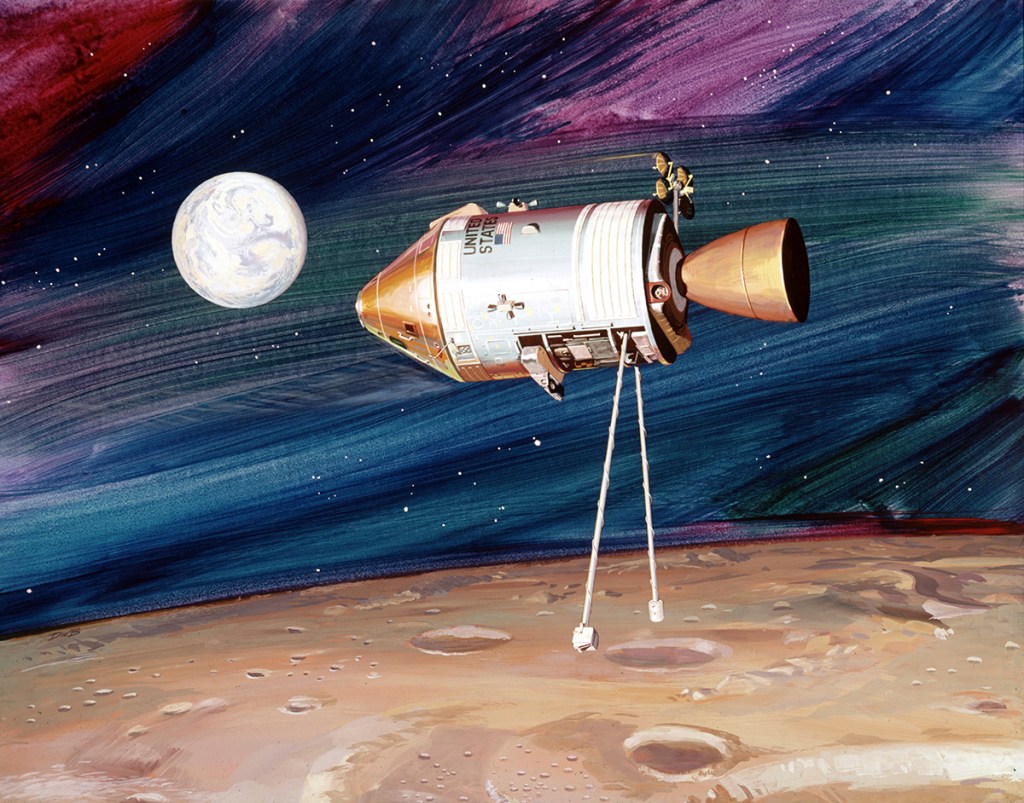
S71-39481

S71-39481 (July 1971) — An artist’s concept showing TRW’s small lunar subsatellite being ejected into lunar orbit from the SIM bay of the Apollo 15 Service Module. The 80-pound satellite will remain in orbit a year or more, carrying scientific experiments to study space in the vicinity of the moon. The satellite carries three experiments: S-Band Transponder; Particle Shadows/Boundary Layer Experiment; and Subsatellite Magnetometer Experiment. The subsatellite is housed in a container resembling a rural mailbox, and when deployed is spring-ejected out-of-plane at 4 fps with a spin rate of 140 rpm. After the satellite booms are deployed, the spin rate is stabilized at about 12 rpm. The subsatellite is 31 inches long and has a 14 inch hexagonal diameter. The exact weight is 78.5 pounds. The folded booms deploy to a length of five feet. Subsatellite electrical power is supplied by a solar cell array outputting 25 watts for dayside operation and a rechargeable silver-cadmium battery for nightside passes.

Image credit: NASA JSC
Image source: NASA Images