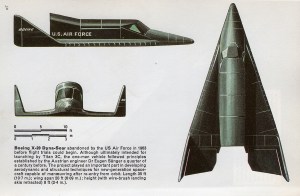
X-20 Three-View

Boeing X-20 Dyna-Soar abandoned by the US Air Force in 1963 before flight trials could begin. Although ultimately intended for launching by Titan 3C, this one-man vehicle followed principles established by the Austrian engineer Dr Eugen Stänger a quarter of a century before. The project played an important part in developing aerodynamic and structural techniques for new-generation space-craft capable of maneuvering after re-entry from orbit. Length 35 ft (10.7m.) wingspan 20 ft (6.09m.); height (with wire-brush landing skis retracted) 8 ft (2.4m.).

Frontiers of Space
Philip Bono & Kenneth Gatland
Macmillan, 1969

Image credit: Macmillan
Image source: Numbers Station
NAR 1970

Image credit: North American Rockwell
Image source: Numbers Station
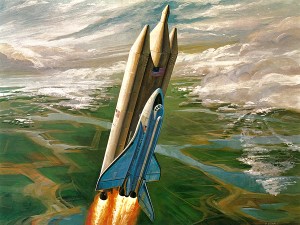
Space Shuttle Illustration

Previously shared here, the same Alvarez artwork without the overpaint:

Image credit: NASA
Images: NASA GRC, Numbers Station

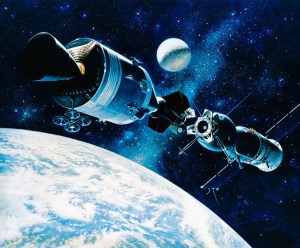
Art Concept – ASTP

Image credit: NASA JSC
Image source: NASA Images

Mars Operational Phase

It’s January 1972.

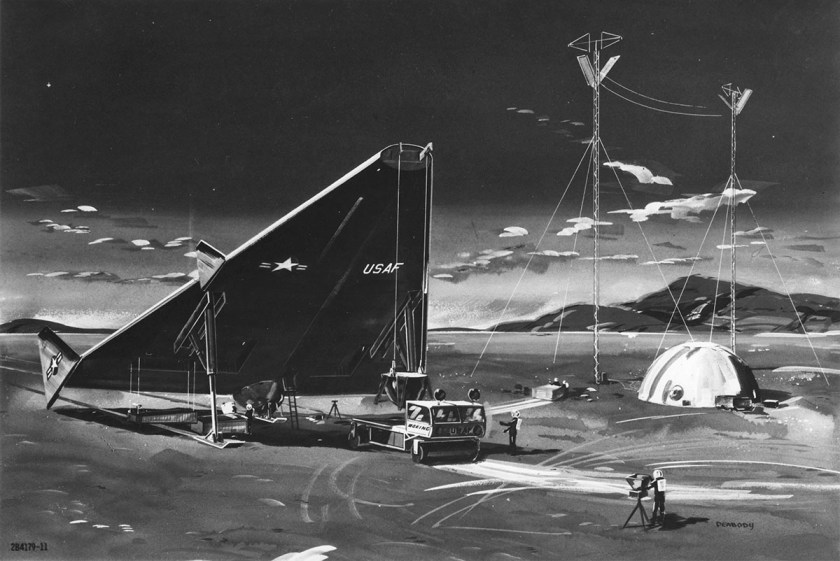
Having safely glided to a stop on a Martian plateau, this illustration depicts the Operational Phase of the mission. The crew have already inflated their six meter habitat (it’s a tent), assembled the flat-pack steamroller and are shown removing the nuclear reactor so it can be dragged at least a kilometer from base camp so it won’t kill them.

With the reactor at a safe distance, the crew of eight have 479 days to explore the surface of Mars and maybe do a spot of gardening.

You can read more about this fascinating 1960 Boeing Study here.

Image credit: Boeing / Chicago Daily News
Image source: Numbers Station
Balloon Repair in LEO

Image credit: Boeing Aircraft Company
Image source: Numbers Station

Alvarez

Image credit: North American Rockwell
Image source: Numbers Station