Image credit: NASA
Image source: National Archives
Image credit: NASA
Image source: National Archives
Image credit: U.S. Air Force Art Collection
Image source: National Archives

Image credit: U.S. Air Force Art Collection
Image source: National Archives
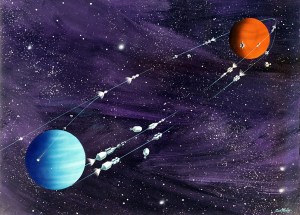
Image credit: General Dynamics / Astronautics
Image source: SDASM Archives
In Orbit
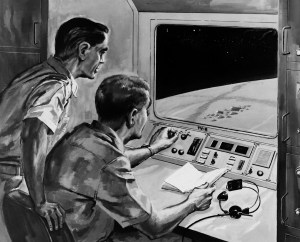
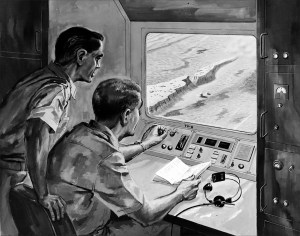
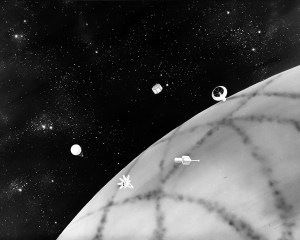
Above: In the flyby scenario, Mars is studied by teleoperated probes. Below Artwork from Ehricke’s time at Convair showing the EMPIRE convoy in orbit. The MEV descends to the surface, landers based on NASA’s Surveyor are dispatched to Deimos and Phobos, a balloon deploys in the Martian atmosphere while a satellite begins to survey the planet.

Transportation [1]
Planets and Planetary Missions
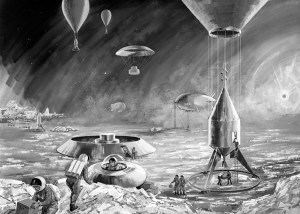
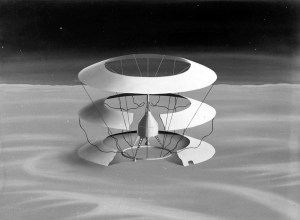
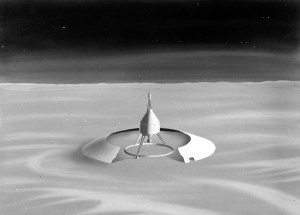
Above: Surface operations. These images are from the SDASM Archive. Below: From the KAE papers, the MEV returns to orbit.

Departure
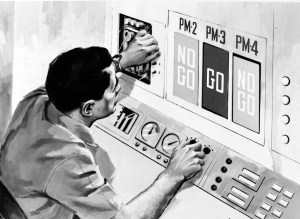
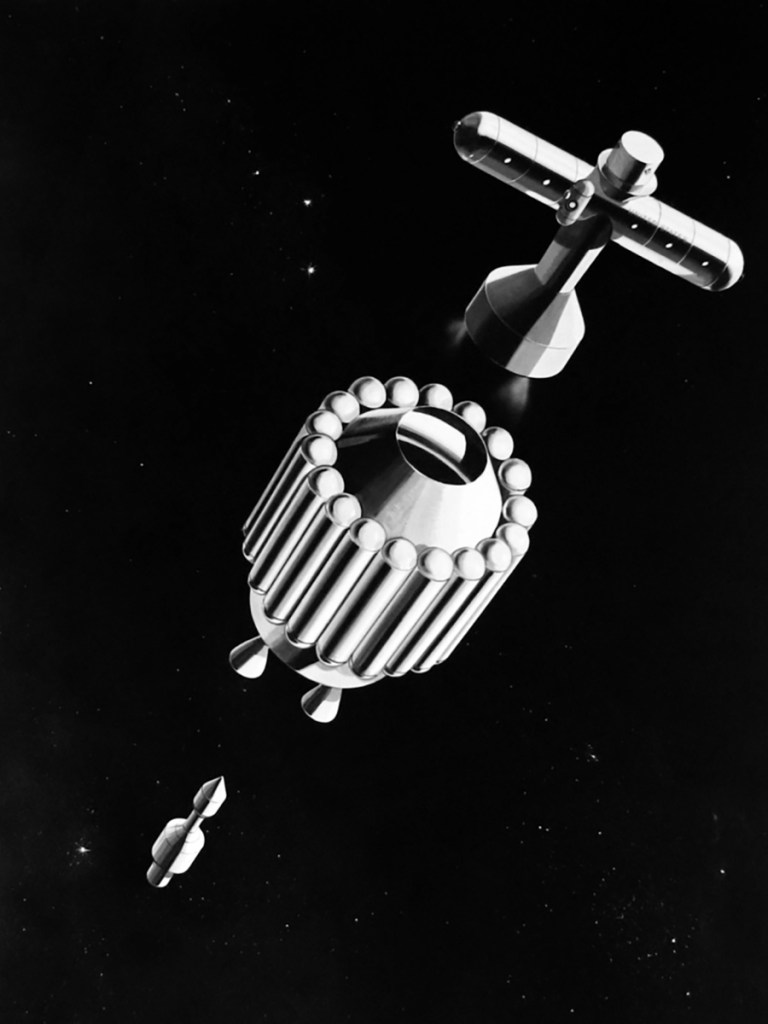
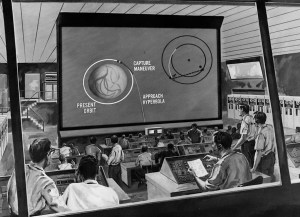
Above: With everything and everyone safely stowed, the fleet get a “Go!” from Mission Control. Below: Free of Mars’ gravitational pull – and on course for Earth – the third stage is discarded.
Arriving Home
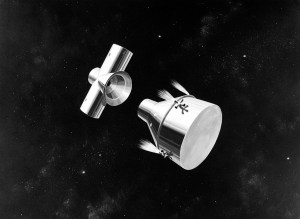
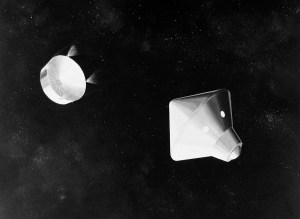
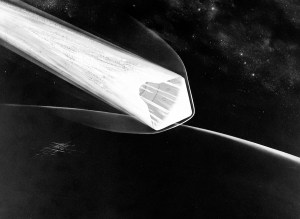
Back in Earth orbit, the crew would transfer to the EEM for re-entry. I think these are from Ehricke’s time at Convair and the paintings by John Sentovic.
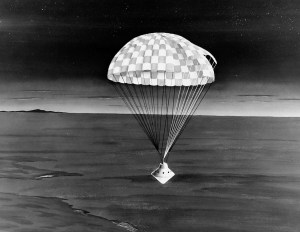
Artists’ concepts (Spacecraft) [1 of 6 folders]
Image credit: Krafft Ehricke Papers
Image source: NASM
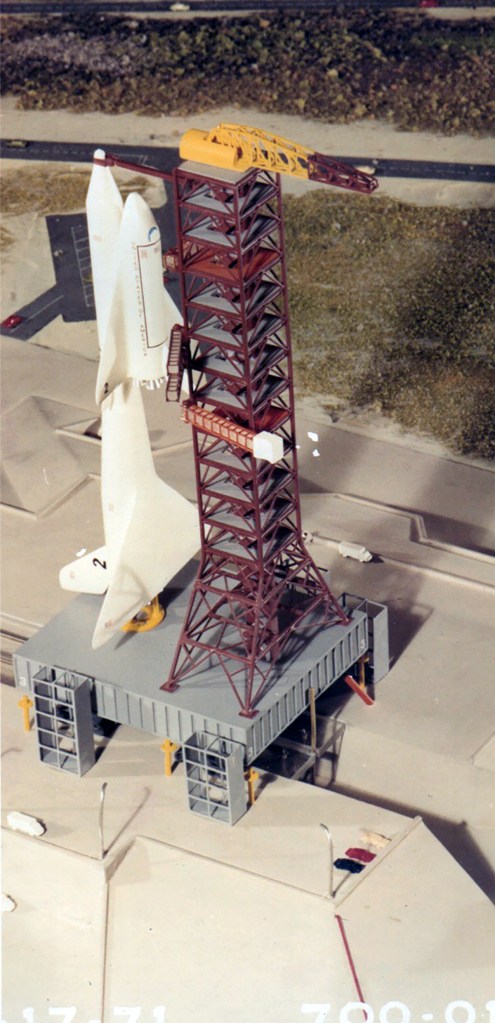
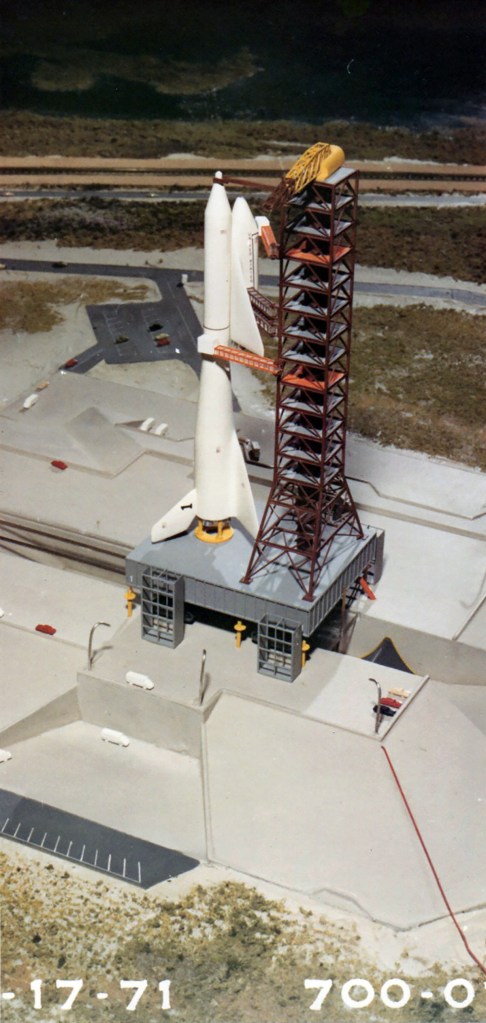
Image credit: North American Rockwell
Image source: Numbers Station
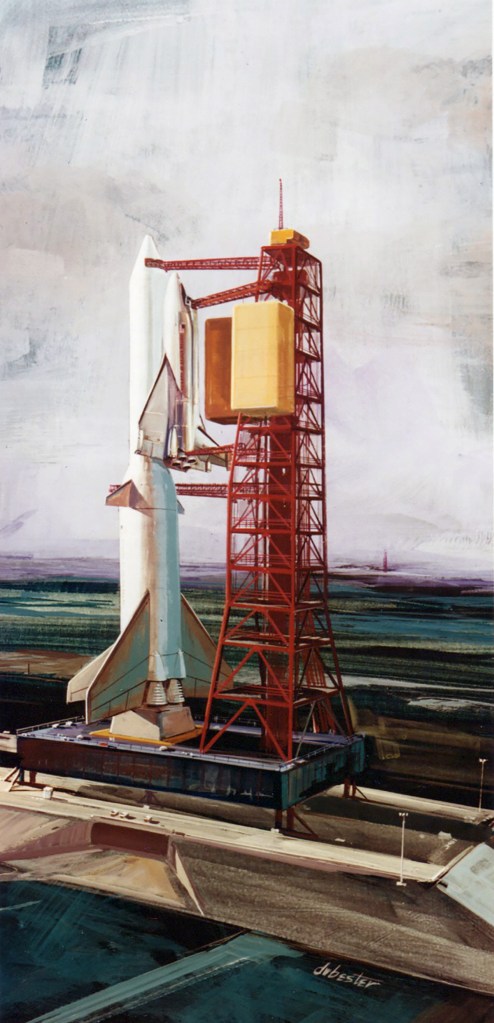
Image credit: North American Rockwell
Image source: Numbers Station
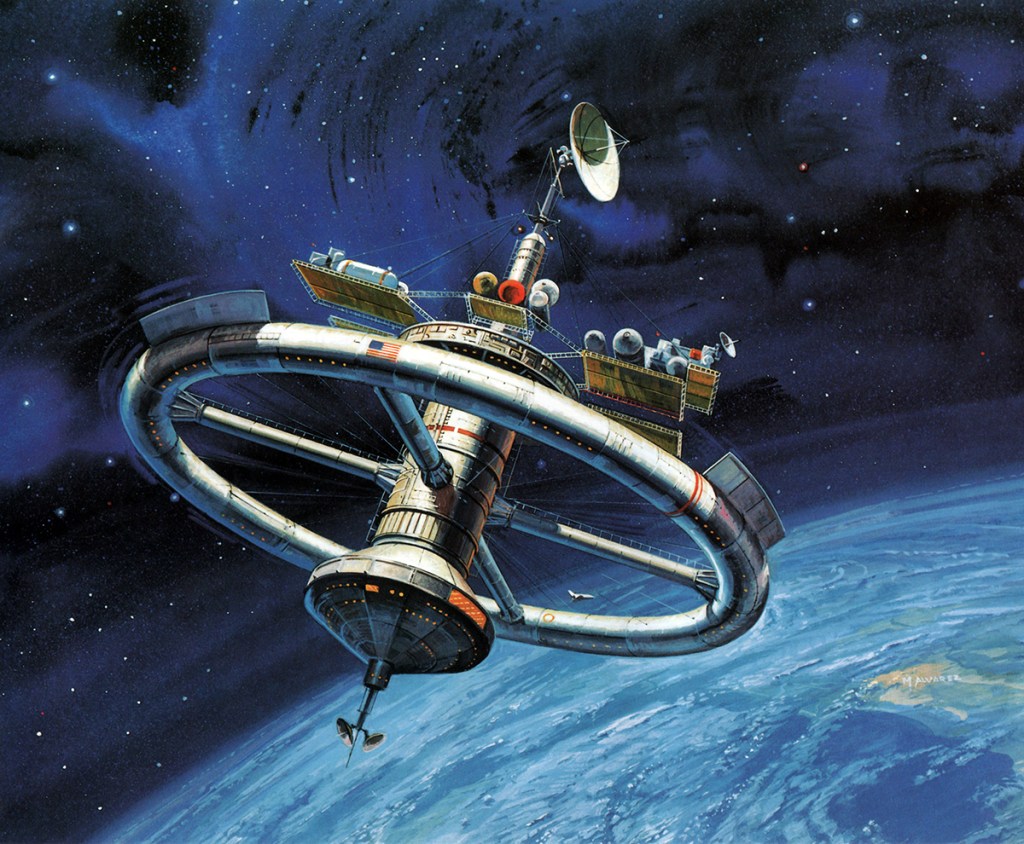
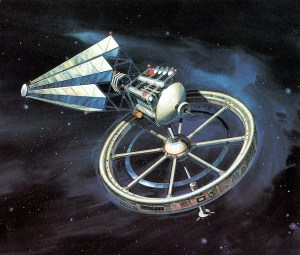
I’m pretty sure the top piece is by North American master illustrator M. Alvarez because he/she signed it. I think the bottom is by the same hand. What are we looking at? It’s a space station, but you knew that. You now know as much as I do. Parked here only because it shares the same page in Flying the Space Shuttles as the 1982 concept by Ted Brown I shared earlier.
Flying the Space Shuttles
Don Dwiggins
Dodd, Mead & Co., 1985
Image credit: NASA
Image source: Numbers Station
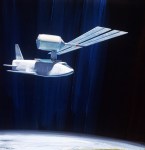
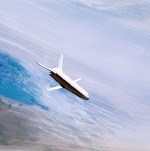
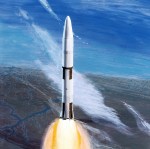
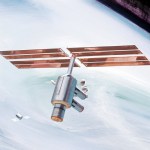
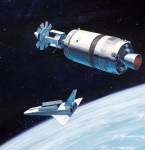
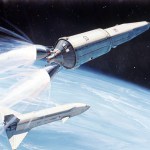
Image credit: North American Rockwell
Image source: Numbers Station
Let’s go back to Solar Transportation for a minute, because it helps to explain some of the images in the Ehricke Papers. Ehricke’s team detailed a Mars lander that looked a lot like early Apollo concepts, but the some of the folders contain images of a landing using what looks like Gemini hardware. I think this image captioned in Solar Transportation is a clue.

From Solar Transportation:
In 1982, a 69 day Mars capture mission launches. The crew conducts intensive reconnaissance both from orbit, and using probes – including landers and returners – but no manned surface excursions are planned. A mission launched between 1984 is one-way, involving a 529 day stay on Mars. A follow-on mission in 1985 (via Venus) retrieves the crew.
Reading back through the General Dynamics and Douglas UMPIRE reports, I think there’s enough connective tissue to make the argument that the paintings below are at least vicinal to EMPIRE / UMPIRE if not directly related, like kissing cousins. It doesn’t really matter though, because I’m not a real historian, and this isn’t a thesis.


Above: Gemini, on Mars or wherever. Below: Yup, that’s a Mars Lander.

Artists’ concepts (Spacecraft) [1 of 6 folders]
Artists’ concepts (spacecraft) [4 of 6 folders]
Image credit: Krafft Ehricke Papers
Image source: NASM
Leaving Earth

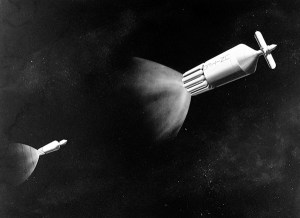

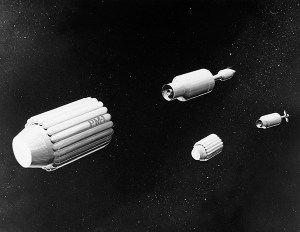
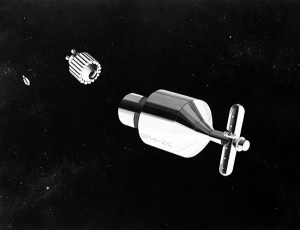
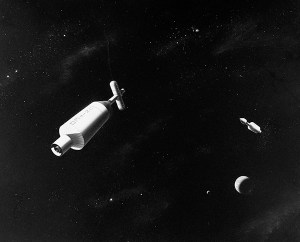
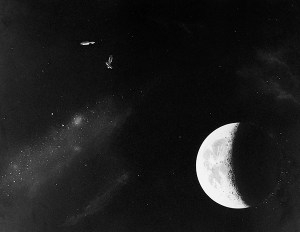
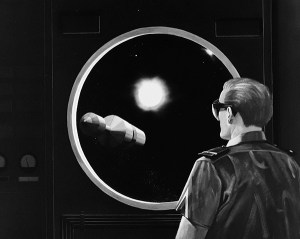
Above: The escape maneuver is performed by firing the first of four nuclear propulsion stages. The stages are jettisoned as each maneuver is complete. The crew ship rotates slowly to provide artificial gravity for the crew. Bottom Right: Drew Carey.
Artists’ concepts (Spacecraft) [1 of 6 folders]
En route to Mars
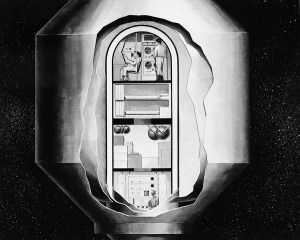
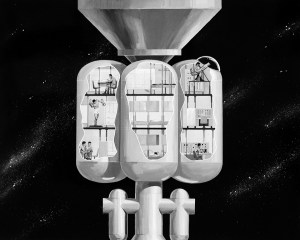
Left: Enjoying Frogger™ while someone else does the laundry. Right: The LLS is modularized, each module can be sealed off if damaged. Mid-deck and someone is taking a shower because in space someone is ALWAYS taking a shower.
Planets and Planetary Missions
Arrival at Mars
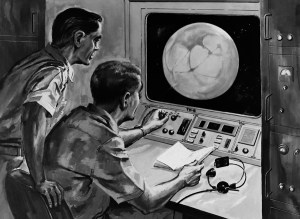
From: Artists’ concepts (Spacecraft) [1 of 6 folders]
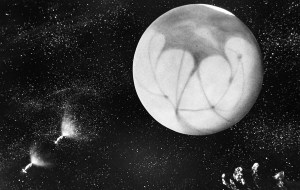
It’s not clear (to me) whether this image represents the convoy arriving at or departing from Mars. Either way, it’s an amazing visual. If it’s arrival, the second stages are fired, slowing the convoy so the can be captured by Mars’ gravity.
Mars Orbit
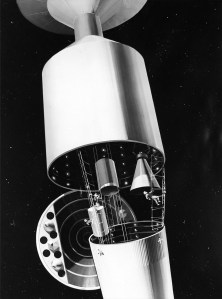
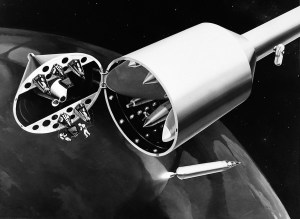
Above: In Mars orbit, the hangar of the Cargo Module is depressurized and the crew remove and deploy surface probes. Below: One last treat, the Convair EMPIRE report went into great detail about the automated Mars probes. One concept was a Mars lander based on NASA’s Surveyor.

Artists’ concepts (Spacecraft) [1 of 6 folders]
Image credit: Krafft Ehricke Papers
Image source: NASM