Miscellaneous Graphics [2 of 2 folders]
Image credit: Krafft Ehricke Papers
Image source: NASM
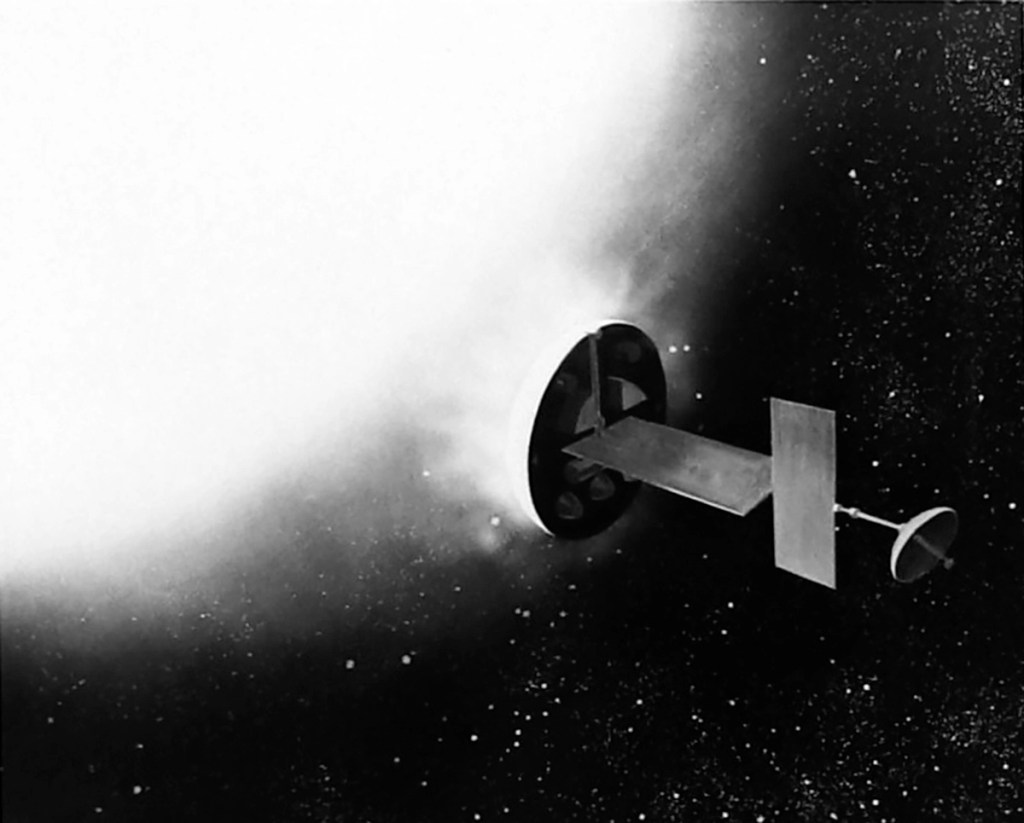
Artists’ concepts (spacecraft) [6 of 6 folders]
Solar Transportation was a presentation given by Krafft Ehrikke at the American Astronautical Society in 1966. In essence, the lecture describes how our solar system might be navigated in the year 2000. As reprinted in the book by Marsha Freeman, it’s a surprisingly enjoyable read.
The summary includes a wish list of propulsion systems to be developed.
Late 70s and most of the 80s
Late 80s and 90s
Ehrikke then presents a timetable, representing a “sensible and likely” evolution of manned helionautical missions.
1970s
1980s
I990s
Solar Transportation then goes back the future and the fall of the year 2000, looking back at the events that led to the interplanetary travel we enjoy at the dawn of the new millennium. The interplanetary corridors between Mercury and Saturn are alive with manned vehicles. Unmanned probes have reached the Sun. Food is grown on Mars and it is expected that exports to Earth will begin within fifty years. An orbital supply and rescue station is established at Venus, acting as a helionautical coast guard station. But like I said already, go and read it yourself.
Image credit: Krafft Ehricke Papers
Image source: NASM

Mars Capture Mission in 1982. Orbit crew inspects the nuclear twin engine NERVA II system of the Earth Departure Module. Each engine delivers 250, 000 lbs. of thrust.
Image credit: Krafft Ehricke Papers
Image source: NASM
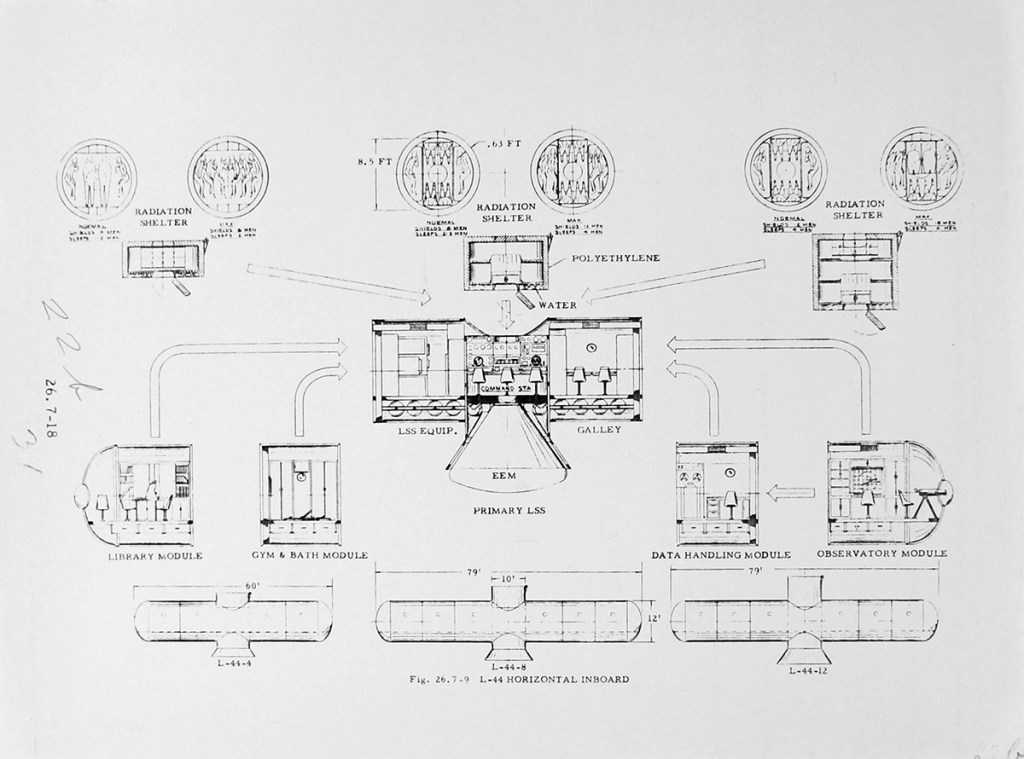
Artists’ concepts (spacecraft) [2 of 6 folders]
Vehicle Requirements
Image credit: Krafft Ehricke Papers
Image source: NASM
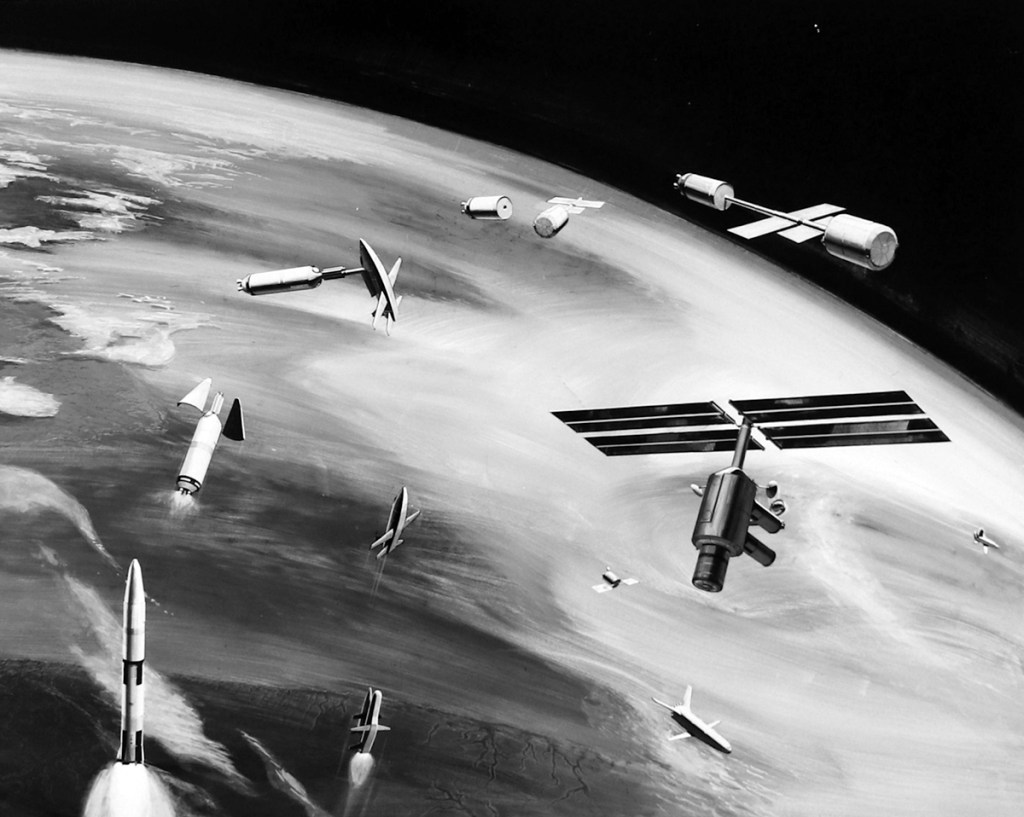
Image credit: Krafft Ehricke Papers, North American Rockwell
Image source: NASM
Planetary Illustrations (artists’ concepts)
Image credit: Krafft Ehricke Papers / North American Rockwell
Image source: NASM

Christmas in Selenopolis: While some of the residents of the lunar city enjoy ice skating and other winter sports, other citizens are visiting the Hall of Astronauts museum, on the left. Others travel on the indoor monorail, seen on the right, visiting friends, or perhaps doing last-minute shopping.
Image credit: Krafft Ehricke Papers / Space Global
Image source: NASM
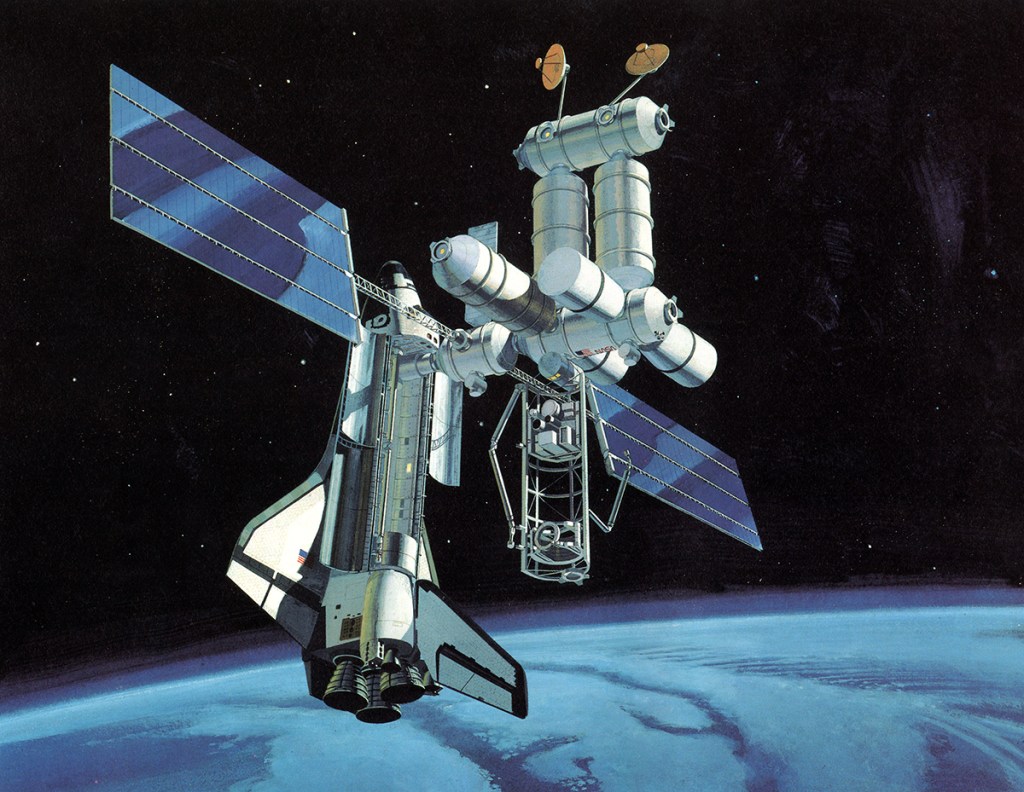
Image credit: NASA
Image source: Numbers Station
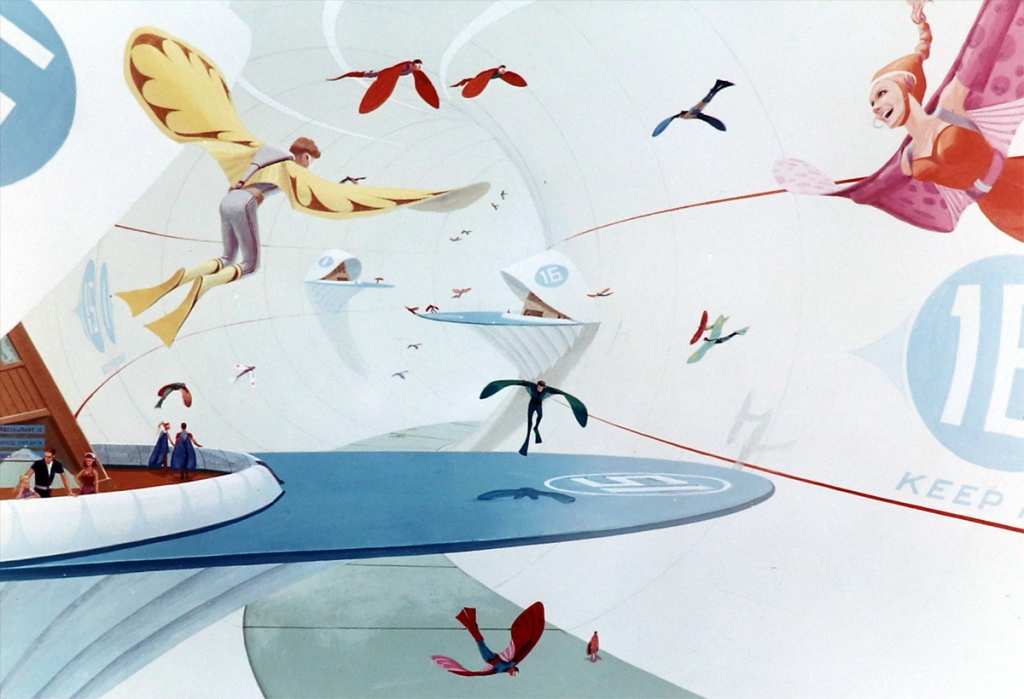
Image credit: Krafft Ehricke Papers
Image source: NASM