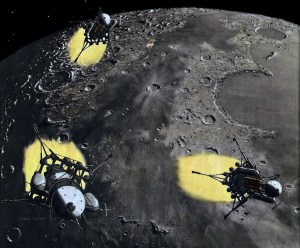
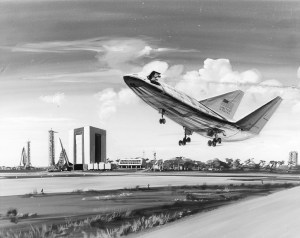
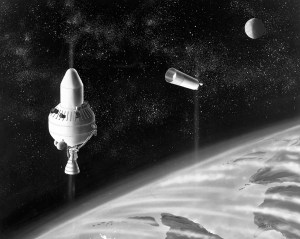
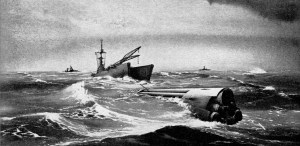
Landing on the moon. Ten minutes before touchdown, rocket motors are switched on to slow down ships’ high-speed fall caused by the moon’s gravity. Vehicles are maneuvering 550 miles above landing area known as Sinus Roris (Dewy Bay), dark plain above cargo ship in lower left.
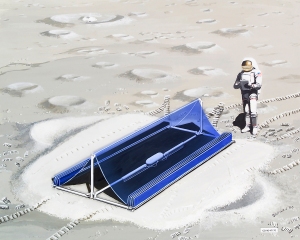
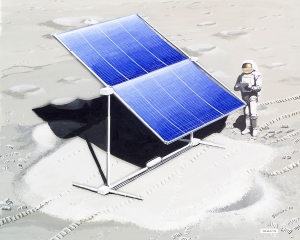
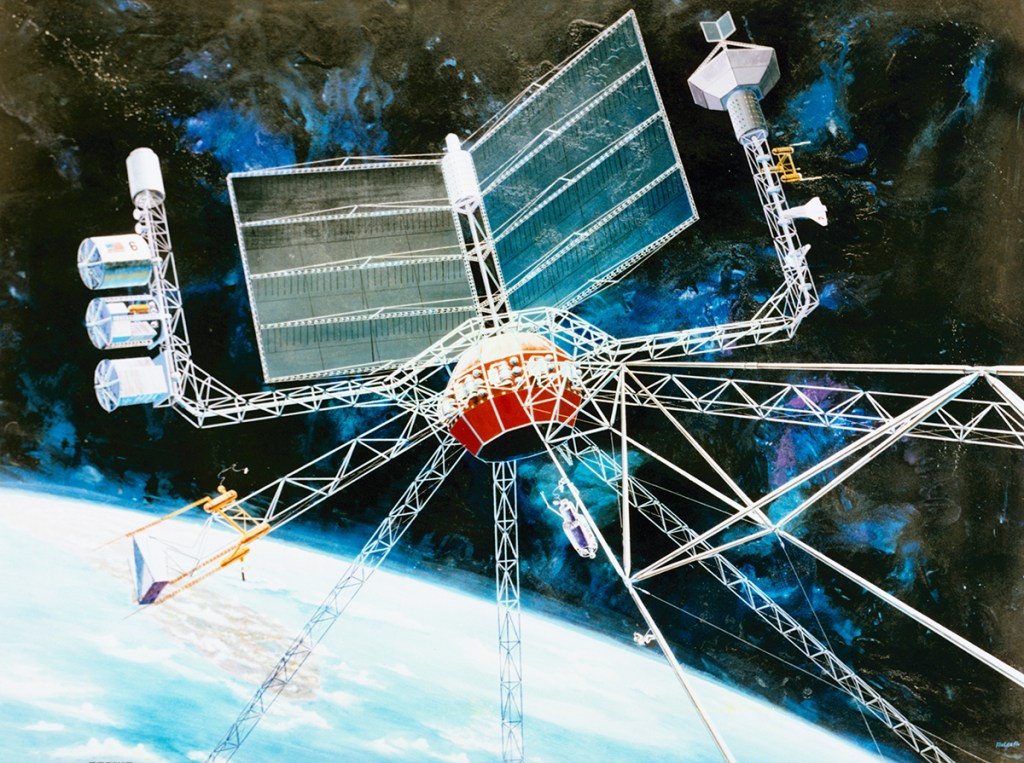
In this series by Lewis Research Center artist Les Bossinas, an astronaut demonstrates multi-purpose solar arrays. As it harnesses the power of the sun, the first can be configured as a wind-tunnel for protecting strawberries or used as a tent for children’s garden parties. The second model can be used as a balance beam for gymnastics, a ping pong table, or folded up to create a porch screen. Just the thing for an evening cocktail while watching the sunset.
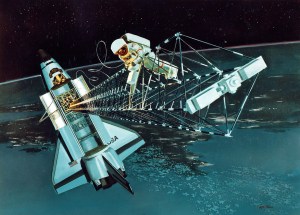
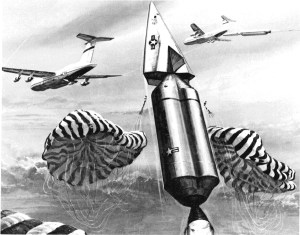
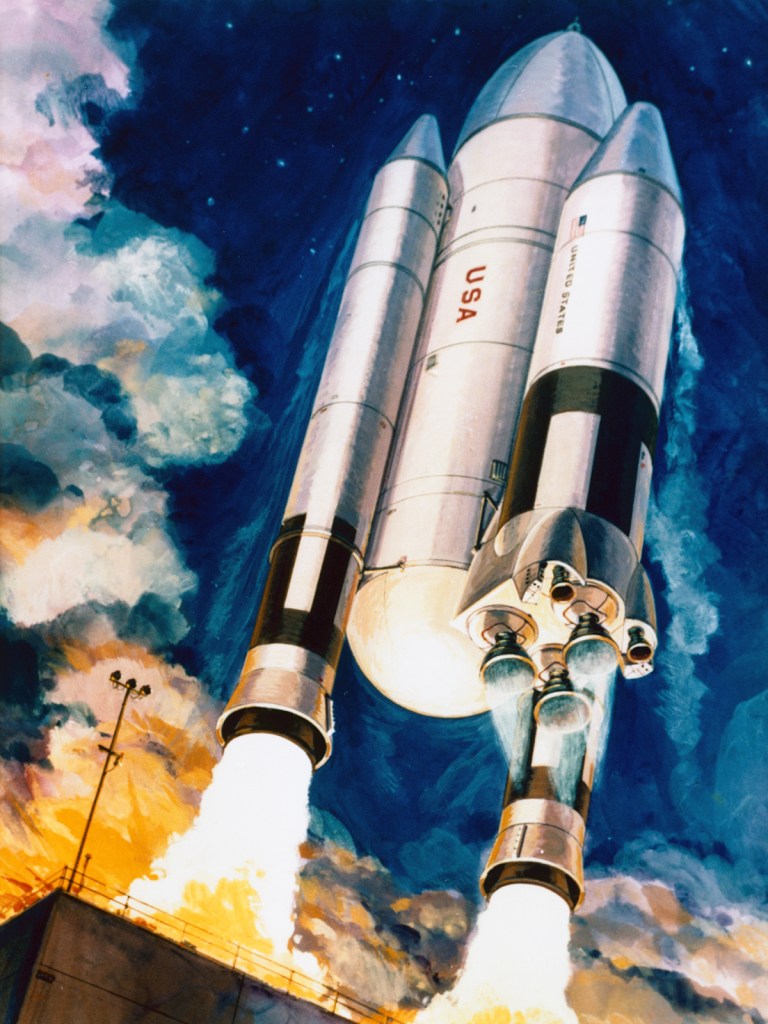
A Lockheed artist’s impression of a novel method of taking a unique and untried method of orbital delivery and making it even more unique and more untried. As my wife said to me in the giftshop of the Palm Springs Aerial Tramway, “Baby, I’ll take the car and see you up there!”
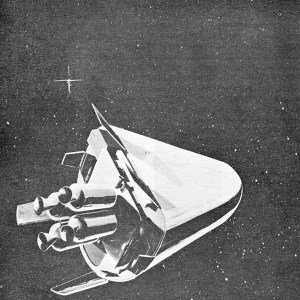
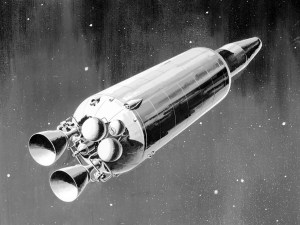
L. Apollo is pictured here by an artist of The Martin Co., one of three leading Space Age manufacturers awarded study contracts on project by NASA. Apollo was a god of Ancient Greece, son of Clymene and Titan. This is nicely appropriate, since Martin produces the mighty Titan intercontinental ballistic missile.
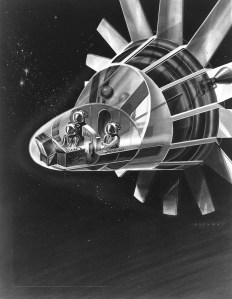
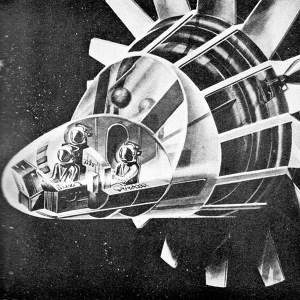
R. The Apollo lunar spacecraft planned to carry 3 crewmen on round trip between earth and the moon is shown above here enroute among the stars. Protruding fan-shapes are solar arrays to gather energy from sun for use aboard. Apollo was said to have been the triumphant participant in Olympic games. Homer called him the “god of prophecy.”
America’s Mightiest Missile by Larry Eisinger Arco Publishing, 1961