S-83-28321

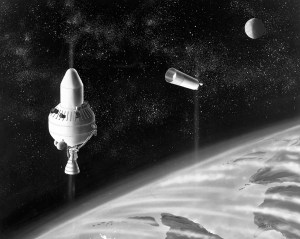
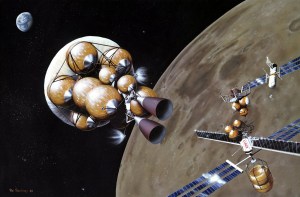
S83-28321 (14 March 1983) — In this artist’s concept of future lunar operations, a lunar ferry is about to burn out of lunar orbit for the trip back to facilities in low Earth orbit. The ferry vehicle carries tank modules filled with liquid oxygen, which has been produced from mining operations on the surface of the Moon. One possibility for such operations would be to have manned facilities in low lunar orbit, such as illustrated here. At the upper right side of the photo is a small orbiting manned station. At the lower right side of the photo is a liquid oxygen propellant dump, to which a lunar landing vehicle carrying liquid oxygen is about to dock. The lunar ferry vehicle itself is representative of one type of aerobraking system. The balloon-like torus around the center of the ferry-craft would inflate to several times its illustrated size and, once the vehicle has swooped down close to the Earth’s outer atmosphere on the return journey, would use atmospheric drag to slow the craft and place itself in low Earth orbit. The liquid oxygen would then be used in operations there for fueling various vehicles, including an orbital transfer vehicle for trips to geosynchronous Earth orbit. This concept is part of a study done for the Johnson Space Center by Eagle Engineering of Houston. The artist was Pat Rawlings.

Image credit: Eagle Engineering
Image source: Internet Archive
Ready Or Not!

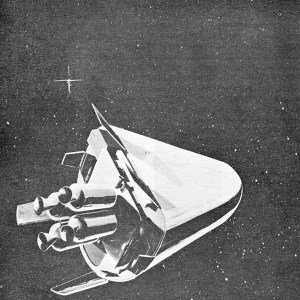
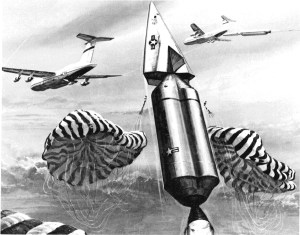
A Lockheed artist’s impression of a novel method of taking a unique and untried method of orbital delivery and making it even more unique and more untried. As my wife said to me in the giftshop of the Palm Springs Aerial Tramway, “Baby, I’ll take the car and see you up there!”

Image credit: Lockheed
Image source: AFMC 

Martin Apollo

see also:

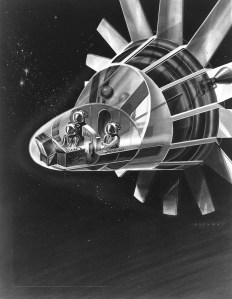
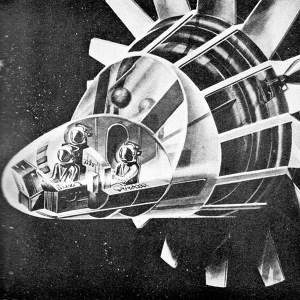
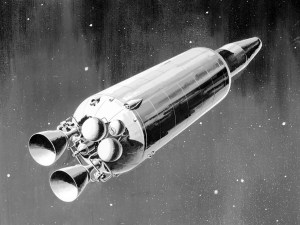
L. Apollo is pictured here by an artist of The Martin Co., one of three leading Space Age manufacturers awarded study contracts on project by NASA. Apollo was a god of Ancient Greece, son of Clymene and Titan. This is nicely appropriate, since Martin produces the mighty Titan intercontinental ballistic missile.

R. The Apollo lunar spacecraft planned to carry 3 crewmen on round trip between earth and the moon is shown above here enroute among the stars. Protruding fan-shapes are solar arrays to gather energy from sun for use aboard. Apollo was said to have been the triumphant participant in Olympic games. Homer called him the “god of prophecy.”

America’s Mightiest Missile
by Larry Eisinger
Arco Publishing, 1961

Image credit: NASA
Image source(s): Mike Acs, Numbers Station

Short Final

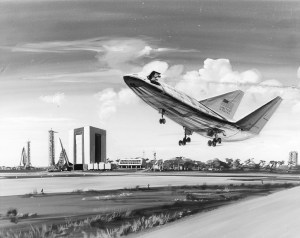
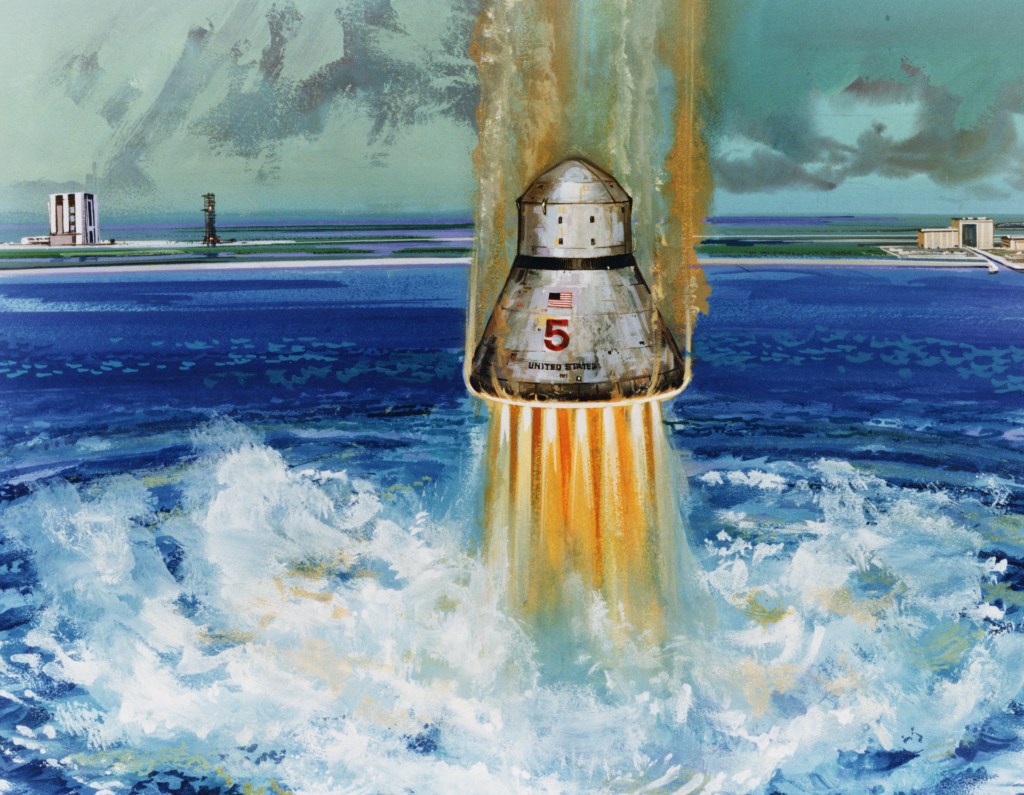
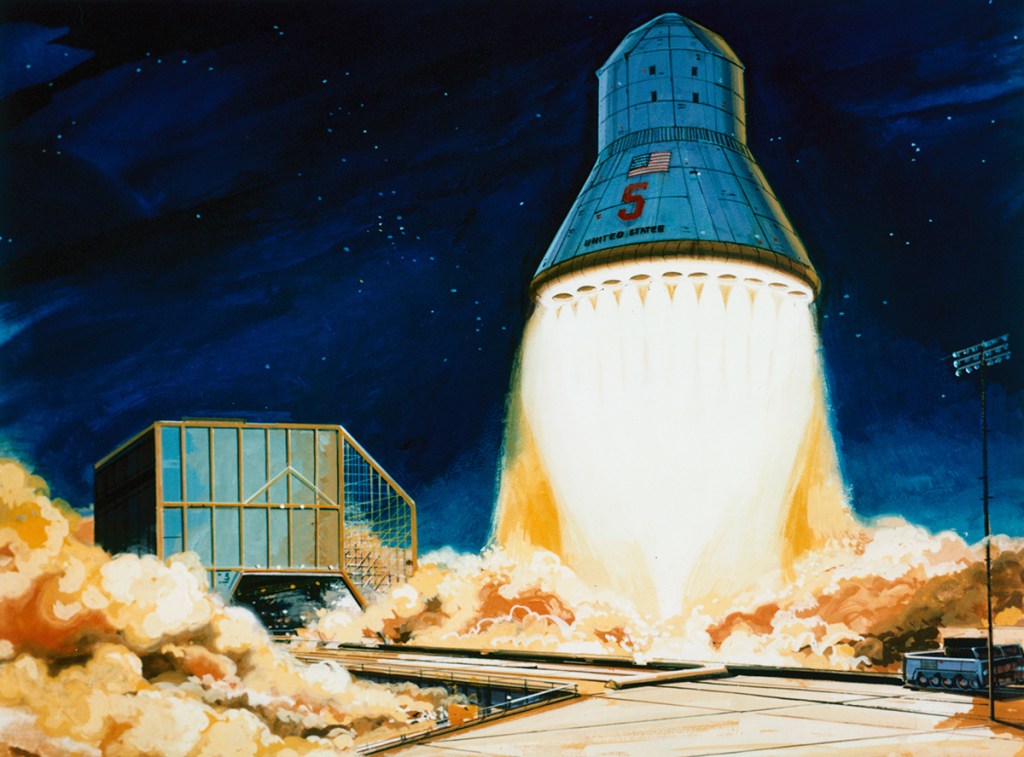
Stunning representation of a NAR Phase A orbiter about to land by Henry Lozano Jr., from the collection of everyone’s favorite space archivist.

Image credit: North American Rockwell
Image source: Mike Acs

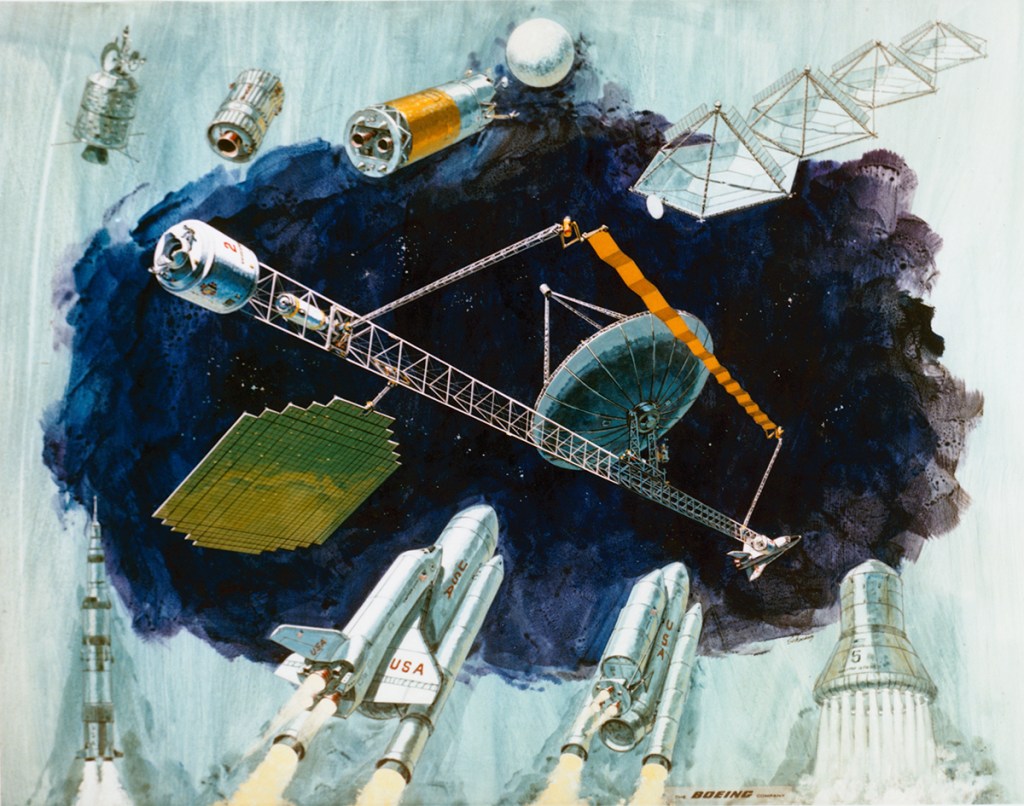
S-76-24322

Image credit: Boeing
Image source: National Archives

Pioneer G

Image credit: NASA
Image source: Numbers Station

SPS

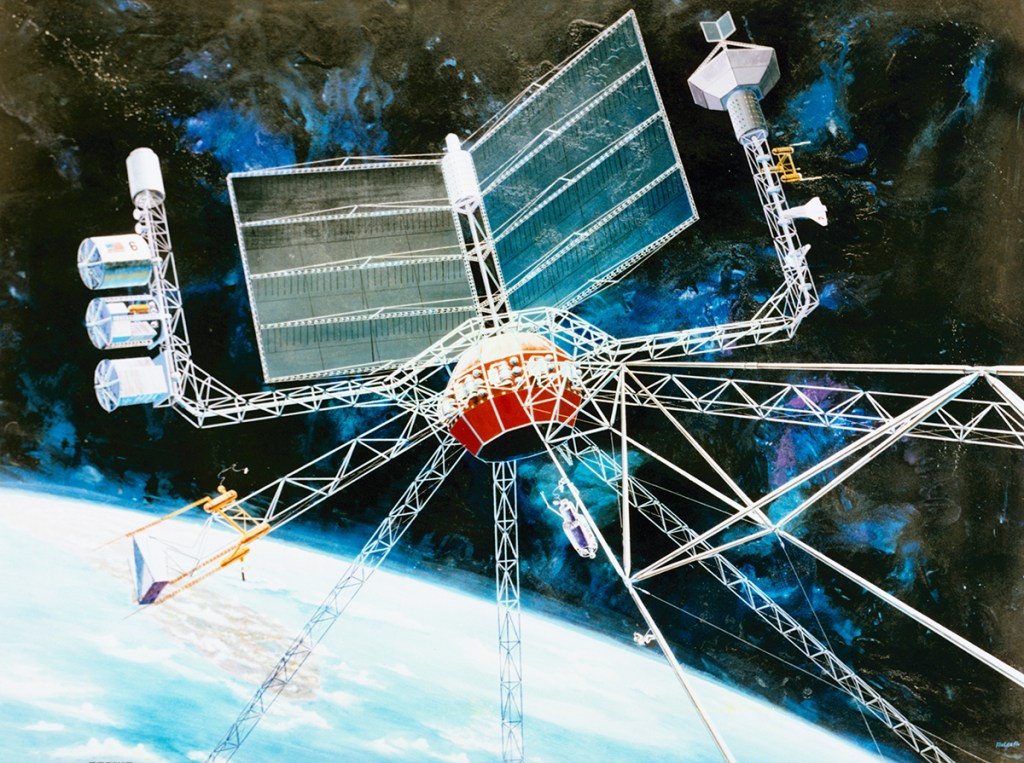
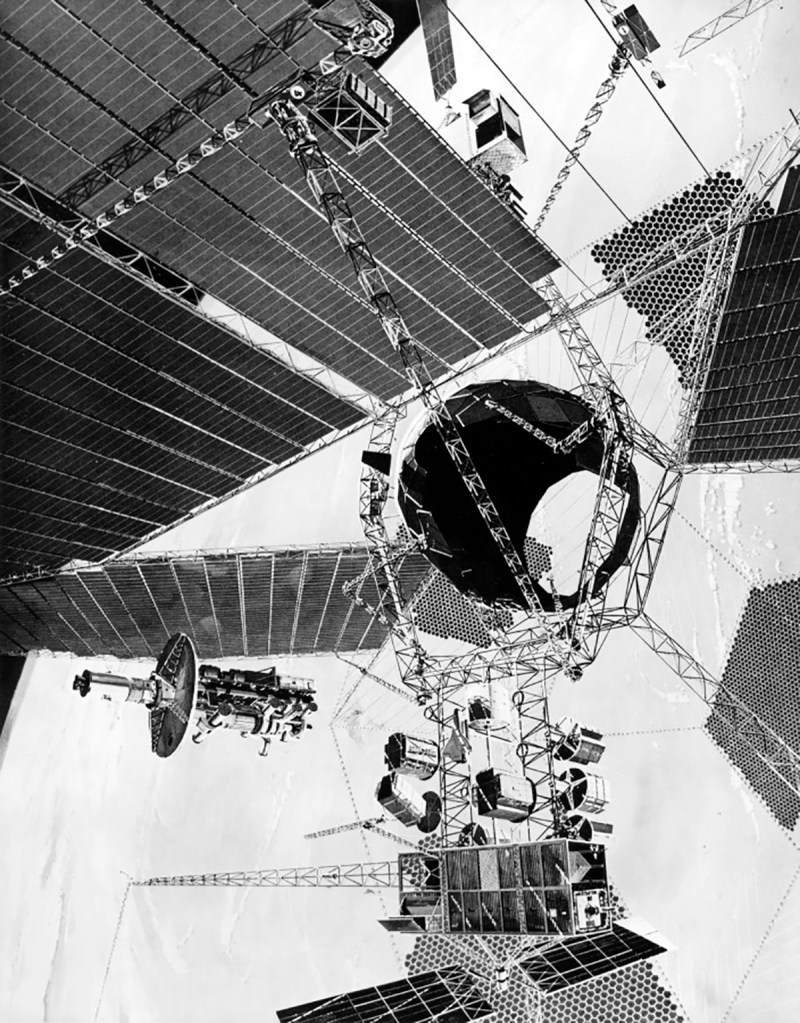
In the aftermath of the ’70s oil crisis, Boeing designed a solar power satellite system that could supply most of the the United States with electricity. Boeing’s plan envisioned satellites the size of small cities placed in geosynchronous orbit, transmitting electrical energy back to Earth as microwaves. The satellites would either be constructed in low Earth orbit for later deployment into a higher orbit or constructed directly at the higher orbit.

Image credit: Boeing
Image source: SDASM Archives

255-GRC-1980-01085

Image credit: Boeing
Image source: National Archives