Image credit: NASA JSC
Image source: NASA Images
Image credit: NASA JSC
Image source: NASA Images
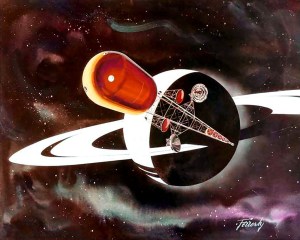
Image credit: Boeing Aircraft Company
Image source: Numbers Station
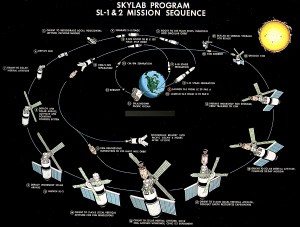
This illustration depicts the Skylab-1 and Skylab-2 mission sequence. The goals of the Skylab were to enrich our scientific knowledge of the Earth, the Sun, the stars, and cosmic space; to study the effects of weightlessness on living organisms, including man; to study the effects of the processing and manufacturing of materials utilizing the absence of gravity; and to conduct Earth resource observations. The Skylab also conducted 19 selected experiments submitted by high school students. Skylab’s 3 different 3-man crews spent up to 84 days in Earth orbit. The Marshall Space Flight Center (MSFC) had responsibility for developing and integrating most of the major components of the Skylab: the Orbital Workshop (OWS), Airlock Module (AM), Multiple Docking Adapter (MDA), Apollo Telescope Mount (ATM), Payload Shroud (PS), and most of the experiments. MSFC was also responsible for providing the Saturn IB launch vehicles for three Apollo spacecraft and crews and a Saturn V launch vehicle for the Skylab.
Image credit: NASA Marshall
Image source: NASA Images
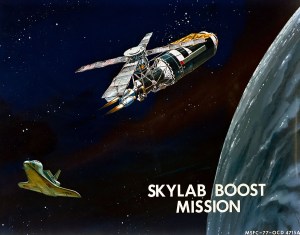
Image credit: NASA Marshall
Image source: NASA Images
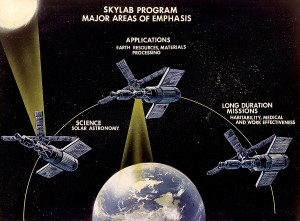
Image credit: NASA Marshall
Image source: NASA Images

Image credit: NASA Marshall
Image source: NASA Images
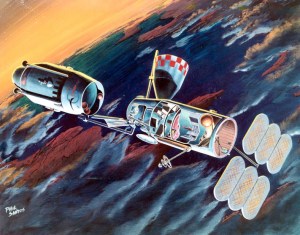
Image credit: Douglas
Image source: SDASM Archives
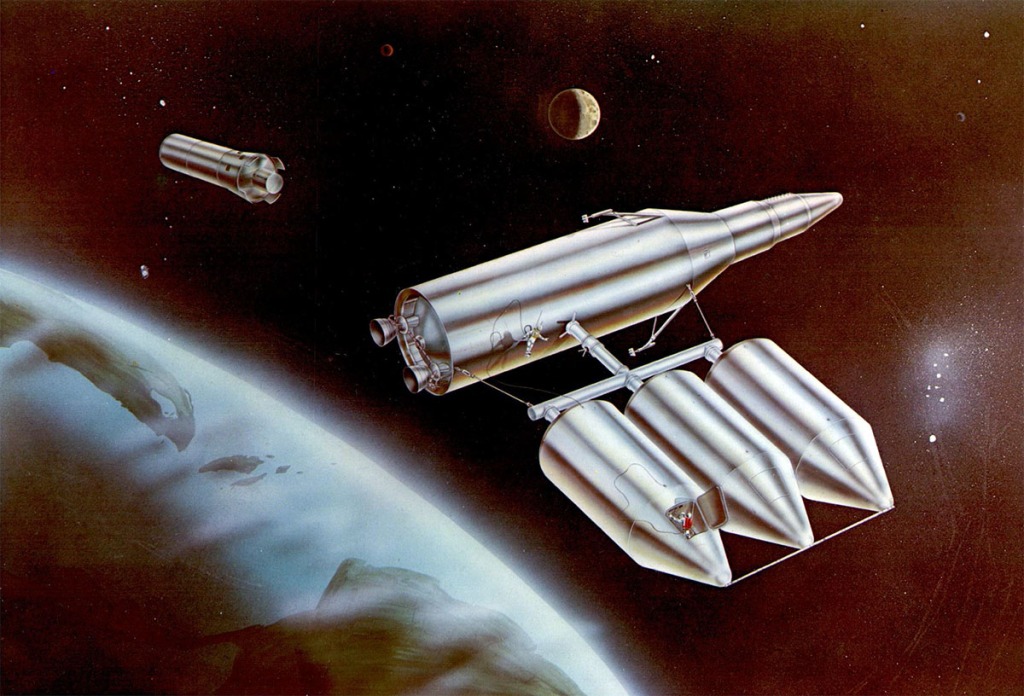
Conceptual view of the operations in the equatorial earth orbit. The operation in orbit is principally one of propellant transfer and it not an assembly job. The vehicle being fueled is the third stage of a SATURN II with a lunar landing and return vehicle attached. The third stage of the SATURN II was used in the combination into orbit and has thus expended its propellants. This stage is fueled into orbit by a detachment of approximately ten men after which the vehicle then proceeds on the moon.
Image credit: United States Army
Image source: NASM
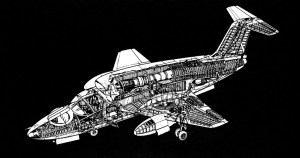
Image credit: Ryan Aeronautical
Image source: SDASM Archives