Image credit: NASA MSFC
Image source: Internet Archive
Image credit: NASA MSFC
Image source: Internet Archive
Image credit: McDonnell Douglas
Image source: Numbers Station
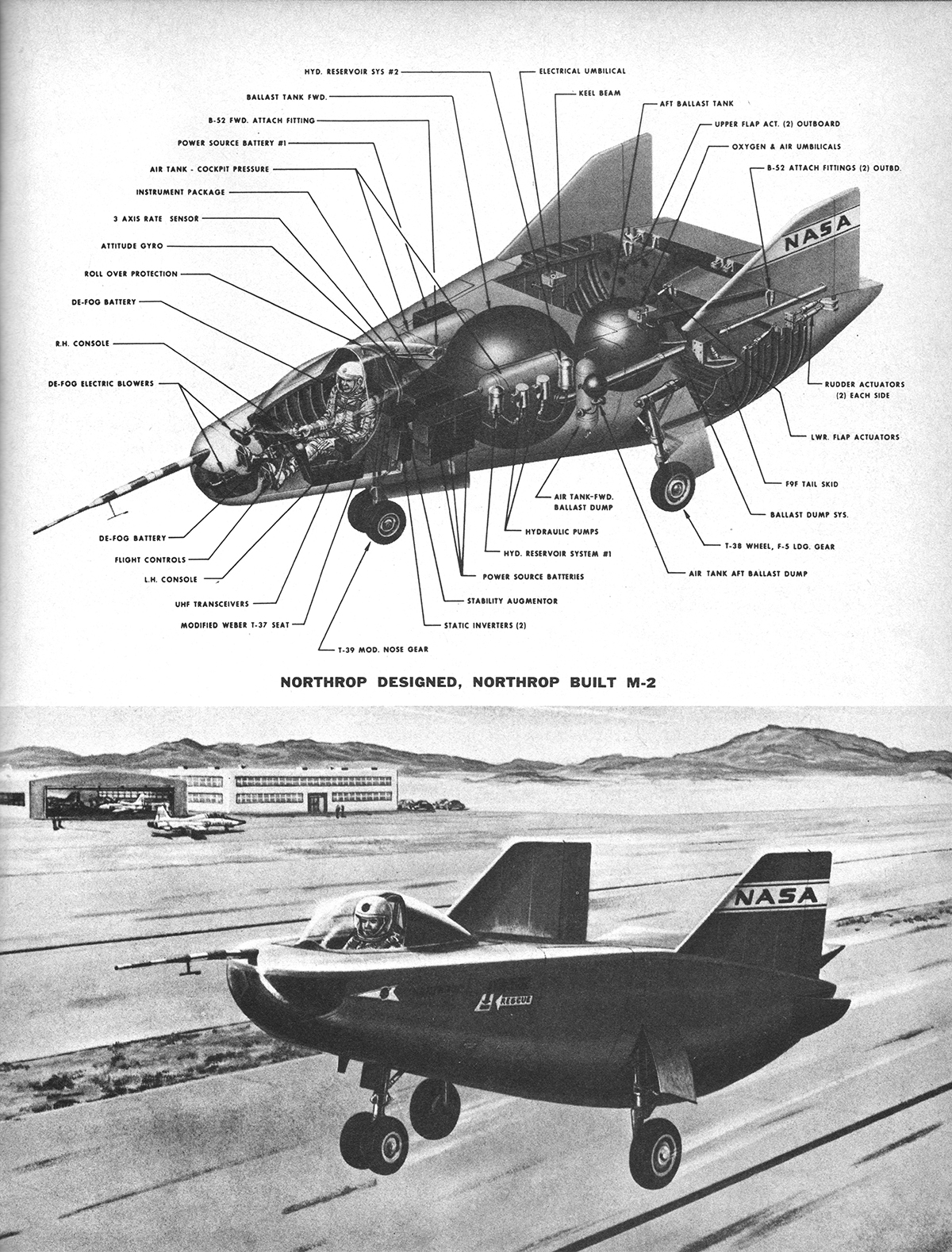
Image credit: Northrop
Image source: Numbers Station
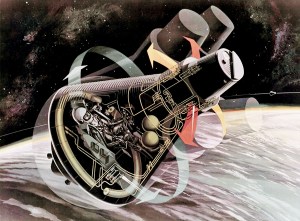
Image credit: NASA
Image source: NM Space Museum
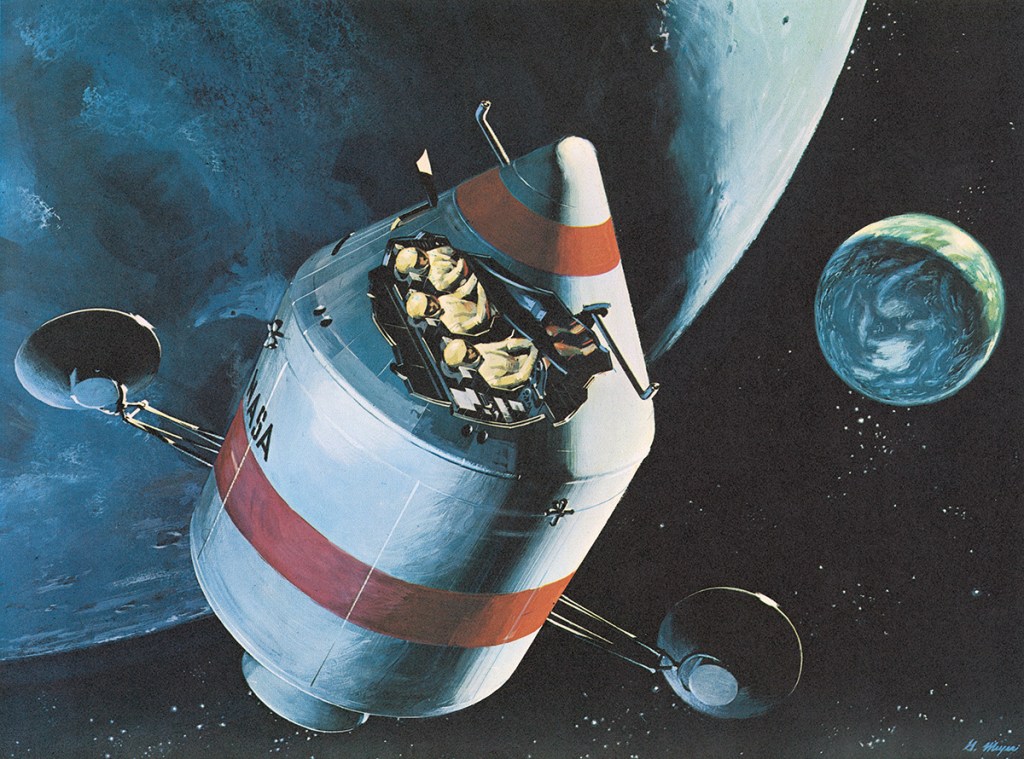
Image credit: North American Aviation
Image source: Numbers Station
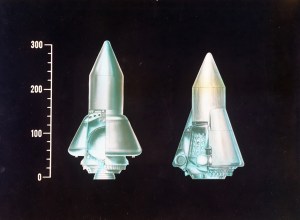
Image credit: Convair
Image source: SDASM Archives
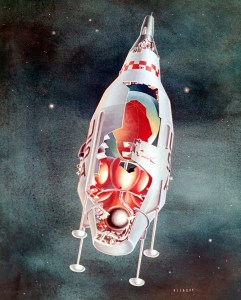
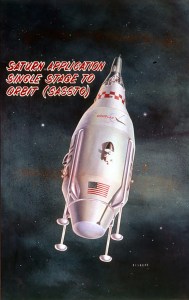
SASSTO (Saturn Application Single-Stage-to-Orbit) combined launch vehicle and spacecraft. Only 62.3 ft (19m.) tall, a single plug-nozzle engine would serve both as launch vehicle and for soft-landing back on Earth after an orbital mission. The craft – seen here with a Gemini two-man capsule – would be recovered intact and could be used repeatedly. It would be a particularly appropriate for ferry missions into Earth-orbit including the emergency rescue of astronauts.
Image credit: Douglas
Images: SDASM Archives
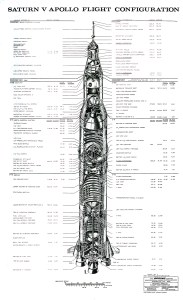
The Saturn V configuration is shown in inches and meters as illustrated by the Boeing Company. The Saturn V vehicle consisted of three stages: the S-IC (first) stage powered by five F-1 engines, the S-II (second) stage powered by five J-2 engines, the S-IVB (third) stage powered by one J-2 engine. A top for the first three stages was designed to contain the instrument unit, the guidance system, the Apollo spacecraft, and the escape system. The Apollo spacecraft consisted of the lunar module, the service module, and the command module. The Saturn V was designed perform lunar and planetary missions and it was capable of placing 280,000 pounds into Earth orbit.
Image credit: NASA MSFC
Image source: NASA Images
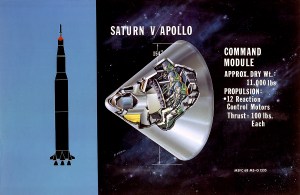
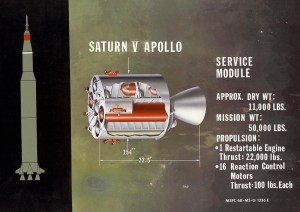
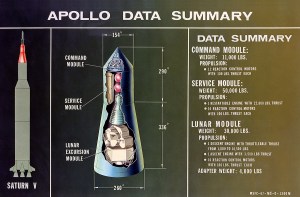
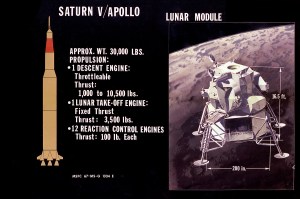
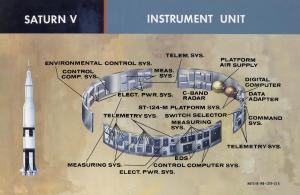
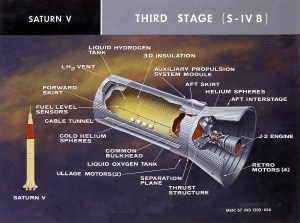
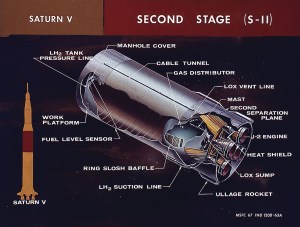
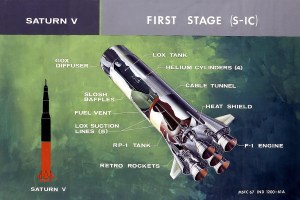
Image credit: NASA MSFC
Image source: NASA Images
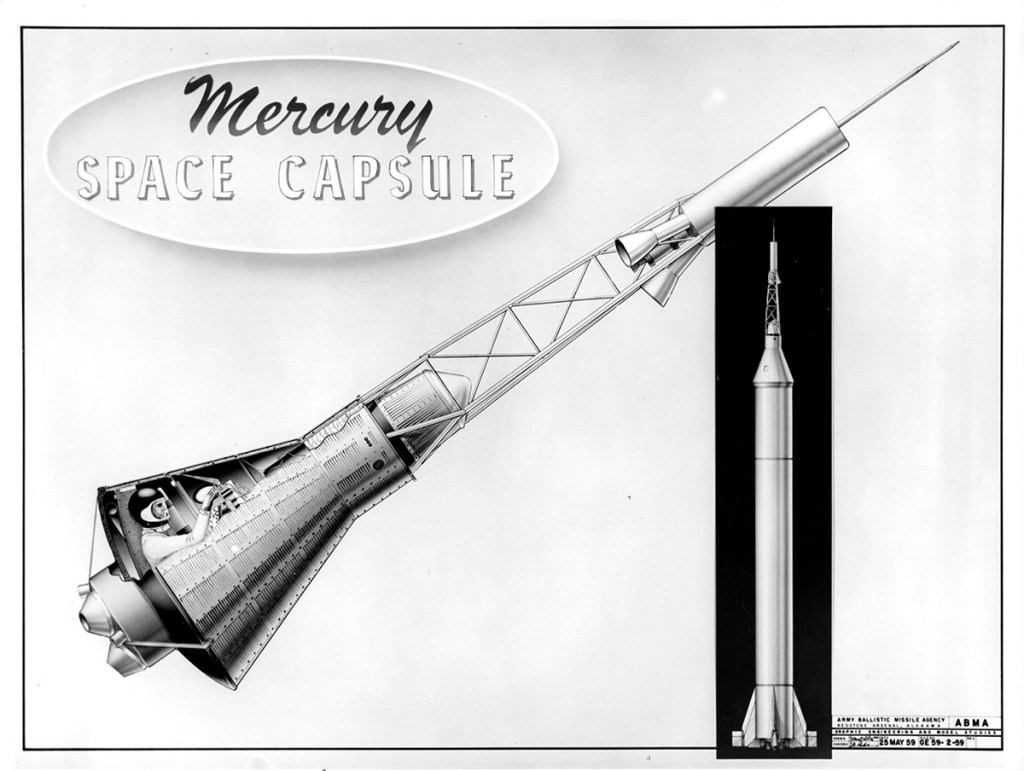
Image credit: ABMA
Image source: Numbers Station