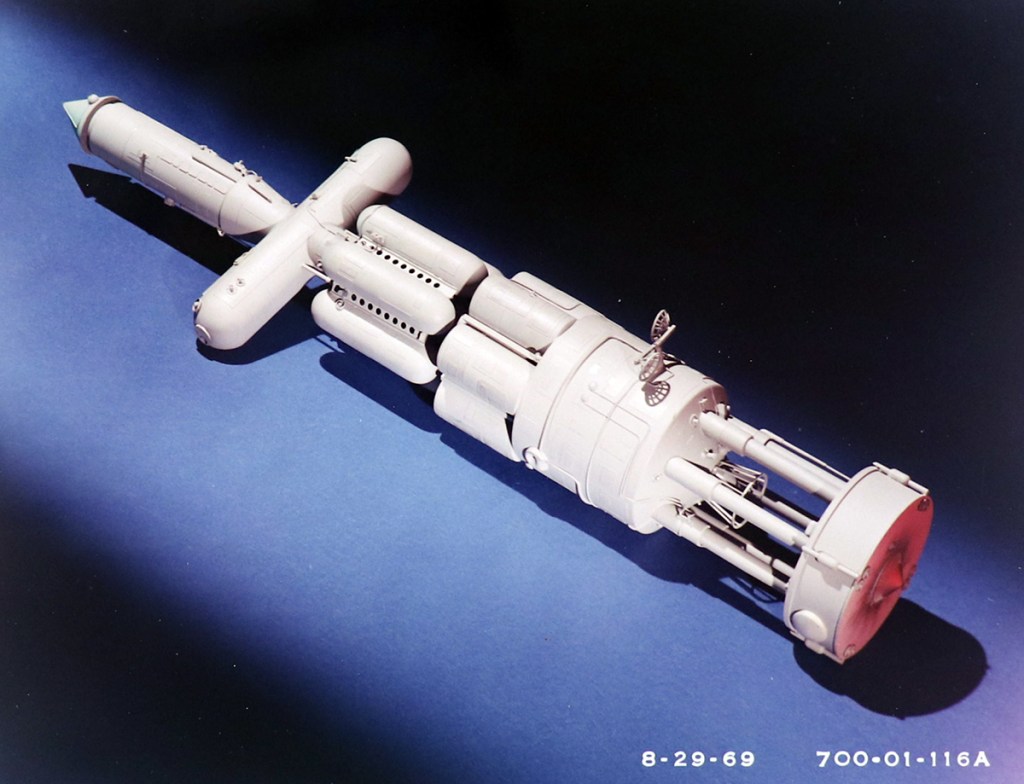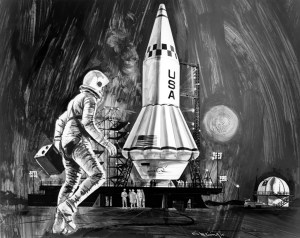
Image credit: Douglas
Image source: SDASM Archives
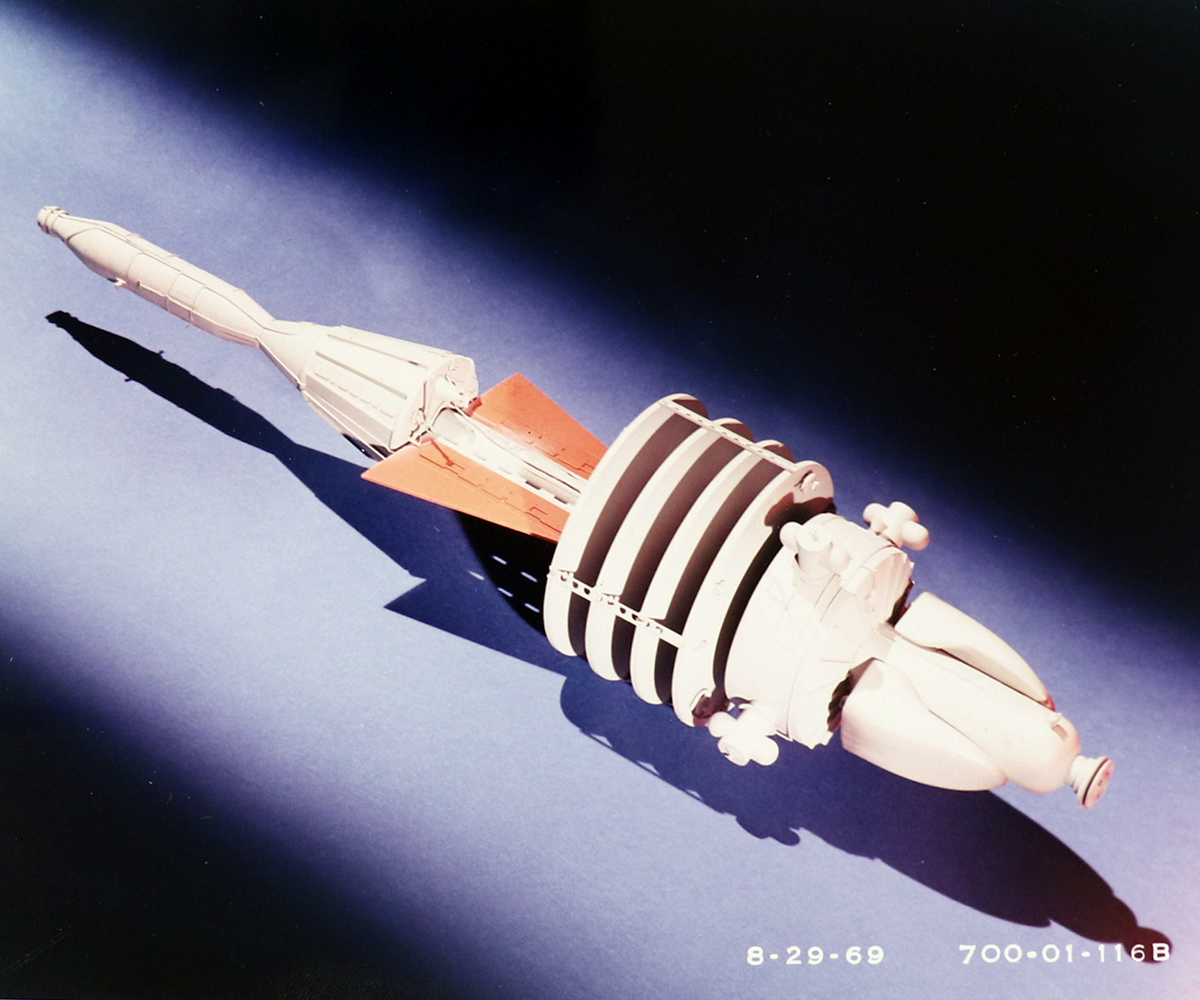
Image credit: Douglas
Image source: SDASM Archives
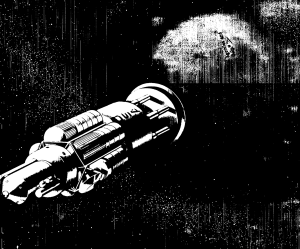
Image credit: General Atomics
File source: NASA NTRS
Lunar Ferry Vehicles
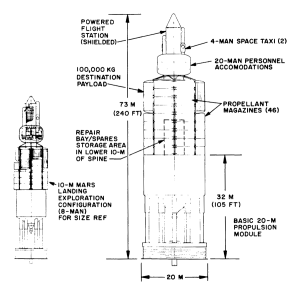
Fig. 3.13 — Exploration vehicle configuration for Jupiter moon landing mission, 20-m propulsion module
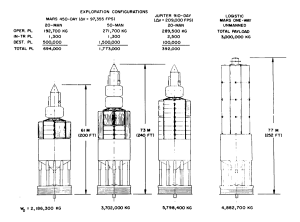
Fig. 3.15 — Various payload configurations on basic 20-m propulsion module (with departure weights for given missions)
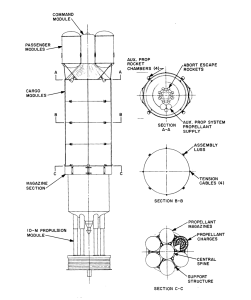
Fig. 3.16 — Earth-orbit-to-lunar-orbit ferry vehicle
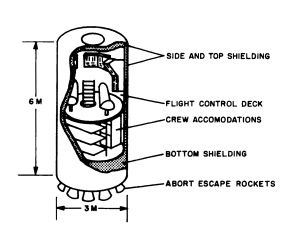
Fig. 3.18 — Lunar-ferry-vehicle command module
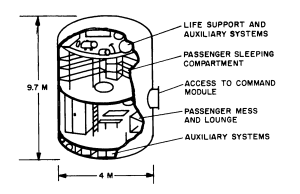
Fig. 3.19 — Reference-design passenger module
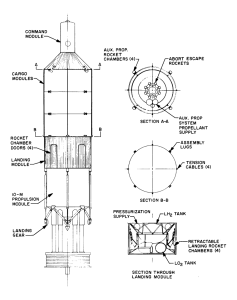
Fig. 3.20 — Earth-orbit-to-lunar-surface ferry vehicle
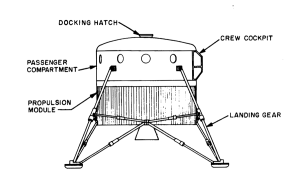
Fig. 3.21 — Lunar passenger ferry
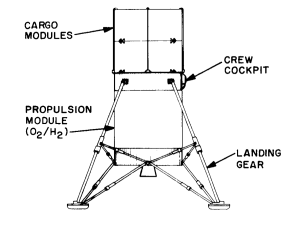
Fig. 3.22 — Lunar cargo shuttle
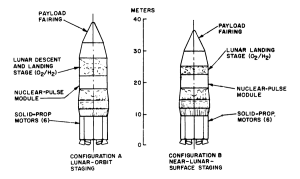
Fig. 3.23 — Solid-propellant-boosted earth-launched lunar logistic vehicles
Lunar Logistics Vehicles
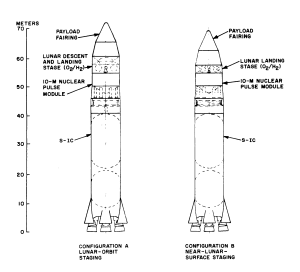
Fig. 3.24 — S-IC boosted earth launched lunar logistics vehicle
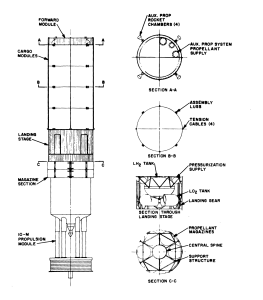
Fig. 3.15 — Orbit launched lunar logistics vehicle
From:
Nuclear Pulse Space Vehicle Study
Vol. III — Conceptual Vehicle Designs and Operational Systems (U)
Image credit: General Atomics
File Source: Cornell
Personnel Accommodations
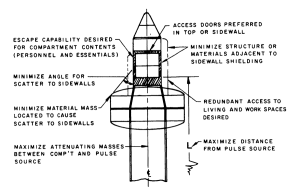
Fig. 3.2 — Factors that influence the location of the shielded powered flight station
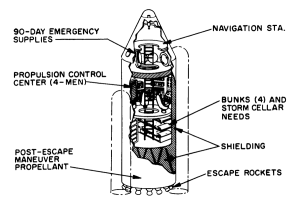
Fig. 3.4 — Powered flight station-escape vehicle for 8-man exploration missions with 10-m configurations
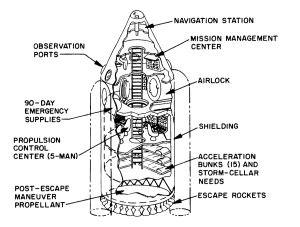
Fig. 3.5 — Powered flight station-escape vehicle for 20-man exploration missions with 20-m configurations
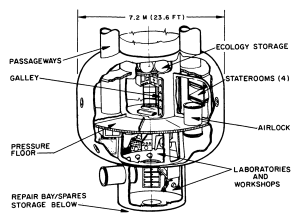
Fig 3.6 — Exploration-mission personnel accommodations for an 8-man complement
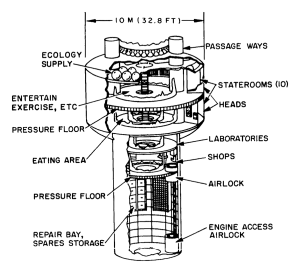
Fig 3.7 — Exploration-mission personnel accommodations for a 20-man complement
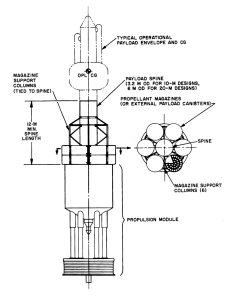
Fig 3.8 — General arrangement of payload spine and magazine payload support columns
Planetary Exploration Vehicles
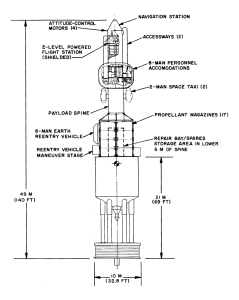
Fig. 3.11 — Exploration vehicle for Mars orbital capture mission using 10-m propulsion module
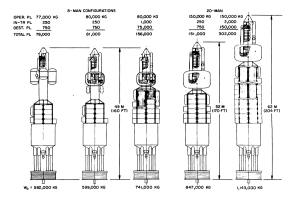
Fig. 3.12 — Various payload configurations on basic 10-m propulsion module (with departure weights for 72, 850 fps Mars mission)
From:
Nuclear Pulse Space Vehicle Study
Vol. III — Conceptual Vehicle Designs and Operational Systems (U)
Image credit: General Atomics
File Source: Cornell
Let’s go back to Solar Transportation for a minute, because it helps to explain some of the images in the Ehricke Papers. Ehricke’s team detailed a Mars lander that looked a lot like early Apollo concepts, but the some of the folders contain images of a landing using what looks like Gemini hardware. I think this image captioned in Solar Transportation is a clue.

From Solar Transportation:
In 1982, a 69 day Mars capture mission launches. The crew conducts intensive reconnaissance both from orbit, and using probes – including landers and returners – but no manned surface excursions are planned. A mission launched between 1984 is one-way, involving a 529 day stay on Mars. A follow-on mission in 1985 (via Venus) retrieves the crew.
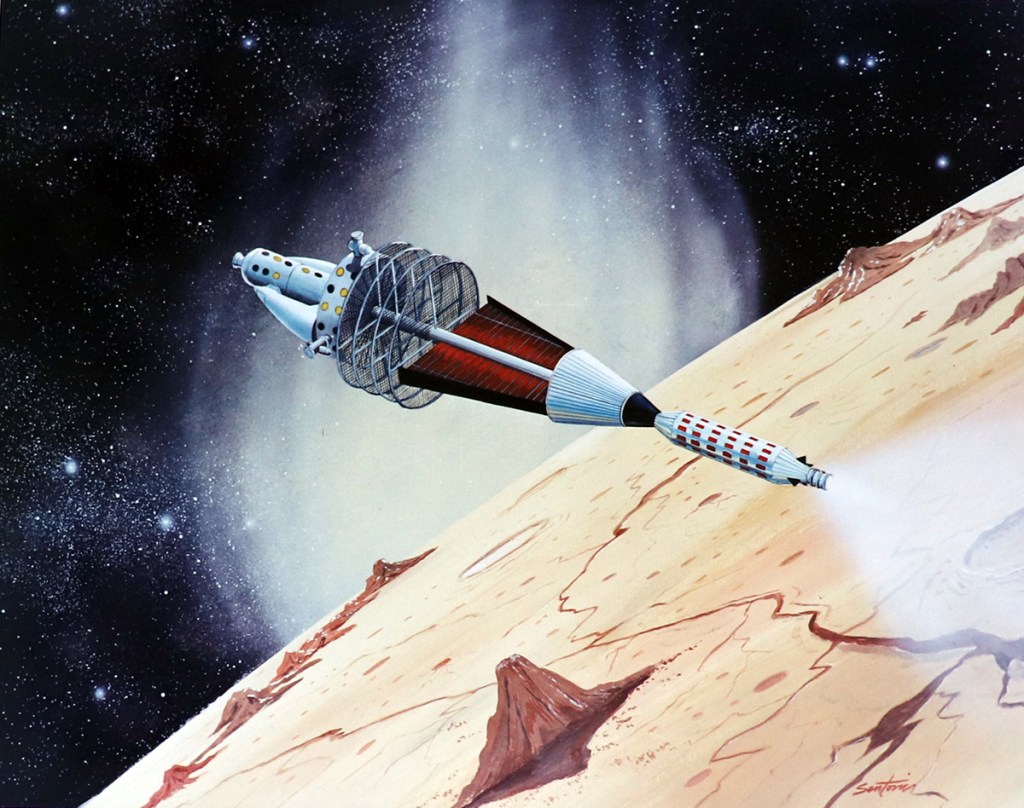
Reading back through the General Dynamics and Douglas UMPIRE reports, I think there’s enough connective tissue to make the argument that the paintings below are at least vicinal to EMPIRE / UMPIRE if not directly related, like kissing cousins. It doesn’t really matter though, because I’m not a real historian, and this isn’t a thesis.


Above: Gemini, on Mars or wherever. Below: Yup, that’s a Mars Lander.

Artists’ concepts (Spacecraft) [1 of 6 folders]
Artists’ concepts (spacecraft) [4 of 6 folders]
Image credit: Krafft Ehricke Papers
Image source: NASM

Mars Capture Mission in 1982. Orbit crew inspects the nuclear twin engine NERVA II system of the Earth Departure Module. Each engine delivers 250, 000 lbs. of thrust.
Image credit: Krafft Ehricke Papers
Image source: NASM

Artists’ concepts (spacecraft) [6 of 6 folders]
Image credit: Krafft Ehricke Papers
Image source: NASM
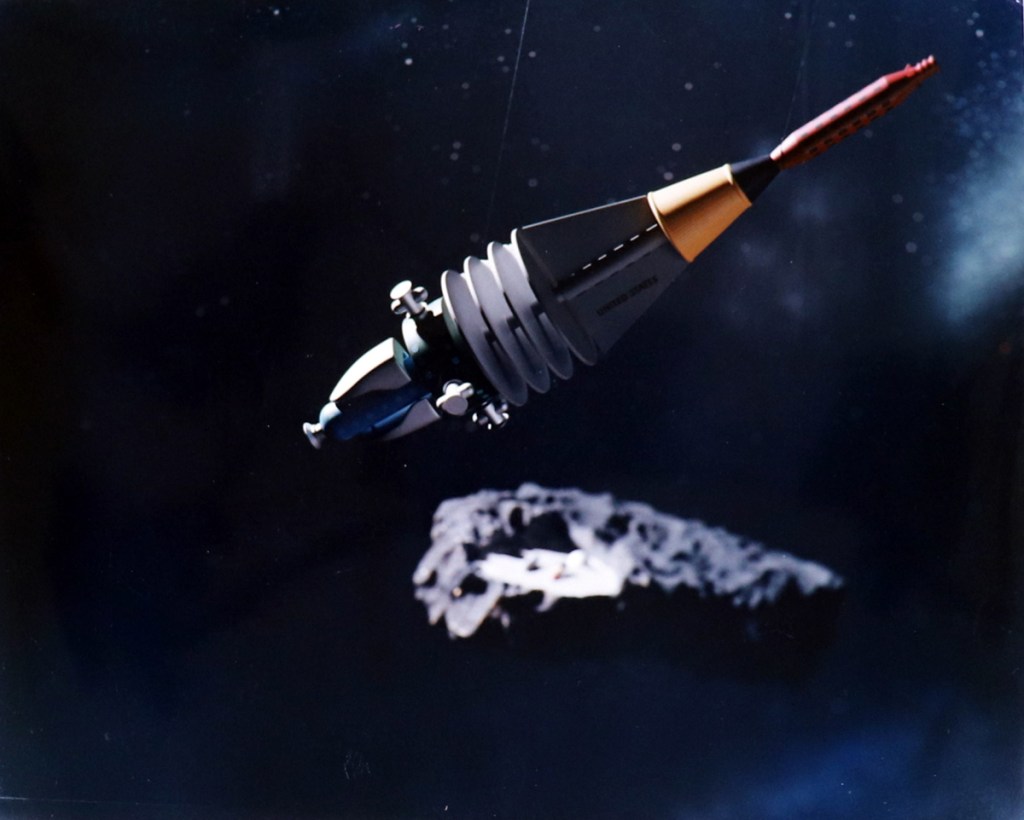
Image credit: Krafft Ehricke Papers
Image source: NASM